How To Write a
Rhetorical Analysis
AP Lang & Comp
What are Rhetorical Techniques?
• The effective use of words to persuade or
influence.
• Includes ethos, logos and pathos.
• Includes tone, diction, details, imagery,
figurative language, humor, syntax, etc, etc,
etc.
• Anything used to deliberately create effect.
What is a Rhetorical Analysis?
• Writing that separates the content
(what the passage is about) from the
methods (rhetorical strategies) used to
successfully convey that content.
• Prompt offers an effect; answer should
identify and discuss rhetorical
techniques used to create the effect.
• Rhetorical Analysis = Why, How, So
What
• WHY = Are the choices effective and
appropriate for the intended audience?
• HOW = What techniques does the writer
choose to present the material?
• SO WHAT = What is accomplished or
created?
• If you don’t do this, you don’t have
analysis!!
How do I Write a Rhetorical Analysis?
• Analyze the prompt to determine what kind of
analysis and what effect to address.
• Understand the passage!
• Deal with “hidden” questions, such as: What
IS the effect? Answer these in the first body
paragraph.
• Given the time, select three techniques to
discuss. Keep in mind the type of essay
presented by the passage and look for typical
techniques for that rhetorical mode.
• Compose a thesis that states BOTH the effect
AND the techniques.
• Be sure to avoid the trap of explaining
meaning; no AP essay question will ask you
what a passage means.
• Focus on HOW a technique creates the given
effect.
• Rule of thumb: more than HALF your essay
should be commentary.
How do I Write a Thesis for a
Rhetorical Analysis?
• The author’s name
• plus an adjective (sophisticated, carefully crafted, flashy,
inventive)
• plus the rhetoric strategies (three specific rhetorical
strategies used as topics of body paragraphs)
• plus a strong verb (demonstrates, creates, emphasizes,
generates, fulfills)
• plus the function (what the rhetoric does for the piece)
Example: Douglass’s sophisticated use of diction, imagery
and figurative language creates his unfavorable attitude
towards slavery.
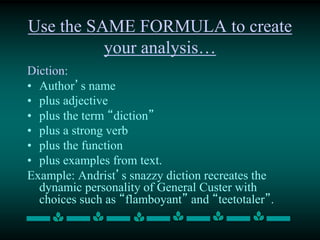
Use the SAME FORMULA to create
your analysis…
Diction:
• Author’s name
• plus adjective
• plus the term “diction”
• plus a strong verb
• plus the function
• plus examples from text.
Example: Andrist’s snazzy diction recreates the
dynamic personality of General Custer with
choices such as “flamboyant” and “teetotaler”.
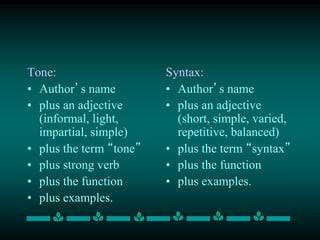
Tone:
• Author’s name
• plus an adjective
(informal, light,
impartial, simple)
• plus the term “tone”
• plus strong verb
• plus the function
• plus examples.
Syntax:
• Author’s name
• plus an adjective
(short, simple, varied,
repetitive, balanced)
• plus the term “syntax”
• plus the function
• plus examples.

Write-a-Rhetorical-Analysis.ppt

  • 1.
    How To Writea Rhetorical Analysis AP Lang & Comp
  • 2.
    What are RhetoricalTechniques? • The effective use of words to persuade or influence. • Includes ethos, logos and pathos. • Includes tone, diction, details, imagery, figurative language, humor, syntax, etc, etc, etc. • Anything used to deliberately create effect.
  • 3.
    What is aRhetorical Analysis? • Writing that separates the content (what the passage is about) from the methods (rhetorical strategies) used to successfully convey that content. • Prompt offers an effect; answer should identify and discuss rhetorical techniques used to create the effect.
  • 4.
    • Rhetorical Analysis= Why, How, So What • WHY = Are the choices effective and appropriate for the intended audience? • HOW = What techniques does the writer choose to present the material? • SO WHAT = What is accomplished or created? • If you don’t do this, you don’t have analysis!!
  • 5.
    How do IWrite a Rhetorical Analysis? • Analyze the prompt to determine what kind of analysis and what effect to address. • Understand the passage! • Deal with “hidden” questions, such as: What IS the effect? Answer these in the first body paragraph. • Given the time, select three techniques to discuss. Keep in mind the type of essay presented by the passage and look for typical techniques for that rhetorical mode.
  • 6.
    • Compose athesis that states BOTH the effect AND the techniques. • Be sure to avoid the trap of explaining meaning; no AP essay question will ask you what a passage means. • Focus on HOW a technique creates the given effect. • Rule of thumb: more than HALF your essay should be commentary.
  • 7.
    How do IWrite a Thesis for a Rhetorical Analysis? • The author’s name • plus an adjective (sophisticated, carefully crafted, flashy, inventive) • plus the rhetoric strategies (three specific rhetorical strategies used as topics of body paragraphs) • plus a strong verb (demonstrates, creates, emphasizes, generates, fulfills) • plus the function (what the rhetoric does for the piece) Example: Douglass’s sophisticated use of diction, imagery and figurative language creates his unfavorable attitude towards slavery.
  • 8.
    Use the SAMEFORMULA to create your analysis… Diction: • Author’s name • plus adjective • plus the term “diction” • plus a strong verb • plus the function • plus examples from text. Example: Andrist’s snazzy diction recreates the dynamic personality of General Custer with choices such as “flamboyant” and “teetotaler”.
  • 9.
    Tone: • Author’s name •plus an adjective (informal, light, impartial, simple) • plus the term “tone” • plus strong verb • plus the function • plus examples. Syntax: • Author’s name • plus an adjective (short, simple, varied, repetitive, balanced) • plus the term “syntax” • plus the function • plus examples.