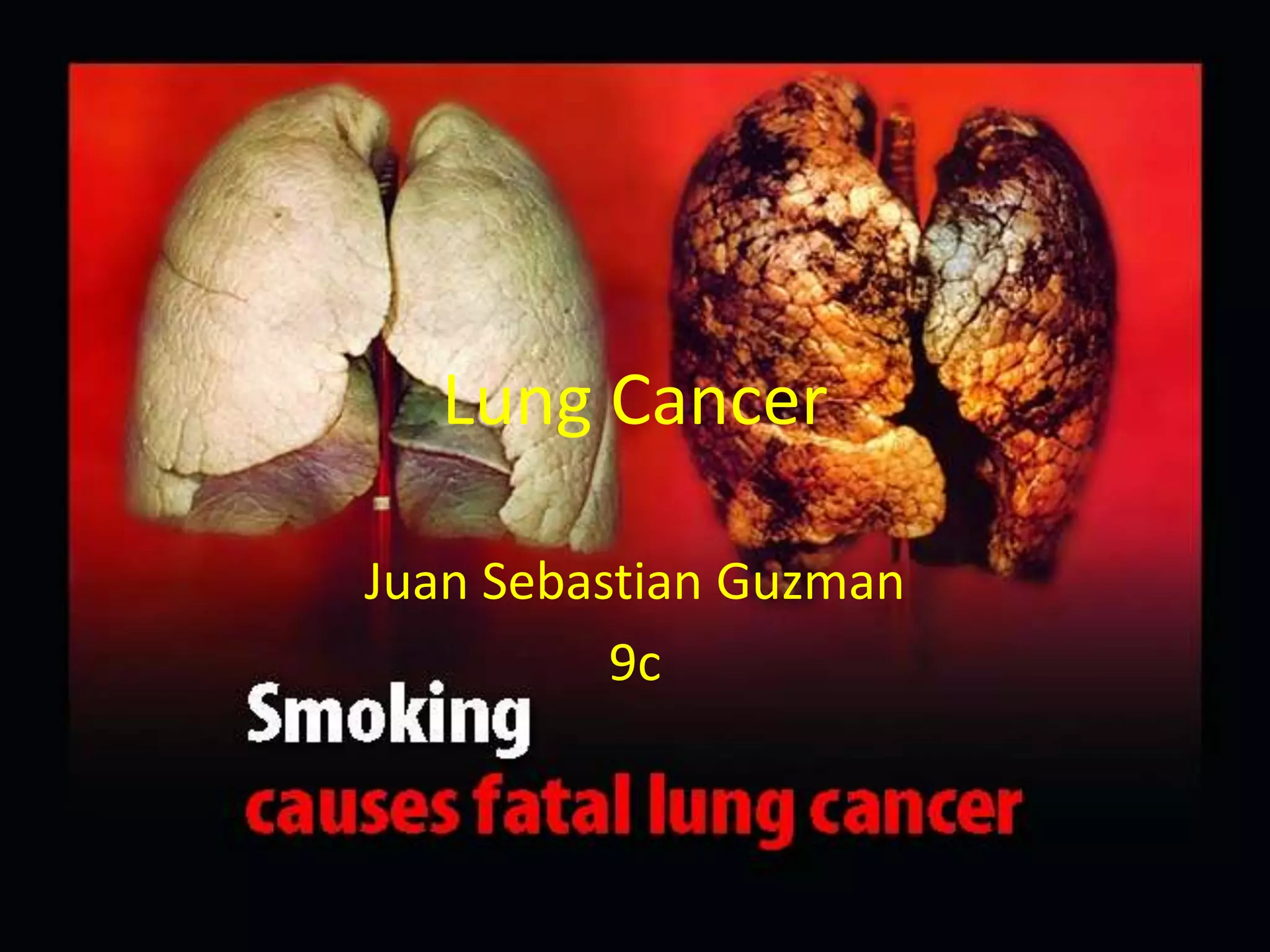
Lung Cancer

Juan Sebastian Guzman
          9c
What is a cancer ?

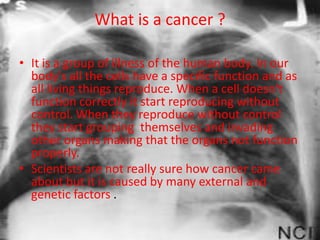
• It is a group of illness of the human body. In our
  body's all the cells have a specific function and as
  all living things reproduce. When a cell doesn't
  function correctly it start reproducing without
  control. When they reproduce without control
  they start grouping themselves and invading
  other organs making that the organs not function
  properly.
• Scientists are not really sure how cancer came
  about but it is caused by many external and
  genetic factors .
Lung Cancer
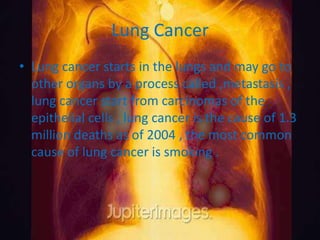
• Lung cancer starts in the lungs and may go to
  other organs by a process called ,metastasis ,
  lung cancer start from carcinomas of the
  epithelial cells , lung cancer is the cause of 1.3
  million deaths as of 2004 , the most common
  cause of lung cancer is smoking .
Types of Lung Cancer
•   Small cell lung Cancer : accounts for about 20% of all lung cancers. Although the
    cells are small, they multiply quickly and form large tumors that can spread
    throughout the body. Smoking is almost always the cause of SCLC.
•   Non Small Cell Cancer :

•   Squalors cell carcinoma (also called epidermis carcinoma). This is the most
    common type of NSCLC. It forms in the lining of the bronchial tubes and is the
    most common type of lung cancer in men.
•   Aden carcinoma. This cancer is found in the glands of the lungs that produce
    mucus. This is the most common type of lung cancer in women and also among
    people who have not smoked.
•   Bronchi alveolar carcinoma. This is a rare subset of adenocarcinoma. It forms near
    the lungs' air sacs. Recent clinical research has shown that this type of cancer
    responds more effectively to the newer target therapies .
•   Large-cell undifferentiated carcinoma. This cancer forms near the surface, or outer
    edges, of the lungs. It can grow rapidly.
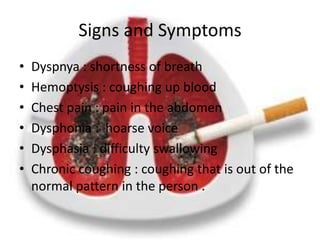
Signs and Symptoms
•   Dyspnya : shortness of breath
•   Hemoptysis : coughing up blood
•   Chest pain : pain in the abdomen
•   Dysphonia : hoarse voice
•   Dysphasia : difficulty swallowing
•   Chronic coughing : coughing that is out of the
    normal pattern in the person .
Treatment for Lung Cancer
• There are a number of different treatment options for lung cancer.
  Standard treatment options include surgical resection, chemotherapy, and
  radiation therapy. Newer lung cancer treatment approaches include
  photodynamic therapy, electrocautery, cryosurgery, laser surgery, targeted
  therapy and internal radiation. Each lung cancer treatment has its own
  specific ability to fight cancer and its own set of side effects and possible
  complications. Therefore while there are many options, lung cancer
  treatment needs to be performed judiciously and only after very careful
  consideration of a number of factors.
• For occult and stage 0 NSCLC, surgery is generally curative without the
  need for radiation or chemotherapy. This is because these stages do not
  represent invasive lung cancer—the lung cancer is completely contained
  within the primary tumor. Therefore when the tumor is surgically
  removed, the cancer is gone for good. Obviously the success rate in this
  case, as with all stages, depends on the quality and accuracy of the lung
  cancer staging. If cancer cells have migrated away from the tumor, these
  stages no longer apply and additional treatment is necessary.

Lung cancer

  • 1.
  • 2.
    What is acancer ? • It is a group of illness of the human body. In our body's all the cells have a specific function and as all living things reproduce. When a cell doesn't function correctly it start reproducing without control. When they reproduce without control they start grouping themselves and invading other organs making that the organs not function properly. • Scientists are not really sure how cancer came about but it is caused by many external and genetic factors .
  • 3.
    Lung Cancer • Lungcancer starts in the lungs and may go to other organs by a process called ,metastasis , lung cancer start from carcinomas of the epithelial cells , lung cancer is the cause of 1.3 million deaths as of 2004 , the most common cause of lung cancer is smoking .
  • 4.
    Types of LungCancer • Small cell lung Cancer : accounts for about 20% of all lung cancers. Although the cells are small, they multiply quickly and form large tumors that can spread throughout the body. Smoking is almost always the cause of SCLC. • Non Small Cell Cancer : • Squalors cell carcinoma (also called epidermis carcinoma). This is the most common type of NSCLC. It forms in the lining of the bronchial tubes and is the most common type of lung cancer in men. • Aden carcinoma. This cancer is found in the glands of the lungs that produce mucus. This is the most common type of lung cancer in women and also among people who have not smoked. • Bronchi alveolar carcinoma. This is a rare subset of adenocarcinoma. It forms near the lungs' air sacs. Recent clinical research has shown that this type of cancer responds more effectively to the newer target therapies . • Large-cell undifferentiated carcinoma. This cancer forms near the surface, or outer edges, of the lungs. It can grow rapidly.
  • 5.
    Signs and Symptoms • Dyspnya : shortness of breath • Hemoptysis : coughing up blood • Chest pain : pain in the abdomen • Dysphonia : hoarse voice • Dysphasia : difficulty swallowing • Chronic coughing : coughing that is out of the normal pattern in the person .
  • 6.
    Treatment for LungCancer • There are a number of different treatment options for lung cancer. Standard treatment options include surgical resection, chemotherapy, and radiation therapy. Newer lung cancer treatment approaches include photodynamic therapy, electrocautery, cryosurgery, laser surgery, targeted therapy and internal radiation. Each lung cancer treatment has its own specific ability to fight cancer and its own set of side effects and possible complications. Therefore while there are many options, lung cancer treatment needs to be performed judiciously and only after very careful consideration of a number of factors. • For occult and stage 0 NSCLC, surgery is generally curative without the need for radiation or chemotherapy. This is because these stages do not represent invasive lung cancer—the lung cancer is completely contained within the primary tumor. Therefore when the tumor is surgically removed, the cancer is gone for good. Obviously the success rate in this case, as with all stages, depends on the quality and accuracy of the lung cancer staging. If cancer cells have migrated away from the tumor, these stages no longer apply and additional treatment is necessary.