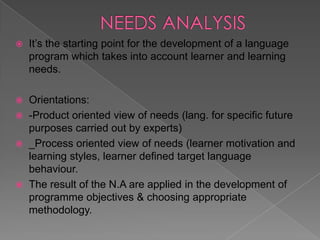
   It’s the starting point for the development of a language
    program which takes into account learner and learning
    needs.

 Orientations:
 -Product oriented view of needs (lang. for specific future
  purposes carried out by experts)
 _Process oriented view of needs (learner motivation and
  learning styles, learner defined target language
  behaviour.
 The result of the N.A are applied in the development of
  programme objectives & choosing appropriate
  methodology.
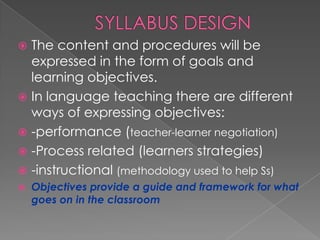
 The content and procedures will be
  expressed in the form of goals and
  learning objectives.
 In language teaching there are different
  ways of expressing objectives:
 -performance (teacher-learner negotiation)
 -Process related (learners strategies)
 -instructional (methodology used to help Ss)
   Objectives provide a guide and framework for what
    goes on in the classroom
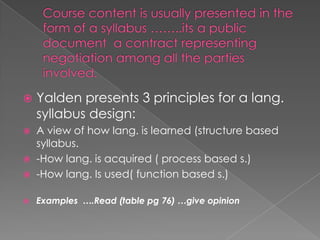
   Yalden presents 3 principles for a lang.
    syllabus design:
   A view of how lang. is learned (structure based
    syllabus.
   -How lang. is acquired ( process based s.)
   -How lang. Is used( function based s.)

   Examples ….Read (table pg 76) …give opinion
 -Allow the syllabus designer freedom to
  respond to changing or newly perceived
  needs in the learners.
 -Allow for choice in how to implement the
  syllabus.
 -Create space for learner-teacher
  negotiation in “real life” communication in
  the classroom.
 Disscuss……Dis/Agree?
   Learning depends on the interaction between the
    teacher and the learners in the
    classroom, teaching
    approaches, activities, materials procedures
    employed by the teacher.
   Teacher training and development is necessary
    and ongoing process.
   Teachers must be reflective, analytic , creative and
    open to new methods and ideas.
   Teachers experiences contribute to the process of
    curriculum renewal.

   Discuss….opinion
 Must take place at all stages of curriculum
  planning and implementation and involve
  all participants.
 Purpose:
 Determine whether the curriculum goals
  have been met (based on the assessment of
    participants).
    Determine effectiveness of the curriculum
    and evaluate the language programme
    itself (focusing on the teachers, the
    methodology, the materials.)

L.pcurriculum policy

  • 2.
    It’s the starting point for the development of a language program which takes into account learner and learning needs.  Orientations:  -Product oriented view of needs (lang. for specific future purposes carried out by experts)  _Process oriented view of needs (learner motivation and learning styles, learner defined target language behaviour.  The result of the N.A are applied in the development of programme objectives & choosing appropriate methodology.
  • 3.
     The contentand procedures will be expressed in the form of goals and learning objectives.  In language teaching there are different ways of expressing objectives:  -performance (teacher-learner negotiation)  -Process related (learners strategies)  -instructional (methodology used to help Ss)  Objectives provide a guide and framework for what goes on in the classroom
  • 4.
    Yalden presents 3 principles for a lang. syllabus design:  A view of how lang. is learned (structure based syllabus.  -How lang. is acquired ( process based s.)  -How lang. Is used( function based s.)  Examples ….Read (table pg 76) …give opinion
  • 5.
     -Allow thesyllabus designer freedom to respond to changing or newly perceived needs in the learners.  -Allow for choice in how to implement the syllabus.  -Create space for learner-teacher negotiation in “real life” communication in the classroom.  Disscuss……Dis/Agree?
  • 6.
    Learning depends on the interaction between the teacher and the learners in the classroom, teaching approaches, activities, materials procedures employed by the teacher.  Teacher training and development is necessary and ongoing process.  Teachers must be reflective, analytic , creative and open to new methods and ideas.  Teachers experiences contribute to the process of curriculum renewal.  Discuss….opinion
  • 7.
     Must takeplace at all stages of curriculum planning and implementation and involve all participants.  Purpose:  Determine whether the curriculum goals have been met (based on the assessment of participants). Determine effectiveness of the curriculum and evaluate the language programme itself (focusing on the teachers, the methodology, the materials.)