© House of Lords 2015
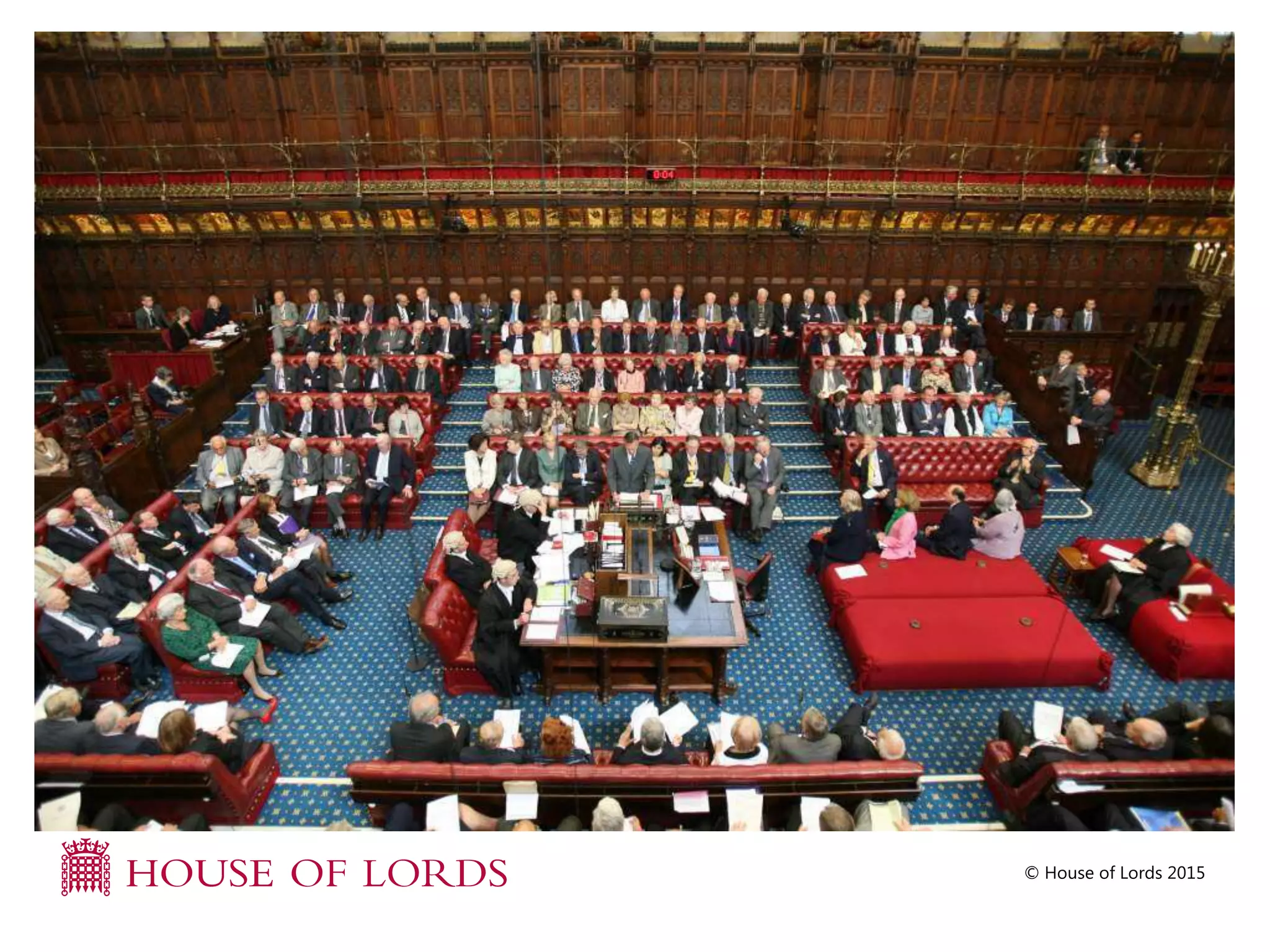
Legislation in the Lords
© House of Lords 2015
State Opening of Parliament
© House of Lords 2015
Similar but not the same:
Lords / Commons procedures
• No formal programming of bills in the
Lords: timetabling is less certain
• Committee stage normally open to all
members. No evidence taking
• No selection of amendments – all relevant
amendments tabled can be debated
• Third Reading on a separate day
© House of Lords 2015
2015-16 Government Bills
introduced in the House of Lords
• Bank of England and Financial Services Bill
• Charities (Protection and Social Investment) Bill
• Childcare Bill
• Cities and Local Government Devolution Bill
• Energy Bill
• Enterprise Bill
• Psychoactive Substances Bill
© House of Lords 2015
Private Members’ Bills
• Same procedures as Government Bills
• Can be introduced by any Member
• 44 entered into the ballot – 2 more since
• Much lower chance of becoming law
© House of Lords 2015
Draft Bills
• Draft Investigatory Powers Bill
• Draft Wales Bill
• Draft Public Service Ombudsman
Bill
© House of Lords 2015
Joint Committee on the Draft Investigatory
Powers Bill (11 January 2016)
© House of Lords 2015
Committee work
• Permanent committees on e.g. EU matters
• Ad hoc inquiries, such as
– Equality Act 2010 and Disability
Committee
– Social mobility for school leavers
Committee
© House of Lords 2015
Sources of information about legislative
business in the House
• The Parliamentary website
www.parliament.uk
• The Government Whips Office
website www.lordswhips.org.uk
© House of Lords 2015
Bill pages
Timetable
Bills
Explanatory
Notes
Amendments
Briefing
papers
© House of Lords 2015
www.lordswhips.org.uk
© House of Lords 2015
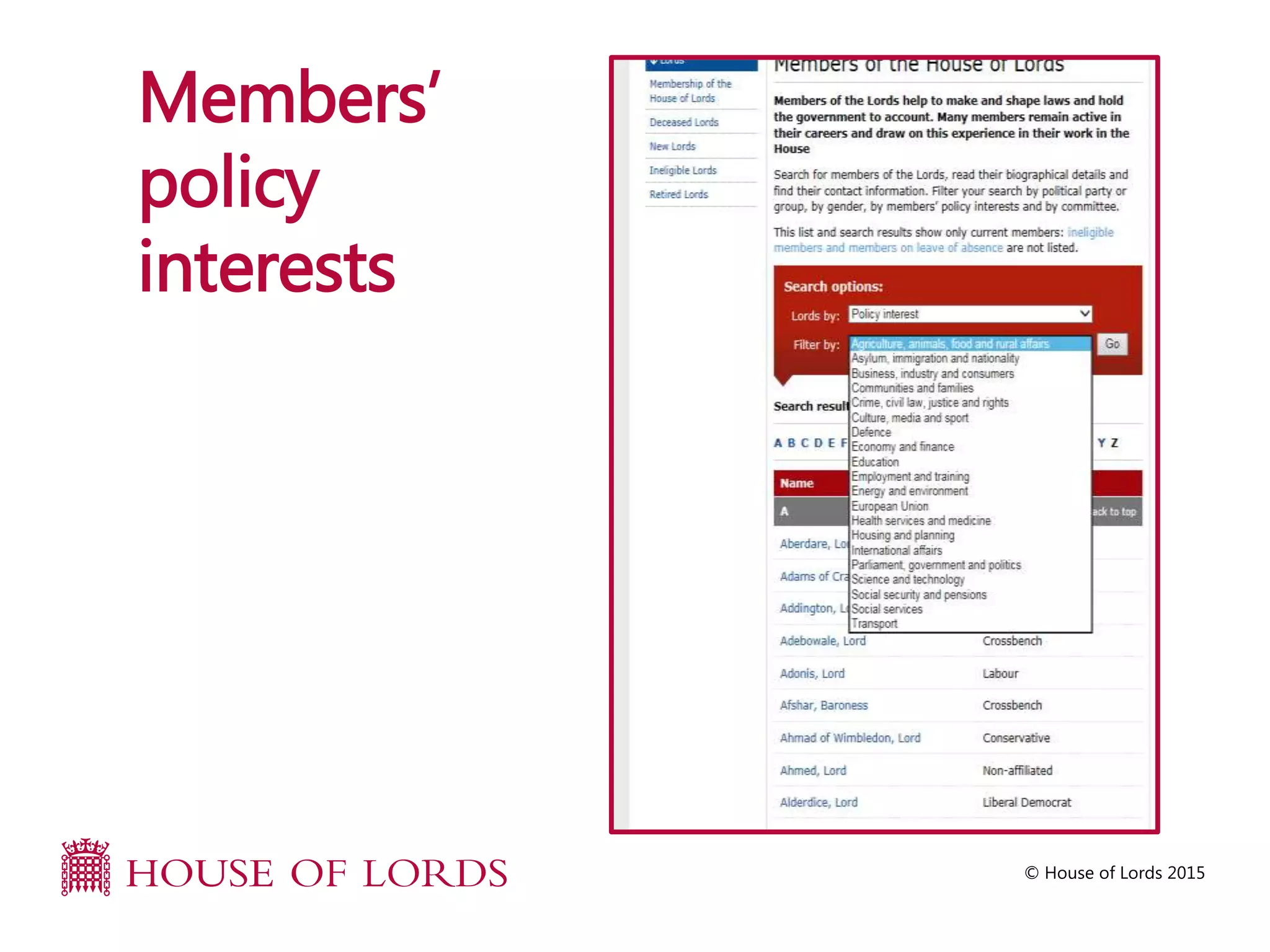
Members’
policy
interests

Lords legislation - January 2016

  • 1.
    © House ofLords 2015 Legislation in the Lords
  • 2.
    © House ofLords 2015 State Opening of Parliament
  • 3.
    © House ofLords 2015
  • 4.
    © House ofLords 2015 Similar but not the same: Lords / Commons procedures • No formal programming of bills in the Lords: timetabling is less certain • Committee stage normally open to all members. No evidence taking • No selection of amendments – all relevant amendments tabled can be debated • Third Reading on a separate day
  • 5.
    © House ofLords 2015 2015-16 Government Bills introduced in the House of Lords • Bank of England and Financial Services Bill • Charities (Protection and Social Investment) Bill • Childcare Bill • Cities and Local Government Devolution Bill • Energy Bill • Enterprise Bill • Psychoactive Substances Bill
  • 6.
    © House ofLords 2015 Private Members’ Bills • Same procedures as Government Bills • Can be introduced by any Member • 44 entered into the ballot – 2 more since • Much lower chance of becoming law
  • 7.
    © House ofLords 2015 Draft Bills • Draft Investigatory Powers Bill • Draft Wales Bill • Draft Public Service Ombudsman Bill
  • 8.
    © House ofLords 2015 Joint Committee on the Draft Investigatory Powers Bill (11 January 2016)
  • 9.
    © House ofLords 2015 Committee work • Permanent committees on e.g. EU matters • Ad hoc inquiries, such as – Equality Act 2010 and Disability Committee – Social mobility for school leavers Committee
  • 10.
    © House ofLords 2015 Sources of information about legislative business in the House • The Parliamentary website www.parliament.uk • The Government Whips Office website www.lordswhips.org.uk
  • 11.
    © House ofLords 2015
  • 12.
    © House ofLords 2015 Bill pages Timetable Bills Explanatory Notes Amendments Briefing papers
  • 13.
    © House ofLords 2015 www.lordswhips.org.uk
  • 14.
    © House ofLords 2015
  • 15.
    © House ofLords 2015 Members’ policy interests