LTE
Project analysis slide 2
Long Term Evolution (LTE)
In Nov. 2004, 3GPP began a project to define the long-term evolution (LTE)
of Universal Mobile Telecommunications System (UMTS) cellular technology
• Higher performance
• Backwards compatible
• Wide application
Long Term Evolution (LTE)
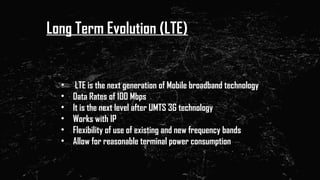
• LTE is the next generation of Mobile broadband technology
• Data Rates of 100 Mbps
• It is the next level after UMTS 3G technology
• Works with IP
• Flexibility of use of existing and new frequency bands
• Allow for reasonable terminal power consumption
Project analysis slide 4
Why need Long Term Evolution (LTE)
• Overall Device and Network Performance
• Streaming Media
• Videoconferencing over LTE
• Sharing Your LTE Connection via Mobile Hotspot
Project analysis slide 3
MARKET
ANALYSIS
TECHNICAL
ANALYSIS
FINANCIAL
ANALYSIS
ECONOMIC
ANALYSIS
ECOLOGICAL
ANALYSIS
Lorem ipsum dolor
sit amet, consectetur
adipiscing elit, sed
do eiusmod tempor
incididunt ut labore
et dolore magna
aliqua.
Lorem ipsum dolor
sit amet, consectetur
adipiscing elit, sed
do eiusmod tempor
incididunt ut labore
et dolore magna
aliqua.
Lorem ipsum dolor
sit amet, consectetur
adipiscing elit, sed
do eiusmod tempor
incididunt ut labore
et dolore magna
aliqua.
Lorem ipsum dolor
sit amet, consectetur
adipiscing elit, sed
do eiusmod tempor
incididunt ut labore
et dolore magna
aliqua.
Lorem ipsum dolor
sit amet, consectetur
adipiscing elit, sed
do eiusmod tempor
incididunt ut labore
et dolore magna
aliqua.
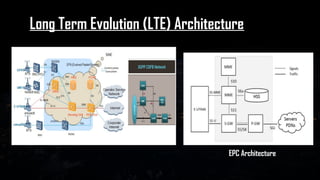
Long Term Evolution (LTE) Architecture
EPC Architecture
Project analysis slide 4
Limitations of LTE
• This service is not currently available in all cities.
• More towers and fresh technologies need to be developed for better signals while in transit
e.g., in buses and trains.
• LTE being complex needs only skilled people to manage the system. They even need to be
paid a higher salary.
• This technology cannot be used in old versions of smartphones.
• Needs complex hardware.
• LTE requires expensive infrastructure for operation.
• 4G LTE network has higher data prices for the consumers
Thank You

Long Term Evolution (LTE): High-Speed Wireless Communication Explained

  • 1.
  • 2.
    Project analysis slide2 Long Term Evolution (LTE) In Nov. 2004, 3GPP began a project to define the long-term evolution (LTE) of Universal Mobile Telecommunications System (UMTS) cellular technology • Higher performance • Backwards compatible • Wide application Long Term Evolution (LTE) • LTE is the next generation of Mobile broadband technology • Data Rates of 100 Mbps • It is the next level after UMTS 3G technology • Works with IP • Flexibility of use of existing and new frequency bands • Allow for reasonable terminal power consumption
  • 3.
    Project analysis slide4 Why need Long Term Evolution (LTE) • Overall Device and Network Performance • Streaming Media • Videoconferencing over LTE • Sharing Your LTE Connection via Mobile Hotspot
  • 4.
    Project analysis slide3 MARKET ANALYSIS TECHNICAL ANALYSIS FINANCIAL ANALYSIS ECONOMIC ANALYSIS ECOLOGICAL ANALYSIS Lorem ipsum dolor sit amet, consectetur adipiscing elit, sed do eiusmod tempor incididunt ut labore et dolore magna aliqua. Lorem ipsum dolor sit amet, consectetur adipiscing elit, sed do eiusmod tempor incididunt ut labore et dolore magna aliqua. Lorem ipsum dolor sit amet, consectetur adipiscing elit, sed do eiusmod tempor incididunt ut labore et dolore magna aliqua. Lorem ipsum dolor sit amet, consectetur adipiscing elit, sed do eiusmod tempor incididunt ut labore et dolore magna aliqua. Lorem ipsum dolor sit amet, consectetur adipiscing elit, sed do eiusmod tempor incididunt ut labore et dolore magna aliqua. Long Term Evolution (LTE) Architecture EPC Architecture
  • 5.
    Project analysis slide4 Limitations of LTE • This service is not currently available in all cities. • More towers and fresh technologies need to be developed for better signals while in transit e.g., in buses and trains. • LTE being complex needs only skilled people to manage the system. They even need to be paid a higher salary. • This technology cannot be used in old versions of smartphones. • Needs complex hardware. • LTE requires expensive infrastructure for operation. • 4G LTE network has higher data prices for the consumers
  • 6.