By:- eFinanceManagement.com
1. Meaning
2. Types of long term debt
3. Advantages of long term debt
4. Disadvantages of long term debt
5. Long term debt on Balance sheet
 Long Term Debt or LTD is a loan that is held beyond 12
months or more. In the Balance Sheet, companies
classify long term debt as a non-current liability. Such
type of loans can have a maturity date of anywhere
between 12 months to 30+ years.
 When the word "debt" is used to mean "liabilities" (as
is done in financial ratios) then other examples will
include vehicle loans, bonds payable, capital lease
obligations, pension and other post-retirement benefit
obligations, and deferred income taxes.
 Also known as long-term liabilities, long-term
debt refers to any financial obligations that extend
beyond a 12-month period, or beyond the current
business year or operating cycle.
 CONVERTIBLE BONDS:- These are bonds with
a feature that allows holders to redeem them
for shares of common stock.
 LEASE OBLIGATIONS OR CONTRACTS:- Many
business leases extend beyond a 12-month
period, which is why they're often classified as
long-term debt.
 BANK DEBT:- Any loan that comes from a bank or any
other financial institutions comes under bank debt.
Unlike bonds, these loans are not tradable or
transferable.
 PENSION OR POSTRETIREMENT BENEFITS:-
Some companies offer long-term benefits to
their employees or provide them with pension
payments in retirement.
 CONTINGENT OBLIGATIONS:- These are
potential obligations that may arise
depending on how a future event plays out. A
common example includes pending lawsuits
that have not yet been settled.
 NDIVIDUAL NOTES PAYABLE:-These are debt
instruments issued to individual investors. Payment
terms might vary from note to note.
 Every company needs funds to run its day-to-day business,
buy fixed assets and for other business activities. Long term
debts give the organization immediate access to funds without
worrying for paying it in the short term. The borrower only has
to make the payment of the current portion.
 In case, a company wants only a portion of total debt currently,
they have the option to structure the debt that way. This way
the company receives the debt as and when they need.
 Interest that the borrower pays on the debt is taken as expense
in the income statement. Therefore, it helps to bring down the
taxable income.
 Debt financing provides sufficient flexibility in
the financial/capital structure of the company.
 A business generates income and net worth for
its owners. By using long-term debt, an owner
leverages her personal investment to increase
her returns.
 Long-term debt usually has fixed interest rates
that translate into consistent monthly payments
and high predictability.
 Too much of anything is bad and the same
goes for the LTD. A company should not be
overly dependent on the debts because one
has to pay it eventually.
 Equity is a safer option for the reason that it is
not mandatory for a company to pay dividends.
However, if a company is issuing debt then
interest payment is mandatory.
 Interest on debt is permanent burden to the
company. . It is legally liable to pay interest on
debt.
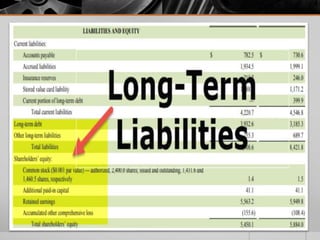
 The term ‘Liabilities’ in a company’s Balance sheet
means a particular amount which a company owes to
someone (individual, institutions or Companies). Or in
other words, if a company borrows a certain amount
or takes credit for Business Operations, then the
company has the obligation to repay it within a
stipulated time-frame.
 If, a Company X ltd. borrows 5 million from a Bank
with an interest rate of 5% per annum for 8 months,
then the Debt would be treated as Short-term
liabilities and if the tenure becomes more than one
year then it would come under ‘Long-Term Liabilities’
on Balance Sheet.
 A company must always aim for the optimal debt
structure. An organization should know their capacity,
the growth target of the business every year and
consider other aspects before bulking up the debt.
Also, the company should be extra careful and ensure
that the principal and interest amount do not impact
the cash flow considerably.
 To know more about it click on the link below...
https://efinancemanagement.com/sources-of-
finance/long-term-debt
THANK YOU

Long term debt

  • 1.
  • 2.
    1. Meaning 2. Typesof long term debt 3. Advantages of long term debt 4. Disadvantages of long term debt 5. Long term debt on Balance sheet
  • 3.
     Long TermDebt or LTD is a loan that is held beyond 12 months or more. In the Balance Sheet, companies classify long term debt as a non-current liability. Such type of loans can have a maturity date of anywhere between 12 months to 30+ years.  When the word "debt" is used to mean "liabilities" (as is done in financial ratios) then other examples will include vehicle loans, bonds payable, capital lease obligations, pension and other post-retirement benefit obligations, and deferred income taxes.  Also known as long-term liabilities, long-term debt refers to any financial obligations that extend beyond a 12-month period, or beyond the current business year or operating cycle.
  • 4.
     CONVERTIBLE BONDS:-These are bonds with a feature that allows holders to redeem them for shares of common stock.  LEASE OBLIGATIONS OR CONTRACTS:- Many business leases extend beyond a 12-month period, which is why they're often classified as long-term debt.  BANK DEBT:- Any loan that comes from a bank or any other financial institutions comes under bank debt. Unlike bonds, these loans are not tradable or transferable.
  • 5.
     PENSION ORPOSTRETIREMENT BENEFITS:- Some companies offer long-term benefits to their employees or provide them with pension payments in retirement.  CONTINGENT OBLIGATIONS:- These are potential obligations that may arise depending on how a future event plays out. A common example includes pending lawsuits that have not yet been settled.  NDIVIDUAL NOTES PAYABLE:-These are debt instruments issued to individual investors. Payment terms might vary from note to note.
  • 6.
     Every companyneeds funds to run its day-to-day business, buy fixed assets and for other business activities. Long term debts give the organization immediate access to funds without worrying for paying it in the short term. The borrower only has to make the payment of the current portion.  In case, a company wants only a portion of total debt currently, they have the option to structure the debt that way. This way the company receives the debt as and when they need.  Interest that the borrower pays on the debt is taken as expense in the income statement. Therefore, it helps to bring down the taxable income.
  • 7.
     Debt financingprovides sufficient flexibility in the financial/capital structure of the company.  A business generates income and net worth for its owners. By using long-term debt, an owner leverages her personal investment to increase her returns.  Long-term debt usually has fixed interest rates that translate into consistent monthly payments and high predictability.
  • 8.
     Too muchof anything is bad and the same goes for the LTD. A company should not be overly dependent on the debts because one has to pay it eventually.  Equity is a safer option for the reason that it is not mandatory for a company to pay dividends. However, if a company is issuing debt then interest payment is mandatory.  Interest on debt is permanent burden to the company. . It is legally liable to pay interest on debt.
  • 9.
     The term‘Liabilities’ in a company’s Balance sheet means a particular amount which a company owes to someone (individual, institutions or Companies). Or in other words, if a company borrows a certain amount or takes credit for Business Operations, then the company has the obligation to repay it within a stipulated time-frame.  If, a Company X ltd. borrows 5 million from a Bank with an interest rate of 5% per annum for 8 months, then the Debt would be treated as Short-term liabilities and if the tenure becomes more than one year then it would come under ‘Long-Term Liabilities’ on Balance Sheet.
  • 11.
     A companymust always aim for the optimal debt structure. An organization should know their capacity, the growth target of the business every year and consider other aspects before bulking up the debt. Also, the company should be extra careful and ensure that the principal and interest amount do not impact the cash flow considerably.  To know more about it click on the link below... https://efinancemanagement.com/sources-of- finance/long-term-debt
  • 12.