By:-
eFinanceManagement.com
https://efinancemanagement.com/sources-of-finance/structured-notes
Structured Notes
1. Meaning
2. How do these Works?
3. Types
4. Advantages & Disadvantages
5. Reference
Content
Structured notes are securities having a combination of derivatives and bond components, tailored to help investors with
little risk appetite to invest in high to medium risk assets.
These notes are in the form of debt, and coupon payments are made to the investors over the period of their investment.
Structured notes perform on the basis of the performance of their underlying/linked assets.
Meaning
Structured notes are issued for a particular time frame and have a fixed maturity period. Early redemptions are generally
not permissible and may carry heavy costs with them. Also, usually, there is no guarantee for the safety of the principal
amount. Hence, it is the call of the investor to invest in it or not.
Because of their high risk-high return nature and involvement of a large sum of money, earlier only institutional investors
and high net-worth individuals used to invest in structured notes. However, now ordinary investors looking for better
than the standard or normal return also have an opportunity to earn high returns, if certain market conditions are met.
How do these Work?
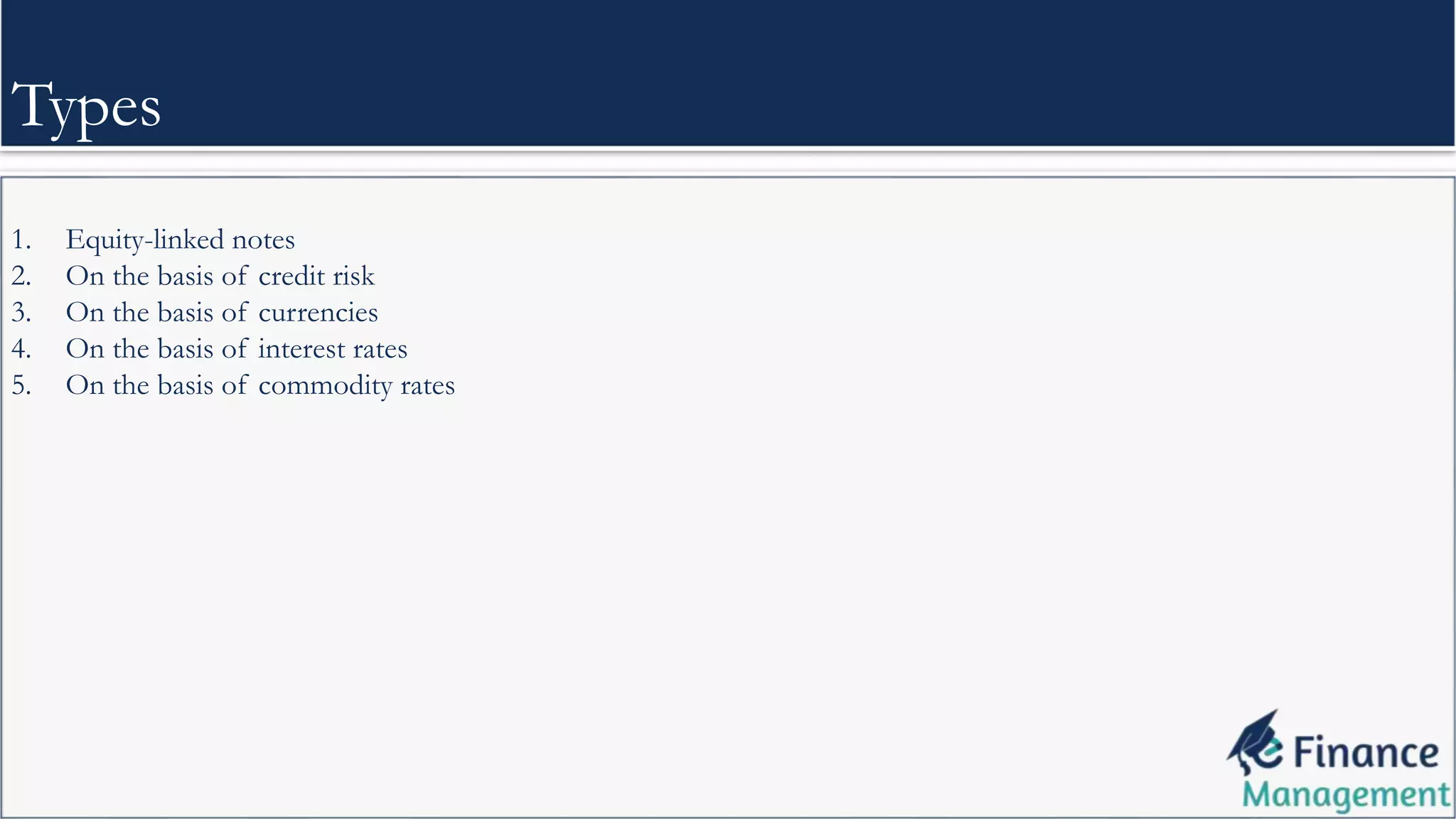
1. Equity-linked notes
2. On the basis of credit risk
3. On the basis of currencies
4. On the basis of interest rates
5. On the basis of commodity rates
Types
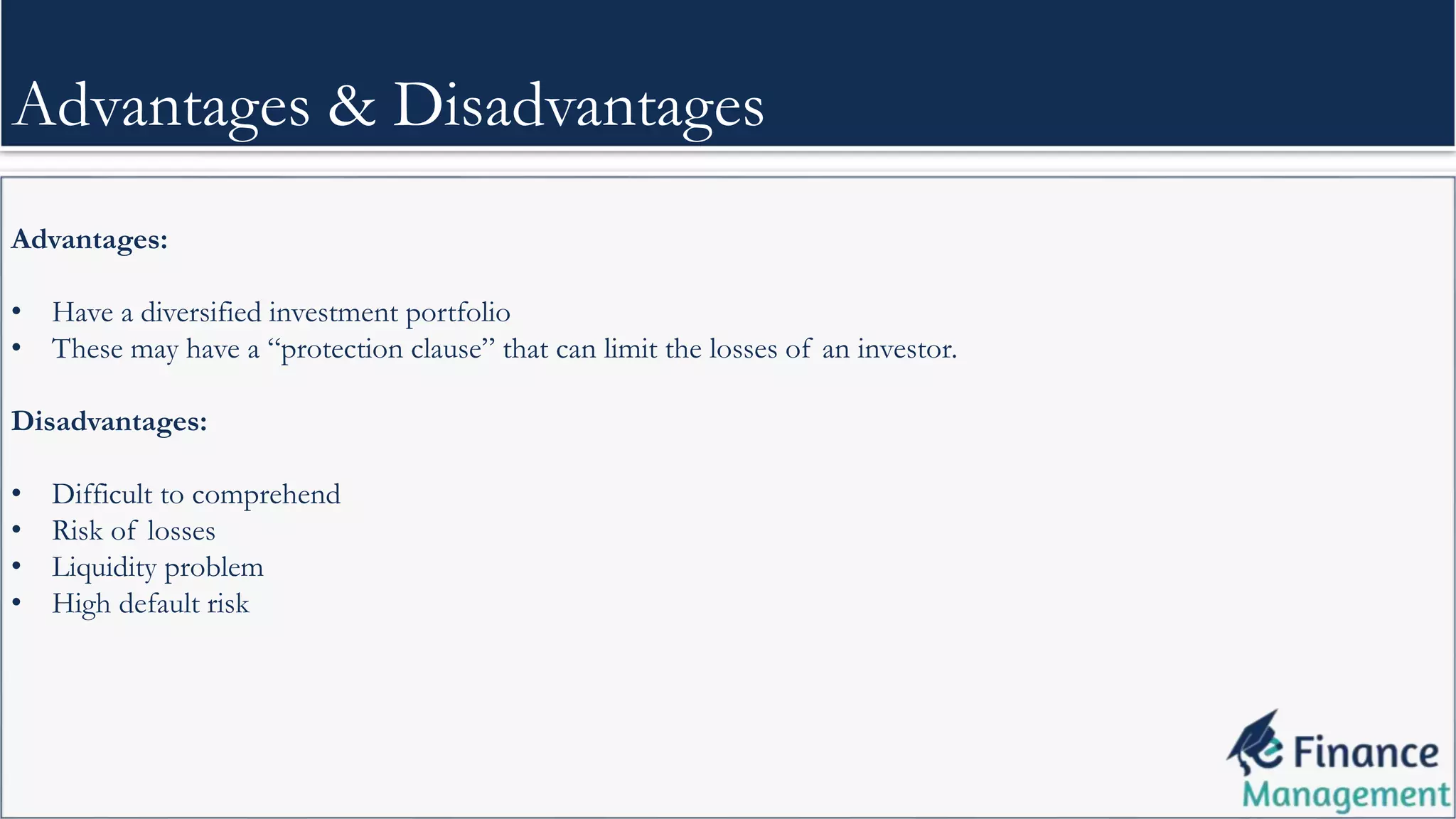
Advantages:
• Have a diversified investment portfolio
• These may have a “protection clause” that can limit the losses of an investor.
Disadvantages:
• Difficult to comprehend
• Risk of losses
• Liquidity problem
• High default risk
Advantages & Disadvantages
Reference
To know more about it, click on the link given below:
https://efinancemanagement.com/sources-of-finance/structured-notes

Structures Notes

  • 1.
  • 2.
    1. Meaning 2. Howdo these Works? 3. Types 4. Advantages & Disadvantages 5. Reference Content
  • 3.
    Structured notes aresecurities having a combination of derivatives and bond components, tailored to help investors with little risk appetite to invest in high to medium risk assets. These notes are in the form of debt, and coupon payments are made to the investors over the period of their investment. Structured notes perform on the basis of the performance of their underlying/linked assets. Meaning
  • 4.
    Structured notes areissued for a particular time frame and have a fixed maturity period. Early redemptions are generally not permissible and may carry heavy costs with them. Also, usually, there is no guarantee for the safety of the principal amount. Hence, it is the call of the investor to invest in it or not. Because of their high risk-high return nature and involvement of a large sum of money, earlier only institutional investors and high net-worth individuals used to invest in structured notes. However, now ordinary investors looking for better than the standard or normal return also have an opportunity to earn high returns, if certain market conditions are met. How do these Work?
  • 5.
    1. Equity-linked notes 2.On the basis of credit risk 3. On the basis of currencies 4. On the basis of interest rates 5. On the basis of commodity rates Types
  • 6.
    Advantages: • Have adiversified investment portfolio • These may have a “protection clause” that can limit the losses of an investor. Disadvantages: • Difficult to comprehend • Risk of losses • Liquidity problem • High default risk Advantages & Disadvantages
  • 7.
    Reference To know moreabout it, click on the link given below: https://efinancemanagement.com/sources-of-finance/structured-notes