L U P U S
N E P H R I T I S
K D I G O
G U I D E L I N E S
2 0 2 4
I N T R O D U C T I O N
• Lifetime incidence of lupus nephritis (LN) is 20% – 60%
• Kidney involvement in SLE has been associated with higher mortality, especially for patients
progressing to kidney failure
• The ultimate goal of treating LN is to preserve kidney function and reduce the morbidity and
mortality associated with chronic kidney disease (CKD) and kidney failure, while minimizing
medication-associated toxicities
K D I G O 2 0 2 4 G U I D E L I N E S
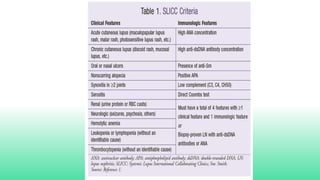
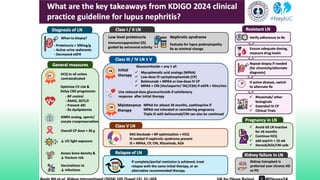
D I A G N O S I S O F L U P U S N E P H R I T I S
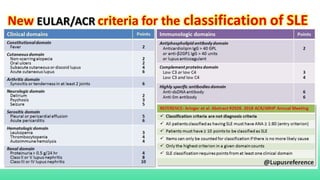
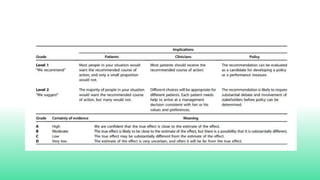
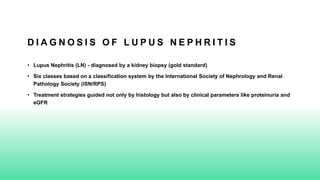
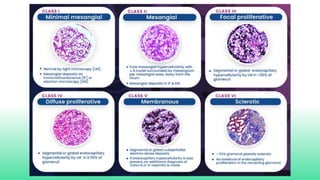
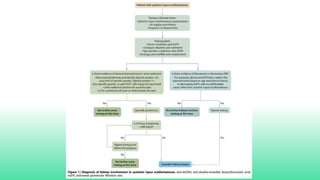
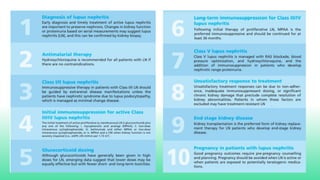
• Lupus Nephritis (LN) - diagnosed by a kidney biopsy (gold standard)
• Six classes based on a classification system by the International Society of Nephrology and Renal
Pathology Society (ISN/RPS)
• Treatment strategies guided not only by histology but also by clinical parameters like proteinuria and
eGFR
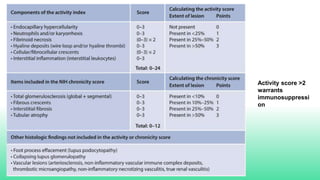
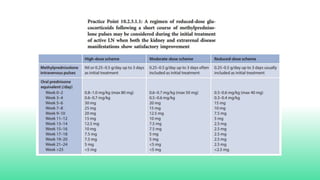
Activity score >2
warrants
immunosuppressi
on
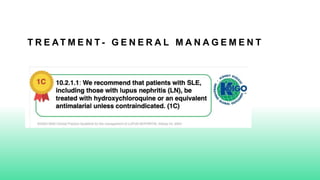
T R E AT M E N T - G E N E R A L M A N A G E M E N T
B E N E F I T S O F A N T I M A L A R I A L S
• Decreasing flare rates
• Higher response rates to immunosuppression therapy
• Slows progression of kidney disease
• Lowers incidence of cardiovascular and thrombotic events in patients with antiphospholipid
antibodies
• Less organ damage, improved lipid profile, and better preservation of bone mass.
• Starting dose of hydroxychloroquine is around 5 mg/kg/d (2.3 mg/kg/d for chloroquine)
• If eGFR <30 ml/min per 1.73 m2 , the dose of hydroxychloroquine should be reduced by >25%
• In pregnancy - decrease the lupus activity and a satisfactory safety profile in both the mother and the
fetus
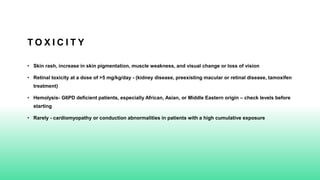
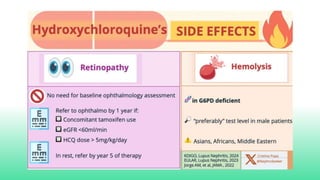
T O X I C I T Y
• Skin rash, increase in skin pigmentation, muscle weakness, and visual change or loss of vision
• Retinal toxicity at a dose of >5 mg/kg/day - (kidney disease, preexisting macular or retinal disease, tamoxifen
treatment)
• Hemolysis- G6PD deficient patients, especially African, Asian, or Middle Eastern origin – check levels before
starting
• Rarely - cardiomyopathy or conduction abnormalities in patients with a high cumulative exposure
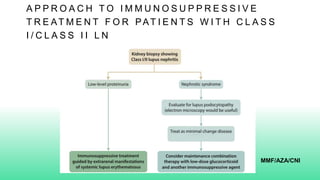
A P P R O A C H T O I M M U N O S U P P R E S S I V E
T R E AT M E N T F O R PAT I E N T S W I T H C L A S S
I / C L A S S I I L N
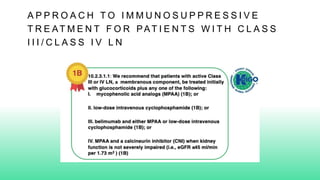
MMF/AZA/CNI
A P P R O A C H T O I M M U N O S U P P R E S S I V E
T R E AT M E N T F O R PAT I E N T S W I T H C L A S S
I I I / C L A S S I V L N
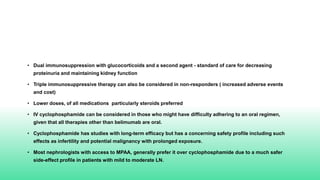
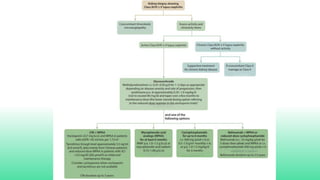
• Dual immunosuppression with glucocorticoids and a second agent - standard of care for decreasing
proteinuria and maintaining kidney function
• Triple immunosuppressive therapy can also be considered in non-responders ( increased adverse events
and cost)
• Lower doses, of all medications particularly steroids preferred
• IV cyclophosphamide can be considered in those who might have difficulty adhering to an oral regimen,
given that all therapies other than belimumab are oral.
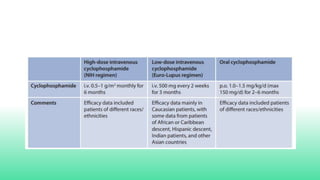
• Cyclophosphamide has studies with long-term efficacy but has a concerning safety profile including such
effects as infertility and potential malignancy with prolonged exposure.
• Most nephrologists with access to MPAA, generally prefer it over cyclophosphamide due to a much safer
side-effect profile in patients with mild to moderate LN.
• Reduced-dose i.v. cyclophosphamide has the most favorable immediate toxicity profile
among the 3 cyclophosphamide regimens.
• The risk of future hematologic malignancy is related to total lifetime exposure (>36 g), as is
myelofibrosis (>80g).
• Total lifetime exposure plus age constitutes a significant risk factor for premature ovarian
failure (>7.5–15g/m2 for young to older pediatric patients, respectively;300 mg/kg for
adults)
O T H E R R E C O M M E N D AT I O N S
• Intravenous cyclophosphamide can be used as the initial therapy for active Class III and
Class IV LN in patients who may have difficulty adhering to an oral regimen
• An MPAA-based regimen is the preferred initial therapy of proliferative LN for patients at
high risk of infertility, such as patients who have a moderate-to-high prior
cyclophosphamide exposure.
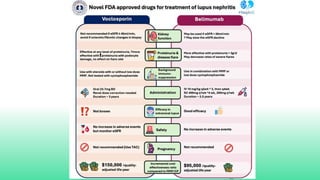
• Initial therapy with an immunosuppressive regimen that includes a CNI (voclosporin,
tacrolimus, or cyclosporine) may be preferred in patients with relatively preserved kidney
function and nephrotic range proteinuria likely due to extensive podocyte injury, as well as
patients who cannot tolerate standard-dose MPAA or are unfit for or will not use
cyclophosphamide based regimens.
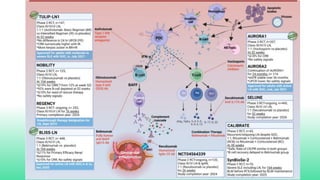
C N I
• CNIs reduce IL-2 transcription and T lymphocyte proliferation and have a direct modulatory effect
on podocyte cytoskeleton, thereby reducing proteinuria due to podocyte injury
• Cyclosporin, TAC, Voclosporin
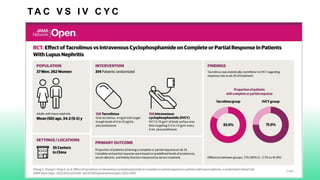
TA C V S I V C Y C
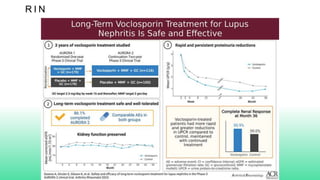
R I N
• Advantages – No need of trough levels
• Disavantage – Cost, contraindicated in preganancy
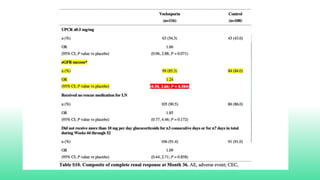
• Voclosporin not specifically recommended ahead of tacrolimus by KDIGO
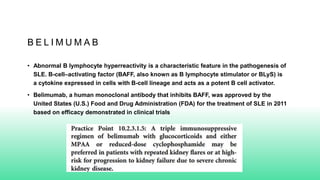
B E L I M U M A B
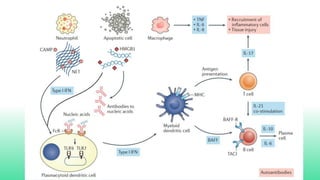
• Abnormal B lymphocyte hyperreactivity is a characteristic feature in the pathogenesis of
SLE. B-cell–activating factor (BAFF, also known as B lymphocyte stimulator or BLyS) is
a cytokine expressed in cells with B-cell lineage and acts as a potent B cell activator.
• Belimumab, a human monoclonal antibody that inhibits BAFF, was approved by the
United States (U.S.) Food and Drug Administration (FDA) for the treatment of SLE in 2011
based on efficacy demonstrated in clinical trials
C AV E AT S
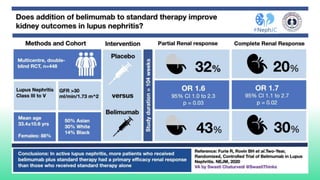
• The proteinuria threshold was changed mid-trial from 0.5 to 0.7 grams/day and if it remained, BLISS-
LN would have been a negative trial
• A secondary analysis showed the overall increase in PERR and complete response rate (CRR) when
belimumab was added to standard therapy was attributed to patients with a proliferative histologic
component, while there was no observed treatment difference associated with belimumab in patients
with class V LN
• Even if BLISS-LN was not convincing, patients treated with the belimumab-containing triple
immunosuppressive regimen had lower rates of adverse kidney outcomes
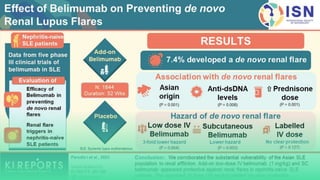
• An analysis of 5 phase 3 RCTs (low dose belimumab as add-on to standard of care vs placebo)
showed belimumab appeared protective against renal flares in nephritis-naive patients with SLE
• Other therapies, such as azathioprine or leflunomide combined with glucocorticoids, may
be considered for the recommended initial drugs for proliferative LN in situations of
patient intolerance, lack of availability, and/or excessive cost of standard drugs, but these
alternatives may be associated with inferior efficacy, including increased rate of disease
flares and/or increased incidence of drug toxicities
• Newer biologic and non-biologic therapies are under development and may offer future
options for the treatment of active LN.
• Rituximab may be considered for patients with persistent disease activity or inadequate
response to initial standard-of-care therapy
M A I N T E N A N C E T H E R A P Y F O R C L A S S I I I
A N D C L A S S I V L U P U S N E P H R I T I S
• At the end of initial therapy, only about 10%–40% of patients achieve complete response
as defined by clinical parameters and approximately 20% achieve complete histologic
remission
• LN relapses frequently, and relapses predispose patients to additional kidney damage and
progression to kidney failure.
• Ongoing treatment is therefore needed to consolidate initial responses into more complete
and sustained responses, and to prevent disease flares
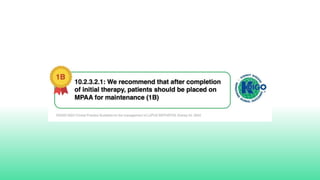
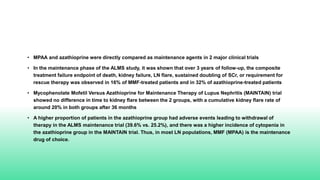
• MPAA and azathioprine were directly compared as maintenance agents in 2 major clinical trials
• In the maintenance phase of the ALMS study, it was shown that over 3 years of follow-up, the composite
treatment failure endpoint of death, kidney failure, LN flare, sustained doubling of SCr, or requirement for
rescue therapy was observed in 16% of MMF-treated patients and in 32% of azathioprine-treated patients
• Mycophenolate Mofetil Versus Azathioprine for Maintenance Therapy of Lupus Nephritis (MAINTAIN) trial
showed no difference in time to kidney flare between the 2 groups, with a cumulative kidney flare rate of
around 20% in both groups after 36 months
• A higher proportion of patients in the azathioprine group had adverse events leading to withdrawal of
therapy in the ALMS maintenance trial (39.6% vs. 25.2%), and there was a higher incidence of cytopenia in
the azathioprine group in the MAINTAIN trial. Thus, in most LN populations, MMF (MPAA) is the maintenance
drug of choice.
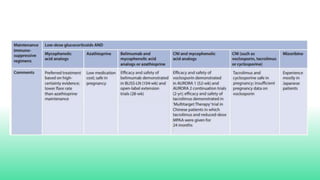
• Maintenance immunosuppression should be continued ≥36 months for most patients with a proliferative GN
(class III/IV).
• It is unclear when it is safe to stop therapy – reprat kidney biopsy can be considered
• Steroids should be tapered to the lowest possible dose that controls LN and systemic manifestations
• Discontinuation of steroids can be considered if patients have maintained complete clinical repsonse for >
12 months
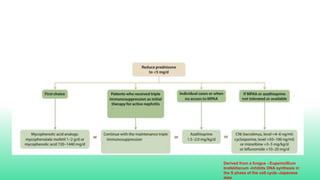
Derived from a fungus - Eupenicillium
brefeldianum -inhibits DNA synthesis in
the S phase of the cell cycle.-Japanese
data
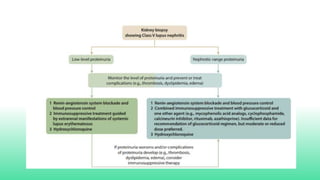
A S U G G E S T E D A P P R O A C H T O T H E
M A N A G E M E N T O F PAT I E N T S W I T H P U R E
C L A S S V L N
• Class V LN (membranous lupus nephritis) accounts for 5%–10% of all LN cases.
• Long-term follow-up data show that 10%–30% of patients with class V LN progress to
kidney failure and the risk of progressive CKD is associated with the severity of
proteinuria.
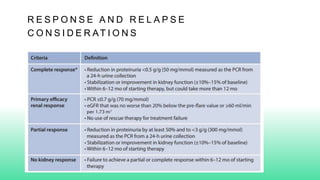
R E S P O N S E A N D R E L A P S E
C O N S I D E R AT I O N S
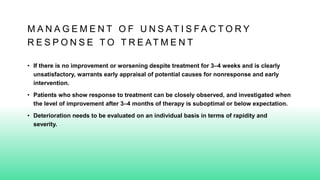
M A N A G E M E N T O F U N S AT I S F A C T O R Y
R E S P O N S E T O T R E AT M E N T
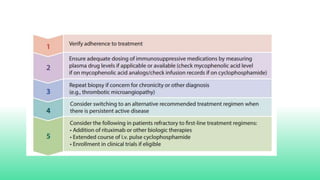
• If there is no improvement or worsening despite treatment for 3–4 weeks and is clearly
unsatisfactory, warrants early appraisal of potential causes for nonresponse and early
intervention.
• Patients who show response to treatment can be closely observed, and investigated when
the level of improvement after 3–4 months of therapy is suboptimal or below expectation.
• Deterioration needs to be evaluated on an individual basis in terms of rapidity and
severity.
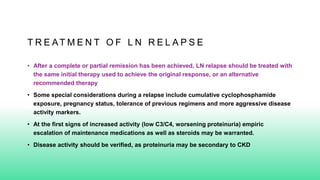
T R E AT M E N T O F L N R E L A P S E
• After a complete or partial remission has been achieved, LN relapse should be treated with
the same initial therapy used to achieve the original response, or an alternative
recommended therapy
• Some special considerations during a relapse include cumulative cyclophosphamide
exposure, pregnancy status, tolerance of previous regimens and more aggressive disease
activity markers.
• At the first signs of increased activity (low C3/C4, worsening proteinuria) empiric
escalation of maintenance medications as well as steroids may be warranted.
• Disease activity should be verified, as proteinuria may be secondary to CKD
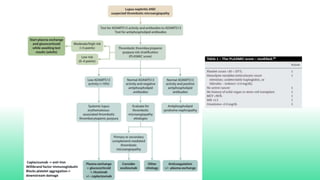
L U P U S N E P H R I T I S A N D T H R O M B O T I C
M I C R O A N G I O PAT H Y
• TMA is a pathologic description of vascular endothelial injury secondary to various
etiologies
• It often occurs concurrently with another form of LN (generally class III/IV disease)
• Causes - thrombotic thrombocytopenic purpura (TTP), antiphospholipid syndrome (APS),
• and complement-mediated TMA
Caplacizumab -> anti-Von
Willibrand factor immunoglobulin
Blocks platelet aggregation->
downstream damage
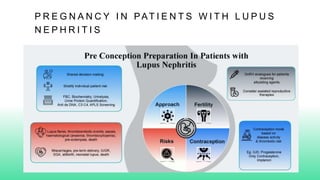
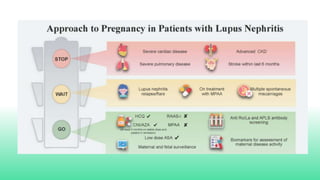
P R E G N A N C Y I N PAT I E N T S W I T H L U P U S
N E P H R I T I S
• Patients should attempt to avoid pregnancy until >6 months remission
• Hydroxychloroquine and low-dose aspirin (< 16 weeks gestation) can be used to decrease
complications during pregnancy
• Use of hydroxychloroquine has been associated with decreased SLE activity during
pregnancy
• Glucocorticoids, hydroxychloroquine, azathioprine, tacrolimus, and cyclosporine are
considered “safe” immunosuppressive treatments during pregnancy
• There is currently limited evidence for the newer agents (belimumab and voclosporin)
• Animal studies did not show additional birth defects with belimumab In humans, the
evidence is conflicting
• Voclosporin formulation contains alcohol, and the current recommendation is that
voclosporin should be avoided in pregnant and lactating patients
T R E AT M E N T O F L U P U S N E P H R I T I S I N
C H I L D R E N
• Treat pediatric patients with LN using immunosuppression regimens similar to those used
in adults
• Should consider issues like growth, fertility, and psychosocial factors, when devising the
therapy plan
M A N A G E M E N T O F L U P U S PAT I E N T S W I T H
K I D N E Y F A I L U R E
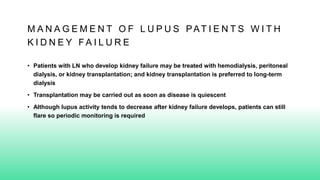
• Patients with LN who develop kidney failure may be treated with hemodialysis, peritoneal
dialysis, or kidney transplantation; and kidney transplantation is preferred to long-term
dialysis
• Transplantation may be carried out as soon as disease is quiescent
• Although lupus activity tends to decrease after kidney failure develops, patients can still
flare so periodic monitoring is required
LN KDIGO 2xcccssdtrffgghgggbbbbh024.pptx

LN KDIGO 2xcccssdtrffgghgggbbbbh024.pptx

  • 1.
    L U PU S N E P H R I T I S K D I G O G U I D E L I N E S 2 0 2 4
  • 2.
    I N TR O D U C T I O N • Lifetime incidence of lupus nephritis (LN) is 20% – 60% • Kidney involvement in SLE has been associated with higher mortality, especially for patients progressing to kidney failure • The ultimate goal of treating LN is to preserve kidney function and reduce the morbidity and mortality associated with chronic kidney disease (CKD) and kidney failure, while minimizing medication-associated toxicities
  • 6.
    K D IG O 2 0 2 4 G U I D E L I N E S
  • 8.
    D I AG N O S I S O F L U P U S N E P H R I T I S • Lupus Nephritis (LN) - diagnosed by a kidney biopsy (gold standard) • Six classes based on a classification system by the International Society of Nephrology and Renal Pathology Society (ISN/RPS) • Treatment strategies guided not only by histology but also by clinical parameters like proteinuria and eGFR
  • 10.
  • 12.
    T R EAT M E N T - G E N E R A L M A N A G E M E N T
  • 13.
    B E NE F I T S O F A N T I M A L A R I A L S • Decreasing flare rates • Higher response rates to immunosuppression therapy • Slows progression of kidney disease • Lowers incidence of cardiovascular and thrombotic events in patients with antiphospholipid antibodies • Less organ damage, improved lipid profile, and better preservation of bone mass. • Starting dose of hydroxychloroquine is around 5 mg/kg/d (2.3 mg/kg/d for chloroquine) • If eGFR <30 ml/min per 1.73 m2 , the dose of hydroxychloroquine should be reduced by >25% • In pregnancy - decrease the lupus activity and a satisfactory safety profile in both the mother and the fetus
  • 14.
    T O XI C I T Y • Skin rash, increase in skin pigmentation, muscle weakness, and visual change or loss of vision • Retinal toxicity at a dose of >5 mg/kg/day - (kidney disease, preexisting macular or retinal disease, tamoxifen treatment) • Hemolysis- G6PD deficient patients, especially African, Asian, or Middle Eastern origin – check levels before starting • Rarely - cardiomyopathy or conduction abnormalities in patients with a high cumulative exposure
  • 17.
    A P PR O A C H T O I M M U N O S U P P R E S S I V E T R E AT M E N T F O R PAT I E N T S W I T H C L A S S I / C L A S S I I L N MMF/AZA/CNI
  • 18.
    A P PR O A C H T O I M M U N O S U P P R E S S I V E T R E AT M E N T F O R PAT I E N T S W I T H C L A S S I I I / C L A S S I V L N
  • 19.
    • Dual immunosuppressionwith glucocorticoids and a second agent - standard of care for decreasing proteinuria and maintaining kidney function • Triple immunosuppressive therapy can also be considered in non-responders ( increased adverse events and cost) • Lower doses, of all medications particularly steroids preferred • IV cyclophosphamide can be considered in those who might have difficulty adhering to an oral regimen, given that all therapies other than belimumab are oral. • Cyclophosphamide has studies with long-term efficacy but has a concerning safety profile including such effects as infertility and potential malignancy with prolonged exposure. • Most nephrologists with access to MPAA, generally prefer it over cyclophosphamide due to a much safer side-effect profile in patients with mild to moderate LN.
  • 21.
    • Reduced-dose i.v.cyclophosphamide has the most favorable immediate toxicity profile among the 3 cyclophosphamide regimens. • The risk of future hematologic malignancy is related to total lifetime exposure (>36 g), as is myelofibrosis (>80g). • Total lifetime exposure plus age constitutes a significant risk factor for premature ovarian failure (>7.5–15g/m2 for young to older pediatric patients, respectively;300 mg/kg for adults)
  • 23.
    O T HE R R E C O M M E N D AT I O N S • Intravenous cyclophosphamide can be used as the initial therapy for active Class III and Class IV LN in patients who may have difficulty adhering to an oral regimen • An MPAA-based regimen is the preferred initial therapy of proliferative LN for patients at high risk of infertility, such as patients who have a moderate-to-high prior cyclophosphamide exposure. • Initial therapy with an immunosuppressive regimen that includes a CNI (voclosporin, tacrolimus, or cyclosporine) may be preferred in patients with relatively preserved kidney function and nephrotic range proteinuria likely due to extensive podocyte injury, as well as patients who cannot tolerate standard-dose MPAA or are unfit for or will not use cyclophosphamide based regimens.
  • 24.
    C N I •CNIs reduce IL-2 transcription and T lymphocyte proliferation and have a direct modulatory effect on podocyte cytoskeleton, thereby reducing proteinuria due to podocyte injury • Cyclosporin, TAC, Voclosporin
  • 25.
    TA C VS I V C Y C
  • 26.
  • 28.
    • Advantages –No need of trough levels • Disavantage – Cost, contraindicated in preganancy • Voclosporin not specifically recommended ahead of tacrolimus by KDIGO
  • 29.
    B E LI M U M A B • Abnormal B lymphocyte hyperreactivity is a characteristic feature in the pathogenesis of SLE. B-cell–activating factor (BAFF, also known as B lymphocyte stimulator or BLyS) is a cytokine expressed in cells with B-cell lineage and acts as a potent B cell activator. • Belimumab, a human monoclonal antibody that inhibits BAFF, was approved by the United States (U.S.) Food and Drug Administration (FDA) for the treatment of SLE in 2011 based on efficacy demonstrated in clinical trials
  • 31.
    C AV EAT S • The proteinuria threshold was changed mid-trial from 0.5 to 0.7 grams/day and if it remained, BLISS- LN would have been a negative trial • A secondary analysis showed the overall increase in PERR and complete response rate (CRR) when belimumab was added to standard therapy was attributed to patients with a proliferative histologic component, while there was no observed treatment difference associated with belimumab in patients with class V LN • Even if BLISS-LN was not convincing, patients treated with the belimumab-containing triple immunosuppressive regimen had lower rates of adverse kidney outcomes • An analysis of 5 phase 3 RCTs (low dose belimumab as add-on to standard of care vs placebo) showed belimumab appeared protective against renal flares in nephritis-naive patients with SLE
  • 35.
    • Other therapies,such as azathioprine or leflunomide combined with glucocorticoids, may be considered for the recommended initial drugs for proliferative LN in situations of patient intolerance, lack of availability, and/or excessive cost of standard drugs, but these alternatives may be associated with inferior efficacy, including increased rate of disease flares and/or increased incidence of drug toxicities • Newer biologic and non-biologic therapies are under development and may offer future options for the treatment of active LN. • Rituximab may be considered for patients with persistent disease activity or inadequate response to initial standard-of-care therapy
  • 36.
    M A IN T E N A N C E T H E R A P Y F O R C L A S S I I I A N D C L A S S I V L U P U S N E P H R I T I S • At the end of initial therapy, only about 10%–40% of patients achieve complete response as defined by clinical parameters and approximately 20% achieve complete histologic remission • LN relapses frequently, and relapses predispose patients to additional kidney damage and progression to kidney failure. • Ongoing treatment is therefore needed to consolidate initial responses into more complete and sustained responses, and to prevent disease flares
  • 38.
    • MPAA andazathioprine were directly compared as maintenance agents in 2 major clinical trials • In the maintenance phase of the ALMS study, it was shown that over 3 years of follow-up, the composite treatment failure endpoint of death, kidney failure, LN flare, sustained doubling of SCr, or requirement for rescue therapy was observed in 16% of MMF-treated patients and in 32% of azathioprine-treated patients • Mycophenolate Mofetil Versus Azathioprine for Maintenance Therapy of Lupus Nephritis (MAINTAIN) trial showed no difference in time to kidney flare between the 2 groups, with a cumulative kidney flare rate of around 20% in both groups after 36 months • A higher proportion of patients in the azathioprine group had adverse events leading to withdrawal of therapy in the ALMS maintenance trial (39.6% vs. 25.2%), and there was a higher incidence of cytopenia in the azathioprine group in the MAINTAIN trial. Thus, in most LN populations, MMF (MPAA) is the maintenance drug of choice.
  • 39.
    • Maintenance immunosuppressionshould be continued ≥36 months for most patients with a proliferative GN (class III/IV). • It is unclear when it is safe to stop therapy – reprat kidney biopsy can be considered • Steroids should be tapered to the lowest possible dose that controls LN and systemic manifestations • Discontinuation of steroids can be considered if patients have maintained complete clinical repsonse for > 12 months
  • 40.
    Derived from afungus - Eupenicillium brefeldianum -inhibits DNA synthesis in the S phase of the cell cycle.-Japanese data
  • 42.
    A S UG G E S T E D A P P R O A C H T O T H E M A N A G E M E N T O F PAT I E N T S W I T H P U R E C L A S S V L N • Class V LN (membranous lupus nephritis) accounts for 5%–10% of all LN cases. • Long-term follow-up data show that 10%–30% of patients with class V LN progress to kidney failure and the risk of progressive CKD is associated with the severity of proteinuria.
  • 44.
    R E SP O N S E A N D R E L A P S E C O N S I D E R AT I O N S
  • 45.
    M A NA G E M E N T O F U N S AT I S F A C T O R Y R E S P O N S E T O T R E AT M E N T • If there is no improvement or worsening despite treatment for 3–4 weeks and is clearly unsatisfactory, warrants early appraisal of potential causes for nonresponse and early intervention. • Patients who show response to treatment can be closely observed, and investigated when the level of improvement after 3–4 months of therapy is suboptimal or below expectation. • Deterioration needs to be evaluated on an individual basis in terms of rapidity and severity.
  • 47.
    T R EAT M E N T O F L N R E L A P S E • After a complete or partial remission has been achieved, LN relapse should be treated with the same initial therapy used to achieve the original response, or an alternative recommended therapy • Some special considerations during a relapse include cumulative cyclophosphamide exposure, pregnancy status, tolerance of previous regimens and more aggressive disease activity markers. • At the first signs of increased activity (low C3/C4, worsening proteinuria) empiric escalation of maintenance medications as well as steroids may be warranted. • Disease activity should be verified, as proteinuria may be secondary to CKD
  • 48.
    L U PU S N E P H R I T I S A N D T H R O M B O T I C M I C R O A N G I O PAT H Y • TMA is a pathologic description of vascular endothelial injury secondary to various etiologies • It often occurs concurrently with another form of LN (generally class III/IV disease) • Causes - thrombotic thrombocytopenic purpura (TTP), antiphospholipid syndrome (APS), • and complement-mediated TMA
  • 49.
    Caplacizumab -> anti-Von Willibrandfactor immunoglobulin Blocks platelet aggregation-> downstream damage
  • 50.
    P R EG N A N C Y I N PAT I E N T S W I T H L U P U S N E P H R I T I S
  • 51.
    • Patients shouldattempt to avoid pregnancy until >6 months remission • Hydroxychloroquine and low-dose aspirin (< 16 weeks gestation) can be used to decrease complications during pregnancy • Use of hydroxychloroquine has been associated with decreased SLE activity during pregnancy • Glucocorticoids, hydroxychloroquine, azathioprine, tacrolimus, and cyclosporine are considered “safe” immunosuppressive treatments during pregnancy • There is currently limited evidence for the newer agents (belimumab and voclosporin) • Animal studies did not show additional birth defects with belimumab In humans, the evidence is conflicting • Voclosporin formulation contains alcohol, and the current recommendation is that voclosporin should be avoided in pregnant and lactating patients
  • 53.
    T R EAT M E N T O F L U P U S N E P H R I T I S I N C H I L D R E N • Treat pediatric patients with LN using immunosuppression regimens similar to those used in adults • Should consider issues like growth, fertility, and psychosocial factors, when devising the therapy plan
  • 54.
    M A NA G E M E N T O F L U P U S PAT I E N T S W I T H K I D N E Y F A I L U R E • Patients with LN who develop kidney failure may be treated with hemodialysis, peritoneal dialysis, or kidney transplantation; and kidney transplantation is preferred to long-term dialysis • Transplantation may be carried out as soon as disease is quiescent • Although lupus activity tends to decrease after kidney failure develops, patients can still flare so periodic monitoring is required

Editor's Notes

  • #21 low-dose cyclophosphamide is associated with fewer adverse events (such as infection, malignancy, leukopenia, and bone toxicity121; although in some studies, the efficacy also appeared lower than that of the high-dose regimen)
  • #23 KDIGO advises to use low dose steroid regimen whenever possible dose steroid- lymphoproliferative disorder, skin cancer and steroid AE
  • #26 The guideline suggests to use a CNI based regimen in Preserved GFR nephrotic presentation with extensive FPE Can't tolerate full dose MMF/Not willing or fit for cyclophosphamide Evidence Tac vs iv cyclo here :
  • #27 AURORA 1 was a multinational phase 3 trial in patients with eGFR > 45 ml/min/1.72m2. (Rovin BH et al, 2021) Proteinuria decreased at 1 year compared with placebo (OR 2.65, 95% CI, 1.64-4.27). Patients who completed AURORA 1 were then eligible to move on to AURORA 2, an additional 2 years of blinded therapy versus placebo. (Saxena A, et al, 2024) AURORA 2 showed sustained reduction of proteinuria with voclosporin (similar to other CNIs), with no concerning safety signals. Unfortunately, over the 3 years total, there was no significant improvement in eGFR slope over placebo. Finally, as pointed out in the NephJC discussion of AURORA, practitioners should consider whether the change in a single amino acid in voclosporin from the structure of cyclosporin is worth the cost. Some may point to the lack of need for monitoring of levels and subsequent dosage adjustment as a potential cost savings for voclosporin, but this hardly balances with the cost difference of the medication itself. Voclosporin has yet to elevate itself over other CNIs and it is not specifically recommended ahead of tacrolimus by these guidelines. 
  • #30 Complete renal response at week 104  UPCR <0.5 eGFR that was no worse than 10% below the pre-flare value or ≥90 ml per minute per 1.73 m2 and  No rescue therapy. Primary efficacy renal response at week 52. Time to a renal-related event or death. An ordinal renal response without urinary sediment. Partial Renal Response(PRR): Estimated GFR no more than 10% below the baseline value or within normal range AND ≥ 50% decrease in the urine protein:creatinine ratio with one of the following: a urine protein:creatinine ratio of < 1.0, if the baseline ratio was ≤3.0 OR a urine protein:creatinine ratio of < 3.0, if the baseline ratio was >3.0 AND No receipt of prohibited (rescue) therapy resulting in treatment failure
  • #34 Cyclophosphamide & MPAA maintain their status with Class 1b recommendations as initial rx #NephJC IV cyclophosphamide preferable where adherence to oral rx doubtful MPAA in those with high risk of infertility (eg mod to high cycloph