Lecture. Cirrhosis
Department of Faculty Therapy, BSMU
Lecturer prof. Mavzyutova G.A.
Liver. Anatomical and morphological features. The
structure of the liver lobule
Cirrhosis of the liver. Definition
 Diffuse pathological process,
accompanied by a violation of the
normal architectonics of the organ,
the formation of nodes of the
regeneration of the parenchyma,
fibrous septa, leading to the
restructuring of the vascular system
of the liver
Cirrhosis of the liver. Relevance
ей органов пищеварения.
 About 700 thousand annually – die
from cirrhosis of the liver
 Liver cirrhosis and fibrhosis are the
cause of 90-95% of chronic liver
disease deaths
Etiology.
 polyetiological disease, but the main causes are
 Viruses: HBV, HCV, HDV
 B. Alcohol
 B. Other factors: drugs, autoimmune
mechanisms (CAH), metabolic diseases
(hemochromatosis, Konovalov-Wilson's disease,
etc.) occupy a small proportion in the etiology
 cryptogenic - the cause is not established in
about 10-20% of cases
Etiology of cirrhosis. Alcohol
 The causes of cirrhosis are
 Acute alcoholic hepatitis
 Alcoholic steatohepatosis
 It develops in 15-20% of people who
have consumed 60-80g of ethanol in
men and 40-50g of ethanol in women
daily or often for many years
Typical
appearance of a
patient with
alcoholic
cirrhosis of the
liver with portal
hypertension
Pathanatomy for cirrhosis of the liver (large-
node Cyr.)
Morphology in cirrhosis
 and nodes-regenerates (false slices) of various sizes;
 b - wide fields of connective tissue with several triads.
Picrofuchsin stain according to Van Gieson.
Histological changes in the liver parenchyma with
cirrhosis
Pathogenesis of cyrrhosis
Viruses. alc. etc
Necrosis of hepatocytes
Neo Fibrillogenesis
Violation of the liver
architectonics
Pathogenesis
 Neofibrillogenesis (function of
perisinusoidal cells of the ITO) is an excess
fibroplastic process: nodulation, formation
of connective tissue septa connecting the
central veins and portal tracts,
fragmentation of the hepatic lobules into
false.
 Anastomoses bypass blood
Pathogenesis of C. Anastomoses bypass
blood
Pathogenesis
 Blood bypass by anastomoses leads to
ischemia and necrosis of hepatocytes
 Hepatocyte breakdown products stimulate
regenerative processes - neofibrillogenesis
 A vicious circle is formed, the structure
and functions of the liver are disrupted,
portal hypertension develops
Classification of liver cirrhosis (Los Angeles,
1994). By etiology:
 Viral
 Alcoholic
 Autoimmune
 Drug
 Primary biliary (cholestatic)
 Secondary biliary (extrahepatic bile duct
obstruction)
 Stagnant (cardiac)
 Metabolic (hemochromatosis, Konovalov-Wilson's
disease, ά1-antitrypsin deficiency, etc.)
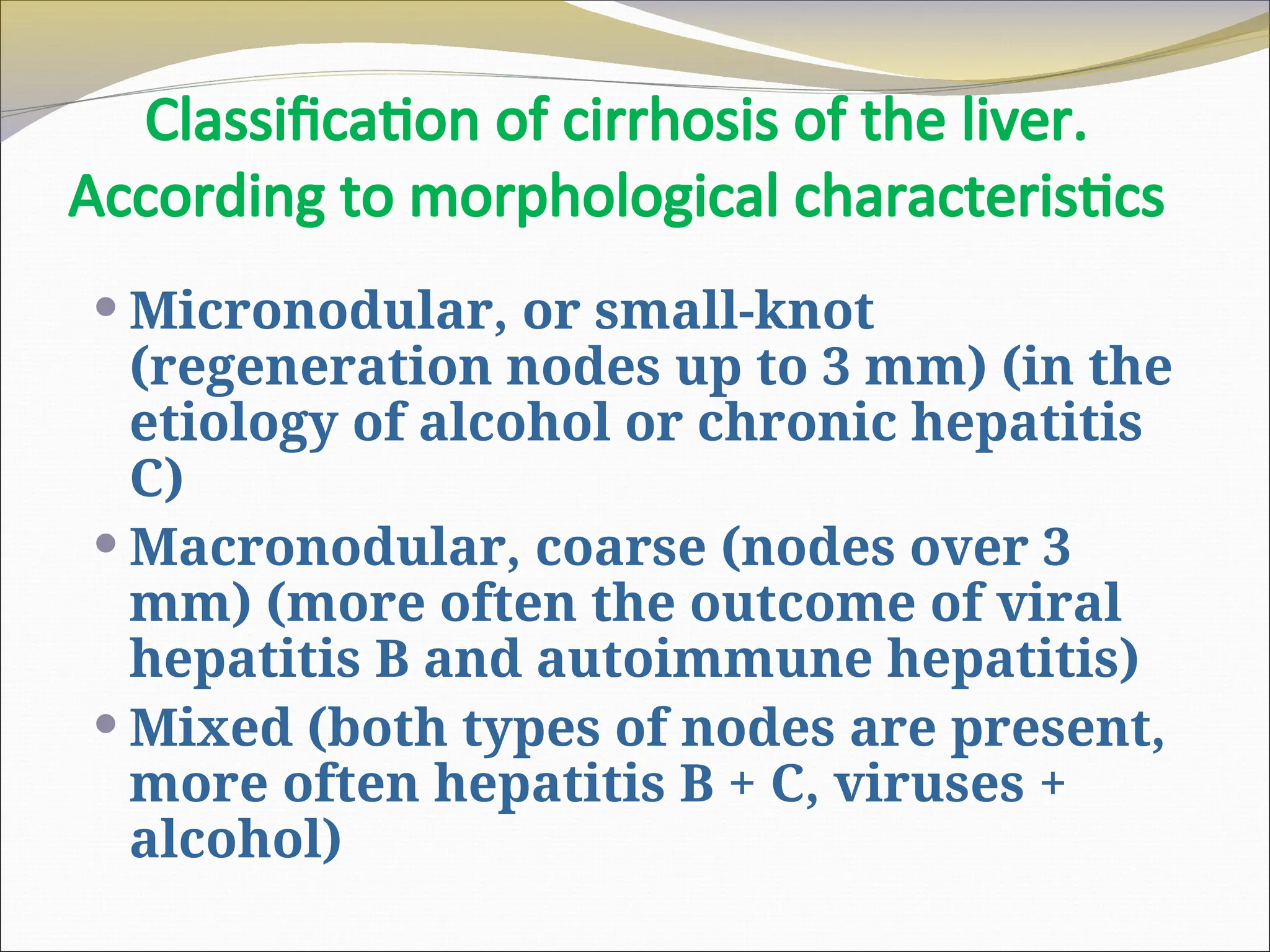
Classification of cirrhosis of the liver.
According to morphological characteristics
 Micronodular, or small-knot
(regeneration nodes up to 3 mm) (in the
etiology of alcohol or chronic hepatitis
C)
 Macronodular, coarse (nodes over 3
mm) (more often the outcome of viral
hepatitis B and autoimmune hepatitis)
 Mixed (both types of nodes are present,
more often hepatitis B + C, viruses +
alcohol)
 Stage: initial, severe clinical
manifestations, terminal
 Phase:
 active (minimal, moderate, high),
inactive
 The degree of functional impairment:
 light, medium, heavy
Classification of cirrhosis
According to clinical characteristics
Classification of cirrhosis of the liver. Clinical
manifestations
 The severity of portal hypertension:
 hidden, moderate, pronounced; subhepatic,
intra-, suprahepatic, mixed
 The presence of syndromes:
 hepatolienal, hepatorenal, hepatopancreatic
 Complications:
 edematous ascites syndrome, hemorrhagic
syndrome, hypersplenism, hepatic
encephalopathy (coma)
Clinic of cirrhosis
 Hepatitis syndromes (cytolytic,
mesenchymal-inflammatory,
cholestatic, hemorrhagic, dyspeptic,
asthenovegetative) persist, but their
severity changes (more or less)
 New cirrhosis specific syndromes
appear
Clinic. Nonspecific syndromes
 There is a decrease in the manifestations of the
cytolytic syndrome (viral activity decreases)
 An increase in cholestatic syndrome (a change
in the architectonics and function of
hepatocytes)
 - An increase in hemorrhagic (portal
hypertension and impaired blood formation),
 It is possible to attach a pain syndrome (severe
hepatomegaly, spasm, dysgenia, peritonitis,
ischemia, portal vein thrombosis, intense
ascites)
Clinic. Specific syndromes
 Portal hypertension: port-caval and other
anastomoses, varicose veins of the
esophagus, stomach, rectum, ascites,
anasarca,
 Hepatomegaly (in the late stages,
reduction in size) - in 80-90% of patients
and liver compaction
Clinic of cirrhosis of the liver. Specific
syndromes
 Hepatocyte deficiency syndrome:
 violation of protein-synthetic, detoxification,
hormone-synthetic, hemostatic, digestive and
other functions. It manifests itself in weight loss
in patients with manifestations of protein, fatty
degeneration, gynecomastia in men,
telangiectasias, palmar erythema, hemorrhagic
manifestations, disturbances in the nervous
system, changes in hematopoiesis, etc.
Clinic. Specific syndromes
 Splenomegaly (portal hypertension),
which turns into hypersplenism
(impaired hematopoietic function of
the spleen)
 Hepatorenal, hepatopancreatic
syndromes (shunting of the kidneys,
pancreas leads to impaired function)
Clinic. Early reliable signs of cyrrhosis
 Teleangiectasias, palmar erythema,
gynecomastia (breast enlargement in
men), hepatomegaly with a
compacted, scalloped edge of the
liver
 History of hepatitis, alcoholism,
periodic flatulence, violation of the
color of urine (darkening), feces
(lightening)
Palpation of the liver - the first stage of
diagnosis
Small signs of cirrhosis. Palmar erythema
Small signs of cirrhosis. Spider veins.
Teleangiectasia
Clinic. Late manifestations
 Varicose veins, splenomegaly. Ascites,
anasarca, "the head of Medusa."
 Trophological insufficiency is a consequence
of a violation of the synthetic function of the
liver, an imbalance in the intake and
consumption of nutrients
 Kwashiorkor (protein deficiency in the blood
and internal organs).
 Insanity (depletion of the somatic pool of
proteins and fat stores)).
Patient with
portal
hypertension
after
laparocentesis
Diagnosis of cirrhosis of the liver. Blood
biochemistry. Signs of hepatocellular failure
 Decrease in total protein, albumin. The
increase in globulins.
 Increase in protein sedimentary samples.
Thymol, sublimate (10 or more times)
 Increased levels of blood cholestasis markers
- bilirubin, alkaline phosphatase, GGTP
 increase in blood cholinesterase level,
change in bromosulfalein test (delay in its
release of more than 25% at N 5%)
 Violation of haemostasis: a decrease in IPT
proportional to the severity, an increase in ,
etc.
Biomarkers in the diagnosis of liver fibrosis
 FT (fibrotests - in the blood serum determine the
content
 - total bilirubin, GGTP, a2-macroglobulin, apoprotein A1
and haptoglobin
 hyaluronic acid
 the severity of deviations of indicators characterizes
fibrosis (F2-F4) FT (fibrotests - in the blood serum
determine the content
 - total bilirubin, GGTP, a2-macroglobulin, apoprotein A1
and haptoglobin
 hyaluronic acid
 the severity of deviations of indicators characterizes
fibrosis (F2-F4)
Severe
hepatocellu
lar
(protein-
fat) failure
- cachexia
in a patient
with
cirrhosis
Diagnosis of liver cirrhosis
 FGDS (visualization of varicose veins, node sizes),
 Ultrasound (determination of the size and structure
of the liver, identification of large regeneration
nodes, hepatosplenomegaly),
 CT of the liver and biliary tract and ERCP in the case
of a differential diagnosis of biliary CP,
 Liver and spleen scan
 Laparoscopy with puncture biopsy of the liver -
verification of the diagnosis
 Celiacography (contrast study for vascular
imaging).
 Splenoportography is used only in case of an
upcoming shunt operation.
FGDS - portal gastropathy (varicose veins,
bleeding)
Diagnostics. Ultrasound scan
Diagnostics. Dopplerometry,
rheoelastography
 changes in the diameter and patency of
blood vessels;
 impaired blood flow in the liver
Diagnostics. Scintigraphy (the introduction of a
radioactive substance to assess the functioning of
the liver) is characteristic of:
 a decrease in the concentration of a
radioactive element (against the background
of a drop in the ability to capture and hold
such substances);
 the substance is not fixed (dysfunction of all
parts of the diseased organ);
 the substance is retained in the spleen zone;
 the drug settles in the bones of the pelvis and
spine (a critical decrease in liver function)
Diagnostics. MRT
 The study of the organ through MRI allows a
qualitative assessment of its anatomy, namely:
parameters relative to the norm, structural
leaving, location, concentration of lesions.
 - a significant decrease in the size of the organ
with its partial right-sided atrophy, so
characteristic of cirrhosis, is visible.
 allows you to track the pathological changes
occurring in the portal vein, which passes
through the liver and contains the main source of
blood supply to the organ.
CT of the liver in CP
Laparoscopy-verification of the diagnosis
 - minimally invasive surgery is necessary for
differential diagnosis. In multi-node cirrhosis,
neoplasms are visible (red or brown in color,
sizes from 3 mm), dilated veins, and
thickening of the hepatic capsule.
Laparoscopic diagnosis is performed to
confirm the diagnosis.
Cirrhosis. Rare form.
Primary biliary
 Rare prevalence (25-30 per 1 million population)
 Women aged 40 to 60 are more likely to get sick
 In pathogenesis, destructive cholangitis, - the
formation of autoantibodies to the mitochondrial
membrane of bile epithelial cells
 The main clinical syndrome is cholestatic. Blood
has a high content of cholestasis markers
(bilirubin, schf, GGTP), ALT,
 detection of antimitochondrial antibodies during
immunological examination approves the
diagnosis
Cirrhosis. Rare form.
Secondary biliary
ространенность неизвестна
 t is always secondary against the background of
long-existing cholestasis in biliary tract
obstruction (GI, calculous cholecystitis, duct
strictures, etc.)
 In the clinic, cholestatic syndrome is often
combined with pain (in the right
hypochondrium)
 Laboratory markers of cholestasis are positive,
but there are no autoantibodies in the blood
during immunological examination
 Additional methods of examination (CT,
ultrasound, ERCP) reveal obstruction of large
bile ducts
Pronounced
cholestatic
syndrome in a
patient with
secondary
biliary
cirrhosis of
the liver
Differential diagnosis of C
 Different etiology of cirrhosis are differentiated
among themselves, using viral markers and
other tests
 Liver tumor Cirrhosis-cancer (malignancy or
primary tumor) using the above criteria and
additional research methods , in this case main
diagnostic value has imm. marker –α fetoprotein
(increased serum level)
 It’s worth using the above criteria and additional
research methods
TREATMENT OF LIVER CIRRHOSIS
Etiotropic:
 elimination of alcohol;
 treatment of viral hepatitis with interferons
and nucleosides, class A (on the child-Pugh
scale), with C of group B,C-is not shown
(possible complications),
 prednisone (30-40 mg/day.), budesonide in
autoimmune hepatitis outcomes is
recommended;
 elimination of secondary cholestasis (BC).
 refusal of hepatotoxic drugs (tubazid,
methotrexate, etc.)
TREATMENT OF LIVER CIRRHOSIS
 Pathogenetic has not been developed
 Basic therapy is aimed at correcting
and controlling the main syndromes:
portal hypertension, hepatocellular
insufficiency, cholestasis,
hemorrhagic syndrome, hepatic
encephalopathy, hypersplenism,
infectious complications, prevention
and treatment of C complications
Syndromal treatment
Syndrom The aim of therapy Main measures
Portal
hyperten
sion
The treatment of
edematous -ascites
syndrome, prevention of
bleeding from varicose
veins
Diuretics – long time
Non-selective B-blockers,
nitrates
Bypass operations
Hepatoce
llular
insufficie
ncy
Regulation of protein,
fat metabolism,
supplementing the
deficiency of vitamins,
improve. metabolism
albumen,
amino acids
parenter., vitamins
trace elements,
hepatoprotectors
Syndromal treatment
Синдром Терапевтическая
цель
Основные лечебные
мероприятия
Холестаз Устранение внутри-
и внепечёночного
(хирургически)
холестаза,
связывание
желчных кислот
Гепатопротекторы
(эссенциале,
гептрал),
урсодезоксихолевая
кислота,
жирорастворимые
витамины D,E,K
Холестирамин,
энтеросорбенты
Complications of C
 Edematous ascites syndrome
 Gastrointestinal bleeding
 Hypersplenism
 Hepatic encephalopathy. Coma
 Infectious complications. Spontaneous
bacterial peritonitis
 Hepatocellular carcinoma
Patient with
decompensated
cirrhosis, ascites,
hepatocellular
insufficiency,
with hepatic
encephalopathy
Histological changes in the
liver of a patient with
hepatic encephalopathy:
Severe internal edema of
endotheliocytes, swollen
Kupffer cells form
granulomas
Treatment of C complications
Hemorrhagic syndrome
 Prevention and treatment of life-threatening
bleeding:
 Hemostatic drugs (decinone, ACC, calcium
chloride, vasopressin, somatostatin, native
plasma, blood), endoscopic coagulation,
ligation,
 embolization and sclerotherapy of varicose
veins (promising method))
Treatment of C complications
Hepatic encephalopathy
 detoxification, reduction of ammonia,
prevention of coma:
 diet with protein limitation up to 30-20 g /
day., high enemas, lactulose (dufalac);
 regulation of acid-base balance - sodium
bicarbonate, electrolytes;
 ornithine aspartate, arginine malate, etc.,
branched-chain intravenous drip, (reduce
protein catabolism, improve metabolism in
the brain)
 Plasmapheresis and other extracorporeal
methods
Treatment of complications of CP.
Hypersplenism
 treatment of anemia, elimination of
the toxic effect of the spleen on
hematopoiesis:
 Iron preparations
 methyluracil, pentoxyl,
 prednisone
 - with inefficiency - splenectomy
Treatment of Infectious Complications of C
 Intestinal decontamination,
prevention of bacterial infections:
 Antibiotics: neomycin, kanamycin
(toxicity), metronidazole, rifaximin,
ciprofloxacin
 High cleansing enemas, lactulose,
intestinal eubiotics (helak, bifi form,
linex, etc.)
Child-Pugh Prognostic Scale (CPU Severity
Assessment)
Criteria А В С
Bilirubin 28-45mkm/l 45,1-67,3 More than 67,2
Albumen More than
50%
40-50% Less 40%
Prothrombus.
PTI Index
80-110% 60-79% Less 60%
Ascites no Small
transient
Big
Torpid
Encephalo
patia
no Arises
periodically
Coma
Phlebeurysm 2mm 3-4 mm 5mm and more
Prognosis for cirrhosis
 One class A criterion - 1 point, B - 2 points, C - 3
points
 The forecast is estimated by the sum of points:
class A - 6-7 points, class B - 8-11 points, class C
- 12 or more
 Patients with LC live on average 10 years,
class B up to 5 years, class C - 1-2 years
 Patients with LC of viral etiology of class A are
subject to antiviral therapy, class B and C of
any etiology - liver transplantation
Liver cirrhosis facultative therapy.pptx

Liver cirrhosis facultative therapy.pptx

  • 1.
    Lecture. Cirrhosis Department ofFaculty Therapy, BSMU Lecturer prof. Mavzyutova G.A.
  • 2.
    Liver. Anatomical andmorphological features. The structure of the liver lobule
  • 3.
    Cirrhosis of theliver. Definition  Diffuse pathological process, accompanied by a violation of the normal architectonics of the organ, the formation of nodes of the regeneration of the parenchyma, fibrous septa, leading to the restructuring of the vascular system of the liver
  • 4.
    Cirrhosis of theliver. Relevance ей органов пищеварения.  About 700 thousand annually – die from cirrhosis of the liver  Liver cirrhosis and fibrhosis are the cause of 90-95% of chronic liver disease deaths
  • 5.
    Etiology.  polyetiological disease,but the main causes are  Viruses: HBV, HCV, HDV  B. Alcohol  B. Other factors: drugs, autoimmune mechanisms (CAH), metabolic diseases (hemochromatosis, Konovalov-Wilson's disease, etc.) occupy a small proportion in the etiology  cryptogenic - the cause is not established in about 10-20% of cases
  • 6.
    Etiology of cirrhosis.Alcohol  The causes of cirrhosis are  Acute alcoholic hepatitis  Alcoholic steatohepatosis  It develops in 15-20% of people who have consumed 60-80g of ethanol in men and 40-50g of ethanol in women daily or often for many years
  • 7.
    Typical appearance of a patientwith alcoholic cirrhosis of the liver with portal hypertension
  • 8.
    Pathanatomy for cirrhosisof the liver (large- node Cyr.)
  • 9.
    Morphology in cirrhosis and nodes-regenerates (false slices) of various sizes;  b - wide fields of connective tissue with several triads. Picrofuchsin stain according to Van Gieson.
  • 10.
    Histological changes inthe liver parenchyma with cirrhosis
  • 11.
    Pathogenesis of cyrrhosis Viruses.alc. etc Necrosis of hepatocytes Neo Fibrillogenesis Violation of the liver architectonics
  • 12.
    Pathogenesis  Neofibrillogenesis (functionof perisinusoidal cells of the ITO) is an excess fibroplastic process: nodulation, formation of connective tissue septa connecting the central veins and portal tracts, fragmentation of the hepatic lobules into false.  Anastomoses bypass blood
  • 13.
    Pathogenesis of C.Anastomoses bypass blood
  • 14.
    Pathogenesis  Blood bypassby anastomoses leads to ischemia and necrosis of hepatocytes  Hepatocyte breakdown products stimulate regenerative processes - neofibrillogenesis  A vicious circle is formed, the structure and functions of the liver are disrupted, portal hypertension develops
  • 15.
    Classification of livercirrhosis (Los Angeles, 1994). By etiology:  Viral  Alcoholic  Autoimmune  Drug  Primary biliary (cholestatic)  Secondary biliary (extrahepatic bile duct obstruction)  Stagnant (cardiac)  Metabolic (hemochromatosis, Konovalov-Wilson's disease, ά1-antitrypsin deficiency, etc.)
  • 16.
    Classification of cirrhosisof the liver. According to morphological characteristics  Micronodular, or small-knot (regeneration nodes up to 3 mm) (in the etiology of alcohol or chronic hepatitis C)  Macronodular, coarse (nodes over 3 mm) (more often the outcome of viral hepatitis B and autoimmune hepatitis)  Mixed (both types of nodes are present, more often hepatitis B + C, viruses + alcohol)
  • 18.
     Stage: initial,severe clinical manifestations, terminal  Phase:  active (minimal, moderate, high), inactive  The degree of functional impairment:  light, medium, heavy Classification of cirrhosis According to clinical characteristics
  • 19.
    Classification of cirrhosisof the liver. Clinical manifestations  The severity of portal hypertension:  hidden, moderate, pronounced; subhepatic, intra-, suprahepatic, mixed  The presence of syndromes:  hepatolienal, hepatorenal, hepatopancreatic  Complications:  edematous ascites syndrome, hemorrhagic syndrome, hypersplenism, hepatic encephalopathy (coma)
  • 20.
    Clinic of cirrhosis Hepatitis syndromes (cytolytic, mesenchymal-inflammatory, cholestatic, hemorrhagic, dyspeptic, asthenovegetative) persist, but their severity changes (more or less)  New cirrhosis specific syndromes appear
  • 21.
    Clinic. Nonspecific syndromes There is a decrease in the manifestations of the cytolytic syndrome (viral activity decreases)  An increase in cholestatic syndrome (a change in the architectonics and function of hepatocytes)  - An increase in hemorrhagic (portal hypertension and impaired blood formation),  It is possible to attach a pain syndrome (severe hepatomegaly, spasm, dysgenia, peritonitis, ischemia, portal vein thrombosis, intense ascites)
  • 22.
    Clinic. Specific syndromes Portal hypertension: port-caval and other anastomoses, varicose veins of the esophagus, stomach, rectum, ascites, anasarca,  Hepatomegaly (in the late stages, reduction in size) - in 80-90% of patients and liver compaction
  • 23.
    Clinic of cirrhosisof the liver. Specific syndromes  Hepatocyte deficiency syndrome:  violation of protein-synthetic, detoxification, hormone-synthetic, hemostatic, digestive and other functions. It manifests itself in weight loss in patients with manifestations of protein, fatty degeneration, gynecomastia in men, telangiectasias, palmar erythema, hemorrhagic manifestations, disturbances in the nervous system, changes in hematopoiesis, etc.
  • 24.
    Clinic. Specific syndromes Splenomegaly (portal hypertension), which turns into hypersplenism (impaired hematopoietic function of the spleen)  Hepatorenal, hepatopancreatic syndromes (shunting of the kidneys, pancreas leads to impaired function)
  • 25.
    Clinic. Early reliablesigns of cyrrhosis  Teleangiectasias, palmar erythema, gynecomastia (breast enlargement in men), hepatomegaly with a compacted, scalloped edge of the liver  History of hepatitis, alcoholism, periodic flatulence, violation of the color of urine (darkening), feces (lightening)
  • 26.
    Palpation of theliver - the first stage of diagnosis
  • 27.
    Small signs ofcirrhosis. Palmar erythema
  • 28.
    Small signs ofcirrhosis. Spider veins. Teleangiectasia
  • 29.
    Clinic. Late manifestations Varicose veins, splenomegaly. Ascites, anasarca, "the head of Medusa."  Trophological insufficiency is a consequence of a violation of the synthetic function of the liver, an imbalance in the intake and consumption of nutrients  Kwashiorkor (protein deficiency in the blood and internal organs).  Insanity (depletion of the somatic pool of proteins and fat stores)).
  • 30.
  • 31.
    Diagnosis of cirrhosisof the liver. Blood biochemistry. Signs of hepatocellular failure  Decrease in total protein, albumin. The increase in globulins.  Increase in protein sedimentary samples. Thymol, sublimate (10 or more times)  Increased levels of blood cholestasis markers - bilirubin, alkaline phosphatase, GGTP  increase in blood cholinesterase level, change in bromosulfalein test (delay in its release of more than 25% at N 5%)  Violation of haemostasis: a decrease in IPT proportional to the severity, an increase in , etc.
  • 32.
    Biomarkers in thediagnosis of liver fibrosis  FT (fibrotests - in the blood serum determine the content  - total bilirubin, GGTP, a2-macroglobulin, apoprotein A1 and haptoglobin  hyaluronic acid  the severity of deviations of indicators characterizes fibrosis (F2-F4) FT (fibrotests - in the blood serum determine the content  - total bilirubin, GGTP, a2-macroglobulin, apoprotein A1 and haptoglobin  hyaluronic acid  the severity of deviations of indicators characterizes fibrosis (F2-F4)
  • 33.
  • 34.
    Diagnosis of livercirrhosis  FGDS (visualization of varicose veins, node sizes),  Ultrasound (determination of the size and structure of the liver, identification of large regeneration nodes, hepatosplenomegaly),  CT of the liver and biliary tract and ERCP in the case of a differential diagnosis of biliary CP,  Liver and spleen scan  Laparoscopy with puncture biopsy of the liver - verification of the diagnosis  Celiacography (contrast study for vascular imaging).  Splenoportography is used only in case of an upcoming shunt operation.
  • 35.
    FGDS - portalgastropathy (varicose veins, bleeding)
  • 36.
  • 37.
    Diagnostics. Dopplerometry, rheoelastography  changesin the diameter and patency of blood vessels;  impaired blood flow in the liver
  • 38.
    Diagnostics. Scintigraphy (theintroduction of a radioactive substance to assess the functioning of the liver) is characteristic of:  a decrease in the concentration of a radioactive element (against the background of a drop in the ability to capture and hold such substances);  the substance is not fixed (dysfunction of all parts of the diseased organ);  the substance is retained in the spleen zone;  the drug settles in the bones of the pelvis and spine (a critical decrease in liver function)
  • 39.
    Diagnostics. MRT  Thestudy of the organ through MRI allows a qualitative assessment of its anatomy, namely: parameters relative to the norm, structural leaving, location, concentration of lesions.  - a significant decrease in the size of the organ with its partial right-sided atrophy, so characteristic of cirrhosis, is visible.  allows you to track the pathological changes occurring in the portal vein, which passes through the liver and contains the main source of blood supply to the organ.
  • 40.
    CT of theliver in CP
  • 41.
    Laparoscopy-verification of thediagnosis  - minimally invasive surgery is necessary for differential diagnosis. In multi-node cirrhosis, neoplasms are visible (red or brown in color, sizes from 3 mm), dilated veins, and thickening of the hepatic capsule. Laparoscopic diagnosis is performed to confirm the diagnosis.
  • 42.
    Cirrhosis. Rare form. Primarybiliary  Rare prevalence (25-30 per 1 million population)  Women aged 40 to 60 are more likely to get sick  In pathogenesis, destructive cholangitis, - the formation of autoantibodies to the mitochondrial membrane of bile epithelial cells  The main clinical syndrome is cholestatic. Blood has a high content of cholestasis markers (bilirubin, schf, GGTP), ALT,  detection of antimitochondrial antibodies during immunological examination approves the diagnosis
  • 43.
    Cirrhosis. Rare form. Secondarybiliary ространенность неизвестна  t is always secondary against the background of long-existing cholestasis in biliary tract obstruction (GI, calculous cholecystitis, duct strictures, etc.)  In the clinic, cholestatic syndrome is often combined with pain (in the right hypochondrium)  Laboratory markers of cholestasis are positive, but there are no autoantibodies in the blood during immunological examination  Additional methods of examination (CT, ultrasound, ERCP) reveal obstruction of large bile ducts
  • 44.
    Pronounced cholestatic syndrome in a patientwith secondary biliary cirrhosis of the liver
  • 45.
    Differential diagnosis ofC  Different etiology of cirrhosis are differentiated among themselves, using viral markers and other tests  Liver tumor Cirrhosis-cancer (malignancy or primary tumor) using the above criteria and additional research methods , in this case main diagnostic value has imm. marker –α fetoprotein (increased serum level)  It’s worth using the above criteria and additional research methods
  • 46.
    TREATMENT OF LIVERCIRRHOSIS Etiotropic:  elimination of alcohol;  treatment of viral hepatitis with interferons and nucleosides, class A (on the child-Pugh scale), with C of group B,C-is not shown (possible complications),  prednisone (30-40 mg/day.), budesonide in autoimmune hepatitis outcomes is recommended;  elimination of secondary cholestasis (BC).  refusal of hepatotoxic drugs (tubazid, methotrexate, etc.)
  • 47.
    TREATMENT OF LIVERCIRRHOSIS  Pathogenetic has not been developed  Basic therapy is aimed at correcting and controlling the main syndromes: portal hypertension, hepatocellular insufficiency, cholestasis, hemorrhagic syndrome, hepatic encephalopathy, hypersplenism, infectious complications, prevention and treatment of C complications
  • 48.
    Syndromal treatment Syndrom Theaim of therapy Main measures Portal hyperten sion The treatment of edematous -ascites syndrome, prevention of bleeding from varicose veins Diuretics – long time Non-selective B-blockers, nitrates Bypass operations Hepatoce llular insufficie ncy Regulation of protein, fat metabolism, supplementing the deficiency of vitamins, improve. metabolism albumen, amino acids parenter., vitamins trace elements, hepatoprotectors
  • 49.
    Syndromal treatment Синдром Терапевтическая цель Основныелечебные мероприятия Холестаз Устранение внутри- и внепечёночного (хирургически) холестаза, связывание желчных кислот Гепатопротекторы (эссенциале, гептрал), урсодезоксихолевая кислота, жирорастворимые витамины D,E,K Холестирамин, энтеросорбенты
  • 50.
    Complications of C Edematous ascites syndrome  Gastrointestinal bleeding  Hypersplenism  Hepatic encephalopathy. Coma  Infectious complications. Spontaneous bacterial peritonitis  Hepatocellular carcinoma
  • 51.
  • 52.
    Histological changes inthe liver of a patient with hepatic encephalopathy: Severe internal edema of endotheliocytes, swollen Kupffer cells form granulomas
  • 53.
    Treatment of Ccomplications Hemorrhagic syndrome  Prevention and treatment of life-threatening bleeding:  Hemostatic drugs (decinone, ACC, calcium chloride, vasopressin, somatostatin, native plasma, blood), endoscopic coagulation, ligation,  embolization and sclerotherapy of varicose veins (promising method))
  • 54.
    Treatment of Ccomplications Hepatic encephalopathy  detoxification, reduction of ammonia, prevention of coma:  diet with protein limitation up to 30-20 g / day., high enemas, lactulose (dufalac);  regulation of acid-base balance - sodium bicarbonate, electrolytes;  ornithine aspartate, arginine malate, etc., branched-chain intravenous drip, (reduce protein catabolism, improve metabolism in the brain)  Plasmapheresis and other extracorporeal methods
  • 56.
    Treatment of complicationsof CP. Hypersplenism  treatment of anemia, elimination of the toxic effect of the spleen on hematopoiesis:  Iron preparations  methyluracil, pentoxyl,  prednisone  - with inefficiency - splenectomy
  • 57.
    Treatment of InfectiousComplications of C  Intestinal decontamination, prevention of bacterial infections:  Antibiotics: neomycin, kanamycin (toxicity), metronidazole, rifaximin, ciprofloxacin  High cleansing enemas, lactulose, intestinal eubiotics (helak, bifi form, linex, etc.)
  • 58.
    Child-Pugh Prognostic Scale(CPU Severity Assessment) Criteria А В С Bilirubin 28-45mkm/l 45,1-67,3 More than 67,2 Albumen More than 50% 40-50% Less 40% Prothrombus. PTI Index 80-110% 60-79% Less 60% Ascites no Small transient Big Torpid Encephalo patia no Arises periodically Coma Phlebeurysm 2mm 3-4 mm 5mm and more
  • 59.
    Prognosis for cirrhosis One class A criterion - 1 point, B - 2 points, C - 3 points  The forecast is estimated by the sum of points: class A - 6-7 points, class B - 8-11 points, class C - 12 or more  Patients with LC live on average 10 years, class B up to 5 years, class C - 1-2 years  Patients with LC of viral etiology of class A are subject to antiviral therapy, class B and C of any etiology - liver transplantation

Editor's Notes

  • #30 Внешний вид больного с сформировавшимся циррозом печени
  • #35 Эндоскопическая картина варикоза при портальной гипертензии