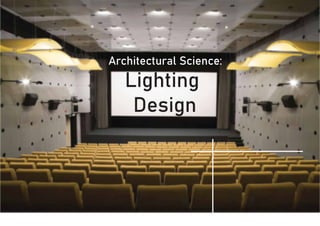
Lighting
Design
Architectural Science:
Project Description
Alem Cinema
Alem Cinema is found on the last three stories of the
building, which has 3 cinema where two of them are
differ in size and the last one is VIP .
Space included are Vinder Spcae, Waiting area,
Minikitchen, Projector room, out of the the 3 cinema we
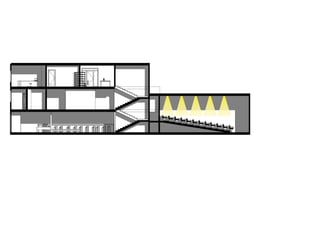
focus our Lighting Project on the cinema 1 Which has
stage, back stage, project room, cooridor and other
space listed above.
The objective of this lighting design project is to create a
unique and immersive experience for cinema-goers
using the layering technique. This technique involves
adding light in layers to create depth, dimension, and
mood in the cinema space.
The site is locate in the main road from Meskel Square
to Bole Bridge.
GUIDING LIGHT
1
2
3
4
5
6
7
8
9
10
11
12
13
14
15
16
17
18
19
20
DOWN
UP
20R x 0.150
19G x 0.315
1
2
3
4
5
6
7
8
9
D
O
W
N
U
P
9R x 0.150
8G x 0.300
1
2
3
4
5
6
7
8
9
DOWN
UP
9R x 0.156
8G x 0.339
34.27 %
100.00 % 100.00 %
S-01
S-01
S-02
S-02
Guiding lights are a type of lighting element that is used to
guide people through a space, and can be useful in a
cinema to help patrons find their way in and out of the the-
ater, and to help them navigate the space once inside.
1
2
3
4
5
6
7
8
9
10
11
12
13
14
15
16
17
18
19
20
DOWN
UP
20R x 0.150
19G x 0.315
1
2
3
4
5
6
7
8
9
D
O
W
N
U
P
9R x 0.150
8G x 0.300
1
2
3
4
5
6
7
8
9
DOWN
UP
9R x 0.156
8G x 0.339
34.27 %
100.00 % 100.00 %
S-01
S-01
S-02
S-02
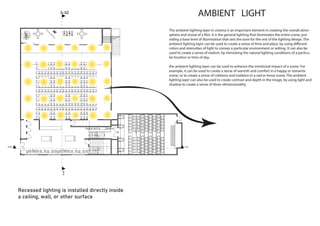
AMBIENT LIGHT
The ambient lighting layer in cinema is an important element in creating the overall atmo-
sphere and mood of a film. It is the general lighting that illuminates the entire scene, pro-
viding a base level of illumination that sets the tone for the rest of the lighting design. The
ambient lighting layer can be used to create a sense of time and place, by using different
colors and intensities of light to convey a particular environment or setting. It can also be
used to create a sense of realism, by mimicking the natural lighting conditions of a particu-
lar location or time of day.
the ambient lighting layer can be used to enhance the emotional impact of a scene. For
example, it can be used to create a sense of warmth and comfort in a happy or romantic
scene, or to create a sense of coldness and isolation in a sad or tense scene. The ambient
lighting layer can also be used to create contrast and depth in the image, by using light and
shadow to create a sense of three-dimensionality.
Recessed lighting is installed directly inside
a ceiling, wall, or other surface
ACCENT LIGHT
1
2
3
4
5
6
7
8
9
10
11
12
13
14
15
16
17
18
19
20
DOWN
UP
20R x 0.150
19G x 0.315
1
2
3
4
5
6
7
8
9
D
O
W
N
U
P
9R x 0.150
8G x 0.300
1
2
3
4
5
6
7
8
9
DOWN
UP
9R x 0.156
8G x 0.339
34.27 %
100.00 % 100.00 %
S-01
S-01
S-02
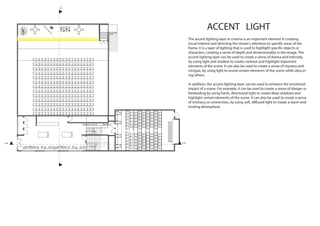
The accent lighting layer in cinema is an important element in creating
visual interest and directing the viewer's attention to specific areas of the
frame. It is a layer of lighting that is used to highlight specific objects or
characters, creating a sense of depth and dimensionality in the image. The
accent lighting layer can be used to create a sense of drama and intensity,
by using light and shadow to create contrast and highlight important
elements of the scene. It can also be used to create a sense of mystery and
intrigue, by using light to reveal certain elements of the scene while obscur-
ing others.
In addition, the accent lighting layer can be used to enhance the emotional
impact of a scene. For example, it can be used to create a sense of danger or
foreboding by using harsh, directional light to create deep shadows and
highlight certain elements of the scene. It can also be used to create a sense
of intimacy or connection, by using soft, diffused light to create a warm and
inviting atmosphere.
1
2
3
4
5
6
7
8
9
10
11
12
13
14
15
16
17
18
19
20
DOWN
UP
20R x 0.150
19G x 0.315
1
2
3
4
5
6
7
8
9
D
O
W
N
U
P
9R x 0.150
8G x 0.300
1
2
3
4
5
6
7
8
9
DOWN
UP
9R x 0.156
8G x 0.339
34.27 %
100.00 % 100.00 %
S-01
S-01
S-02
S-02
SPACE LIGHT
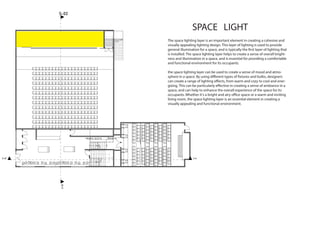
The space lighting layer is an important element in creating a cohesive and
visually appealing lighting design. This layer of lighting is used to provide
general illumination for a space, and is typically the first layer of lighting that
is installed. The space lighting layer helps to create a sense of overall bright-
ness and illumination in a space, and is essential for providing a comfortable
and functional environment for its occupants.
the space lighting layer can be used to create a sense of mood and atmo-
sphere in a space. By using different types of fixtures and bulbs, designers
can create a range of lighting effects, from warm and cozy to cool and ener-
gizing. This can be particularly effective in creating a sense of ambiance in a
space, and can help to enhance the overall experience of the space for its
occupants. Whether it's a bright and airy office space or a warm and inviting
living room, the space lighting layer is an essential element in creating a
visually appealing and functional environment.
1
2
3
4
5
6
7
8
9
10
11
12
13
14
15
16
17
18
19
20
DOWN
UP
20R x 0.150
19G x 0.315
1
2
3
4
5
6
7
8
9
D
O
W
N
U
P
9R x 0.150
8G x 0.300
1
2
3
4
5
6
7
8
9
DOWN
UP
9R x 0.156
8G x 0.339
34.27 %
100.00 % 100.00 %
S-01
S-01
S-02
S-02
TASK LIGHT
The task lighting layer is an important element in interior design, as it is
used to provide illumination for specific tasks and activities. This layer of
lighting is typically brighter and more focused than other layers of lighting,
and is used to provide direct illumination for activities such as reading,
cooking, or working on a computer. By providing targeted illumination for
specific tasks, the task lighting layer helps to improve visibility and reduce
eye strain, making it easier and more comfortable to perform these activi-
ties.
the task lighting layer can be used to create a sense of depth and dimen-
sionality in a space. By using targeted illumination to highlight specific areas
of a room, such as a piece of artwork or a decorative object, the task lighting
layer can create a sense of visual interest and draw the eye to specific
elements of the space. This can be particularly effective in creating a sense
of drama and intrigue in a room, and can help to create a more visually
engaging and dynamic space.
Lighting Design.pdf

Lighting Design.pdf

  • 1.
  • 2.
    Project Description Alem Cinema AlemCinema is found on the last three stories of the building, which has 3 cinema where two of them are differ in size and the last one is VIP . Space included are Vinder Spcae, Waiting area, Minikitchen, Projector room, out of the the 3 cinema we focus our Lighting Project on the cinema 1 Which has stage, back stage, project room, cooridor and other space listed above. The objective of this lighting design project is to create a unique and immersive experience for cinema-goers using the layering technique. This technique involves adding light in layers to create depth, dimension, and mood in the cinema space. The site is locate in the main road from Meskel Square to Bole Bridge.
  • 3.
    GUIDING LIGHT 1 2 3 4 5 6 7 8 9 10 11 12 13 14 15 16 17 18 19 20 DOWN UP 20R x0.150 19G x 0.315 1 2 3 4 5 6 7 8 9 D O W N U P 9R x 0.150 8G x 0.300 1 2 3 4 5 6 7 8 9 DOWN UP 9R x 0.156 8G x 0.339 34.27 % 100.00 % 100.00 % S-01 S-01 S-02 S-02 Guiding lights are a type of lighting element that is used to guide people through a space, and can be useful in a cinema to help patrons find their way in and out of the the- ater, and to help them navigate the space once inside.
  • 5.
    1 2 3 4 5 6 7 8 9 10 11 12 13 14 15 16 17 18 19 20 DOWN UP 20R x 0.150 19Gx 0.315 1 2 3 4 5 6 7 8 9 D O W N U P 9R x 0.150 8G x 0.300 1 2 3 4 5 6 7 8 9 DOWN UP 9R x 0.156 8G x 0.339 34.27 % 100.00 % 100.00 % S-01 S-01 S-02 S-02 AMBIENT LIGHT The ambient lighting layer in cinema is an important element in creating the overall atmo- sphere and mood of a film. It is the general lighting that illuminates the entire scene, pro- viding a base level of illumination that sets the tone for the rest of the lighting design. The ambient lighting layer can be used to create a sense of time and place, by using different colors and intensities of light to convey a particular environment or setting. It can also be used to create a sense of realism, by mimicking the natural lighting conditions of a particu- lar location or time of day. the ambient lighting layer can be used to enhance the emotional impact of a scene. For example, it can be used to create a sense of warmth and comfort in a happy or romantic scene, or to create a sense of coldness and isolation in a sad or tense scene. The ambient lighting layer can also be used to create contrast and depth in the image, by using light and shadow to create a sense of three-dimensionality. Recessed lighting is installed directly inside a ceiling, wall, or other surface
  • 7.
    ACCENT LIGHT 1 2 3 4 5 6 7 8 9 10 11 12 13 14 15 16 17 18 19 20 DOWN UP 20R x0.150 19G x 0.315 1 2 3 4 5 6 7 8 9 D O W N U P 9R x 0.150 8G x 0.300 1 2 3 4 5 6 7 8 9 DOWN UP 9R x 0.156 8G x 0.339 34.27 % 100.00 % 100.00 % S-01 S-01 S-02 The accent lighting layer in cinema is an important element in creating visual interest and directing the viewer's attention to specific areas of the frame. It is a layer of lighting that is used to highlight specific objects or characters, creating a sense of depth and dimensionality in the image. The accent lighting layer can be used to create a sense of drama and intensity, by using light and shadow to create contrast and highlight important elements of the scene. It can also be used to create a sense of mystery and intrigue, by using light to reveal certain elements of the scene while obscur- ing others. In addition, the accent lighting layer can be used to enhance the emotional impact of a scene. For example, it can be used to create a sense of danger or foreboding by using harsh, directional light to create deep shadows and highlight certain elements of the scene. It can also be used to create a sense of intimacy or connection, by using soft, diffused light to create a warm and inviting atmosphere.
  • 9.
    1 2 3 4 5 6 7 8 9 10 11 12 13 14 15 16 17 18 19 20 DOWN UP 20R x 0.150 19Gx 0.315 1 2 3 4 5 6 7 8 9 D O W N U P 9R x 0.150 8G x 0.300 1 2 3 4 5 6 7 8 9 DOWN UP 9R x 0.156 8G x 0.339 34.27 % 100.00 % 100.00 % S-01 S-01 S-02 S-02 SPACE LIGHT The space lighting layer is an important element in creating a cohesive and visually appealing lighting design. This layer of lighting is used to provide general illumination for a space, and is typically the first layer of lighting that is installed. The space lighting layer helps to create a sense of overall bright- ness and illumination in a space, and is essential for providing a comfortable and functional environment for its occupants. the space lighting layer can be used to create a sense of mood and atmo- sphere in a space. By using different types of fixtures and bulbs, designers can create a range of lighting effects, from warm and cozy to cool and ener- gizing. This can be particularly effective in creating a sense of ambiance in a space, and can help to enhance the overall experience of the space for its occupants. Whether it's a bright and airy office space or a warm and inviting living room, the space lighting layer is an essential element in creating a visually appealing and functional environment.
  • 11.
    1 2 3 4 5 6 7 8 9 10 11 12 13 14 15 16 17 18 19 20 DOWN UP 20R x 0.150 19Gx 0.315 1 2 3 4 5 6 7 8 9 D O W N U P 9R x 0.150 8G x 0.300 1 2 3 4 5 6 7 8 9 DOWN UP 9R x 0.156 8G x 0.339 34.27 % 100.00 % 100.00 % S-01 S-01 S-02 S-02 TASK LIGHT The task lighting layer is an important element in interior design, as it is used to provide illumination for specific tasks and activities. This layer of lighting is typically brighter and more focused than other layers of lighting, and is used to provide direct illumination for activities such as reading, cooking, or working on a computer. By providing targeted illumination for specific tasks, the task lighting layer helps to improve visibility and reduce eye strain, making it easier and more comfortable to perform these activi- ties. the task lighting layer can be used to create a sense of depth and dimen- sionality in a space. By using targeted illumination to highlight specific areas of a room, such as a piece of artwork or a decorative object, the task lighting layer can create a sense of visual interest and draw the eye to specific elements of the space. This can be particularly effective in creating a sense of drama and intrigue in a room, and can help to create a more visually engaging and dynamic space.