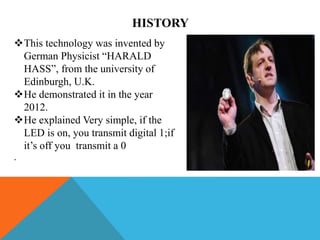
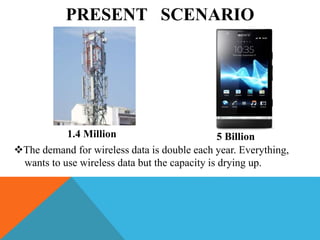
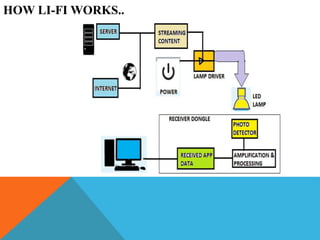
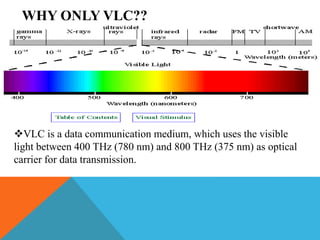
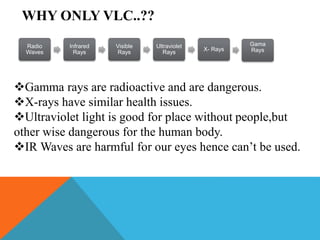
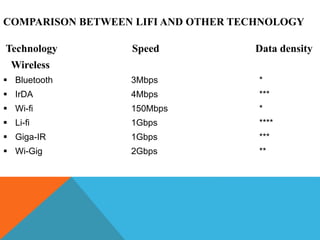
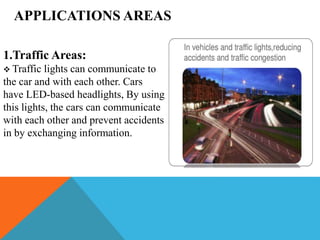
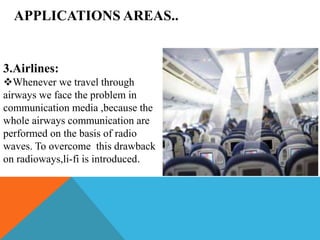
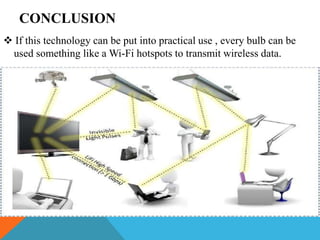
This document discusses LiFi technology, which transmits data through illumination using LED light bulbs. It was invented in 2012 by German physicist Harald Hass. LiFi works by switching LED lights on and off very quickly to transmit digital 1s and 0s. It provides wireless connectivity at speeds up to 1Gbps, faster than WiFi. Potential applications of LiFi include use in traffic lights, airplanes, and underwater communications since it does not interfere with radio frequencies. While it has advantages over WiFi like higher speeds and bandwidth, LiFi also has limitations such as requiring line of sight and being disrupted by external light sources.