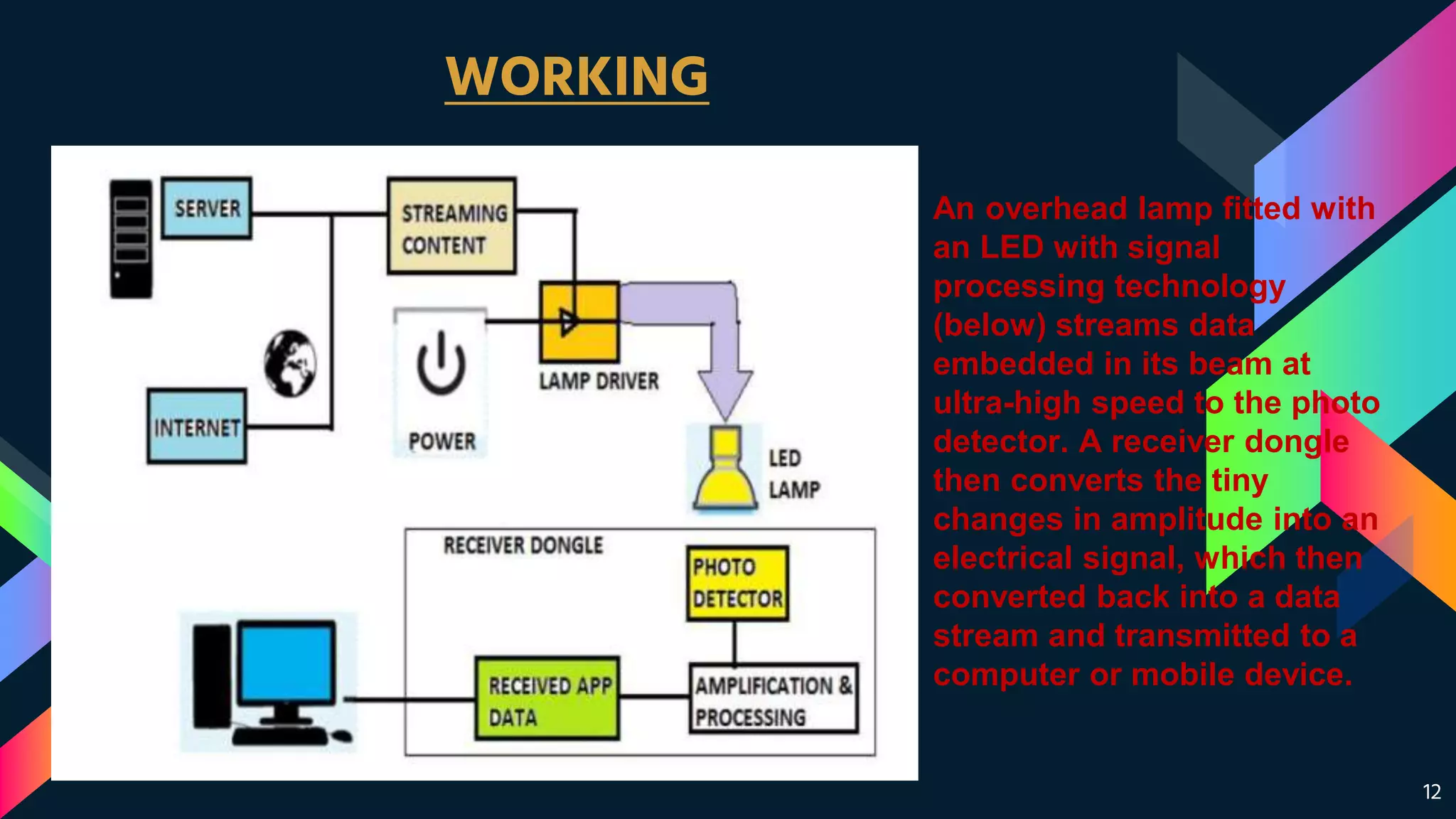
Li-Fi uses visible light communication and LED bulbs to transmit data wirelessly. It was coined by Professor Harald Haas in 2011 as a wireless alternative to Wi-Fi that could increase available bandwidth. Li-Fi transmits data through rapid variations in LED light intensity faster than what the human eye can detect. It provides higher speeds than Wi-Fi, does not interfere with other devices, and the signal cannot pass through walls providing better security. While Li-Fi remains in development, potential applications include use in vehicles, aviation, underwater communication and hospitals.











![Rejuvenation of wireless technology [li fi]](https://cdn.slidesharecdn.com/ss_thumbnails/rejuvenationofwirelesstechnologyli-fi-160407085339-thumbnail.jpg?width=640&height=640&fit=bounds)


