Life Skills for NSS Cadets
Presented by: Syed Mohsin Raja.
Visiting Faculty for Digital Media & Business Development
Assam Rajiv Gandhi University of Cooperative Management
IDOL, Gauhati University
Indian Institute of Entrepreneurship, Guwahati
“NOT me, But You!”
Organized by:
Directorate of Student Welfare, Gauhati University.
Date: 6th Jan, 2017
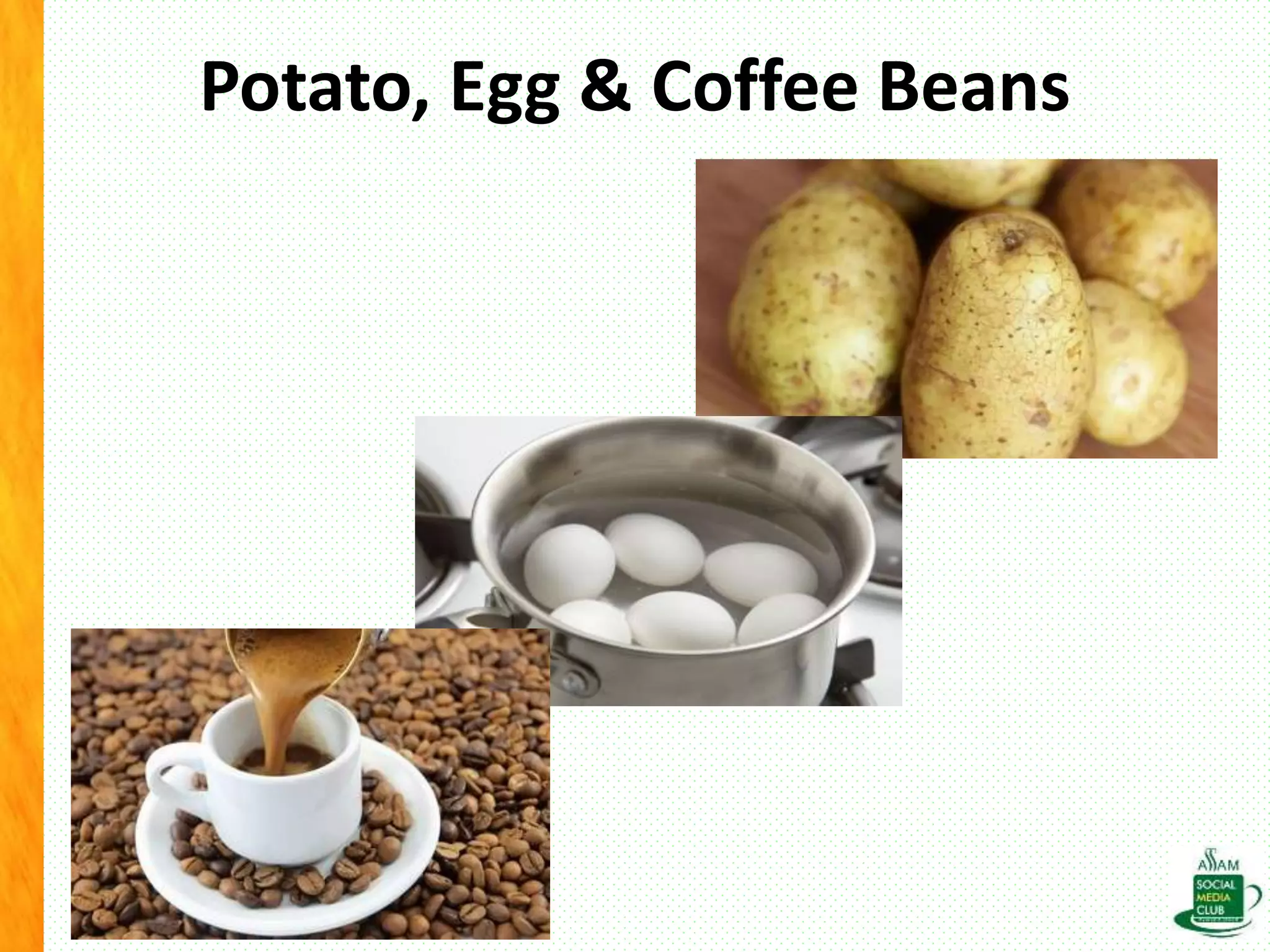
Potato, Egg & Coffee Beans
What is NSS?
• Launched, 24 September 1969,
• Started initially in 37 universities involving
40,000 volunteers,
• Now 2.6 million volunteers spread over in
200 Universities.
NSS Symbol
• Rath Wheel of the world famous Konark Sun
Temple
• The wheel portrays the cycle of creation,
preservation and release and signifies the
movement in life across time and space,
• The symbol thus stands for continuity as well
as change and implies the continuous
striving of NSS for social change.
The NSS Wheel Badge
The NSS Wheel Badge
• The eight bars in the wheel represent the 24
hours of a day.
• The red colour indicates that the volunteer is
full of young blood that is lively, active,
energetic and full of high spirit.
• The navy blue colour indicates the cosmos of
which the NSS is tiny part, ready to
contribute its share for the welfare of the
mankind.
Mango Tree
The Constant
CHANGE
Coping w/ the Constant
Everyone has to face the CHANGE!
Change is the Reality of Life!
Change is the Challenge!
Well being & Competency.
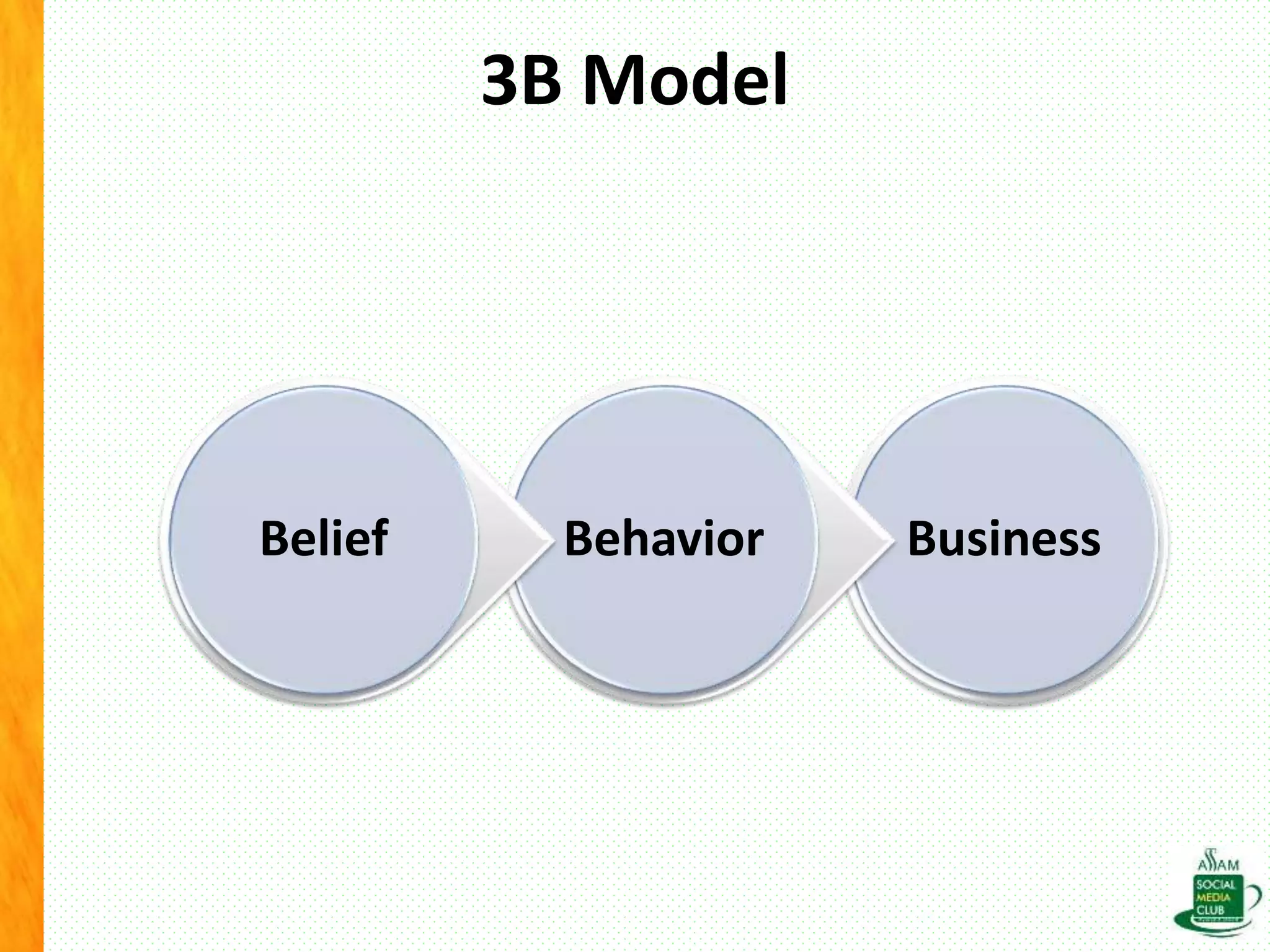
3B Model
BusinessBehaviorBelief
Life Skills
- Are aimed at Behaviour Change or
Behaviour Development,
- Designed to balance Knowledge,
Attitude and Skills.
UNICEF
Life Skills in Theory
“Skills that help an individual to be
successful in living a productive and
satisfying life”.
- TLS Model, Hendricks, 1996
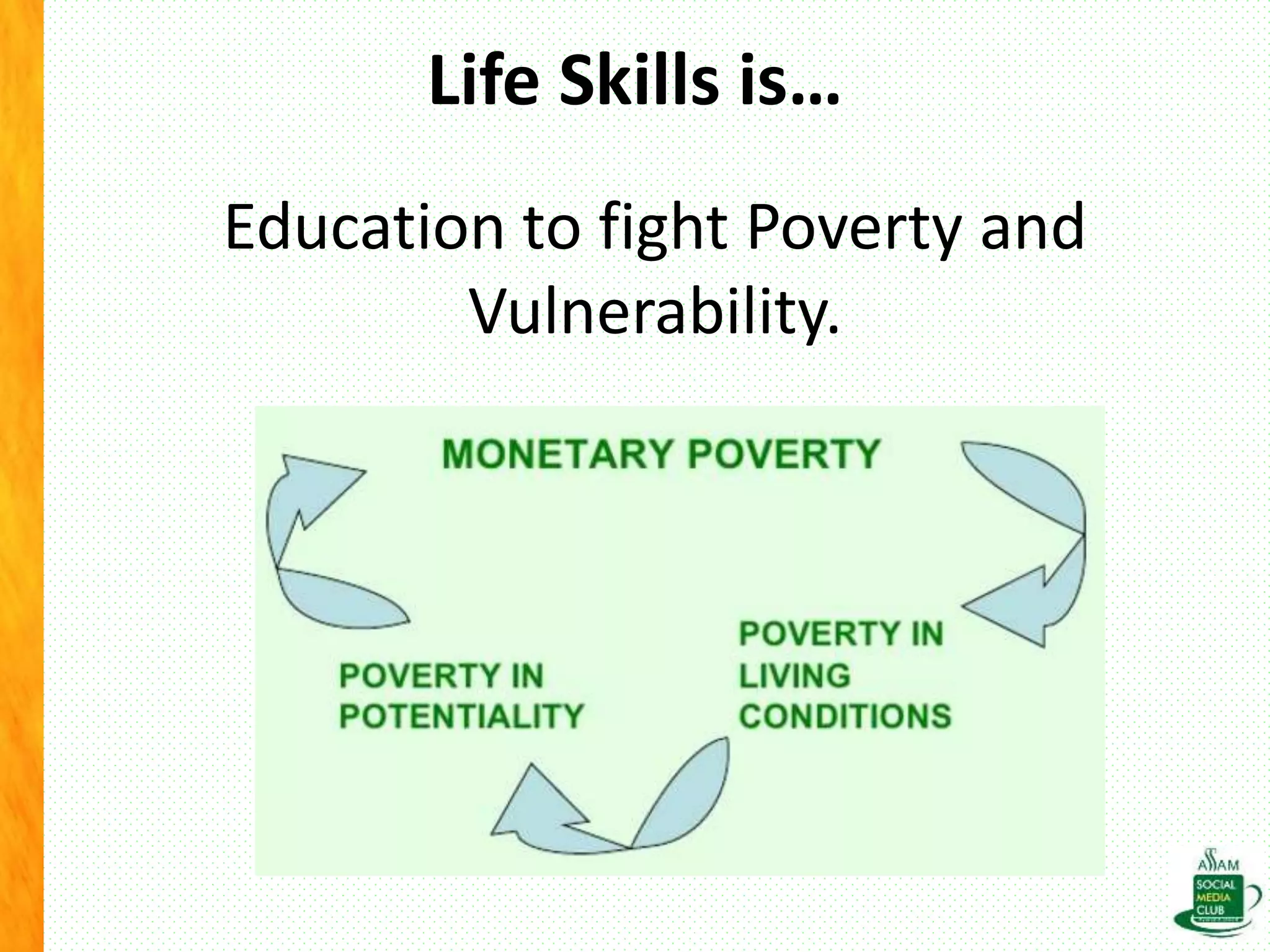
Life Skills is…
Education to fight Poverty and
Vulnerability.
Life Skills is…
The force that strengthens the ability of an
individual to Evolve, have Self-Confidence and to
Prosper, breaking the barriers of Knowledge,
Attitude and Skills.
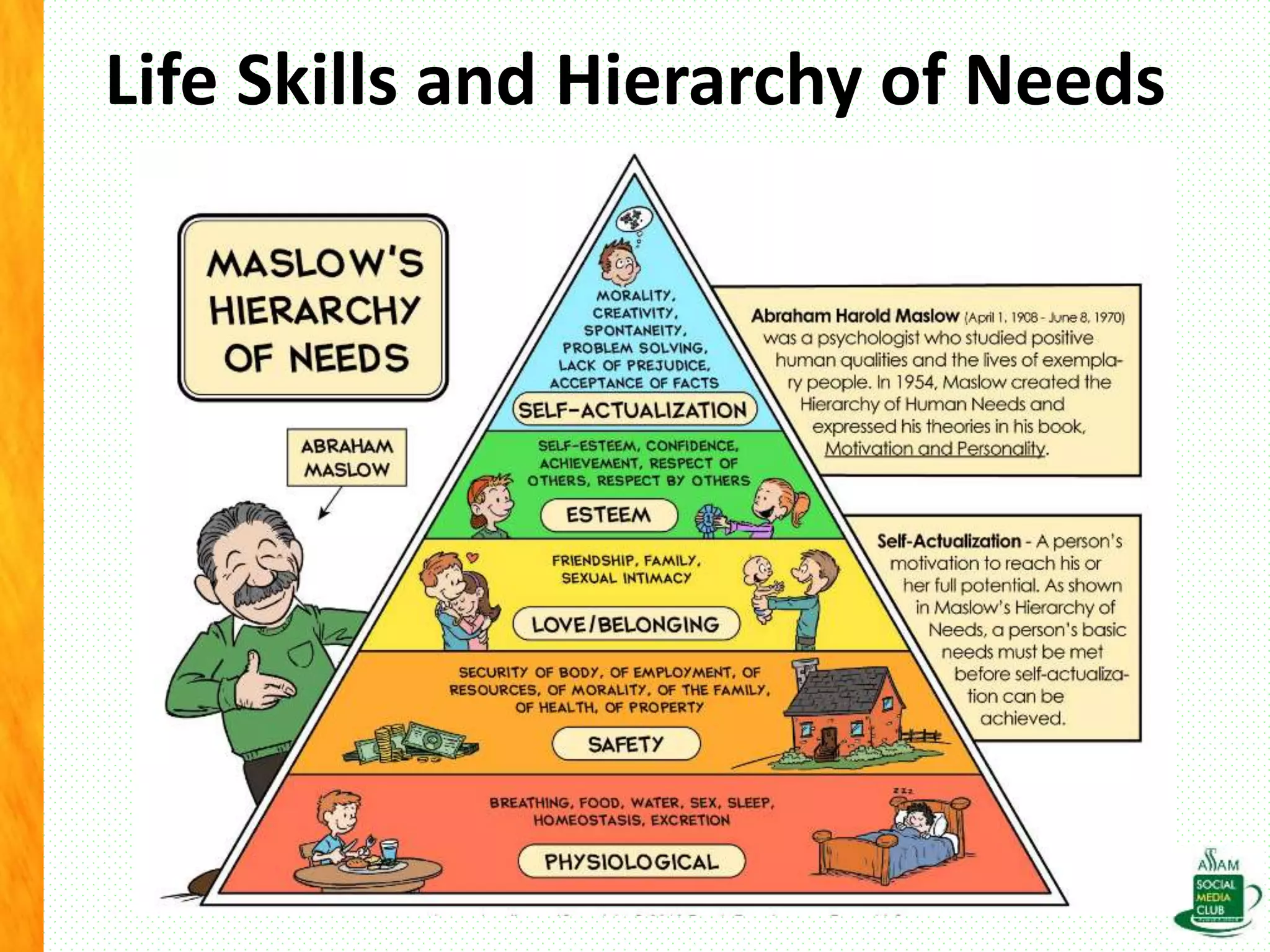
Life Skills and Hierarchy of Needs
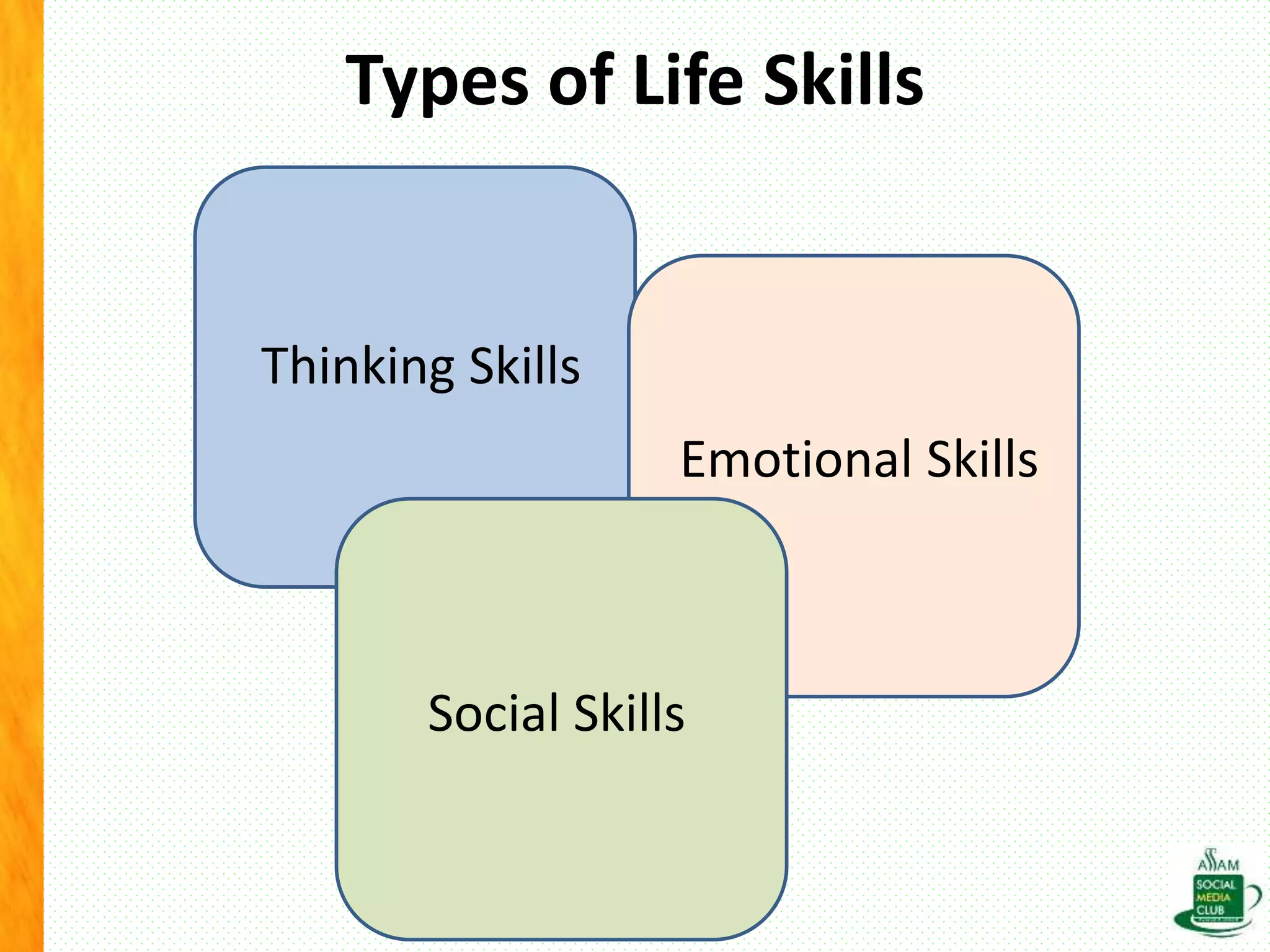
Types of Life Skills
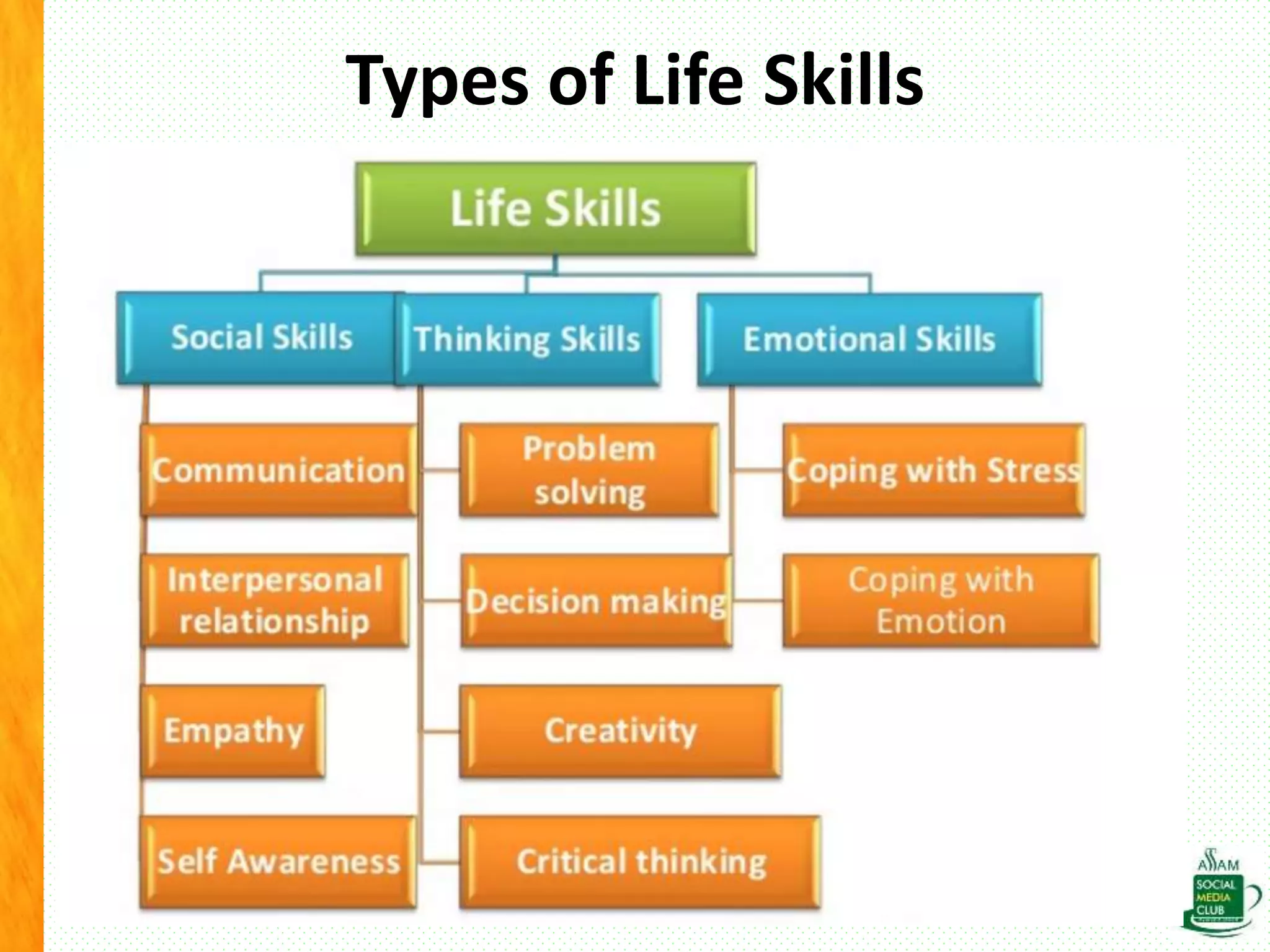
Emotional Skills
Thinking Skills
Social Skills
Types of Life Skills
Self Actualization
• Recognition of 'self', our character, our
strengths and weaknesses, desires and
dislikes.
• Recognize when we are stressed or
under pressure.
• Prerequisite to effective
communication and interpersonal
relations, as well as for developing
empathy with others.
Empathy
• Ability to imagine what life is like for
another person.
• Help us to accept others.
• Improve social interactions.
• Encourage nurturing positive behaviour
towards people in need of care and
assistance, or tolerance
• Required to develop a successful
relationship with our loved ones and
society at large.
Interpersonal Skills
• Help us to relate in positive ways with
people we interact with.
• To make and keep friendly
relationships.
• To maintaining good relations with
family members who are the most
important source of social support.
• An ability to end relationships
constructively.
Effective Communication
• Ability to express ourselves, both
verbally and non-verbally, in ways that
are appropriate to our cultures and
situations.
• Ability to express opinions and desires,
and also needs and fears.
• Being able to ask for advice and help in
the time of need.
Problem Solving
• Helps us to deal constructively with
problems in our lives.
• Problems that are left unresolved can
cause mental stress and give rise to
accompanying physical strain.
Thinking Skills
Decision Making
• Helps us to deal constructively with
decisions about our lives.
• Teach people how to actively make
decisions about their actions in relation
to a healthy assessment of different
options and, what effects these
different decisions are likely to have.
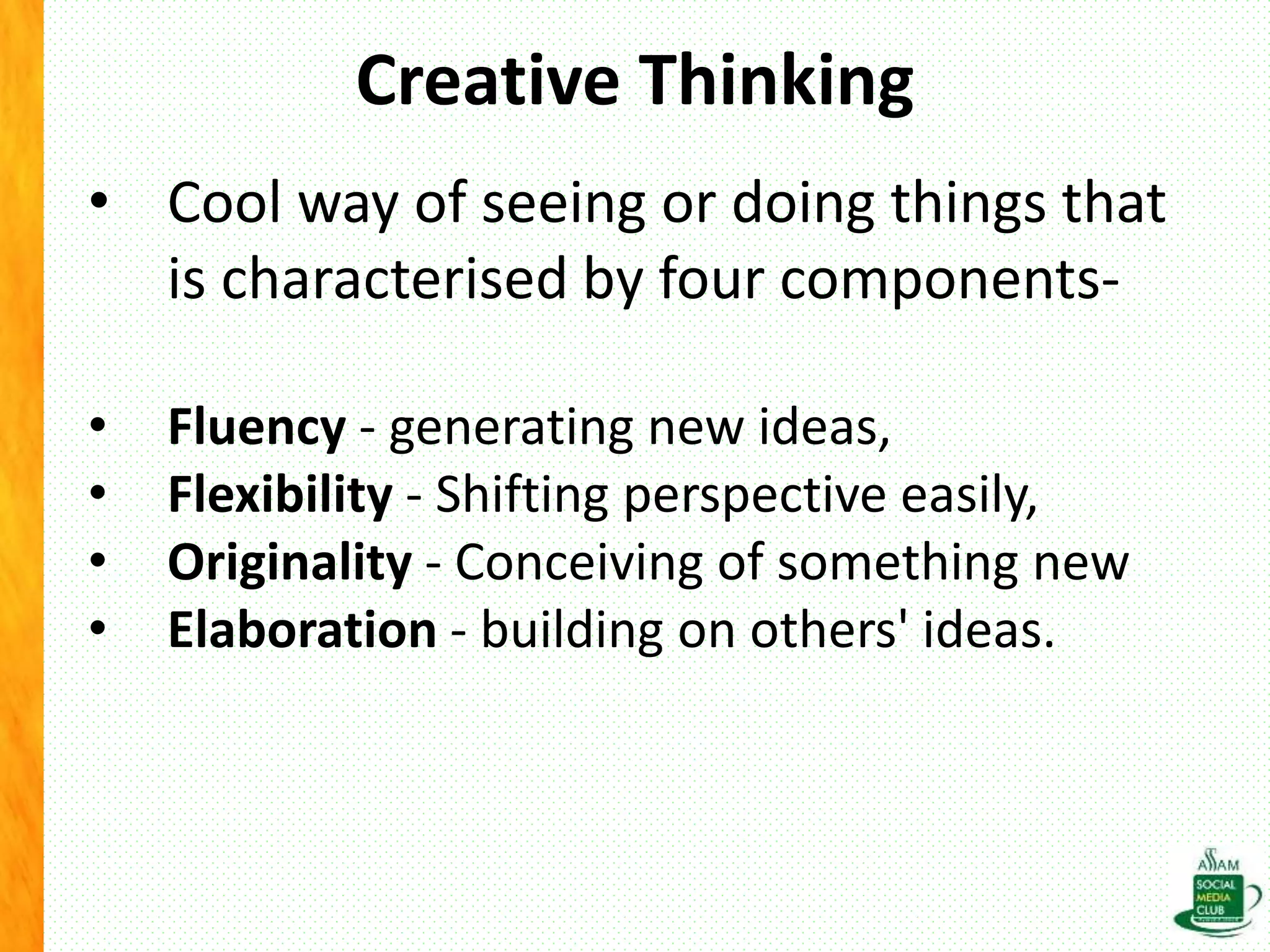
Creative Thinking
• Cool way of seeing or doing things that
is characterised by four components-
• Fluency - generating new ideas,
• Flexibility - Shifting perspective easily,
• Originality - Conceiving of something new
• Elaboration - building on others' ideas.
Critical Thinking
• An ability to analyze information and
experiences in an objective manner.
• Contribute to a well balanced way of
life by helping us to recognize and
assess the factors that influence
attitudes and behaviour, such as values,
peer pressure and the media.
Coping w/ Stress
• Recognizing the sources of stress in our
lives,
• Recognizing how they affect us, and
• How we act in a way that helps us
control our levels of stress by changing
our environment or lifestyle, and
learning how to relax.
Emotional Skills
Coping w/ Emotions
• Recognizing emotions within us and
others,
• Being aware of how emotions influence
behavior and being able to respond to
emotions appropriately.
• Intense emotions like anger or sadness
can have negative effects on our health
if we don't respond to them
appropriately.
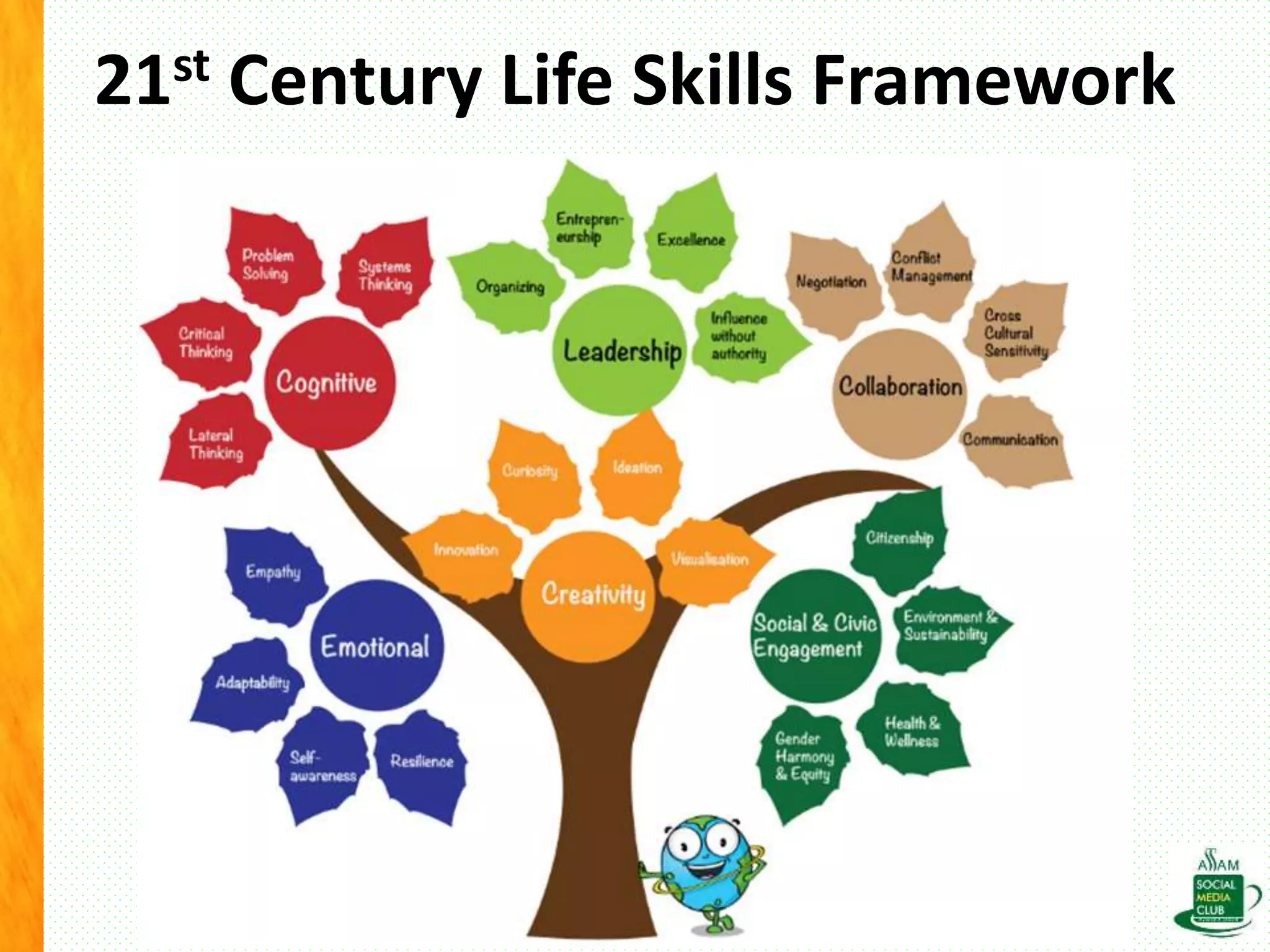
21st Century Life Skills Framework
Recap:
• Life Skills can change and affect:
1. Ignorance,
2. Awareness,
3. Concern,
4. Knowledge,
5. Motivation,
6. Professional Skills,
7. Habit,
8. Lifestyle
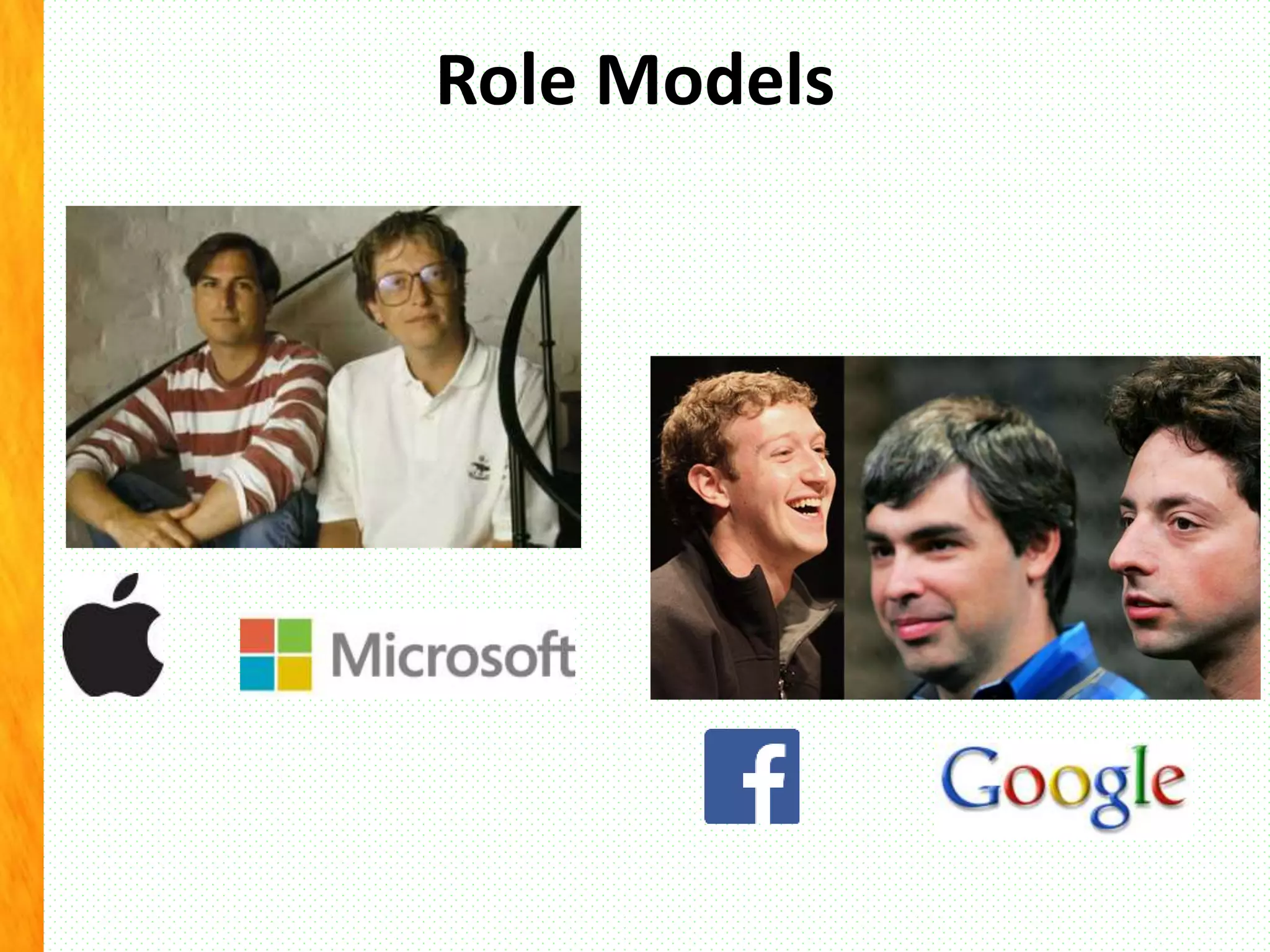
Role Models
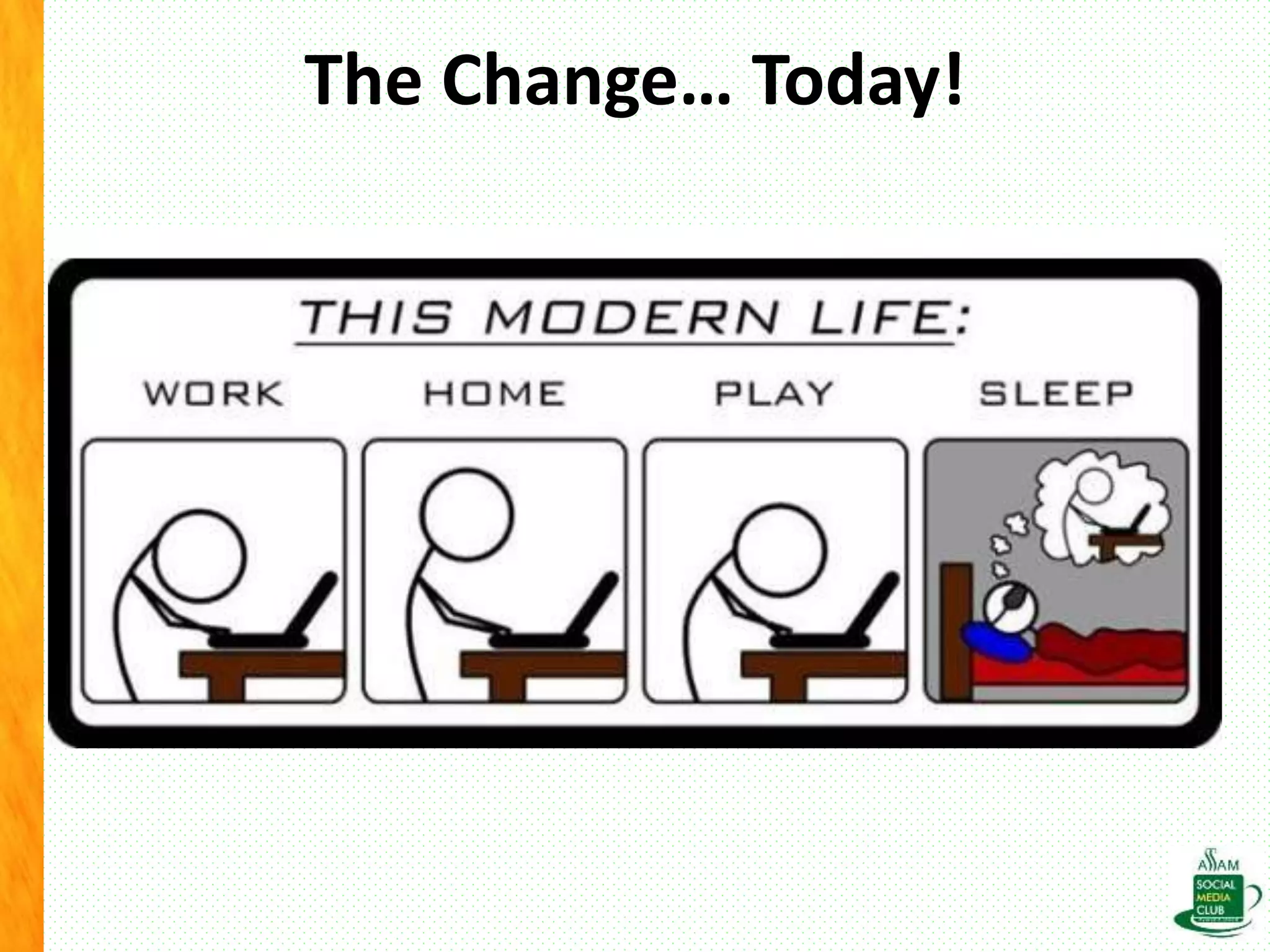
The Change… Today!
Life Skills in the Age of Digital Media
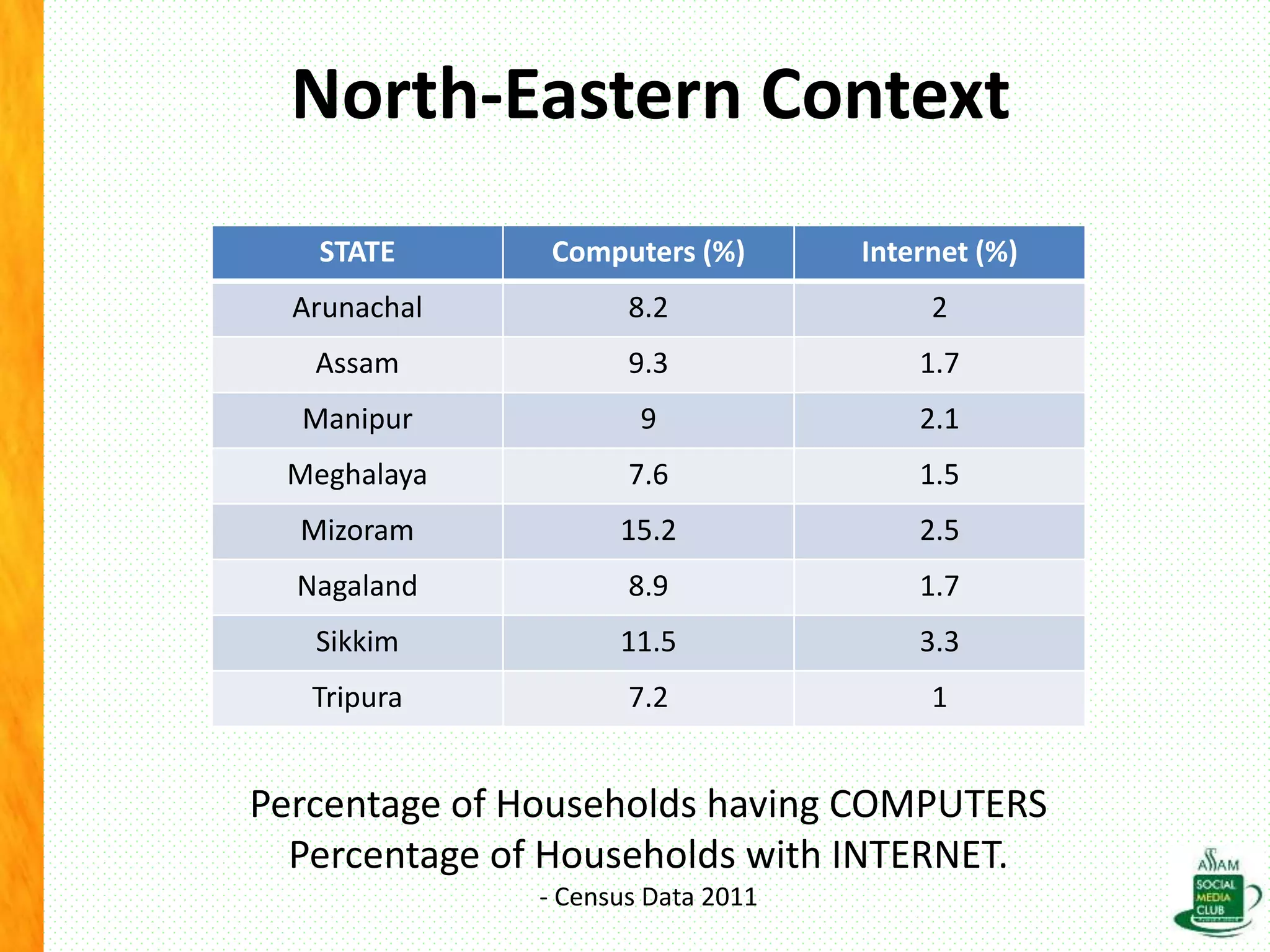
North-Eastern Context
STATE Computers (%) Internet (%)
Arunachal 8.2 2
Assam 9.3 1.7
Manipur 9 2.1
Meghalaya 7.6 1.5
Mizoram 15.2 2.5
Nagaland 8.9 1.7
Sikkim 11.5 3.3
Tripura 7.2 1
Percentage of Households having COMPUTERS
Percentage of Households with INTERNET.
- Census Data 2011
Digital Media Usage:
• DM can change and affect:
1. Ignorance,
2. Awareness,
3. Concern,
4. Knowledge,
5. Motivation,
6. Professional Skills,
7. Habit,
8. Education,
9. Lifestyle
Life Skill in the Digitized World
Be Responsible!
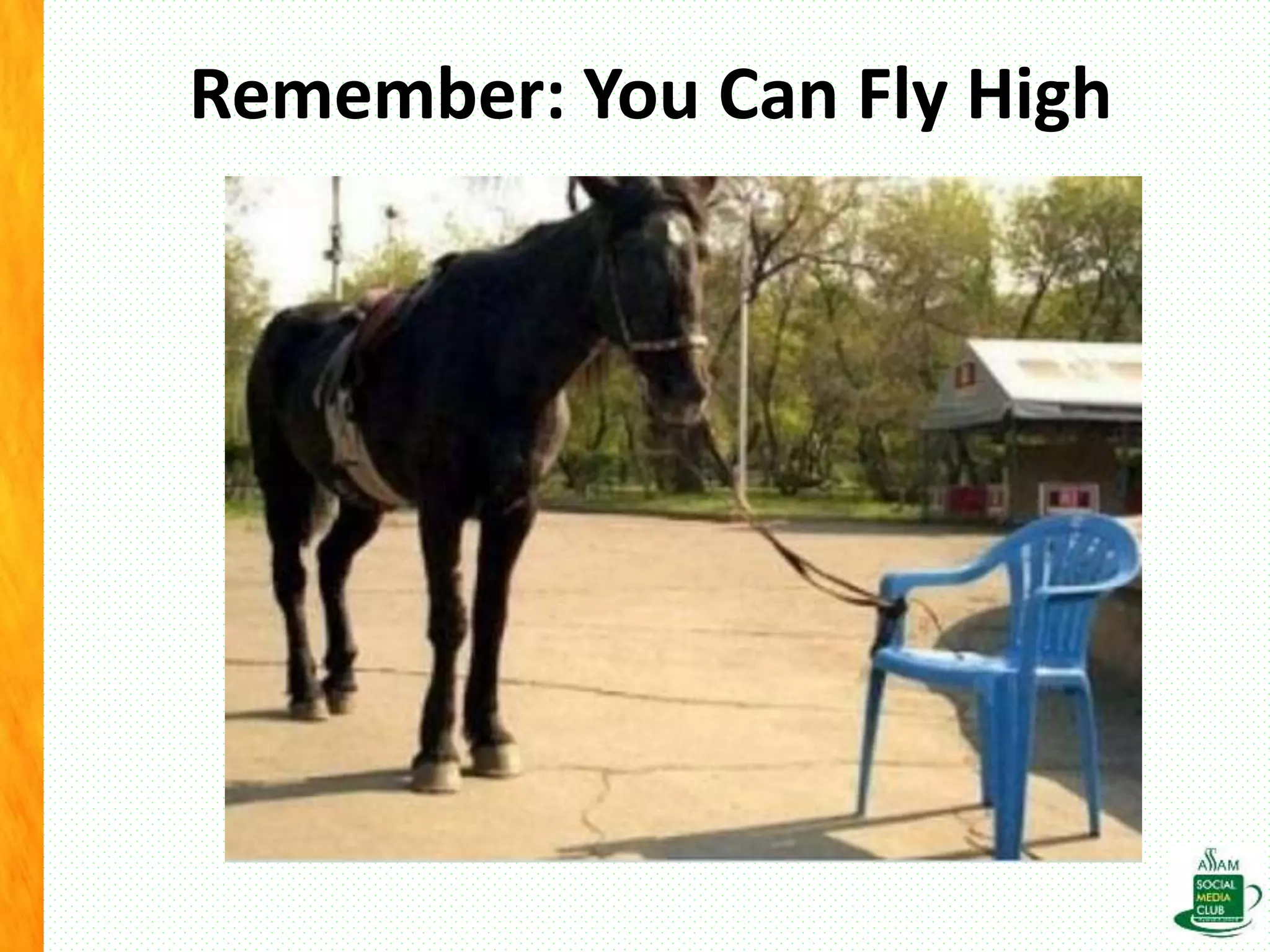
Remember: You Can Fly High
Thank You!
Syed Mohsin Raja
mohsin@5itechnology.com
+91-9435488999
FB.com/SyedMRaza.in

Life Skills for NSS Cadets

  • 1.
    Life Skills forNSS Cadets Presented by: Syed Mohsin Raja. Visiting Faculty for Digital Media & Business Development Assam Rajiv Gandhi University of Cooperative Management IDOL, Gauhati University Indian Institute of Entrepreneurship, Guwahati “NOT me, But You!” Organized by: Directorate of Student Welfare, Gauhati University. Date: 6th Jan, 2017
  • 2.
    Potato, Egg &Coffee Beans
  • 3.
    What is NSS? •Launched, 24 September 1969, • Started initially in 37 universities involving 40,000 volunteers, • Now 2.6 million volunteers spread over in 200 Universities.
  • 4.
    NSS Symbol • RathWheel of the world famous Konark Sun Temple • The wheel portrays the cycle of creation, preservation and release and signifies the movement in life across time and space, • The symbol thus stands for continuity as well as change and implies the continuous striving of NSS for social change.
  • 5.
  • 6.
    The NSS WheelBadge • The eight bars in the wheel represent the 24 hours of a day. • The red colour indicates that the volunteer is full of young blood that is lively, active, energetic and full of high spirit. • The navy blue colour indicates the cosmos of which the NSS is tiny part, ready to contribute its share for the welfare of the mankind.
  • 7.
  • 8.
  • 9.
    Coping w/ theConstant Everyone has to face the CHANGE! Change is the Reality of Life! Change is the Challenge! Well being & Competency.
  • 10.
  • 11.
    Life Skills - Areaimed at Behaviour Change or Behaviour Development, - Designed to balance Knowledge, Attitude and Skills. UNICEF
  • 12.
    Life Skills inTheory “Skills that help an individual to be successful in living a productive and satisfying life”. - TLS Model, Hendricks, 1996
  • 13.
    Life Skills is… Educationto fight Poverty and Vulnerability.
  • 14.
    Life Skills is… Theforce that strengthens the ability of an individual to Evolve, have Self-Confidence and to Prosper, breaking the barriers of Knowledge, Attitude and Skills.
  • 15.
    Life Skills andHierarchy of Needs
  • 16.
    Types of LifeSkills Emotional Skills Thinking Skills Social Skills
  • 17.
  • 18.
    Self Actualization • Recognitionof 'self', our character, our strengths and weaknesses, desires and dislikes. • Recognize when we are stressed or under pressure. • Prerequisite to effective communication and interpersonal relations, as well as for developing empathy with others.
  • 19.
    Empathy • Ability toimagine what life is like for another person. • Help us to accept others. • Improve social interactions. • Encourage nurturing positive behaviour towards people in need of care and assistance, or tolerance • Required to develop a successful relationship with our loved ones and society at large.
  • 20.
    Interpersonal Skills • Helpus to relate in positive ways with people we interact with. • To make and keep friendly relationships. • To maintaining good relations with family members who are the most important source of social support. • An ability to end relationships constructively.
  • 21.
    Effective Communication • Abilityto express ourselves, both verbally and non-verbally, in ways that are appropriate to our cultures and situations. • Ability to express opinions and desires, and also needs and fears. • Being able to ask for advice and help in the time of need.
  • 22.
    Problem Solving • Helpsus to deal constructively with problems in our lives. • Problems that are left unresolved can cause mental stress and give rise to accompanying physical strain. Thinking Skills
  • 23.
    Decision Making • Helpsus to deal constructively with decisions about our lives. • Teach people how to actively make decisions about their actions in relation to a healthy assessment of different options and, what effects these different decisions are likely to have.
  • 24.
    Creative Thinking • Coolway of seeing or doing things that is characterised by four components- • Fluency - generating new ideas, • Flexibility - Shifting perspective easily, • Originality - Conceiving of something new • Elaboration - building on others' ideas.
  • 25.
    Critical Thinking • Anability to analyze information and experiences in an objective manner. • Contribute to a well balanced way of life by helping us to recognize and assess the factors that influence attitudes and behaviour, such as values, peer pressure and the media.
  • 26.
    Coping w/ Stress •Recognizing the sources of stress in our lives, • Recognizing how they affect us, and • How we act in a way that helps us control our levels of stress by changing our environment or lifestyle, and learning how to relax. Emotional Skills
  • 27.
    Coping w/ Emotions •Recognizing emotions within us and others, • Being aware of how emotions influence behavior and being able to respond to emotions appropriately. • Intense emotions like anger or sadness can have negative effects on our health if we don't respond to them appropriately.
  • 28.
    21st Century LifeSkills Framework
  • 29.
    Recap: • Life Skillscan change and affect: 1. Ignorance, 2. Awareness, 3. Concern, 4. Knowledge, 5. Motivation, 6. Professional Skills, 7. Habit, 8. Lifestyle
  • 30.
  • 31.
  • 32.
    Life Skills inthe Age of Digital Media
  • 33.
    North-Eastern Context STATE Computers(%) Internet (%) Arunachal 8.2 2 Assam 9.3 1.7 Manipur 9 2.1 Meghalaya 7.6 1.5 Mizoram 15.2 2.5 Nagaland 8.9 1.7 Sikkim 11.5 3.3 Tripura 7.2 1 Percentage of Households having COMPUTERS Percentage of Households with INTERNET. - Census Data 2011
  • 34.
    Digital Media Usage: •DM can change and affect: 1. Ignorance, 2. Awareness, 3. Concern, 4. Knowledge, 5. Motivation, 6. Professional Skills, 7. Habit, 8. Education, 9. Lifestyle
  • 35.
    Life Skill inthe Digitized World Be Responsible!
  • 36.
  • 37.
  • 38.
    Thank You! Syed MohsinRaja mohsin@5itechnology.com +91-9435488999 FB.com/SyedMRaza.in