Leveraging Supply Chain Productivity with Dynamic S&OPProf. John PaulManaging DirectoriCognitiveManufacturing Supply Chain Officer Summit 2011 - Shanghai
AgendaWhy Dynamic S&OP?Benefits of Dynamic S&OPDynamic S&OP for Manufacturing2
Why Dynamic S&OP? 3
Why dynamic S&OP?Dynamic S&OP – The response to several business challengesVolatile business environment calls for more excellent operational efficiency and effectiveness.Internal collaboration is often not sufficient to face today’s highly competitive market place.Companies’ data containing valuable information are often not analyzed. Companies able to identify these information have firsthand opportunities.4
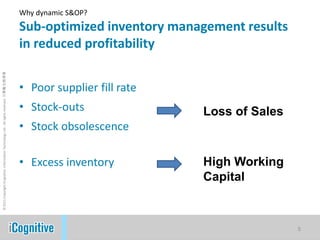
Why dynamic S&OP?Sub-optimized inventory management results in reduced profitabilityPoor supplier fill rate
Stock-outs
Stock obsolescence
Excess inventory5Loss of SalesHigh Working Capital
Implementing Dynamic S&OP 6
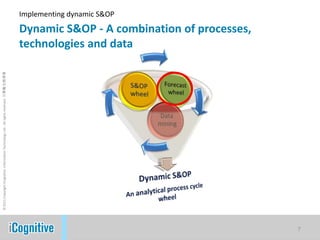
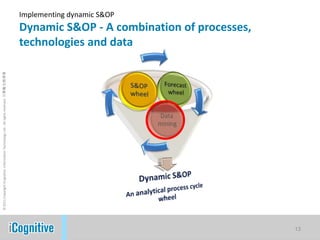
Implementing dynamic S&OPDynamic S&OP - A combination of processes, technologies and data7
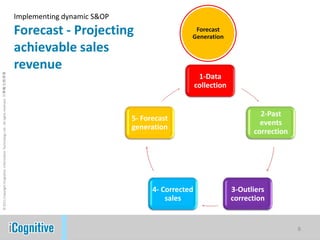
Forecast GenerationImplementing dynamic S&OP Forecast - Projecting achievable sales revenue8
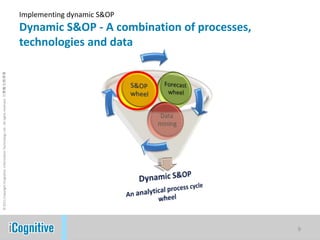
Implementing dynamic S&OPDynamic S&OP - A combination of processes, technologies and data9
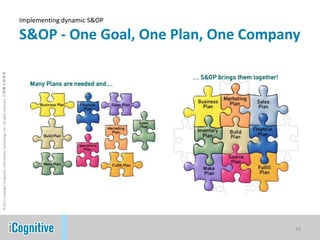
Implementing dynamic S&OPS&OP - One Goal, One Plan, One Company10
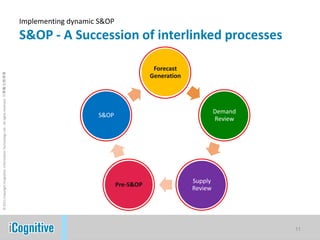
Implementing dynamic S&OP S&OP - A Succession of interlinked processes11
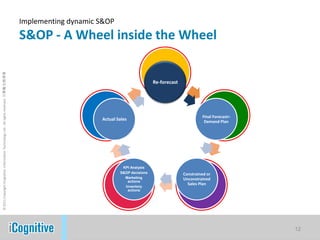
Implementing dynamic S&OP S&OP - A Wheel inside the Wheel12
13Implementing dynamic S&OPDynamic S&OP - A combination of processes, technologies and data
Data mining is the process of discovering meaningful new correlations, patterns and trends by sifting through large amounts of data stored in repositories, using pattern recognition technologies as well as statistical and mathematical techniques.14
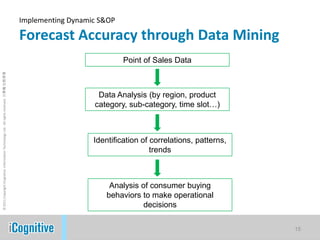
Implementing Dynamic S&OPForecast Accuracy through Data MiningPoint of Sales DataData Analysis (by region, product category, sub-category, time slot…)Identification of correlations, patterns, trendsAnalysis of consumer buying behaviors to make operational decisions15
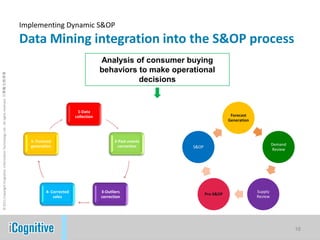
Implementing Dynamic S&OPData Mining integration into the S&OP process Analysis of consumer buying behaviors to make operational decisions16
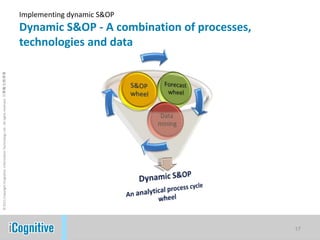
Implementing dynamic S&OPDynamic S&OP - A combination of processes, technologies and data17
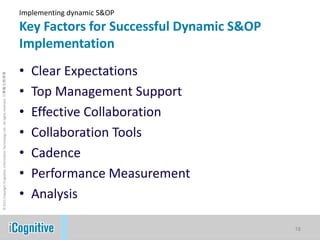
Implementing dynamic S&OPKey Factors for Successful Dynamic S&OP ImplementationClear ExpectationsTop Management SupportEffective CollaborationCollaboration ToolsCadencePerformance MeasurementAnalysis18
Benefits of Dynamic S&OP19
Improved product availabilityHigher supplier fill rateReduced obsolescenceIncrease forecast accuracy and sales360° Supply chain Visibility End to EndEnhanced collaboration and better teamwork20Dynamic S&OP BenefitsHigher customer service, profits and growth
Dynamic S&OP provides deep analysis and forecast to respond to a volatile environment and leverage supply chain productivity21

Leveraging Supply Chain Productivity with Dynamic S&OP

Editor's Notes

  • #11 S&OP serves 2 purposes:Provides the link between the strategic and business plans through the detailed planning and execution systems in the company.Provides a regulator for all the other plans, including the setting of Master Plan Schedule or Global Supply Plan, Inventory investment and commitment of resources.S&OP serves only one goal and one company plan
  • #12 S&OP is an “umbrella’ process that links several distinct processes:Forecast generationDemand PlanningSupply PlanningFinancial PlanningIt is more than just the Sales and Production Plan: it is part of the overall company business process, including Marketing, Warehousing and Distribution, Finance as well as Production, Supply and Procurement Planning.The S&OP cycle wheelThe monthly cycle starts with previous month realization analysis, and re-forecast of the future month, for the sales, the supply and the inventory position. S&OP process owners in their respective scope of work and responsibility must first work in parallel to allow later reconciliation
  • #13 The forecasting wheelSales forecasting is a management process, not a computer programThis distinction is important because it affects so many areas across an organization
  • #16 NMC has collected POS mass data from all outlets. However, these valuable data were left not analyzed. The first step of the process is to perform a data mining process that comprises:Analyzing regional, category, sub category differences and behaviors Identifying correlation, patterns, trendsAnalyzing purchase behaviorsThus help to make strategic decisions
  • #17 Discover meaningful new correlations, patterns and trends using large amount of data and integrate their results or their related decisions through the S&OP processProducts and regions sometimes managed by different departments