TEACHING MANUAL
Submitted By,
REMYA. V
Social Science,
Reg. No.: 14367014
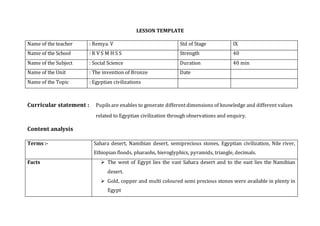
LESSON TEMPLATE
Name of the teacher : Remya. V Std of Stage IX
Name of the School : R V S M H S S Strength 40
Name of the Subject : Social Science Duration 40 min
Name of the Unit : The invention of Bronze Date
Name of the Topic : Egyptian civilizations
Curricular statement : Pupilsare enables to generate differentdimensions of knowledge and different values
related to Egyptian civilization through observations and enquiry.
Content analysis
Terms :- Sahara desert, Namibian desert, semiprecious stones, Egyptian civilization, Nile river,
Ethiopian floods, pharaohs, hieroglyphics, pyramids, triangle, decimals.
Facts  The west of Egypt lies the vast Sahara desert and to the east lies the Namibian
desert.
 Gold, copper and multi coloured semi precious stones were available in plenty in
Egypt
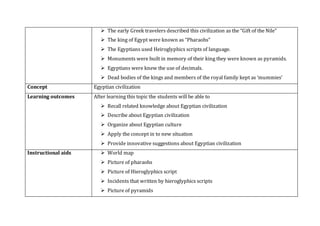
 The early Greek travelers described this civilization as the “Gift of the Nile”
 The king of Egypt were known as “Pharaohs”
 The Egyptians used Heiroglyphics scripts of language.
 Monuments were built in memory of their king they were known as pyramids.
 Egyptians were knew the use of decimals.
 Dead bodies of the kings and members of the royal family kept as ‘mummies’
Concept Egyptian civilization
Learning outcomes After learning this topic the students will be able to
 Recall related knowledge about Egyptian civilization
 Describe about Egyptian civilization
 Organize about Egyptian culture
 Apply the concept in to new situation
 Provide innovative suggestions about Egyptian civilization
Instructional aids  World map
 Picture of pharaohs
 Picture of Hieroglyphics script
 Incidents that written by hieroglyphics scripts
 Picture of pyramids
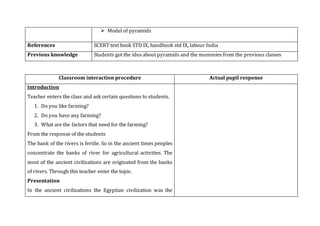
 Model of pyramids
References SCERT text book STD IX, handbook std IX, labour India
Previous knowledge Students got the idea about pyramids and the mummies from the previous classes
Classroom interaction procedure Actual pupil response
Introduction
Teacher enters the class and ask certain questions to students.
1. Do you like farming?
2. Do you have any farming?
3. What are the factors that need for the farming?
From the response of the students
The bank of the rivers is fertile. So in the ancient times peoples
concentrate the banks of river for agricultural activities. The
most of the ancient civilizations are originated from the banks
of rivers. Through this teacher enter the topic.
Presentation
In the ancient civilizations the Egyptian civilization was the
most important bronze age civilization.
The Egyptian civilization was originated from the banks of Nile.
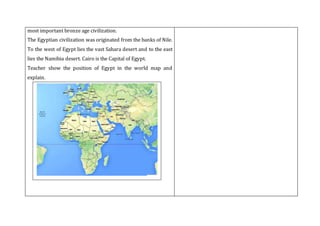
To the west of Egypt lies the vast Sahara desert and to the east
lies the Namibia desert. Cairo is the Capital of Egypt.
Teacher show the position of Egypt in the world map and
explain.
The rise and fall of the Egyptian civilization were according to
the fluctuations in the flooding of the Nile river. At the end of
each summer, the ensuing Ethiopian floods deposited black and
fertile alluvial soil of the banks of the river. Agricultural
products of this area became the basic factor of the Egyptian
civilizations.
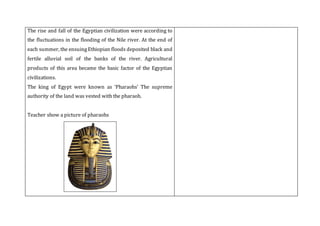
The king of Egypt were known as ‘Pharaohs’ The supreme
authority of the land was vested with the pharaoh.
Teacher show a picture of pharaohs
A feature of the Egyptian civilization was that events were
recorded accurately. The script used for writing down these
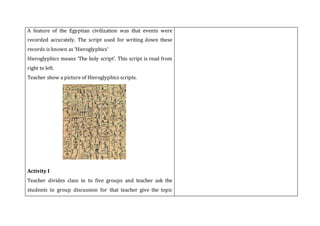
records is known as ‘Hieroglyphics’
Hieroglyphics means ‘The holy script’. This script is read from
right to left.
Teacher show a picture of Hieroglyphics scripts.
Activity I
Teacher divides class in to five groups and teacher ask the
students to group discussion for that teacher give the topic
write a short note on the topic Hieroglyphics script”.
Teacher give little more time to group discussion. Teacher ask
the students to present their answer in front of the class. After
that teacher generalize the topic.
“Egyptiansused the Hieroglyphicscript for recorded the events.
This scripts is reads from right to left. This script means ‘The
holy script’.
Teacher shows a chart containing the events recorded in the
Hieroglyphic script.
Events recorded in Hieroglyphic script
1. Administrative achievements of the pharaohs
2. Royal customs and rituals
3. Description of military raids
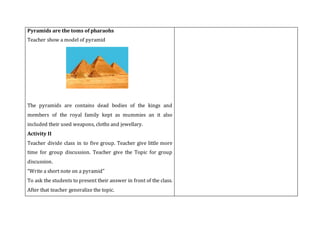
Pyramids are the toms of pharaohs
Teacher show a model of pyramid
The pyramids are contains dead bodies of the kings and
members of the royal family kept as mummies an it also
included their used weapons, cloths and jewellary.
Activity II
Teacher divide class in to five group. Teacher give little more
time for group discussion. Teacher give the Topic for group
discussion.
“Write a short note on a pyramid”
To ask the students to present their answer in front of the class.
After that teacher generalize the topic.
“Egyptian civilization was rich in diversity. The king of Egypt
were known as pharaohs. Pyramids are the tombs of pharaohs
and it also included their used weapons, cloths, Jewelleries. The
base of the pyramids is square and the sides are triangular. The
top of the pyramids is the apex of the triangle.
Conclusion Egyptian civilization was very rich in diversity.
Review:
1. Which country is known as “the Gift of Nile”?
2. Name the script used by Egyptians?
3. What are the events recorded in the Hieroglyphics script?
4. What did you call the dead bodies of Pharaohs?
Enrichment activity
1. Write a short note on the River Nile?
2. “Most of the civilizations originated in river valley”. Justify your answer?

Lesson template remya

  • 1.
    TEACHING MANUAL Submitted By, REMYA.V Social Science, Reg. No.: 14367014
  • 2.
    LESSON TEMPLATE Name ofthe teacher : Remya. V Std of Stage IX Name of the School : R V S M H S S Strength 40 Name of the Subject : Social Science Duration 40 min Name of the Unit : The invention of Bronze Date Name of the Topic : Egyptian civilizations Curricular statement : Pupilsare enables to generate differentdimensions of knowledge and different values related to Egyptian civilization through observations and enquiry. Content analysis Terms :- Sahara desert, Namibian desert, semiprecious stones, Egyptian civilization, Nile river, Ethiopian floods, pharaohs, hieroglyphics, pyramids, triangle, decimals. Facts  The west of Egypt lies the vast Sahara desert and to the east lies the Namibian desert.  Gold, copper and multi coloured semi precious stones were available in plenty in Egypt
  • 3.
     The earlyGreek travelers described this civilization as the “Gift of the Nile”  The king of Egypt were known as “Pharaohs”  The Egyptians used Heiroglyphics scripts of language.  Monuments were built in memory of their king they were known as pyramids.  Egyptians were knew the use of decimals.  Dead bodies of the kings and members of the royal family kept as ‘mummies’ Concept Egyptian civilization Learning outcomes After learning this topic the students will be able to  Recall related knowledge about Egyptian civilization  Describe about Egyptian civilization  Organize about Egyptian culture  Apply the concept in to new situation  Provide innovative suggestions about Egyptian civilization Instructional aids  World map  Picture of pharaohs  Picture of Hieroglyphics script  Incidents that written by hieroglyphics scripts  Picture of pyramids
  • 4.
     Model ofpyramids References SCERT text book STD IX, handbook std IX, labour India Previous knowledge Students got the idea about pyramids and the mummies from the previous classes Classroom interaction procedure Actual pupil response Introduction Teacher enters the class and ask certain questions to students. 1. Do you like farming? 2. Do you have any farming? 3. What are the factors that need for the farming? From the response of the students The bank of the rivers is fertile. So in the ancient times peoples concentrate the banks of river for agricultural activities. The most of the ancient civilizations are originated from the banks of rivers. Through this teacher enter the topic. Presentation In the ancient civilizations the Egyptian civilization was the
  • 5.
    most important bronzeage civilization. The Egyptian civilization was originated from the banks of Nile. To the west of Egypt lies the vast Sahara desert and to the east lies the Namibia desert. Cairo is the Capital of Egypt. Teacher show the position of Egypt in the world map and explain.
  • 6.
    The rise andfall of the Egyptian civilization were according to the fluctuations in the flooding of the Nile river. At the end of each summer, the ensuing Ethiopian floods deposited black and fertile alluvial soil of the banks of the river. Agricultural products of this area became the basic factor of the Egyptian civilizations. The king of Egypt were known as ‘Pharaohs’ The supreme authority of the land was vested with the pharaoh. Teacher show a picture of pharaohs
  • 7.
    A feature ofthe Egyptian civilization was that events were recorded accurately. The script used for writing down these records is known as ‘Hieroglyphics’ Hieroglyphics means ‘The holy script’. This script is read from right to left. Teacher show a picture of Hieroglyphics scripts. Activity I Teacher divides class in to five groups and teacher ask the students to group discussion for that teacher give the topic
  • 8.
    write a shortnote on the topic Hieroglyphics script”. Teacher give little more time to group discussion. Teacher ask the students to present their answer in front of the class. After that teacher generalize the topic. “Egyptiansused the Hieroglyphicscript for recorded the events. This scripts is reads from right to left. This script means ‘The holy script’. Teacher shows a chart containing the events recorded in the Hieroglyphic script. Events recorded in Hieroglyphic script 1. Administrative achievements of the pharaohs 2. Royal customs and rituals 3. Description of military raids
  • 9.
    Pyramids are thetoms of pharaohs Teacher show a model of pyramid The pyramids are contains dead bodies of the kings and members of the royal family kept as mummies an it also included their used weapons, cloths and jewellary. Activity II Teacher divide class in to five group. Teacher give little more time for group discussion. Teacher give the Topic for group discussion. “Write a short note on a pyramid” To ask the students to present their answer in front of the class. After that teacher generalize the topic.
  • 10.
    “Egyptian civilization wasrich in diversity. The king of Egypt were known as pharaohs. Pyramids are the tombs of pharaohs and it also included their used weapons, cloths, Jewelleries. The base of the pyramids is square and the sides are triangular. The top of the pyramids is the apex of the triangle. Conclusion Egyptian civilization was very rich in diversity. Review: 1. Which country is known as “the Gift of Nile”? 2. Name the script used by Egyptians? 3. What are the events recorded in the Hieroglyphics script? 4. What did you call the dead bodies of Pharaohs? Enrichment activity 1. Write a short note on the River Nile? 2. “Most of the civilizations originated in river valley”. Justify your answer?