LESSON IV – THE
GREAT INDIAN
DESERT
The Thar Desert is by far the largest
desert in India; a barren, dry and
empty place. And yet many millions
live there and have done for
centuries….
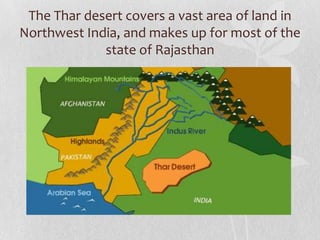
The Thar desert covers a vast area of land in
Northwest India, and makes up for most of the
             state of Rajasthan
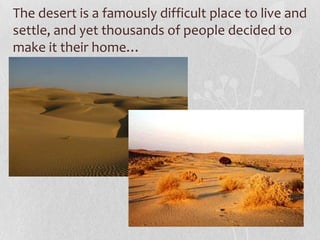
The desert is a famously difficult place to live and
settle, and yet thousands of people decided to
make it their home…
The desert provides opportunity for many types
of industry. Despite being a difficult place to
live, it is the only place with enough area to herd
•
cows, goats and camels
• Other industries include:
• Quarrying stone
• Mining gold and jewels (the Thar desert is famous for its rubies and
  emeralds)
• Harvesting water – when something is rare and precious, people
  will always be able to make money from it…
• Traditional textile manufacture and textile printing
• A huge and successful tourist industry
• Elephant farming
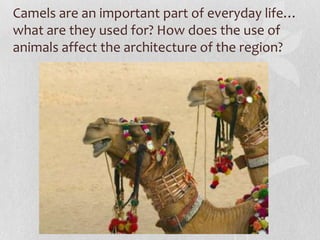
Camels are an important part of everyday life…
what are they used for? How does the use of
animals affect the architecture of the region?
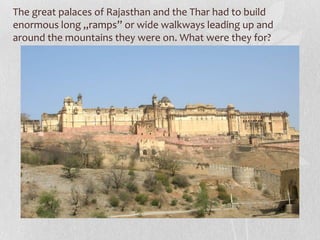
The great palaces of Rajasthan and the Thar had to build
enormous long „ramps” or wide walkways leading up and
around the mountains they were on. What were they for?
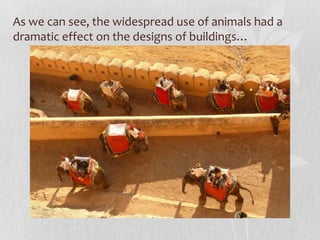
As we can see, the widespread use of animals had a
dramatic effect on the designs of buildings…
Rajasthanis… the modern nomads of India
• Why would people become nomadic?
• Why would people stay nomadic? India has changed almost
  completely over the past 100 years… why are so many of the
  people who live in Rajasthan still living nomadic lives?
• What might we expect a nomadic culture to be like? How might we
  describe a nomadic culture? What other differences are there
  between nomadic and non—nomadic people?

• What can we guess about their homes and architecture?
• What materials must they use, or have access too? What must their
  properties be?
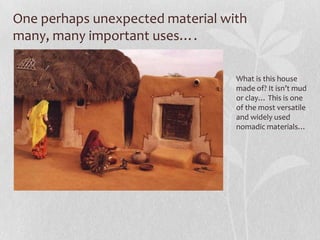
One perhaps unexpected material with
many, many important uses….

                                  What is this house
                                  made of? It isn’t mud
                                  or clay… This is one
                                  of the most versatile
                                  and widely used
                                  nomadic materials…
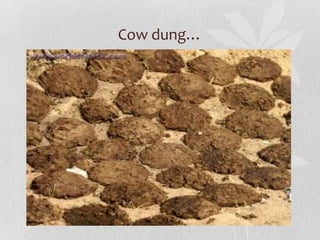
Cow dung…
What would the religions and temples of the
desert cultures be like?
• Let’s think again about what a deity or temple iconography needs
  in order to be created…
• What would this culture essentially worship?
• What might the icons of this deity be?
• What would be feared/respected/misunderstood etc, and how
  could this be represented?
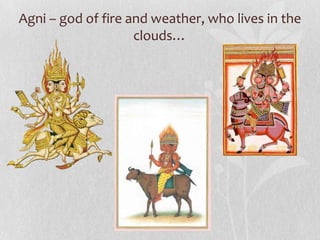
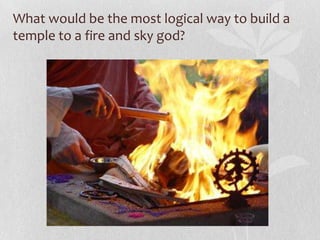
Agni – god of fire and weather, who lives in the
                    clouds…
What would be the most logical way to build a
temple to a fire and sky god?
Modern Rajasthan is a blaze of colours
• Split between two main cities, Jaipur and Jodhpur, it is famous
  around the world for its colourful culture, its palaces and forts, and
  beautiful designs and buildings.
• Colour has always been important in desert cultures. Why might
  this be?
• Certainly Jaipur and Jodhpur are two of the most distinctive cities
  in the world, known respectively as the ‚pink’ and ‚blue’ cities of
  India, sitting in the ‚golden triangle’ of Rajasthan.
• As with most of India, ancient tradition sits next to modern
  development, and nowhere is this more obvious than the desert
  cities.
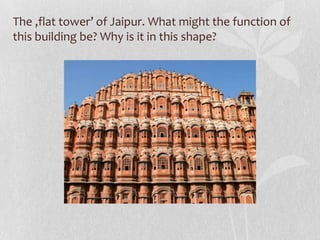
The ‚flat tower’ of Jaipur. What might the function of
this building be? Why is it in this shape?
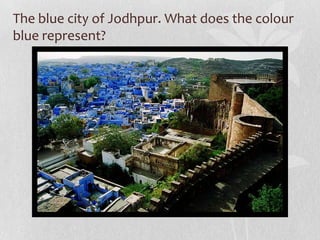
The blue city of Jodhpur. What does the colour
blue represent?

Lesson iv – the great indian desert

  • 1.
    LESSON IV –THE GREAT INDIAN DESERT The Thar Desert is by far the largest desert in India; a barren, dry and empty place. And yet many millions live there and have done for centuries….
  • 2.
    The Thar desertcovers a vast area of land in Northwest India, and makes up for most of the state of Rajasthan
  • 3.
    The desert isa famously difficult place to live and settle, and yet thousands of people decided to make it their home…
  • 4.
    The desert providesopportunity for many types of industry. Despite being a difficult place to live, it is the only place with enough area to herd • cows, goats and camels • Other industries include: • Quarrying stone • Mining gold and jewels (the Thar desert is famous for its rubies and emeralds) • Harvesting water – when something is rare and precious, people will always be able to make money from it… • Traditional textile manufacture and textile printing • A huge and successful tourist industry • Elephant farming
  • 5.
    Camels are animportant part of everyday life… what are they used for? How does the use of animals affect the architecture of the region?
  • 6.
    The great palacesof Rajasthan and the Thar had to build enormous long „ramps” or wide walkways leading up and around the mountains they were on. What were they for?
  • 7.
    As we cansee, the widespread use of animals had a dramatic effect on the designs of buildings…
  • 8.
    Rajasthanis… the modernnomads of India • Why would people become nomadic? • Why would people stay nomadic? India has changed almost completely over the past 100 years… why are so many of the people who live in Rajasthan still living nomadic lives? • What might we expect a nomadic culture to be like? How might we describe a nomadic culture? What other differences are there between nomadic and non—nomadic people? • What can we guess about their homes and architecture? • What materials must they use, or have access too? What must their properties be?
  • 9.
    One perhaps unexpectedmaterial with many, many important uses…. What is this house made of? It isn’t mud or clay… This is one of the most versatile and widely used nomadic materials…
  • 10.
  • 11.
    What would thereligions and temples of the desert cultures be like? • Let’s think again about what a deity or temple iconography needs in order to be created… • What would this culture essentially worship? • What might the icons of this deity be? • What would be feared/respected/misunderstood etc, and how could this be represented?
  • 12.
    Agni – godof fire and weather, who lives in the clouds…
  • 13.
    What would bethe most logical way to build a temple to a fire and sky god?
  • 14.
    Modern Rajasthan isa blaze of colours • Split between two main cities, Jaipur and Jodhpur, it is famous around the world for its colourful culture, its palaces and forts, and beautiful designs and buildings. • Colour has always been important in desert cultures. Why might this be? • Certainly Jaipur and Jodhpur are two of the most distinctive cities in the world, known respectively as the ‚pink’ and ‚blue’ cities of India, sitting in the ‚golden triangle’ of Rajasthan. • As with most of India, ancient tradition sits next to modern development, and nowhere is this more obvious than the desert cities.
  • 15.
    The ‚flat tower’of Jaipur. What might the function of this building be? Why is it in this shape?
  • 16.
    The blue cityof Jodhpur. What does the colour blue represent?