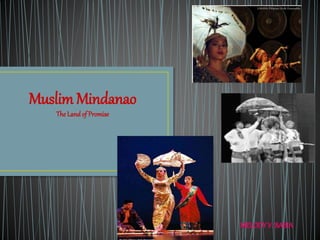
Muslim Mindanao
The Landof Promise
MELODYV. BABIA
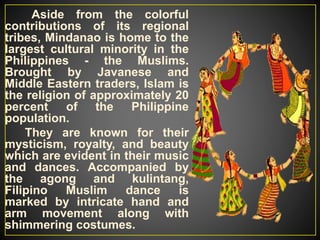
Aside from the colorful
contributions of its regional
tribes, Mindanao is home to the
largest cultural minority in the
Philippines - the Muslims.
Brought by Javanese and
Middle Eastern traders, Islam is
the religion of approximately 20
percent of the Philippine
population.
They are known for their
mysticism, royalty, and beauty
which are evident in their music
and dances. Accompanied by
the agong and kulintang,
Filipino Muslim dance is
marked by intricate hand and
arm movement along with
shimmering costumes.
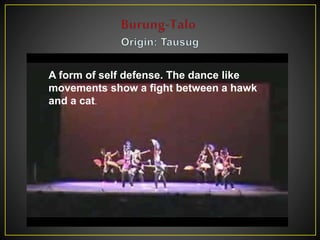
A form of self defense. The dance like
movements show a fight between a hawk
and a cat.
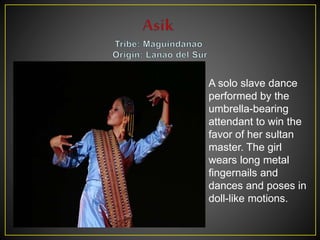
A solo slave dance
performed by the
umbrella-bearing
attendant to win the
favor of her sultan
master. The girl
wears long metal
fingernails and
dances and poses in
doll-like motions.
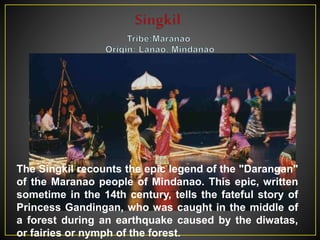
The Singkil recounts the epic legend of the "Darangan"
of the Maranao people of Mindanao. This epic, written
sometime in the 14th century, tells the fateful story of
Princess Gandingan, who was caught in the middle of
a forest during an earthquake caused by the diwatas,
or fairies or nymph of the forest.
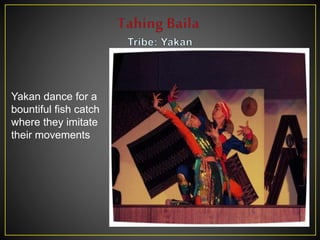
Yakan dance for a
bountiful fish catch
where they imitate
their movements
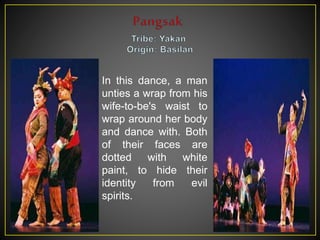
In this dance, a man
unties a wrap from his
wife-to-be's waist to
wrap around her body
and dance with. Both
of their faces are
dotted with white
paint, to hide their
identity from evil
spirits.
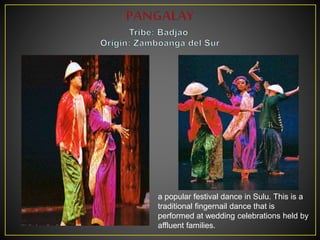
a popular festival dance in Sulu. This is a
traditional fingernail dance that is
performed at wedding celebrations held by
affluent families.
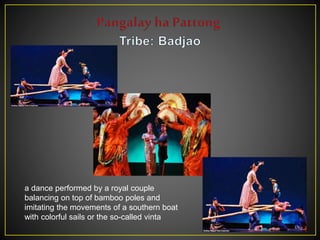
a dance performed by a royal couple
balancing on top of bamboo poles and
imitating the movements of a southern boat
with colorful sails or the so-called vinta
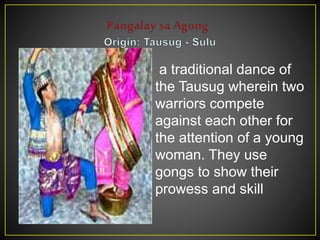
a traditional dance of
the Tausug wherein two
warriors compete
against each other for
the attention of a young
woman. They use
gongs to show their
prowess and skill
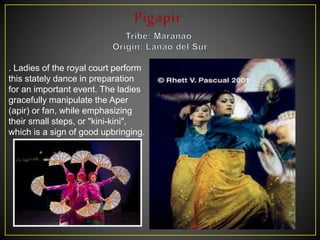
. Ladies of the royal court perform
this stately dance in preparation
for an important event. The ladies
gracefully manipulate the Aper
(apir) or fan, while emphasizing
their small steps, or "kini-kini",
which is a sign of good upbringing.
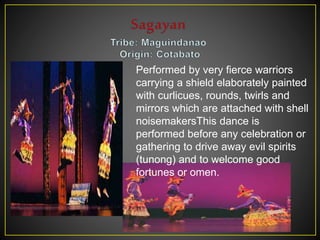
Performed by very fierce warriors
carrying a shield elaborately painted
with curlicues, rounds, twirls and
mirrors which are attached with shell
noisemakersThis dance is
performed before any celebration or
gathering to drive away evil spirits
(tunong) and to welcome good
fortunes or omen.
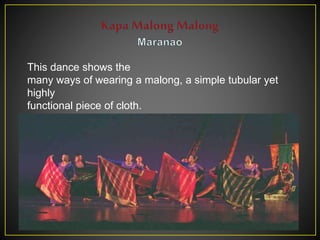
This dance shows the
many ways of wearing a malong, a simple tubular yet
highly
functional piece of cloth.
Mindanao dances

Mindanao dances

  • 1.
    Muslim Mindanao The LandofPromise MELODYV. BABIA
  • 2.
    Aside from thecolorful contributions of its regional tribes, Mindanao is home to the largest cultural minority in the Philippines - the Muslims. Brought by Javanese and Middle Eastern traders, Islam is the religion of approximately 20 percent of the Philippine population. They are known for their mysticism, royalty, and beauty which are evident in their music and dances. Accompanied by the agong and kulintang, Filipino Muslim dance is marked by intricate hand and arm movement along with shimmering costumes.
  • 4.
    A form ofself defense. The dance like movements show a fight between a hawk and a cat.
  • 5.
    A solo slavedance performed by the umbrella-bearing attendant to win the favor of her sultan master. The girl wears long metal fingernails and dances and poses in doll-like motions.
  • 6.
    The Singkil recountsthe epic legend of the "Darangan" of the Maranao people of Mindanao. This epic, written sometime in the 14th century, tells the fateful story of Princess Gandingan, who was caught in the middle of a forest during an earthquake caused by the diwatas, or fairies or nymph of the forest.
  • 7.
    Yakan dance fora bountiful fish catch where they imitate their movements
  • 8.
    In this dance,a man unties a wrap from his wife-to-be's waist to wrap around her body and dance with. Both of their faces are dotted with white paint, to hide their identity from evil spirits.
  • 9.
    a popular festivaldance in Sulu. This is a traditional fingernail dance that is performed at wedding celebrations held by affluent families.
  • 10.
    a dance performedby a royal couple balancing on top of bamboo poles and imitating the movements of a southern boat with colorful sails or the so-called vinta
  • 11.
    a traditional danceof the Tausug wherein two warriors compete against each other for the attention of a young woman. They use gongs to show their prowess and skill
  • 12.
    . Ladies ofthe royal court perform this stately dance in preparation for an important event. The ladies gracefully manipulate the Aper (apir) or fan, while emphasizing their small steps, or "kini-kini", which is a sign of good upbringing.
  • 13.
    Performed by veryfierce warriors carrying a shield elaborately painted with curlicues, rounds, twirls and mirrors which are attached with shell noisemakersThis dance is performed before any celebration or gathering to drive away evil spirits (tunong) and to welcome good fortunes or omen.
  • 14.
    This dance showsthe many ways of wearing a malong, a simple tubular yet highly functional piece of cloth.