SOCIOLOGICAL PERSPECTIVES
FOR HEALTH & SOCIAL CARE
Unit 7
Lesson 3
Collectivism, New Right and
Postmodernism
Learning Objectives
• To describe the three remaining
sociological perspectives:
– Collectivism
– New Right
– Postmodernism
COLLECTIVISM
Government
commitment to
providing care and
support to the
vulnerable in society
through taxation and
national insurance.
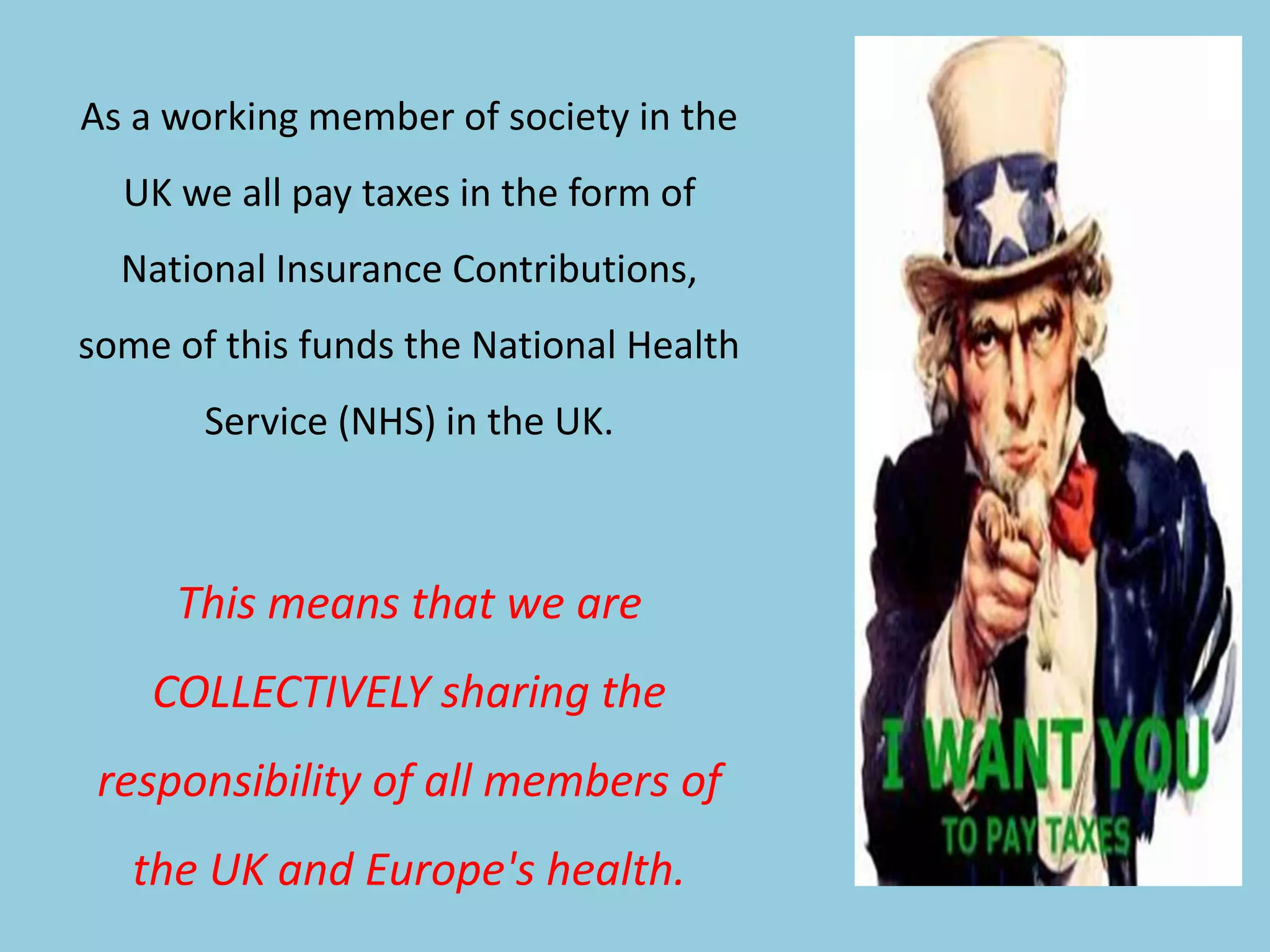
As a working member of society in the
UK we all pay taxes in the form of
National Insurance Contributions,
some of this funds the National Health
Service (NHS) in the UK.
This means that we are
COLLECTIVELY sharing the
responsibility of all members of
the UK and Europe's health.
• A political response to the role of government
in our society and their response to meeting
identified areas of welfare need.
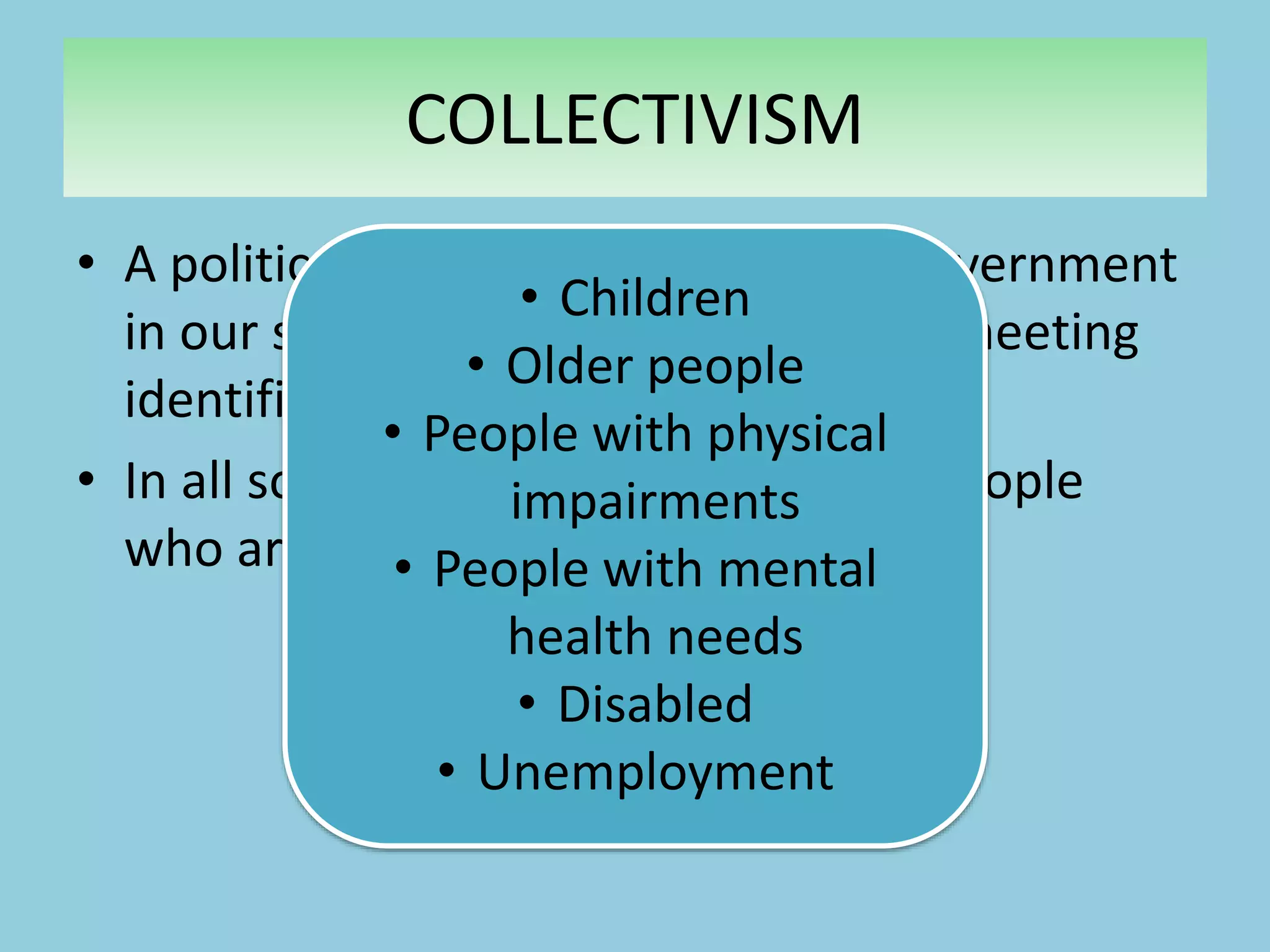
• In all societies, there are groups of people
who are vulnerable.
Can you think of any?
COLLECTIVISM
• Children
• Older people
• People with physical
impairments
• People with mental
health needs
• Disabled
• Unemployment
• After World War II, many of the soldiers were
living in deprived conditions.
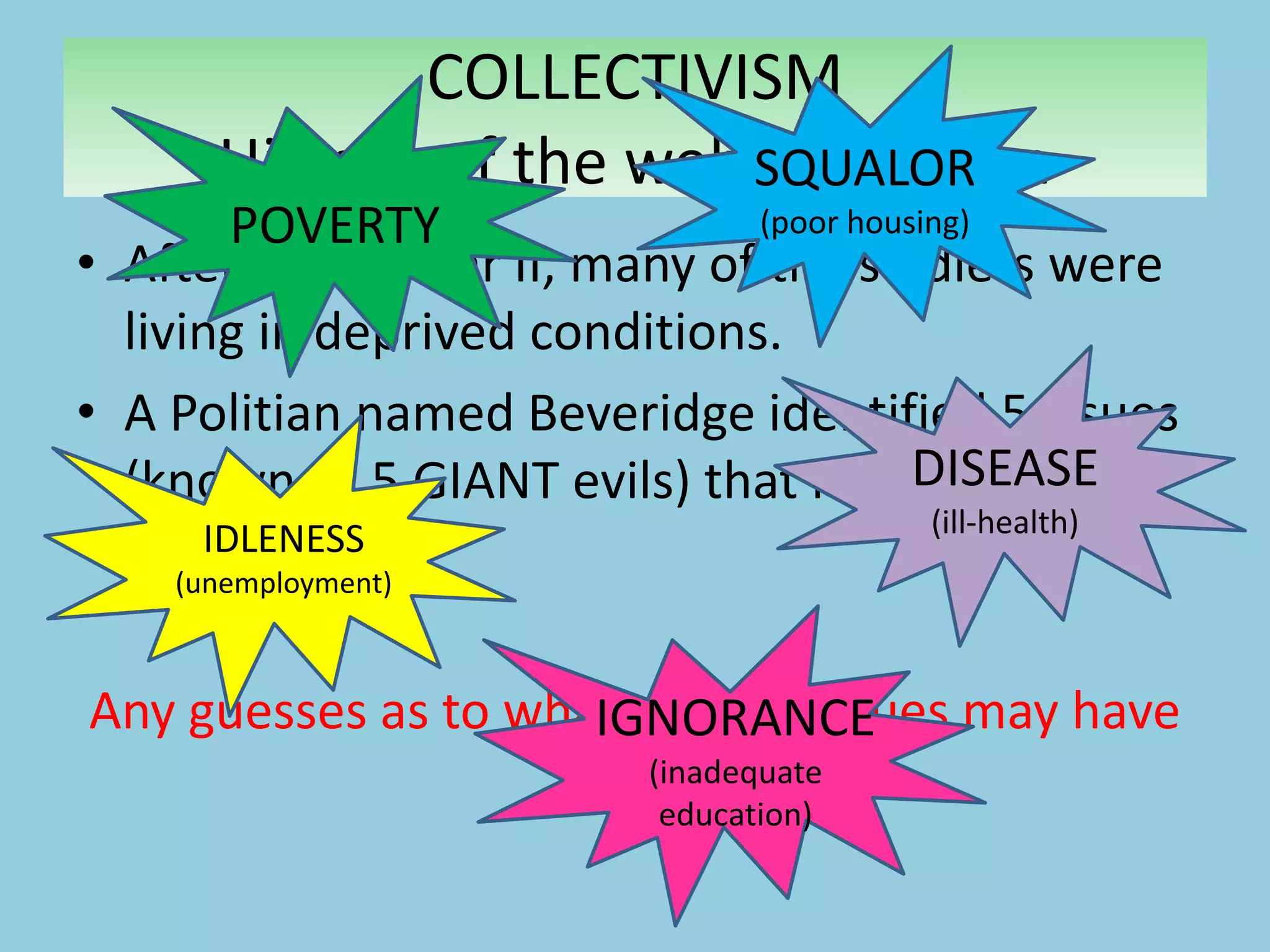
• A Politian named Beveridge identified 5 issues
(known as 5 GIANT evils) that needed to be
addressed.
Any guesses as to what these 5 issues may have
been?
COLLECTIVISM
History of the welfare system
POVERTY
IDLENESS
(unemployment)
SQUALOR
(poor housing)
DISEASE
(ill-health)
IGNORANCE
(inadequate
education)
POVERTY
IDLENESS
(unemployment)
DISEASE
(ill-health)
SQUALOR
(poor housing)
IGNORANCE
(inadequate
education)
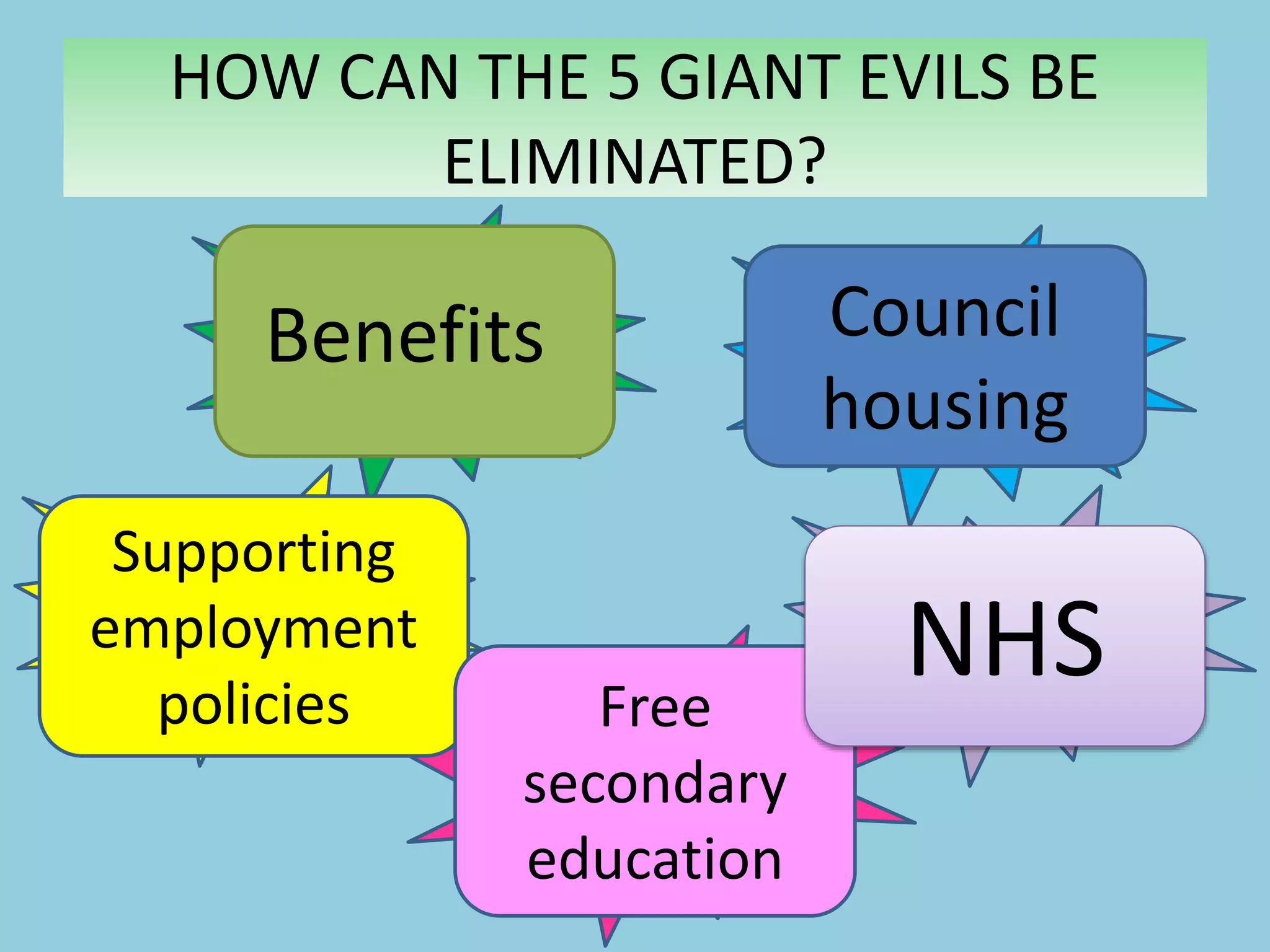
HOW CAN THE 5 GIANT EVILS BE
ELIMINATED?
Benefits
Supporting
employment
policies Free
secondary
education
NHS
Council
housing
Collectivism:
History of the welfare system
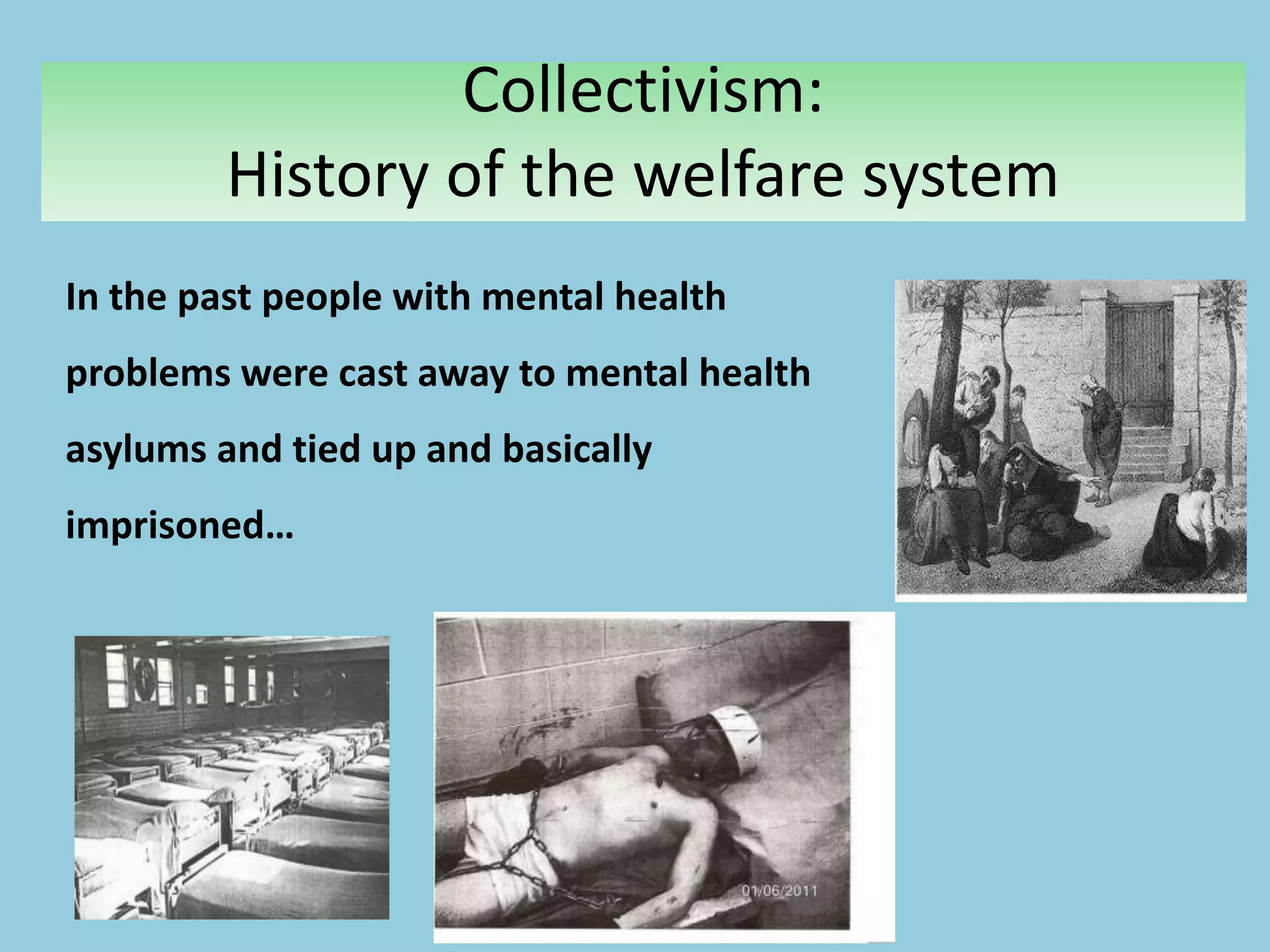
In the past people with mental health
problems were cast away to mental health
asylums and tied up and basically
imprisoned…
Collectivism:
History of the welfare system
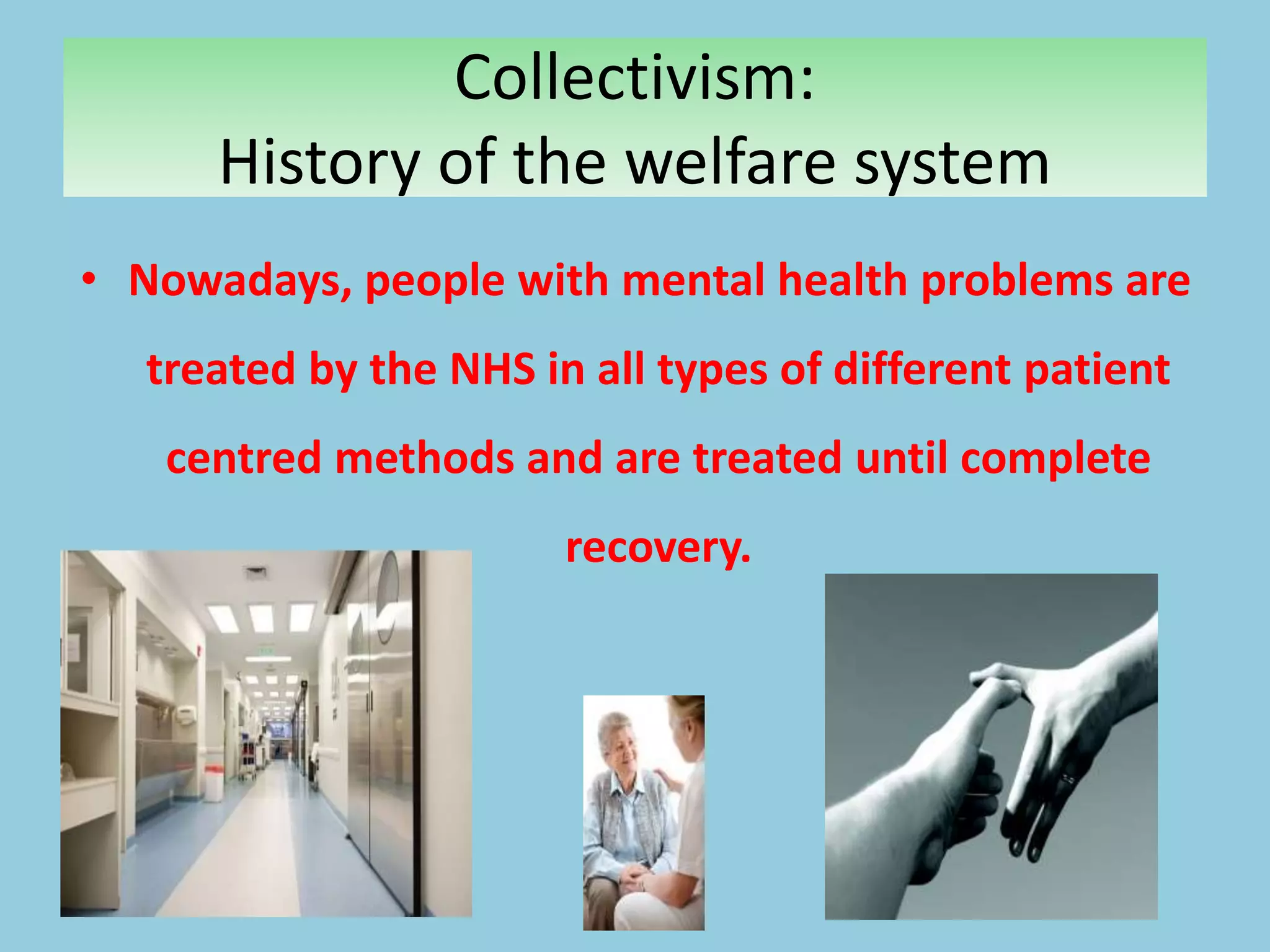
• Nowadays, people with mental health problems are
treated by the NHS in all types of different patient
centred methods and are treated until complete
recovery.
THE NEW RIGHT
Opposite view to Collectivism
Political View
SOCIETY WORKS BEST
IF INDIVIDUALS TAKE
RESPONSIBILITY FOR
THEMSELVES AND
NOT DEPEND ON THE
STATE
• The New Right was developed in the 1980’s
when the Conservative Party was in power
THE NEW RIGHT – where it all began
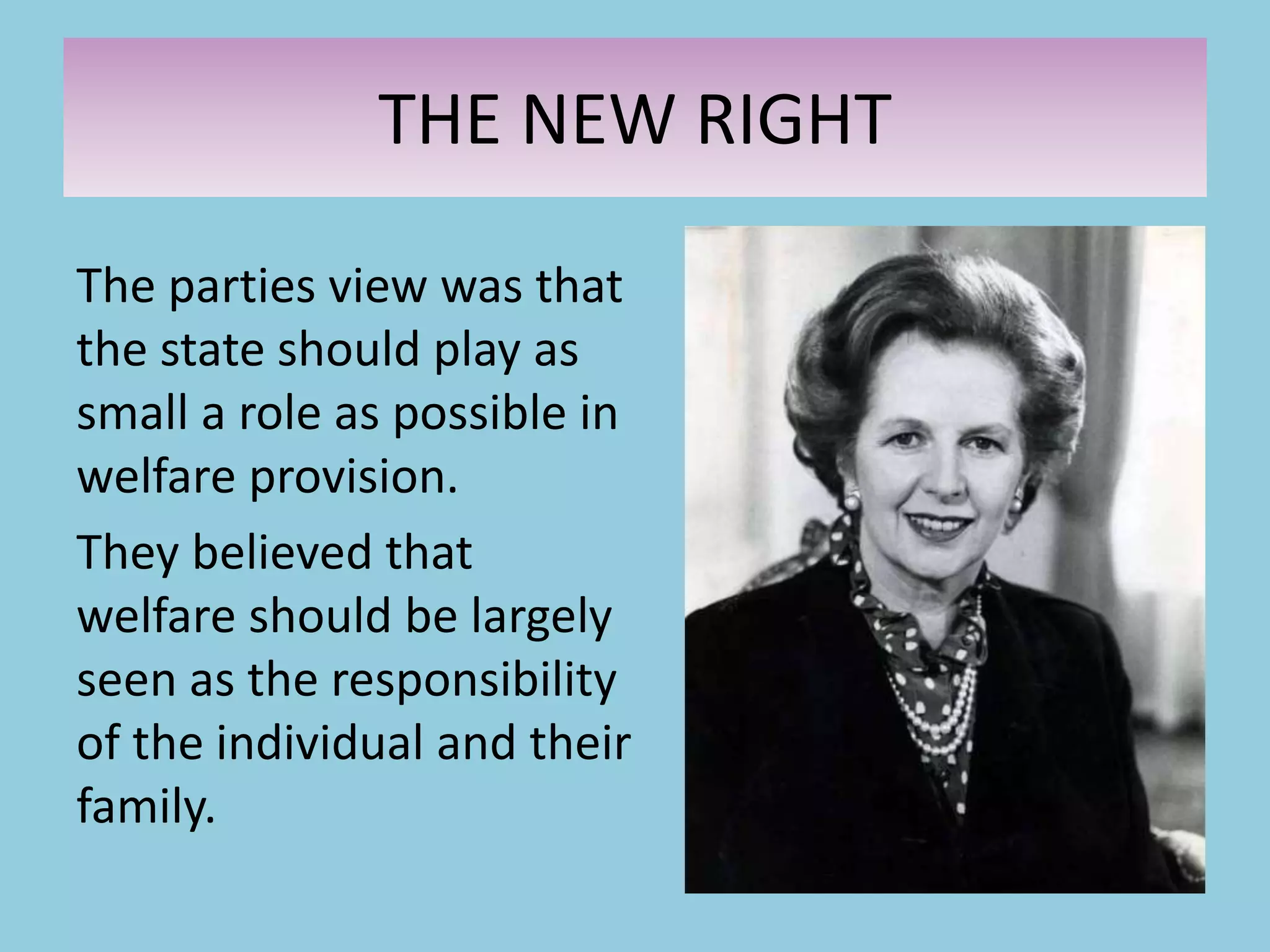
The parties view was that
the state should play as
small a role as possible in
welfare provision.
They believed that
welfare should be largely
seen as the responsibility
of the individual and their
family.
THE NEW RIGHT
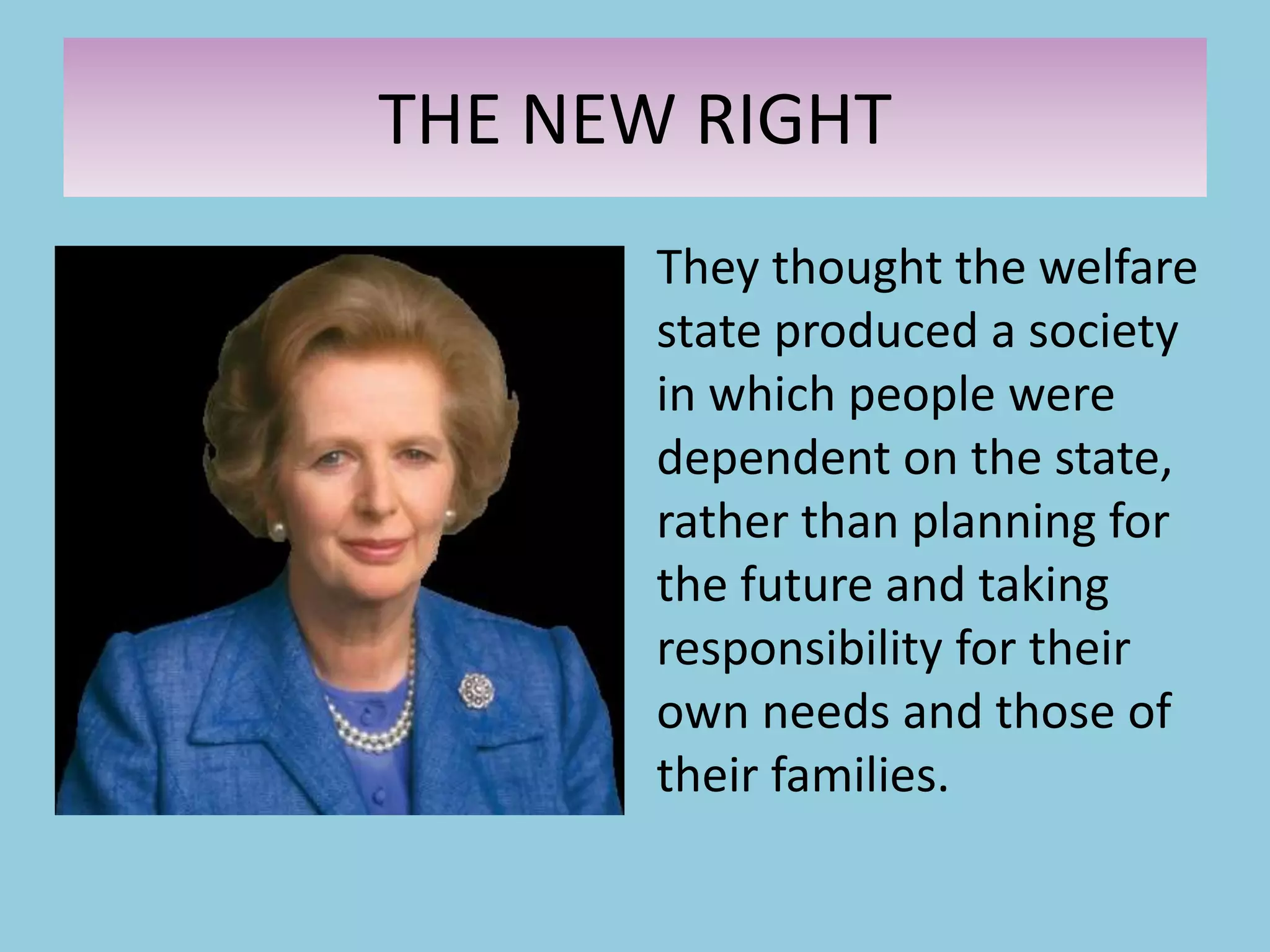
They thought the welfare
state produced a society
in which people were
dependent on the state,
rather than planning for
the future and taking
responsibility for their
own needs and those of
their families.
THE NEW RIGHT
New Right challenges Collectivism…
• They see welfare as the responsibility of the
individual and their family rather than the
state (opposite to collectivists view).
• They regard state support (benefits) as
intrusive and supporting a dependency
culture draining resources
– they believe that the state should promote
independence, freedom and liberty.
Time to vote!
Do you agree with:
The New Right or The Collectivists?
In pairs discuss:
 How much responsibility should the state
have for providing health, social care and
welfare support?
 Is it the individuals responsibility or the
states for our health & welfare?
 Do you think competition within the
health sector would create more efficient
& effective services
Discuss this in pairs
and then vote which
view you wish to
support
5 minutes
Simon, aged 45 has mental health
problems. He has received care & support
from the NHS & voluntary sectors for his
problems for over 20 years.
Simon often felt frustrated with the level
of services he received and has always
said that he would have a better quality of
life if the state would just give him the
money to buy care & support services
himself.
A new government initiative a
‘Personalisation Policy’ has been
introduced, so now Simon can control his
own budget and personalise his own care.
Simon is very keen as he believes that he
understands his needs best.
POSTMODERNISM
ACTIVITY
Complete the first side of the worksheet in pairs.
Use your phones to research.
POST MODERNISM
• Focuses on the rapid change in our
society.
• Postmodernists believe that because of
the constant change, structuralist
perspectives like Marxism and
functionalism no longer help us to
understand society.
• People make their own decisions.
POSTMODERNISM
Postmodernism
It is an approach that looks to understand
society by focusing on rapid change and
uncertainty in our society.
Postmodernists would say that we can no longer
talk about established institutions such as:
• Family
• Religion
• Economy
….because nothing is staying the same anymore
Postmodernists say society now is much less
stable , more fragmented and fast changing
which causes uncertainty & chaos within our
societies
For example we see and
think about
‘The Family’ in a different
way these days, family
structure, roles and
relationships within the
family can be diverse,
there is no longer a
‘Typical Family’
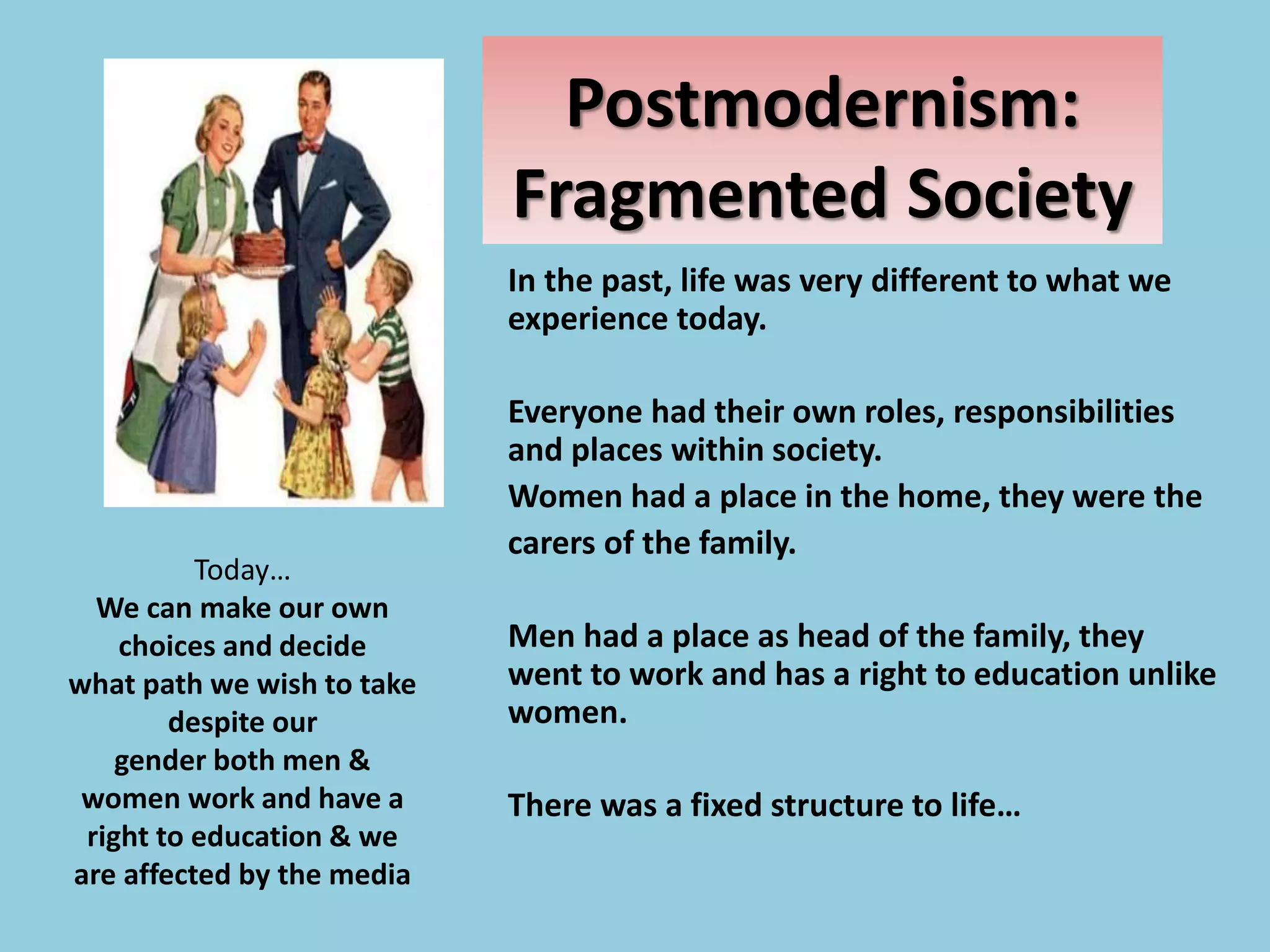
Postmodernism:
Fragmented Society
In the past, life was very different to what we
experience today.
Everyone had their own roles, responsibilities
and places within society.
Women had a place in the home, they were the
carers of the family.
Men had a place as head of the family, they
went to work and has a right to education unlike
women.
There was a fixed structure to life…
Today…
We can make our own
choices and decide
what path we wish to take
despite our
gender both men &
women work and have a
right to education & we
are affected by the media
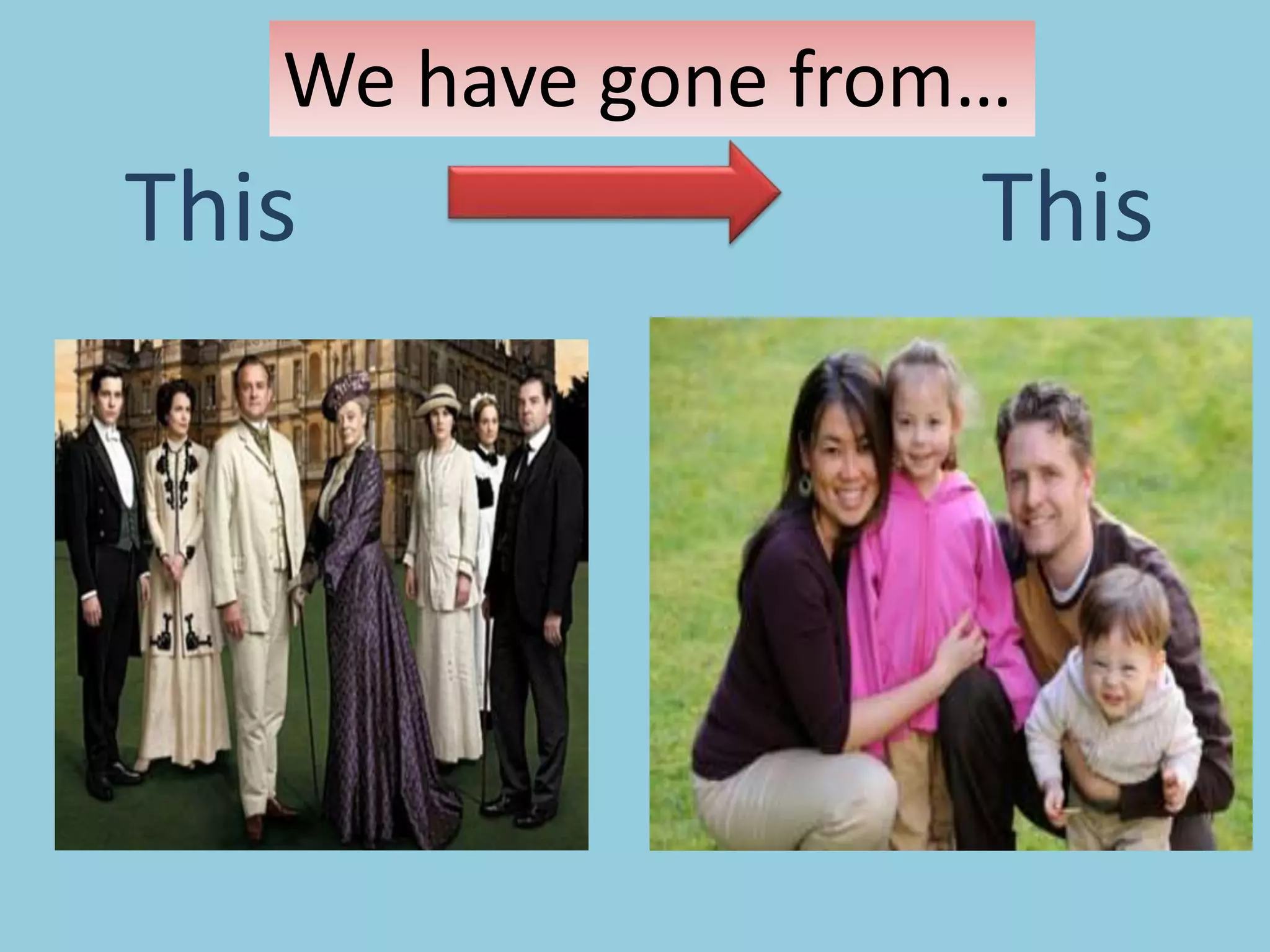
We have gone from…
This This
Postmodernism
For example whole
communities would
gather together on
Sunday to attend
church
In modern industrial society:
• Social institutions (Families & Communities)
• Social Roles (Family Roles)
• And beliefs (Strict Religion)
that people held were very straight
forward and rigid….Postmodernists
believe that this is now a thing of
the past.
We have gone from…
This This
Postmodernism
Employment
In the past people would take on a ‘Job for life’
but nowadays very rarely do people begin a job
that they see as a ‘Job for life’.
Working life today, just like social life today is
unpredictable, less certain and risky.
Not only just from an employers perspective but
as a personal social perspective too, today we
have more choice to change our minds and
take risks.
Postmodernists argue
that society is no
longer based upon
stable, permanent
social institutions that
people can base their
lives around like they
did in the past.
We have gone from…
This This
Postmodernism:
Health & Illness
Nowadays we focus
on Modern medicine
rather than prayer
and fate…
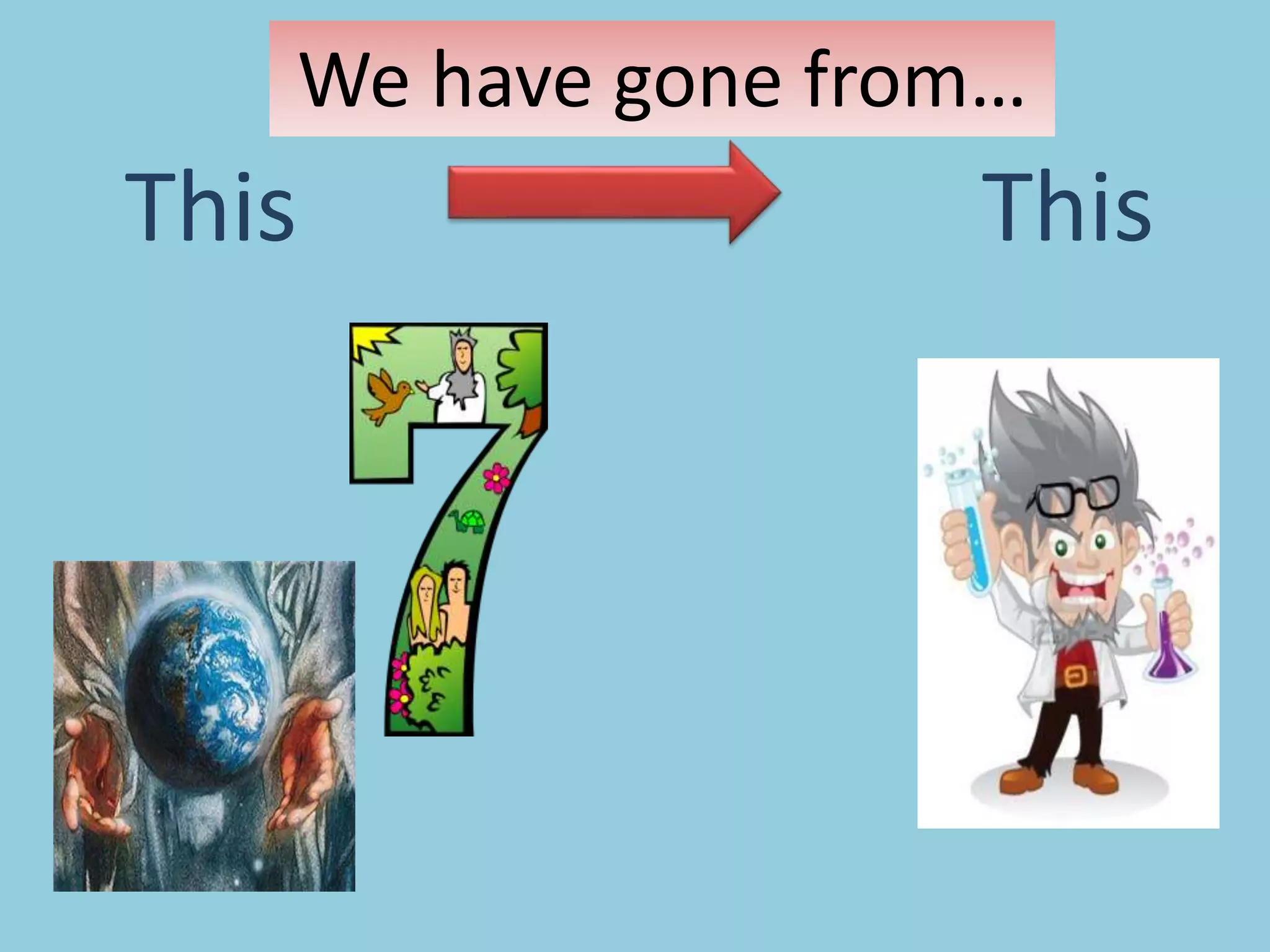
Health & Illness has changed over time…
Traditionally…
Societies would explain illness through
superstition and religion.
For example ill health would be due to
‘Evil Sprits’ or ‘God’s will’
Postmodernism:
Health & Illness
In Modern Society:
MOST societies now explain things
scientifically and there is usually a
preferred or best way of curing or helping
health & illness.
Modern society refer to modern
medicine…
Eg. Antibiotics
So…. We have gone from…
This This
Postmodernism:
Health & Illness
Postmodern societies are characterised by
diversity and fragmentation.
In a postmodern society people can pick and
mix from a range of traditional and modern
therapies
Can you think of any
examples?
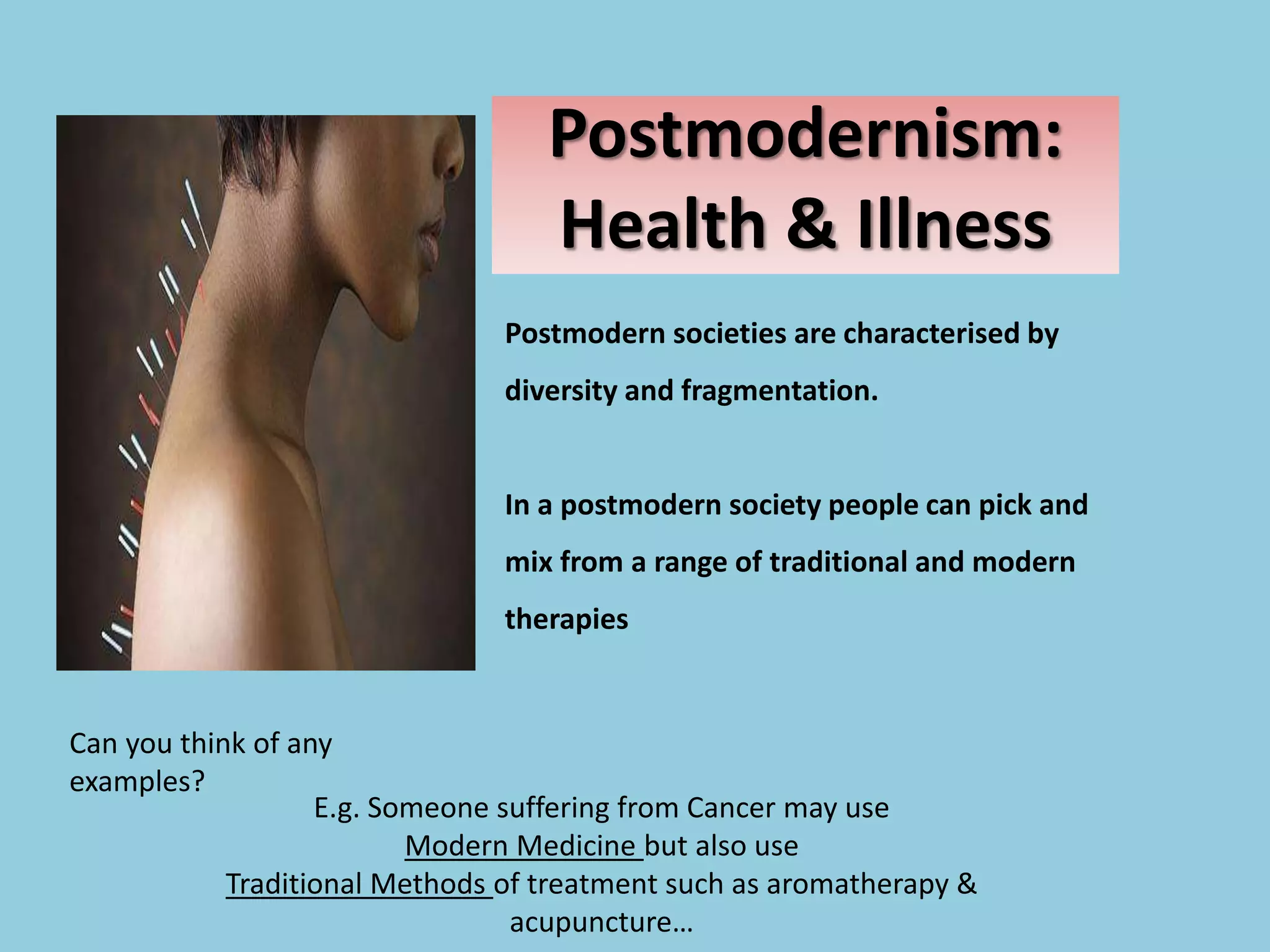
E.g. Someone suffering from Cancer may use
Modern Medicine but also use
Traditional Methods of treatment such as aromatherapy &
acupuncture…
Now you can complete the Collectivism, New
Right and Postmodernism section of P1
• Explain the principal sociological perspectives
Produce an information booklet or a set of
factsheets explaining the principal sociological
perspectives:

Lesson 3 - collectivism and postmodernism

  • 1.
    SOCIOLOGICAL PERSPECTIVES FOR HEALTH& SOCIAL CARE Unit 7 Lesson 3 Collectivism, New Right and Postmodernism
  • 2.
    Learning Objectives • Todescribe the three remaining sociological perspectives: – Collectivism – New Right – Postmodernism
  • 3.
  • 4.
    Government commitment to providing careand support to the vulnerable in society through taxation and national insurance.
  • 5.
    As a workingmember of society in the UK we all pay taxes in the form of National Insurance Contributions, some of this funds the National Health Service (NHS) in the UK. This means that we are COLLECTIVELY sharing the responsibility of all members of the UK and Europe's health.
  • 6.
    • A politicalresponse to the role of government in our society and their response to meeting identified areas of welfare need. • In all societies, there are groups of people who are vulnerable. Can you think of any? COLLECTIVISM • Children • Older people • People with physical impairments • People with mental health needs • Disabled • Unemployment
  • 7.
    • After WorldWar II, many of the soldiers were living in deprived conditions. • A Politian named Beveridge identified 5 issues (known as 5 GIANT evils) that needed to be addressed. Any guesses as to what these 5 issues may have been? COLLECTIVISM History of the welfare system POVERTY IDLENESS (unemployment) SQUALOR (poor housing) DISEASE (ill-health) IGNORANCE (inadequate education)
  • 8.
    POVERTY IDLENESS (unemployment) DISEASE (ill-health) SQUALOR (poor housing) IGNORANCE (inadequate education) HOW CANTHE 5 GIANT EVILS BE ELIMINATED? Benefits Supporting employment policies Free secondary education NHS Council housing
  • 9.
    Collectivism: History of thewelfare system In the past people with mental health problems were cast away to mental health asylums and tied up and basically imprisoned…
  • 10.
    Collectivism: History of thewelfare system • Nowadays, people with mental health problems are treated by the NHS in all types of different patient centred methods and are treated until complete recovery.
  • 11.
    THE NEW RIGHT Oppositeview to Collectivism Political View
  • 12.
    SOCIETY WORKS BEST IFINDIVIDUALS TAKE RESPONSIBILITY FOR THEMSELVES AND NOT DEPEND ON THE STATE
  • 13.
    • The NewRight was developed in the 1980’s when the Conservative Party was in power THE NEW RIGHT – where it all began
  • 14.
    The parties viewwas that the state should play as small a role as possible in welfare provision. They believed that welfare should be largely seen as the responsibility of the individual and their family. THE NEW RIGHT
  • 15.
    They thought thewelfare state produced a society in which people were dependent on the state, rather than planning for the future and taking responsibility for their own needs and those of their families. THE NEW RIGHT
  • 16.
    New Right challengesCollectivism… • They see welfare as the responsibility of the individual and their family rather than the state (opposite to collectivists view). • They regard state support (benefits) as intrusive and supporting a dependency culture draining resources – they believe that the state should promote independence, freedom and liberty.
  • 17.
    Time to vote! Doyou agree with: The New Right or The Collectivists? In pairs discuss:  How much responsibility should the state have for providing health, social care and welfare support?  Is it the individuals responsibility or the states for our health & welfare?  Do you think competition within the health sector would create more efficient & effective services Discuss this in pairs and then vote which view you wish to support 5 minutes
  • 18.
    Simon, aged 45has mental health problems. He has received care & support from the NHS & voluntary sectors for his problems for over 20 years. Simon often felt frustrated with the level of services he received and has always said that he would have a better quality of life if the state would just give him the money to buy care & support services himself. A new government initiative a ‘Personalisation Policy’ has been introduced, so now Simon can control his own budget and personalise his own care. Simon is very keen as he believes that he understands his needs best.
  • 19.
  • 20.
    ACTIVITY Complete the firstside of the worksheet in pairs. Use your phones to research.
  • 21.
    POST MODERNISM • Focuseson the rapid change in our society. • Postmodernists believe that because of the constant change, structuralist perspectives like Marxism and functionalism no longer help us to understand society. • People make their own decisions. POSTMODERNISM
  • 22.
    Postmodernism It is anapproach that looks to understand society by focusing on rapid change and uncertainty in our society. Postmodernists would say that we can no longer talk about established institutions such as: • Family • Religion • Economy ….because nothing is staying the same anymore Postmodernists say society now is much less stable , more fragmented and fast changing which causes uncertainty & chaos within our societies For example we see and think about ‘The Family’ in a different way these days, family structure, roles and relationships within the family can be diverse, there is no longer a ‘Typical Family’
  • 23.
    Postmodernism: Fragmented Society In thepast, life was very different to what we experience today. Everyone had their own roles, responsibilities and places within society. Women had a place in the home, they were the carers of the family. Men had a place as head of the family, they went to work and has a right to education unlike women. There was a fixed structure to life… Today… We can make our own choices and decide what path we wish to take despite our gender both men & women work and have a right to education & we are affected by the media
  • 24.
    We have gonefrom… This This
  • 25.
    Postmodernism For example whole communitieswould gather together on Sunday to attend church In modern industrial society: • Social institutions (Families & Communities) • Social Roles (Family Roles) • And beliefs (Strict Religion) that people held were very straight forward and rigid….Postmodernists believe that this is now a thing of the past.
  • 26.
    We have gonefrom… This This
  • 27.
    Postmodernism Employment In the pastpeople would take on a ‘Job for life’ but nowadays very rarely do people begin a job that they see as a ‘Job for life’. Working life today, just like social life today is unpredictable, less certain and risky. Not only just from an employers perspective but as a personal social perspective too, today we have more choice to change our minds and take risks. Postmodernists argue that society is no longer based upon stable, permanent social institutions that people can base their lives around like they did in the past.
  • 28.
    We have gonefrom… This This
  • 29.
    Postmodernism: Health & Illness Nowadayswe focus on Modern medicine rather than prayer and fate… Health & Illness has changed over time… Traditionally… Societies would explain illness through superstition and religion. For example ill health would be due to ‘Evil Sprits’ or ‘God’s will’
  • 30.
    Postmodernism: Health & Illness InModern Society: MOST societies now explain things scientifically and there is usually a preferred or best way of curing or helping health & illness. Modern society refer to modern medicine… Eg. Antibiotics
  • 31.
    So…. We havegone from… This This
  • 32.
    Postmodernism: Health & Illness Postmodernsocieties are characterised by diversity and fragmentation. In a postmodern society people can pick and mix from a range of traditional and modern therapies Can you think of any examples? E.g. Someone suffering from Cancer may use Modern Medicine but also use Traditional Methods of treatment such as aromatherapy & acupuncture…
  • 33.
    Now you cancomplete the Collectivism, New Right and Postmodernism section of P1 • Explain the principal sociological perspectives Produce an information booklet or a set of factsheets explaining the principal sociological perspectives:

Editor's Notes

  • #18 Students to complete the handout in the booklet provided including Simons case study (on next slide).
  • #27 Nature - science