Financial
     Management 1
 FM is required for an organisation to be
  able to achieve its goals. This unit will
look also at Financial Strategies/Planning
           and Systems Control
Importance and role of financial
management
   Many businesses have departments who
    manage the finance in the business.
   It is the responsibility of the finance
    manager to plan and control the finances of
    the business.
   This produces accurate and timely data.
       Why is this important????
Thus
   FM is the recording, reporting, analysing,
    interpreting and evaluating of information
    so the organisation can meet its objectives.

   Look now at fig 7.1 pg 347
Objectives of FM
   Liquidity – Cash Flow
   Profitability – Revenue covers Expenses
   Risk Minimisation – Procedures to minimise
    things going wrong
   Growth – Ways to expand the business
Conflicting Objectives
   There will be times when the objectives
    conflict.
       For example, investing in a new project. This will
        hurt the cash flow and profits, but will help make
        the business grow in the long run.
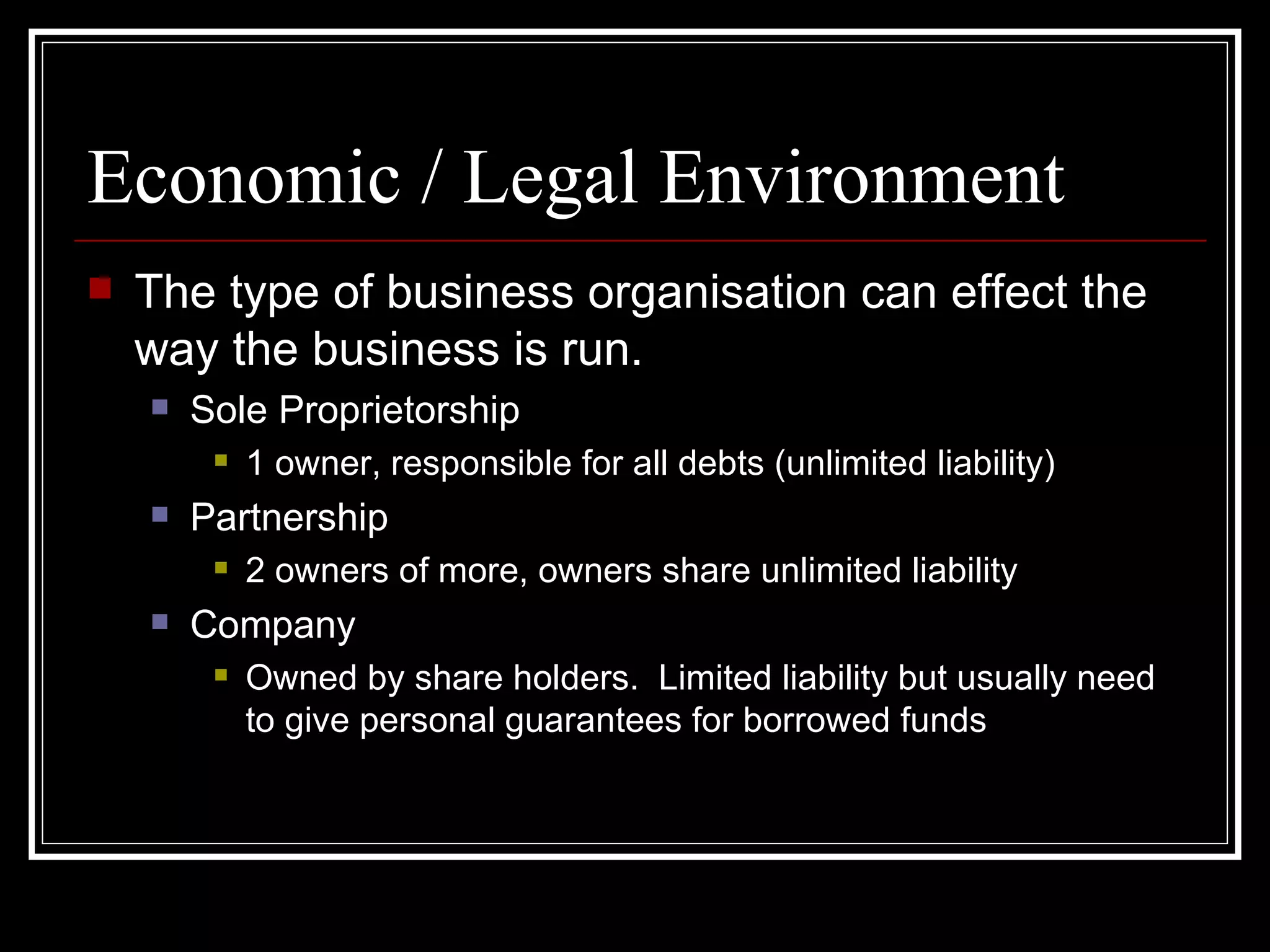
Economic / Legal Environment
   The type of business organisation can effect the
    way the business is run.
       Sole Proprietorship
            1 owner, responsible for all debts (unlimited liability)
       Partnership
            2 owners of more, owners share unlimited liability
       Company
            Owned by share holders. Limited liability but usually need
             to give personal guarantees for borrowed funds
Question
   Q3 page 349/350
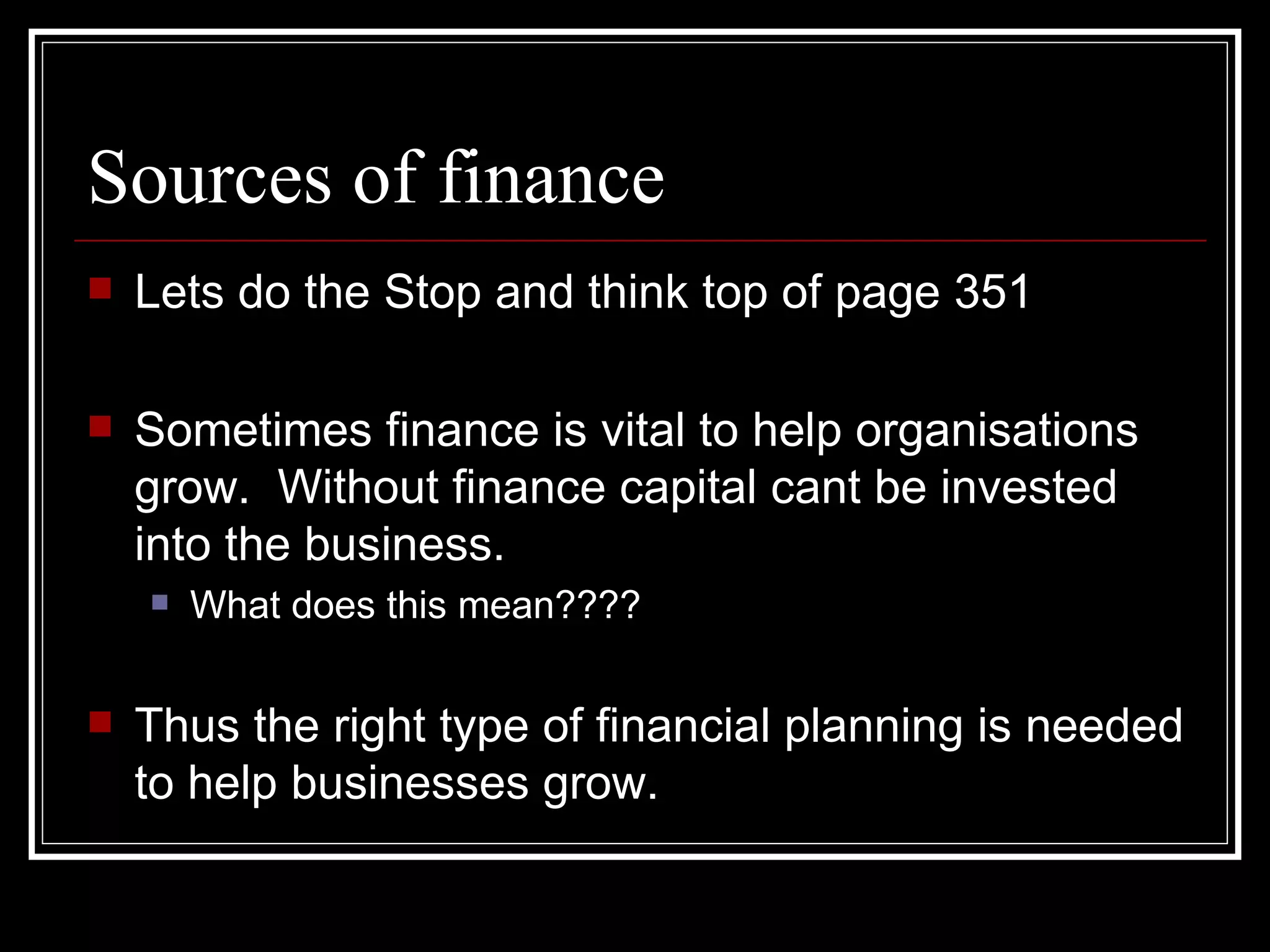
Sources of finance
   Lets do the Stop and think top of page 351

   Sometimes finance is vital to help organisations
    grow. Without finance capital cant be invested
    into the business.
       What does this mean????


   Thus the right type of financial planning is needed
    to help businesses grow.
Sources of finance
   Lets go over now table 7.2 and 7.3

Lesson 1 pp1

  • 1.
    Financial Management 1 FM is required for an organisation to be able to achieve its goals. This unit will look also at Financial Strategies/Planning and Systems Control
  • 2.
    Importance and roleof financial management  Many businesses have departments who manage the finance in the business.  It is the responsibility of the finance manager to plan and control the finances of the business.  This produces accurate and timely data.  Why is this important????
  • 3.
    Thus  FM is the recording, reporting, analysing, interpreting and evaluating of information so the organisation can meet its objectives.  Look now at fig 7.1 pg 347
  • 4.
    Objectives of FM  Liquidity – Cash Flow  Profitability – Revenue covers Expenses  Risk Minimisation – Procedures to minimise things going wrong  Growth – Ways to expand the business
  • 5.
    Conflicting Objectives  There will be times when the objectives conflict.  For example, investing in a new project. This will hurt the cash flow and profits, but will help make the business grow in the long run.
  • 6.
    Economic / LegalEnvironment  The type of business organisation can effect the way the business is run.  Sole Proprietorship  1 owner, responsible for all debts (unlimited liability)  Partnership  2 owners of more, owners share unlimited liability  Company  Owned by share holders. Limited liability but usually need to give personal guarantees for borrowed funds
  • 7.
    Question  Q3 page 349/350
  • 8.
    Sources of finance  Lets do the Stop and think top of page 351  Sometimes finance is vital to help organisations grow. Without finance capital cant be invested into the business.  What does this mean????  Thus the right type of financial planning is needed to help businesses grow.
  • 9.
    Sources of finance  Lets go over now table 7.2 and 7.3