CAREGIVING
COURSE
MALLORY ALVA V. BALABBO RN, SCFHS-
RN, LPT
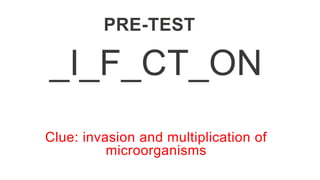
PRE-TEST
_I_F_CT_ON
Clue: invasion and multiplication of
microorganisms
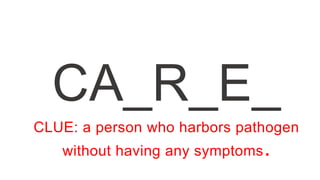
CA_R_E_
CLUE: a person who harbors pathogen
without having any symptoms.
INFECTION
CONTROL
INFECTION CONTROL
Infection prevention and control
(IPC) is a PRACTICAL,
EVIDENCE-BASED APPROACH
which prevents patients and health
workers from being harmed by
avoidable infection and as a result
of antimicrobial resistance.
INFECTION
The invasion and multiplication of microorganisms such
as bacteria, viruses, and parasites that are not normally present
within the body.
An infection may cause no symptoms and be subclinical, or it
may cause symptoms and be clinically apparent.
An infection may remain localized, or it may spread through
the blood or lymphatic vessels to become systemic (body wide).
PATHOGENS
A pathogen is an organism that causes disease
A HUMAN body is naturally full of microbes.These microbes only
cause a problem if your immune system is weakened.
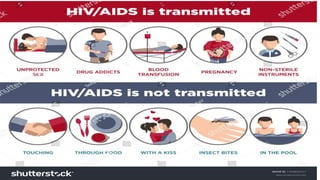
Pathogens can be transmitted a few ways depending on the
type. They can be spread through skin contact, bodily fluids,
airborne particles, contact with feces, and touching a surface
touched by an infected person.
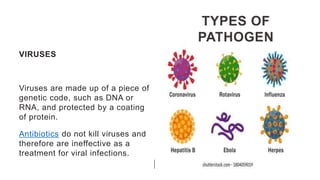
TYPES OF
PATHOGEN
VIRUSES
Viruses are made up of a piece of
genetic code, such as DNA or
RNA, and protected by a coating
of protein.
Antibiotics do not kill viruses and
therefore are ineffective as a
treatment for viral infections.
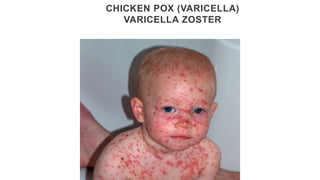
CHICKEN POX (VARICELLA)
VARICELLA ZOSTER
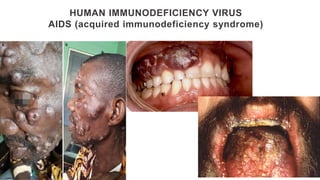
HUMAN IMMUNODEFICIENCY VIRUS
AIDS (acquired immunodeficiency syndrome)
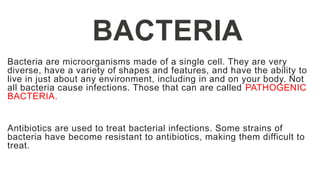
BACTERIA
Bacteria are microorganisms made of a single cell. They are very
diverse, have a variety of shapes and features, and have the ability to
live in just about any environment, including in and on your body. Not
all bacteria cause infections. Those that can are called PATHOGENIC
BACTERIA.
Antibiotics are used to treat bacterial infections. Some strains of
bacteria have become resistant to antibiotics, making them difficult to
treat.
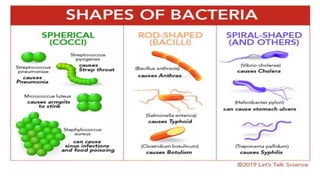
TYPES OF BACTERIA
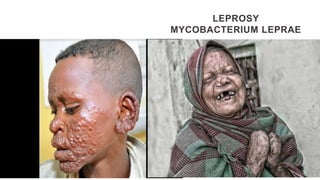
LEPROSY
MYCOBACTERIUM LEPRAE
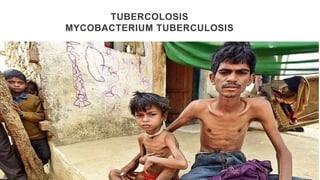
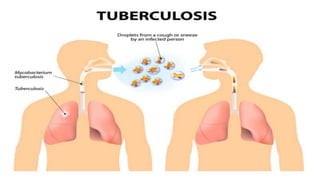
TUBERCOLOSIS
MYCOBACTERIUM TUBERCULOSIS
FUNGI
There are millions of different fungal species on Earth.
Just 300 ARE KNOWN TO CAUSE SICKNESS.
Fungi can be found just about everywhere in the
environment, including indoors, outdoors, and on human
skin. They cause infection when they overgrow.
Fungi cells contain a nucleus and other components
protected by a membrane and a thick cell wall. Their
structure can make them harder to kill.
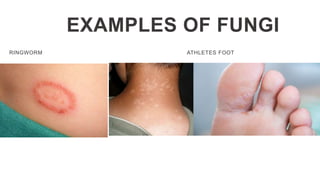
EXAMPLES OF FUNGI
RINGWORM ATHLETES FOOT
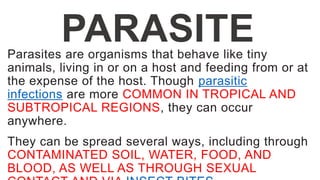
PARASITE
Parasites are organisms that behave like tiny
animals, living in or on a host and feeding from or at
the expense of the host. Though parasitic
infections are more COMMON IN TROPICAL AND
SUBTROPICAL REGIONS, they can occur
anywhere.
They can be spread several ways, including through
CONTAMINATED SOIL, WATER, FOOD, AND
BLOOD, AS WELL AS THROUGH SEXUAL
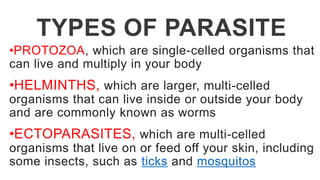
TYPES OF PARASITE
•PROTOZOA, which are single-celled organisms that
can live and multiply in your body
•HELMINTHS, which are larger, multi-celled
organisms that can live inside or outside your body
and are commonly known as worms
•ECTOPARASITES, which are multi-celled
organisms that live on or feed off your skin, including
some insects, such as ticks and mosquitos
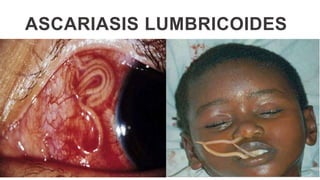
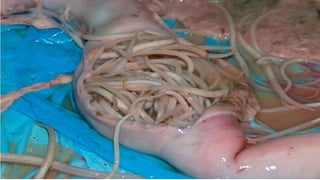
DISTRUBING
IMAGE:
BEWARE
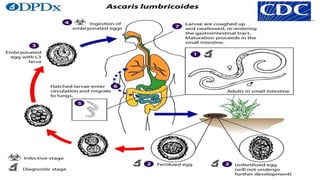
ASCARIASIS LUMBRICOIDES
ASSIGNMENT
WHERE TO WRITE?
-ONE WHOLE SHEET OF
PAPER
RESEARCH ON WHAT?
- CHAIN OF INFECTION
HAPPY EATING!
THANK YOU
SEE YOU
TOMORROW
CHAIN OF
INFECTION
DAY 2
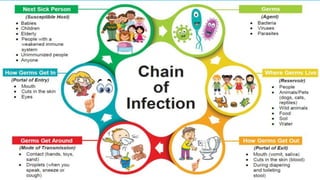
WHAT IS CHAIN OF INFECTION
The spread of an infection
within a community is
described as a “chain,” several
interconnected steps that
describe how a pathogen
moves about.
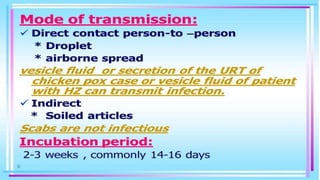
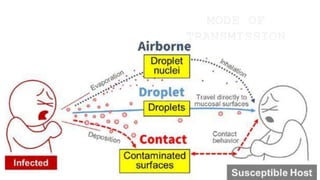
MODE OF TRANSMISSION
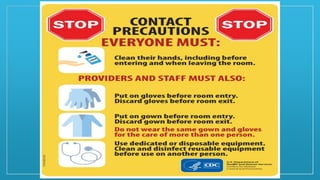
CONTACT TRANSMISSION
occurs when there is physical contact between
an infected person/contaminated object and
another person.
1.Through DIRECT CONTACT where the
infection travels to another person through
touch.
2.Through INDIRECT CONTACT when an
individual touches an object contaminated by a
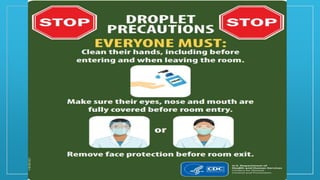
DROPLET TRANSMISSION
happens when an infected
person COUGHS, SNEEZES, OR
TALKS, and tiny drops from
the infected person ENTER
ANOTHER PERSON’S EYES,
NOSE AND MOUTH.
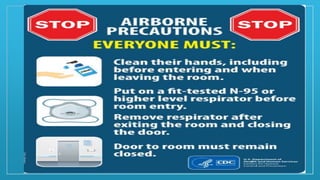
AIRBORNE TRANSMISSION
occurs when small particles in the air
containing the virus are inhaled into a
person’s respiratory system.
MODE OF
TRANSMISSION
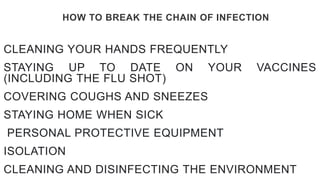
HOW TO BREAK THE CHAIN OF INFECTION
CLEANING YOUR HANDS FREQUENTLY
STAYING UP TO DATE ON YOUR VACCINES
(INCLUDING THE FLU SHOT)
COVERING COUGHS AND SNEEZES
STAYING HOME WHEN SICK
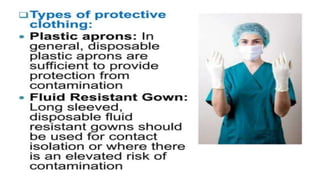
PERSONAL PROTECTIVE EQUIPMENT
ISOLATION
CLEANING AND DISINFECTING THE ENVIRONMENT
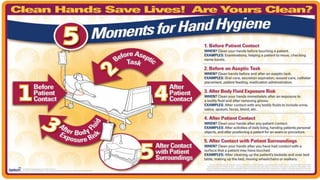
5 MOMENTS
OF HYGIENE
SUMMATIVE EXAMINATION
TOMORROW
15 ITEMS
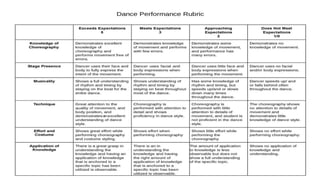
PERFORMANCE TASK 1
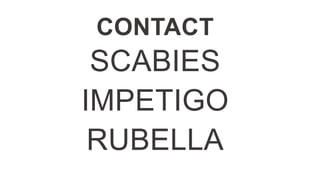
CONTACT
SCABIES
IMPETIGO
RUBELLA
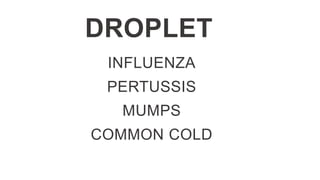
DROPLET
INFLUENZA
PERTUSSIS
MUMPS
COMMON COLD
PERSONAL
PROTECTIVE
EQUIPMENT
LESSON 1- INFECTION.pptx

LESSON 1- INFECTION.pptx