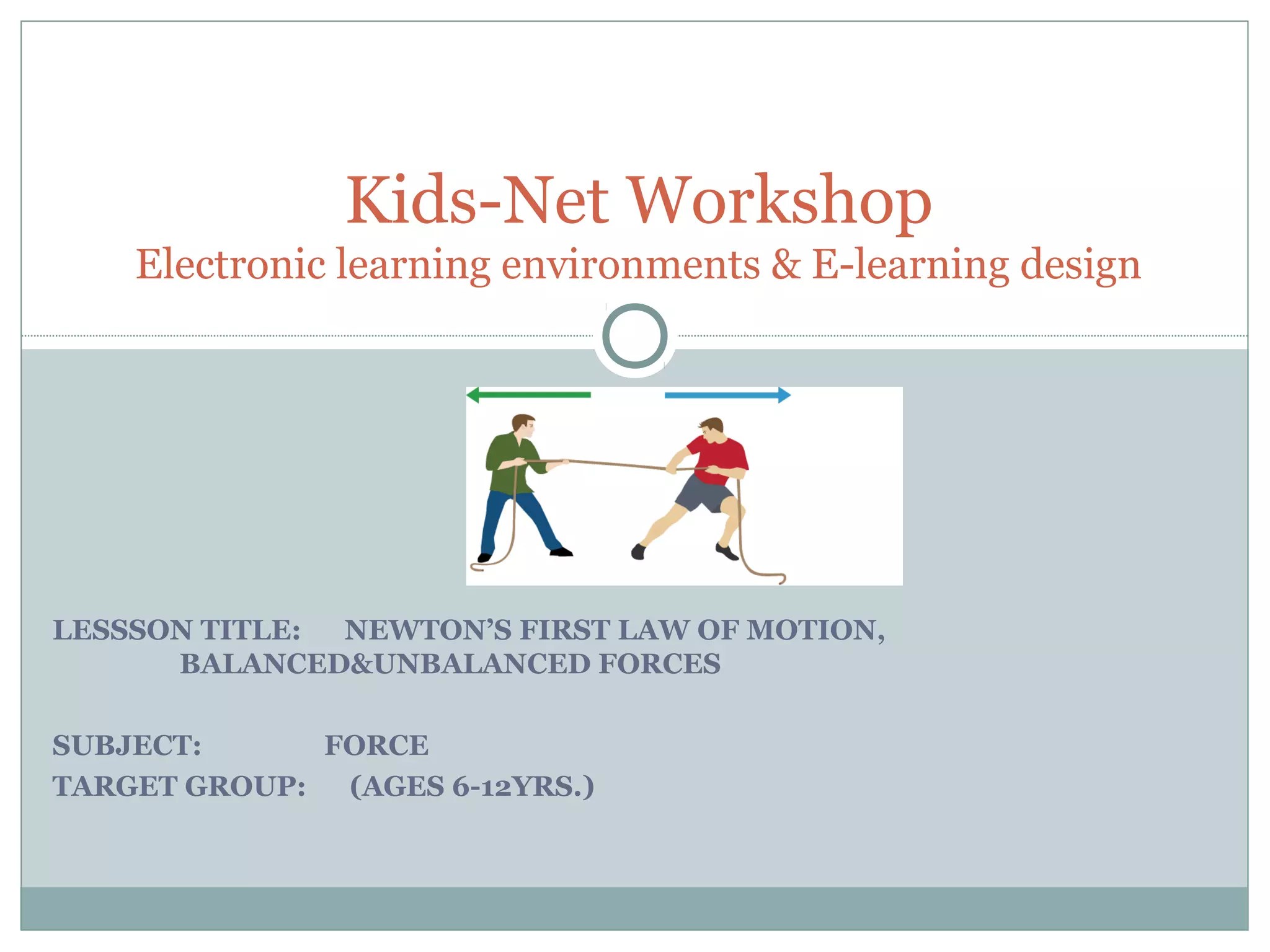
LESSSON TITLE: NEWTON’S FIRST LAW OF MOTION,
BALANCED&UNBALANCED FORCES
SUBJECT: FORCE
TARGET GROUP: (AGES 6-12YRS.)
Kids-Net Workshop
Electronic learning environments & E-learning design
Target group
Elementary
Science oriented
6 – 12 yrs.
Learning objectives
Students remember previous knowledge (scafolding)
At the end of the lesson students will be able to differenciate
types of forces
Students will understand the concept of force
Know and be able to apply the Newton’s first law of motion
Be able to give examples of balanced and unbalanced forces
SAE INTERNATIONALSAE INTERNATIONAL www.awim.org
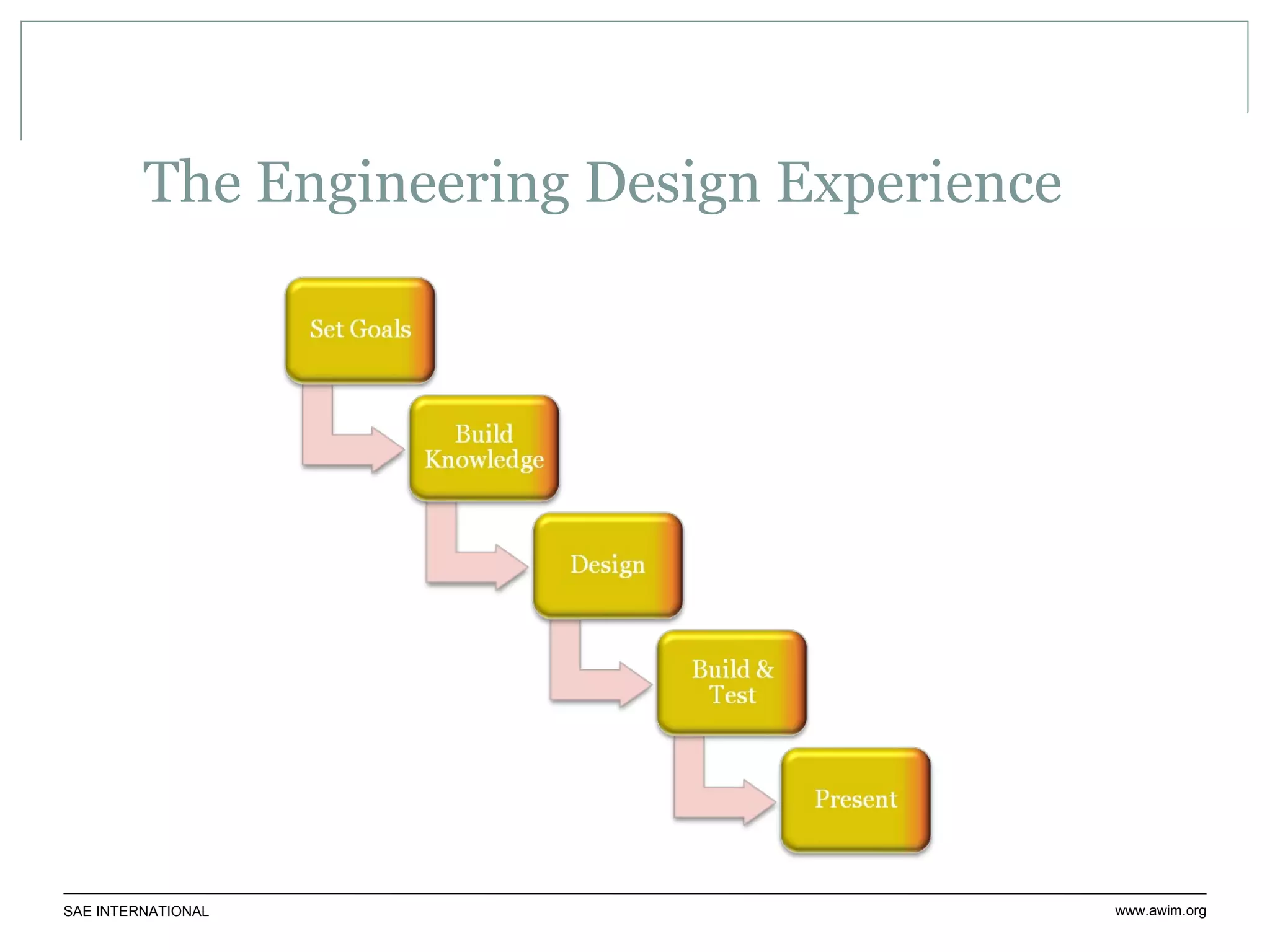
The Engineering Design Experience
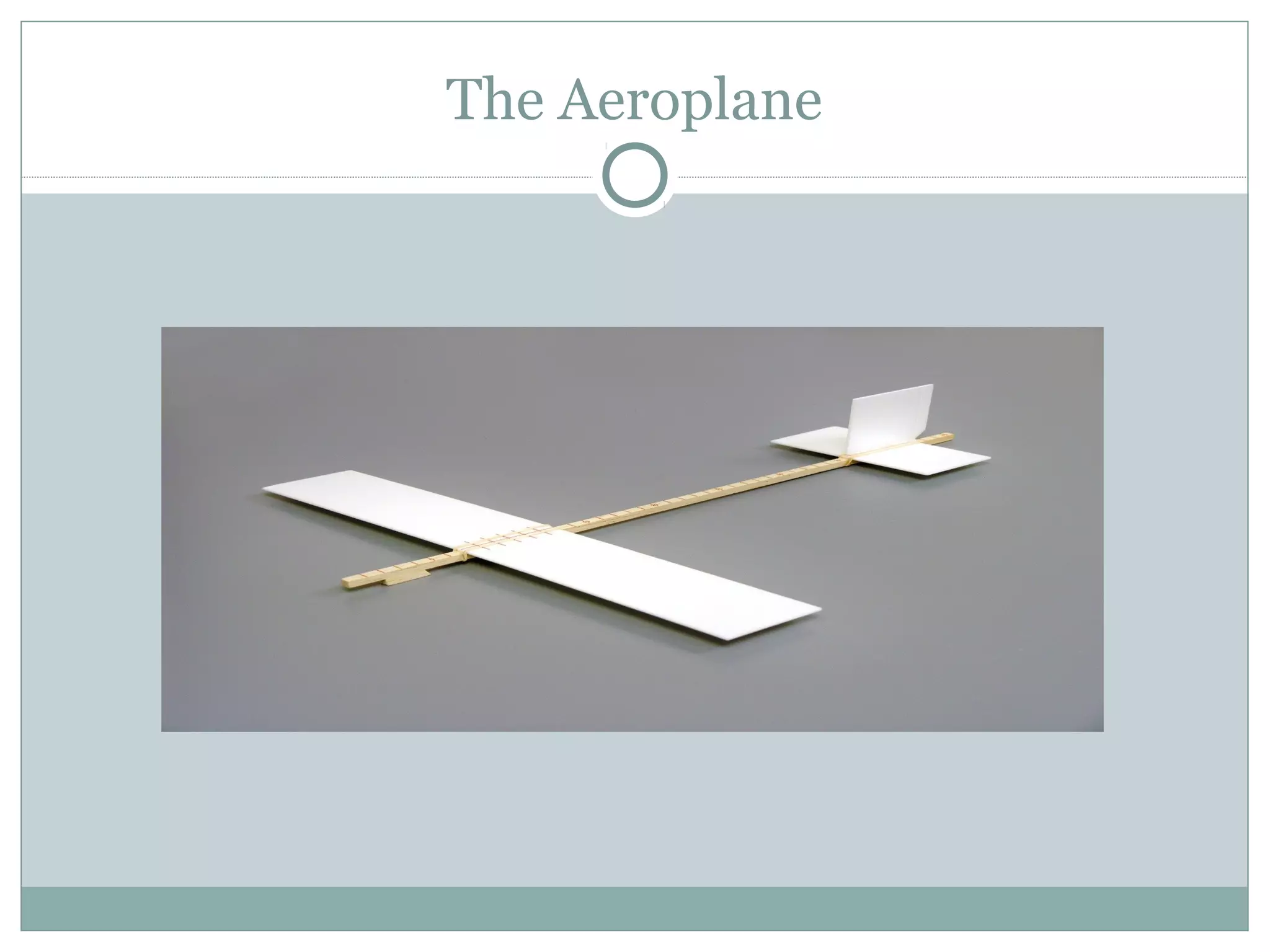
The Aeroplane
Pre-assessment
1) A stationary object has no forces acting on it.
 True or False
2) A stationary object has net or balanced forces acting on it.
 True or False
Feedback
When you push on a stationary object, you are applying a force. Despite this, you still
might not be able to accelerate it. That is because there might be another force that nets
against yours.
For example, you push on a beached whale. The reason why you can't accelerate it is
because the force of friction between the whale and the sand perfectly nets against (same
magnitude, opposite direction) the force you are applying.
For another example, you're presumably not plummeting to the center of the Earth right
now despite the fact that Earth's gravity is pulling on you. This is because your chair is
exerting a normal force in the opposite direction (radially outwards from the center of
Earth) that perfectly offsets the force of gravity.
This statement would have been true for question one, if it said
“balance forces", not just "forces".
Scaffold
Last lesson, we defined force as any interaction which
tends to change the motion of an object
Forces are also described as a push or pull on an object.
They can be due to phenomena such as gravity,
magnetism, or anything that might cause a mass to
accelerate.
Students give example of cases where force is in action.
Assessments
At the end of the lesson ‘true or false’ questions will
be made available to test students’ understanding of
the topic
Students are also required to give situation or
instances where Newton’s first law of motion is in
action
Definition
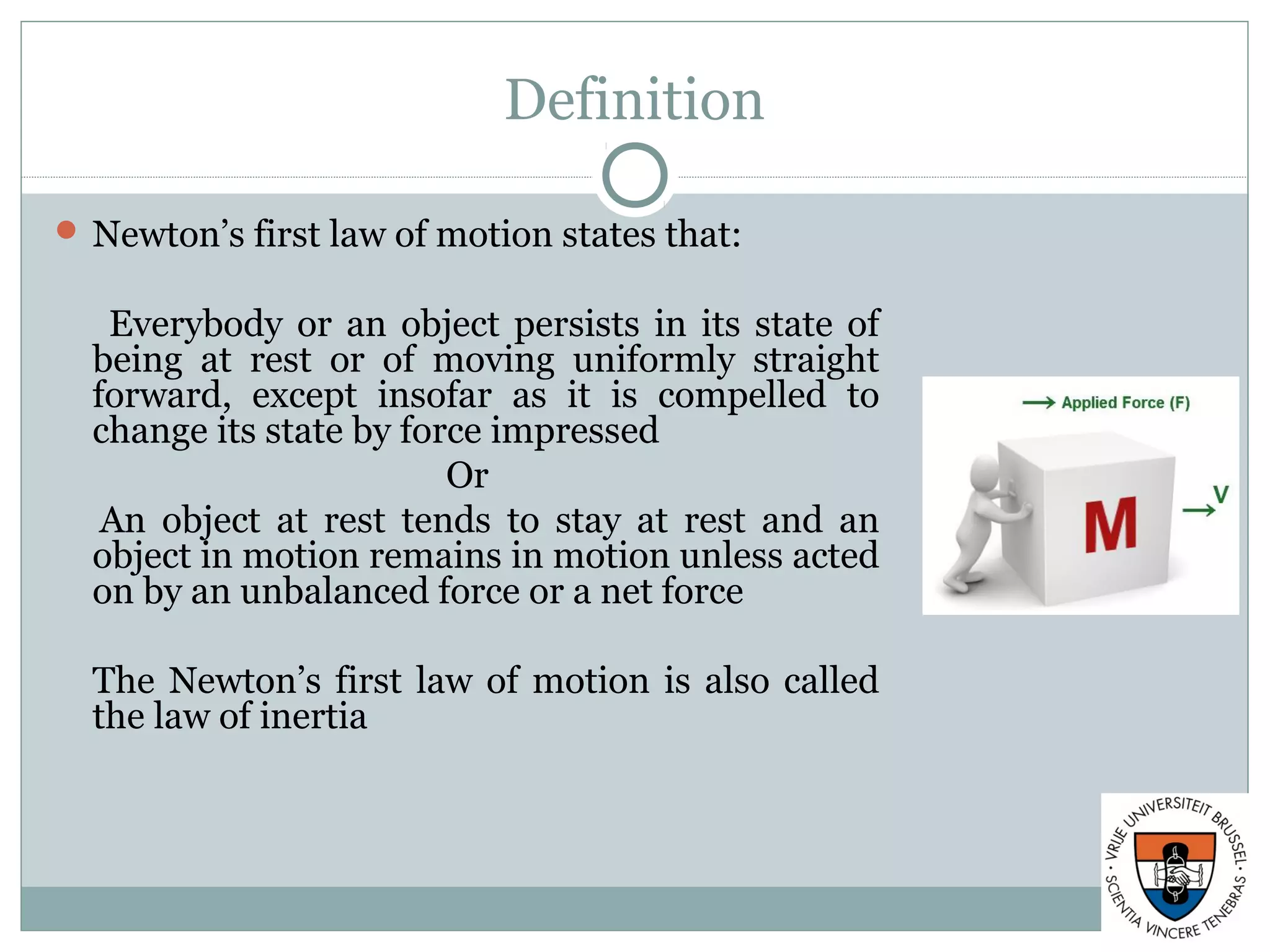
 Newton’s first law of motion states that:
Everybody or an object persists in its state of
being at rest or of moving uniformly straight
forward, except insofar as it is compelled to
change its state by force impressed
Or
An object at rest tends to stay at rest and an
object in motion remains in motion unless acted
on by an unbalanced force or a net force
The Newton’s first law of motion is also called
the law of inertia
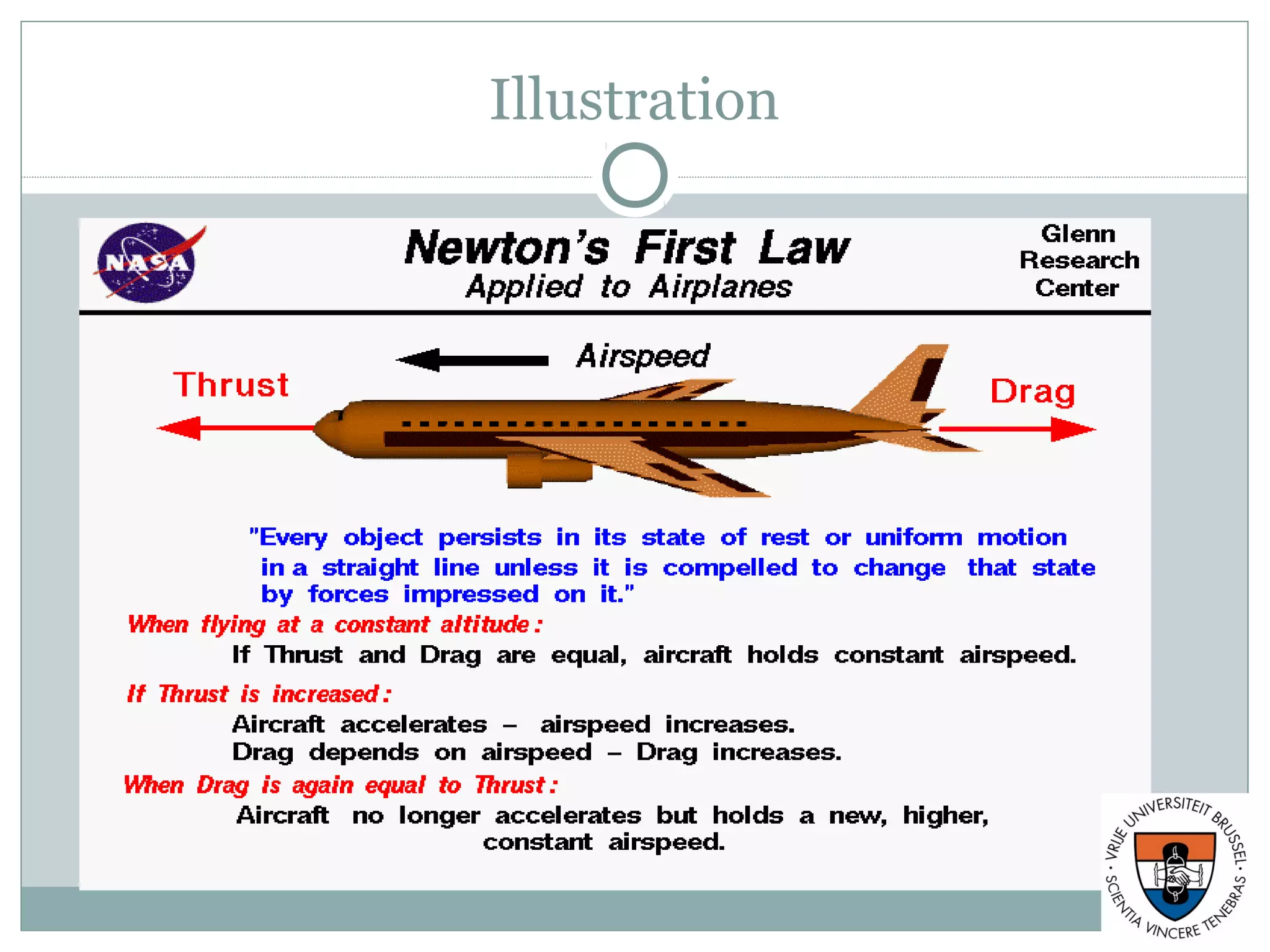
Illustration
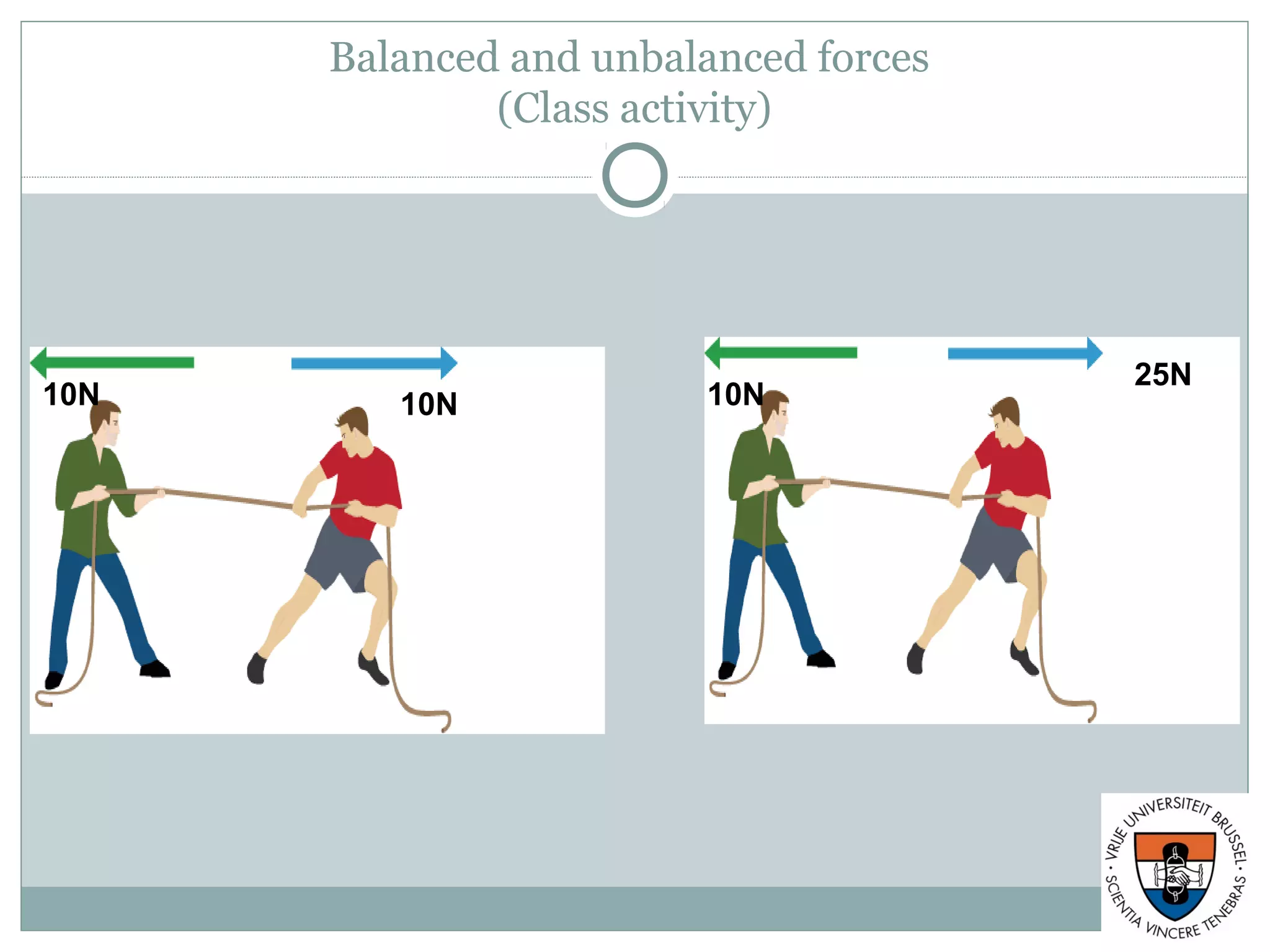
Balanced and unbalanced forces
(Class activity)
10N
25N
10N 10N
Balanced and unbalanced forces
Which of the following is/are correct?
(a)An object in motion will slow down unless it is acted on
by an unbalanced force in the direction of motion
(b)An object in motion will maintain its speed and direction
forever unless acted on by an unbalanced force
(c)An object at rest will stay at rest unless acted on by an
unbalanced force
(d)An object acted on by an unbalanced force will always
accelerate in the direction of the of the unbalanced force
Explanation of balanced and unbalanced force
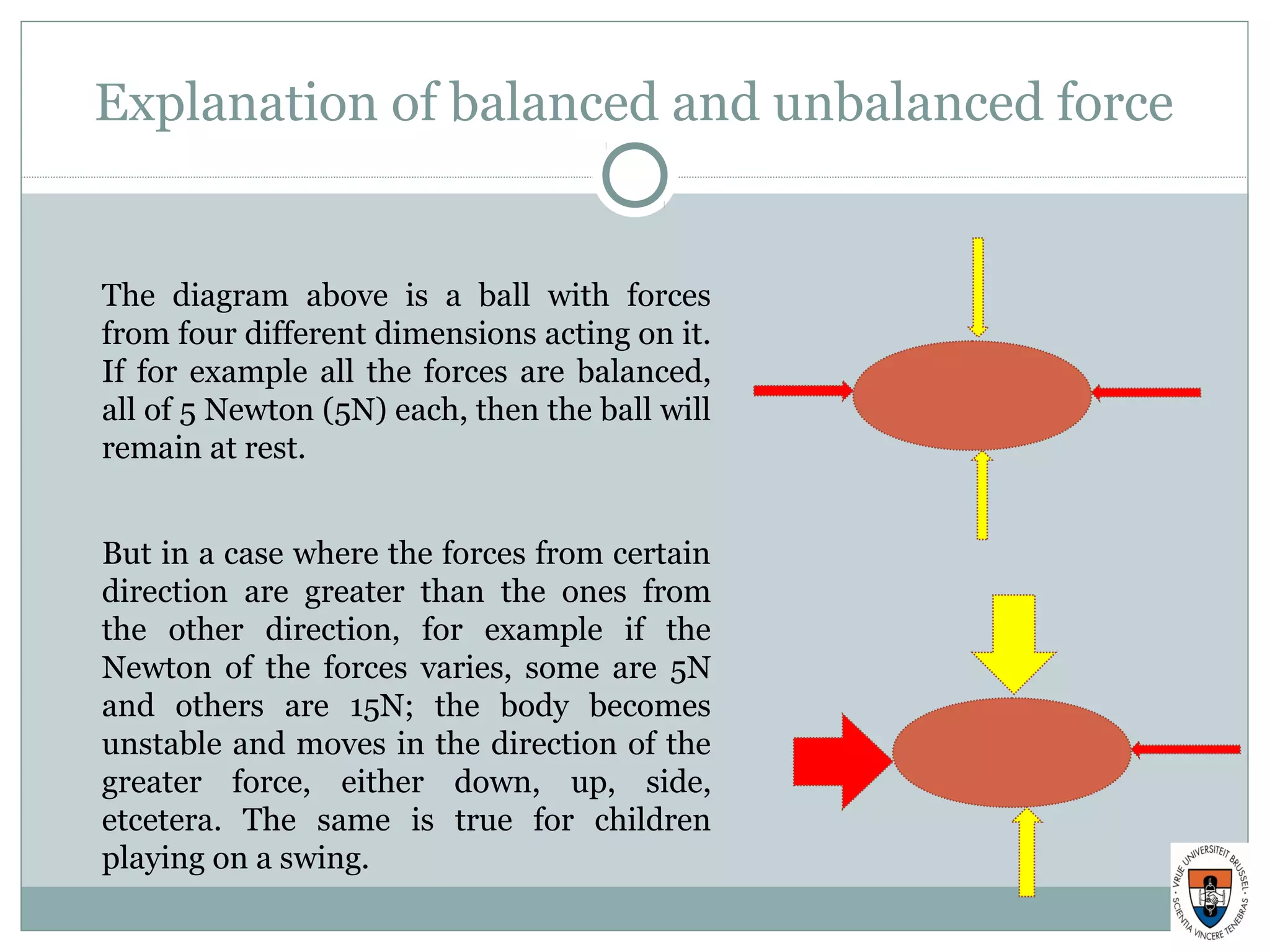
The diagram above is a ball with forces
from four different dimensions acting on it.
If for example all the forces are balanced,
all of 5 Newton (5N) each, then the ball will
remain at rest.
But in a case where the forces from certain
direction are greater than the ones from
the other direction, for example if the
Newton of the forces varies, some are 5N
and others are 15N; the body becomes
unstable and moves in the direction of the
greater force, either down, up, side,
etcetera. The same is true for children
playing on a swing.
Next lesson
Next class, we shall learn about Newton’s second law of motion.
Watch the following videos:
https://www.khanacademy.org/science/physics/forc
es-newtons-laws/newtons-laws-of-
motion/v/newton-s-1st-law-of-motion
https://www.khanacademy.org/science/physics/forc
es-newtons-laws/newtons-laws-of-
motion/v/newton-s-second-law-of-motion
Appreciation
Thank you

Lesson 1

  • 1.
    LESSSON TITLE: NEWTON’SFIRST LAW OF MOTION, BALANCED&UNBALANCED FORCES SUBJECT: FORCE TARGET GROUP: (AGES 6-12YRS.) Kids-Net Workshop Electronic learning environments & E-learning design
  • 2.
  • 3.
    Learning objectives Students rememberprevious knowledge (scafolding) At the end of the lesson students will be able to differenciate types of forces Students will understand the concept of force Know and be able to apply the Newton’s first law of motion Be able to give examples of balanced and unbalanced forces
  • 4.
    SAE INTERNATIONALSAE INTERNATIONALwww.awim.org The Engineering Design Experience
  • 5.
  • 6.
    Pre-assessment 1) A stationaryobject has no forces acting on it.  True or False 2) A stationary object has net or balanced forces acting on it.  True or False Feedback When you push on a stationary object, you are applying a force. Despite this, you still might not be able to accelerate it. That is because there might be another force that nets against yours. For example, you push on a beached whale. The reason why you can't accelerate it is because the force of friction between the whale and the sand perfectly nets against (same magnitude, opposite direction) the force you are applying. For another example, you're presumably not plummeting to the center of the Earth right now despite the fact that Earth's gravity is pulling on you. This is because your chair is exerting a normal force in the opposite direction (radially outwards from the center of Earth) that perfectly offsets the force of gravity. This statement would have been true for question one, if it said “balance forces", not just "forces".
  • 7.
    Scaffold Last lesson, wedefined force as any interaction which tends to change the motion of an object Forces are also described as a push or pull on an object. They can be due to phenomena such as gravity, magnetism, or anything that might cause a mass to accelerate. Students give example of cases where force is in action.
  • 8.
    Assessments At the endof the lesson ‘true or false’ questions will be made available to test students’ understanding of the topic Students are also required to give situation or instances where Newton’s first law of motion is in action
  • 9.
    Definition  Newton’s firstlaw of motion states that: Everybody or an object persists in its state of being at rest or of moving uniformly straight forward, except insofar as it is compelled to change its state by force impressed Or An object at rest tends to stay at rest and an object in motion remains in motion unless acted on by an unbalanced force or a net force The Newton’s first law of motion is also called the law of inertia
  • 10.
  • 11.
    Balanced and unbalancedforces (Class activity) 10N 25N 10N 10N
  • 12.
    Balanced and unbalancedforces Which of the following is/are correct? (a)An object in motion will slow down unless it is acted on by an unbalanced force in the direction of motion (b)An object in motion will maintain its speed and direction forever unless acted on by an unbalanced force (c)An object at rest will stay at rest unless acted on by an unbalanced force (d)An object acted on by an unbalanced force will always accelerate in the direction of the of the unbalanced force
  • 13.
    Explanation of balancedand unbalanced force The diagram above is a ball with forces from four different dimensions acting on it. If for example all the forces are balanced, all of 5 Newton (5N) each, then the ball will remain at rest. But in a case where the forces from certain direction are greater than the ones from the other direction, for example if the Newton of the forces varies, some are 5N and others are 15N; the body becomes unstable and moves in the direction of the greater force, either down, up, side, etcetera. The same is true for children playing on a swing.
  • 14.
    Next lesson Next class,we shall learn about Newton’s second law of motion. Watch the following videos: https://www.khanacademy.org/science/physics/forc es-newtons-laws/newtons-laws-of- motion/v/newton-s-1st-law-of-motion https://www.khanacademy.org/science/physics/forc es-newtons-laws/newtons-laws-of- motion/v/newton-s-second-law-of-motion
  • 15.