Lennox Gastaut
Syndrome
Enrique Feoli MD
North East Regional Epilepsy Group
Goals
 Understand the definition of LGS
 Outline the clinical presentation of LGS
 Compare the different medications
available to treat LGS
 Develop a rational treatment approach for
LGS
Syndrome types in different age groups
Infancy;
-West Syndrome
-Ohtahara Synd.
-Dravet Syndrome
Late Childhood (5-10y)
-Absence Epilepsy
-Landau-K syndrome
-Benign Rolandic E.
Early Childhood (1-5y)
-LGS
-Febrile Seizures
Adolescence
-JME
-Juvenile Absence epilepsy
LGS Prevalence and Incidence
 Prevalence is 1 to 10 % of all childhood
epilepsy
 Incidence rate for LGS of all new onset
epilepsies is 0.6 %
Etiology
 Brain malformations
 Hypoxic-ischemic brain injury
 Meningitis &Encephalitis/Congenital infections
 Neurocutaneous syndromes-Tuberous sclerosis
 Trauma
 Brain tumors
 Cortical dysplasia/Bilateral perisylvian syndrome
 17-30% with LGS will have history of infantile spasms.
 Few have metabolic issues such as Leigh’s
encephalomyelopathy or Channelopathies.
LGS Diagnosis; Pediatrics
 -Onset 3 to 8 years of age
 -Seizures type;
-Tonic-atonic drop attacks
-Tonic clonic
- Atypical absences;
Gradual onset and termination
Behavioral pause/stare (30 + seconds)
Clonic activity
LGS Diagnosis; Pediatrics Cont
 May present as non-convulsive status
epilepticus in 50 to 75 % of patients
 -Cognitive impairment and developmental delay.
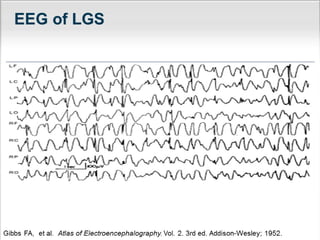
 -EEG; irregular, gneneralized 2 to 2 ½ Hz spikes
and wave pattern
LGS Diagnosis; adult
 Onset 4 to 8 years of age
 Cognitive impairment and developmental delay
 Seizures Type;
Childhood onset tonic-atonic drop attacks
Complex partial/frontal lobe seizures
Seizures; arms asymetrically elevated
Vocalization
5 to 20 seconds duration
LGS Diagnosis; adult
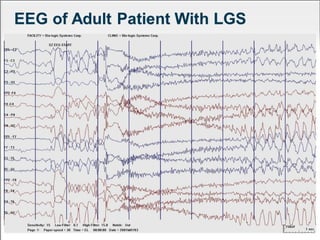
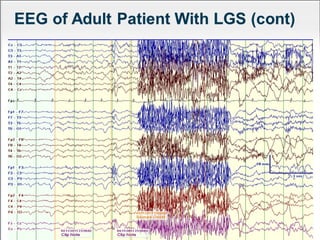
EEG (variable)
- Background; normal (rare) to diffuse
slowing
- Ictal; diffuse attenuation
generalized irregular 2 to 2 ½ Hz
spikes/wave generalized might lateralized
without clear focal findings.
LGS treatment
 Antiepileptic drugs
 Surgery;
-Vagus Nerve stimulator VNS shows a 24%–
42% global seizure reduction. Comparable
outcome to corpus callosotomy without
invasive surgery (a)
-Corpus callosotomy
most beneficial for atonic seizures
 Diet; Ketogenic, Modified Atkins diet.
a-Lancman et al. AES 2011 Abstract 3.313
LGS treatment with AEDs
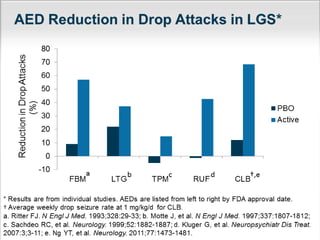
 Effective in randomized, double blind
placebo controlled trial, approved by FDA;
Clobazam, Felbamate,Lamotrigine,
Rufinamide, Topiramate.
 Effective in open level trials
Vigabatrin, Zonisamide
LGS treatment with AEDs
 Often used
Valproic acid, Clonazepam
 Limited utility (may exacerbate seizures)
CBZ, Phenobarbital, Primidone
Aeds Additive effects
 Post-hoc sub analysis of the CLB trial;
Evaluated drop seizures rate from baseline
to 12 week in patient receiving CLB with
LTG or VPA.
Average reduction in drop seizures was
grater for either combination vs placebo.
Efficacy was dose dependent
What Medication to use first
 Based on Syndrome
 Based on gender
 Based on side effects
Choices; Depakote, Topiramate,
Lamotrigine, Felbamate.
What medication to use Next
 Based on the first medicine
 Based on Additive effect
 Based on side effects
Options; Rufinamide, Zonisamide,
Vigabatrin, same as the previous list,
Benzodiazepines, Levetiracetam
Diet for LGS
 Ketogenic Diet
 Modified Atkins diet for Epilepsy
 Low glycemic index diet
Ketogenic diet
 A treatment option for epilepsy (LGS)
 A very strict diet that involves fluid
restriction, high fat and low carbohydrate +
protein intake.
 The goal: alter the body’s fuel source from
glucose to fat.
History
 The basis of the diet – fasting
 Devised in the 1920’s at Johns Hopkins
University School of Medicine.
 Popularity faded in the 40’s and 50’s when new
anticonvulsant drugs were discovered
 Resurgence recently because, among others, of
the TV movie based on Charlie Abrahams
Who is a candidate
 Children – usually 2-10 years of age
 Most effective in kids with “drop” type
seizures
 The children considered have at least 3
seizures/week
 The antiepileptic medication is not
working.
Efficacy
 20-30% – seizures were completely
controlled
 50-70% - seizure frequency decreased by
50%
 20-30% - not effective
Modified Atkins
 Absence of protein, fluid, or calorie
restriction
 64% fat
 30% protein
 6% carbohydrate (10 to 20% on regular
Atkins diet)
Modified Atkins
 The modified Atkins diet is a modification
of the traditional ketogenic
 Foods are not weighed and measured, but
carbohydrate counts are monitored by
patients and parents.
 It is started outside of the hospital
Modified Atkins
Is it Effective?
 60 to 70 % >50% improvement,
 20 to 30 % >90% improvement
 5 to 10 % seizure free
Surgical Options
 Vagus Nerve stimulator VNS shows a
24%–42% global seizure reduction.
Comparable outcome to corpus
callosotomy without invasive surgery.
 Corpus callosotomy
most beneficial for atonic seizures
Summary
 Lennox Gastaut Syndrome
 Difficult epileptic encephalopathy
 Onset in childhood
 Persist into adult life
 Optimal Treatment
 Requires identification of the syndrome
 Selection of effective therapy
 Ovoid treatments that exacerbate seizures

Lennox gastaut-syndrome-final

  • 1.
    Lennox Gastaut Syndrome Enrique FeoliMD North East Regional Epilepsy Group
  • 2.
    Goals  Understand thedefinition of LGS  Outline the clinical presentation of LGS  Compare the different medications available to treat LGS  Develop a rational treatment approach for LGS
  • 3.
    Syndrome types indifferent age groups Infancy; -West Syndrome -Ohtahara Synd. -Dravet Syndrome Late Childhood (5-10y) -Absence Epilepsy -Landau-K syndrome -Benign Rolandic E. Early Childhood (1-5y) -LGS -Febrile Seizures Adolescence -JME -Juvenile Absence epilepsy
  • 4.
    LGS Prevalence andIncidence  Prevalence is 1 to 10 % of all childhood epilepsy  Incidence rate for LGS of all new onset epilepsies is 0.6 %
  • 5.
    Etiology  Brain malformations Hypoxic-ischemic brain injury  Meningitis &Encephalitis/Congenital infections  Neurocutaneous syndromes-Tuberous sclerosis  Trauma  Brain tumors  Cortical dysplasia/Bilateral perisylvian syndrome  17-30% with LGS will have history of infantile spasms.  Few have metabolic issues such as Leigh’s encephalomyelopathy or Channelopathies.
  • 6.
    LGS Diagnosis; Pediatrics -Onset 3 to 8 years of age  -Seizures type; -Tonic-atonic drop attacks -Tonic clonic - Atypical absences; Gradual onset and termination Behavioral pause/stare (30 + seconds) Clonic activity
  • 7.
    LGS Diagnosis; PediatricsCont  May present as non-convulsive status epilepticus in 50 to 75 % of patients  -Cognitive impairment and developmental delay.  -EEG; irregular, gneneralized 2 to 2 ½ Hz spikes and wave pattern
  • 9.
    LGS Diagnosis; adult Onset 4 to 8 years of age  Cognitive impairment and developmental delay  Seizures Type; Childhood onset tonic-atonic drop attacks Complex partial/frontal lobe seizures Seizures; arms asymetrically elevated Vocalization 5 to 20 seconds duration
  • 10.
    LGS Diagnosis; adult EEG(variable) - Background; normal (rare) to diffuse slowing - Ictal; diffuse attenuation generalized irregular 2 to 2 ½ Hz spikes/wave generalized might lateralized without clear focal findings.
  • 13.
    LGS treatment  Antiepilepticdrugs  Surgery; -Vagus Nerve stimulator VNS shows a 24%– 42% global seizure reduction. Comparable outcome to corpus callosotomy without invasive surgery (a) -Corpus callosotomy most beneficial for atonic seizures  Diet; Ketogenic, Modified Atkins diet. a-Lancman et al. AES 2011 Abstract 3.313
  • 15.
    LGS treatment withAEDs  Effective in randomized, double blind placebo controlled trial, approved by FDA; Clobazam, Felbamate,Lamotrigine, Rufinamide, Topiramate.  Effective in open level trials Vigabatrin, Zonisamide
  • 16.
    LGS treatment withAEDs  Often used Valproic acid, Clonazepam  Limited utility (may exacerbate seizures) CBZ, Phenobarbital, Primidone
  • 18.
    Aeds Additive effects Post-hoc sub analysis of the CLB trial; Evaluated drop seizures rate from baseline to 12 week in patient receiving CLB with LTG or VPA. Average reduction in drop seizures was grater for either combination vs placebo. Efficacy was dose dependent
  • 19.
    What Medication touse first  Based on Syndrome  Based on gender  Based on side effects Choices; Depakote, Topiramate, Lamotrigine, Felbamate.
  • 20.
    What medication touse Next  Based on the first medicine  Based on Additive effect  Based on side effects Options; Rufinamide, Zonisamide, Vigabatrin, same as the previous list, Benzodiazepines, Levetiracetam
  • 21.
    Diet for LGS Ketogenic Diet  Modified Atkins diet for Epilepsy  Low glycemic index diet
  • 22.
    Ketogenic diet  Atreatment option for epilepsy (LGS)  A very strict diet that involves fluid restriction, high fat and low carbohydrate + protein intake.  The goal: alter the body’s fuel source from glucose to fat.
  • 23.
    History  The basisof the diet – fasting  Devised in the 1920’s at Johns Hopkins University School of Medicine.  Popularity faded in the 40’s and 50’s when new anticonvulsant drugs were discovered  Resurgence recently because, among others, of the TV movie based on Charlie Abrahams
  • 24.
    Who is acandidate  Children – usually 2-10 years of age  Most effective in kids with “drop” type seizures  The children considered have at least 3 seizures/week  The antiepileptic medication is not working.
  • 25.
    Efficacy  20-30% –seizures were completely controlled  50-70% - seizure frequency decreased by 50%  20-30% - not effective
  • 26.
    Modified Atkins  Absenceof protein, fluid, or calorie restriction  64% fat  30% protein  6% carbohydrate (10 to 20% on regular Atkins diet)
  • 27.
    Modified Atkins  Themodified Atkins diet is a modification of the traditional ketogenic  Foods are not weighed and measured, but carbohydrate counts are monitored by patients and parents.  It is started outside of the hospital
  • 28.
    Modified Atkins Is itEffective?  60 to 70 % >50% improvement,  20 to 30 % >90% improvement  5 to 10 % seizure free
  • 29.
    Surgical Options  VagusNerve stimulator VNS shows a 24%–42% global seizure reduction. Comparable outcome to corpus callosotomy without invasive surgery.  Corpus callosotomy most beneficial for atonic seizures
  • 30.
    Summary  Lennox GastautSyndrome  Difficult epileptic encephalopathy  Onset in childhood  Persist into adult life  Optimal Treatment  Requires identification of the syndrome  Selection of effective therapy  Ovoid treatments that exacerbate seizures