Notes
The shape of the note tells you how long
to play it for. Each one has a name, but
all you need to know for now is how many
beats it lasts (how many beats you have
to count as you play it).

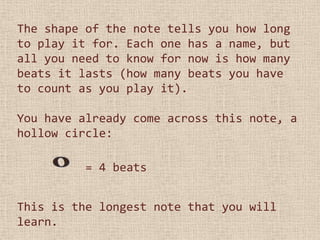
You have already come across this note, a
hollow circle:

          = 4 beats


This is the longest note that you will
learn.
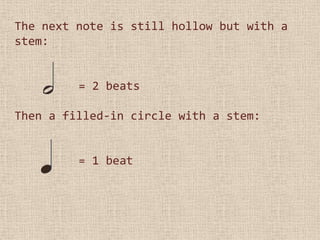
The next note is still hollow but with a
stem:


         = 2 beats

Then a filled-in circle with a stem:


         = 1 beat
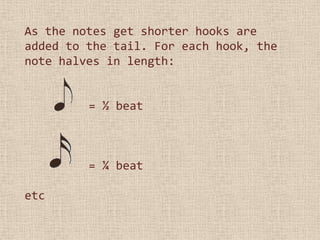
As the notes get shorter hooks are
added to the tail. For each hook, the
note halves in length:


         = ½ beat


         = ¼ beat

etc
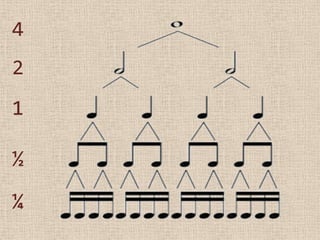
4
2
1

½
¼
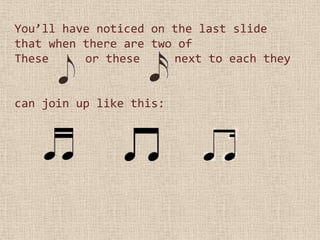
You’ll have noticed on the last slide
that when there are two of
These     or these     next to each they


can join up like this:
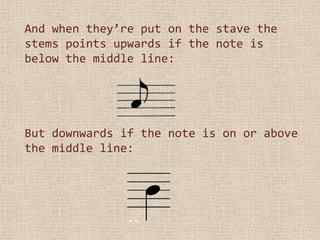
And when they’re put on the stave the
stems points upwards if the note is
below the middle line:


But downwards if the note is on or above
the middle line:
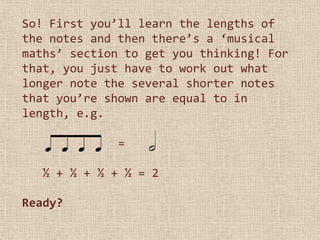
So! First you’ll learn the lengths of
the notes and then there’s a ‘musical
maths’ section to get you thinking! For
that, you just have to work out what
longer note the several shorter notes
that you’re shown are equal to in
length, e.g.

              =

  ½ + ½ + ½ + ½ = 2

Ready?

Lengths of notes

  • 1.
  • 2.
    The shape ofthe note tells you how long to play it for. Each one has a name, but all you need to know for now is how many beats it lasts (how many beats you have to count as you play it). You have already come across this note, a hollow circle: = 4 beats This is the longest note that you will learn.
  • 3.
    The next noteis still hollow but with a stem: = 2 beats Then a filled-in circle with a stem: = 1 beat
  • 4.
    As the notesget shorter hooks are added to the tail. For each hook, the note halves in length: = ½ beat = ¼ beat etc
  • 5.
  • 6.
    You’ll have noticedon the last slide that when there are two of These or these next to each they can join up like this:
  • 7.
    And when they’reput on the stave the stems points upwards if the note is below the middle line: But downwards if the note is on or above the middle line:
  • 8.
    So! First you’lllearn the lengths of the notes and then there’s a ‘musical maths’ section to get you thinking! For that, you just have to work out what longer note the several shorter notes that you’re shown are equal to in length, e.g. = ½ + ½ + ½ + ½ = 2 Ready?