Unit 1 – Part 3
Basic Symbol Notation
T H E S T U D E N T W I L L B E AB L E TO R E AD
B AS I C M U S I C N O TAT I O N .
2 / 2 0 / 2 0 2 4 S A M P L E F O O T E R T E X T 1
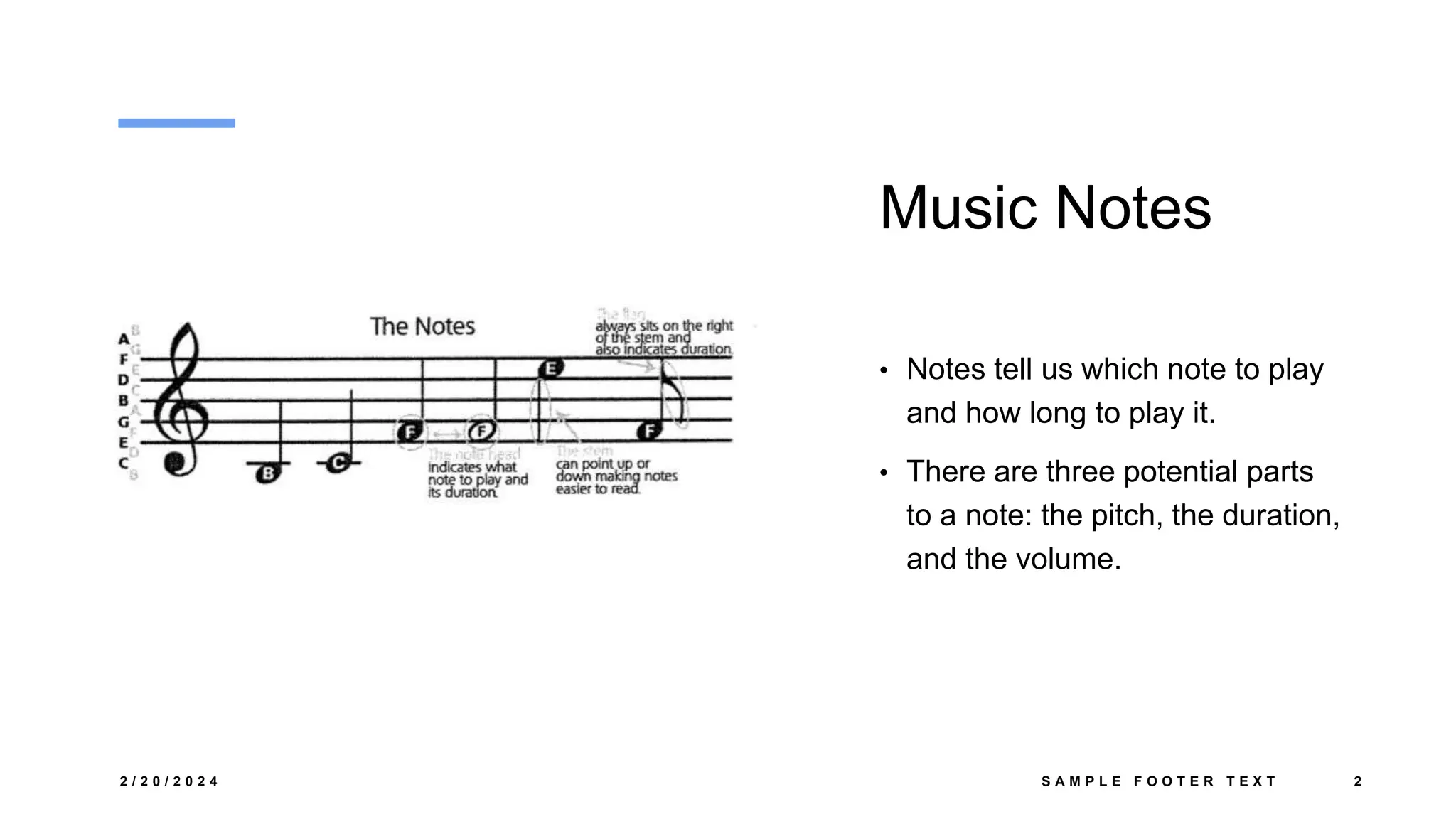
Music Notes
• Notes tell us which note to play
and how long to play it.
• There are three potential parts
to a note: the pitch, the duration,
and the volume.
2 / 2 0 / 2 0 2 4 S A M P L E F O O T E R T E X T 2
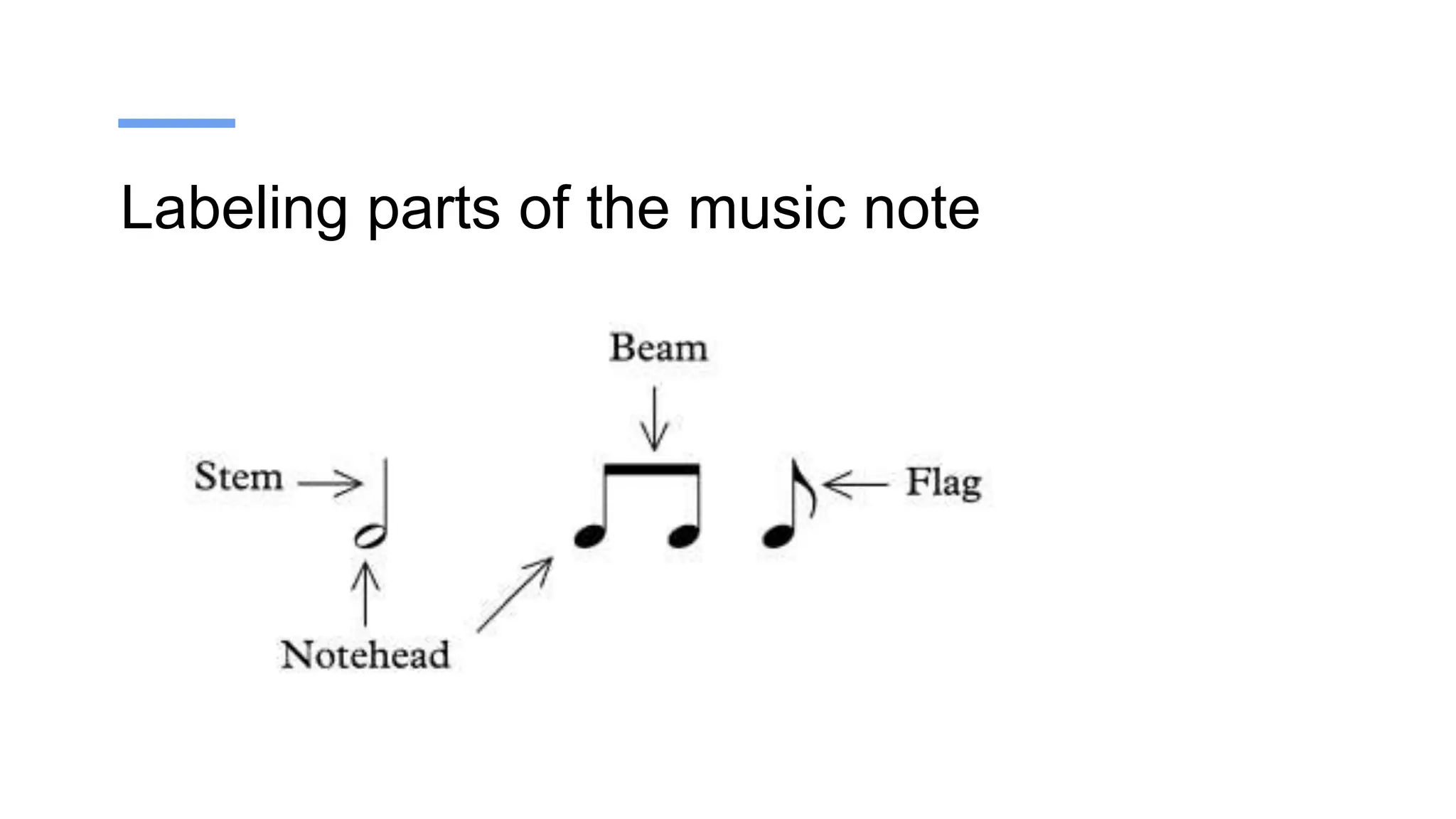
Labeling parts of the music note
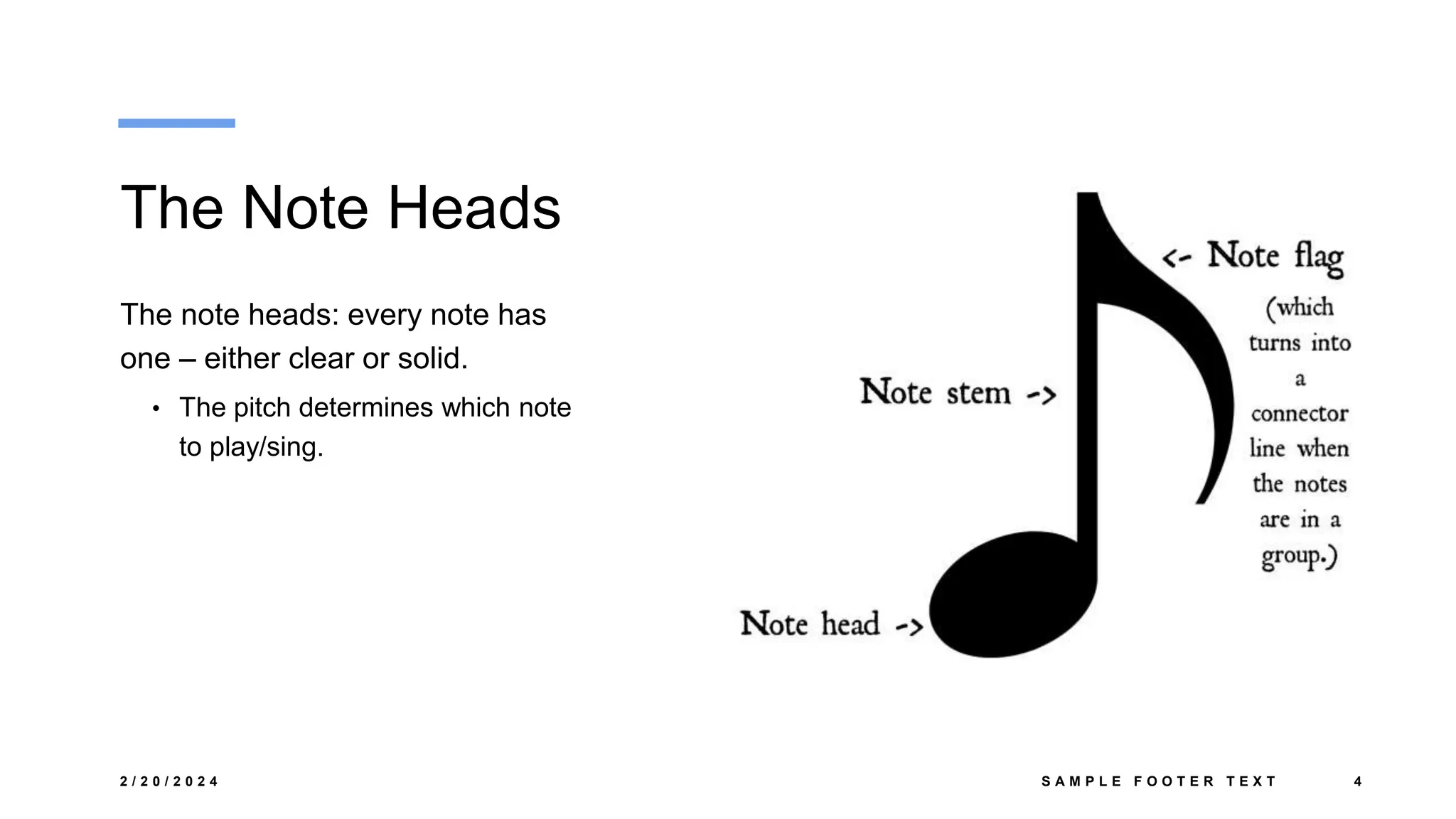
The Note Heads
The note heads: every note has
one – either clear or solid.
• The pitch determines which note
to play/sing.
2 / 2 0 / 2 0 2 4 S A M P L E F O O T E R T E X T 4
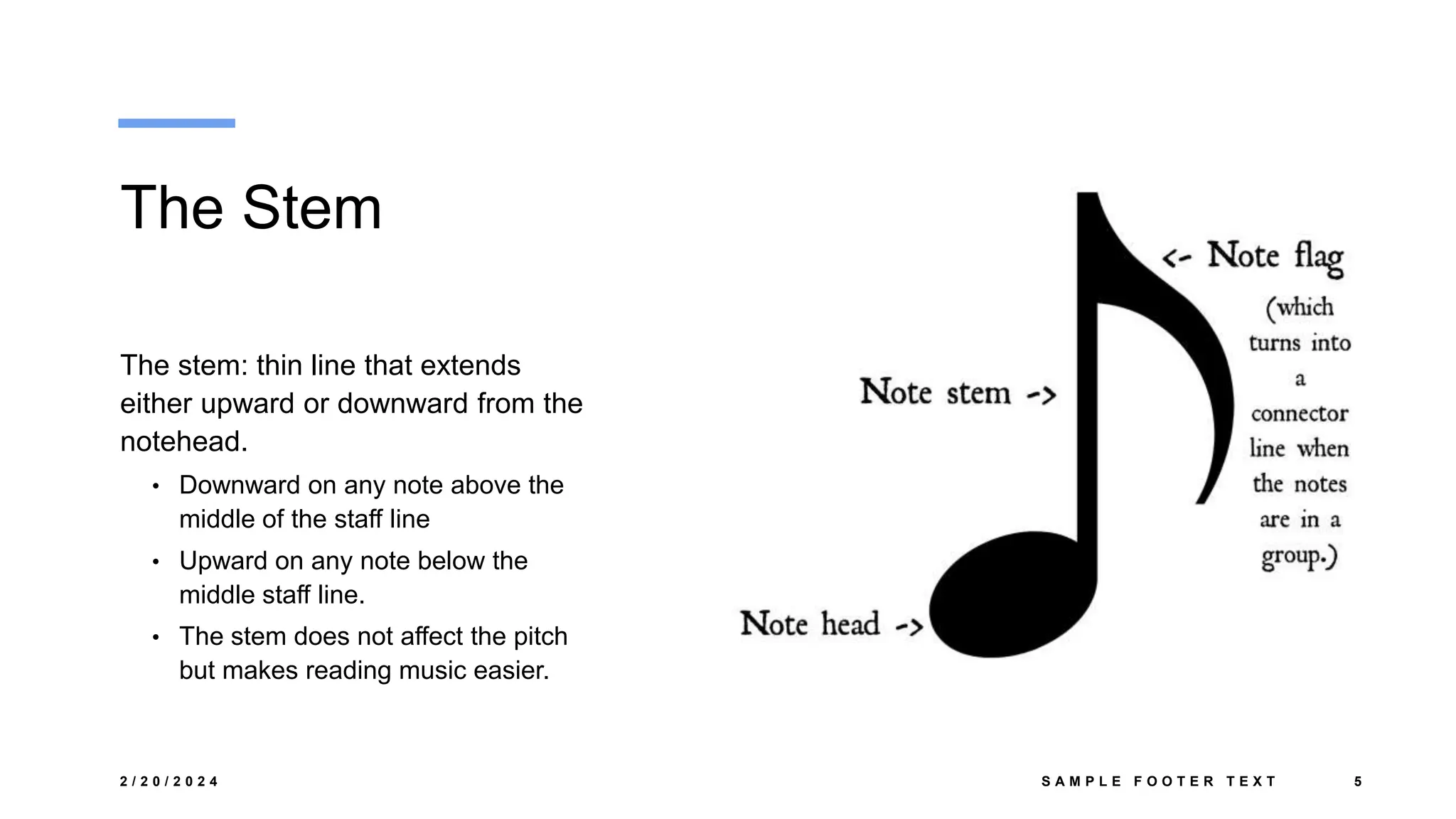
The Stem
The stem: thin line that extends
either upward or downward from the
notehead.
• Downward on any note above the
middle of the staff line
• Upward on any note below the
middle staff line.
• The stem does not affect the pitch
but makes reading music easier.
2 / 2 0 / 2 0 2 4 S A M P L E F O O T E R T E X T 5
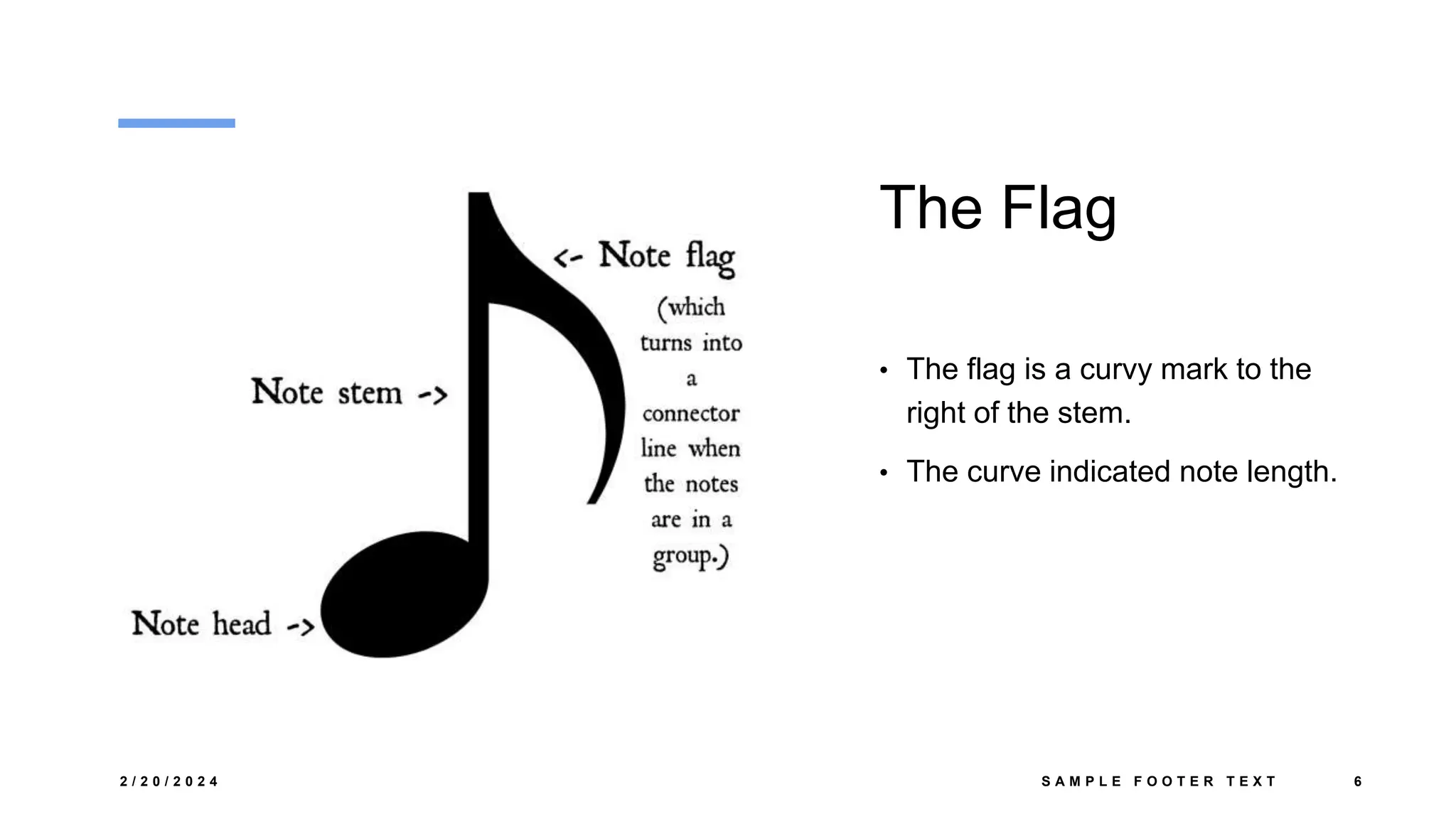
The Flag
• The flag is a curvy mark to the
right of the stem.
• The curve indicated note length.
2 / 2 0 / 2 0 2 4 S A M P L E F O O T E R T E X T 6
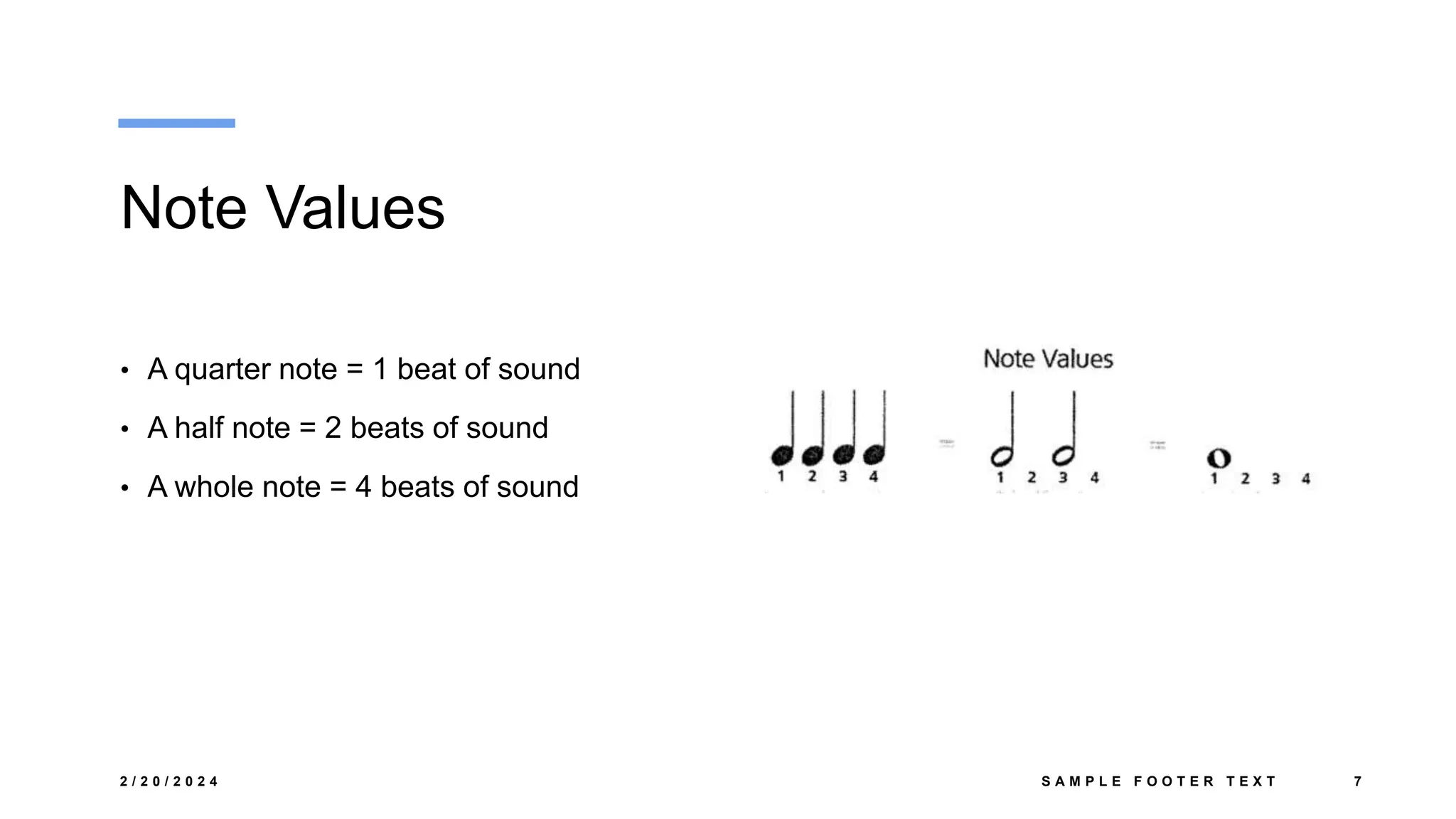
Note Values
• A quarter note = 1 beat of sound
• A half note = 2 beats of sound
• A whole note = 4 beats of sound
2 / 2 0 / 2 0 2 4 S A M P L E F O O T E R T E X T 7
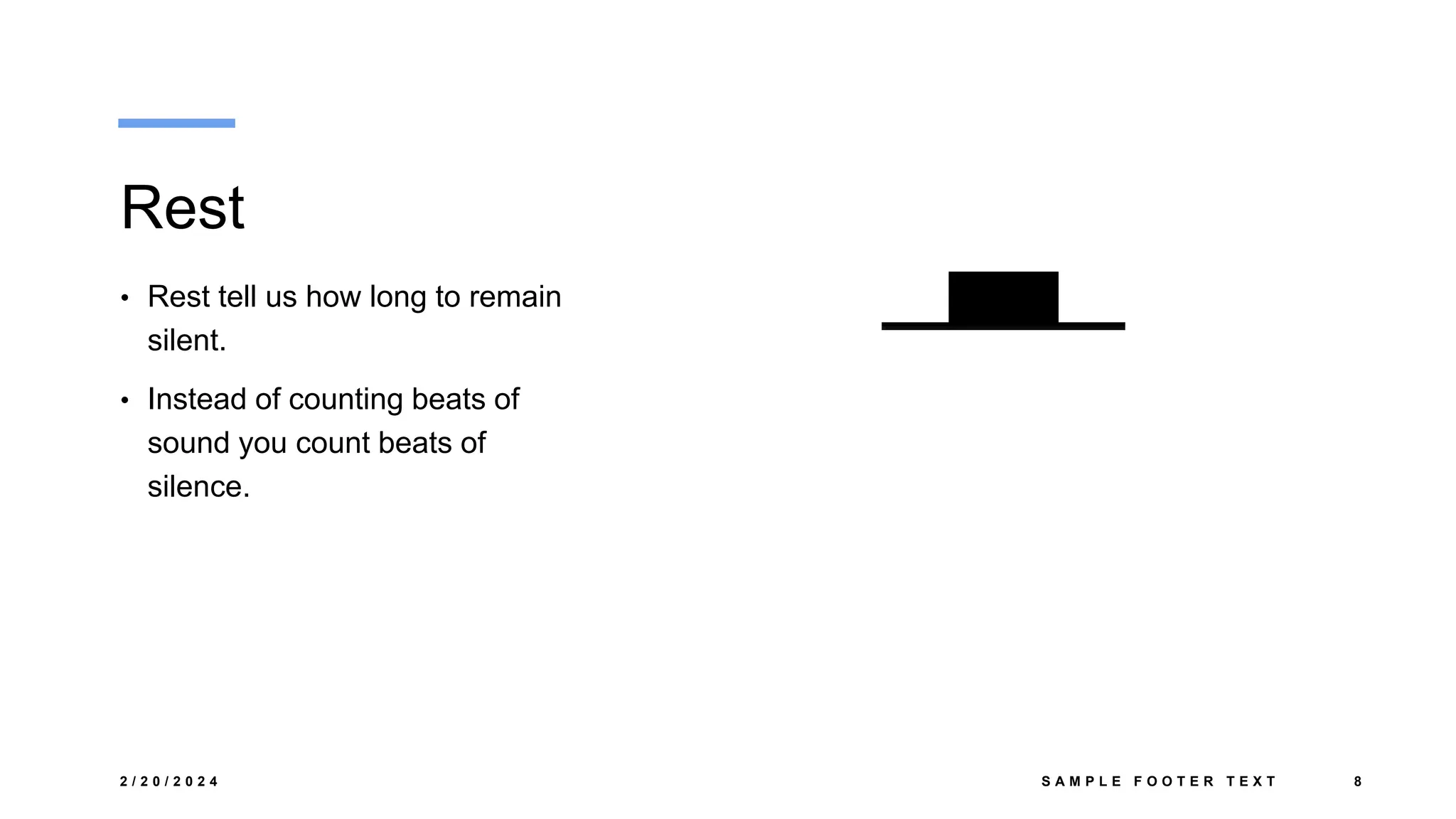
Rest
• Rest tell us how long to remain
silent.
• Instead of counting beats of
sound you count beats of
silence.
2 / 2 0 / 2 0 2 4 S A M P L E F O O T E R T E X T 8
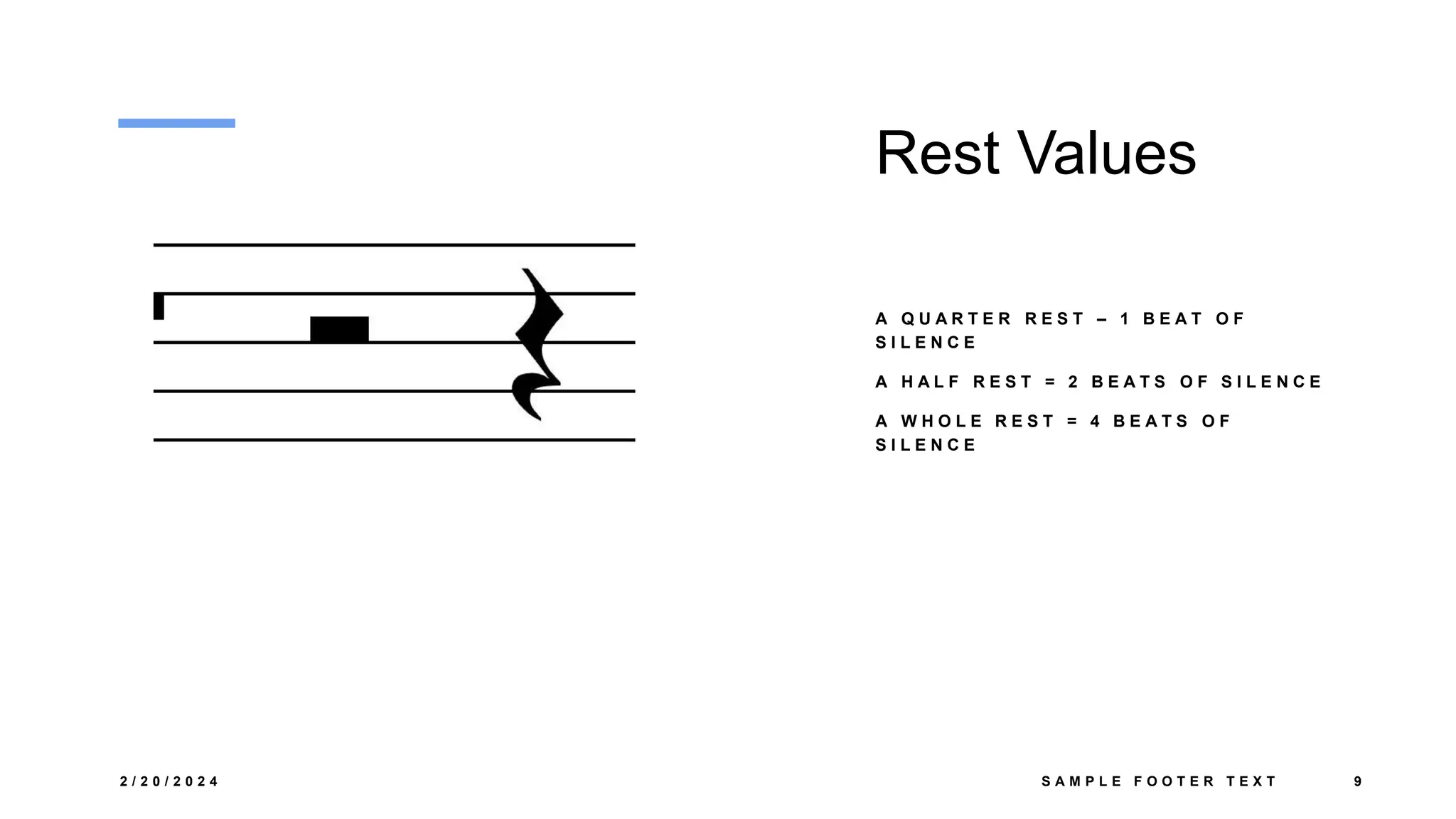
Rest Values
A Q U A R T E R R E S T – 1 B E A T O F
S I L E N C E
A H A L F R E S T = 2 B E A T S O F S I L E N C E
A W H O L E R E S T = 4 B E A T S O F
S I L E N C E
2 / 2 0 / 2 0 2 4 S A M P L E F O O T E R T E X T 9
Dots and Ties
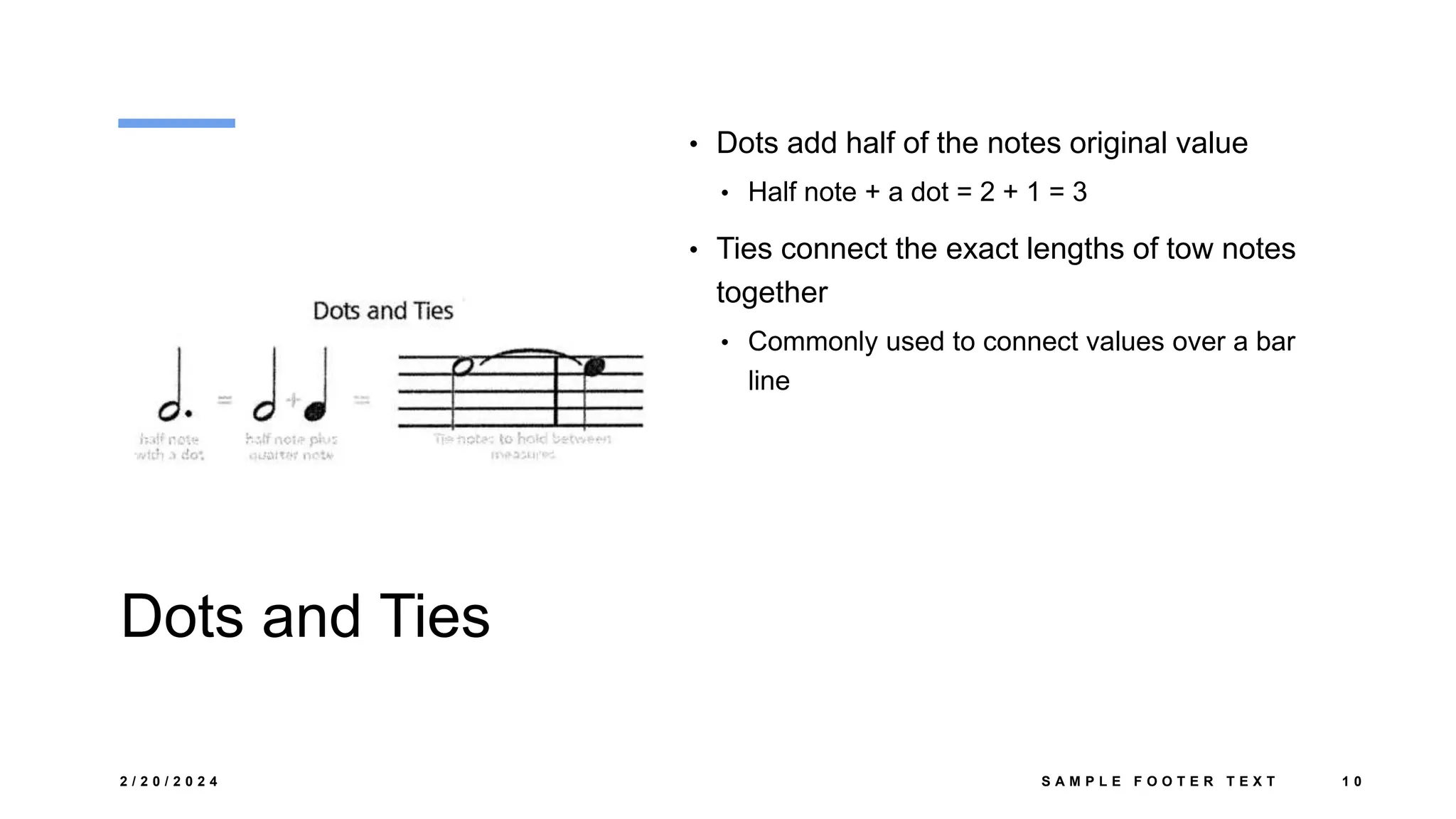
• Dots add half of the notes original value
• Half note + a dot = 2 + 1 = 3
• Ties connect the exact lengths of tow notes
together
• Commonly used to connect values over a bar
line
2 / 2 0 / 2 0 2 4 S A M P L E F O O T E R T E X T 1 0
Flags
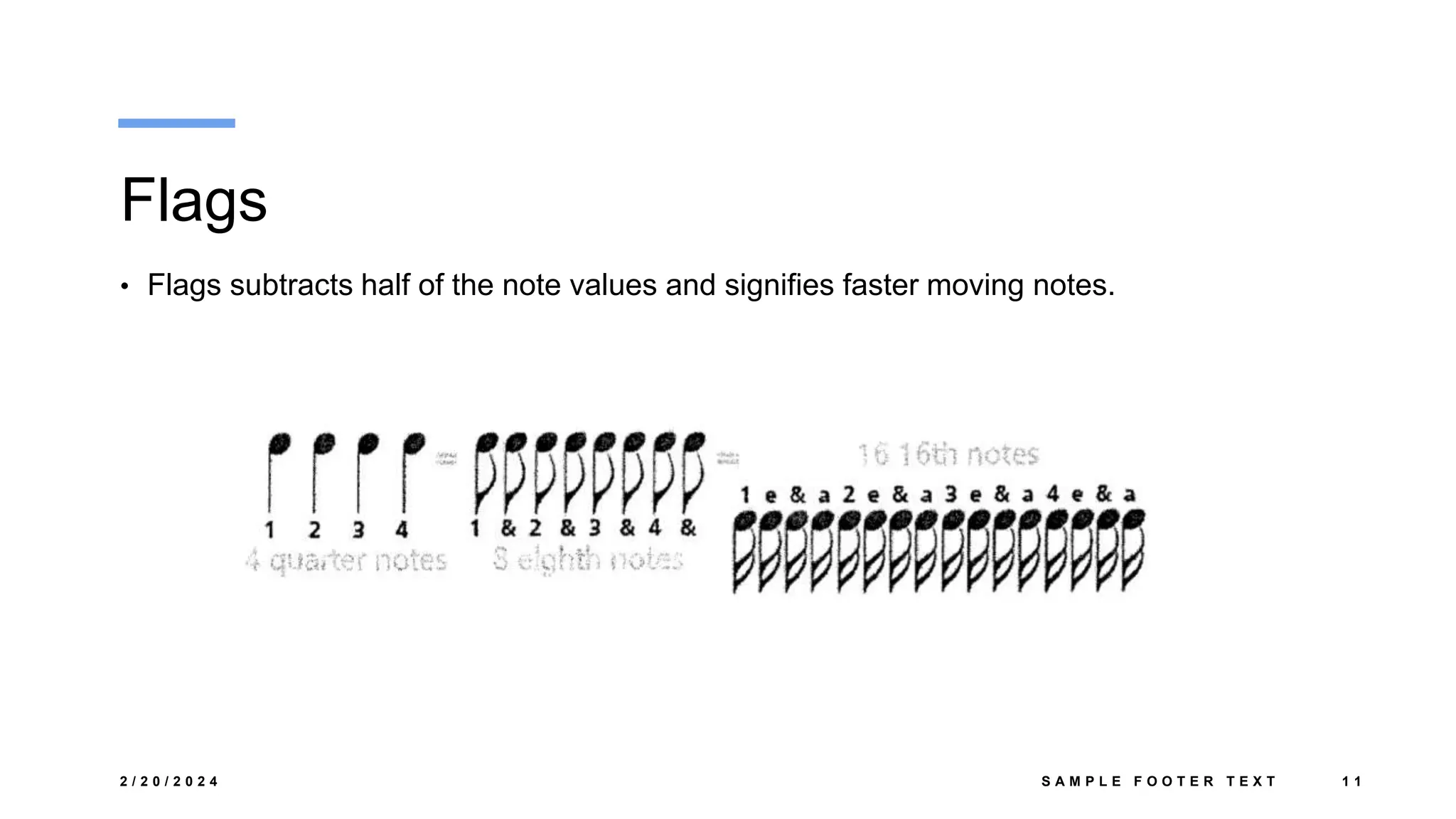
• Flags subtracts half of the note values and signifies faster moving notes.
2 / 2 0 / 2 0 2 4 S A M P L E F O O T E R T E X T 1 1
Beams
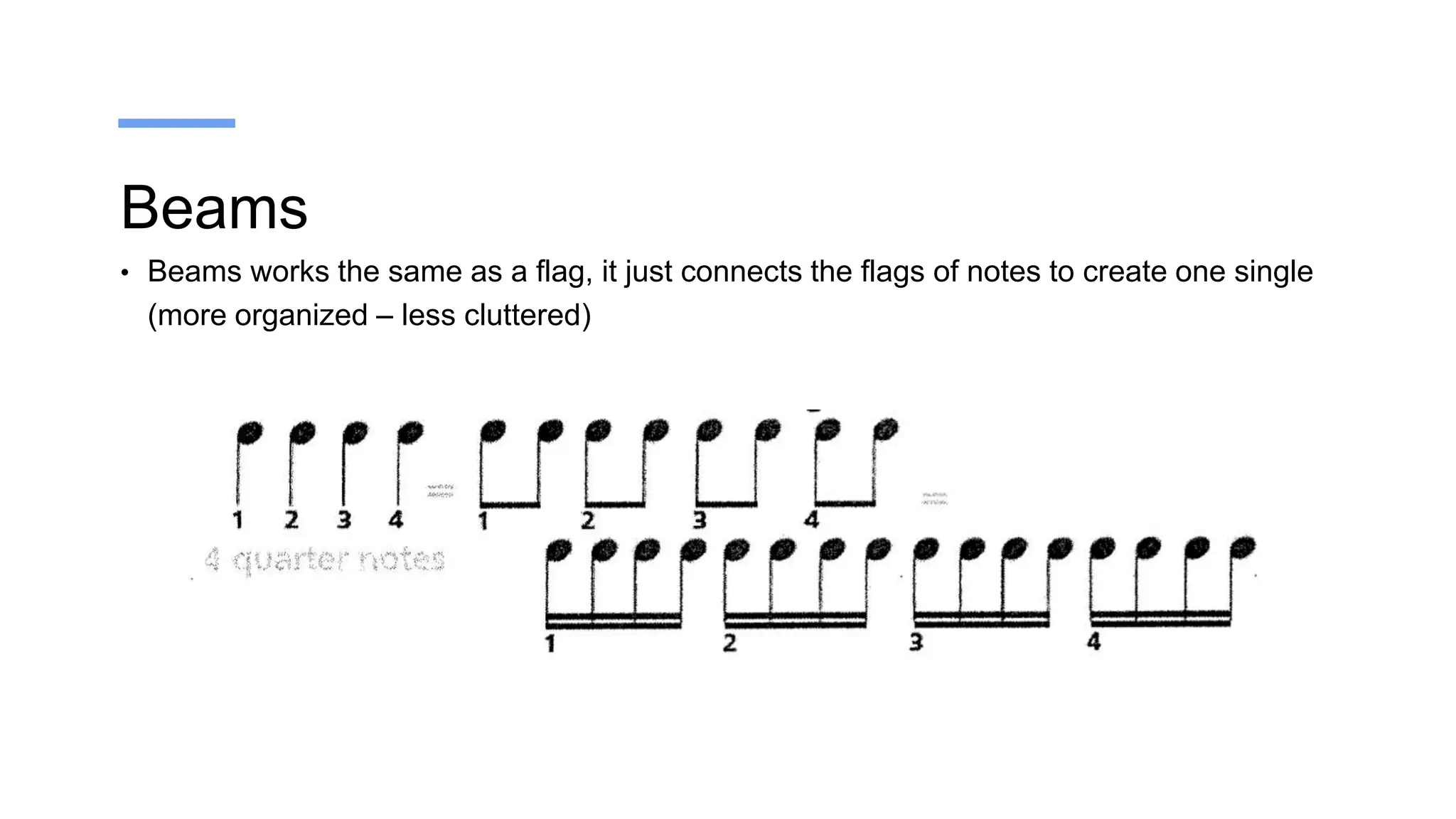
• Beams works the same as a flag, it just connects the flags of notes to create one single
(more organized – less cluttered)
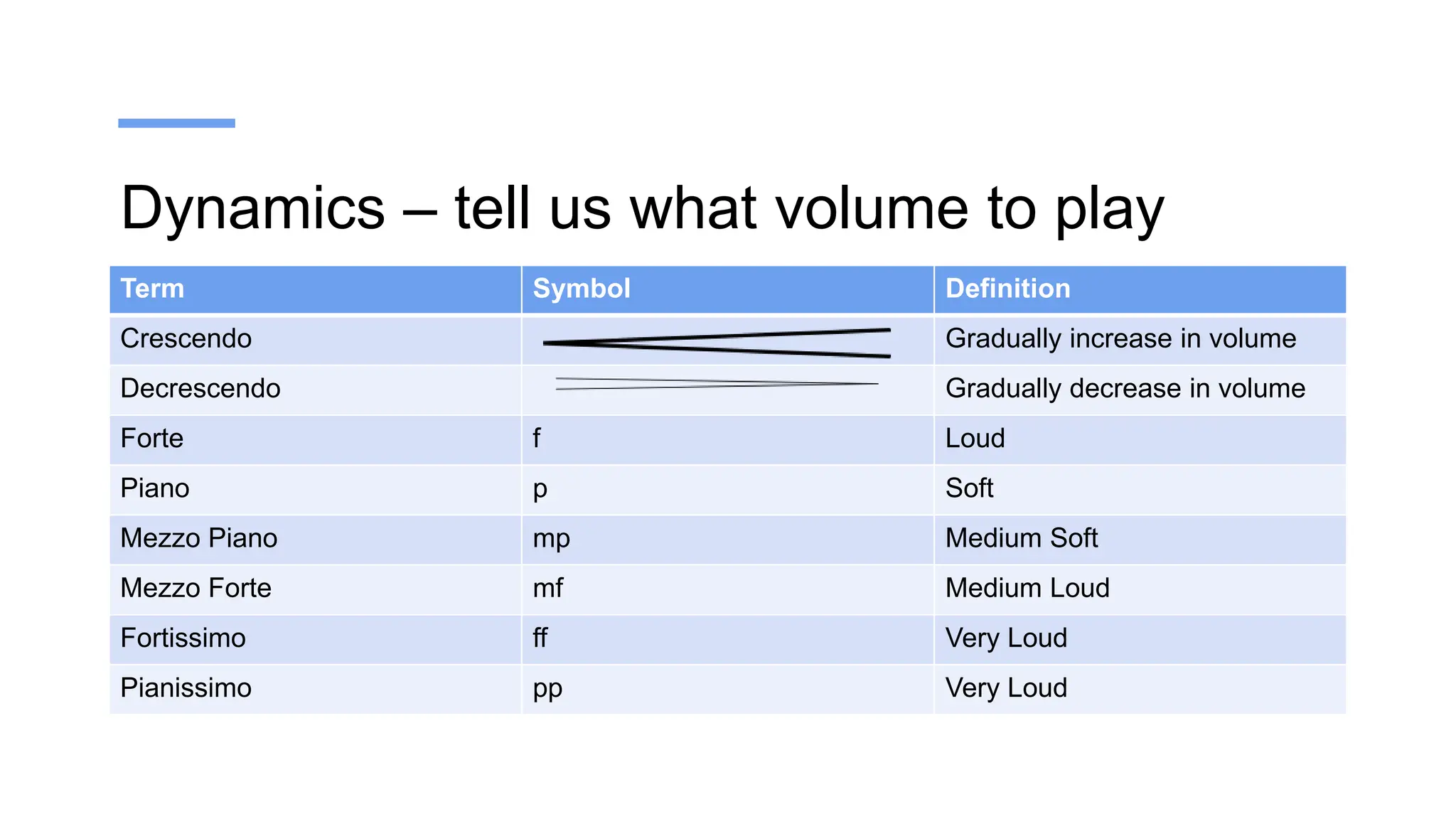
Dynamics – tell us what volume to play
Term Symbol Definition
Crescendo Gradually increase in volume
Decrescendo Gradually decrease in volume
Forte f Loud
Piano p Soft
Mezzo Piano mp Medium Soft
Mezzo Forte mf Medium Loud
Fortissimo ff Very Loud
Pianissimo pp Very Loud
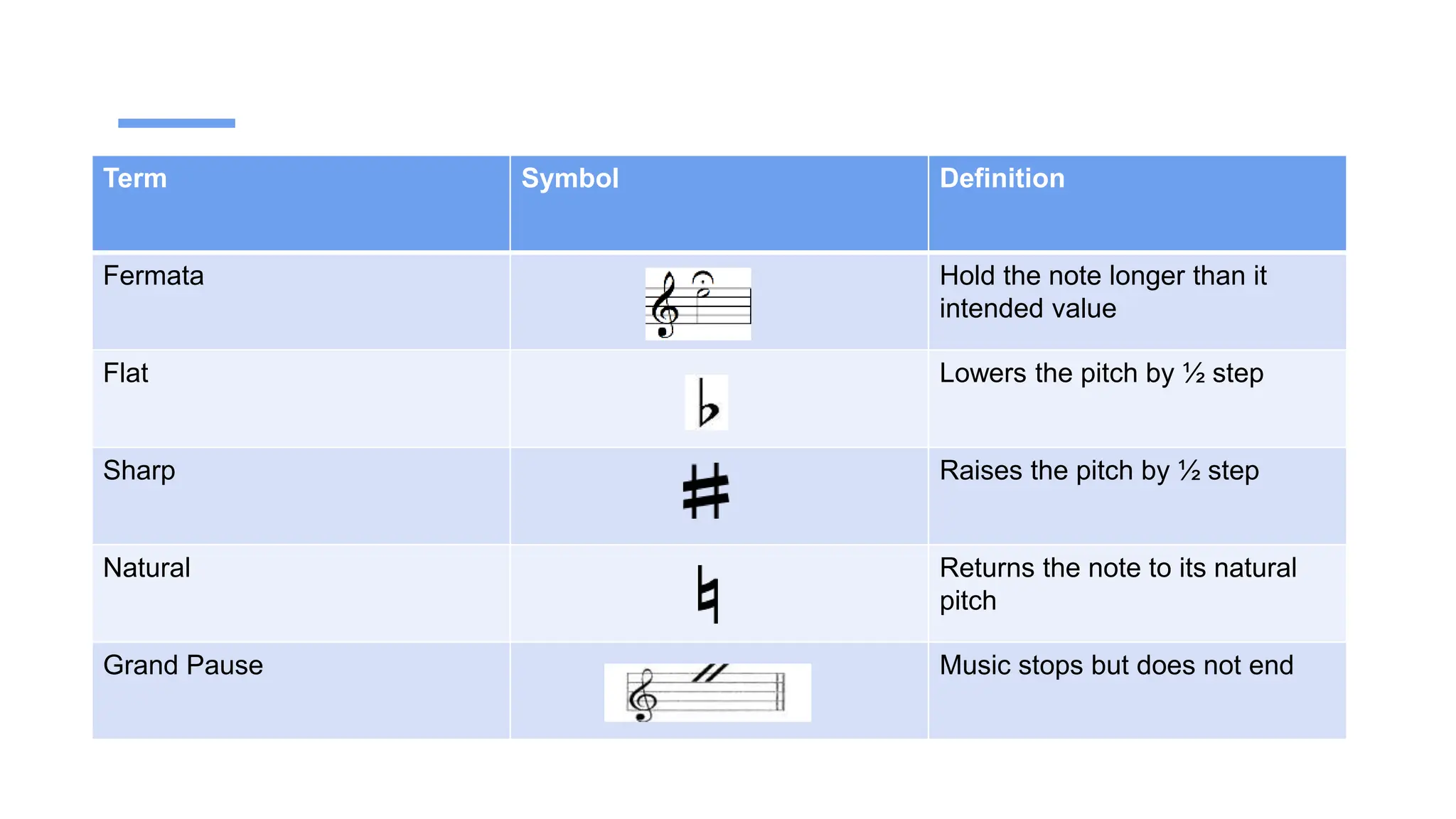
Term Symbol Definition
Fermata Hold the note longer than it
intended value
Flat Lowers the pitch by ½ step
Sharp Raises the pitch by ½ step
Natural Returns the note to its natural
pitch
Grand Pause Music stops but does not end
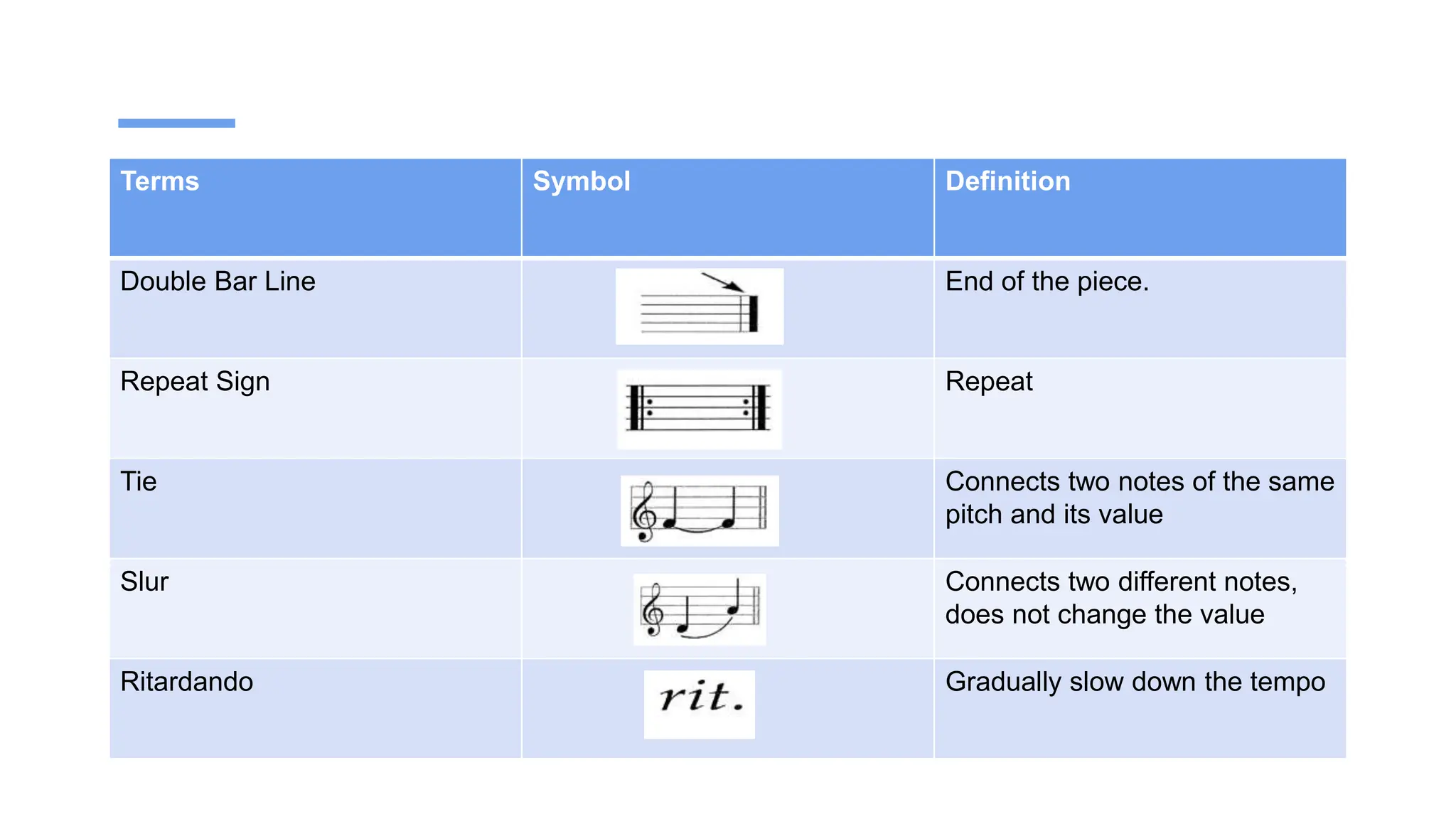
Terms Symbol Definition
Double Bar Line End of the piece.
Repeat Sign Repeat
Tie Connects two notes of the same
pitch and its value
Slur Connects two different notes,
does not change the value
Ritardando Gradually slow down the tempo

Unit+1+-+Part+3+Basic+Notation.pptxhgvvu

  • 1.
    Unit 1 –Part 3 Basic Symbol Notation T H E S T U D E N T W I L L B E AB L E TO R E AD B AS I C M U S I C N O TAT I O N . 2 / 2 0 / 2 0 2 4 S A M P L E F O O T E R T E X T 1
  • 2.
    Music Notes • Notestell us which note to play and how long to play it. • There are three potential parts to a note: the pitch, the duration, and the volume. 2 / 2 0 / 2 0 2 4 S A M P L E F O O T E R T E X T 2
  • 3.
    Labeling parts ofthe music note
  • 4.
    The Note Heads Thenote heads: every note has one – either clear or solid. • The pitch determines which note to play/sing. 2 / 2 0 / 2 0 2 4 S A M P L E F O O T E R T E X T 4
  • 5.
    The Stem The stem:thin line that extends either upward or downward from the notehead. • Downward on any note above the middle of the staff line • Upward on any note below the middle staff line. • The stem does not affect the pitch but makes reading music easier. 2 / 2 0 / 2 0 2 4 S A M P L E F O O T E R T E X T 5
  • 6.
    The Flag • Theflag is a curvy mark to the right of the stem. • The curve indicated note length. 2 / 2 0 / 2 0 2 4 S A M P L E F O O T E R T E X T 6
  • 7.
    Note Values • Aquarter note = 1 beat of sound • A half note = 2 beats of sound • A whole note = 4 beats of sound 2 / 2 0 / 2 0 2 4 S A M P L E F O O T E R T E X T 7
  • 8.
    Rest • Rest tellus how long to remain silent. • Instead of counting beats of sound you count beats of silence. 2 / 2 0 / 2 0 2 4 S A M P L E F O O T E R T E X T 8
  • 9.
    Rest Values A QU A R T E R R E S T – 1 B E A T O F S I L E N C E A H A L F R E S T = 2 B E A T S O F S I L E N C E A W H O L E R E S T = 4 B E A T S O F S I L E N C E 2 / 2 0 / 2 0 2 4 S A M P L E F O O T E R T E X T 9
  • 10.
    Dots and Ties •Dots add half of the notes original value • Half note + a dot = 2 + 1 = 3 • Ties connect the exact lengths of tow notes together • Commonly used to connect values over a bar line 2 / 2 0 / 2 0 2 4 S A M P L E F O O T E R T E X T 1 0
  • 11.
    Flags • Flags subtractshalf of the note values and signifies faster moving notes. 2 / 2 0 / 2 0 2 4 S A M P L E F O O T E R T E X T 1 1
  • 12.
    Beams • Beams worksthe same as a flag, it just connects the flags of notes to create one single (more organized – less cluttered)
  • 13.
    Dynamics – tellus what volume to play Term Symbol Definition Crescendo Gradually increase in volume Decrescendo Gradually decrease in volume Forte f Loud Piano p Soft Mezzo Piano mp Medium Soft Mezzo Forte mf Medium Loud Fortissimo ff Very Loud Pianissimo pp Very Loud
  • 14.
    Term Symbol Definition FermataHold the note longer than it intended value Flat Lowers the pitch by ½ step Sharp Raises the pitch by ½ step Natural Returns the note to its natural pitch Grand Pause Music stops but does not end
  • 15.
    Terms Symbol Definition DoubleBar Line End of the piece. Repeat Sign Repeat Tie Connects two notes of the same pitch and its value Slur Connects two different notes, does not change the value Ritardando Gradually slow down the tempo