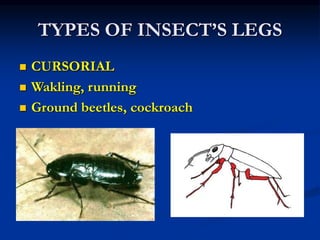
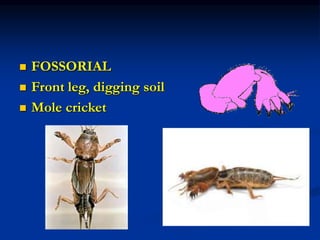
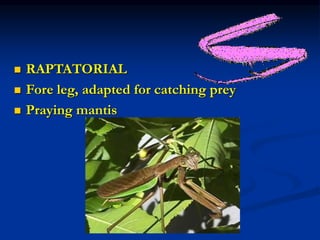
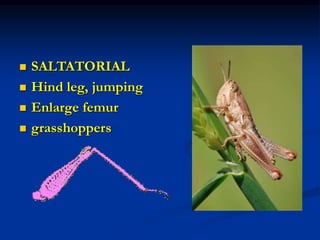
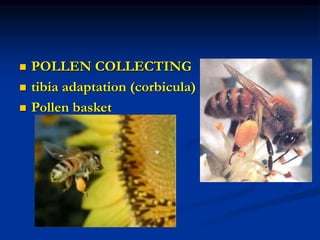
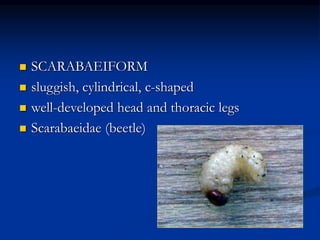
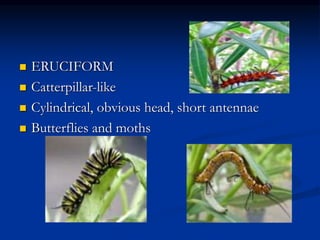
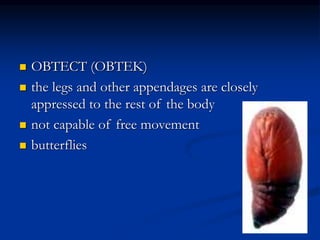
This document describes different types of insect legs and larvae. It outlines six main types of insect legs: cursorial for walking, fossorial for digging, raptorial for catching prey, saltatorial for jumping, natatorial for swimming, and pollen collecting legs with adaptations for carrying pollen. It also describes seven main types of insect larvae: campodeiform, carabiform, scarabaeiform, elateriform, eruciform, platyform, and vermiform. Finally, it outlines three main types of insect pupae: exarate, obtect, and coarctate.








![Human Reproduction [ Reproductive System ] Notes @irfanullah_mehar Irfanullah...](https://cdn.slidesharecdn.com/ss_thumbnails/humanreproductionreproductivesystemnotesirfanullahmeharirfanullahmeharjanantantra-260111172350-56e85778-thumbnail.jpg?width=640&height=640&fit=bounds)


