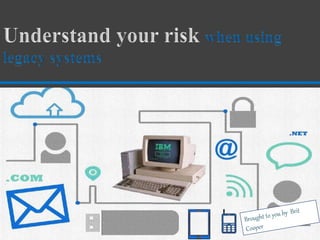
Legacy Systems:
Old technologies, computers, or
applications that are considered outdated
but are still functioning in the enterprise.
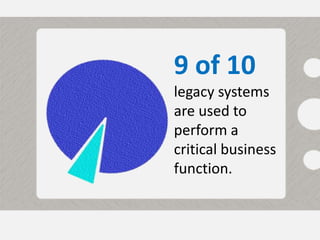
9 of 10
legacy systems
are used to
perform a
critical business
function.
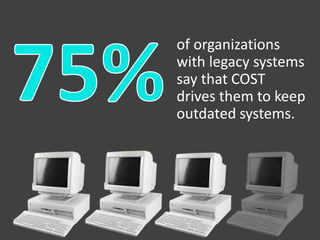
of organizations
with legacy systems
say that COST
drives them to keep
outdated systems.
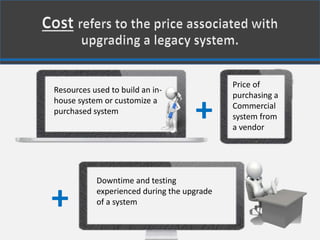
Downtime and testing
experienced during the upgrade
of a system
Resources used to build an in-
house system or customize a
purchased system
Price of
purchasing a
commercial
system from
a vendor
+
+
Often the vendor no longer
supports the legacy systems,
meaning that no future updates
to the technology, computer, or
application will be provided.
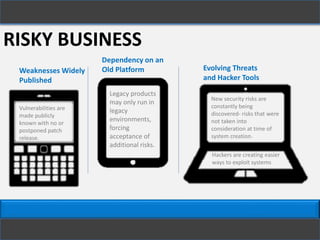
RISKY BUSINESS
Weaknesses Widely
Published
Dependency on an
Old Platform Evolving Threats
and Hacker Tools
Vulnerabilities are
made publicly
known with no or
postponed patch
release.
Legacy products
may only run in
legacy
environments,
forcing
acceptance of
additional risks.
New security risks are
constantly being
discovered- risks that were
not taken into
consideration at time of
system creation.
Hackers are creating easier
ways to exploit systems
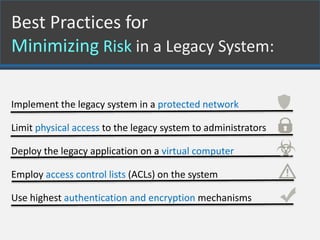
Implement the legacy system in a protected network
Limit physical access to the legacy system to administrators
Deploy the legacy application on a virtual computer
Employ access control lists (ACLs) on the system
Use highest authentication and encryption mechanisms
Best Practices for
Minimizing Risk in a Legacy System:
when using legacy systems

Legacy Systems: The Forgotten Risk

  • 2.
    Legacy Systems: Old technologies,computers, or applications that are considered outdated but are still functioning in the enterprise.
  • 3.
    9 of 10 legacysystems are used to perform a critical business function.
  • 4.
    of organizations with legacysystems say that COST drives them to keep outdated systems.
  • 5.
    Downtime and testing experiencedduring the upgrade of a system Resources used to build an in- house system or customize a purchased system Price of purchasing a commercial system from a vendor + +
  • 6.
    Often the vendorno longer supports the legacy systems, meaning that no future updates to the technology, computer, or application will be provided.
  • 7.
    RISKY BUSINESS Weaknesses Widely Published Dependencyon an Old Platform Evolving Threats and Hacker Tools Vulnerabilities are made publicly known with no or postponed patch release. Legacy products may only run in legacy environments, forcing acceptance of additional risks. New security risks are constantly being discovered- risks that were not taken into consideration at time of system creation. Hackers are creating easier ways to exploit systems
  • 8.
    Implement the legacysystem in a protected network Limit physical access to the legacy system to administrators Deploy the legacy application on a virtual computer Employ access control lists (ACLs) on the system Use highest authentication and encryption mechanisms Best Practices for Minimizing Risk in a Legacy System:
  • 9.