-How+adjective..?
-The to-infinitive ; the infinitive without to
-Used to/would
-Conditional type 0
-Conditional type 1
EL102 Touchstone 3
Lecture 2
How+adjective..?
 How+adjective..? for questions about
size and other measurements.
 It presents the answers for height,
length, width, and depth as full
sentences with adjectives after the
measurement- high, long, wide,
deep (e.g., It`s 29 kilometers wide)
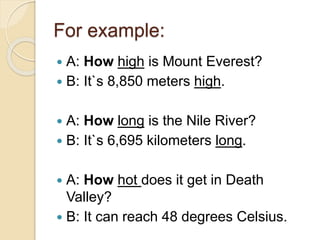
For example:
 A: How high is Mount Everest?
 B: It`s 8,850 meters high.
 A: How long is the Nile River?
 B: It`s 6,695 kilometers long.
 A: How hot does it get in Death
Valley?
 B: It can reach 48 degrees Celsius.
The to-infinitive ; the infinitive without to
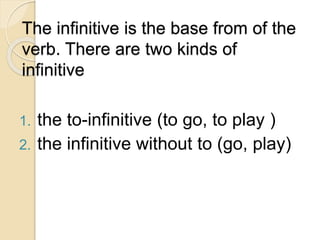
The infinitive is the base from of the
verb. There are two kinds of
infinitive
1. the to-infinitive (to go, to play )
2. the infinitive without to (go, play)
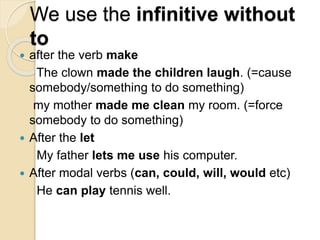
We use the infinitive without
to
 after the verb make
The clown made the children laugh. (=cause
somebody/something to do something)
my mother made me clean my room. (=force
somebody to do something)
 After the let
My father lets me use his computer.
 After modal verbs (can, could, will, would etc)
He can play tennis well.
The –ing form
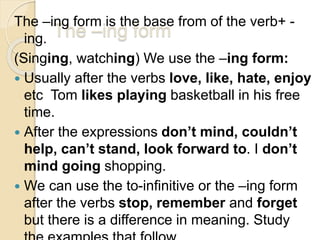
The –ing form is the base from of the verb+ -
ing.
(Singing, watching) We use the –ing form:
 Usually after the verbs love, like, hate, enjoy
etc Tom likes playing basketball in his free
time.
 After the expressions don’t mind, couldn’t
help, can’t stand, look forward to. I don’t
mind going shopping.
 We can use the to-infinitive or the –ing form
after the verbs stop, remember and forget
but there is a difference in meaning. Study
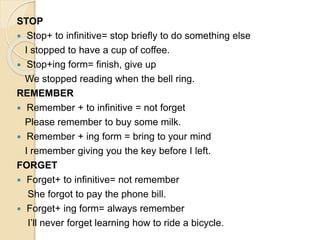
STOP
 Stop+ to infinitive= stop briefly to do something else
I stopped to have a cup of coffee.
 Stop+ing form= finish, give up
We stopped reading when the bell ring.
REMEMBER
 Remember + to infinitive = not forget
Please remember to buy some milk.
 Remember + ing form = bring to your mind
I remember giving you the key before I left.
FORGET
 Forget+ to infinitive= not remember
She forgot to pay the phone bill.
 Forget+ ing form= always remember
I’ll never forget learning how to ride a bicycle.
Conditionals
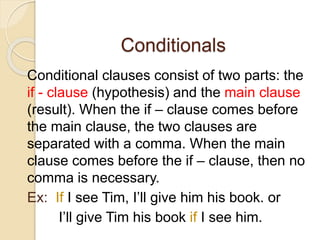
Conditionals
Conditional clauses consist of two parts: the
if - clause (hypothesis) and the main clause
(result). When the if – clause comes before
the main clause, the two clauses are
separated with a comma. When the main
clause comes before the if – clause, then no
comma is necessary.
Ex: If I see Tim, I’ll give him his book. or
I’ll give Tim his book if I see him.
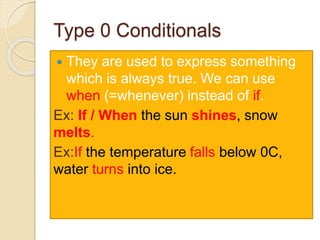
Type 0 Conditionals
 They are used to express something
which is always true. We can use
when (=whenever) instead of if.
Ex: If / When the sun shines, snow
melts.
Ex:If the temperature falls below 0C,
water turns into ice.
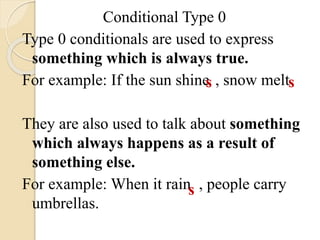
Conditional Type 0
Type 0 conditionals are used to express
something which is always true.
For example: If the sun shine , snow melt
They are also used to talk about something
which always happens as a result of
something else.
For example: When it rain , people carry
umbrellas.
s s
s
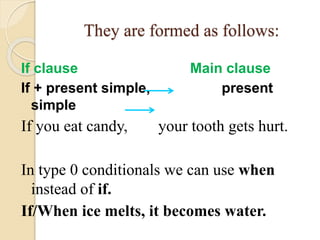
They are formed as follows:
If clause Main clause
If + present simple, present
simple
If you eat candy, your tooth gets hurt.
In type 0 conditionals we can use when
instead of if.
If/When ice melts, it becomes water.
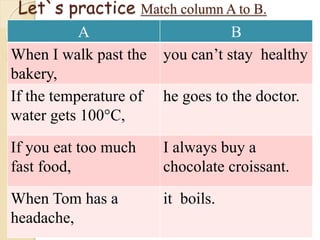
Let`s practice Match column A to B.
A B
When I walk past the
bakery,
you can’t stay healthy
If the temperature of
water gets 100°C,
he goes to the doctor.
If you eat too much
fast food,
I always buy a
chocolate croissant.
When Tom has a
headache,
it boils.
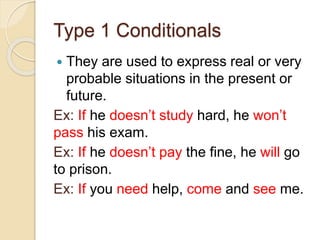
Type 1 Conditionals
 They are used to express real or very
probable situations in the present or
future.
Ex: If he doesn’t study hard, he won’t
pass his exam.
Ex: If he doesn’t pay the fine, he will go
to prison.
Ex: If you need help, come and see me.
Used to/Would
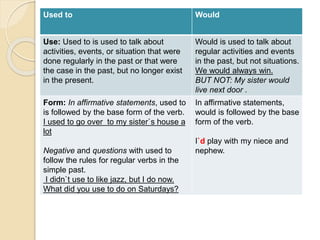
Used to Would
Use: Used to is used to talk about
activities, events, or situation that were
done regularly in the past or that were
the case in the past, but no longer exist
in the present.
Would is used to talk about
regular activities and events
in the past, but not situations.
We would always win.
BUT NOT: My sister would
live next door .
Form: In affirmative statements, used to
is followed by the base form of the verb.
I used to go over to my sister`s house a
lot
Negative and questions with used to
follow the rules for regular verbs in the
simple past.
I didn`t use to like jazz, but I do now.
What did you use to do on Saturdays?
In affirmative statements,
would is followed by the base
form of the verb.
I`d play with my niece and
nephew.
Lecture2 how+adjective

Lecture2 how+adjective

  • 1.
    -How+adjective..? -The to-infinitive ;the infinitive without to -Used to/would -Conditional type 0 -Conditional type 1 EL102 Touchstone 3 Lecture 2
  • 2.
    How+adjective..?  How+adjective..? forquestions about size and other measurements.  It presents the answers for height, length, width, and depth as full sentences with adjectives after the measurement- high, long, wide, deep (e.g., It`s 29 kilometers wide)
  • 3.
    For example:  A:How high is Mount Everest?  B: It`s 8,850 meters high.  A: How long is the Nile River?  B: It`s 6,695 kilometers long.  A: How hot does it get in Death Valley?  B: It can reach 48 degrees Celsius.
  • 4.
    The to-infinitive ;the infinitive without to
  • 5.
    The infinitive isthe base from of the verb. There are two kinds of infinitive 1. the to-infinitive (to go, to play ) 2. the infinitive without to (go, play)
  • 6.
    We use theinfinitive without to  after the verb make The clown made the children laugh. (=cause somebody/something to do something) my mother made me clean my room. (=force somebody to do something)  After the let My father lets me use his computer.  After modal verbs (can, could, will, would etc) He can play tennis well.
  • 7.
    The –ing form The–ing form is the base from of the verb+ - ing. (Singing, watching) We use the –ing form:  Usually after the verbs love, like, hate, enjoy etc Tom likes playing basketball in his free time.  After the expressions don’t mind, couldn’t help, can’t stand, look forward to. I don’t mind going shopping.  We can use the to-infinitive or the –ing form after the verbs stop, remember and forget but there is a difference in meaning. Study
  • 8.
    STOP  Stop+ toinfinitive= stop briefly to do something else I stopped to have a cup of coffee.  Stop+ing form= finish, give up We stopped reading when the bell ring. REMEMBER  Remember + to infinitive = not forget Please remember to buy some milk.  Remember + ing form = bring to your mind I remember giving you the key before I left. FORGET  Forget+ to infinitive= not remember She forgot to pay the phone bill.  Forget+ ing form= always remember I’ll never forget learning how to ride a bicycle.
  • 9.
  • 10.
    Conditionals Conditional clauses consistof two parts: the if - clause (hypothesis) and the main clause (result). When the if – clause comes before the main clause, the two clauses are separated with a comma. When the main clause comes before the if – clause, then no comma is necessary. Ex: If I see Tim, I’ll give him his book. or I’ll give Tim his book if I see him.
  • 11.
    Type 0 Conditionals They are used to express something which is always true. We can use when (=whenever) instead of if. Ex: If / When the sun shines, snow melts. Ex:If the temperature falls below 0C, water turns into ice.
  • 12.
    Conditional Type 0 Type0 conditionals are used to express something which is always true. For example: If the sun shine , snow melt They are also used to talk about something which always happens as a result of something else. For example: When it rain , people carry umbrellas. s s s
  • 13.
    They are formedas follows: If clause Main clause If + present simple, present simple If you eat candy, your tooth gets hurt. In type 0 conditionals we can use when instead of if. If/When ice melts, it becomes water.
  • 14.
    Let`s practice Matchcolumn A to B. A B When I walk past the bakery, you can’t stay healthy If the temperature of water gets 100°C, he goes to the doctor. If you eat too much fast food, I always buy a chocolate croissant. When Tom has a headache, it boils.
  • 15.
    Type 1 Conditionals They are used to express real or very probable situations in the present or future. Ex: If he doesn’t study hard, he won’t pass his exam. Ex: If he doesn’t pay the fine, he will go to prison. Ex: If you need help, come and see me.
  • 17.
  • 18.
    Used to Would Use:Used to is used to talk about activities, events, or situation that were done regularly in the past or that were the case in the past, but no longer exist in the present. Would is used to talk about regular activities and events in the past, but not situations. We would always win. BUT NOT: My sister would live next door . Form: In affirmative statements, used to is followed by the base form of the verb. I used to go over to my sister`s house a lot Negative and questions with used to follow the rules for regular verbs in the simple past. I didn`t use to like jazz, but I do now. What did you use to do on Saturdays? In affirmative statements, would is followed by the base form of the verb. I`d play with my niece and nephew.