From-Rajendra Bhide
Solutions
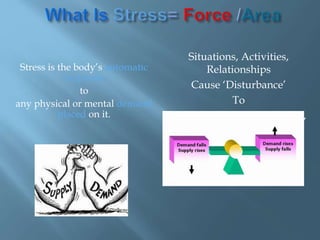
Stress is the body’s automatic
response
to
any physical or mental demand
placed on it.
Situations, Activities,
Relationships
Cause ‘Disturbance’
To
Physical, Mental, Emotional,
Psychological Self
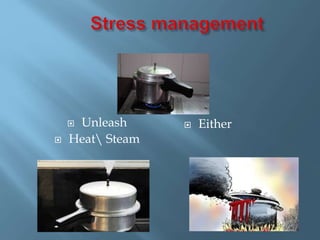
 Unleash
 Heat Steam
 Either
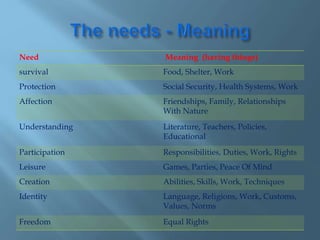
Need Meaning (having things)
survival Food, Shelter, Work
Protection Social Security, Health Systems, Work
Affection Friendships, Family, Relationships
With Nature
Understanding Literature, Teachers, Policies,
Educational
Participation Responsibilities, Duties, Work, Rights
Leisure Games, Parties, Peace Of Mind
Creation Abilities, Skills, Work, Techniques
Identity Language, Religions, Work, Customs,
Values, Norms
Freedom Equal Rights
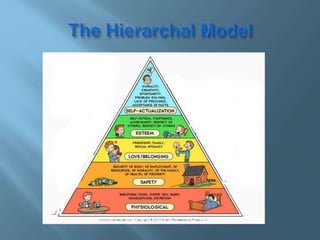
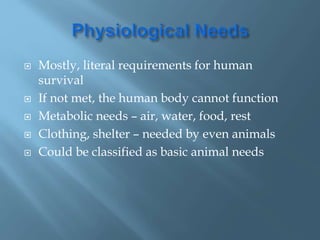
 Mostly, literal requirements for human
survival
 If not met, the human body cannot function
 Metabolic needs – air, water, food, rest
 Clothing, shelter – needed by even animals
 Could be classified as basic animal needs
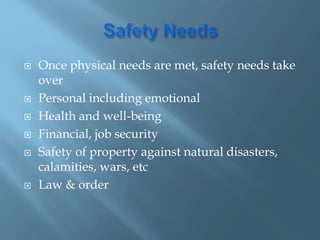
 Once physical needs are met, safety needs take
over
 Personal including emotional
 Health and well-being
 Financial, job security
 Safety of property against natural disasters,
calamities, wars, etc
 Law & order
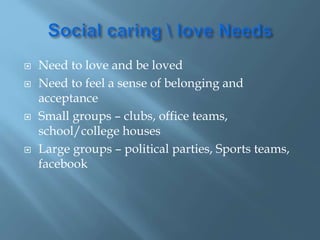
 Need to love and be loved
 Need to feel a sense of belonging and
acceptance
 Small groups – clubs, office teams,
school/college houses
 Large groups – political parties, Sports teams,
facebook
 Need to be respected by others and in turn
respect them
 Sense of contribution, to feel self-valued, in
profession or hobby
 Lower - respect of others, the need for status,
recognition, fame, prestige, and attention
 Higher - self-respect, the need for strength,
competence, mastery, self-confidence,
independence and freedom
 What a man can be, he must be
 Intrinsic growth of what is already in a person
 Growth-motivated rather than deficiency-
motivated
 Cannot normally be reached until other lower
order needs are met
 Rarely happens - < 1%
 Acceptance of facts, spontaneous, focused on
problems outside self, without prejudice
Fight ,Flight
Float
• Question: Do you think too much about
past?
• Question: Do you think too much about
future?
• Question: Do you have financial problems?
• Question: Do you think too much to make
others happy?
• Question: Do you have good relations with
your spouse and kids?
• Question: Do you have a healthy professional
circumstances?
•
•
• Question: Do you read good books?
• Question: Do you walk for 15 minutes daily or
go to the park?-
• Question: Do you laugh often? By watching
funny programs or sharing jokes?
• Question: Do you have a best friend with
whom you can share your feelings and discuss
your problems?
• Question: when was the last time you gave
something in charity?
• Question: when was the last time you
rewarded yourself by buying something good
for you?
1. Physical
- Weight gain/loss
- Unexpected hair loss
- Heart palpitations
- High blood pressure
2. Emotional
- Mood swings
- Anxiety
- Can lead to depression
• Can also lead to unhealthy coping strategies (i.e.
alcohol, drugs, etc)
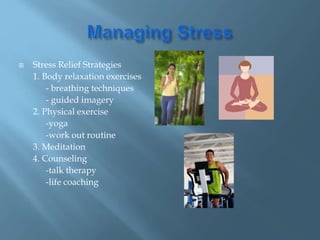
 Stress Relief Strategies
1. Body relaxation exercises
- breathing techniques
- guided imagery
2. Physical exercise
-yoga
-work out routine
3. Meditation
4. Counseling
-talk therapy
-life coaching
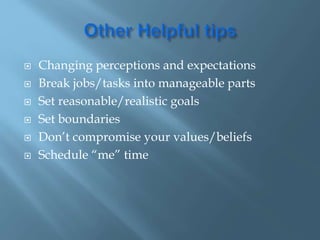
 Changing perceptions and expectations
 Break jobs/tasks into manageable parts
 Set reasonable/realistic goals
 Set boundaries
 Don’t compromise your values/beliefs
 Schedule “me” time
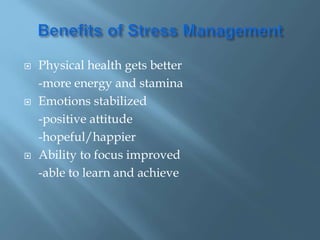
 Physical health gets better
-more energy and stamina
 Emotions stabilized
-positive attitude
-hopeful/happier
 Ability to focus improved
-able to learn and achieve
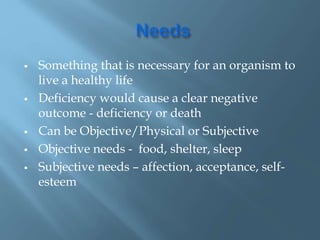
 Something that is necessary for an organism to
live a healthy life
 Deficiency would cause a clear negative
outcome - deficiency or death
 Can be Objective/Physical or Subjective
 Objective needs - food, shelter, sleep
 Subjective needs – affection, acceptance, self-
esteem
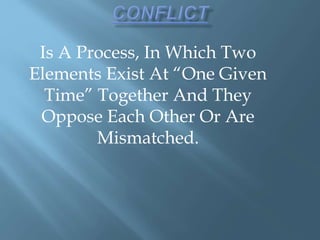
Is A Process, In Which Two
Elements Exist At “One Given
Time” Together And They
Oppose Each Other Or Are
Mismatched.
Statements on Conflict"
I tend to avoid conflict
I depend on harmony
I always stand up and express my opinion
I hate conflict
I like conflict because it produces results
and progress
I often compromise in conflict
I have lost in conflict
Hidden Conflicts: below the surface, often not
visible; these differences are felt but parties have not
decided yet how to act or react.
Rising Conflicts: acute conflict issues that may have
just erupted, but have not become systemic, or
involved anyone beyond the immediate parties.
Clear Cut Conflicts: disputes that are in the active
stage. People have made a decision on how they are
going to address the threat to their interest and have
selected a method of action
.
 Interest conflicts: These refer to the actions and emotions by which
people become involved to gain or protect their needs.
 Information conflicts: Caused by lack of information or differences in
same information
 Relationship conflicts: Are due to differences of personality and
emotions, as well as misperceptions, stereotypes and prejudices.
 Structural conflicts: Emerge over differing ideas concerning process,
rules and power to control time and space such as in land boundaries,
distribution of goods, or resource use issues.
 Value conflicts: Refers to clashes between cultural, social or personal
beliefs or different world views and traditions.
 Conflicts over access: This includes conflicts that
result as a consequence of a change in access or
inequitable access.
 Conflicts due to change in resource quality and
availability: The cause of these conflicts can be
either a change in the 'amount' or the quality of
the resource available to the different parties.
 Conflicts regarding authority over resource: Such
conflicts stem from a shift in decision-making
authority over a resource.
 Conflicts that result from differences in use and
non-use economic values: associated with the
resource as well as differences in cultural, ethical
or religious values.
 Conflicts associated with information
processing and availability
 Conflicts resulting from legal/policy
interests: These conflicts can result from different
interests in different institutions.
 Driver -Passenger
 Passenger- Driver
 Driver –Driver
 Passenger -Passenger

Lecture on stress management

  • 1.
  • 2.
    Stress is thebody’s automatic response to any physical or mental demand placed on it. Situations, Activities, Relationships Cause ‘Disturbance’ To Physical, Mental, Emotional, Psychological Self
  • 3.
     Unleash  HeatSteam  Either
  • 5.
    Need Meaning (havingthings) survival Food, Shelter, Work Protection Social Security, Health Systems, Work Affection Friendships, Family, Relationships With Nature Understanding Literature, Teachers, Policies, Educational Participation Responsibilities, Duties, Work, Rights Leisure Games, Parties, Peace Of Mind Creation Abilities, Skills, Work, Techniques Identity Language, Religions, Work, Customs, Values, Norms Freedom Equal Rights
  • 6.
     Mostly, literalrequirements for human survival  If not met, the human body cannot function  Metabolic needs – air, water, food, rest  Clothing, shelter – needed by even animals  Could be classified as basic animal needs
  • 7.
     Once physicalneeds are met, safety needs take over  Personal including emotional  Health and well-being  Financial, job security  Safety of property against natural disasters, calamities, wars, etc  Law & order
  • 8.
     Need tolove and be loved  Need to feel a sense of belonging and acceptance  Small groups – clubs, office teams, school/college houses  Large groups – political parties, Sports teams, facebook
  • 9.
     Need tobe respected by others and in turn respect them  Sense of contribution, to feel self-valued, in profession or hobby  Lower - respect of others, the need for status, recognition, fame, prestige, and attention  Higher - self-respect, the need for strength, competence, mastery, self-confidence, independence and freedom
  • 10.
     What aman can be, he must be  Intrinsic growth of what is already in a person  Growth-motivated rather than deficiency- motivated  Cannot normally be reached until other lower order needs are met  Rarely happens - < 1%  Acceptance of facts, spontaneous, focused on problems outside self, without prejudice
  • 12.
  • 13.
    • Question: Doyou think too much about past? • Question: Do you think too much about future? • Question: Do you have financial problems? • Question: Do you think too much to make others happy? • Question: Do you have good relations with your spouse and kids? • Question: Do you have a healthy professional circumstances? • •
  • 14.
    • Question: Doyou read good books? • Question: Do you walk for 15 minutes daily or go to the park?- • Question: Do you laugh often? By watching funny programs or sharing jokes? • Question: Do you have a best friend with whom you can share your feelings and discuss your problems? • Question: when was the last time you gave something in charity? • Question: when was the last time you rewarded yourself by buying something good for you?
  • 15.
    1. Physical - Weightgain/loss - Unexpected hair loss - Heart palpitations - High blood pressure 2. Emotional - Mood swings - Anxiety - Can lead to depression • Can also lead to unhealthy coping strategies (i.e. alcohol, drugs, etc)
  • 16.
     Stress ReliefStrategies 1. Body relaxation exercises - breathing techniques - guided imagery 2. Physical exercise -yoga -work out routine 3. Meditation 4. Counseling -talk therapy -life coaching
  • 17.
     Changing perceptionsand expectations  Break jobs/tasks into manageable parts  Set reasonable/realistic goals  Set boundaries  Don’t compromise your values/beliefs  Schedule “me” time
  • 18.
     Physical healthgets better -more energy and stamina  Emotions stabilized -positive attitude -hopeful/happier  Ability to focus improved -able to learn and achieve
  • 19.
     Something thatis necessary for an organism to live a healthy life  Deficiency would cause a clear negative outcome - deficiency or death  Can be Objective/Physical or Subjective  Objective needs - food, shelter, sleep  Subjective needs – affection, acceptance, self- esteem
  • 20.
    Is A Process,In Which Two Elements Exist At “One Given Time” Together And They Oppose Each Other Or Are Mismatched.
  • 21.
    Statements on Conflict" Itend to avoid conflict I depend on harmony I always stand up and express my opinion I hate conflict I like conflict because it produces results and progress I often compromise in conflict I have lost in conflict
  • 22.
    Hidden Conflicts: belowthe surface, often not visible; these differences are felt but parties have not decided yet how to act or react. Rising Conflicts: acute conflict issues that may have just erupted, but have not become systemic, or involved anyone beyond the immediate parties. Clear Cut Conflicts: disputes that are in the active stage. People have made a decision on how they are going to address the threat to their interest and have selected a method of action .
  • 23.
     Interest conflicts:These refer to the actions and emotions by which people become involved to gain or protect their needs.  Information conflicts: Caused by lack of information or differences in same information  Relationship conflicts: Are due to differences of personality and emotions, as well as misperceptions, stereotypes and prejudices.  Structural conflicts: Emerge over differing ideas concerning process, rules and power to control time and space such as in land boundaries, distribution of goods, or resource use issues.  Value conflicts: Refers to clashes between cultural, social or personal beliefs or different world views and traditions.
  • 24.
     Conflicts overaccess: This includes conflicts that result as a consequence of a change in access or inequitable access.  Conflicts due to change in resource quality and availability: The cause of these conflicts can be either a change in the 'amount' or the quality of the resource available to the different parties.  Conflicts regarding authority over resource: Such conflicts stem from a shift in decision-making authority over a resource.
  • 25.
     Conflicts thatresult from differences in use and non-use economic values: associated with the resource as well as differences in cultural, ethical or religious values.  Conflicts associated with information processing and availability  Conflicts resulting from legal/policy interests: These conflicts can result from different interests in different institutions.
  • 26.
     Driver -Passenger Passenger- Driver  Driver –Driver  Passenger -Passenger