COLLECTING CRITICALCOLLECTING CRITICAL
INCIDENTSINCIDENTS
ByBy Paul PedersenPaul Pedersen
Professor Emeritus Syracuse University,Professor Emeritus Syracuse University,
Visiting Professor, Department of Psychology, UniversityVisiting Professor, Department of Psychology, University
of Hawaiiof Hawaii
FOCUS ON…FOCUS ON…
 Notice a particular event or incident.Notice a particular event or incident.
 What did the person or persons do?What did the person or persons do?
 What were the consequences?What were the consequences?
HOW ARE CRITICAL INCIDENTHOW ARE CRITICAL INCIDENT
SNAPSHOTS USEFUL?SNAPSHOTS USEFUL?
 You sharpen your information gatheringYou sharpen your information gathering
skills.skills.
 You better understand the host culture.You better understand the host culture.
 You learn different styles ofYou learn different styles of
communication.communication.
 You develop a commitment to personsYou develop a commitment to persons
and relationships.and relationships.
 You learn different styles of decisionYou learn different styles of decision
making.making.
WHY DID YOU DO THAT?WHY DID YOU DO THAT?
 Recruit a volunteer to talk about anRecruit a volunteer to talk about an
incident where they made an importantincident where they made an important
decision.decision.
 Ask the volunteer to describe the incidentAsk the volunteer to describe the incident
up to the point where a decision wasup to the point where a decision was
made, but not disclose their final decision.made, but not disclose their final decision.
 Ask the audience to predict what decisionAsk the audience to predict what decision
was made and why.was made and why.
 Ask the volunteer to disclose their actualAsk the volunteer to disclose their actual
decision and why they decided.decision and why they decided.
HOW DID YOU FEEL DURINGHOW DID YOU FEEL DURING
THE INCIDENT?THE INCIDENT?
 Recruit a volunteer to talk about anRecruit a volunteer to talk about an
incident where they had strong feelings.incident where they had strong feelings.
 Ask the volunteer to describe the incidentAsk the volunteer to describe the incident
 Ask everyone to predict the feelings theAsk everyone to predict the feelings the
volunteer had on a 7 point scale.volunteer had on a 7 point scale.
 Ask the volunteer to disclose their ownAsk the volunteer to disclose their own
score and why they felt that way.score and why they felt that way.
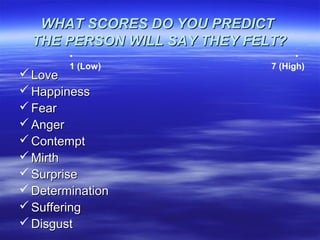
WHAT SCORES DO YOU PREDICTWHAT SCORES DO YOU PREDICT
THE PERSON WILL SAY THEY FELT?THE PERSON WILL SAY THEY FELT?
 LoveLove
 HappinessHappiness
 FearFear
 AngerAnger
 ContemptContempt
 MirthMirth
 SurpriseSurprise
 DeterminationDetermination
 SufferingSuffering
 DisgustDisgust
1 (Low) 7 (High)
CONCLUSIONCONCLUSION
 Critical incidents become opportunities toCritical incidents become opportunities to
learn something new.learn something new.
 Other people may think differently than youOther people may think differently than you
do.do.
 Other people may feel differently than youOther people may feel differently than you
would.would.

Collecting Critical Incidents

  • 1.
    COLLECTING CRITICALCOLLECTING CRITICAL INCIDENTSINCIDENTS ByByPaul PedersenPaul Pedersen Professor Emeritus Syracuse University,Professor Emeritus Syracuse University, Visiting Professor, Department of Psychology, UniversityVisiting Professor, Department of Psychology, University of Hawaiiof Hawaii
  • 2.
    FOCUS ON…FOCUS ON… Notice a particular event or incident.Notice a particular event or incident.  What did the person or persons do?What did the person or persons do?  What were the consequences?What were the consequences?
  • 3.
    HOW ARE CRITICALINCIDENTHOW ARE CRITICAL INCIDENT SNAPSHOTS USEFUL?SNAPSHOTS USEFUL?  You sharpen your information gatheringYou sharpen your information gathering skills.skills.  You better understand the host culture.You better understand the host culture.  You learn different styles ofYou learn different styles of communication.communication.  You develop a commitment to personsYou develop a commitment to persons and relationships.and relationships.  You learn different styles of decisionYou learn different styles of decision making.making.
  • 4.
    WHY DID YOUDO THAT?WHY DID YOU DO THAT?  Recruit a volunteer to talk about anRecruit a volunteer to talk about an incident where they made an importantincident where they made an important decision.decision.  Ask the volunteer to describe the incidentAsk the volunteer to describe the incident up to the point where a decision wasup to the point where a decision was made, but not disclose their final decision.made, but not disclose their final decision.  Ask the audience to predict what decisionAsk the audience to predict what decision was made and why.was made and why.  Ask the volunteer to disclose their actualAsk the volunteer to disclose their actual decision and why they decided.decision and why they decided.
  • 5.
    HOW DID YOUFEEL DURINGHOW DID YOU FEEL DURING THE INCIDENT?THE INCIDENT?  Recruit a volunteer to talk about anRecruit a volunteer to talk about an incident where they had strong feelings.incident where they had strong feelings.  Ask the volunteer to describe the incidentAsk the volunteer to describe the incident  Ask everyone to predict the feelings theAsk everyone to predict the feelings the volunteer had on a 7 point scale.volunteer had on a 7 point scale.  Ask the volunteer to disclose their ownAsk the volunteer to disclose their own score and why they felt that way.score and why they felt that way.
  • 6.
    WHAT SCORES DOYOU PREDICTWHAT SCORES DO YOU PREDICT THE PERSON WILL SAY THEY FELT?THE PERSON WILL SAY THEY FELT?  LoveLove  HappinessHappiness  FearFear  AngerAnger  ContemptContempt  MirthMirth  SurpriseSurprise  DeterminationDetermination  SufferingSuffering  DisgustDisgust 1 (Low) 7 (High)
  • 7.
    CONCLUSIONCONCLUSION  Critical incidentsbecome opportunities toCritical incidents become opportunities to learn something new.learn something new.  Other people may think differently than youOther people may think differently than you do.do.  Other people may feel differently than youOther people may feel differently than you would.would.