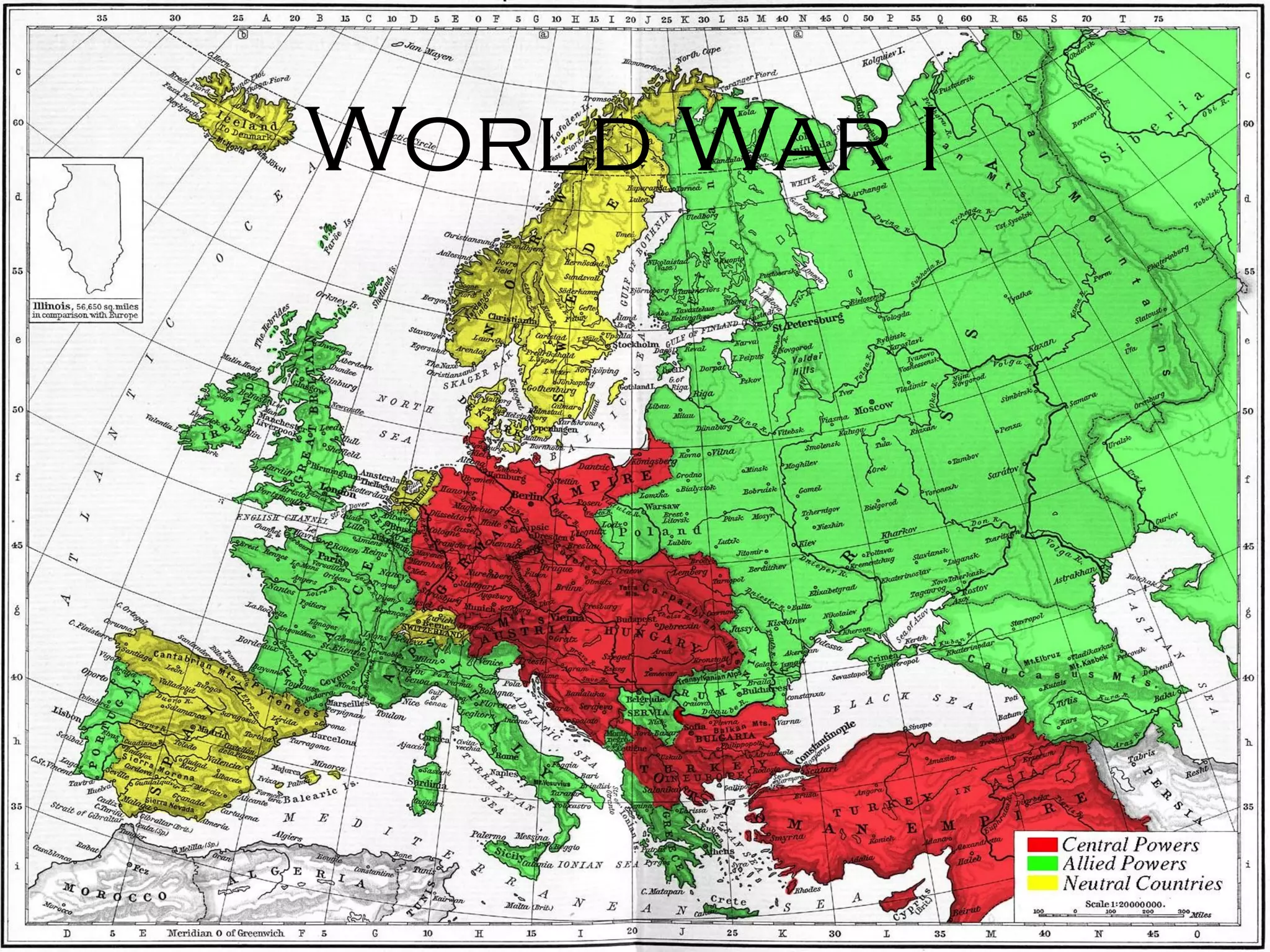
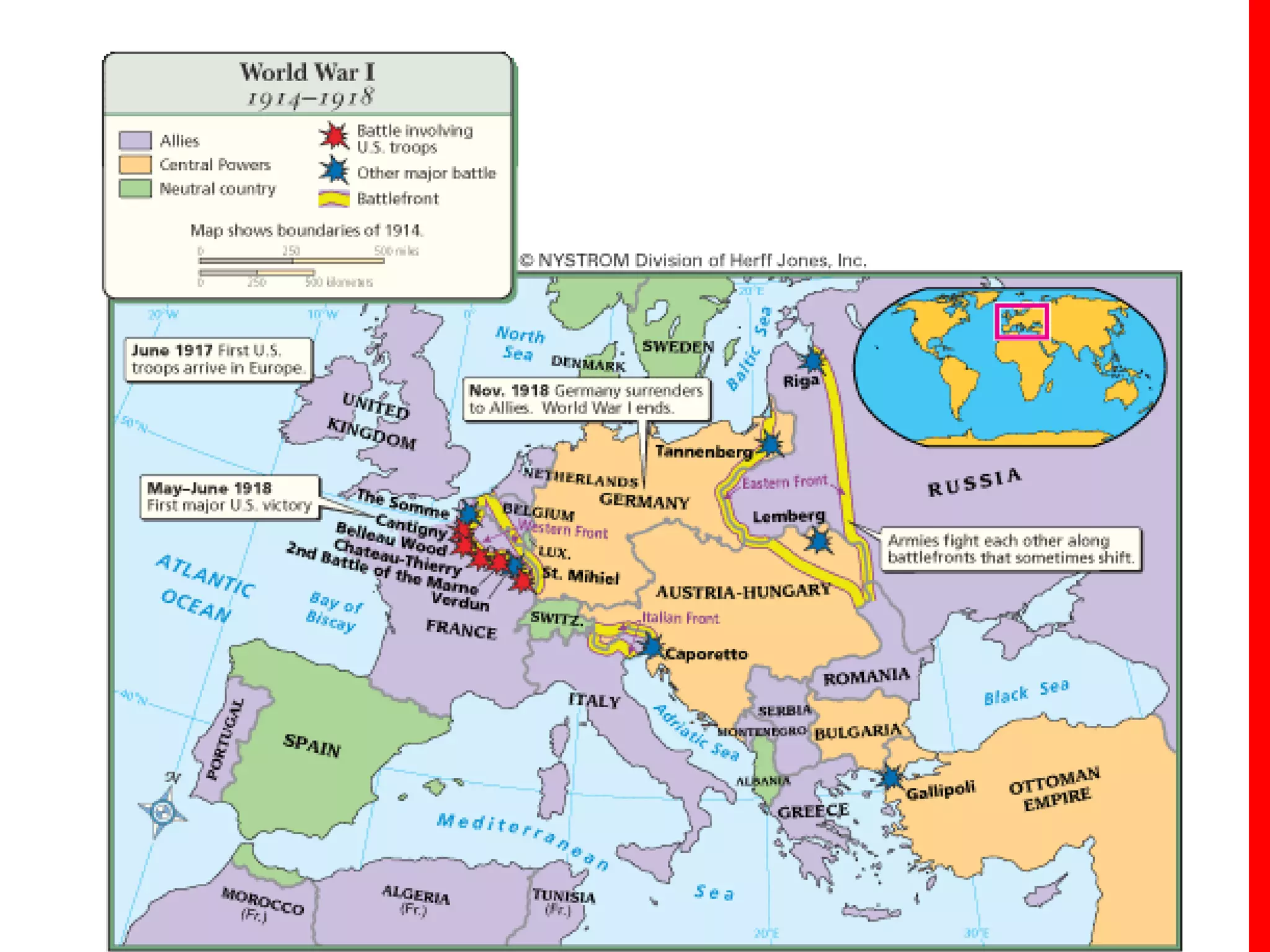
World War I
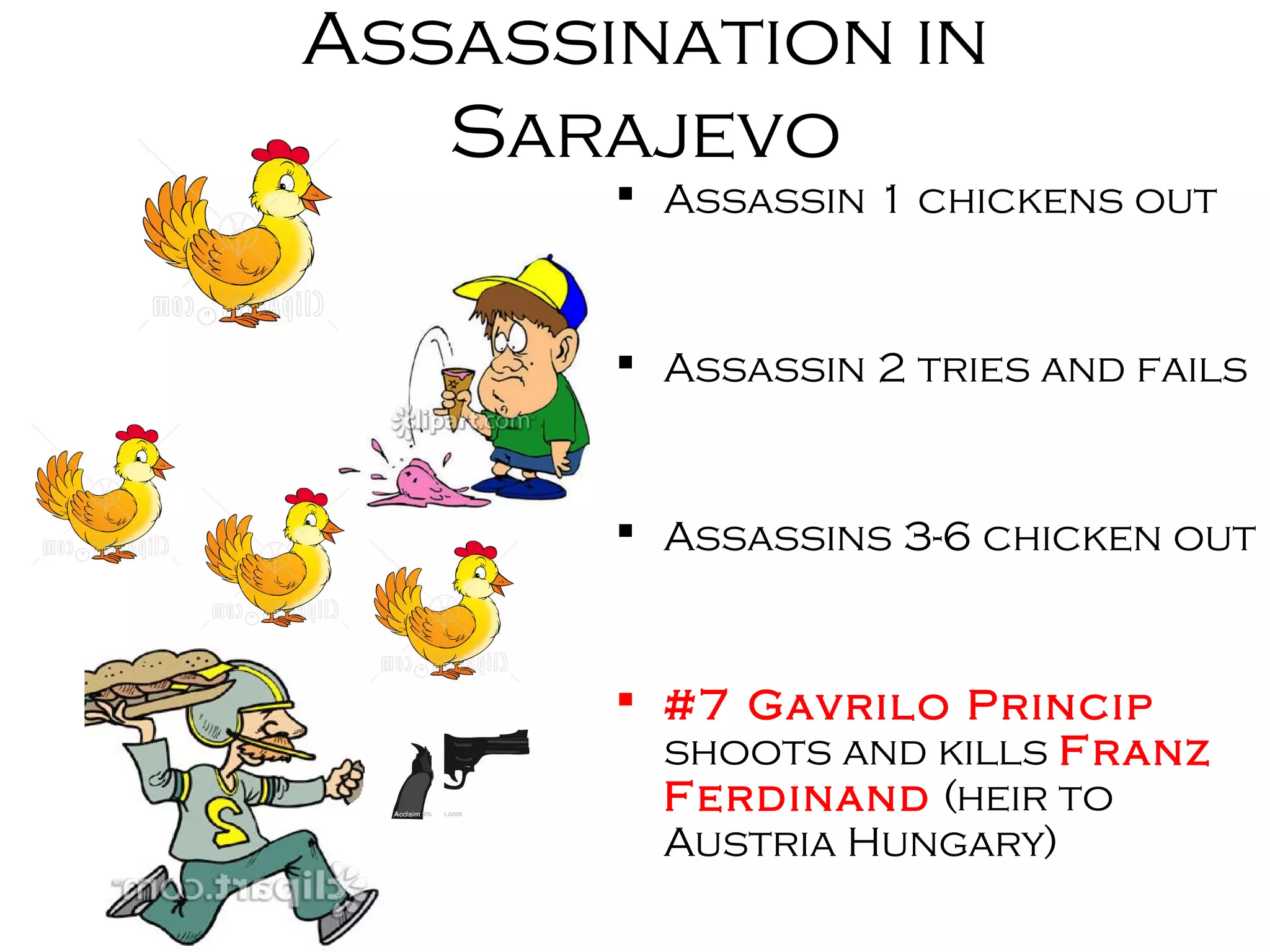
Assassination in
Sarajevo
 Assassin 1 chickens out
 Assassin 2 tries and fails
 Assassins 3-6 chicken out
 #7 Gavrilo Princip
shoots and kills Franz
Ferdinand (heir to
Austria Hungary)
Woodrow Wilson’s
Declaration of Neutrality
 “Every man who really loves America will act and speak in
the true spirit of neutrality, which is the spirit of
impartiality and fairness and friendliness to all
concerned.”
 “The people of the United States are drawn from many
nations, and chiefly from the nations now at war.”
 “…the one people holding itself ready to play a part of
impartial mediation and speak the counsels of peace and
accommodation, not as a partisan, but as a friend.”
 The United States must be neutral in fact, as well as in
name, during these days that are to try men's souls. We
must be impartial in thought, as well as action…”
Chapter 23
WWI
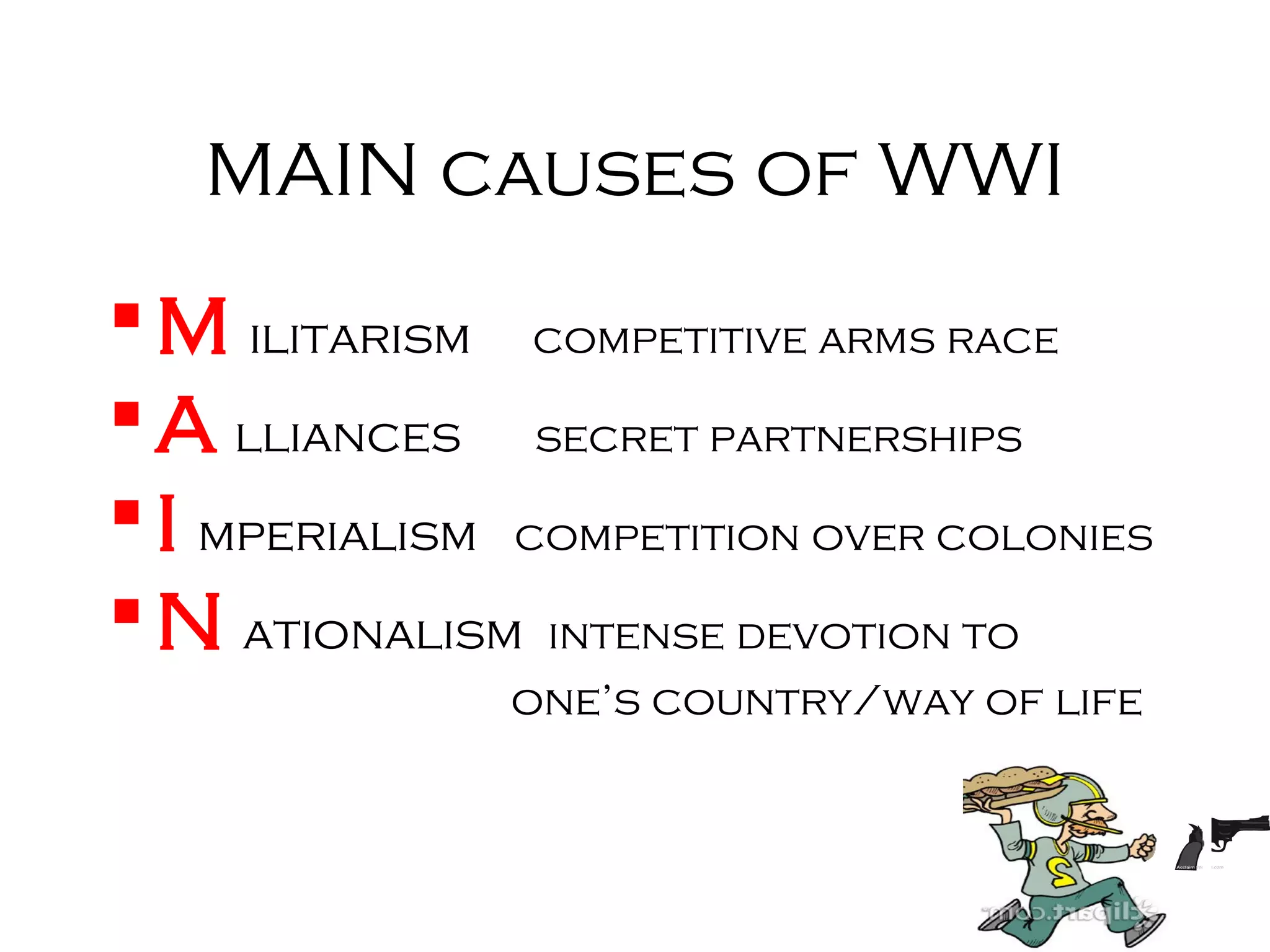
MAIN causes of WWI
M ilitarism competitive arms race
A lliances secret partnerships
I mperialism competition over colonies
N ationalism intense devotion to
one’s country/way of life
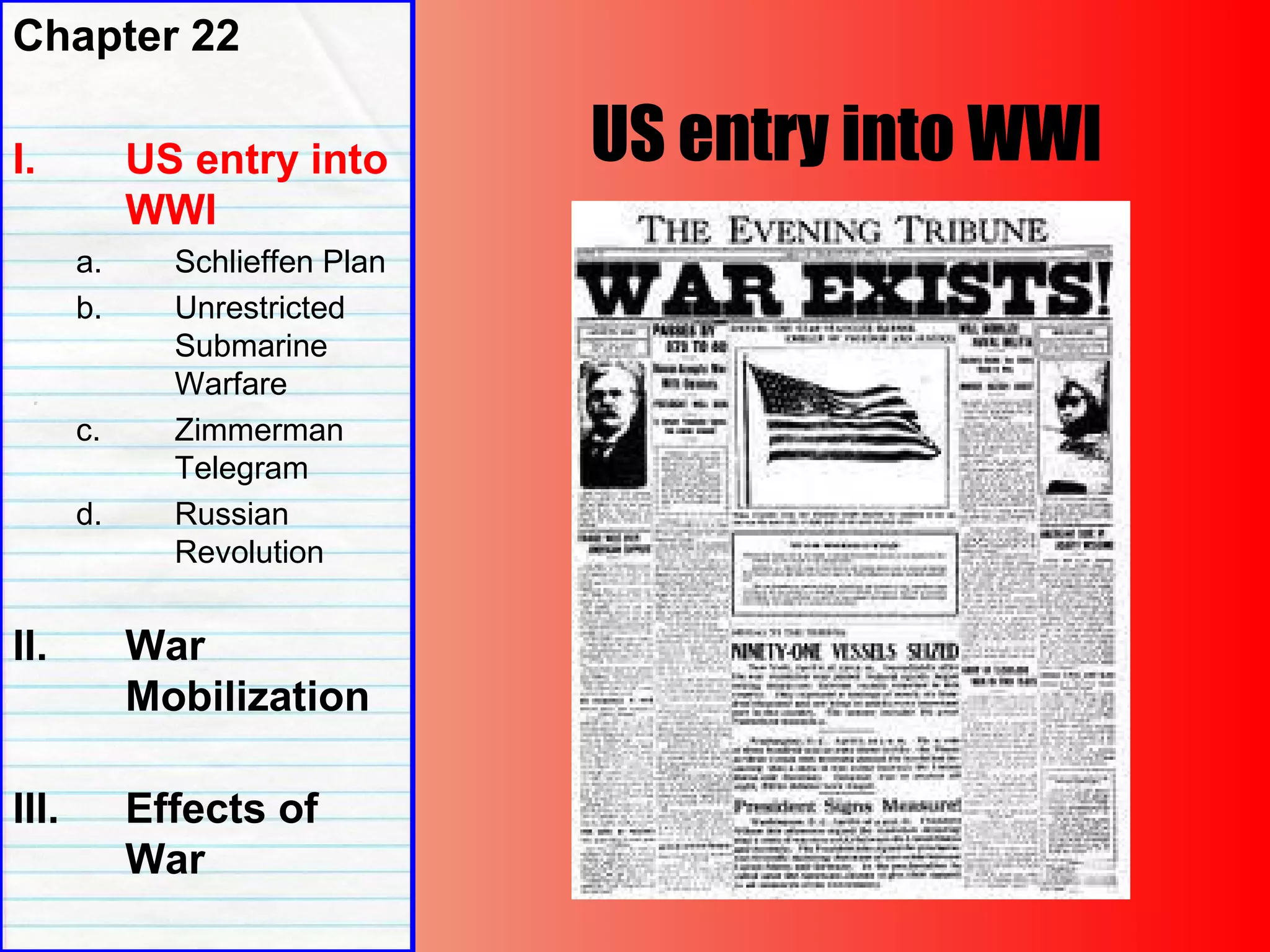
US entry into WWI
Chapter 22
I. US entry into
WWI
a. Schlieffen Plan
b. Unrestricted
Submarine
Warfare
c. Zimmerman
Telegram
d. Russian
Revolution
II. War
Mobilization
III. Effects of
War
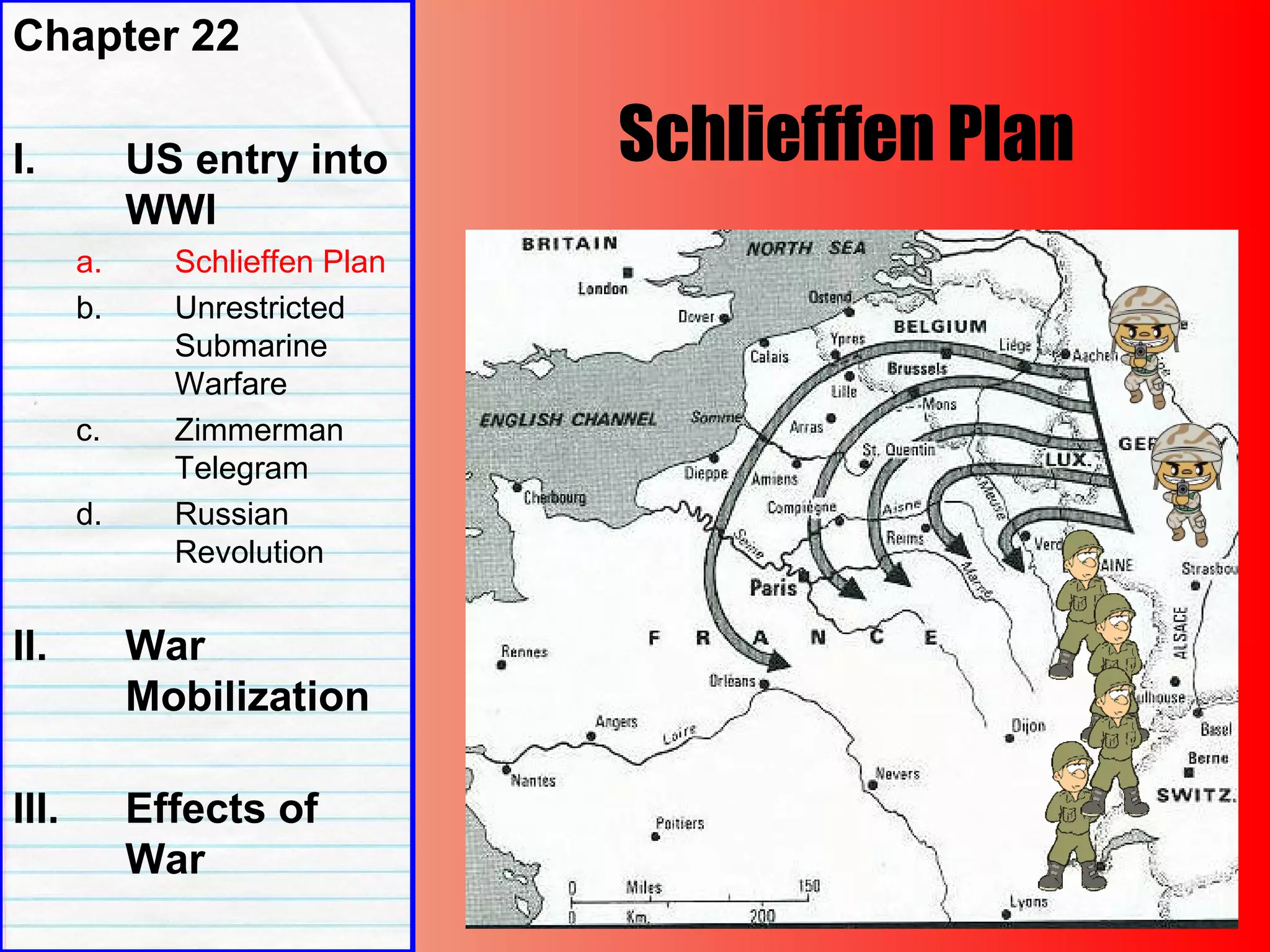
Schliefffen Plan
Chapter 22
I. US entry into
WWI
a. Schlieffen Plan
b. Unrestricted
Submarine
Warfare
c. Zimmerman
Telegram
d. Russian
Revolution
II. War
Mobilization
III. Effects of
War
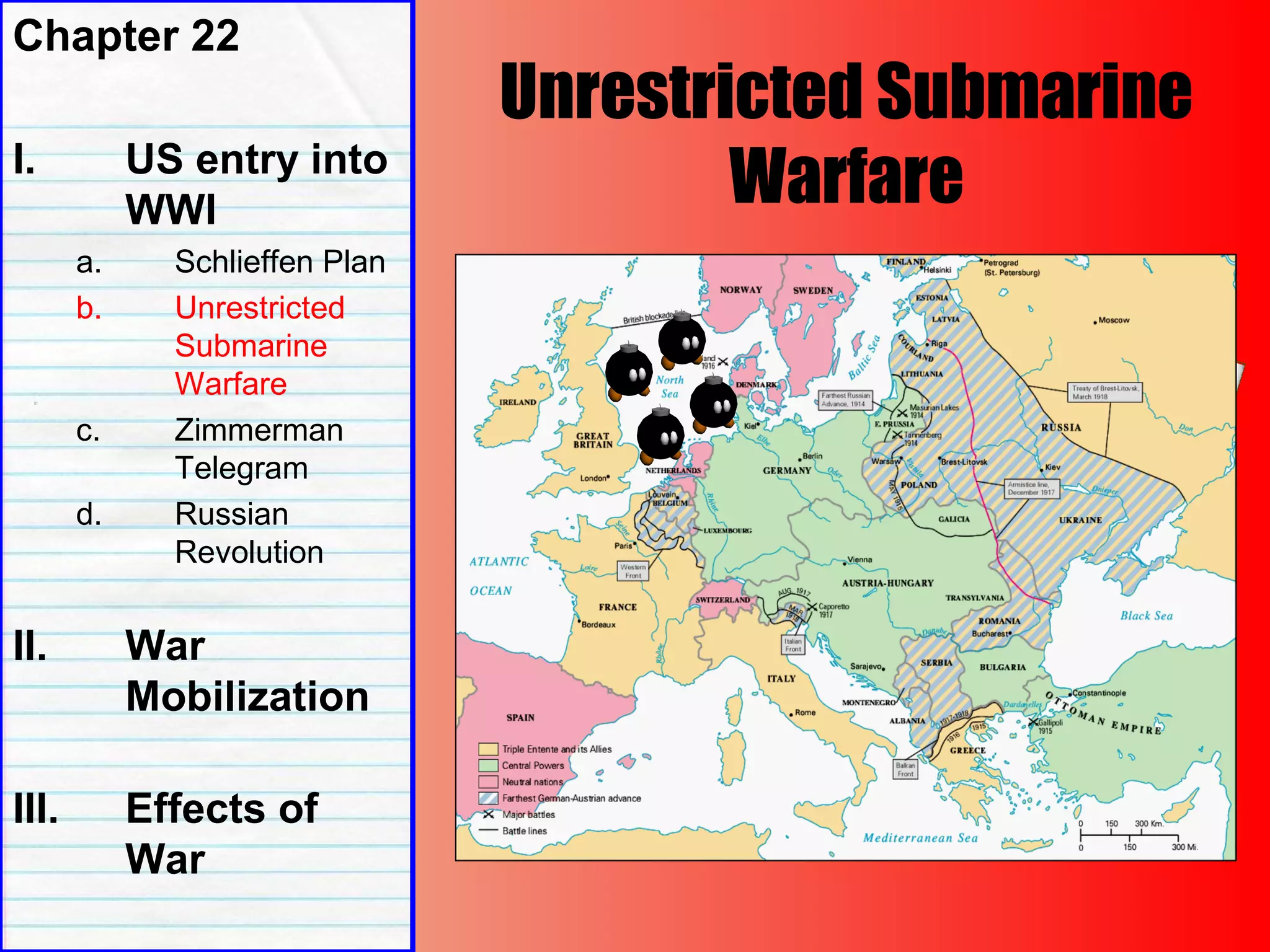
Unrestricted Submarine
Warfare
Chapter 22
I. US entry into
WWI
a. Schlieffen Plan
b. Unrestricted
Submarine
Warfare
c. Zimmerman
Telegram
d. Russian
Revolution
II. War
Mobilization
III. Effects of
War
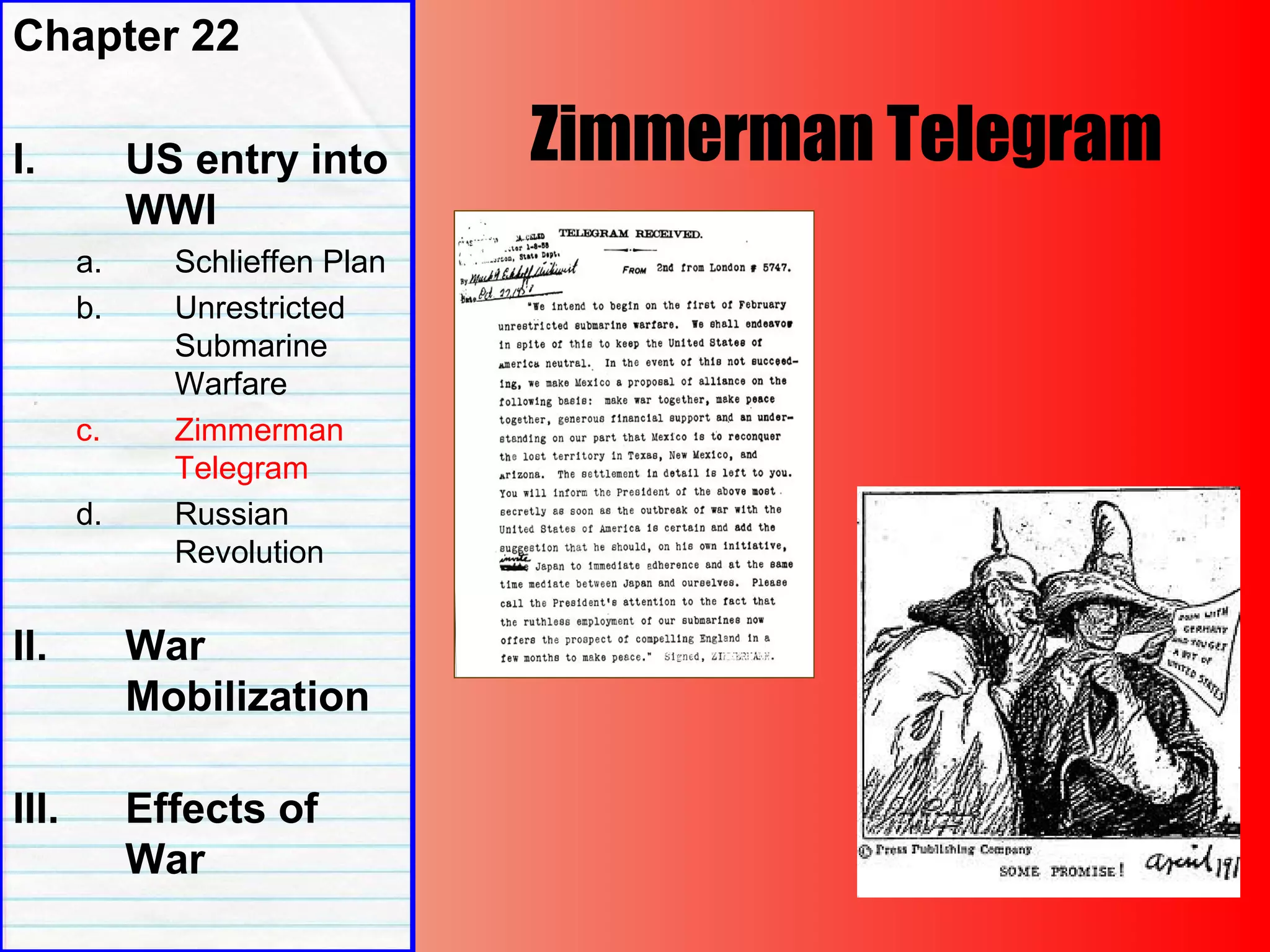
Zimmerman Telegram
Chapter 22
I. US entry into
WWI
a. Schlieffen Plan
b. Unrestricted
Submarine
Warfare
c. Zimmerman
Telegram
d. Russian
Revolution
II. War
Mobilization
III. Effects of
War
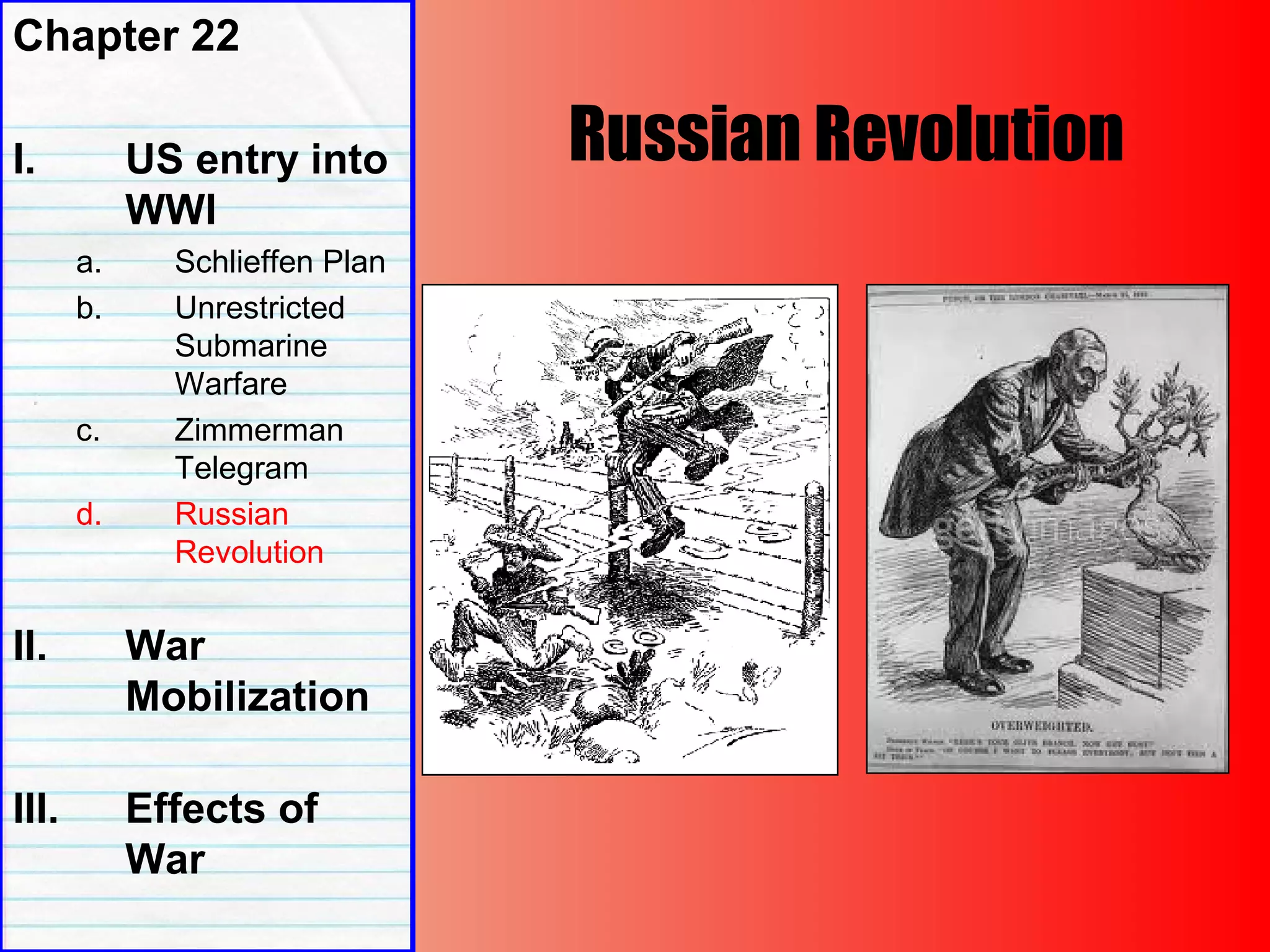
Russian Revolution
Chapter 22
I. US entry into
WWI
a. Schlieffen Plan
b. Unrestricted
Submarine
Warfare
c. Zimmerman
Telegram
d. Russian
Revolution
II. War
Mobilization
III. Effects of
War
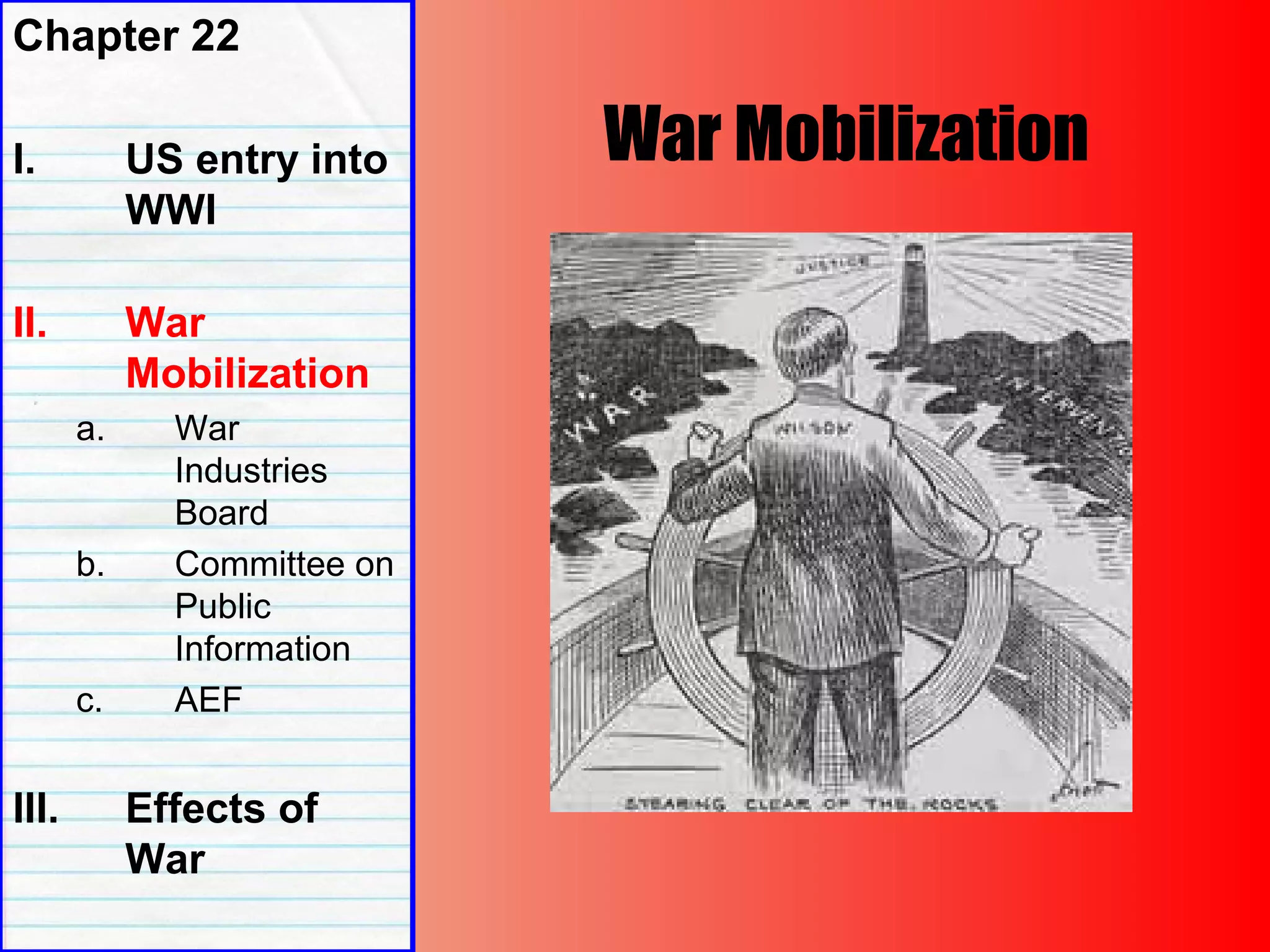
War Mobilization
Chapter 22
I. US entry into
WWI
II. War
Mobilization
a. War
Industries
Board
b. Committee on
Public
Information
c. AEF
III. Effects of
War
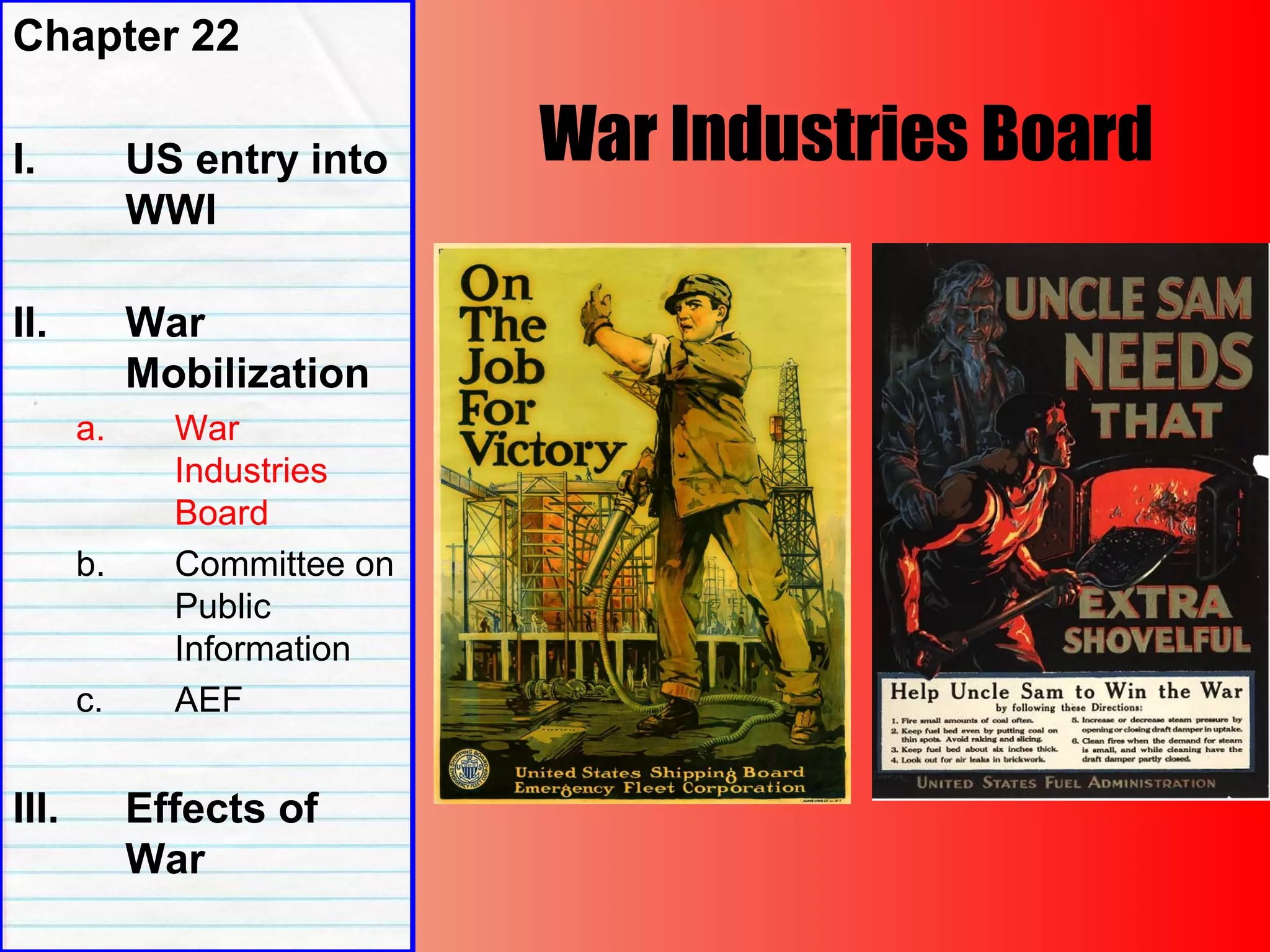
War Industries Board
Chapter 22
I. US entry into
WWI
II. War
Mobilization
a. War
Industries
Board
b. Committee on
Public
Information
c. AEF
III. Effects of
War
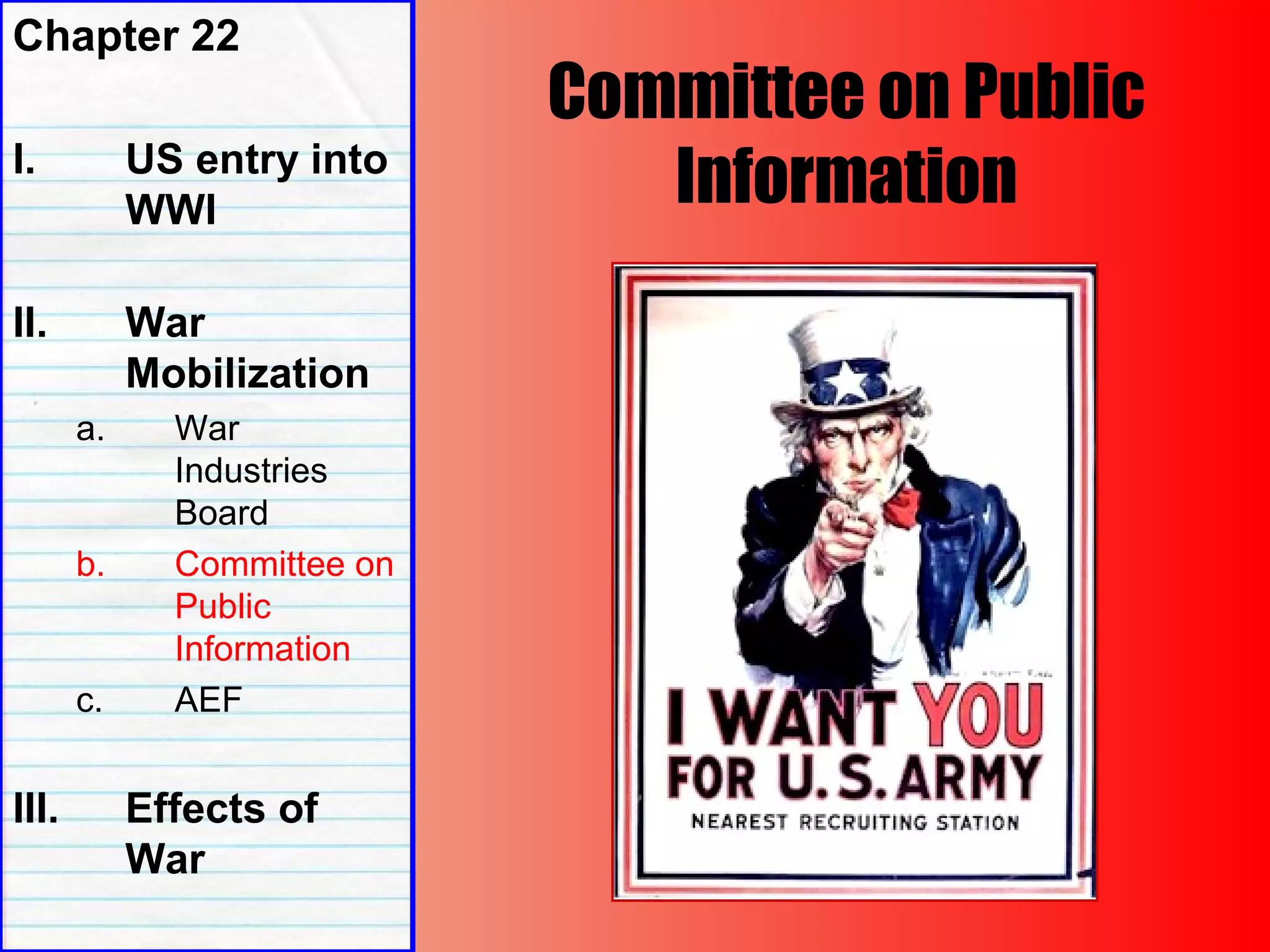
Committee on Public
Information
Chapter 22
I. US entry into
WWI
II. War
Mobilization
a. War
Industries
Board
b. Committee on
Public
Information
c. AEF
III. Effects of
War
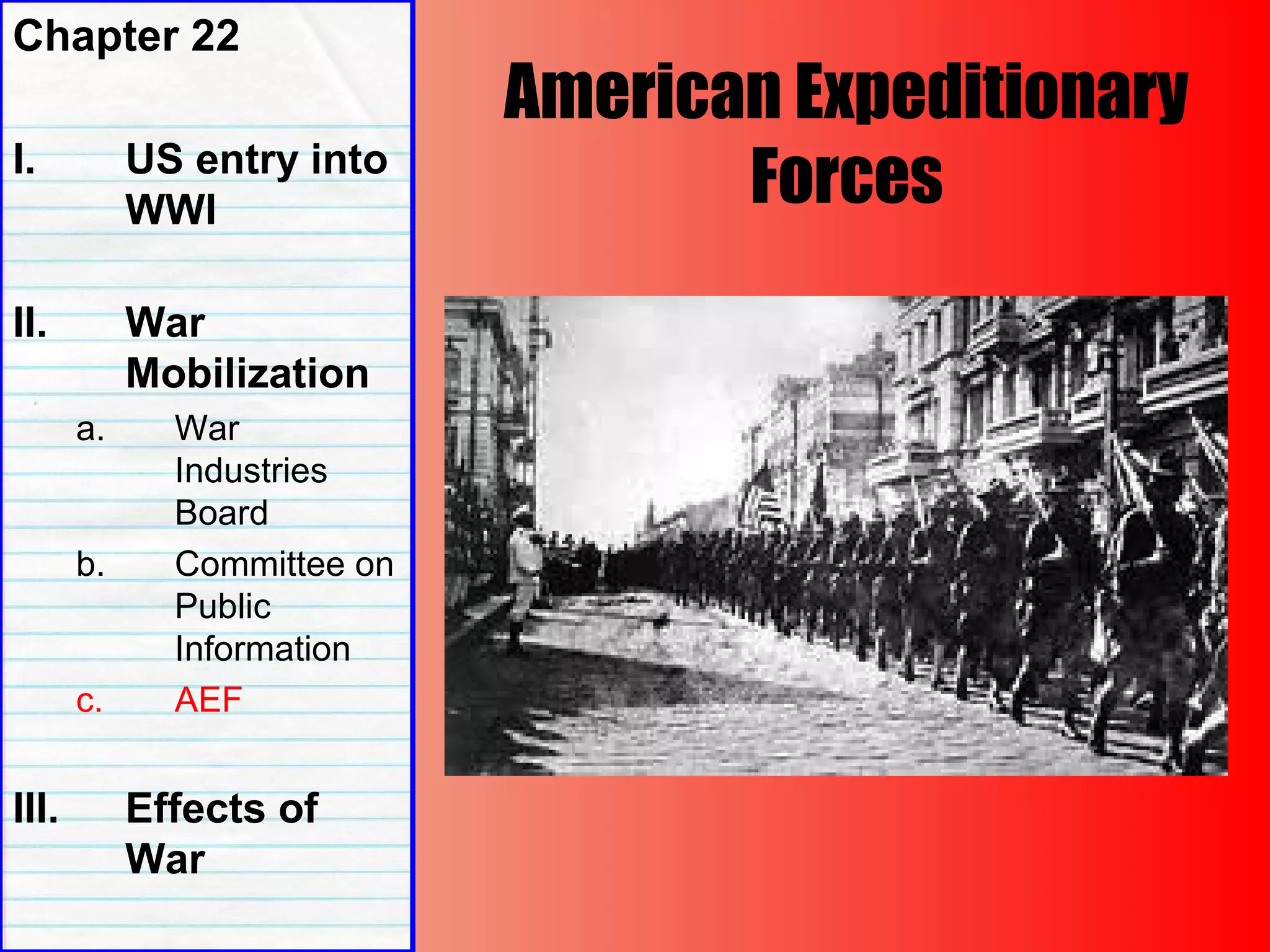
American Expeditionary
Forces
Chapter 22
I. US entry into
WWI
II. War
Mobilization
a. War
Industries
Board
b. Committee on
Public
Information
c. AEF
III. Effects of
War
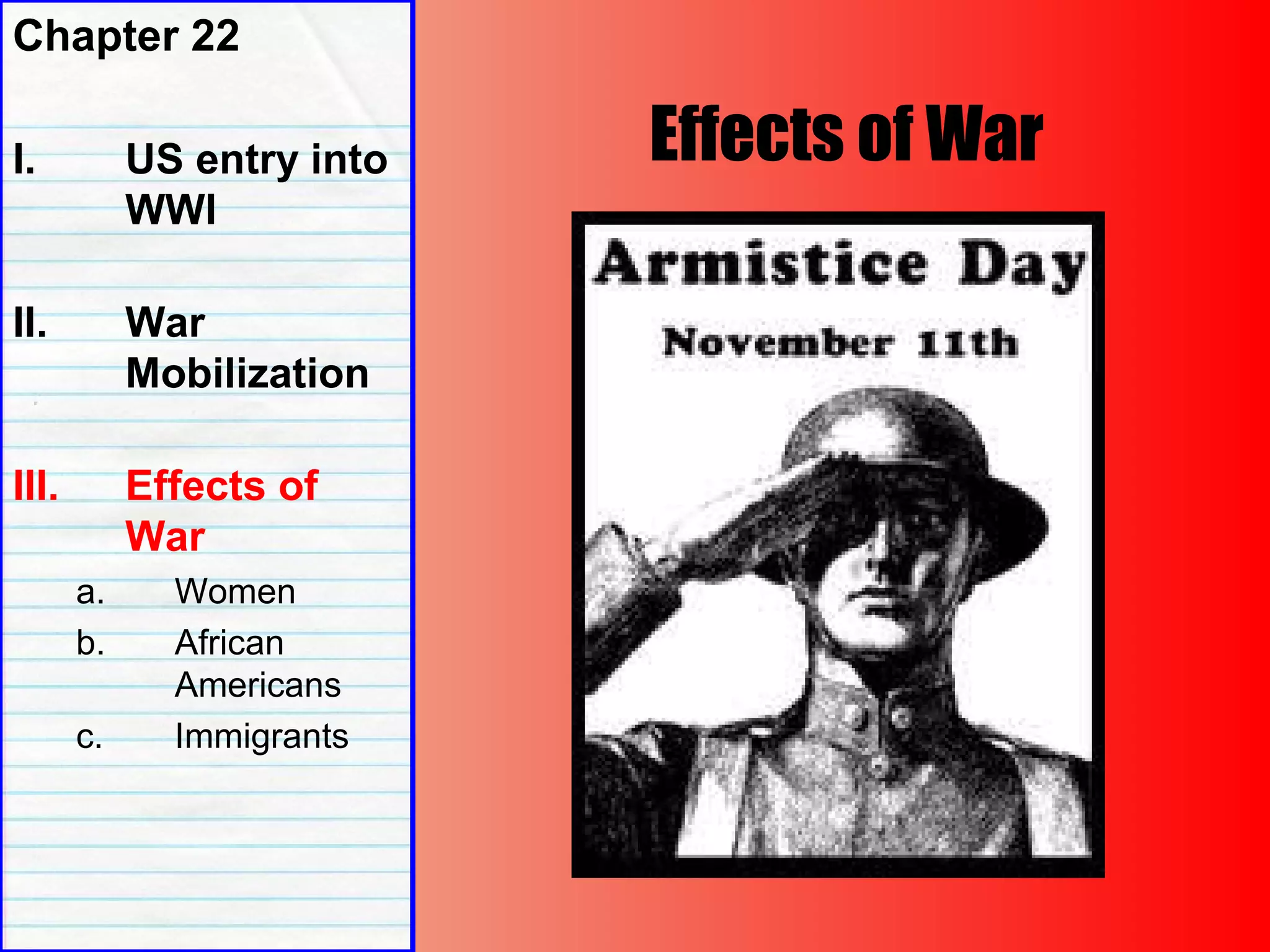
Effects of War
Chapter 22
I. US entry into
WWI
II. War
Mobilization
III. Effects of
War
a. Women
b. African
Americans
c. Immigrants
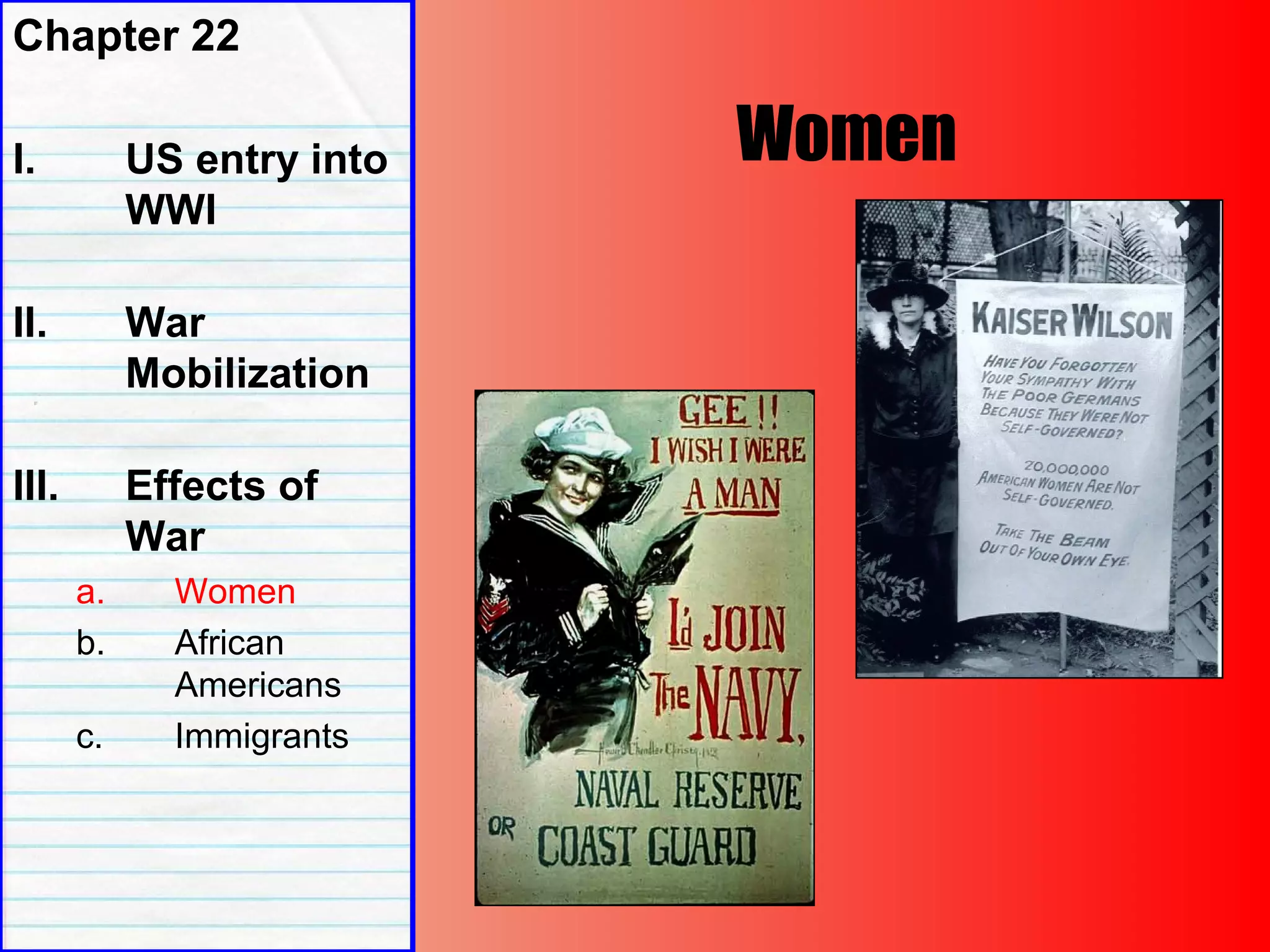
Women
Chapter 22
I. US entry into
WWI
II. War
Mobilization
III. Effects of
War
a. Women
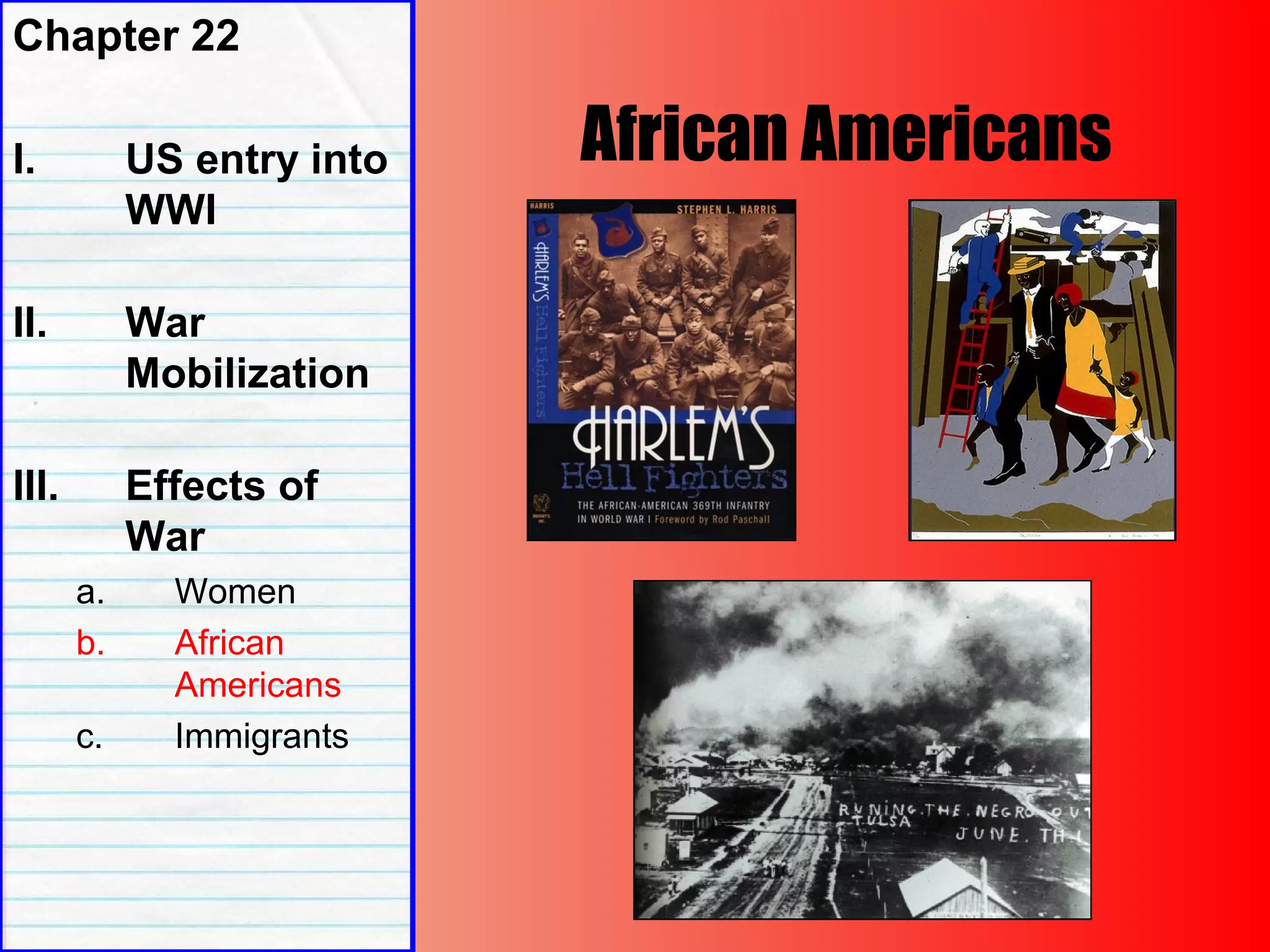
b. African
Americans
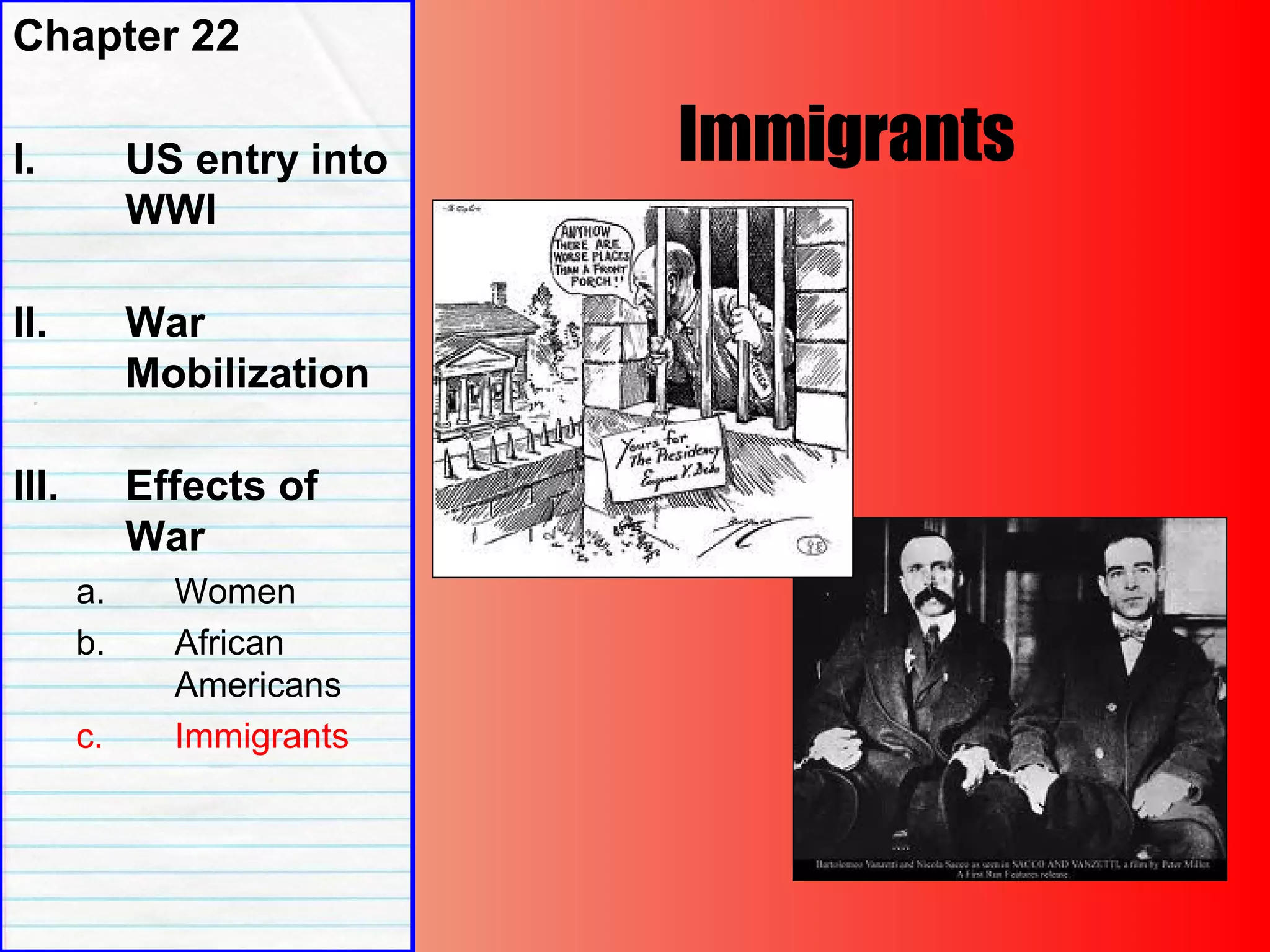
c. Immigrants
African Americans
Chapter 22
I. US entry into
WWI
II. War
Mobilization
III. Effects of
War
a. Women
b. African
Americans
c. Immigrants
Immigrants
Chapter 22
I. US entry into
WWI
II. War
Mobilization
III. Effects of
War
a. Women
b. African
Americans
c. Immigrants
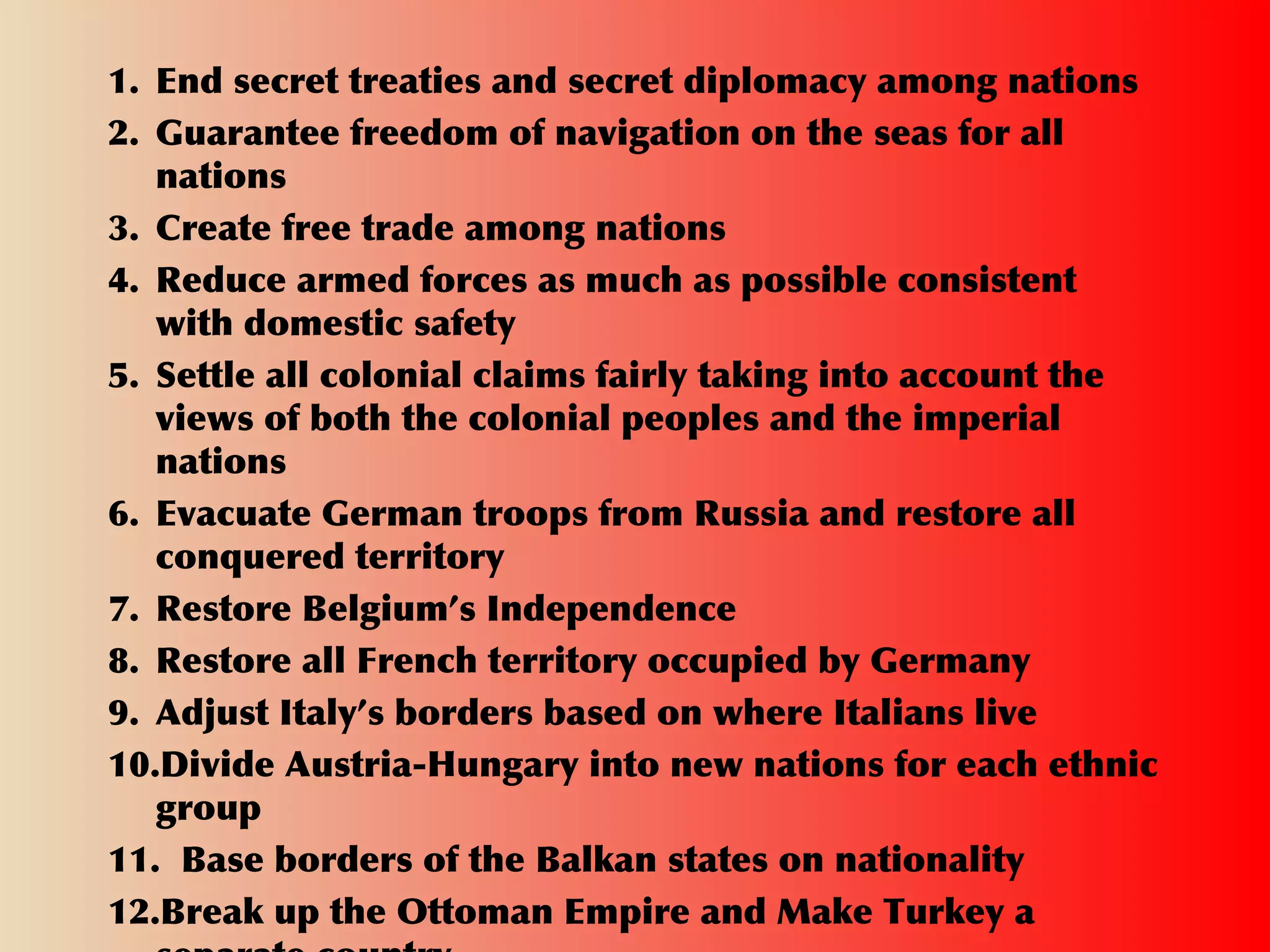
1. End secret treaties and secret diplomacy among nations
2. Guarantee freedom of navigation on the seas for all
nations
3. Create free trade among nations
4. Reduce armed forces as much as possible consistent
with domestic safety
5. Settle all colonial claims fairly taking into account the
views of both the colonial peoples and the imperial
nations
6. Evacuate German troops from Russia and restore all
conquered territory
7. Restore Belgium’s Independence
8. Restore all French territory occupied by Germany
9. Adjust Italy’s borders based on where Italians live
10.Divide Austria-Hungary into new nations for each ethnic
group
11. Base borders of the Balkan states on nationality
12.Break up the Ottoman Empire and Make Turkey a

Lecture 23 on WWI

  • 1.
  • 2.
    Assassination in Sarajevo  Assassin1 chickens out  Assassin 2 tries and fails  Assassins 3-6 chicken out  #7 Gavrilo Princip shoots and kills Franz Ferdinand (heir to Austria Hungary)
  • 3.
    Woodrow Wilson’s Declaration ofNeutrality  “Every man who really loves America will act and speak in the true spirit of neutrality, which is the spirit of impartiality and fairness and friendliness to all concerned.”  “The people of the United States are drawn from many nations, and chiefly from the nations now at war.”  “…the one people holding itself ready to play a part of impartial mediation and speak the counsels of peace and accommodation, not as a partisan, but as a friend.”  The United States must be neutral in fact, as well as in name, during these days that are to try men's souls. We must be impartial in thought, as well as action…”
  • 5.
  • 6.
    MAIN causes ofWWI M ilitarism competitive arms race A lliances secret partnerships I mperialism competition over colonies N ationalism intense devotion to one’s country/way of life
  • 7.
    US entry intoWWI Chapter 22 I. US entry into WWI a. Schlieffen Plan b. Unrestricted Submarine Warfare c. Zimmerman Telegram d. Russian Revolution II. War Mobilization III. Effects of War
  • 8.
    Schliefffen Plan Chapter 22 I.US entry into WWI a. Schlieffen Plan b. Unrestricted Submarine Warfare c. Zimmerman Telegram d. Russian Revolution II. War Mobilization III. Effects of War
  • 9.
    Unrestricted Submarine Warfare Chapter 22 I.US entry into WWI a. Schlieffen Plan b. Unrestricted Submarine Warfare c. Zimmerman Telegram d. Russian Revolution II. War Mobilization III. Effects of War
  • 10.
    Zimmerman Telegram Chapter 22 I.US entry into WWI a. Schlieffen Plan b. Unrestricted Submarine Warfare c. Zimmerman Telegram d. Russian Revolution II. War Mobilization III. Effects of War
  • 11.
    Russian Revolution Chapter 22 I.US entry into WWI a. Schlieffen Plan b. Unrestricted Submarine Warfare c. Zimmerman Telegram d. Russian Revolution II. War Mobilization III. Effects of War
  • 12.
    War Mobilization Chapter 22 I.US entry into WWI II. War Mobilization a. War Industries Board b. Committee on Public Information c. AEF III. Effects of War
  • 13.
    War Industries Board Chapter22 I. US entry into WWI II. War Mobilization a. War Industries Board b. Committee on Public Information c. AEF III. Effects of War
  • 14.
    Committee on Public Information Chapter22 I. US entry into WWI II. War Mobilization a. War Industries Board b. Committee on Public Information c. AEF III. Effects of War
  • 15.
    American Expeditionary Forces Chapter 22 I.US entry into WWI II. War Mobilization a. War Industries Board b. Committee on Public Information c. AEF III. Effects of War
  • 16.
    Effects of War Chapter22 I. US entry into WWI II. War Mobilization III. Effects of War a. Women b. African Americans c. Immigrants
  • 17.
    Women Chapter 22 I. USentry into WWI II. War Mobilization III. Effects of War a. Women b. African Americans c. Immigrants
  • 18.
    African Americans Chapter 22 I.US entry into WWI II. War Mobilization III. Effects of War a. Women b. African Americans c. Immigrants
  • 19.
    Immigrants Chapter 22 I. USentry into WWI II. War Mobilization III. Effects of War a. Women b. African Americans c. Immigrants
  • 20.
    1. End secrettreaties and secret diplomacy among nations 2. Guarantee freedom of navigation on the seas for all nations 3. Create free trade among nations 4. Reduce armed forces as much as possible consistent with domestic safety 5. Settle all colonial claims fairly taking into account the views of both the colonial peoples and the imperial nations 6. Evacuate German troops from Russia and restore all conquered territory 7. Restore Belgium’s Independence 8. Restore all French territory occupied by Germany 9. Adjust Italy’s borders based on where Italians live 10.Divide Austria-Hungary into new nations for each ethnic group 11. Base borders of the Balkan states on nationality 12.Break up the Ottoman Empire and Make Turkey a