Name:Purshottam.a.thak
ur
stD:X DIV:B
suB:hIstory
toPIC:WorlD War 1
The Great War: World War I
The War to End All Wars
“The lamps have gone out all over
Europe and we shall not see them
lit again in our lifetime.”
- British Prime Minister Lord Grey
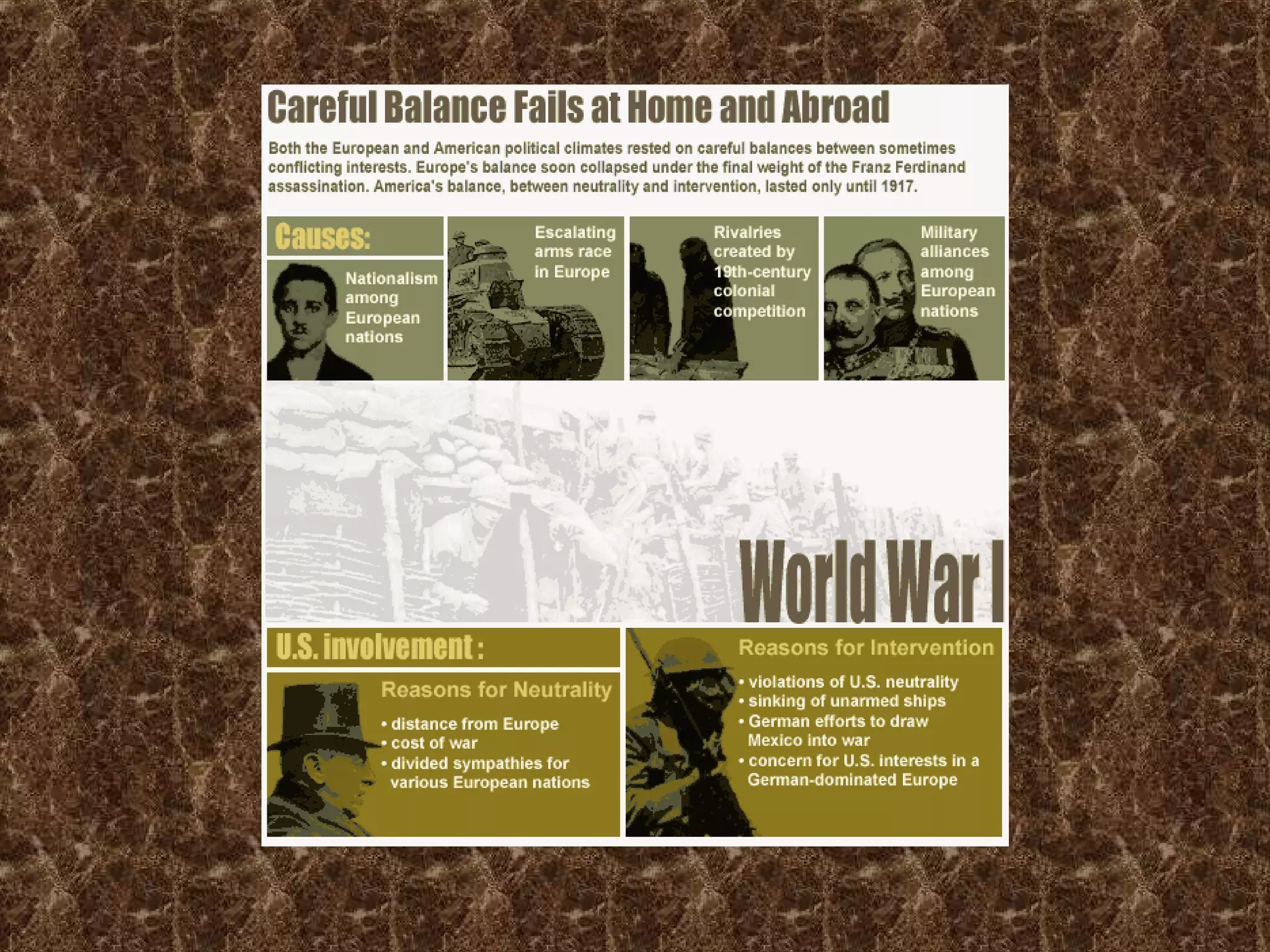
Long Term Causes
of World War I
• Nationalism
• Militarism
• Imperialism
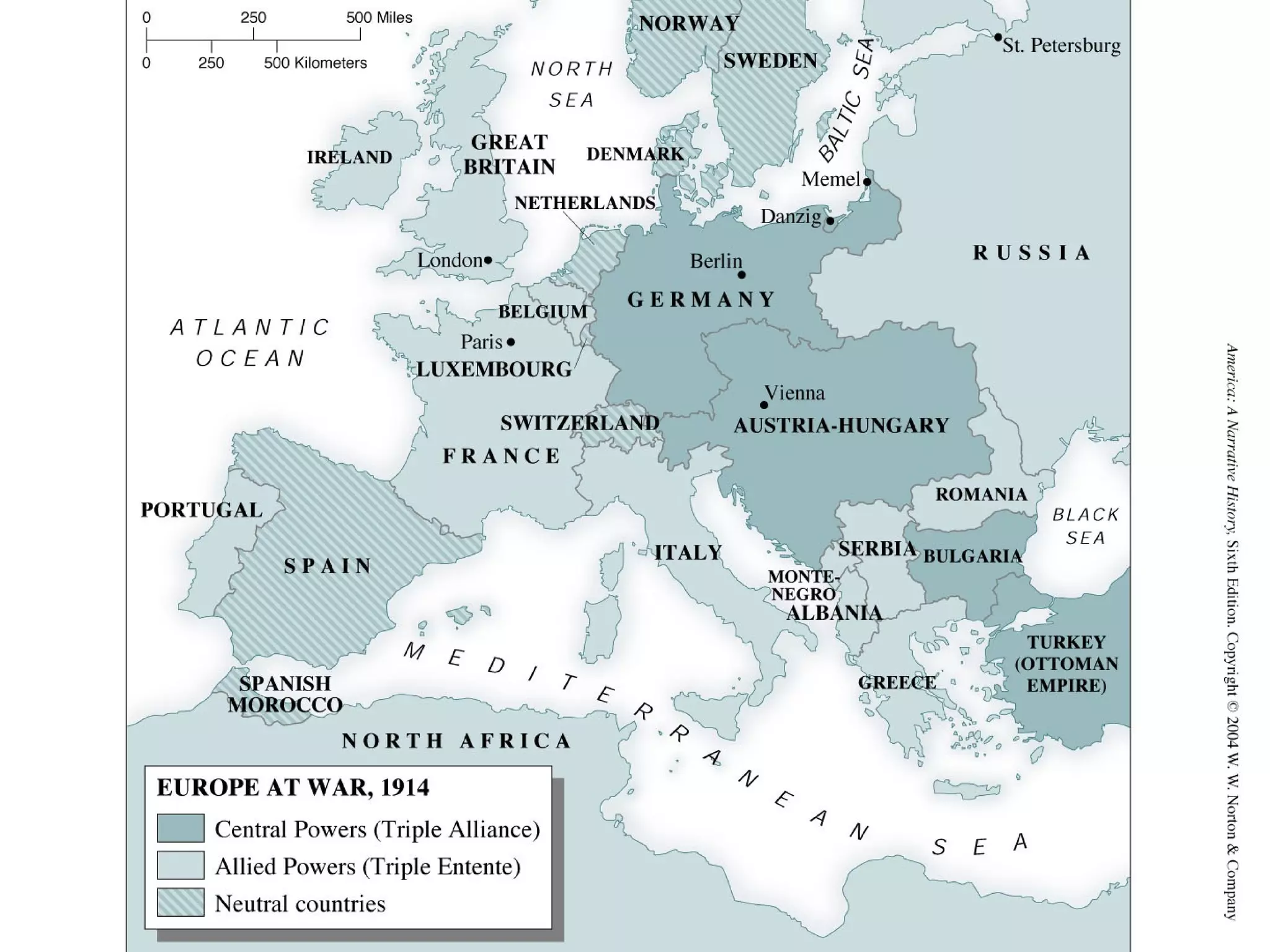
• Peace time alliances
• Long-standing ethnic grudges
Map 22.1 European Alliances in 1914 (p. 638)
25_8.jpg
Short term timeline leading to
World War I
• June 28 - Assassination of Austro-Hungarian
Archduke and heir, Francis Ferdinand (and Sophie,
his wife)
• July 23 - Austria issues ultimatum to Serbia and
invades on July 27
• July 28-30 - Russians mobilize as Serbia’s ally
• August 1 - Germany, Austria-Hungary’s ally, declares
war on Russia (and Serbia)
• August 3 - Germany declares war on France (allied
with Russia) and invades Belgium en route to Paris,
France
• August 4 - Great Britain, France’s ally, declares war
on Germany
The sides formed
• Triple Entente
(Allies)
– France
– Great Britain
– Italy
– Russia (1917 exit)
– United States (1917
entry)
• Central Powers
– Germany
– Austria-Hungary
(empire)
– Ottoman Empire
– Bulgaria
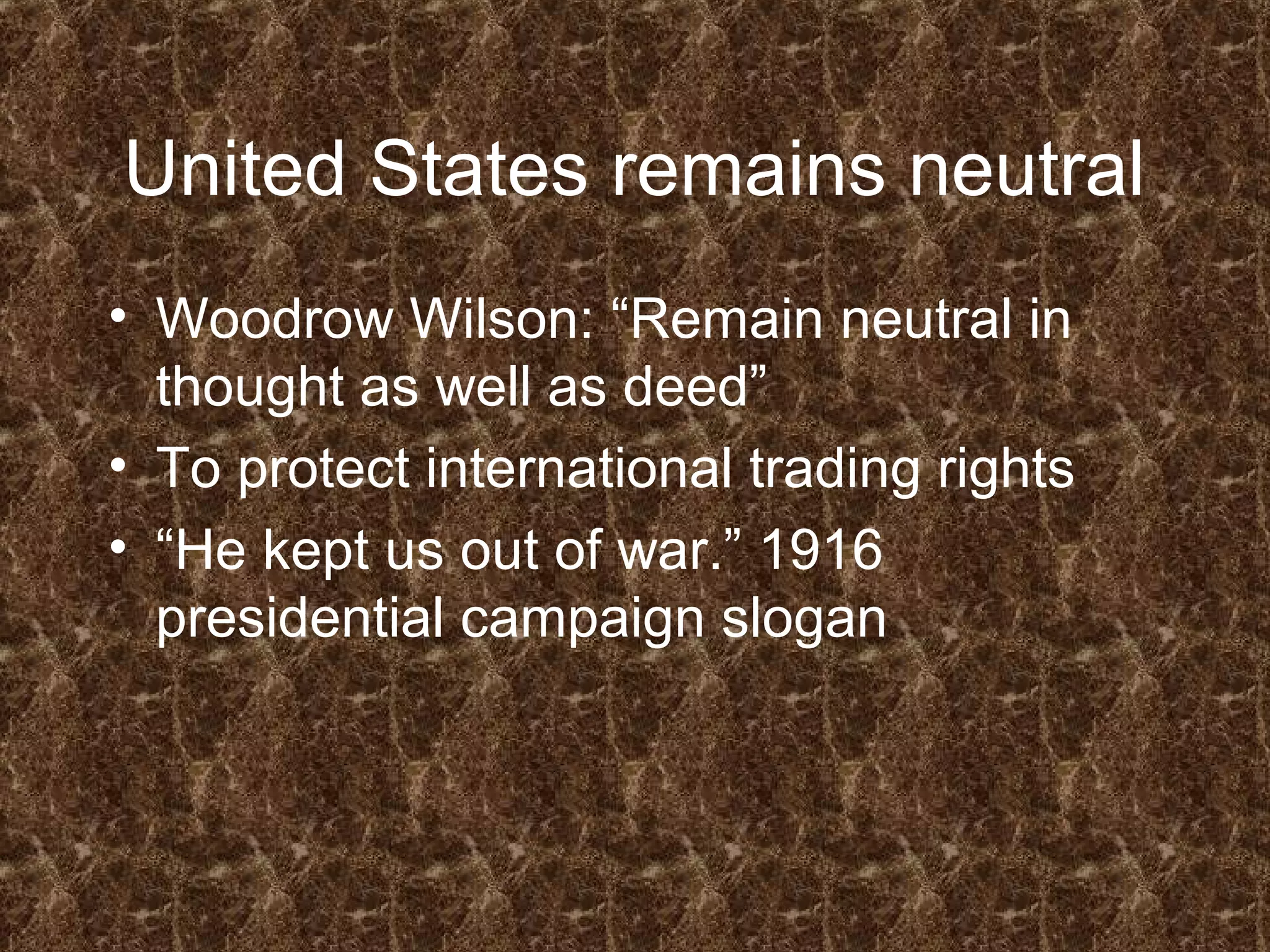
United States remains neutral
• Woodrow Wilson: “Remain neutral in
thought as well as deed”
• To protect international trading rights
• “He kept us out of war.” 1916
presidential campaign slogan
U.S. Neutrality under fire
• British blockade of North Sea
• Germans engage in
submarine (u-boat) warfare
• Lusitania crisis (May 1915)
British liner sunk by German
U-boats
• Arabic and Sussex sinkings
(Germans issue Sussex
pledge)
• Economic ties with Britain and
France - war time trade and
US financing of allied war
effort
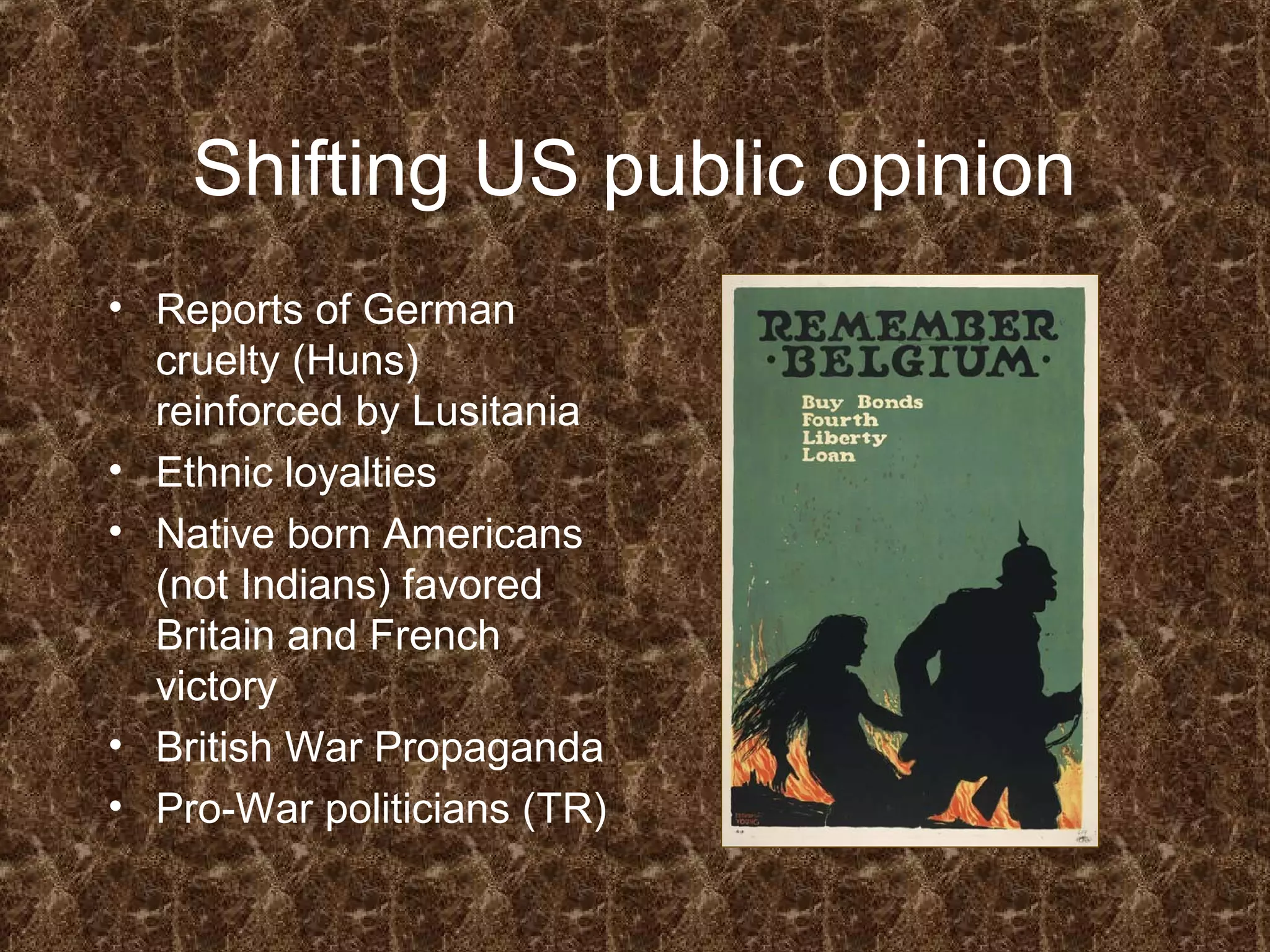
Shifting US public opinion
• Reports of German
cruelty (Huns)
reinforced by Lusitania
• Ethnic loyalties
• Native born Americans
(not Indians) favored
Britain and French
victory
• British War Propaganda
• Pro-War politicians (TR)
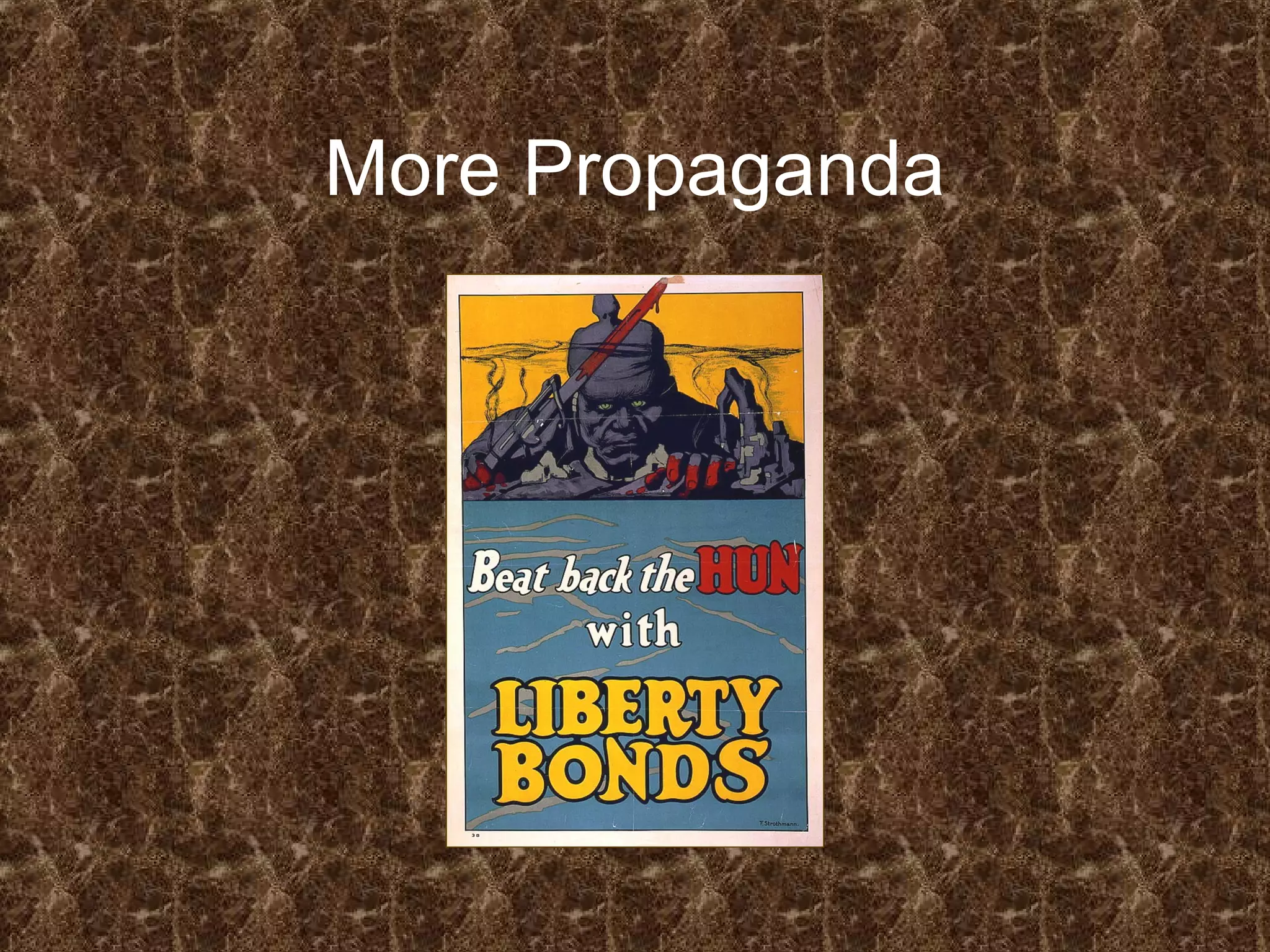
More Propaganda
Preparedness
• Greater $ for military
spending necessary
• National Security
League
• National Defense Act:
June 1916
• Midwest and Western
Americans opposed to
preparedness
(Populists,
Progressives,
Socialists)
Election of 1916
• “He Kept us out of War”
• Peace efforts had failed
• Wilson narrowly won
• January 1917, “Peace without Victory”
Speech
• April 1917, Wilson asked for declaration
of war.
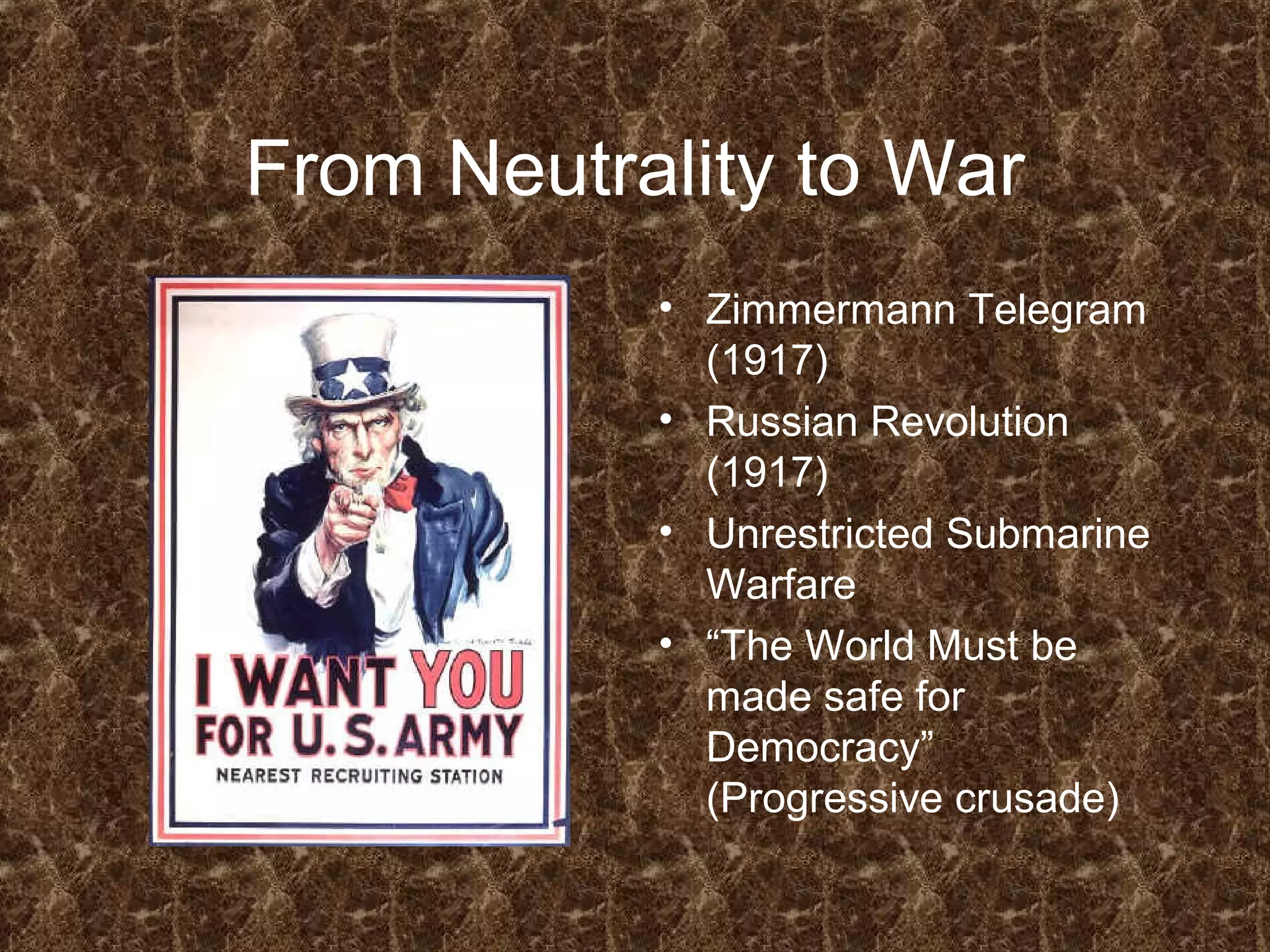
From Neutrality to War
• Zimmermann Telegram
(1917)
• Russian Revolution
(1917)
• Unrestricted Submarine
Warfare
• “The World Must be
made safe for
Democracy”
(Progressive crusade)
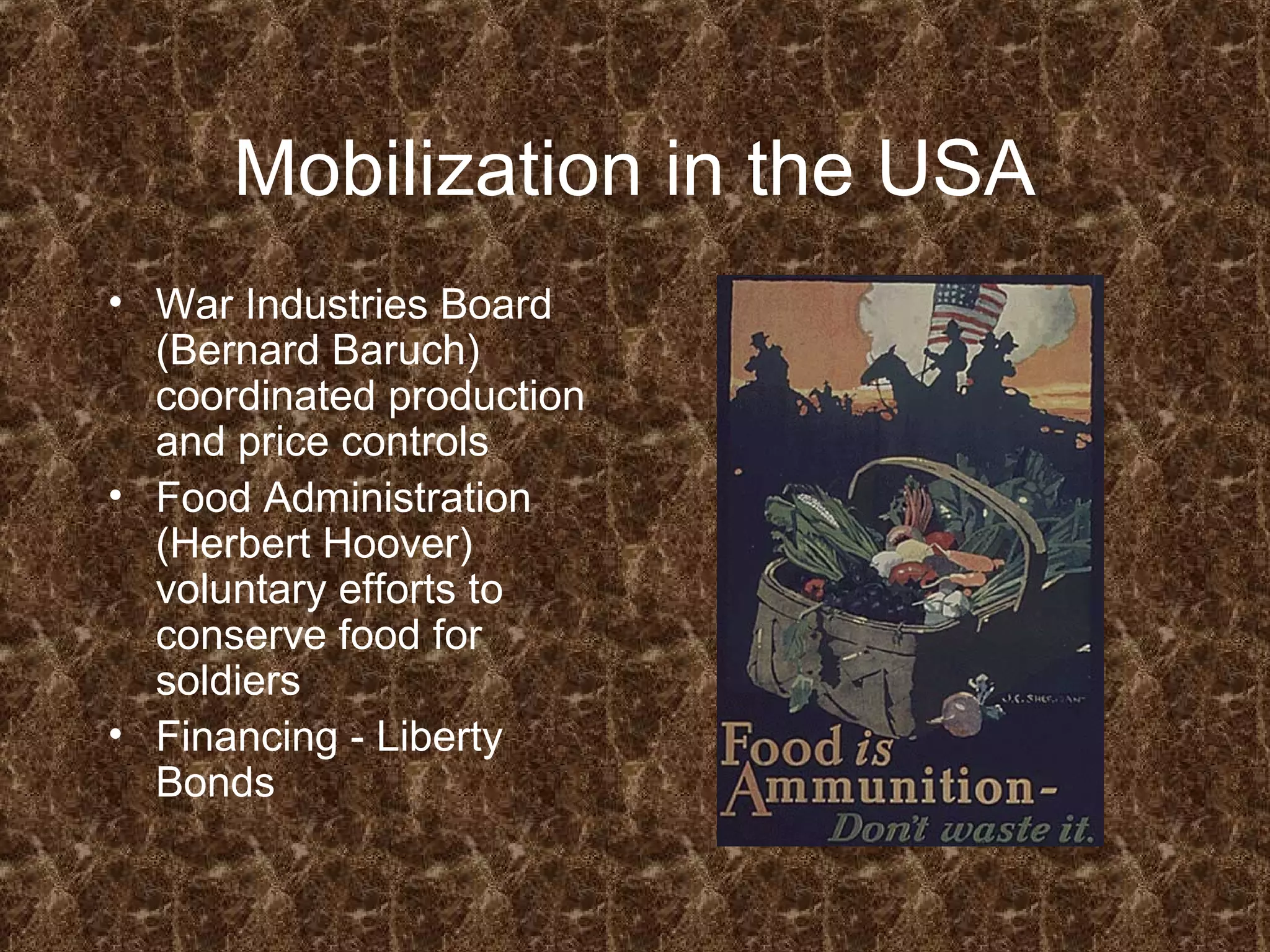
Mobilization in the USA
• War Industries Board
(Bernard Baruch)
coordinated production
and price controls
• Food Administration
(Herbert Hoover)
voluntary efforts to
conserve food for
soldiers
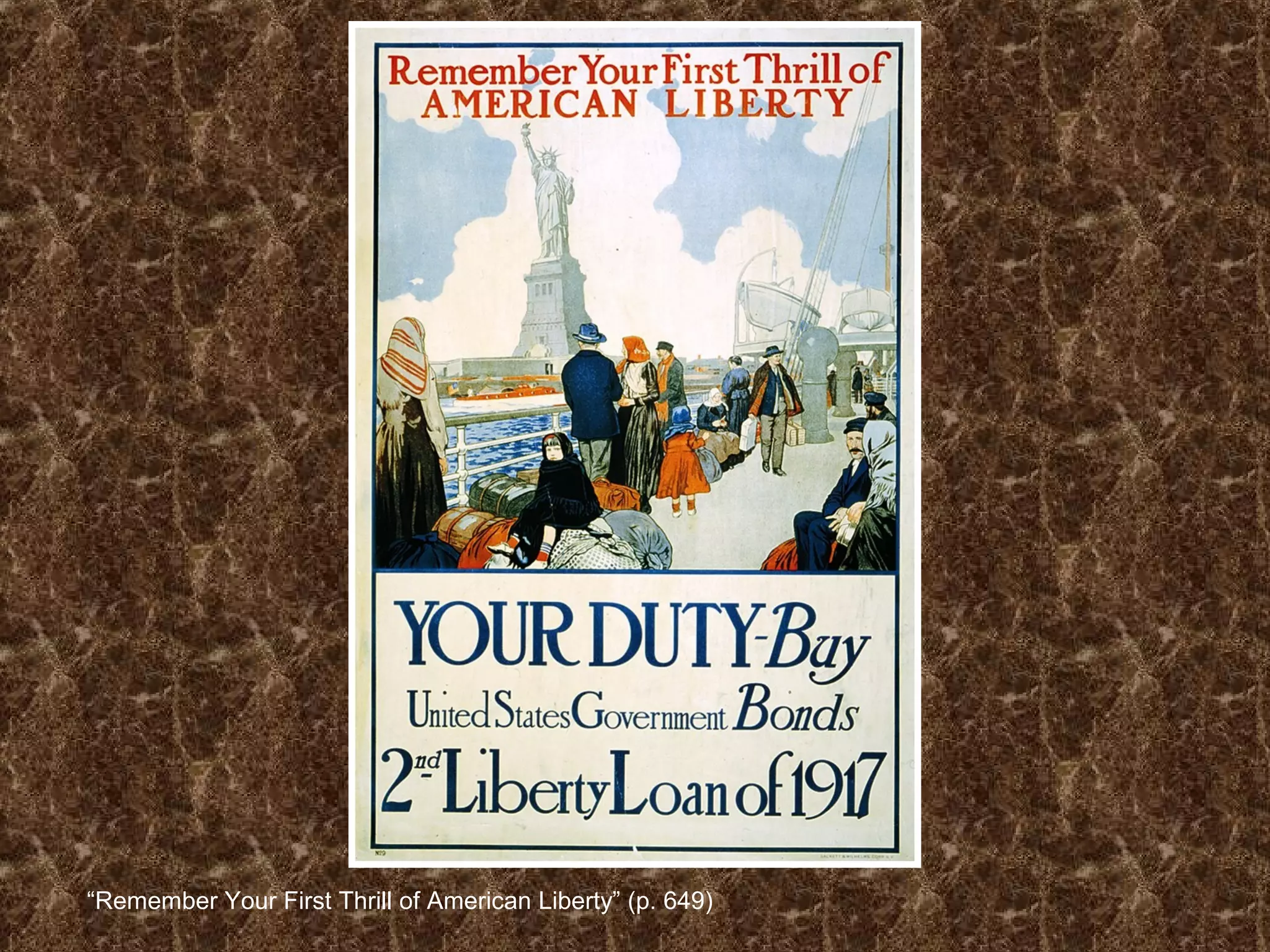
• Financing - Liberty
Bonds
25_10.jpg
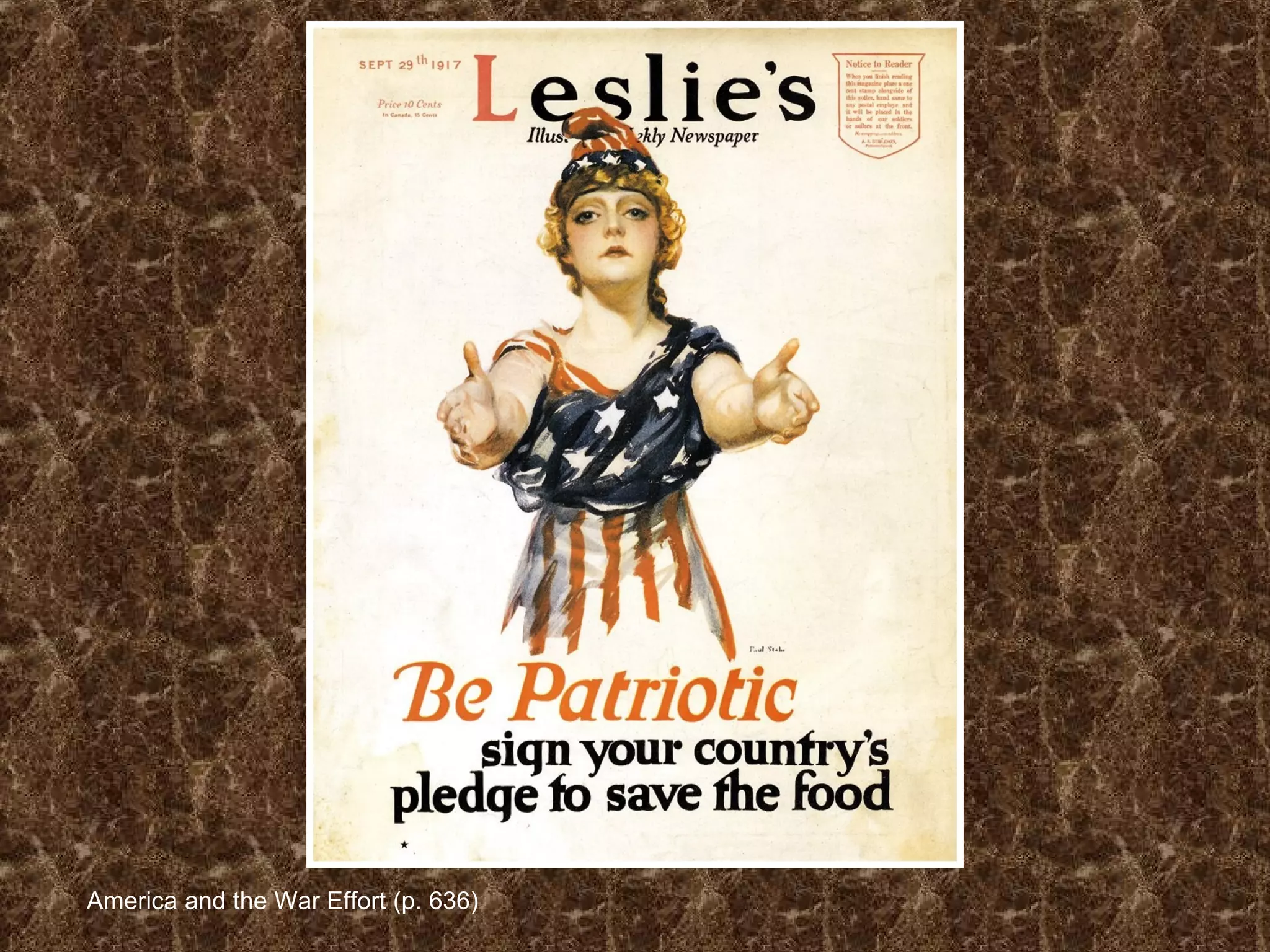
America and the War Effort (p. 636)
“Remember Your First Thrill of American Liberty” (p. 649)
Wartime Public Opinion
• Committee on
Public Information -
propaganda agency
in America (George
Creel) “do your bit”
for the war
• Hate the Hun,
Liberty Cabbage,
Salisbury Steak,
Can the Kaiser
Wartime Civil Liberties
• Espionage and Sedition
Acts (1917-18) jail
sentences for those
critical of disloyal or
abusive remarks toward
US war effort
• Schenck v. United
States (1919) “clear and
present danger” - free
speech could be limited
The Armed Forces
• Selective Service Act (1917) draft: 2.8
million draftees, 2.9 million volunteers
• Eventually 2 million were sent to Europe
• Blacks - 400,000 served, few officers
• Blacks hoped for service abroad =
equal rights at home (not so)
American Society
• Women took mens jobs
while men were “Over
There” led to
Nineteenth Amendment
• Mexicans - left Mexico
(upheaval and
revolution) and took
jobs in American West
• Blacks - Great
Migration to northern
cities for job
opportunities and to
escape poverty
Fighting the War
• New style of
warfare:
mechanized
– Machine guns
– tanks
– long-range, heavy
artillery
– poison gas
(various types)
– Trench warfare
(not entirely new)
– “No-Man’s Land”
– Hand grenades
Other factors after US entry
• Russian revolution and withdrawal
(Treaty of Brest-Litovsk) allowed
Germany to focus on Western front
entirely
• Naval shipping losses = huge. Led to
“Convoy System” and record ship
construction
Pershing’s Crusaders:
The Doughboys
• American
Expeditionary
Force (AEF)
• General John
J. Pershing
• First major
action in
spring 1918
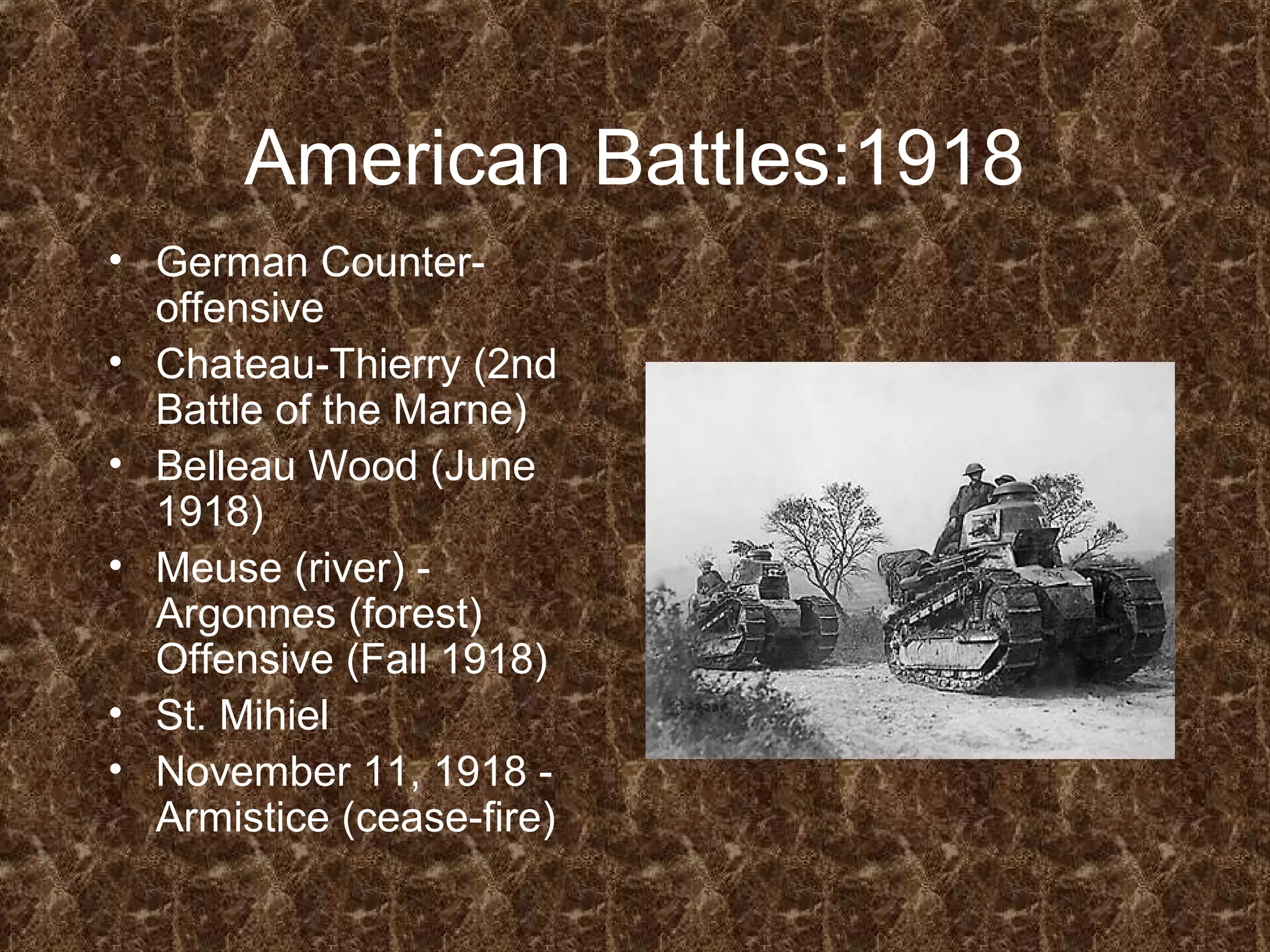
American Battles:1918
• German Counter-
offensive
• Chateau-Thierry (2nd
Battle of the Marne)
• Belleau Wood (June
1918)
• Meuse (river) -
Argonnes (forest)
Offensive (Fall 1918)
• St. Mihiel
• November 11, 1918 -
Armistice (cease-fire)
25_13.jpg
American Troops at the Western Front, 1918
Map 22.2 U.S Participation on the Western Front, 1918 (p. 644)
25_19.jpg
25_16.jpg
Casualties
• 50,000 Americans died in 1918 combat
• 1918 Influenza epidemic (worldwide)
killed thousands of soldiers and millions
of people around the globe
• 112,000 American fatalities
Approximate Comparative Losses in World War I
Winning the Peace: The
Versailles Peace Conference
• Paris and Palace of
Versailles
• Big Four:
– Woodrow Wilson
(USA)
– David Lloyd George
(GBR)
– Georges
Clemenceau (FR)
– Orlando Vittorio (IT)
• Russia excluded
• Defeated powers
humiliated
• Wilson’s 14 points the
major proposal
Wilson’s 14 Points
• To “make the world
safe for democracy”
• #1-5 - international
law
recommendations
• #6-13 - European
boundary
restructure
• #14 - League of
Nations
page1012.jpg
page1039.jpg
Map 22.3 The Great Migration and Beyond (p. 650)
first world war
first world war

first world war

  • 1.
  • 3.
    The Great War:World War I The War to End All Wars “The lamps have gone out all over Europe and we shall not see them lit again in our lifetime.” - British Prime Minister Lord Grey
  • 4.
    Long Term Causes ofWorld War I • Nationalism • Militarism • Imperialism • Peace time alliances • Long-standing ethnic grudges
  • 5.
    Map 22.1 EuropeanAlliances in 1914 (p. 638)
  • 6.
  • 7.
    Short term timelineleading to World War I • June 28 - Assassination of Austro-Hungarian Archduke and heir, Francis Ferdinand (and Sophie, his wife) • July 23 - Austria issues ultimatum to Serbia and invades on July 27 • July 28-30 - Russians mobilize as Serbia’s ally • August 1 - Germany, Austria-Hungary’s ally, declares war on Russia (and Serbia) • August 3 - Germany declares war on France (allied with Russia) and invades Belgium en route to Paris, France • August 4 - Great Britain, France’s ally, declares war on Germany
  • 8.
    The sides formed •Triple Entente (Allies) – France – Great Britain – Italy – Russia (1917 exit) – United States (1917 entry) • Central Powers – Germany – Austria-Hungary (empire) – Ottoman Empire – Bulgaria
  • 9.
    United States remainsneutral • Woodrow Wilson: “Remain neutral in thought as well as deed” • To protect international trading rights • “He kept us out of war.” 1916 presidential campaign slogan
  • 10.
    U.S. Neutrality underfire • British blockade of North Sea • Germans engage in submarine (u-boat) warfare • Lusitania crisis (May 1915) British liner sunk by German U-boats • Arabic and Sussex sinkings (Germans issue Sussex pledge) • Economic ties with Britain and France - war time trade and US financing of allied war effort
  • 11.
    Shifting US publicopinion • Reports of German cruelty (Huns) reinforced by Lusitania • Ethnic loyalties • Native born Americans (not Indians) favored Britain and French victory • British War Propaganda • Pro-War politicians (TR)
  • 12.
  • 13.
    Preparedness • Greater $for military spending necessary • National Security League • National Defense Act: June 1916 • Midwest and Western Americans opposed to preparedness (Populists, Progressives, Socialists)
  • 14.
    Election of 1916 •“He Kept us out of War” • Peace efforts had failed • Wilson narrowly won • January 1917, “Peace without Victory” Speech • April 1917, Wilson asked for declaration of war.
  • 15.
    From Neutrality toWar • Zimmermann Telegram (1917) • Russian Revolution (1917) • Unrestricted Submarine Warfare • “The World Must be made safe for Democracy” (Progressive crusade)
  • 16.
    Mobilization in theUSA • War Industries Board (Bernard Baruch) coordinated production and price controls • Food Administration (Herbert Hoover) voluntary efforts to conserve food for soldiers • Financing - Liberty Bonds
  • 17.
  • 18.
    America and theWar Effort (p. 636)
  • 19.
    “Remember Your FirstThrill of American Liberty” (p. 649)
  • 20.
    Wartime Public Opinion •Committee on Public Information - propaganda agency in America (George Creel) “do your bit” for the war • Hate the Hun, Liberty Cabbage, Salisbury Steak, Can the Kaiser
  • 21.
    Wartime Civil Liberties •Espionage and Sedition Acts (1917-18) jail sentences for those critical of disloyal or abusive remarks toward US war effort • Schenck v. United States (1919) “clear and present danger” - free speech could be limited
  • 22.
    The Armed Forces •Selective Service Act (1917) draft: 2.8 million draftees, 2.9 million volunteers • Eventually 2 million were sent to Europe • Blacks - 400,000 served, few officers • Blacks hoped for service abroad = equal rights at home (not so)
  • 23.
    American Society • Womentook mens jobs while men were “Over There” led to Nineteenth Amendment • Mexicans - left Mexico (upheaval and revolution) and took jobs in American West • Blacks - Great Migration to northern cities for job opportunities and to escape poverty
  • 24.
    Fighting the War •New style of warfare: mechanized – Machine guns – tanks – long-range, heavy artillery – poison gas (various types) – Trench warfare (not entirely new) – “No-Man’s Land” – Hand grenades
  • 25.
    Other factors afterUS entry • Russian revolution and withdrawal (Treaty of Brest-Litovsk) allowed Germany to focus on Western front entirely • Naval shipping losses = huge. Led to “Convoy System” and record ship construction
  • 26.
    Pershing’s Crusaders: The Doughboys •American Expeditionary Force (AEF) • General John J. Pershing • First major action in spring 1918
  • 27.
    American Battles:1918 • GermanCounter- offensive • Chateau-Thierry (2nd Battle of the Marne) • Belleau Wood (June 1918) • Meuse (river) - Argonnes (forest) Offensive (Fall 1918) • St. Mihiel • November 11, 1918 - Armistice (cease-fire)
  • 28.
  • 29.
    American Troops atthe Western Front, 1918
  • 30.
    Map 22.2 U.SParticipation on the Western Front, 1918 (p. 644)
  • 31.
  • 32.
  • 33.
    Casualties • 50,000 Americansdied in 1918 combat • 1918 Influenza epidemic (worldwide) killed thousands of soldiers and millions of people around the globe • 112,000 American fatalities
  • 34.
  • 35.
    Winning the Peace:The Versailles Peace Conference • Paris and Palace of Versailles • Big Four: – Woodrow Wilson (USA) – David Lloyd George (GBR) – Georges Clemenceau (FR) – Orlando Vittorio (IT) • Russia excluded • Defeated powers humiliated • Wilson’s 14 points the major proposal
  • 36.
    Wilson’s 14 Points •To “make the world safe for democracy” • #1-5 - international law recommendations • #6-13 - European boundary restructure • #14 - League of Nations
  • 37.
  • 38.
  • 39.
    Map 22.3 TheGreat Migration and Beyond (p. 650)

Editor's Notes

  • #6 Map 22.1 European Alliances in 1914 (p. 638) ©Bedford St. Martin’s
  • #7 In this cartoon, the Samson-like War pulls down the temple of Civilization
  • #18 Food Will Win the War
  • #19 America and the War Effort (p. 636) ©Bedford St. Martin’s
  • #20 “Remember Your First Thrill of American Liberty” (p. 649) ©Bedford St. Martin’s
  • #29 A gun crew firing on entrenched German positions
  • #30 Figure 15: American Troops at the Western Front, 1918 ©Houghton Mifflin
  • #31 Map 22.2 U.S Participation on the Western Front, 1918 (p. 644)© Bedford St. Martin’s
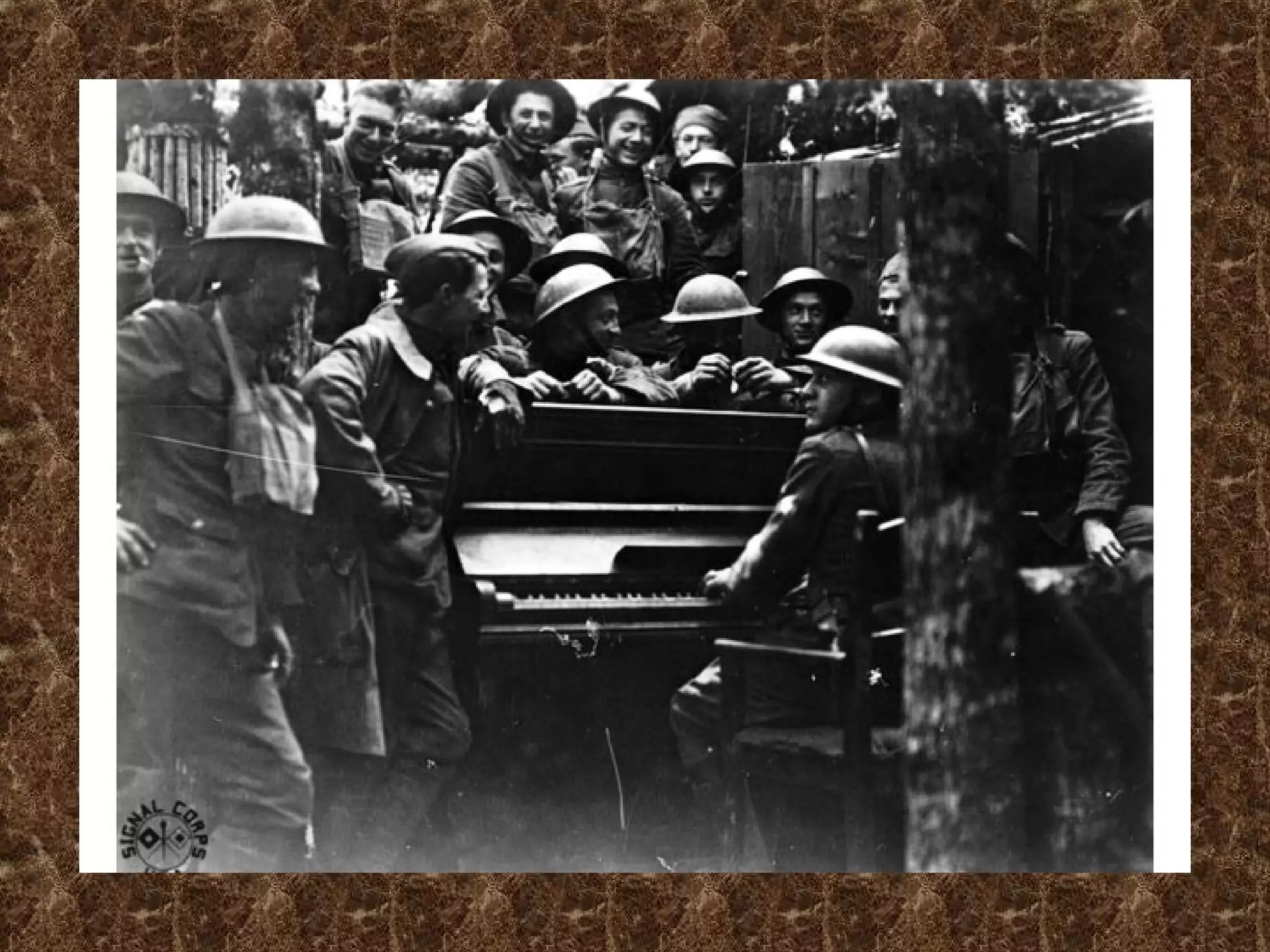
  • #32 Yanks play abandoned German piano
  • #33 Celebration of the Armistice, New York City
  • #35 Figure 31.1: Approximate Comparative Losses in World War I ©Houghton Mifflin
  • #38 Map: Europe at War, 1914
  • #39 Map: Europe after Versailles