WORLD WAR I
AMERICA BEFORE THE WAR
THE PRESIDENTIAL ELECTION OF 1912
•William Howard Taft - Republican
•Theordore Roosevelt - Populist
•Woodrow Wilson - Democrat
•Wilson wins the election
AT HOME IN AMERICA
•Much of the interest of America between
1912 and 1914 was on the economy and
progressive changes.
•Reforming the banks- The creation of the
Federal Reserve
•Anti-Trust Action- Federal Trade
Commission
•Social welfare- Keating-Owens Child Labor
AMERICA BEFORE THE WAR IN EUROPE
•American Foreign Affairs
•The Mexican Revolution and Pancho Villa
•1911 Revolution
•General Victoriano Huerta seized power
•Wilson refused to recognize the government.
•In 1914 Pancho Villa led a group of Guerrillas against
the government and attacked Columbus , New
Mexico
AMERICA BEFORE THE WAR IN EUROPE
•American Foreign Affairs
• The Mexican Revolution and Pancho Villa
• General John J. Pershing was sent across
the border into Mexico to capture Villa
but was unable to do so.
• Pershing continued until 1917 when the
U.S. entered World War I
• Villa was later killed by other rebels.
AMERICA BEFORE THE WAR IN EUROPE
•American Foreign Affairs
•Results- Wilson’s dealings with Mexico hurt U.S.
foreign relations.
•Wilson was seen as a bully by Latin America
•Wilson sent marines into
•Nicaragua
•Haiti
•Dominican Republic
WORLD WAR I
The Causes
CAUSES OF WWI
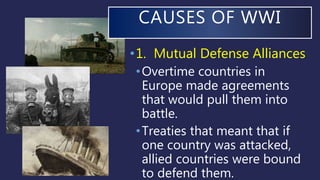
•1. Mutual Defense Alliances
•Overtime countries in
Europe made agreements
that would pull them into
battle.
•Treaties that meant that if
one country was attacked,
allied countries were bound
to defend them.
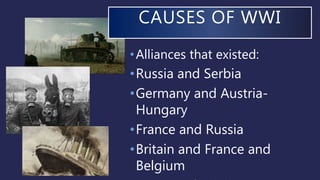
•Alliances that existed:
•Russia and Serbia
•Germany and Austria-
Hungary
•France and Russia
•Britain and France and
Belgium
CAUSES OF WWI
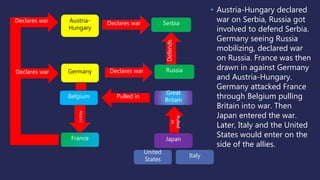
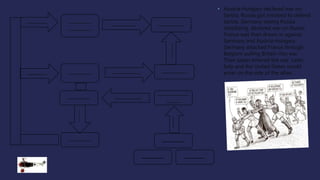
• Austria-Hungary declared
war on Serbia, Russia got
involved to defend Serbia.
Germany seeing Russia
mobilizing, declared war
on Russia. France was then
drawn in against Germany
and Austria-Hungary.
Germany attacked France
through Belgium pulling
Britain into war. Then
Japan entered the war.
Later, Italy and the United
States would enter on the
side of the allies.
Austria-
Hungary
Declares war Serbia
Defends
RussiaGermany Declares war
France
Declares war
Declares war
Belgium
Attacks
Great
Britain
Pulled in
Italy
United
States
Japan
Pulled
in
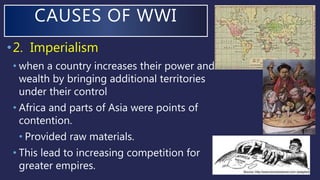
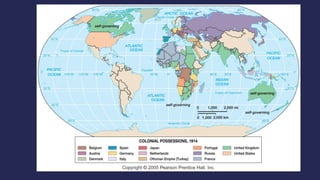
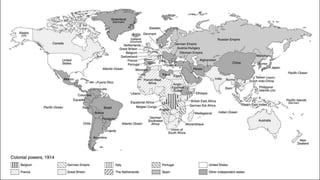
•2. Imperialism
• when a country increases their power and
wealth by bringing additional territories
under their control
• Africa and parts of Asia were points of
contention.
• Provided raw materials.
• This lead to increasing competition for
greater empires.
CAUSES OF WWI
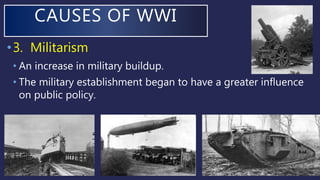
•3. Militarism
• An increase in military buildup.
• The military establishment began to have a greater influence
on public policy.
CAUSES OF WWI
•4. Nationalism / Self-Determination
•The advocacy of political independence for a
particular country
•Much of the origin of the war was based on the
desire of the Slavic peoples in Bosnia and
Herzegovina to no longer be part of Austria
Hungary but instead be part of Serbia.
CAUSES OF WWI
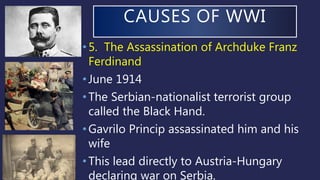
•5. The Assassination of Archduke Franz
Ferdinand
•June 1914
•The Serbian-nationalist terrorist group
called the Black Hand.
•Gavrilo Princip assassinated him and his
wife
•This lead directly to Austria-Hungary
declaring war on Serbia.
CAUSES OF WWI
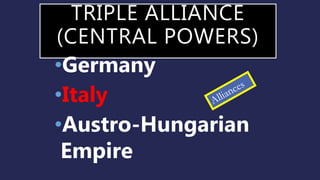
TRIPLE ALLIANCE
(CENTRAL POWERS)
•Germany
•Italy
•Austro-Hungarian
Empire
The Triple Entente
(Allied Forces)
•Britain
•France
•Russia
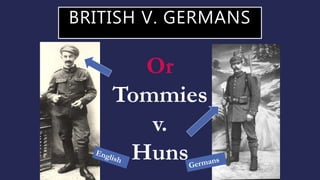
BRITISH V. GERMANS
Or
Tommies
v.
Huns
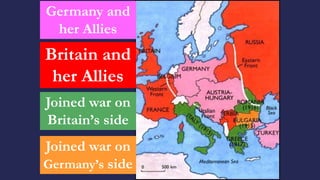
Germany and
her Allies
Britain and
her Allies
Joined war on
Germany’s side
Joined war on
Britain’s side
IN AMERICA
•U.S. Neutrality (Isolationism)
• WHY?
• Lots of German immigrants
• Europe is far away (not our fight)
• Sympathize with Britain
• Reports of German atrocities (invasion of Belgium –
cutting hands and feet off of little babies to get
information)
• Trade – war materials and food (good for the economy)
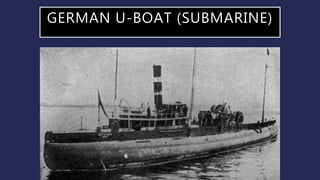
GERMAN U-BOAT (SUBMARINE)
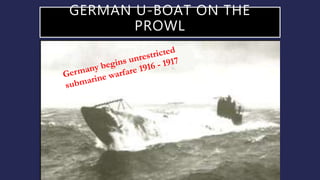
GERMAN U-BOAT ON THE
PROWL
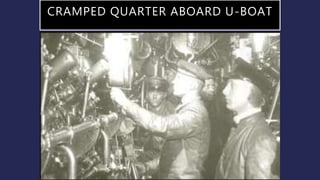
CRAMPED QUARTER ABOARD U-BOAT
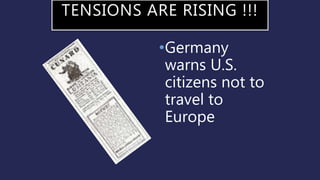
TENSIONS ARE RISING !!!
•Germany
warns U.S.
citizens not to
travel to
Europe
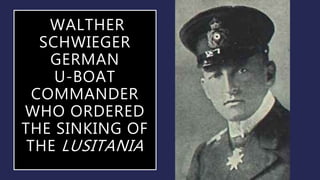
WALTHER
SCHWIEGER
GERMAN
U-BOAT
COMMANDER
WHO ORDERED
THE SINKING OF
THE LUSITANIA
SCHWIEGER’ DIARY ENTRY:
•"It looks as if the ship will
stay afloat only for a very
short time. I couldn't have
fired another torpedo into
this mass of humans
desperately trying to save
themselves".
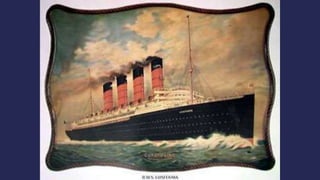
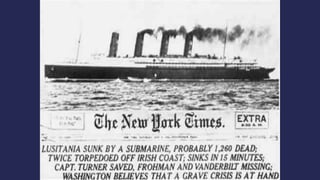
LUSITANIA
•May 1915 –
•Killed 1198
• Americans – 128
•Wilson demands that Germany NOT continue
such attacks –
•Germany agrees – then sinks an unarmed French
steamer The Sussex (4 American passengers)
THE SUSSEX PLEDGE
•May 4, 1916
•Germany promised to alter their naval and
submarine policy of unrestricted submarine
warfare to stop the indiscriminate sinking of non-
military ships.
•Germany broke the pledge on February 1, 1917
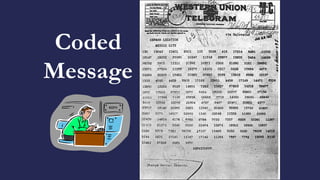
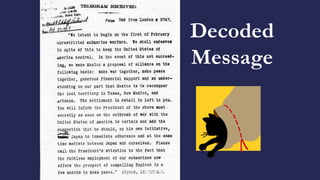
ZIMMERMAN TELEGRAM
INTERCEPTED
ZIMMERMAN TELEGRAM
From the Ambassador of Germany to the
leader of Mexico
Encourages Mexico to go to war with the
United States
Outrage !!!!!
Coded
Message
Decoded
Message
WILSON IS TURNING FROM ISOLATIONISM TO
INTERVENTION
Plan for a League of Nations (led by
US)
Humanitarian need – not imperialism
(Why?? What kind of diplomacy??)
U.S. GETTING MAD!!!!
•German atrocities (Belgium babies)
•Sinking of U.S. ships by u-boats
•Sinking of Lusitania
•Zimmerman Telegram
•And then - - - - even after they promised - - -
(remember the Sussex Pledge?)
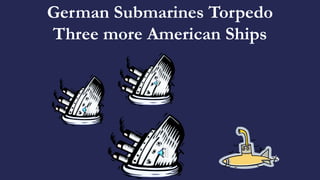
German Submarines Torpedo
Three more American Ships
Now,
I’m
mad!
America Declares War
on Central Powers
April 6, 1917
SELECTIVE SERVICE
May 18, 1917
Congress passes the Selective service act.
Ages 18 to 45
ESPIONAGE ACT OF 1917
Established fines and imprisonment for
those convicted of aiding the enemy or
committing other disloyal acts.
SEDITION ACT OF 1918
Punished anyone who said anything to
obstruct the government or printed
anything disloyal.
THE SUPREME COURT
Schenck v. United States,1919
The court upheld a conviction of a man who circulated
anti-draft leaflets.
“Free speech would not protect a man in falsely
shouting fire in a theater, and causing panic”
“a clear and present danger”
THE AMERICANS IN EUROPE
Many Americans had fought in the war prior to
America declaring war
All volunteered
Most served with the British or Canadians
Ernest Hemingway-Ambulance driver
Aviation-Lafayette Escadrille French air squadrons
THE AMERICANS IN EUROPE
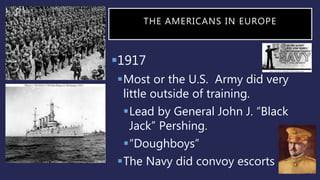
1917
Most or the U.S. Army did very
little outside of training.
Lead by General John J. “Black
Jack” Pershing.
“Doughboys”
The Navy did convoy escorts .
THE RUSSIANS LEAVE THE WAR
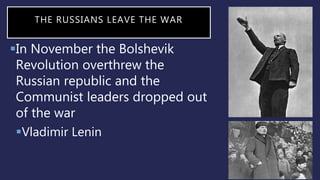
In November the Bolshevik
Revolution overthrew the
Russian republic and the
Communist leaders dropped out
of the war
Vladimir Lenin
THE AMERICANS IN EUROPE
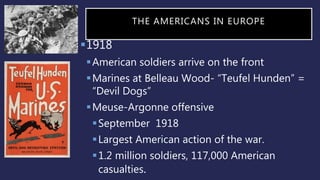
1918
American soldiers arrive on the front
Marines at Belleau Wood- “Teufel Hunden” =
“Devil Dogs”
Meuse-Argonne offensive
September 1918
Largest American action of the war.
1.2 million soldiers, 117,000 American
casualties.
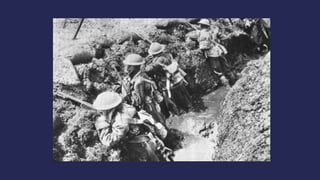
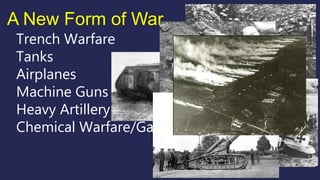
A New Form of War
Trench Warfare
Tanks
Airplanes
Machine Guns
Heavy Artillery
Chemical Warfare/Gas
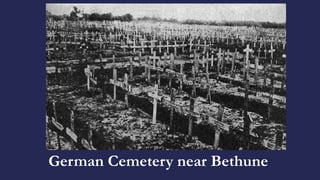
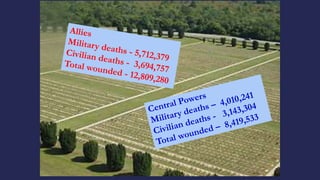
German Cemetery near Bethune
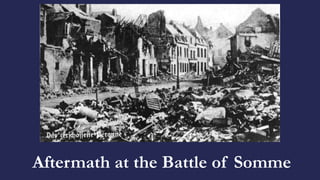
Aftermath at the Battle of Somme
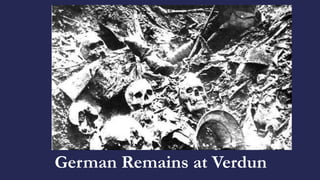
German Remains at Verdun
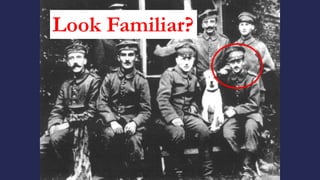
Look Familiar?
THE END OF WAR
October 3, 1918 The new German chancellor asked
to an end to the fighting based on Wilson’s
Fourteen Points.
November 11th at 11am the guns fell silent.
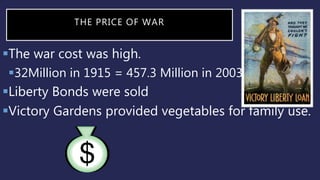
THE PRICE OF WAR
The war cost was high.
32Million in 1915 = 457.3 Million in 2003
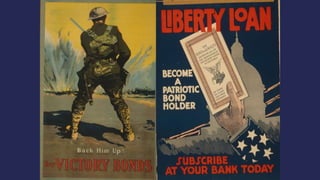
Liberty Bonds were sold
Victory Gardens provided vegetables for family use.
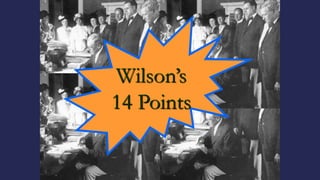
Wilson’s
14 Points
FOURTEEN POINTS
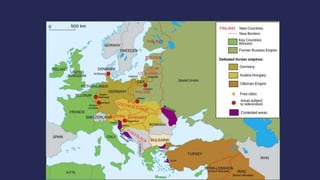
•New nations & boundaries
•Five general principles
•Establish League of Nations
3 main categories
NEW NATIONS & BOUNDARIES
•Self-determination (remember?)
•New countries replace Austro-
Hungarian Empire
•Ethnic division
FIVE GENERAL PRINCIPLES
1. Freedom of the Seas
2. No secret treaties
3. Reduction of military arms
4. Free trade between countries
5. Mediate colonial claims
LEAGUE OF NATIONS
Wilson sees U.S. as
World Peace-keeper
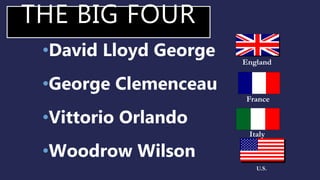
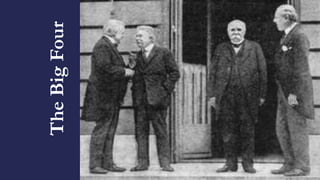
THE BIG FOUR
•David Lloyd George
•George Clemenceau
•Vittorio Orlando
•Woodrow Wilson
England
France
Italy
U.S.
TheBigFour
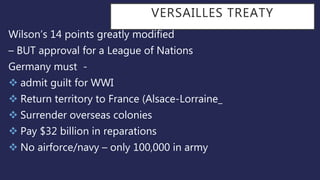
VERSAILLES TREATY
Wilson’s 14 points greatly modified
– BUT approval for a League of Nations
Germany must -
 admit guilt for WWI
 Return territory to France (Alsace-Lorraine_
 Surrender overseas colonies
 Pay $32 billion in reparations
 No airforce/navy – only 100,000 in army
WILSON SEEKS SENATE
APPROVAL FOR TREATY OF
VERSAILLES
SENATE SAYS NO
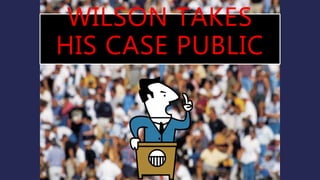
WILSON TAKES
HIS CASE PUBLIC
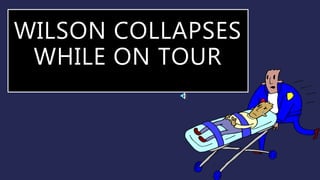
WILSON COLLAPSES
WHILE ON TOUR
• Austria-Hungary declared war on
Serbia, Russia got involved to defend
Serbia. Germany seeing Russia
mobilizing, declared war on Russia.
France was then drawn in against
Germany and Austria-Hungary.
Germany attacked France through
Belgium pulling Britain into war.
Then Japan entered the war. Later,
Italy and the United States would
enter on the side of the allies.
_________
_________
__________ __________
______
___________________ ___________
_________
________
________
_________
________
____________
______
___________
_________________
_________
______

World war i

  • 1.
  • 2.
  • 3.
    THE PRESIDENTIAL ELECTIONOF 1912 •William Howard Taft - Republican •Theordore Roosevelt - Populist •Woodrow Wilson - Democrat •Wilson wins the election
  • 5.
    AT HOME INAMERICA •Much of the interest of America between 1912 and 1914 was on the economy and progressive changes. •Reforming the banks- The creation of the Federal Reserve •Anti-Trust Action- Federal Trade Commission •Social welfare- Keating-Owens Child Labor
  • 6.
    AMERICA BEFORE THEWAR IN EUROPE •American Foreign Affairs •The Mexican Revolution and Pancho Villa •1911 Revolution •General Victoriano Huerta seized power •Wilson refused to recognize the government. •In 1914 Pancho Villa led a group of Guerrillas against the government and attacked Columbus , New Mexico
  • 7.
    AMERICA BEFORE THEWAR IN EUROPE •American Foreign Affairs • The Mexican Revolution and Pancho Villa • General John J. Pershing was sent across the border into Mexico to capture Villa but was unable to do so. • Pershing continued until 1917 when the U.S. entered World War I • Villa was later killed by other rebels.
  • 8.
    AMERICA BEFORE THEWAR IN EUROPE •American Foreign Affairs •Results- Wilson’s dealings with Mexico hurt U.S. foreign relations. •Wilson was seen as a bully by Latin America •Wilson sent marines into •Nicaragua •Haiti •Dominican Republic
  • 10.
  • 11.
    CAUSES OF WWI •1.Mutual Defense Alliances •Overtime countries in Europe made agreements that would pull them into battle. •Treaties that meant that if one country was attacked, allied countries were bound to defend them.
  • 12.
    •Alliances that existed: •Russiaand Serbia •Germany and Austria- Hungary •France and Russia •Britain and France and Belgium CAUSES OF WWI
  • 13.
    • Austria-Hungary declared waron Serbia, Russia got involved to defend Serbia. Germany seeing Russia mobilizing, declared war on Russia. France was then drawn in against Germany and Austria-Hungary. Germany attacked France through Belgium pulling Britain into war. Then Japan entered the war. Later, Italy and the United States would enter on the side of the allies. Austria- Hungary Declares war Serbia Defends RussiaGermany Declares war France Declares war Declares war Belgium Attacks Great Britain Pulled in Italy United States Japan Pulled in
  • 14.
    •2. Imperialism • whena country increases their power and wealth by bringing additional territories under their control • Africa and parts of Asia were points of contention. • Provided raw materials. • This lead to increasing competition for greater empires. CAUSES OF WWI
  • 15.
    •3. Militarism • Anincrease in military buildup. • The military establishment began to have a greater influence on public policy. CAUSES OF WWI
  • 16.
    •4. Nationalism /Self-Determination •The advocacy of political independence for a particular country •Much of the origin of the war was based on the desire of the Slavic peoples in Bosnia and Herzegovina to no longer be part of Austria Hungary but instead be part of Serbia. CAUSES OF WWI
  • 17.
    •5. The Assassinationof Archduke Franz Ferdinand •June 1914 •The Serbian-nationalist terrorist group called the Black Hand. •Gavrilo Princip assassinated him and his wife •This lead directly to Austria-Hungary declaring war on Serbia. CAUSES OF WWI
  • 18.
  • 19.
    The Triple Entente (AlliedForces) •Britain •France •Russia
  • 20.
  • 21.
    Germany and her Allies Britainand her Allies Joined war on Germany’s side Joined war on Britain’s side
  • 22.
    IN AMERICA •U.S. Neutrality(Isolationism) • WHY? • Lots of German immigrants • Europe is far away (not our fight) • Sympathize with Britain • Reports of German atrocities (invasion of Belgium – cutting hands and feet off of little babies to get information) • Trade – war materials and food (good for the economy)
  • 23.
  • 24.
  • 25.
  • 26.
    TENSIONS ARE RISING!!! •Germany warns U.S. citizens not to travel to Europe
  • 30.
  • 31.
    SCHWIEGER’ DIARY ENTRY: •"Itlooks as if the ship will stay afloat only for a very short time. I couldn't have fired another torpedo into this mass of humans desperately trying to save themselves".
  • 32.
    LUSITANIA •May 1915 – •Killed1198 • Americans – 128 •Wilson demands that Germany NOT continue such attacks – •Germany agrees – then sinks an unarmed French steamer The Sussex (4 American passengers)
  • 33.
    THE SUSSEX PLEDGE •May4, 1916 •Germany promised to alter their naval and submarine policy of unrestricted submarine warfare to stop the indiscriminate sinking of non- military ships. •Germany broke the pledge on February 1, 1917
  • 34.
  • 35.
    ZIMMERMAN TELEGRAM From theAmbassador of Germany to the leader of Mexico Encourages Mexico to go to war with the United States Outrage !!!!!
  • 36.
  • 37.
  • 38.
    WILSON IS TURNINGFROM ISOLATIONISM TO INTERVENTION Plan for a League of Nations (led by US) Humanitarian need – not imperialism (Why?? What kind of diplomacy??)
  • 39.
    U.S. GETTING MAD!!!! •Germanatrocities (Belgium babies) •Sinking of U.S. ships by u-boats •Sinking of Lusitania •Zimmerman Telegram •And then - - - - even after they promised - - - (remember the Sussex Pledge?)
  • 40.
  • 41.
  • 42.
    America Declares War onCentral Powers April 6, 1917
  • 44.
    SELECTIVE SERVICE May 18,1917 Congress passes the Selective service act. Ages 18 to 45
  • 45.
    ESPIONAGE ACT OF1917 Established fines and imprisonment for those convicted of aiding the enemy or committing other disloyal acts.
  • 46.
    SEDITION ACT OF1918 Punished anyone who said anything to obstruct the government or printed anything disloyal.
  • 47.
    THE SUPREME COURT Schenckv. United States,1919 The court upheld a conviction of a man who circulated anti-draft leaflets. “Free speech would not protect a man in falsely shouting fire in a theater, and causing panic” “a clear and present danger”
  • 48.
    THE AMERICANS INEUROPE Many Americans had fought in the war prior to America declaring war All volunteered Most served with the British or Canadians Ernest Hemingway-Ambulance driver Aviation-Lafayette Escadrille French air squadrons
  • 49.
    THE AMERICANS INEUROPE 1917 Most or the U.S. Army did very little outside of training. Lead by General John J. “Black Jack” Pershing. “Doughboys” The Navy did convoy escorts .
  • 50.
    THE RUSSIANS LEAVETHE WAR In November the Bolshevik Revolution overthrew the Russian republic and the Communist leaders dropped out of the war Vladimir Lenin
  • 51.
    THE AMERICANS INEUROPE 1918 American soldiers arrive on the front Marines at Belleau Wood- “Teufel Hunden” = “Devil Dogs” Meuse-Argonne offensive September 1918 Largest American action of the war. 1.2 million soldiers, 117,000 American casualties.
  • 53.
    A New Formof War Trench Warfare Tanks Airplanes Machine Guns Heavy Artillery Chemical Warfare/Gas
  • 54.
  • 55.
    Aftermath at theBattle of Somme
  • 56.
  • 57.
  • 59.
    THE END OFWAR October 3, 1918 The new German chancellor asked to an end to the fighting based on Wilson’s Fourteen Points. November 11th at 11am the guns fell silent.
  • 60.
    THE PRICE OFWAR The war cost was high. 32Million in 1915 = 457.3 Million in 2003 Liberty Bonds were sold Victory Gardens provided vegetables for family use.
  • 62.
  • 63.
    FOURTEEN POINTS •New nations& boundaries •Five general principles •Establish League of Nations 3 main categories
  • 64.
    NEW NATIONS &BOUNDARIES •Self-determination (remember?) •New countries replace Austro- Hungarian Empire •Ethnic division
  • 65.
    FIVE GENERAL PRINCIPLES 1.Freedom of the Seas 2. No secret treaties 3. Reduction of military arms 4. Free trade between countries 5. Mediate colonial claims
  • 66.
    LEAGUE OF NATIONS Wilsonsees U.S. as World Peace-keeper
  • 67.
    THE BIG FOUR •DavidLloyd George •George Clemenceau •Vittorio Orlando •Woodrow Wilson England France Italy U.S.
  • 68.
  • 69.
    VERSAILLES TREATY Wilson’s 14points greatly modified – BUT approval for a League of Nations Germany must -  admit guilt for WWI  Return territory to France (Alsace-Lorraine_  Surrender overseas colonies  Pay $32 billion in reparations  No airforce/navy – only 100,000 in army
  • 71.
    WILSON SEEKS SENATE APPROVALFOR TREATY OF VERSAILLES
  • 72.
  • 73.
  • 74.
  • 77.
    • Austria-Hungary declaredwar on Serbia, Russia got involved to defend Serbia. Germany seeing Russia mobilizing, declared war on Russia. France was then drawn in against Germany and Austria-Hungary. Germany attacked France through Belgium pulling Britain into war. Then Japan entered the war. Later, Italy and the United States would enter on the side of the allies. _________ _________ __________ __________ ______ ___________________ ___________ _________ ________ ________ _________ ________ ____________ ______ ___________ _________________ _________ ______