BITS, PILANI – K. K. BIRLA GOA CAMPUS
Operating Systems
by
Mrs. Shubhangi Gawali
Dept. of CS and IS
1July 16, 2014
OPERATING SYSTEMS
LECTURE 11: CPU
SCHEDULING
Basic Concepts
 Maximum CPU utilization obtained with
multiprogramming.
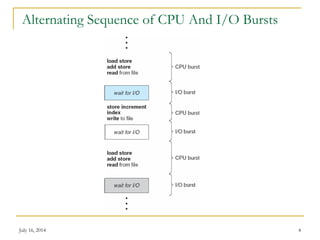
 CPU–I/O Burst Cycle – Process
execution consists of a cycle of CPU
execution and I/O wait.
 CPU burst distribution
 Burst/Service time = total processor
time needed in one CPU-I/O burst cycle.
3July 16, 2014
4
Alternating Sequence of CPU And I/O Bursts
July 16, 2014
Processes
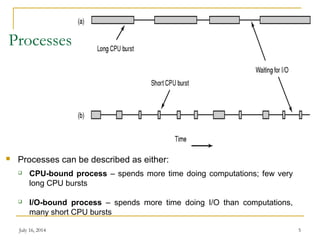
 Processes can be described as either:
 CPU-bound process – spends more time doing computations; few very
long CPU bursts
 I/O-bound process – spends more time doing I/O than computations,
many short CPU bursts
5July 16, 2014
6July 16, 2014
7July 16, 2014
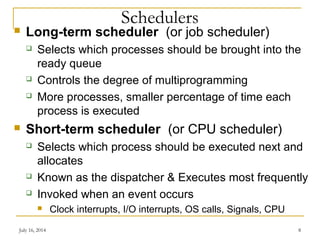
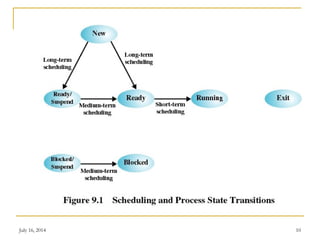
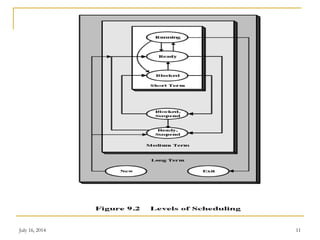
Schedulers
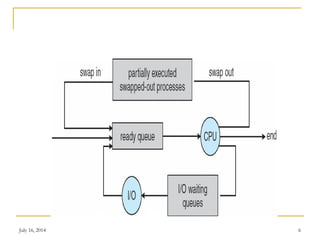
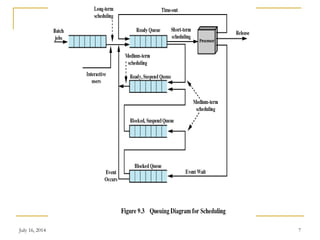
 Long-term scheduler (or job scheduler)
 Selects which processes should be brought into the
ready queue
 Controls the degree of multiprogramming
 More processes, smaller percentage of time each
process is executed
 Short-term scheduler (or CPU scheduler)
 Selects which process should be executed next and
allocates
 Known as the dispatcher & Executes most frequently
 Invoked when an event occurs
 Clock interrupts, I/O interrupts, OS calls, Signals, CPU
July 16, 2014 8
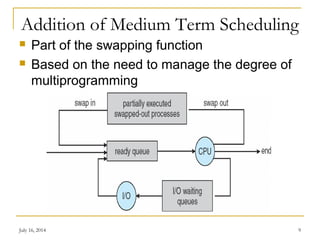
Addition of Medium Term Scheduling
 Part of the swapping function
 Based on the need to manage the degree of
multiprogramming
July 16, 2014 9
July 16, 2014 10
July 16, 2014 11
Schedulers (Cont)
 Short-term scheduler is invoked very frequently
(milliseconds) ⇒ (must be fast)
 CPU scheduler: selects from among the processes in memory
that are ready to execute, and allocates the CPU to one of them
 Long-term scheduler is invoked very infrequently
(seconds, minutes) ⇒ (may be slow)
July 16, 2014 12
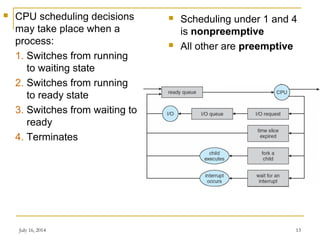
 CPU scheduling decisions
may take place when a
process:
1. Switches from running
to waiting state
2. Switches from running
to ready state
3. Switches from waiting to
ready
4. Terminates
 Scheduling under 1 and 4
is nonpreemptive
 All other are preemptive
July 16, 2014 13
Characterization of Scheduling Policies
 The selection function: determines which process in the
ready queue is selected next for execution.
 The decision mode: specifies the instants in time at
which the selection function is exercised.
 Nonpreemptive:
 Once a process is in the running state, it will continue until it
terminates or blocks itself for I/O.
 Preemptive:
 Currently running process may be interrupted and moved to
the Ready state by the OS.
 Allows for better service since any one process cannot
monopolize the processor for very long.
July 16, 2014 14
Dispatcher
 Dispatcher module gives control of the CPU
to the process selected by the short-term
scheduler; this involves:
 switching context
 switching to user mode
 jumping to the proper location in the user program
to restart that program
 Dispatch latency – time it takes for the
dispatcher to stop one process and start
another running
July 16, 2014 15
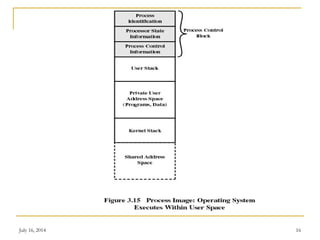
16July 16, 2014
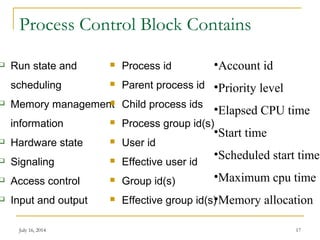
Process Control Block Contains
 Run state and
scheduling
 Memory management
information
 Hardware state
 Signaling
 Access control
 Input and output
 Process id
 Parent process id
 Child process ids
 Process group id(s)
 User id
 Effective user id
 Group id(s)
 Effective group id(s)
July 16, 2014 17
•Account id
•Priority level
•Elapsed CPU time
•Start time
•Scheduled start time
•Maximum cpu time
•Memory allocation
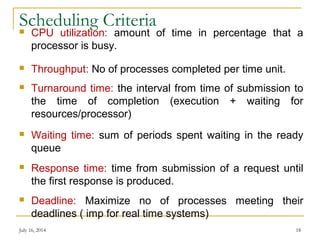
Scheduling Criteria CPU utilization: amount of time in percentage that a
processor is busy.
 Throughput: No of processes completed per time unit.
 Turnaround time: the interval from time of submission to
the time of completion (execution + waiting for
resources/processor)
 Waiting time: sum of periods spent waiting in the ready
queue
 Response time: time from submission of a request until
the first response is produced.
 Deadline: Maximize no of processes meeting their
deadlines ( imp for real time systems)
18July 16, 2014
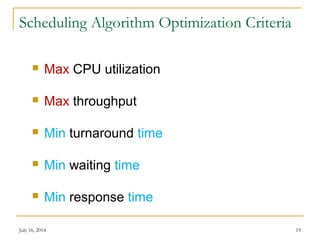
Scheduling Algorithm Optimization Criteria
 Max CPU utilization
 Max throughput
 Min turnaround time
 Min waiting time
 Min response time
19July 16, 2014
20
CPU Scheduling Criteria
 User-oriented
 Response Time
 Elapsed time between the submission of a request until
there is output.
 System-oriented
 Effective and efficient utilization of the processor
 Performance-related
 Quantitative
 Measurable such as response time and throughput
July 16, 2014

cpu scheduling OS

  • 1.
    BITS, PILANI –K. K. BIRLA GOA CAMPUS Operating Systems by Mrs. Shubhangi Gawali Dept. of CS and IS 1July 16, 2014
  • 2.
  • 3.
    Basic Concepts  MaximumCPU utilization obtained with multiprogramming.  CPU–I/O Burst Cycle – Process execution consists of a cycle of CPU execution and I/O wait.  CPU burst distribution  Burst/Service time = total processor time needed in one CPU-I/O burst cycle. 3July 16, 2014
  • 4.
    4 Alternating Sequence ofCPU And I/O Bursts July 16, 2014
  • 5.
    Processes  Processes canbe described as either:  CPU-bound process – spends more time doing computations; few very long CPU bursts  I/O-bound process – spends more time doing I/O than computations, many short CPU bursts 5July 16, 2014
  • 6.
  • 7.
  • 8.
    Schedulers  Long-term scheduler(or job scheduler)  Selects which processes should be brought into the ready queue  Controls the degree of multiprogramming  More processes, smaller percentage of time each process is executed  Short-term scheduler (or CPU scheduler)  Selects which process should be executed next and allocates  Known as the dispatcher & Executes most frequently  Invoked when an event occurs  Clock interrupts, I/O interrupts, OS calls, Signals, CPU July 16, 2014 8
  • 9.
    Addition of MediumTerm Scheduling  Part of the swapping function  Based on the need to manage the degree of multiprogramming July 16, 2014 9
  • 10.
  • 11.
  • 12.
    Schedulers (Cont)  Short-termscheduler is invoked very frequently (milliseconds) ⇒ (must be fast)  CPU scheduler: selects from among the processes in memory that are ready to execute, and allocates the CPU to one of them  Long-term scheduler is invoked very infrequently (seconds, minutes) ⇒ (may be slow) July 16, 2014 12
  • 13.
     CPU schedulingdecisions may take place when a process: 1. Switches from running to waiting state 2. Switches from running to ready state 3. Switches from waiting to ready 4. Terminates  Scheduling under 1 and 4 is nonpreemptive  All other are preemptive July 16, 2014 13
  • 14.
    Characterization of SchedulingPolicies  The selection function: determines which process in the ready queue is selected next for execution.  The decision mode: specifies the instants in time at which the selection function is exercised.  Nonpreemptive:  Once a process is in the running state, it will continue until it terminates or blocks itself for I/O.  Preemptive:  Currently running process may be interrupted and moved to the Ready state by the OS.  Allows for better service since any one process cannot monopolize the processor for very long. July 16, 2014 14
  • 15.
    Dispatcher  Dispatcher modulegives control of the CPU to the process selected by the short-term scheduler; this involves:  switching context  switching to user mode  jumping to the proper location in the user program to restart that program  Dispatch latency – time it takes for the dispatcher to stop one process and start another running July 16, 2014 15
  • 16.
  • 17.
    Process Control BlockContains  Run state and scheduling  Memory management information  Hardware state  Signaling  Access control  Input and output  Process id  Parent process id  Child process ids  Process group id(s)  User id  Effective user id  Group id(s)  Effective group id(s) July 16, 2014 17 •Account id •Priority level •Elapsed CPU time •Start time •Scheduled start time •Maximum cpu time •Memory allocation
  • 18.
    Scheduling Criteria CPUutilization: amount of time in percentage that a processor is busy.  Throughput: No of processes completed per time unit.  Turnaround time: the interval from time of submission to the time of completion (execution + waiting for resources/processor)  Waiting time: sum of periods spent waiting in the ready queue  Response time: time from submission of a request until the first response is produced.  Deadline: Maximize no of processes meeting their deadlines ( imp for real time systems) 18July 16, 2014
  • 19.
    Scheduling Algorithm OptimizationCriteria  Max CPU utilization  Max throughput  Min turnaround time  Min waiting time  Min response time 19July 16, 2014
  • 20.
    20 CPU Scheduling Criteria User-oriented  Response Time  Elapsed time between the submission of a request until there is output.  System-oriented  Effective and efficient utilization of the processor  Performance-related  Quantitative  Measurable such as response time and throughput July 16, 2014

Editor's Notes

  • #6 Jobs with long CPU burst time are CPU-bound jobs and are also referred to as “long jobs”. Jobs with short CPU burst time are IO-bound jobs and are also referred to as “short jobs”. CPU-bound processes have longer CPU bursts than I/O-bound processes.