FLEET MANAGEMENT
MR.AHMED EID
VEHICLE FLEET
MANAGEMENT
Introduction
A fleet is a group of motor vehicles owned or leased by a
business or government agency. Typical examples are vehicles
operated by car rental companies, taxicab companies, trucks,
public bus companies, and police departments
Fleet management has been an important function for
companies since the early 1900s when the first commercial
vehicles were introduced.
Fleet management has changed completely over the last decade
as companies are aware of the impact of efficient fleets on their
business operations. Today, in addition to vehicle procurement
and maintenance, the fleet management team is responsible for
a variety of activities, including driver management, operational
efficiency, and environmental sustainability.
Fleet management
concept.
• Fleet management is the process of
overseeing a company's fleet of vehicles,
including cars, trucks, vans, and other types
of vehicles. This can include everything from
purchasing and maintaining vehicles to
managing drivers and scheduling routes.
• “Fleet management is an administrative
approach that allows companies to organize
and coordinate work vehicles with the aim to
improve efficiency and reduce costs.”
the importance of fleet management
• Effective fleet management is crucial for many
businesses, as it can help to reduce costs, increase
efficiency, and improve safety.
• For example, by optimizing routes and reducing
workless time, fleet managers can save fuel and reduce
vehicle wear and tear. By implementing safety policies
and training programs, fleet managers can reduce the
risk of accidents and improve driver performance.
• There are many different aspects of fleet
management to consider, including
vehicle procuration, maintenance and
repair, fuel management, driver
management, and route optimization.
Each of these areas requires careful
attention to detail and a deep
understanding of the unique needs and
challenges of the business.
In recent years, technology has played an increasingly important role in fleet management.
Many companies now use GPS tracking systems and other telematics tools to monitor vehicle
performance, track driver behavior, and optimize routes in real time. This has led to significant
improvements in efficiency and safety, as well as cost savings for many businesses.
Overall, effective fleet management requires a combination of strategic planning, operational
excellence, and a deep understanding of the needs and challenges of the business. By
implementing best practices and leveraging the latest technologies, fleet managers can help
their companies to operate more efficiently, reduce costs, and improve safety.
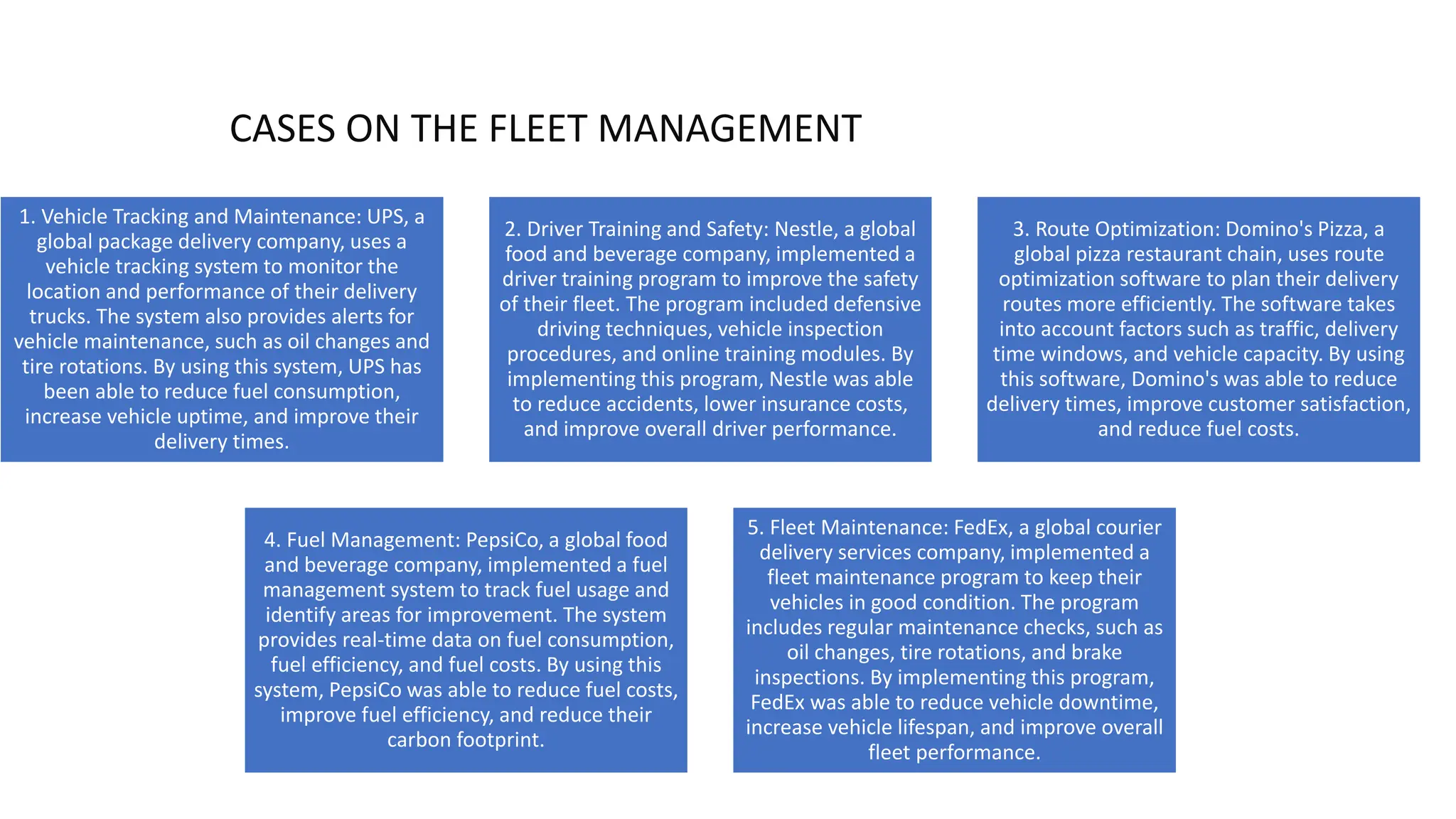
1. Vehicle Tracking and Maintenance: UPS, a
global package delivery company, uses a
vehicle tracking system to monitor the
location and performance of their delivery
trucks. The system also provides alerts for
vehicle maintenance, such as oil changes and
tire rotations. By using this system, UPS has
been able to reduce fuel consumption,
increase vehicle uptime, and improve their
delivery times.
2. Driver Training and Safety: Nestle, a global
food and beverage company, implemented a
driver training program to improve the safety
of their fleet. The program included defensive
driving techniques, vehicle inspection
procedures, and online training modules. By
implementing this program, Nestle was able
to reduce accidents, lower insurance costs,
and improve overall driver performance.
3. Route Optimization: Domino's Pizza, a
global pizza restaurant chain, uses route
optimization software to plan their delivery
routes more efficiently. The software takes
into account factors such as traffic, delivery
time windows, and vehicle capacity. By using
this software, Domino's was able to reduce
delivery times, improve customer satisfaction,
and reduce fuel costs.
4. Fuel Management: PepsiCo, a global food
and beverage company, implemented a fuel
management system to track fuel usage and
identify areas for improvement. The system
provides real-time data on fuel consumption,
fuel efficiency, and fuel costs. By using this
system, PepsiCo was able to reduce fuel costs,
improve fuel efficiency, and reduce their
carbon footprint.
5. Fleet Maintenance: FedEx, a global courier
delivery services company, implemented a
fleet maintenance program to keep their
vehicles in good condition. The program
includes regular maintenance checks, such as
oil changes, tire rotations, and brake
inspections. By implementing this program,
FedEx was able to reduce vehicle downtime,
increase vehicle lifespan, and improve overall
fleet performance.
CASES ON THE FLEET MANAGEMENT
FLEET MANAGER ROLE
1. Vehicle Acquisition: This involves
the purchase or lease of vehicles to
meet the needs of the business. Fleet
managers must consider factors such
as vehicle type, fuel efficiency, safety
features, and cost when selecting
vehicles for the fleet.
2. Maintenance and Repair: Proper
maintenance and repair of vehicles is
essential to ensure their safe and
efficient operation. Fleet managers
must develop and implement
maintenance schedules, work with
maintenance staff to ensure that
repairs are made promptly, and track
vehicle maintenance records.
3. Fuel Management: Fuel costs can
be a significant expense for fleet
operations, and fleet managers must
develop strategies to minimize fuel
consumption and costs. This can
involve monitoring fuel consumption,
managing fuel purchases, and
implementing fuel-efficient driving
practices.
4. Driver Management: Fleet managers
must ensure that drivers are properly
trained, licensed, and qualified to operate
the vehicles in the fleet. They must also
monitor driver behavior, enforce safety
policies, and provide feedback and training
as needed to improve driver performance.
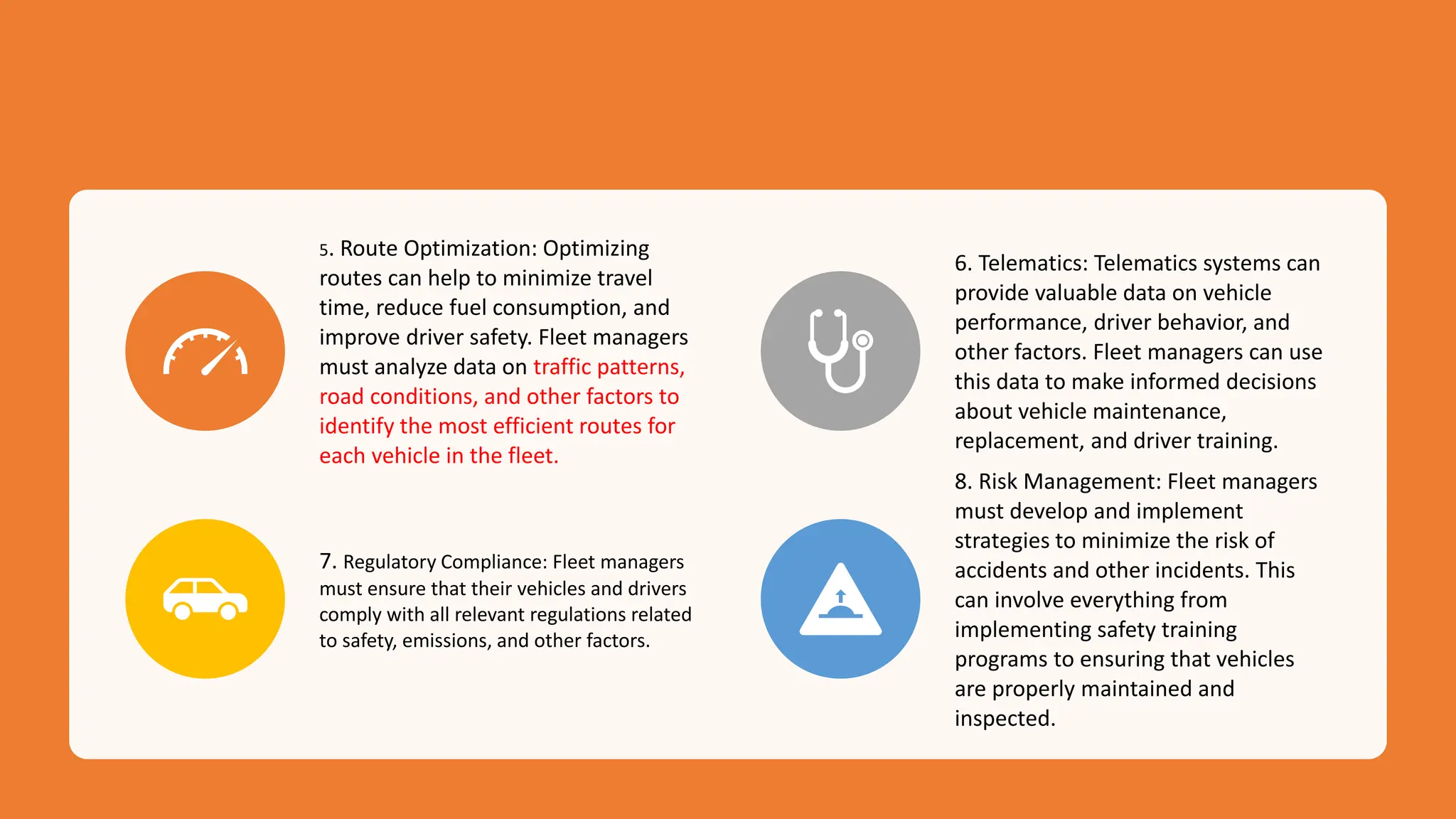
5. Route Optimization: Optimizing
routes can help to minimize travel
time, reduce fuel consumption, and
improve driver safety. Fleet managers
must analyze data on traffic patterns,
road conditions, and other factors to
identify the most efficient routes for
each vehicle in the fleet.
6. Telematics: Telematics systems can
provide valuable data on vehicle
performance, driver behavior, and
other factors. Fleet managers can use
this data to make informed decisions
about vehicle maintenance,
replacement, and driver training.
7. Regulatory Compliance: Fleet managers
must ensure that their vehicles and drivers
comply with all relevant regulations related
to safety, emissions, and other factors.
8. Risk Management: Fleet managers
must develop and implement
strategies to minimize the risk of
accidents and other incidents. This
can involve everything from
implementing safety training
programs to ensuring that vehicles
are properly maintained and
inspected.
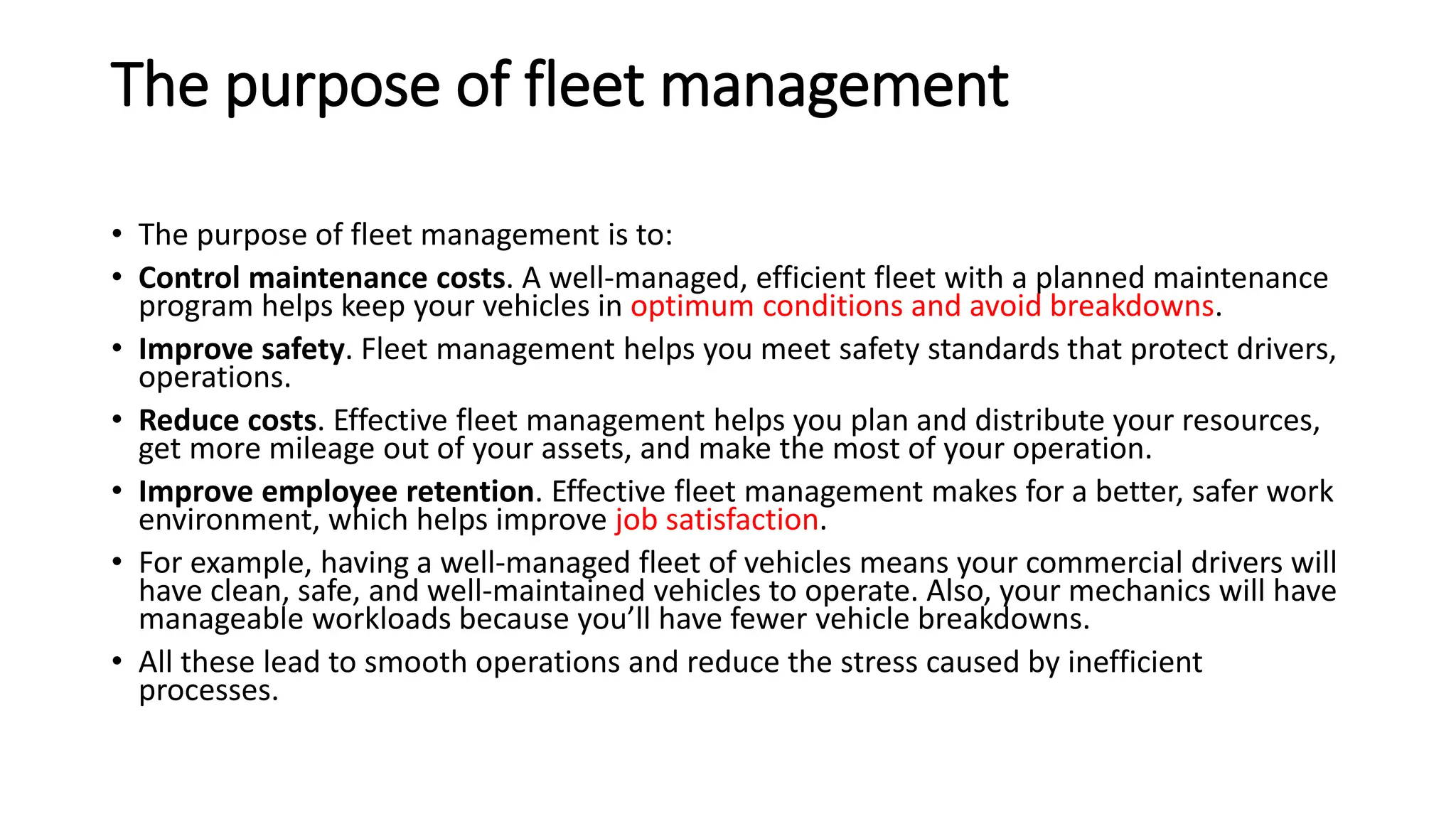
The purpose of fleet management
• The purpose of fleet management is to:
• Control maintenance costs. A well-managed, efficient fleet with a planned maintenance
program helps keep your vehicles in optimum conditions and avoid breakdowns.
• Improve safety. Fleet management helps you meet safety standards that protect drivers,
operations.
• Reduce costs. Effective fleet management helps you plan and distribute your resources,
get more mileage out of your assets, and make the most of your operation.
• Improve employee retention. Effective fleet management makes for a better, safer work
environment, which helps improve job satisfaction.
• For example, having a well-managed fleet of vehicles means your commercial drivers will
have clean, safe, and well-maintained vehicles to operate. Also, your mechanics will have
manageable workloads because you’ll have fewer vehicle breakdowns.
• All these lead to smooth operations and reduce the stress caused by inefficient
processes.
THANKS FOR ATTENTION

Lec1.pdf Transport Fleet Management lecture 1

  • 1.
  • 2.
  • 3.
    Introduction A fleet isa group of motor vehicles owned or leased by a business or government agency. Typical examples are vehicles operated by car rental companies, taxicab companies, trucks, public bus companies, and police departments Fleet management has been an important function for companies since the early 1900s when the first commercial vehicles were introduced. Fleet management has changed completely over the last decade as companies are aware of the impact of efficient fleets on their business operations. Today, in addition to vehicle procurement and maintenance, the fleet management team is responsible for a variety of activities, including driver management, operational efficiency, and environmental sustainability.
  • 4.
    Fleet management concept. • Fleetmanagement is the process of overseeing a company's fleet of vehicles, including cars, trucks, vans, and other types of vehicles. This can include everything from purchasing and maintaining vehicles to managing drivers and scheduling routes. • “Fleet management is an administrative approach that allows companies to organize and coordinate work vehicles with the aim to improve efficiency and reduce costs.”
  • 5.
    the importance offleet management • Effective fleet management is crucial for many businesses, as it can help to reduce costs, increase efficiency, and improve safety. • For example, by optimizing routes and reducing workless time, fleet managers can save fuel and reduce vehicle wear and tear. By implementing safety policies and training programs, fleet managers can reduce the risk of accidents and improve driver performance.
  • 6.
    • There aremany different aspects of fleet management to consider, including vehicle procuration, maintenance and repair, fuel management, driver management, and route optimization. Each of these areas requires careful attention to detail and a deep understanding of the unique needs and challenges of the business.
  • 7.
    In recent years,technology has played an increasingly important role in fleet management. Many companies now use GPS tracking systems and other telematics tools to monitor vehicle performance, track driver behavior, and optimize routes in real time. This has led to significant improvements in efficiency and safety, as well as cost savings for many businesses. Overall, effective fleet management requires a combination of strategic planning, operational excellence, and a deep understanding of the needs and challenges of the business. By implementing best practices and leveraging the latest technologies, fleet managers can help their companies to operate more efficiently, reduce costs, and improve safety.
  • 8.
    1. Vehicle Trackingand Maintenance: UPS, a global package delivery company, uses a vehicle tracking system to monitor the location and performance of their delivery trucks. The system also provides alerts for vehicle maintenance, such as oil changes and tire rotations. By using this system, UPS has been able to reduce fuel consumption, increase vehicle uptime, and improve their delivery times. 2. Driver Training and Safety: Nestle, a global food and beverage company, implemented a driver training program to improve the safety of their fleet. The program included defensive driving techniques, vehicle inspection procedures, and online training modules. By implementing this program, Nestle was able to reduce accidents, lower insurance costs, and improve overall driver performance. 3. Route Optimization: Domino's Pizza, a global pizza restaurant chain, uses route optimization software to plan their delivery routes more efficiently. The software takes into account factors such as traffic, delivery time windows, and vehicle capacity. By using this software, Domino's was able to reduce delivery times, improve customer satisfaction, and reduce fuel costs. 4. Fuel Management: PepsiCo, a global food and beverage company, implemented a fuel management system to track fuel usage and identify areas for improvement. The system provides real-time data on fuel consumption, fuel efficiency, and fuel costs. By using this system, PepsiCo was able to reduce fuel costs, improve fuel efficiency, and reduce their carbon footprint. 5. Fleet Maintenance: FedEx, a global courier delivery services company, implemented a fleet maintenance program to keep their vehicles in good condition. The program includes regular maintenance checks, such as oil changes, tire rotations, and brake inspections. By implementing this program, FedEx was able to reduce vehicle downtime, increase vehicle lifespan, and improve overall fleet performance. CASES ON THE FLEET MANAGEMENT
  • 9.
    FLEET MANAGER ROLE 1.Vehicle Acquisition: This involves the purchase or lease of vehicles to meet the needs of the business. Fleet managers must consider factors such as vehicle type, fuel efficiency, safety features, and cost when selecting vehicles for the fleet. 2. Maintenance and Repair: Proper maintenance and repair of vehicles is essential to ensure their safe and efficient operation. Fleet managers must develop and implement maintenance schedules, work with maintenance staff to ensure that repairs are made promptly, and track vehicle maintenance records. 3. Fuel Management: Fuel costs can be a significant expense for fleet operations, and fleet managers must develop strategies to minimize fuel consumption and costs. This can involve monitoring fuel consumption, managing fuel purchases, and implementing fuel-efficient driving practices. 4. Driver Management: Fleet managers must ensure that drivers are properly trained, licensed, and qualified to operate the vehicles in the fleet. They must also monitor driver behavior, enforce safety policies, and provide feedback and training as needed to improve driver performance.
  • 10.
    5. Route Optimization:Optimizing routes can help to minimize travel time, reduce fuel consumption, and improve driver safety. Fleet managers must analyze data on traffic patterns, road conditions, and other factors to identify the most efficient routes for each vehicle in the fleet. 6. Telematics: Telematics systems can provide valuable data on vehicle performance, driver behavior, and other factors. Fleet managers can use this data to make informed decisions about vehicle maintenance, replacement, and driver training. 7. Regulatory Compliance: Fleet managers must ensure that their vehicles and drivers comply with all relevant regulations related to safety, emissions, and other factors. 8. Risk Management: Fleet managers must develop and implement strategies to minimize the risk of accidents and other incidents. This can involve everything from implementing safety training programs to ensuring that vehicles are properly maintained and inspected.
  • 11.
    The purpose offleet management • The purpose of fleet management is to: • Control maintenance costs. A well-managed, efficient fleet with a planned maintenance program helps keep your vehicles in optimum conditions and avoid breakdowns. • Improve safety. Fleet management helps you meet safety standards that protect drivers, operations. • Reduce costs. Effective fleet management helps you plan and distribute your resources, get more mileage out of your assets, and make the most of your operation. • Improve employee retention. Effective fleet management makes for a better, safer work environment, which helps improve job satisfaction. • For example, having a well-managed fleet of vehicles means your commercial drivers will have clean, safe, and well-maintained vehicles to operate. Also, your mechanics will have manageable workloads because you’ll have fewer vehicle breakdowns. • All these lead to smooth operations and reduce the stress caused by inefficient processes.
  • 12.