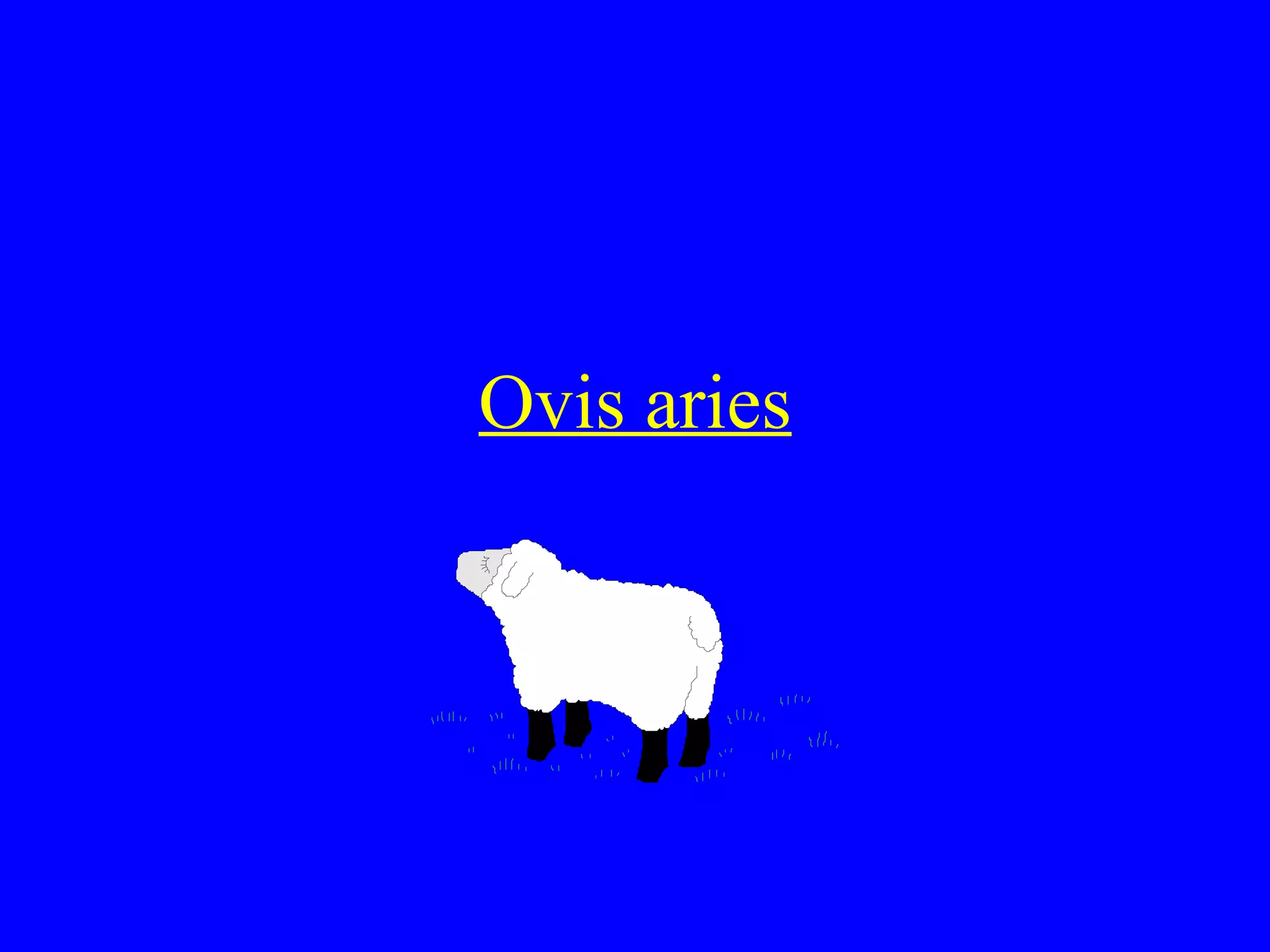
Ovis aries
General Information
•   Ovine
•   Male = ram
•   Female = ewe
•   Young = lamb
•   Castrated male = wether
•   Act of giving birth = lambing
Anatomy
• Ruminant             • Polled or horned

• Dental pad           • Acute sense of smell
                         and hearing
• Even-toed ungulate
                       • Wool producer
Statistics
• Average Temperature 101 – 103 F
• Heart rate 70 – 80 bpm
• Respiration 12 – 20
Breeding
•   Seasonally polyestrus
•   Gestation 150 days
•   Puberty 8 months
•   Birth care: Doc tails,
    dip umbilical cord
Behavior
•   Not smart!
•   Creatures of habit
•   Panic Easily
•   Flocking instinct
•   Like quiet
•   Not generally aggressive
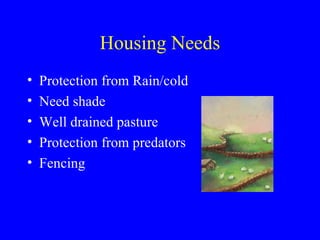
Housing Needs
•   Protection from Rain/cold
•   Need shade
•   Well drained pasture
•   Protection from predators
•   Fencing
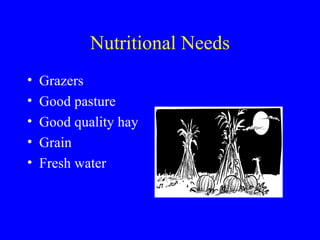
Nutritional Needs
•   Grazers
•   Good pasture
•   Good quality hay
•   Grain
•   Fresh water
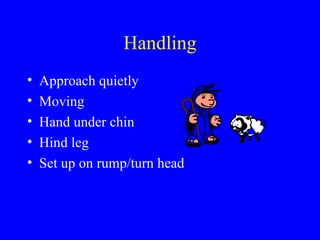
Handling
•   Approach quietly
•   Moving
•   Hand under chin
•   Hind leg
•   Set up on rump/turn head
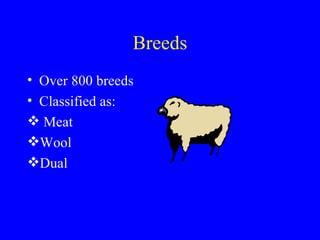
Breeds
• Over 800 breeds
• Classified as:
 Meat
Wool
Dual
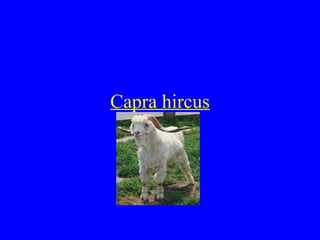
Capra hircus
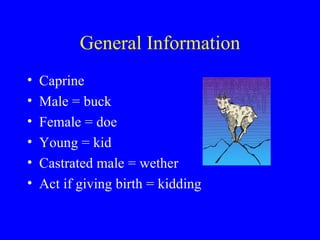
General Information
•   Caprine
•   Male = buck
•   Female = doe
•   Young = kid
•   Castrated male = wether
•   Act if giving birth = kidding
Stastics
• Temperature 101 – 104 F
• Heart rate 80 – 120 kids
             70 – 80 Adults
• Respiration 12 – 20
• Rumen contractions 1 – 3/ min
Anatomy
• Ruminant             • Horned or polled

• Even-toed ungulate   • Scent glands in males

• Dental Pad
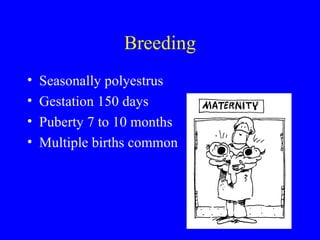
Breeding
•   Seasonally polyestrus
•   Gestation 150 days
•   Puberty 7 to 10 months
•   Multiple births common
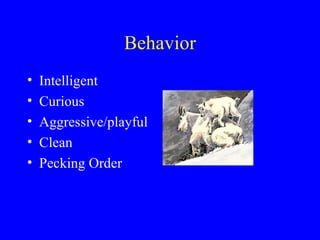
Behavior
•   Intelligent
•   Curious
•   Aggressive/playful
•   Clean
•   Pecking Order
Housing & Nutrition
•   Similar to Sheep
•   Browsers
•   Hate to Get Wet
•   Fresh water
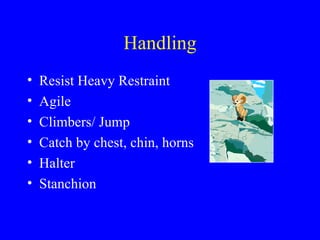
Handling
•   Resist Heavy Restraint
•   Agile
•   Climbers/ Jump
•   Catch by chest, chin, horns
•   Halter
•   Stanchion
Breeds
•   Over 40
•   Dairy
•   Meat
•   Pack
•   Pets/companions
Health Concerns
           Sheep and Goats
• Bloat: Serious buildup of gas in digestive
  tract. Frothy bloat or dry bloat
• Enterotoxemia: (overeaters disease)
  Symptoms: Diarrhea, circling, convulsions
  and sudden death. Vaccine available
• Foot rot: Fungus. Lameness usually first
  sign. NUMBER 1 problem with sheep
• CAE (goats) Caprine Arthritis Encephalitis
  Virus transmitted through mother’s milk.
  No treatment or vaccine
• Pneumonia (especially in sheep) Caused by
  several bacteria or viruses. Symptoms – off
  feed, fever, death!
Tetanus
Caused by organism in soil (Clostridium
  tetani)
Grows in absence of 02. Puncture wound
Signs: Stiffness in hind end, unable to
  swallow, bloat
80% fatal
Mange
•   Lice burrowing under skin
•   Highly contagious
•   Reportable disease, includes quarantine
•   High economic losses
Scours
• Usually a problem in lambs 1 to 3 weeks of
  age – especially if bottle fed.
• Milk irritating to intestines – too much
  cause rawness of lining leading to diarrhea
Worms
• Big problem with sheep because of grazing
  habits.
• Worm with broad spectrum wormer
  minimum of twice a year.

Lec 25 Small Ruminants

  • 1.
  • 2.
    General Information • Ovine • Male = ram • Female = ewe • Young = lamb • Castrated male = wether • Act of giving birth = lambing
  • 3.
    Anatomy • Ruminant • Polled or horned • Dental pad • Acute sense of smell and hearing • Even-toed ungulate • Wool producer
  • 4.
    Statistics • Average Temperature101 – 103 F • Heart rate 70 – 80 bpm • Respiration 12 – 20
  • 5.
    Breeding • Seasonally polyestrus • Gestation 150 days • Puberty 8 months • Birth care: Doc tails, dip umbilical cord
  • 6.
    Behavior • Not smart! • Creatures of habit • Panic Easily • Flocking instinct • Like quiet • Not generally aggressive
  • 7.
    Housing Needs • Protection from Rain/cold • Need shade • Well drained pasture • Protection from predators • Fencing
  • 8.
    Nutritional Needs • Grazers • Good pasture • Good quality hay • Grain • Fresh water
  • 9.
    Handling • Approach quietly • Moving • Hand under chin • Hind leg • Set up on rump/turn head
  • 10.
    Breeds • Over 800breeds • Classified as:  Meat Wool Dual
  • 11.
  • 12.
    General Information • Caprine • Male = buck • Female = doe • Young = kid • Castrated male = wether • Act if giving birth = kidding
  • 13.
    Stastics • Temperature 101– 104 F • Heart rate 80 – 120 kids 70 – 80 Adults • Respiration 12 – 20 • Rumen contractions 1 – 3/ min
  • 14.
    Anatomy • Ruminant • Horned or polled • Even-toed ungulate • Scent glands in males • Dental Pad
  • 15.
    Breeding • Seasonally polyestrus • Gestation 150 days • Puberty 7 to 10 months • Multiple births common
  • 16.
    Behavior • Intelligent • Curious • Aggressive/playful • Clean • Pecking Order
  • 17.
    Housing & Nutrition • Similar to Sheep • Browsers • Hate to Get Wet • Fresh water
  • 18.
    Handling • Resist Heavy Restraint • Agile • Climbers/ Jump • Catch by chest, chin, horns • Halter • Stanchion
  • 19.
    Breeds • Over 40 • Dairy • Meat • Pack • Pets/companions
  • 20.
    Health Concerns Sheep and Goats • Bloat: Serious buildup of gas in digestive tract. Frothy bloat or dry bloat • Enterotoxemia: (overeaters disease) Symptoms: Diarrhea, circling, convulsions and sudden death. Vaccine available • Foot rot: Fungus. Lameness usually first sign. NUMBER 1 problem with sheep
  • 21.
    • CAE (goats)Caprine Arthritis Encephalitis Virus transmitted through mother’s milk. No treatment or vaccine • Pneumonia (especially in sheep) Caused by several bacteria or viruses. Symptoms – off feed, fever, death!
  • 22.
    Tetanus Caused by organismin soil (Clostridium tetani) Grows in absence of 02. Puncture wound Signs: Stiffness in hind end, unable to swallow, bloat 80% fatal
  • 23.
    Mange • Lice burrowing under skin • Highly contagious • Reportable disease, includes quarantine • High economic losses
  • 24.
    Scours • Usually aproblem in lambs 1 to 3 weeks of age – especially if bottle fed. • Milk irritating to intestines – too much cause rawness of lining leading to diarrhea
  • 25.
    Worms • Big problemwith sheep because of grazing habits. • Worm with broad spectrum wormer minimum of twice a year.