Learnings from the CPWF for WLE
Tapping into Research for Development Impact
28 – 29th October, 2014
Rome.
Synopsis of CPWF
Overall Goal of the Program:
• Raising water productivity and improving
food security while helping alleviate poverty,
improve health, and attain environmental
security.
Investment and External Review
• The total value of the investment was more
than 80 million USD.
• As part of the CPWF transition into WLE an
external review (November 2013-March
2014) was commissioned.
• To assess CPWF achievements and lessons
that might be of value to CRPs.
• Broadly endorsed CPWF’s R4D approach
and underscored the value of its
implementation strategy.
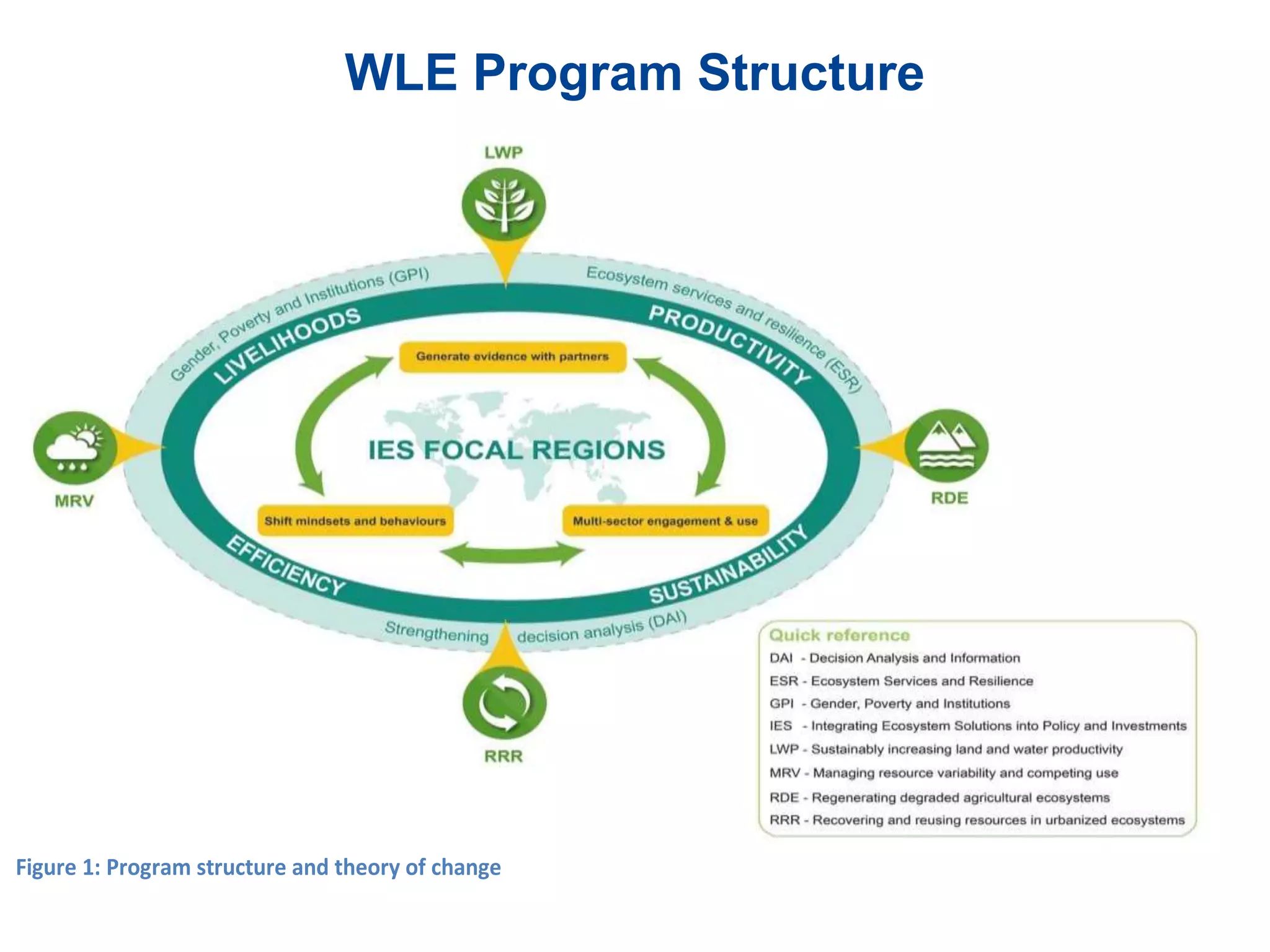
WLE Program Structure
decision-making tools to assess the power and benefits that women and marginalized groups receive
from natural resource management. Finally, the flagships integrate around WLE’s core concepts of
sustainable intensification: livelihoods, productivity, efficiency and sustainability.
Figure 1: Program structure and theory of change
Synopsis of CPWF
Learnings from the CPWF
1. Build on CPWF’s progressive, learning-
driven development of R4D.
Initiation of the IES flagship in its centrality
within WLE.
2. Build on CPWF sunk investment in
people, capacities and networks in the
basins to strengthen the enabling
environment for impact.
Retained four of the basins that CPWF
operated in within the Focal Regions of
WLE.
Same management and coordination
structures, open and competitive calls etc.
Synopsis of CPWF
Learnings from the CPWF
3. Invest in CPWF activities that have the
potential to go to scale.
WLE acknowledges significant opportunities
to take promising outputs from the CPWF
portfolio and other non-CPWF initiatives and
turning them into outcomes and impacts,
with only limited investment. This is being
assessed under extremely trying financial
circumstances.
4. Re-instatement of development-oriented
topic working groups.
This is being considered under the Focal
Regions.
Synopsis of CPWF
Learnings from the CPWF
5. Plan for impact at scale during the life of
the program.
Generating evidence with partners - WLE
carries research out with partners
(international research agencies, national
agencies, and even end users and next
users) to make sure results are owned by
them.
Builds on the networks and partnerships of
CPWF and creates new and innovative
partnerships to take to scale i.e. IWMI/TATA.
6. Invest in CPWF’s unfinished messages.

Learnings from CPWF for WLE

  • 1.
    Learnings from theCPWF for WLE Tapping into Research for Development Impact 28 – 29th October, 2014 Rome.
  • 2.
    Synopsis of CPWF OverallGoal of the Program: • Raising water productivity and improving food security while helping alleviate poverty, improve health, and attain environmental security. Investment and External Review • The total value of the investment was more than 80 million USD. • As part of the CPWF transition into WLE an external review (November 2013-March 2014) was commissioned. • To assess CPWF achievements and lessons that might be of value to CRPs. • Broadly endorsed CPWF’s R4D approach and underscored the value of its implementation strategy.
  • 3.
    WLE Program Structure decision-makingtools to assess the power and benefits that women and marginalized groups receive from natural resource management. Finally, the flagships integrate around WLE’s core concepts of sustainable intensification: livelihoods, productivity, efficiency and sustainability. Figure 1: Program structure and theory of change
  • 4.
    Synopsis of CPWF Learningsfrom the CPWF 1. Build on CPWF’s progressive, learning- driven development of R4D. Initiation of the IES flagship in its centrality within WLE. 2. Build on CPWF sunk investment in people, capacities and networks in the basins to strengthen the enabling environment for impact. Retained four of the basins that CPWF operated in within the Focal Regions of WLE. Same management and coordination structures, open and competitive calls etc.
  • 5.
    Synopsis of CPWF Learningsfrom the CPWF 3. Invest in CPWF activities that have the potential to go to scale. WLE acknowledges significant opportunities to take promising outputs from the CPWF portfolio and other non-CPWF initiatives and turning them into outcomes and impacts, with only limited investment. This is being assessed under extremely trying financial circumstances. 4. Re-instatement of development-oriented topic working groups. This is being considered under the Focal Regions.
  • 6.
    Synopsis of CPWF Learningsfrom the CPWF 5. Plan for impact at scale during the life of the program. Generating evidence with partners - WLE carries research out with partners (international research agencies, national agencies, and even end users and next users) to make sure results are owned by them. Builds on the networks and partnerships of CPWF and creates new and innovative partnerships to take to scale i.e. IWMI/TATA. 6. Invest in CPWF’s unfinished messages.