Learning to Speak in
Wikipedia’s Language
      Public Relations
 and The Free Encyclopedia
[market research]
Who am I?
Jake Orlowitz
Volunteer editor
Ocaasi on Wikipedia
3 years
20,000 edits
15 articles created with over 150,000 views
Monitor Group, Occidental Petroleum, US Gov.
The Wikipedia Adventure
Plain and simple conflict of interest guide
Wikipedia is a massive and increasingly influential
global presence: PR professionals should be aware of it
and view it as a critical medium in their communication
portfolio.
Wikipedia is a massive and increasingly influential
global presence: PR professionals should be aware of it
and view it as a critical medium in their communication
portfolio.

The historical conflict between PR and Wikipedia can
be resolved with a proper understanding of the two
cultures’ roles and processes.
Wikipedia is a massive and increasingly influential
global presence: PR professionals should be aware of it
and view it as a critical medium in their communication
portfolio.

The historical conflict between PR and Wikipedia can
be resolved with a proper understanding of the two
cultures’ roles and processes.

PR professionals can save themselves countless hours
of frustration by learning the best practices for editing.
Imagine a world in which every
single person on the planet is given
free access to the sum of all human
             knowledge.
Wikipedia is important.
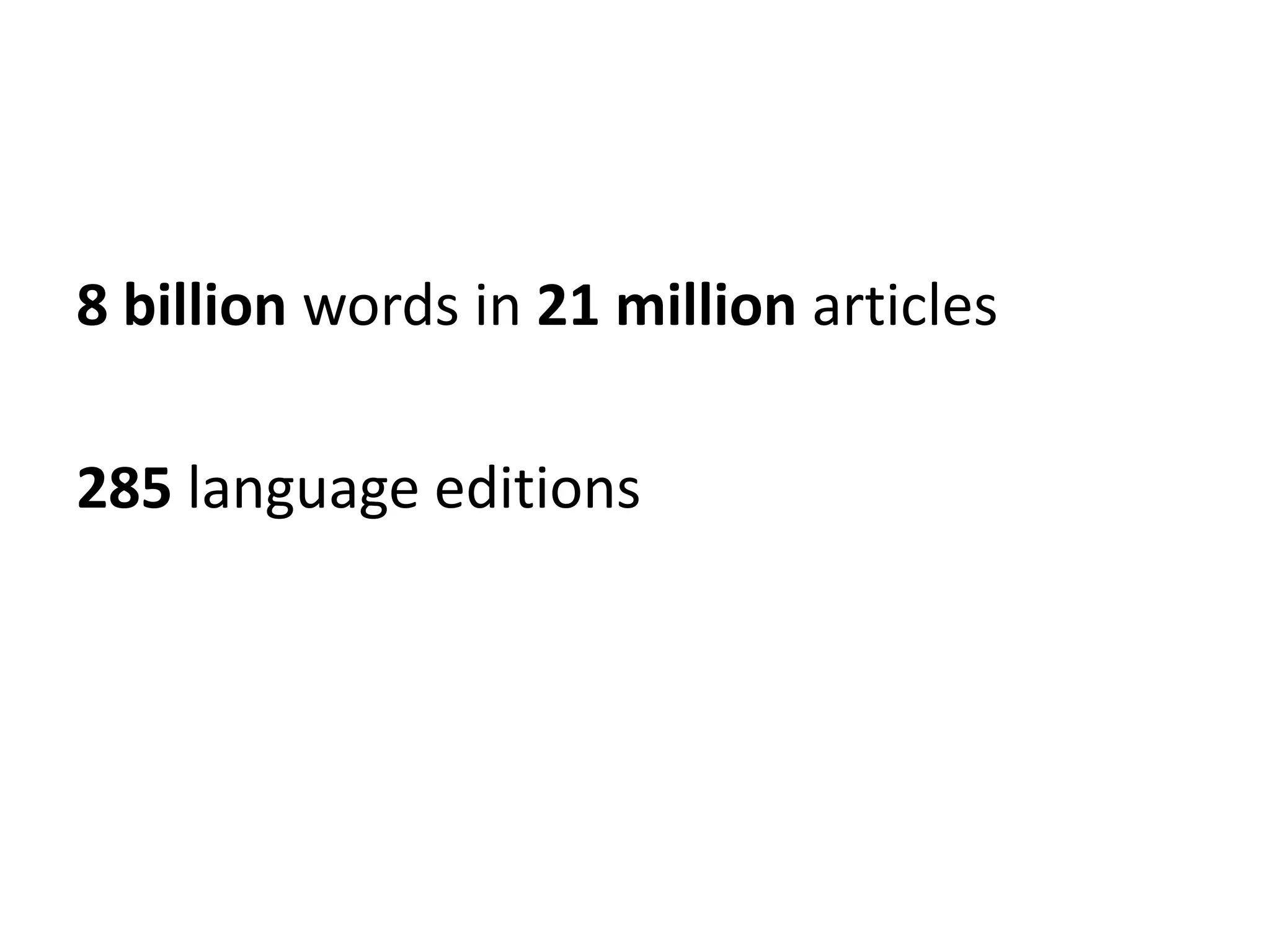
8 billion words in 21 million articles

285 language editions
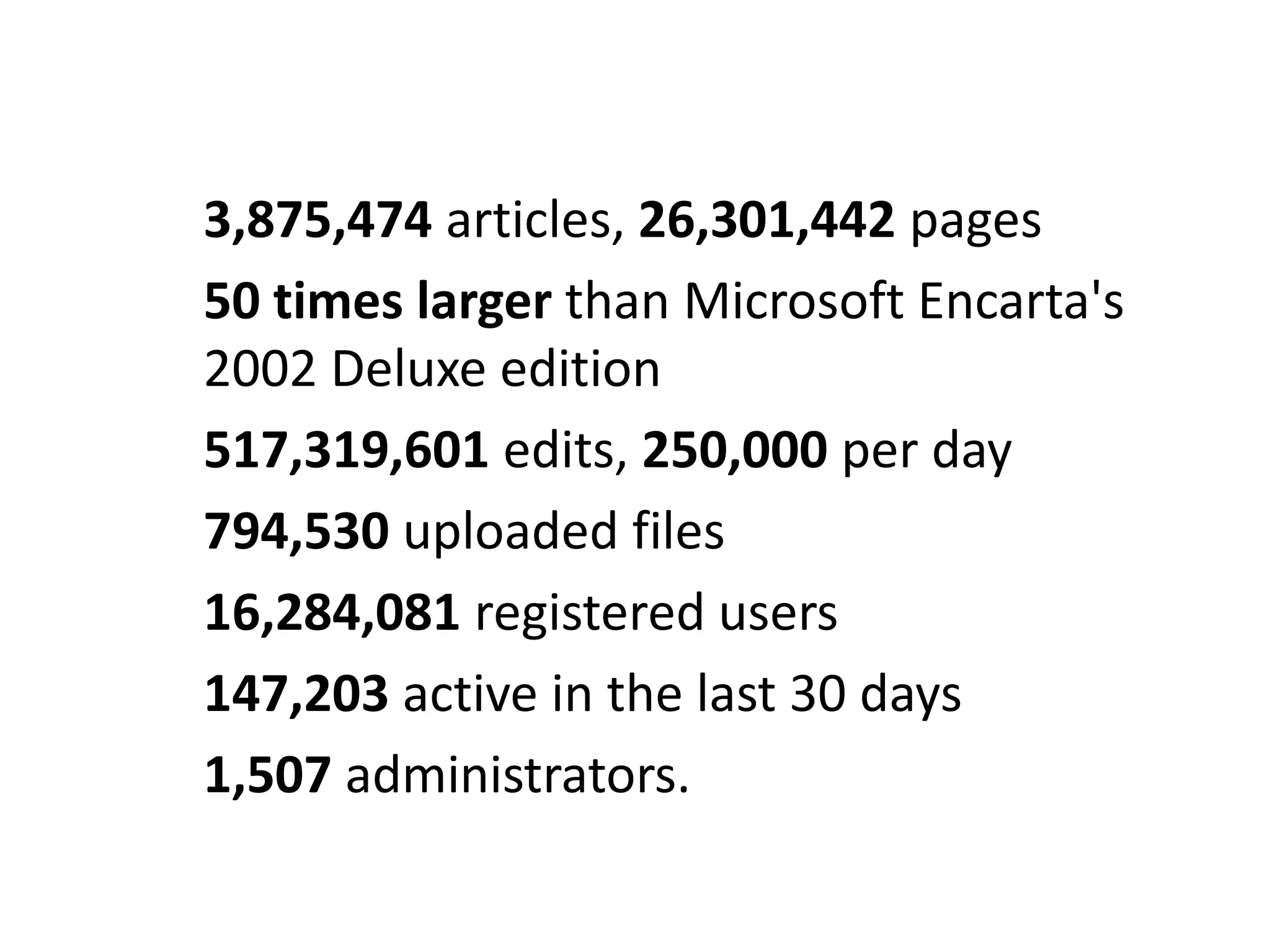
3,875,474 articles, 26,301,442 pages
50 times larger than Microsoft Encarta's
2002 Deluxe edition
517,319,601 edits, 250,000 per day
794,530 uploaded files
16,284,081 registered users
147,203 active in the last 30 days
1,507 administrators.
Why you should care.
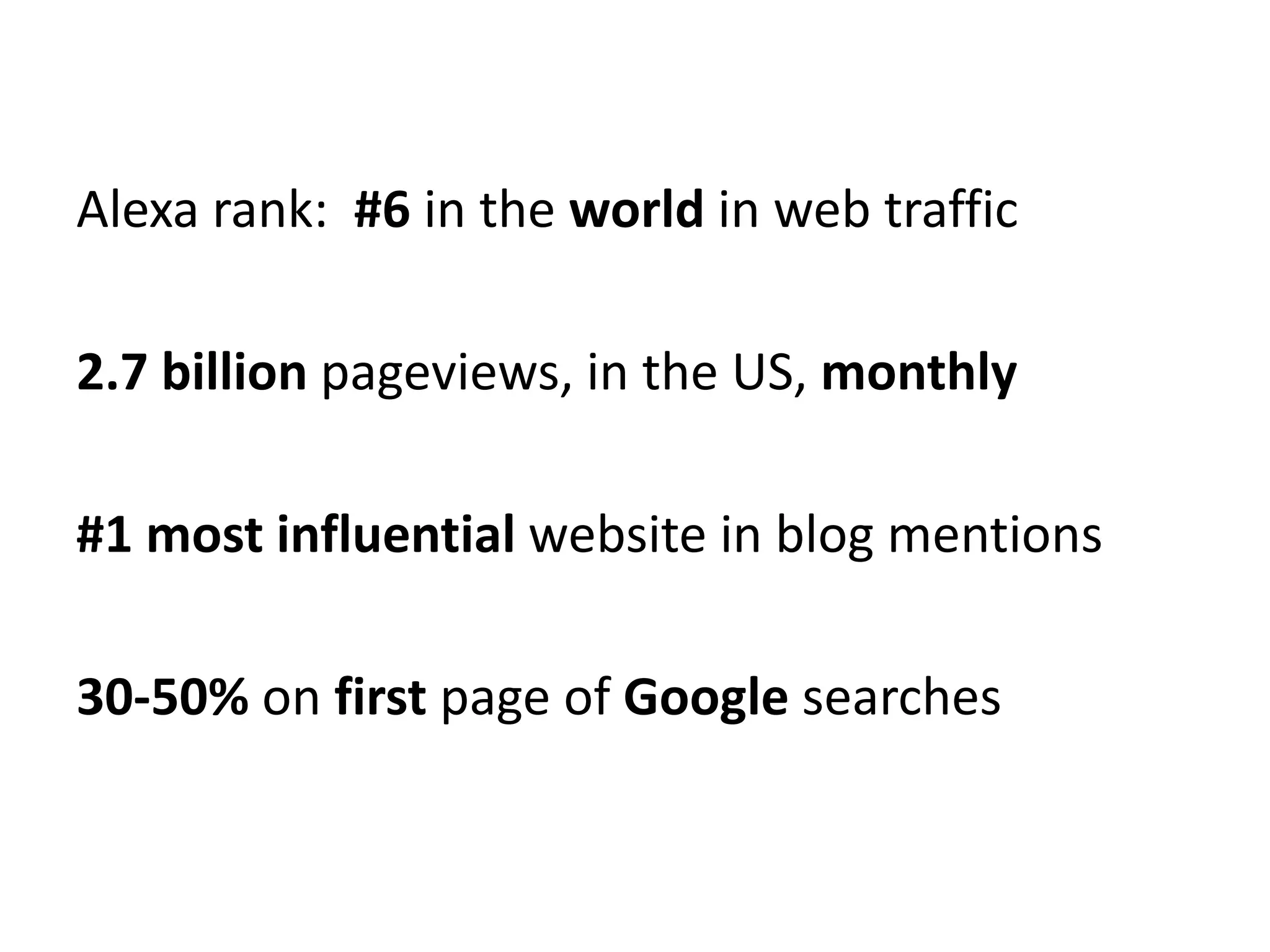
Alexa rank: #6 in the world in web traffic

2.7 billion pageviews, in the US, monthly

#1 most influential website in blog mentions

30-50% on first page of Google searches
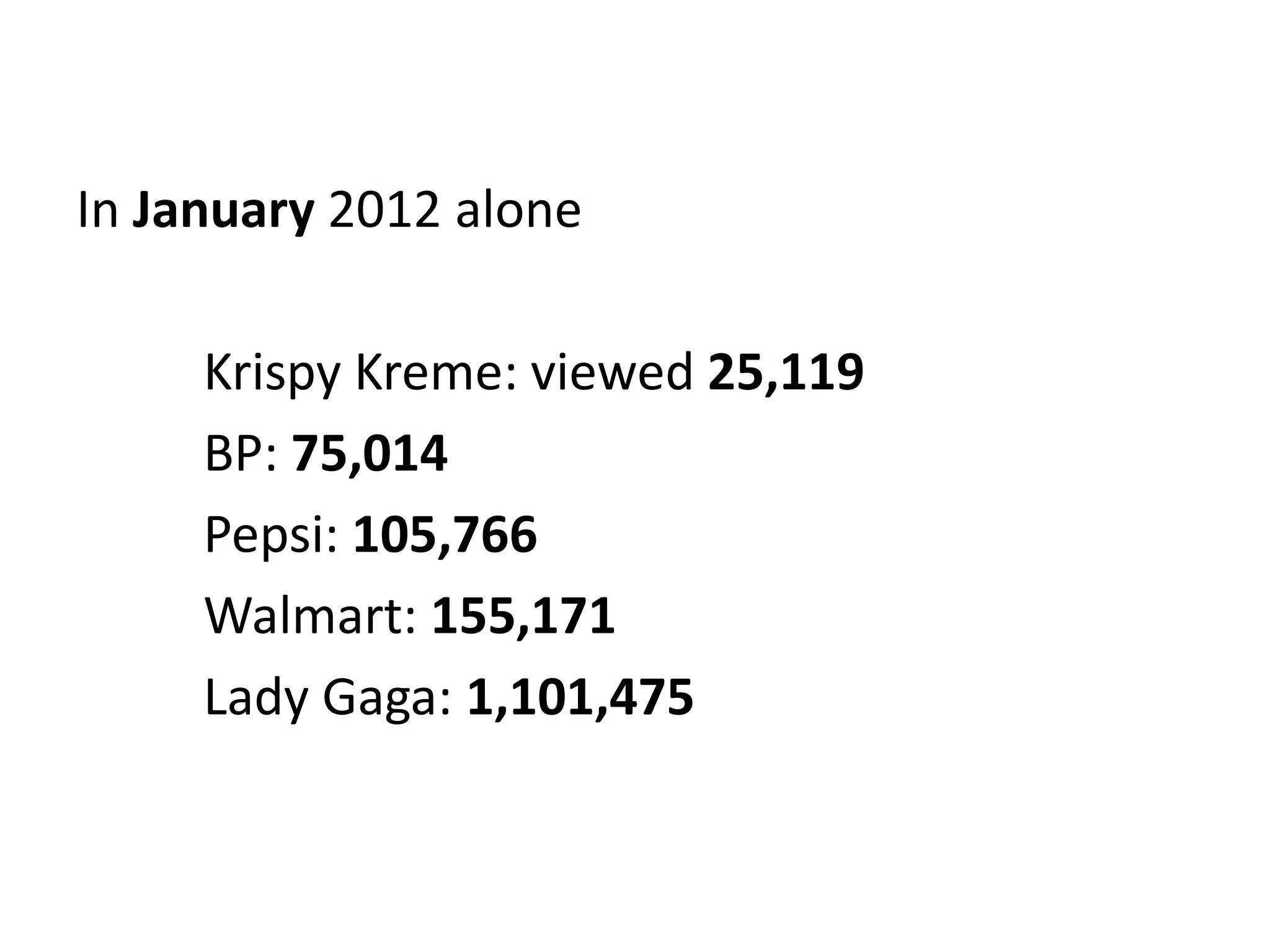
In January 2012 alone

     Krispy Kreme: viewed 25,119
     BP: 75,014
     Pepsi: 105,766
     Walmart: 155,171
     Lady Gaga: 1,101,475
What if these were one of your
           clients?
Wikipedia is trusted.
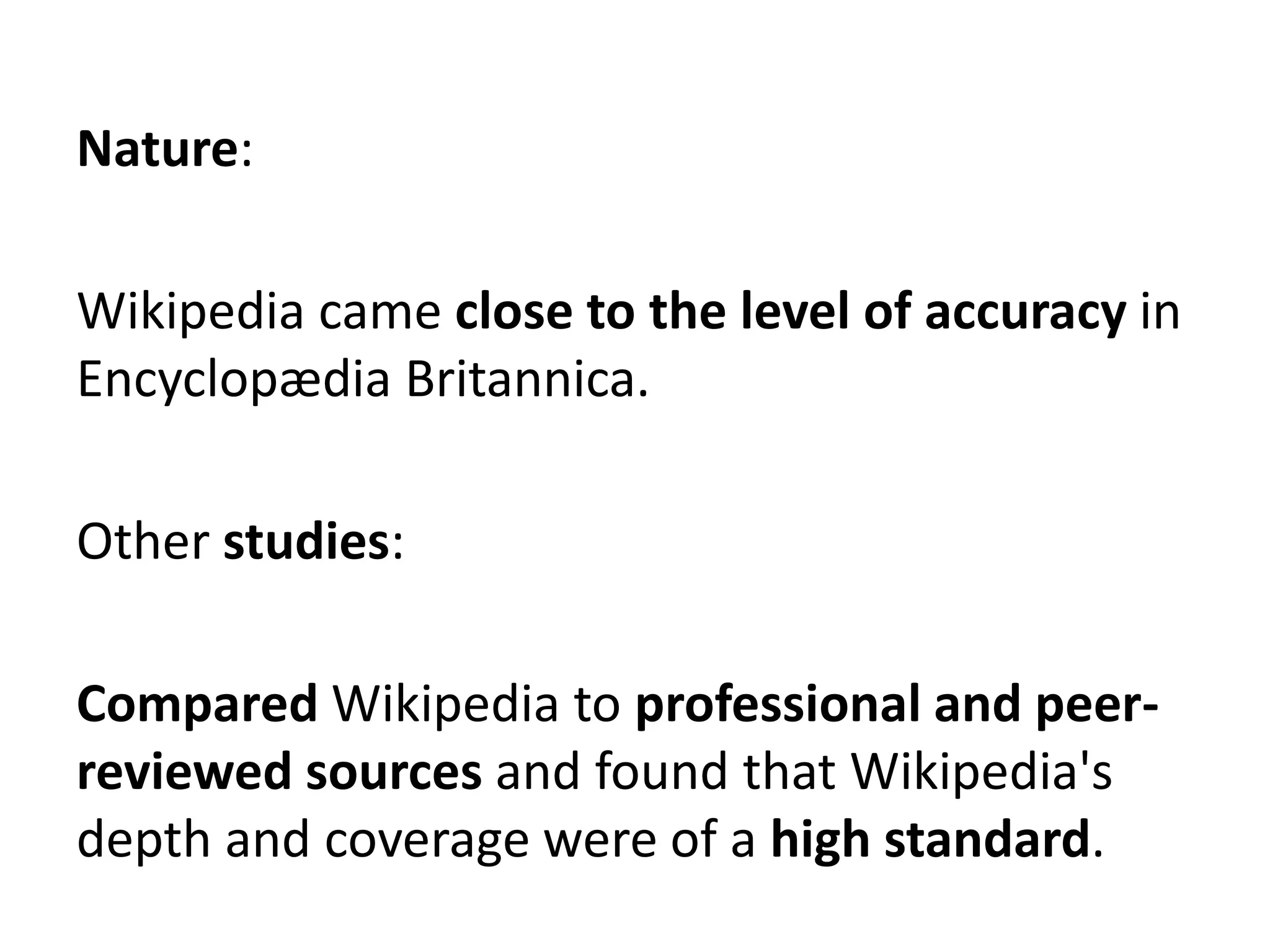
Nature:

Wikipedia came close to the level of accuracy in
Encyclopædia Britannica.

Other studies:

Compared Wikipedia to professional and peer-
reviewed sources and found that Wikipedia's
depth and coverage were of a high standard.
How Wikipedia works.
“I say that our revolution is like Wikipedia.

     Everyone is contributing content.

       small pieces, bits and pieces.

We drew this whole picture of a revolution

    no one is the hero in that picture."

--Wael Ghonim, in 2011 on the overthrow of
                 Mubarak
“The problem with Wikipedia is that
     it only works in practice.

   In theory, it can never work.”
What Wikipedia is.
The free encyclopedia that anyone
can edit, whose mission is to
summarize published reliable
sources.
What Wikipedia is not.
a dictionary
a publisher of original thought
a soapbox or means of promotion
a mirror
a blog or social network
a directory
a manual
a crystal ball
a newspaper
an indiscriminate collection
censored
The Wikipedia community.
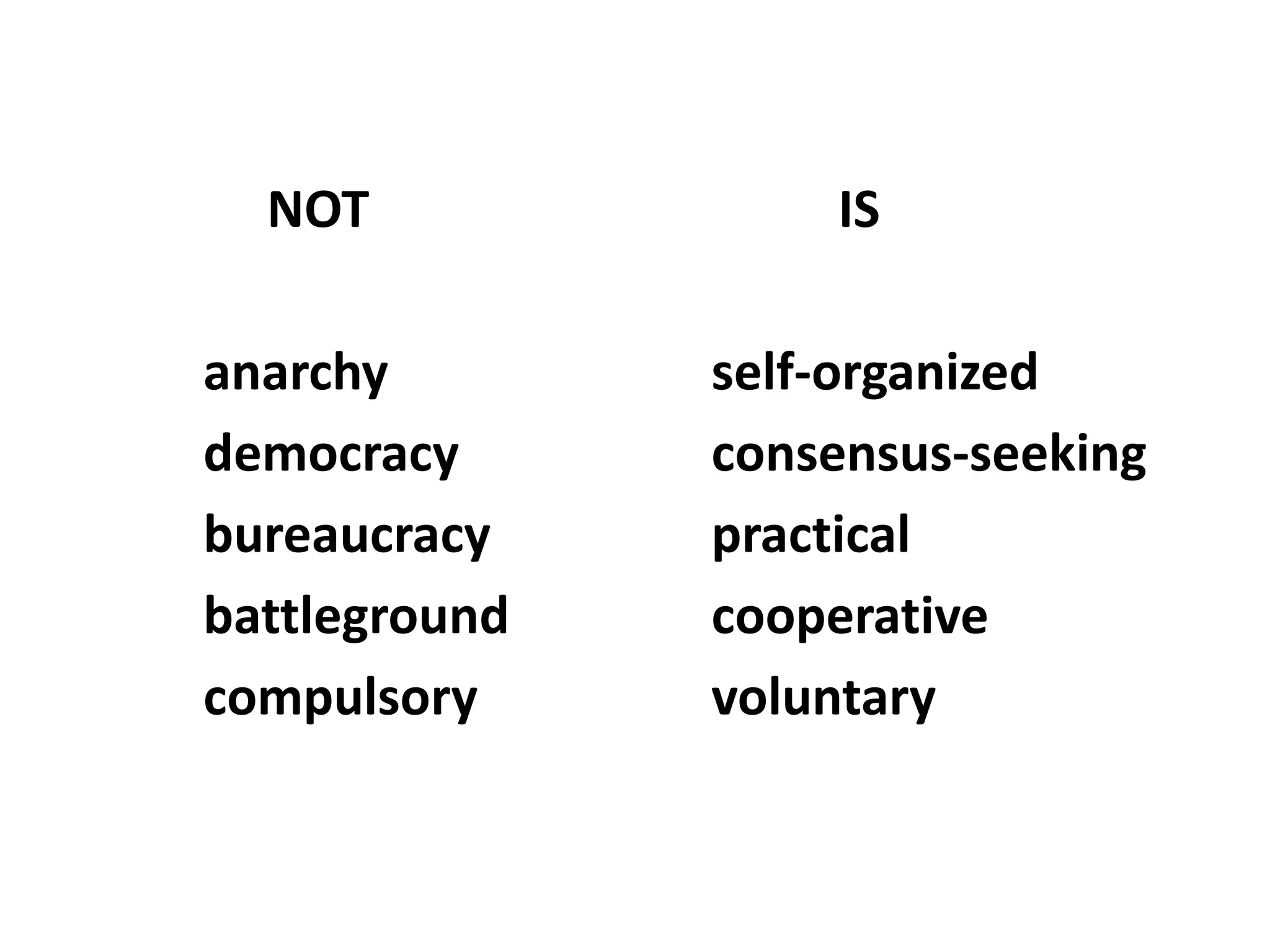
NOT              IS

anarchy        self-organized
democracy      consensus-seeking
bureaucracy    practical
battleground   cooperative
compulsory     voluntary
The Core Policies.
Neutral Point of View
      (NPOV)
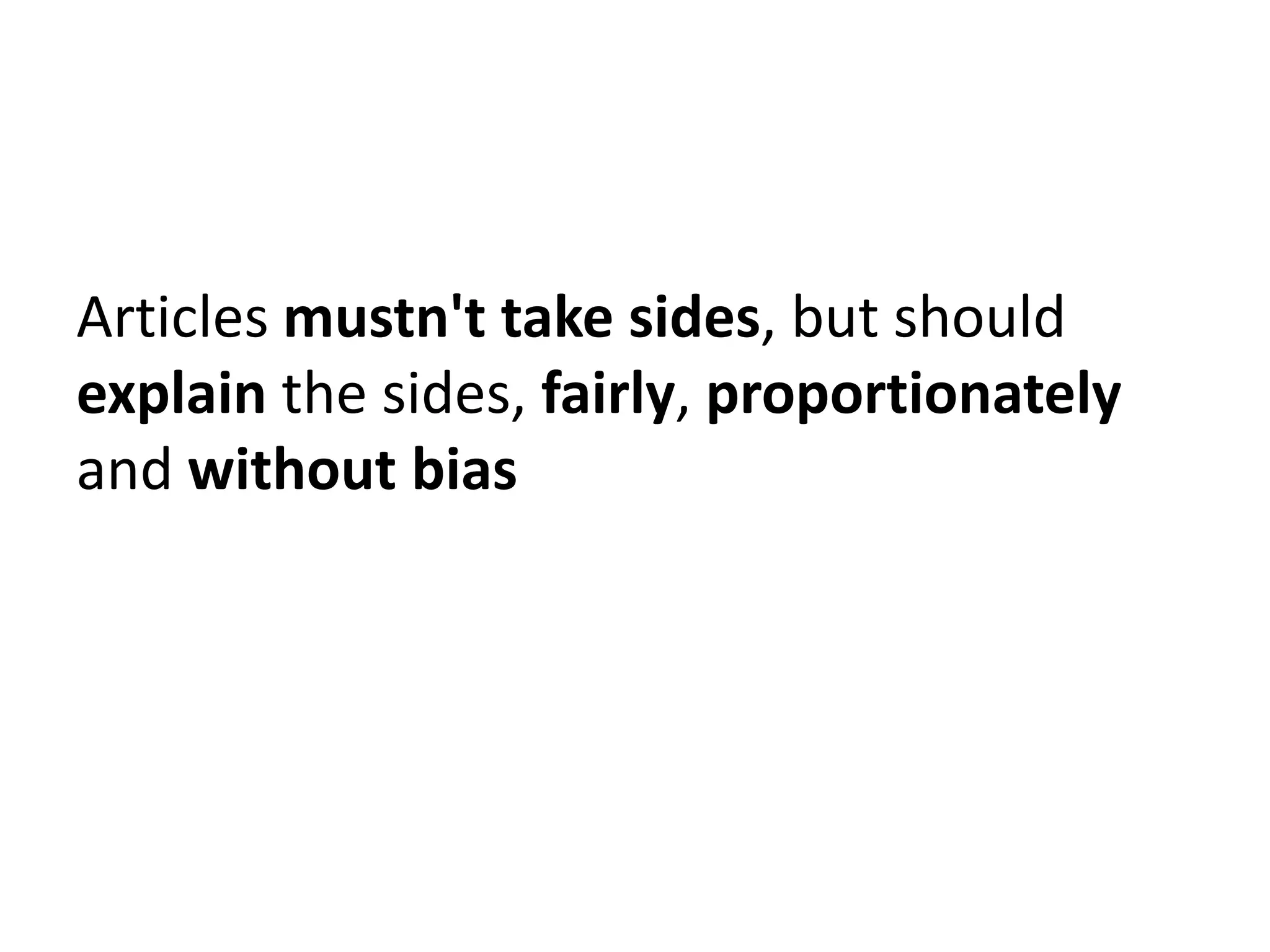
Articles mustn't take sides, but should
explain the sides, fairly, proportionately
and without bias
Verifiability
    (V)
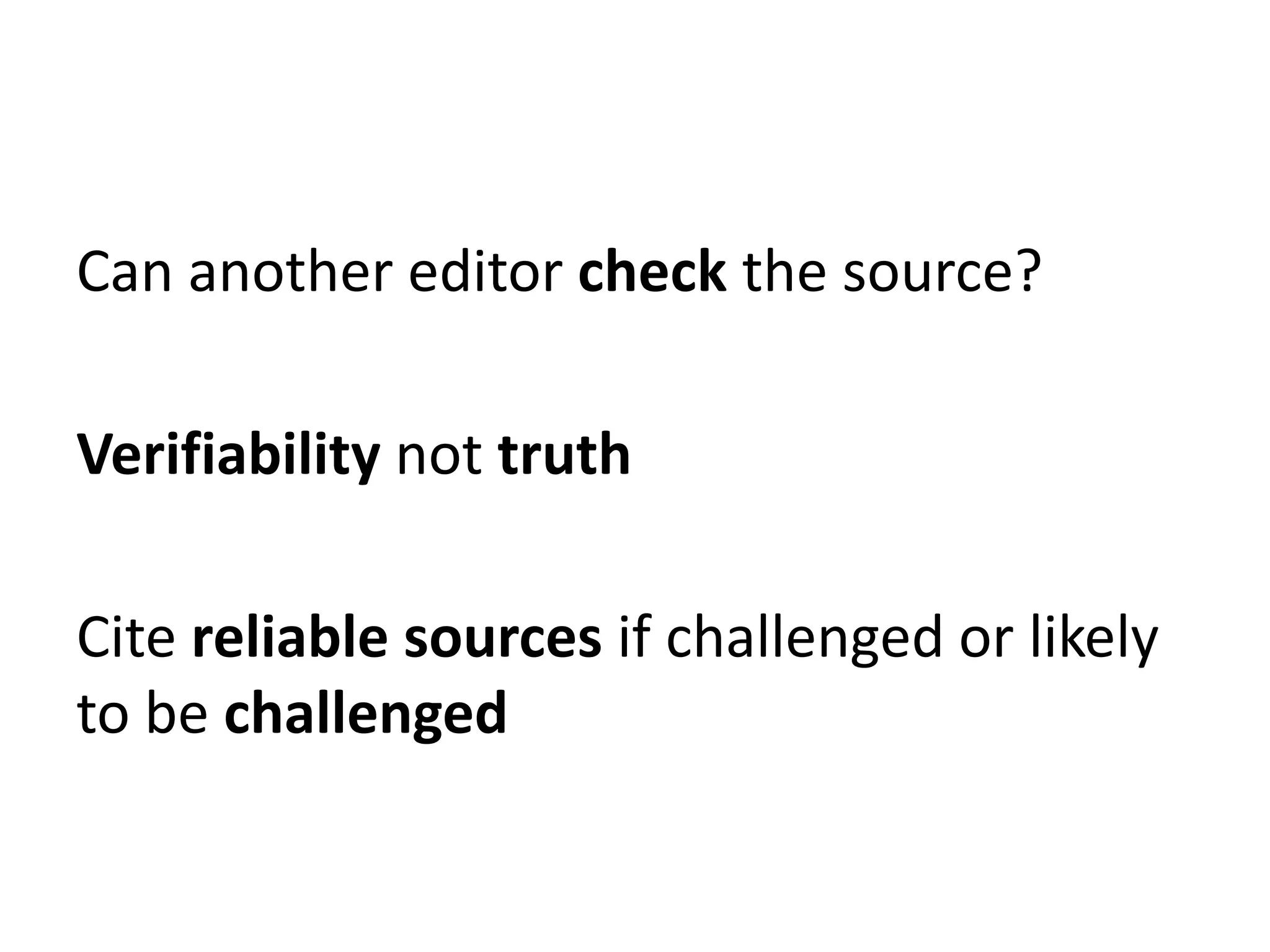
Can another editor check the source?

Verifiability not truth

Cite reliable sources if challenged or likely
to be challenged
Original Research
      (OR)
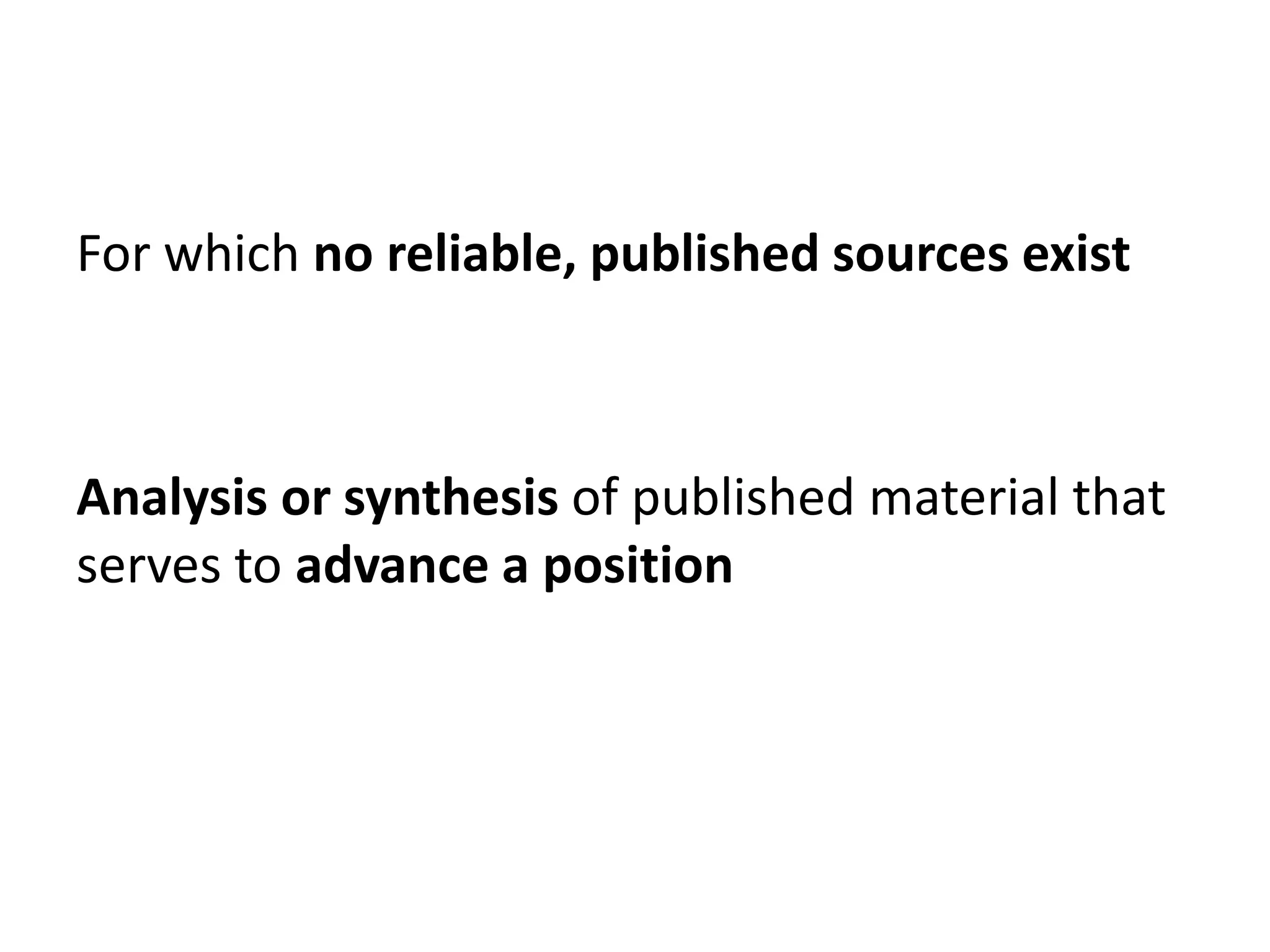
For which no reliable, published sources exist


Analysis or synthesis of published material that
serves to advance a position
Civility
(CIVIL)
Consideration and respect

Focus on improving the encyclopedia

Behave politely, calmly and reasonably

Do not ignore the positions of others
What is Public Relations?
“Public relations is a strategic
communication process that builds
 mutually beneficial relationships
 between organizations and their
             publics.”

        --PRSA definition
What does ethical public relations entail?
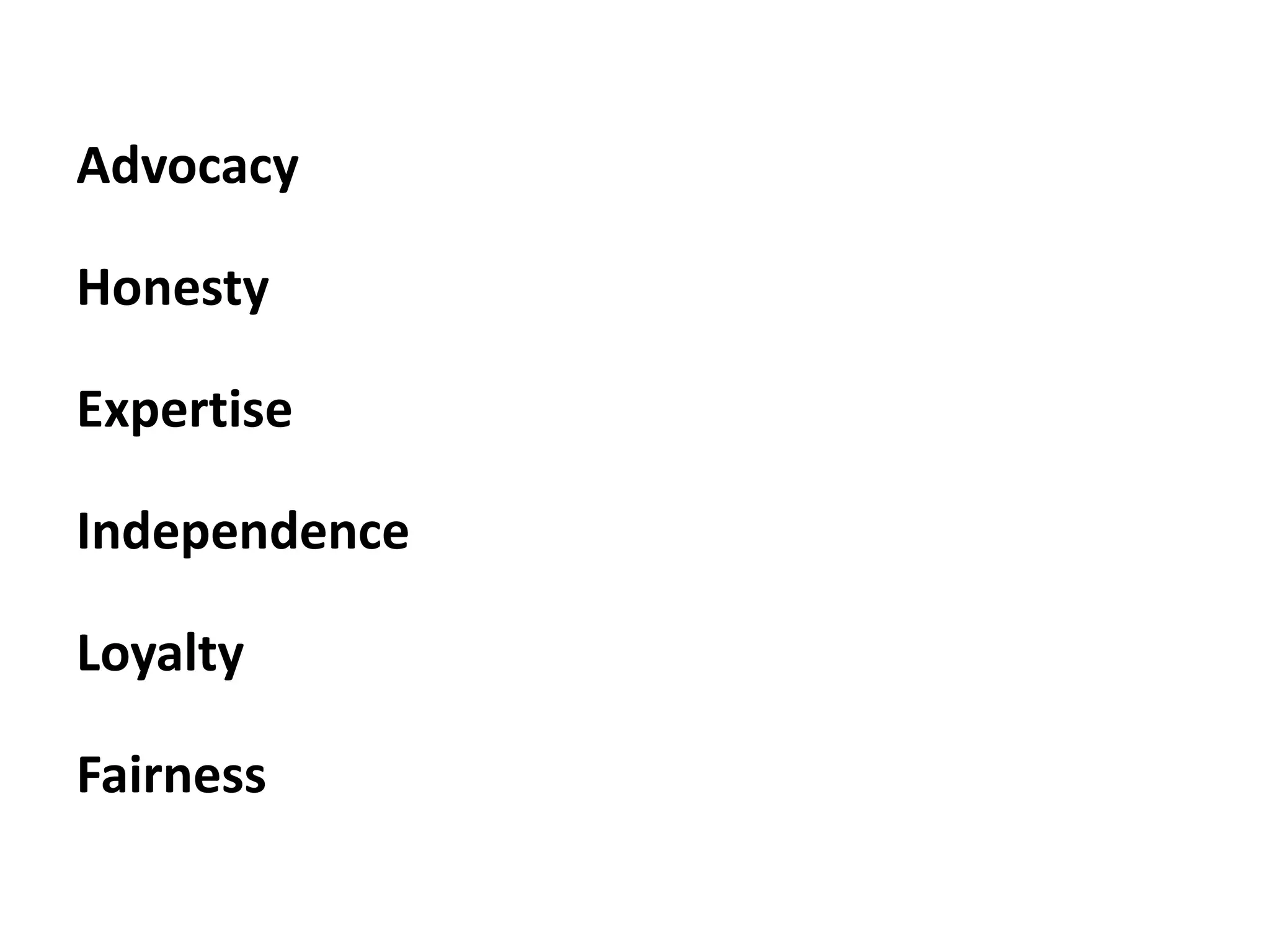
Advocacy

Honesty

Expertise

Independence

Loyalty

Fairness
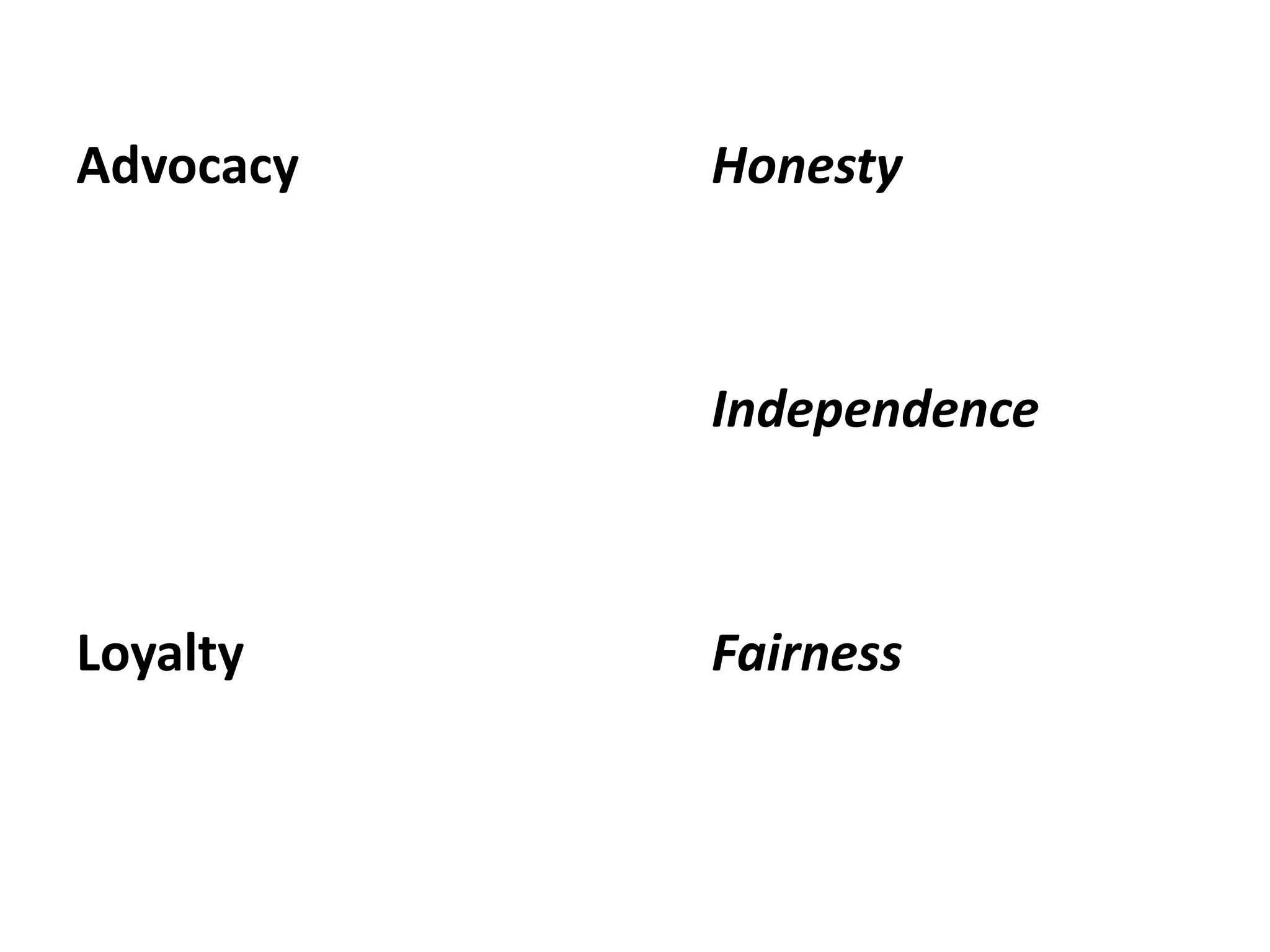
Advocacy   Honesty


           Independence


Loyalty    Fairness
The History of Paid Editing.
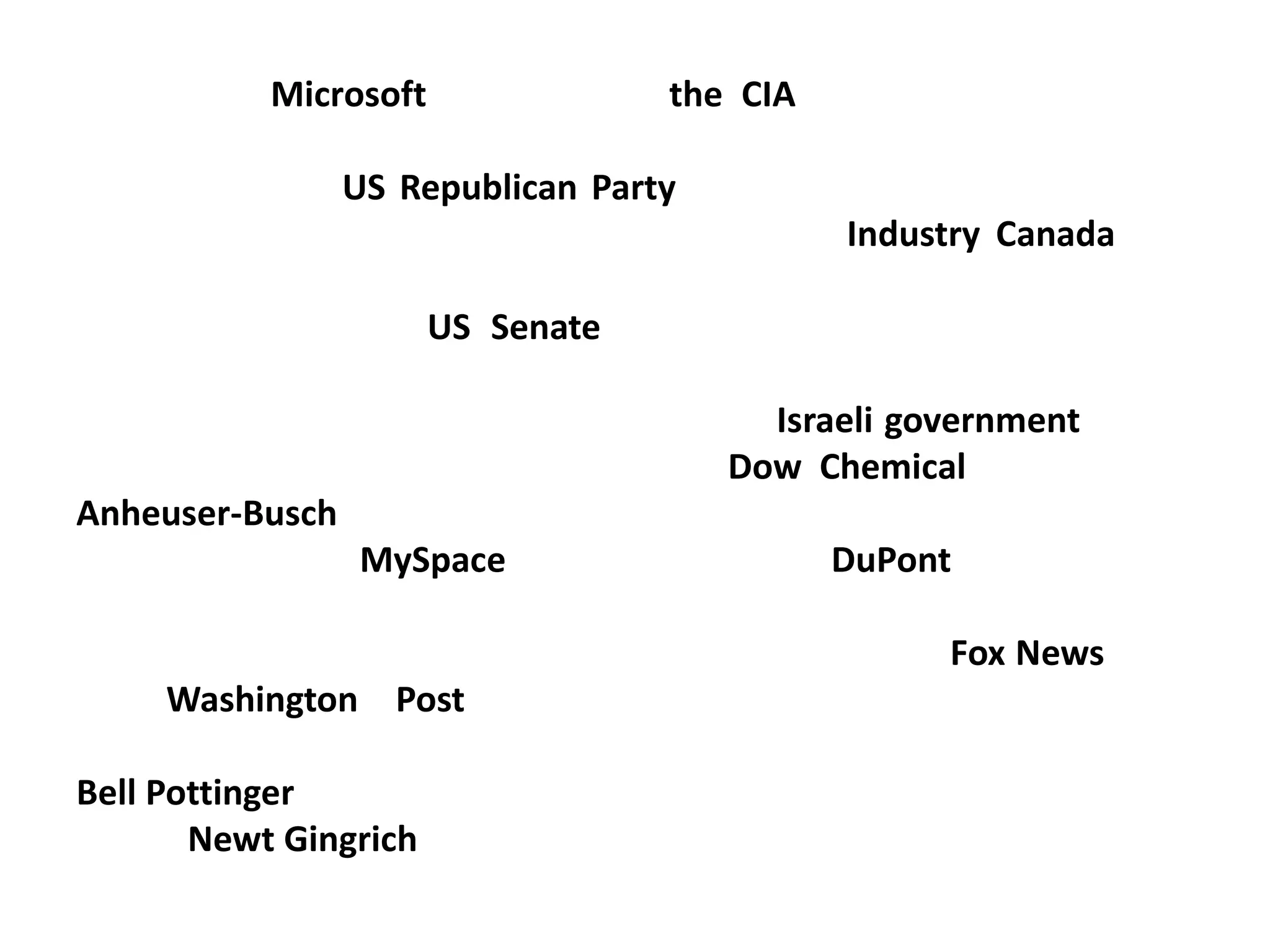
MyWikiBiz, Microsoft, the Vatican, the CIA, the Federal Bureau of
Investigation, the US Democratic Party's Congressional Campaign
Committee, the US Republican Party, Britain's Labour Party, Britain's
Conservative Party, the Canadian government, Industry Canada, the
Department of Prime Minister, Cabinet, and Defence in Australia, the
United Nations, the US Senate, the US Department of Homeland
Security, the US Environmental Protection Agency, Montana Senator
Conrad Burns, Ohio Governor Bob Taft, the Israeli government, Exxon
Mobil, Walmart, AstraZeneca, Diebold, Dow Chemical, Disney, Dell,
Anheuser-Busch, Nestle, Pepsi, Boeing, Sony Computer Entertainment,
EA, SCO Group, MySpace, Pfizer, Raytheon, DuPont, Anglican and
Catholic churches, the Church of Scientology, the World Harvest
Church, Amnesty International, the Discovery Channel, Fox News, CBS,
the Washington Post, the National Rifle Association, News
International, Al Jazeera, Bob Jones University, Ohio State University,
Bell Pottinger, Portland Communications, Anheuser-Busch InBev, Stella
Artois, Newt Gingrich, United Kingdom Parliament…
MyWikiBiz, Microsoft, the Vatican, the CIA, the Federal Bureau of
Investigation, the US Democratic Party's Congressional Campaign
Committee, the US Republican Party, Britain's Labour Party, Britain's
Conservative Party, the Canadian government, Industry Canada, the
Department of Prime Minister, Cabinet, and Defence in Australia, the
United Nations, the US Senate, the US Department of Homeland
Security, the US Environmental Protection Agency, Montana Senator
Conrad Burns, Ohio Governor Bob Taft, the Israeli government, Exxon
Mobil, Walmart, AstraZeneca, Diebold, Dow Chemical, Disney, Dell,
Anheuser-Busch, Nestle, Pepsi, Boeing, Sony Computer Entertainment,
EA, SCO Group, MySpace, Pfizer, Raytheon, DuPont, Anglican and
Catholic churches, the Church of Scientology, the World Harvest
Church, Amnesty International, the Discovery Channel, Fox News, CBS,
the Washington Post, the National Rifle Association, News
International, Al Jazeera, Bob Jones University, Ohio State University,
Bell Pottinger, Portland Communications, Anheuser-Busch InBev, Stella
Artois, Newt Gingrich, United Kingdom Parliament…
Those are only the ones that made
            the news.
Why paid editing matters.
Real world consequences

Extreme media embarrassment

Public forum

Frequently reported in the media
Significant public backlash

Embarrassing PR

Risk of alienating clients

Taints Wikipedia’s reputation
Arguments in favor of paid editing.
“You can destroy someone's
reputation in one minute and it will
      take years to rebuild.”

 -- Lord Bell, head of Bell Pottinger
Responsibility to be accurate

Can do real harm

PR pros have time, access, and competence

Different point of view
Arguments against paid editing.
"It is difficult to get a man to
understand something, when his
  salary depends upon his not
         understanding it."

        --Upton Sinclair
History of non-neutral edits

Accountable to employers, responsibility to
make profit

Whitewash negative and promote positive

Neutrality is difficult
“Paid advocates do not make good editors.

      They insert puffery and spin.

    That is what paid advocates do.”

–Jimmy Wales, in 2012 responding to Phil
                Gomes
“People shouldn't do it, including me.

      Staying objective is difficult.

    You really want to set it straight.”

--Jimmy Wales, in 2005 on editing his own
                  article
“Wikipedians have a problem with our
             profession

    Unfortunately been earned.

   We can't change this overnight

     We can make a difference.”

     --Jane Wilson, head of CIPR
“Responsible and respectful.

Acting in their clients' best interests.

         A two-way street.

Do not believe that to be the case.”

  --Gerald Corbett, head of PRSA
What is a Conflict of Interest?
            (COI)
An incompatibility between the aim of
Wikipedia, which is to produce a neutral,
reliably sourced encyclopedia, and the aims of
an individual editor
Do not promote your own interests or those of
other individuals, companies, or groups

Do not write about these things unless you are
certain that a neutral editor would agree that
your edits improve Wikipedia
Can you edit with a COI?
COI editing is strongly discouraged.
Participation from COI editors is
            welcome.
COI editing done right.
   (Best Practices)
Register with an independent username.

     Represents you as an individual

     One person, one account
Disclose your conflict of interest.

     Be transparent

     Gain the community's trust,

     Get help

      Avoid embarrassment
What does a COI declaration look like?
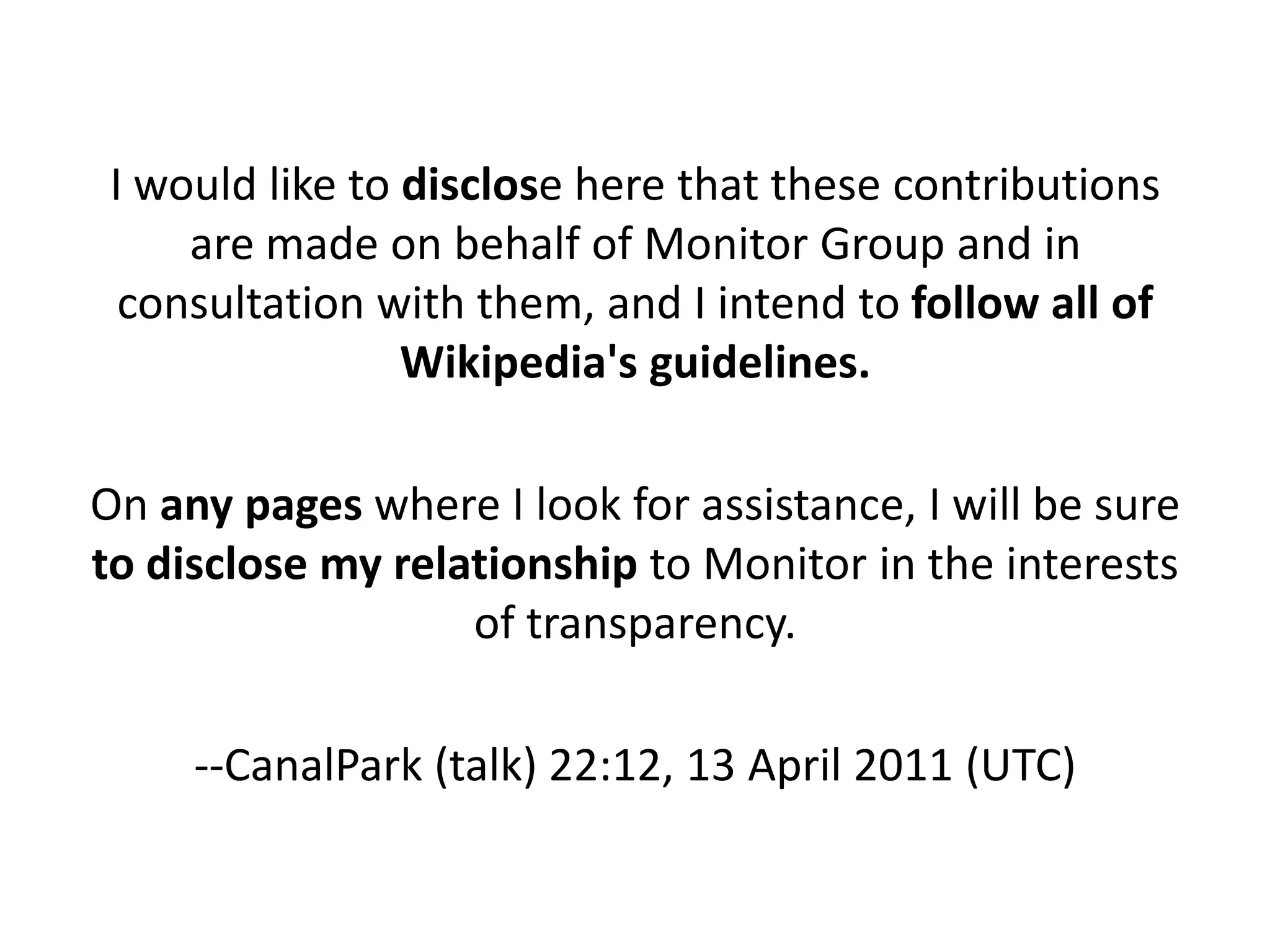
I would like to disclose here that these contributions
     are made on behalf of Monitor Group and in
  consultation with them, and I intend to follow all of
                 Wikipedia's guidelines.

On any pages where I look for assistance, I will be sure
to disclose my relationship to Monitor in the interests
                   of transparency.

     --CanalPark (talk) 22:12, 13 April 2011 (UTC)
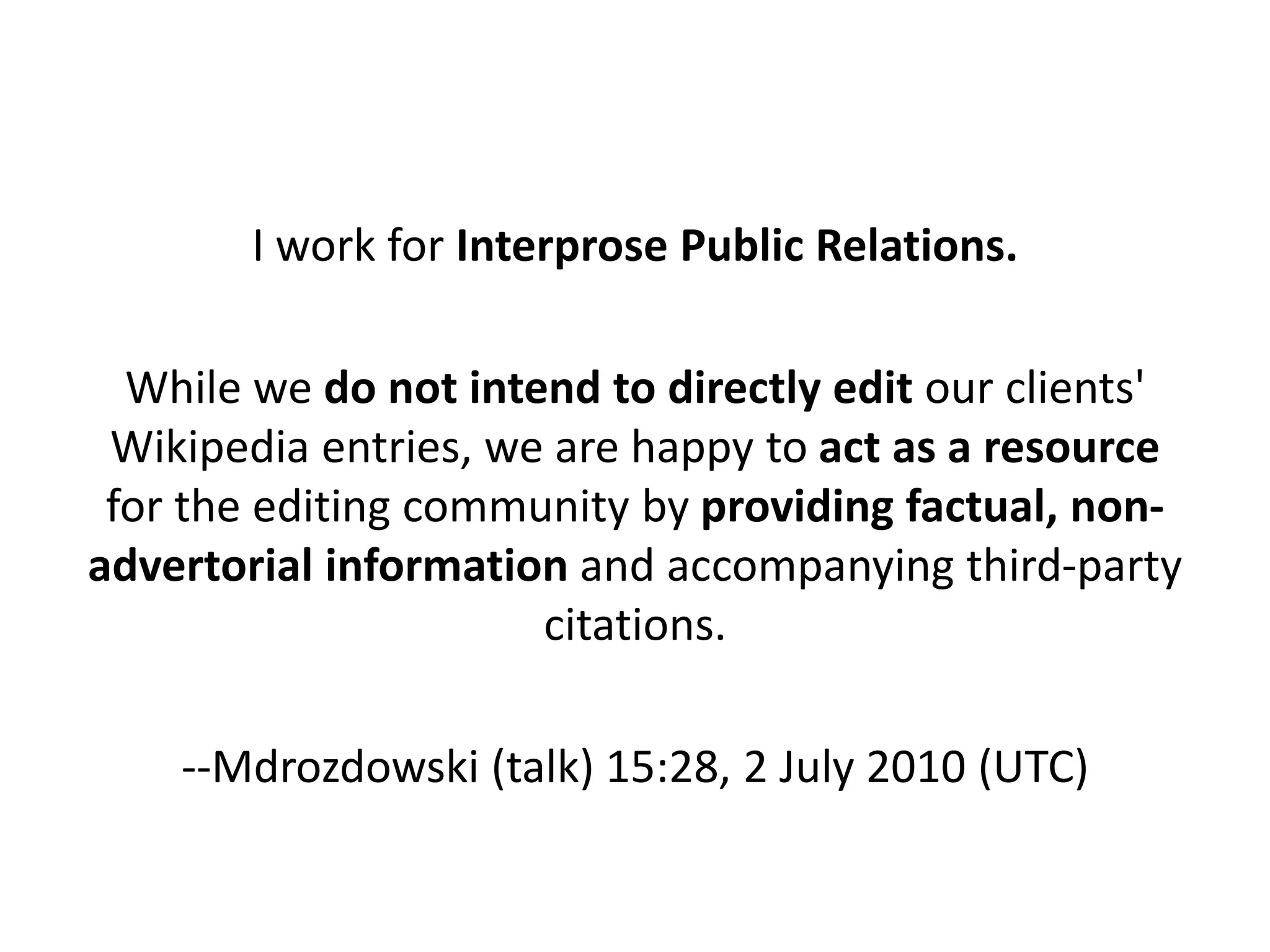
I work for Interprose Public Relations.

  While we do not intend to directly edit our clients'
 Wikipedia entries, we are happy to act as a resource
 for the editing community by providing factual, non-
advertorial information and accompanying third-party
                      citations.

    --Mdrozdowski (talk) 15:28, 2 July 2010 (UTC)
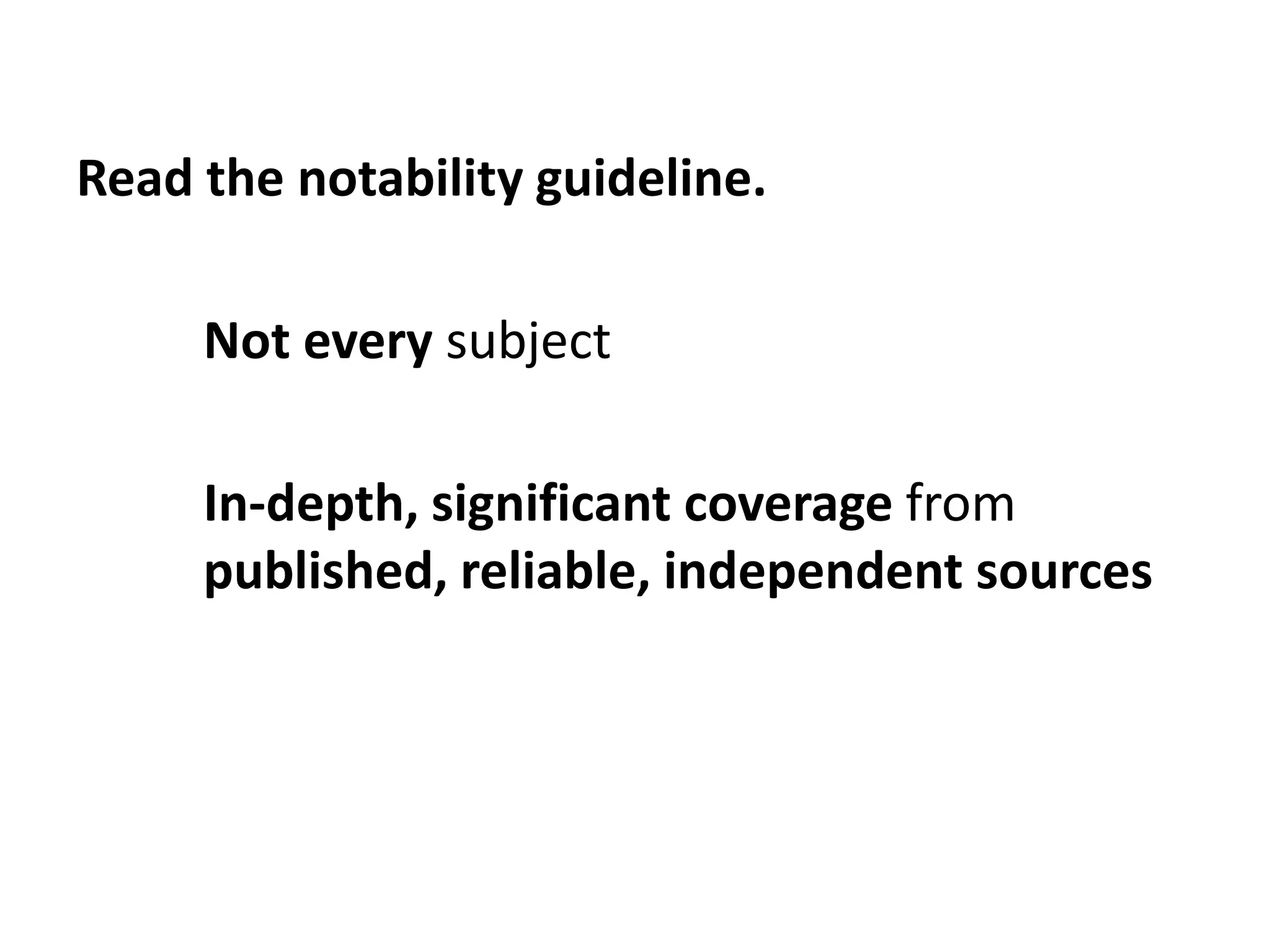
Read the notability guideline.

     Not every subject

     In-depth, significant coverage from
     published, reliable, independent sources
Sources, sources, sources.

     Use: newspapers, magazines, books,
     trades, websites, tv, radio, journals;
     with a reputation for fact-checking and
     accuracy

     Avoid: self-published blogs, press releases,
     and sources with a direct connection to
     the subject
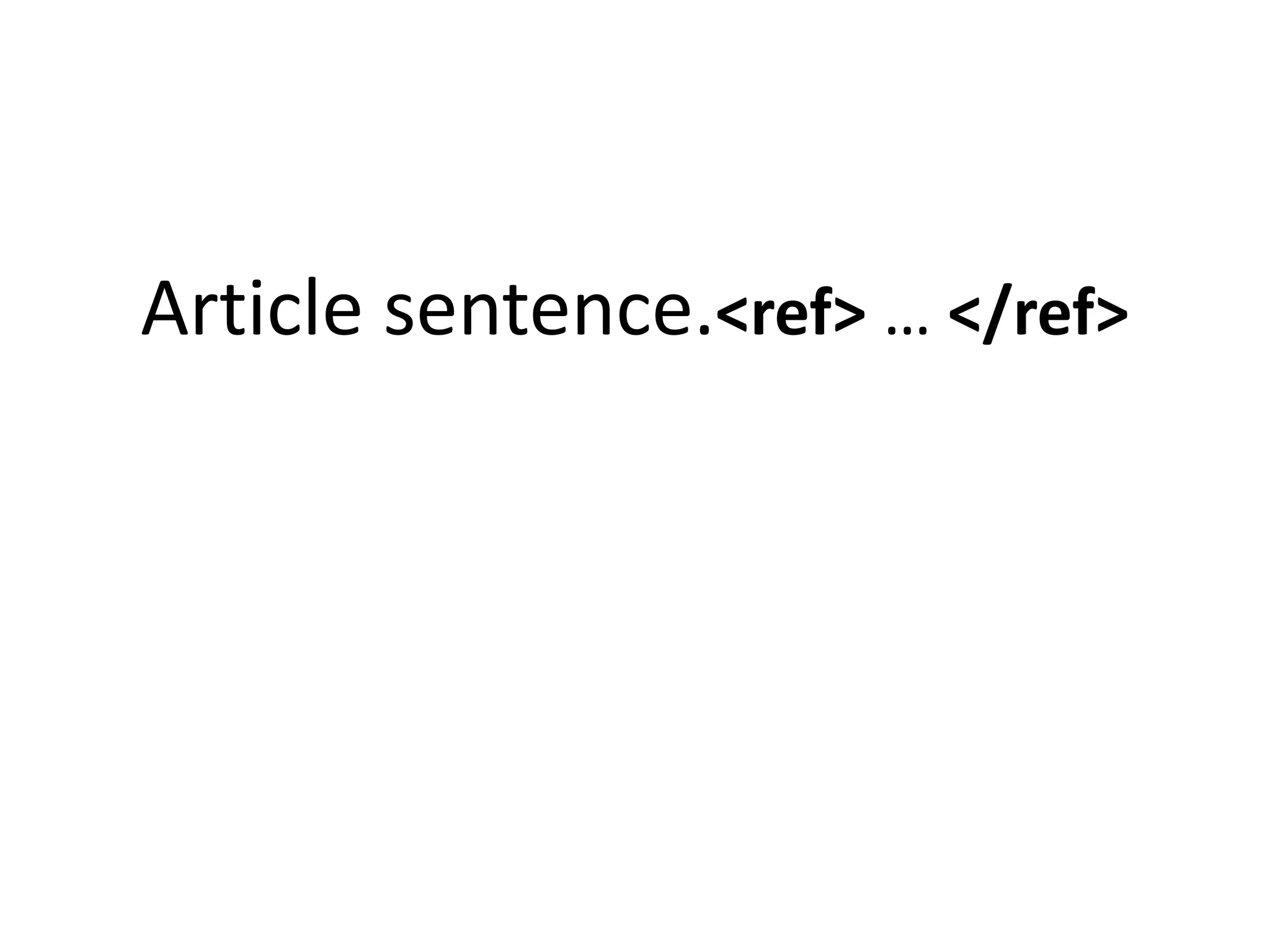
Article sentence.<ref> … </ref>
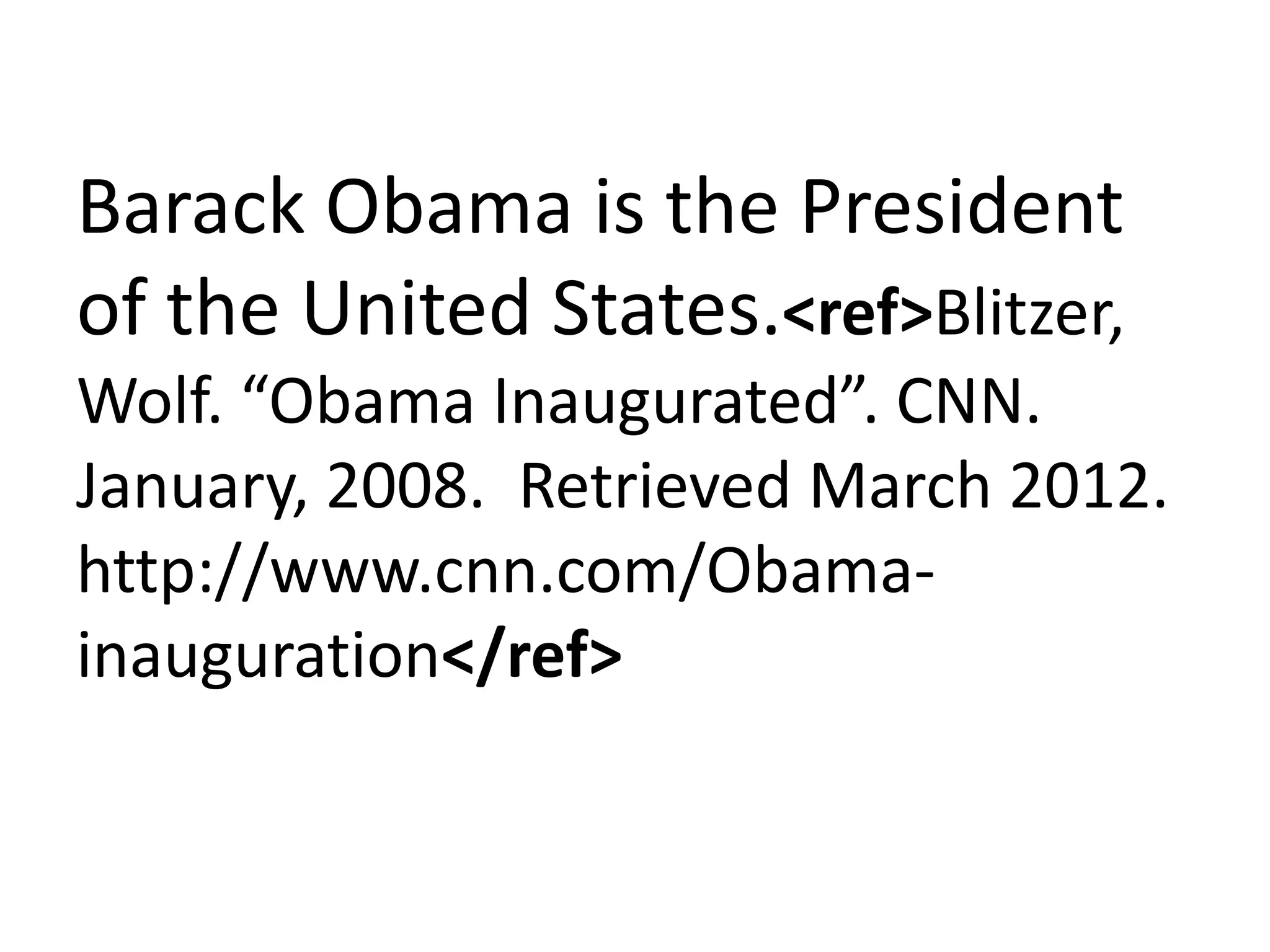
Barack Obama is the President
of the United States.<ref>Blitzer,
Wolf. “Obama Inaugurated”. CNN.
January, 2008. Retrieved March 2012.
http://www.cnn.com/Obama-
inauguration</ref>
Neutralize your conflict of interest.

     Write without bias

     So your biggest competitor would
     think it was fair and balanced

     So it's impossible to tell that someone
     who works for the company wrote it
Avoid advertising or promotion.

     Inform and reference, not promote or sell

     Not commercial, not marketing
Start with a draft.

     New article wizard

     Userspace draft

     Article’s Talk page
Have other editors review your work.

     Ask for feedback

     Talk page, Live help channel , Conflict of
     interest noticeboard, Paid Editor Help

     {{subst:submit}} for new article drafts
     {{requested edit}} for existing articles
Don't make direct edits to live articles.   *
     The safest way

     Especially for controversial information

     Instead, propose drafts and let others
     make the changes
Don't use other articles as excuses.

     Do not use them as justification

     Make your own content better

     Then it will last
Don't rush.

     Months, years, and decades

     Seek the community's feedback

     Articles about living people come first

     Negative and unsourced information goes
Join the community.

     WikiProject Cooperation

     Corporate Representatives for Ethical Wikipedia
     Engagement (CREWE)

     The Signpost
What to do if something goes wrong.
If your article was deleted.

     Understand and fix the issues

     Talk to the administrator, ~~~~

     Deletion Review

     Userspace copy
If no good sources exist for your article.

     Do more research

     Reference Desk

     Ask good sources to write about it

     Wait and try again
If someone is editing your article.

     Nobody owns an article

     Engage others in civil and constructive
     dialogue
If there's a mistake in your article.

     Minor… fix it yourself

     Major… seek input from other editors, let
     them do it
If someone is vandalizing your article.

     Revert obvious vandalism yourself

     Intentionally destructive changes

     For significant changes, discuss it with
     other editors first

      Page protection
If you want to make changes to an article.

     {{Edit request}} on the Talk page using

     WikiProject Cooperation’s Paid Editor Help

     Conflict of Interest noticeboard
If you disagree strongly with other editors.

     Stay civil

     Read the relevant policies

     Seek the input of other uninvolved editors

     Use the dispute resolution process
If you requested feedback but haven't received
a timely response.

     Be transparent about your COI

     Talk pages, COI noticeboard, Admin
     noticeboard, Paid Editor Help

     info@wikipedia.org
If your account was blocked.

     Stay calm

     Ask the administrator

     Appeal the block , {{unblock}}

     Acknowledge if you made a mistake, and
     correct it
If you're overwhelmed by Wikipedia's interface
and policies.

     Take your time

     Ask for help – Help Desk, live chat , search
     WP: and Help:

     We’re here to assist you
What does the future hold?
Wikipedia matters

PR and Wikipedia can work together

You can use Wikipedia effectively
Imagine a world in which every single
person on the planet is given free access to
    the sum of all human knowledge.
That's our commitment.
You can help.
Links
• A free, online copy of this presentation
       http://goo.gl/8LsKW
• The Wikipedia guideline on COI editing
       http://enwp.org/WP:COI
• The Plain and simple conflict of interest guide
       http://enwp.org/WP:PSCOI
• WikiProject Cooperation
       http://enwp.org/WP:COOPERATION
• Corporate Representatives for Ethical Wikipedia Engagement, CREWE
       http://www.facebook.com/groups/crewe.group
• The history of COI editing on Wikipedia
       http://enwp.org/COI_editing_on_Wikipedia
Questions

Is it more efficient to just edit in secret?
Does Wikipedia care about the truth?
Are paid editors treated more unfairly than unpaid advocates?
Does Wikipedia protect living people more than corporations?
Is Jimmy Wales’ stance stronger than the actual policy?
What do you do if a reliable source is wrong?
Are PR ethics in conflict with Wikipedia policies?
Are the interests of the client the same as the interests of the encyclopedia?
Is the client’s interest to avoid embarrassment or fix articles? Is there a COI in
working on the encyclopedia for profit?
Is it deceptive to make changes without disclosure?
How do we engage ethical PR editors while dealing unethical ones?
This presentation is licensed CC-BY-SA 3.0.
It is free for anyone to use, reuse, modify,
 repurpose, or sell, provided attribution is
   given to its creator, who in this case is
  Wikipedia editor Ocaasi relying on texts
    taken directly from Wikipedia, and a
         variety of internet sources.

Learning to Speak in Wikipedia's Language: Public Relations and the Free Encyclopedia

  • 1.
    Learning to Speakin Wikipedia’s Language Public Relations and The Free Encyclopedia
  • 2.
  • 3.
  • 4.
    Jake Orlowitz Volunteer editor Ocaasion Wikipedia 3 years 20,000 edits 15 articles created with over 150,000 views Monitor Group, Occidental Petroleum, US Gov. The Wikipedia Adventure Plain and simple conflict of interest guide
  • 5.
    Wikipedia is amassive and increasingly influential global presence: PR professionals should be aware of it and view it as a critical medium in their communication portfolio.
  • 6.
    Wikipedia is amassive and increasingly influential global presence: PR professionals should be aware of it and view it as a critical medium in their communication portfolio. The historical conflict between PR and Wikipedia can be resolved with a proper understanding of the two cultures’ roles and processes.
  • 7.
    Wikipedia is amassive and increasingly influential global presence: PR professionals should be aware of it and view it as a critical medium in their communication portfolio. The historical conflict between PR and Wikipedia can be resolved with a proper understanding of the two cultures’ roles and processes. PR professionals can save themselves countless hours of frustration by learning the best practices for editing.
  • 8.
    Imagine a worldin which every single person on the planet is given free access to the sum of all human knowledge.
  • 9.
  • 10.
    8 billion wordsin 21 million articles 285 language editions
  • 11.
    3,875,474 articles, 26,301,442pages 50 times larger than Microsoft Encarta's 2002 Deluxe edition 517,319,601 edits, 250,000 per day 794,530 uploaded files 16,284,081 registered users 147,203 active in the last 30 days 1,507 administrators.
  • 12.
  • 13.
    Alexa rank: #6in the world in web traffic 2.7 billion pageviews, in the US, monthly #1 most influential website in blog mentions 30-50% on first page of Google searches
  • 14.
    In January 2012alone Krispy Kreme: viewed 25,119 BP: 75,014 Pepsi: 105,766 Walmart: 155,171 Lady Gaga: 1,101,475
  • 15.
    What if thesewere one of your clients?
  • 16.
  • 17.
    Nature: Wikipedia came closeto the level of accuracy in Encyclopædia Britannica. Other studies: Compared Wikipedia to professional and peer- reviewed sources and found that Wikipedia's depth and coverage were of a high standard.
  • 18.
  • 19.
    “I say thatour revolution is like Wikipedia. Everyone is contributing content. small pieces, bits and pieces. We drew this whole picture of a revolution no one is the hero in that picture." --Wael Ghonim, in 2011 on the overthrow of Mubarak
  • 20.
    “The problem withWikipedia is that it only works in practice. In theory, it can never work.”
  • 21.
  • 22.
    The free encyclopediathat anyone can edit, whose mission is to summarize published reliable sources.
  • 23.
  • 24.
    a dictionary a publisherof original thought a soapbox or means of promotion a mirror a blog or social network a directory a manual a crystal ball a newspaper an indiscriminate collection censored
  • 25.
  • 26.
    NOT IS anarchy self-organized democracy consensus-seeking bureaucracy practical battleground cooperative compulsory voluntary
  • 27.
  • 28.
    Neutral Point ofView (NPOV)
  • 29.
    Articles mustn't takesides, but should explain the sides, fairly, proportionately and without bias
  • 30.
  • 31.
    Can another editorcheck the source? Verifiability not truth Cite reliable sources if challenged or likely to be challenged
  • 32.
  • 33.
    For which noreliable, published sources exist Analysis or synthesis of published material that serves to advance a position
  • 34.
  • 35.
    Consideration and respect Focuson improving the encyclopedia Behave politely, calmly and reasonably Do not ignore the positions of others
  • 36.
    What is PublicRelations?
  • 37.
    “Public relations isa strategic communication process that builds mutually beneficial relationships between organizations and their publics.” --PRSA definition
  • 38.
    What does ethicalpublic relations entail?
  • 39.
  • 40.
    Advocacy Honesty Independence Loyalty Fairness
  • 41.
    The History ofPaid Editing.
  • 42.
    MyWikiBiz, Microsoft, theVatican, the CIA, the Federal Bureau of Investigation, the US Democratic Party's Congressional Campaign Committee, the US Republican Party, Britain's Labour Party, Britain's Conservative Party, the Canadian government, Industry Canada, the Department of Prime Minister, Cabinet, and Defence in Australia, the United Nations, the US Senate, the US Department of Homeland Security, the US Environmental Protection Agency, Montana Senator Conrad Burns, Ohio Governor Bob Taft, the Israeli government, Exxon Mobil, Walmart, AstraZeneca, Diebold, Dow Chemical, Disney, Dell, Anheuser-Busch, Nestle, Pepsi, Boeing, Sony Computer Entertainment, EA, SCO Group, MySpace, Pfizer, Raytheon, DuPont, Anglican and Catholic churches, the Church of Scientology, the World Harvest Church, Amnesty International, the Discovery Channel, Fox News, CBS, the Washington Post, the National Rifle Association, News International, Al Jazeera, Bob Jones University, Ohio State University, Bell Pottinger, Portland Communications, Anheuser-Busch InBev, Stella Artois, Newt Gingrich, United Kingdom Parliament…
  • 43.
    MyWikiBiz, Microsoft, theVatican, the CIA, the Federal Bureau of Investigation, the US Democratic Party's Congressional Campaign Committee, the US Republican Party, Britain's Labour Party, Britain's Conservative Party, the Canadian government, Industry Canada, the Department of Prime Minister, Cabinet, and Defence in Australia, the United Nations, the US Senate, the US Department of Homeland Security, the US Environmental Protection Agency, Montana Senator Conrad Burns, Ohio Governor Bob Taft, the Israeli government, Exxon Mobil, Walmart, AstraZeneca, Diebold, Dow Chemical, Disney, Dell, Anheuser-Busch, Nestle, Pepsi, Boeing, Sony Computer Entertainment, EA, SCO Group, MySpace, Pfizer, Raytheon, DuPont, Anglican and Catholic churches, the Church of Scientology, the World Harvest Church, Amnesty International, the Discovery Channel, Fox News, CBS, the Washington Post, the National Rifle Association, News International, Al Jazeera, Bob Jones University, Ohio State University, Bell Pottinger, Portland Communications, Anheuser-Busch InBev, Stella Artois, Newt Gingrich, United Kingdom Parliament…
  • 44.
    Those are onlythe ones that made the news.
  • 45.
  • 46.
    Real world consequences Extrememedia embarrassment Public forum Frequently reported in the media
  • 47.
    Significant public backlash EmbarrassingPR Risk of alienating clients Taints Wikipedia’s reputation
  • 48.
    Arguments in favorof paid editing.
  • 49.
    “You can destroysomeone's reputation in one minute and it will take years to rebuild.” -- Lord Bell, head of Bell Pottinger
  • 50.
    Responsibility to beaccurate Can do real harm PR pros have time, access, and competence Different point of view
  • 51.
  • 52.
    "It is difficultto get a man to understand something, when his salary depends upon his not understanding it." --Upton Sinclair
  • 53.
    History of non-neutraledits Accountable to employers, responsibility to make profit Whitewash negative and promote positive Neutrality is difficult
  • 54.
    “Paid advocates donot make good editors. They insert puffery and spin. That is what paid advocates do.” –Jimmy Wales, in 2012 responding to Phil Gomes
  • 55.
    “People shouldn't doit, including me. Staying objective is difficult. You really want to set it straight.” --Jimmy Wales, in 2005 on editing his own article
  • 56.
    “Wikipedians have aproblem with our profession Unfortunately been earned. We can't change this overnight We can make a difference.” --Jane Wilson, head of CIPR
  • 57.
    “Responsible and respectful. Actingin their clients' best interests. A two-way street. Do not believe that to be the case.” --Gerald Corbett, head of PRSA
  • 58.
    What is aConflict of Interest? (COI)
  • 59.
    An incompatibility betweenthe aim of Wikipedia, which is to produce a neutral, reliably sourced encyclopedia, and the aims of an individual editor
  • 60.
    Do not promoteyour own interests or those of other individuals, companies, or groups Do not write about these things unless you are certain that a neutral editor would agree that your edits improve Wikipedia
  • 61.
    Can you editwith a COI?
  • 62.
    COI editing isstrongly discouraged.
  • 63.
    Participation from COIeditors is welcome.
  • 64.
    COI editing doneright. (Best Practices)
  • 65.
    Register with anindependent username. Represents you as an individual One person, one account
  • 66.
    Disclose your conflictof interest. Be transparent Gain the community's trust, Get help Avoid embarrassment
  • 67.
    What does aCOI declaration look like?
  • 68.
    I would liketo disclose here that these contributions are made on behalf of Monitor Group and in consultation with them, and I intend to follow all of Wikipedia's guidelines. On any pages where I look for assistance, I will be sure to disclose my relationship to Monitor in the interests of transparency. --CanalPark (talk) 22:12, 13 April 2011 (UTC)
  • 69.
    I work forInterprose Public Relations. While we do not intend to directly edit our clients' Wikipedia entries, we are happy to act as a resource for the editing community by providing factual, non- advertorial information and accompanying third-party citations. --Mdrozdowski (talk) 15:28, 2 July 2010 (UTC)
  • 70.
    Read the notabilityguideline. Not every subject In-depth, significant coverage from published, reliable, independent sources
  • 71.
    Sources, sources, sources. Use: newspapers, magazines, books, trades, websites, tv, radio, journals; with a reputation for fact-checking and accuracy Avoid: self-published blogs, press releases, and sources with a direct connection to the subject
  • 72.
  • 73.
    Barack Obama isthe President of the United States.<ref>Blitzer, Wolf. “Obama Inaugurated”. CNN. January, 2008. Retrieved March 2012. http://www.cnn.com/Obama- inauguration</ref>
  • 74.
    Neutralize your conflictof interest. Write without bias So your biggest competitor would think it was fair and balanced So it's impossible to tell that someone who works for the company wrote it
  • 75.
    Avoid advertising orpromotion. Inform and reference, not promote or sell Not commercial, not marketing
  • 76.
    Start with adraft. New article wizard Userspace draft Article’s Talk page
  • 77.
    Have other editorsreview your work. Ask for feedback Talk page, Live help channel , Conflict of interest noticeboard, Paid Editor Help {{subst:submit}} for new article drafts {{requested edit}} for existing articles
  • 78.
    Don't make directedits to live articles. * The safest way Especially for controversial information Instead, propose drafts and let others make the changes
  • 79.
    Don't use otherarticles as excuses. Do not use them as justification Make your own content better Then it will last
  • 80.
    Don't rush. Months, years, and decades Seek the community's feedback Articles about living people come first Negative and unsourced information goes
  • 81.
    Join the community. WikiProject Cooperation Corporate Representatives for Ethical Wikipedia Engagement (CREWE) The Signpost
  • 82.
    What to doif something goes wrong.
  • 83.
    If your articlewas deleted. Understand and fix the issues Talk to the administrator, ~~~~ Deletion Review Userspace copy
  • 84.
    If no goodsources exist for your article. Do more research Reference Desk Ask good sources to write about it Wait and try again
  • 85.
    If someone isediting your article. Nobody owns an article Engage others in civil and constructive dialogue
  • 86.
    If there's amistake in your article. Minor… fix it yourself Major… seek input from other editors, let them do it
  • 87.
    If someone isvandalizing your article. Revert obvious vandalism yourself Intentionally destructive changes For significant changes, discuss it with other editors first Page protection
  • 88.
    If you wantto make changes to an article. {{Edit request}} on the Talk page using WikiProject Cooperation’s Paid Editor Help Conflict of Interest noticeboard
  • 89.
    If you disagreestrongly with other editors. Stay civil Read the relevant policies Seek the input of other uninvolved editors Use the dispute resolution process
  • 90.
    If you requestedfeedback but haven't received a timely response. Be transparent about your COI Talk pages, COI noticeboard, Admin noticeboard, Paid Editor Help info@wikipedia.org
  • 91.
    If your accountwas blocked. Stay calm Ask the administrator Appeal the block , {{unblock}} Acknowledge if you made a mistake, and correct it
  • 92.
    If you're overwhelmedby Wikipedia's interface and policies. Take your time Ask for help – Help Desk, live chat , search WP: and Help: We’re here to assist you
  • 93.
    What does thefuture hold?
  • 94.
    Wikipedia matters PR andWikipedia can work together You can use Wikipedia effectively
  • 95.
    Imagine a worldin which every single person on the planet is given free access to the sum of all human knowledge.
  • 96.
  • 97.
  • 98.
    Links • A free,online copy of this presentation http://goo.gl/8LsKW • The Wikipedia guideline on COI editing http://enwp.org/WP:COI • The Plain and simple conflict of interest guide http://enwp.org/WP:PSCOI • WikiProject Cooperation http://enwp.org/WP:COOPERATION • Corporate Representatives for Ethical Wikipedia Engagement, CREWE http://www.facebook.com/groups/crewe.group • The history of COI editing on Wikipedia http://enwp.org/COI_editing_on_Wikipedia
  • 99.
    Questions Is it moreefficient to just edit in secret? Does Wikipedia care about the truth? Are paid editors treated more unfairly than unpaid advocates? Does Wikipedia protect living people more than corporations? Is Jimmy Wales’ stance stronger than the actual policy? What do you do if a reliable source is wrong? Are PR ethics in conflict with Wikipedia policies? Are the interests of the client the same as the interests of the encyclopedia? Is the client’s interest to avoid embarrassment or fix articles? Is there a COI in working on the encyclopedia for profit? Is it deceptive to make changes without disclosure? How do we engage ethical PR editors while dealing unethical ones?
  • 100.
    This presentation islicensed CC-BY-SA 3.0. It is free for anyone to use, reuse, modify, repurpose, or sell, provided attribution is given to its creator, who in this case is Wikipedia editor Ocaasi relying on texts taken directly from Wikipedia, and a variety of internet sources.

Editor's Notes

  • #2 Welcome. The title of today’s talk is Speaking Different Languages? Corporate Communications and Wikipedia. I’m going to discuss how these two cultures view the world and interact, how Wikipedia works, why it matters, and how to work with it better.
  • #3 I’d like to start with a brief survey (some market research if you will). How many of you have heard of Wikipedia? Seen it come up in a Google search? Read an article for your personal use? Yearly? Monthly? Weekly? Daily? Read a Talk/Discussion page? Received a message from another editor? Used Wikipedia for researching a company or client? Have a client with a Wikipedia page about their key figures, their brand, their products, their organization, or their competitors? Noted an inaccuracy, incompleteness, or bias in one of those articles? Edited one of those articles? Received negative feedback (or reverts) about your edits? Received positive feedback or engaged in discussion about edits? Want you to write down one question that you are burning to have answered, or just curious about. Tell me if this presentation answered it.
  • #5 I do this for free, for fun. I like interacting with the community and making it better. The first advice, and probably the best advice, which editors hear is to ‘Be Bold’. That’s been my approach, and I’ve tried to see problems in the community and fix them with dedication and passion. It’s addictive.
  • #9 The mission of Wikipedia. This is a radical idea. It is working.
  • #10 Big. Huge. Massive.
  • #11 This is a global project. There is not just one Wikipedia. The mission of sharing the sum of all human knowledge in their own language. Some countries Wikipedia is the only encyclopedia in existence for their culture or language.
  • #12 Note that the 1507 administrators on English Wikipedia are just over 1% of active editors and under a 1000th of a percent of registered users. The community basically runs itself, with a little help from administrators and facilitation from the parent non-profit, the Wikimedia Foundation.
  • #14 Much to the chagrin of SEO professionals, Wikipedia’s Google rankings consistently outperform all but a few search results. SEO folks claim Google has rigged the game, but Wikipedia responds that targeted, high quality content is the real reason.
  • #16 What if one of these were your clients? Would you know how to manage their Wikipedia article?
  • #18 Brittanica disputed the findings: http://corporate.britannica.com/britannica_nature_response.pdf. More people trying to make the encyclopedia better than worse. Over time, it tends towards comprehensiveness and accuracy, although at any given time its reliability is not assured.
  • #20 Anonymous, volunteer, crowd-sourced project. How do paid editors fit into that picture?
  • #21 A joke about Wikipedia that is a humorous as it is true.
  • #23 Not everyone can edit everything, but the core of the sight remains shockingly open. Wikipedia follows the maxim, “With enough eyeballs, all bugs are shallow.” We tend to solve problems through mass attention or automation rather than outright prohibitions. Something to ponder, how do we know a source is reliable? We report what others have already reported; that’s what an encyclopedia is: a reliable, neutral summarizer. It is free for anyone to use, reuse, modify, repurpose, or even sell.
  • #25 We don’t do mere definitions, new research, advertising or activism, mere copying of others content, personal opinions or networking, indexes of information, how-to’s, speculation about the future, unrefined coverage of breaking news events, random facts, anyone’s sanitized version of events.
  • #27 It’s a self-organized, consensus-seeking, civil, voluntary community. It has rules, but the rules exist only to achieve the goal of a better encyclopedia, and can be ignored if they are hindering that. It seeks agreement, not votes. It requires cooperation and collaboration from people with differing views. Paid editors may be required to edit. How do they fit in?
  • #28 Three core content policies. You should know these acronyms by heart.
  • #30 Balance is the essence of neutrality. Wikipedia has no opinion on any issue or controversy. We report what others have reported.
  • #32 You can’t make this stuff up. We’re not equipped to evaluate ‘truth’, though we aim for accuracy. What happens if reliable sources are wrong? What happens if there are no reliable sources for the opposing side of a debate?
  • #34 Keep your own opinions out of it. You can’t do novel research.
  • #36 Be nice. Talk it out. Seek consensus.
  • #37 Be nice. Talk it out. Seek consensus.
  • #38 Strategic. Does that conflict with neutrality?
  • #41 How do advocacy and loyalty interact with honesty, independence, and fairness? Can a loyal advocate be neutral?
  • #42 In 2007 a computer science graduate student name Virgin Griffith published WikiScanner, a tool which combined the ip addresses of Wikipedia of unregistered editors with known Corporate and Government databases. The matches revealed that individuals, organizations, companies, and nations were editing the articles about themselves, their products, and their competitors.
  • #47 Do you want to be added to the list? Would your client fire you over a gaffe? Do you want Wikipedia to be a source of benefit or another area for damage control.
  • #50 Bell Pottinger, one of London’s leading PR firms was caught editing the articles of its clients on the sly. One of the most persuasive arguments made by PR professionals and paid editors is that there is a role for them to correct bias, inaccuracies, and libel about their clients.
  • #51 Some PR professionals follow ethical guidelines. How do we engage those individuals while also dealing with those who do not?
  • #54 Hard enough to be neutral when you don’t have a boss or a client pressuring you or paying you. Neutrality is not always a conscious process and is often influenced by circumstance. One of the best reasons to acknowledge you have a COI is to become aware of your own bias, so you can avoid its influence. There is room for biased editors on Wikipedia, and there’s an old saw about enough people pushing on a flagpole from different directions will eventually get it to stand straight.
  • #55 Jimmy Wales stance has always been that paid editors don’t belong on Wikipedia and should never edit articles directly. Something to consider: Is Jimmy Wales’ stance the actual policy?
  • #56 An embarrassing juxtaposition. Since the incident, Wales has refrained from editing his own articles. Policy was different then (WP:COI was Vanity). Not to paint him as a hypocrite, but to emphasize that editing articles about ones self, company, clients, or interests is both tempting and riddled with challenges.
  • #59 What is a conflict of interest?
  • #60 Everyone has biases, some people are paid to advance theirs. Don’t promote, report.
  • #63 In the past, paid editors were blocked on site. This was Jimmy Wales position. In 2006 the COI guideline was created. In 2009 the community held a “Request for Comment”. There were many people who supported officially prohibiting paid editors, but there were many who disagreed. The discussion closed with ‘no consensus’, meaning the previously existing guideline remained intact.
  • #64 Although there are diehards who will not deal with anyone that has a COI, the reality is that there are many editors who participate in Wikipedia with clear, unequivocal, glaring conflicts of interest, and many of them do so productively and add to the discussion. ‘How’ you edit is more important than ‘who’ edits.
  • #65 Best practices.
  • #66 One person, one account.
  • #67 Say who you are. Be treated with respect.
  • #71 Articles require significant coverage in independent, published, reliable sources.
  • #72 Companies have reams of proprietary literature. That is not considered a good source, because it’s not independent.
  • #75 Writing for the enemy.
  • #76 Don’t use Wikipedia to promote.
  • #77 Once something is live on Wikipedia, it’s visible to the entire world and recorded forever. Do you really want to publish without getting someone else’s opinion?
  • #81 We don’t have a corporate policy similar to BLP policy. Is that a bias or gap in Wikipedia policy?
  • #82 Expand beyond your narrow interests. Read some articles you care about. Leave a comment on the talk page. Fix a typo. Reword a sentence. Find a source. Add some info. Get help from experienced COI editors and COI facilitators. Participate in the discussion on policy, best practices, and outstanding problems.
  • #83 If you follow those best practices, you should be treated with kindness and respect and have a positive experience. Here’s what to do if things get off on the wrong track.
  • #84 Also can be emailed to you, if enabled
  • #85 Put your PR skills to use. Generate valuable press coverage. Then we can write about the subject.
  • #87 What’s minor? Spelling, grammar, factual inaccuracies. What’s major, anything likely to be challenged, controversies, removing negative information, adding positive information, editing a competitor’s article.
  • #88 Page protection is not preemptive or preventative. It’s only used where a demonstrated history of vandalism is present. Pending changes was an idea to require edits to certain articles to be reviewed first, but it failed to gain consensus for continued use after a trial run.