The Future of Wikipedia
in Education
Jake Orlowitz
User:Ocaasi
jorlowitz@gmail.com
@JakeOrlowitz
Wikimedia Foundation Grantee
Wiki Project Med Foundation
Wikipedia Administrator
All content under a CC-BY-SA 3.0 license
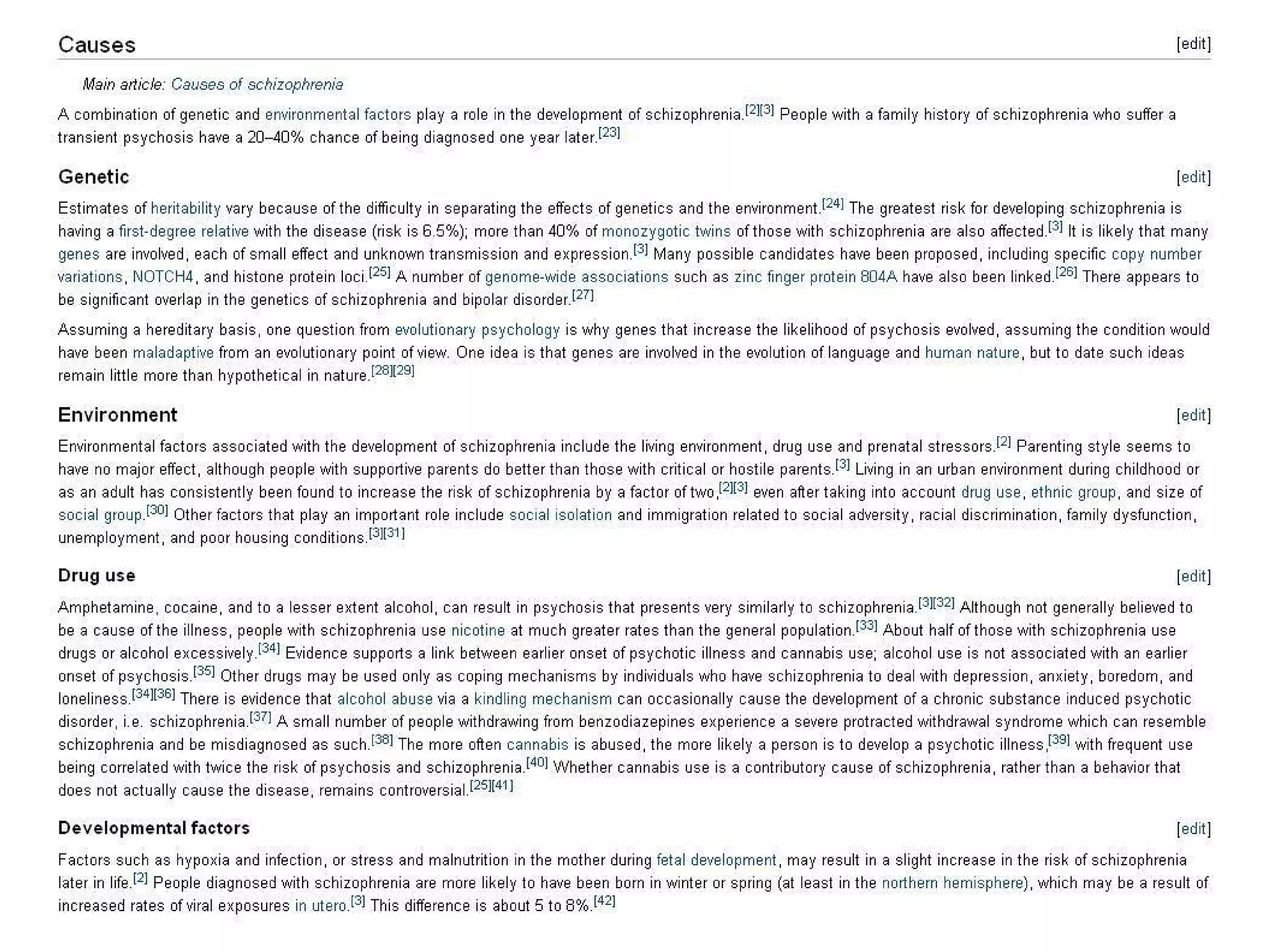
An early study in the journal Nature said that in 2005,
Wikipedia scientific articles came close to the level of
accuracy in Encyclopædia Britannica and had a similar
rate of "serious errors".[2]
Between 2008 and 2012, articles in medical and scientific
fields such as pathology,[5] toxicology,[6] oncology,[7]
pharmaceuticals,[8] and psychiatry[9] comparing Wikipedia
to professional and peer-reviewed sources found that
Wikipedia's depth and coverage were of a high
standard.
--Reliability of Wikipedia, Wikipedia
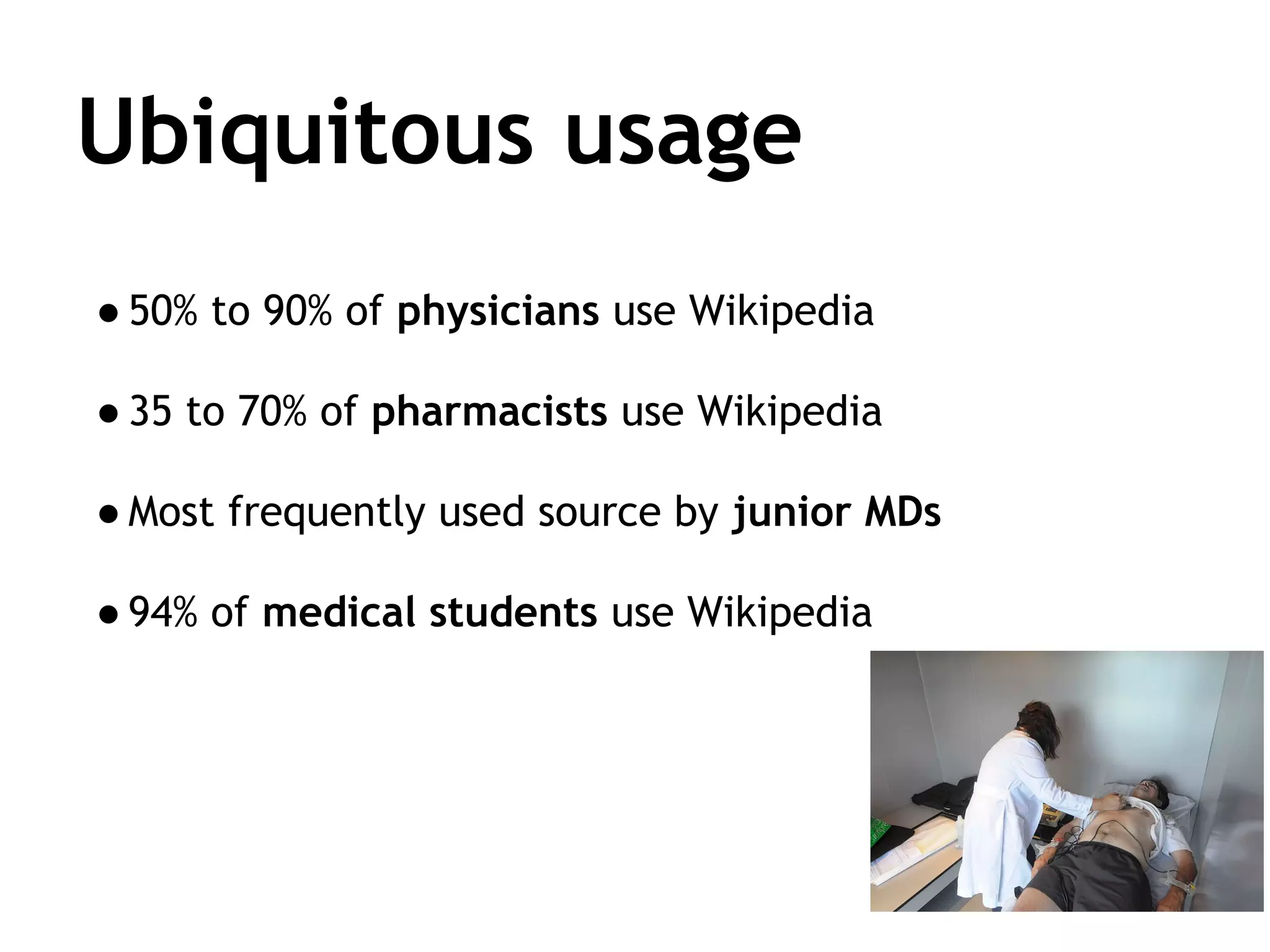
Ubiquitous usage
● 50% to 90% of physicians
● 35 to 70% of pharmacists
● 94% of medical students use Wikipedia
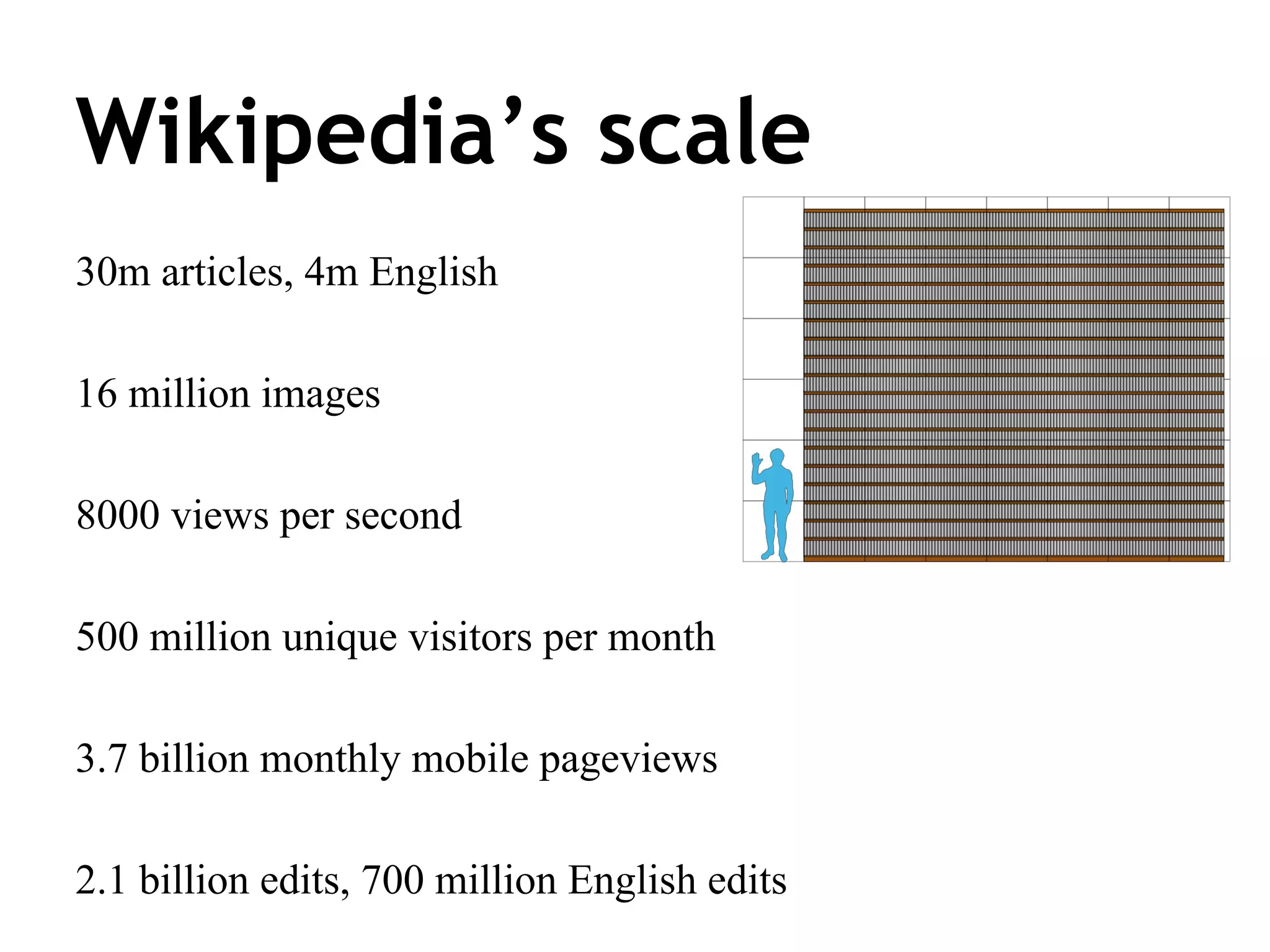
Wikipedia’s scale
30m articles, 4m English
16 million images
8000 views per second
500 million unique visitors per month
3.7 billion monthly mobile pageviews
2.1 billion edits, 700 million English
Wikipedia’s mission
Imagine a world in which every person on
the planet shares in the sum of all human
knowledge. That is what we’re doing.

(for free, in the language of their choice)
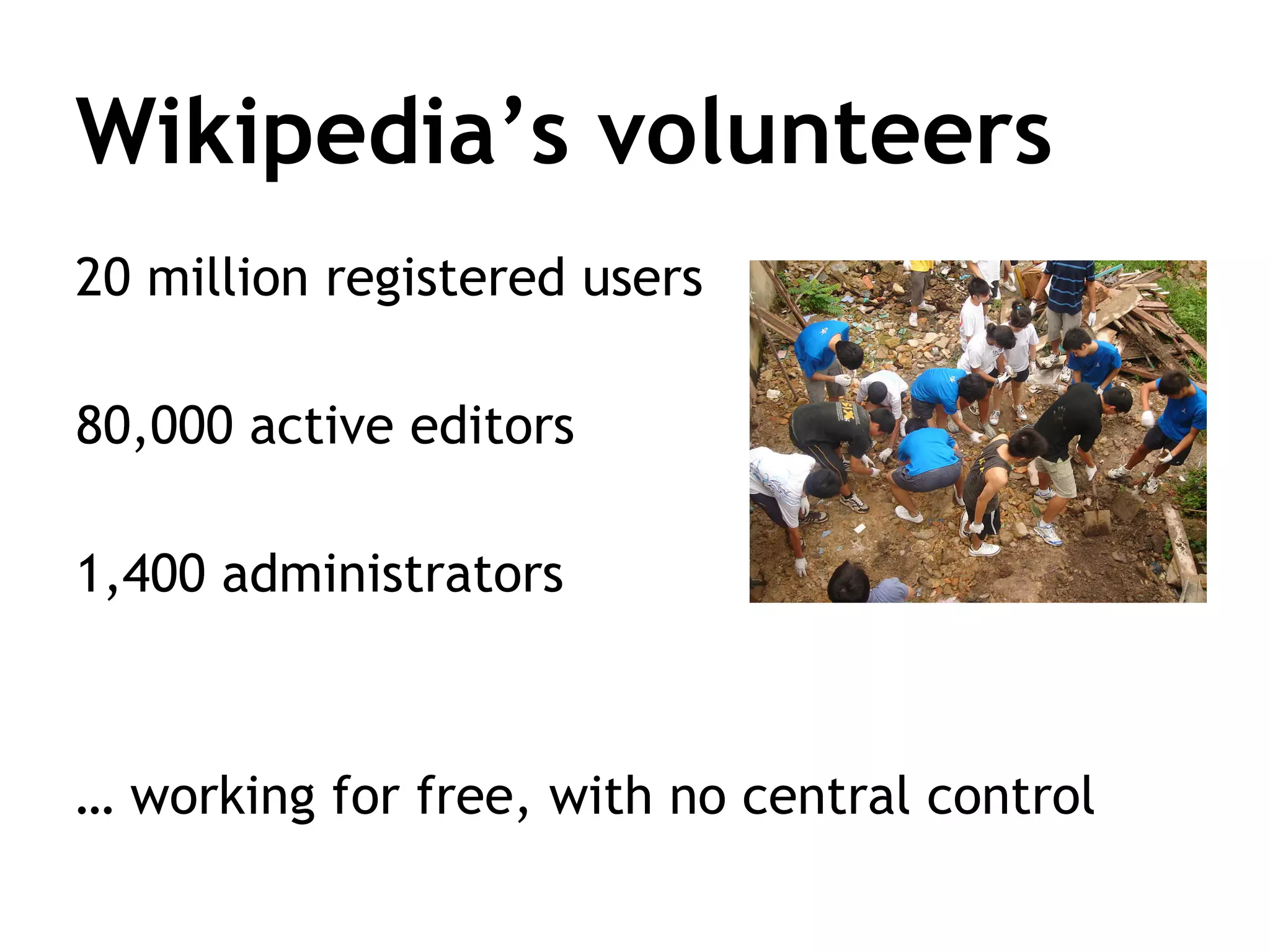
Wikipedia’s volunteers
20 million registered users
120,000 active editors
1,400 administrators

… working for free, with no central control
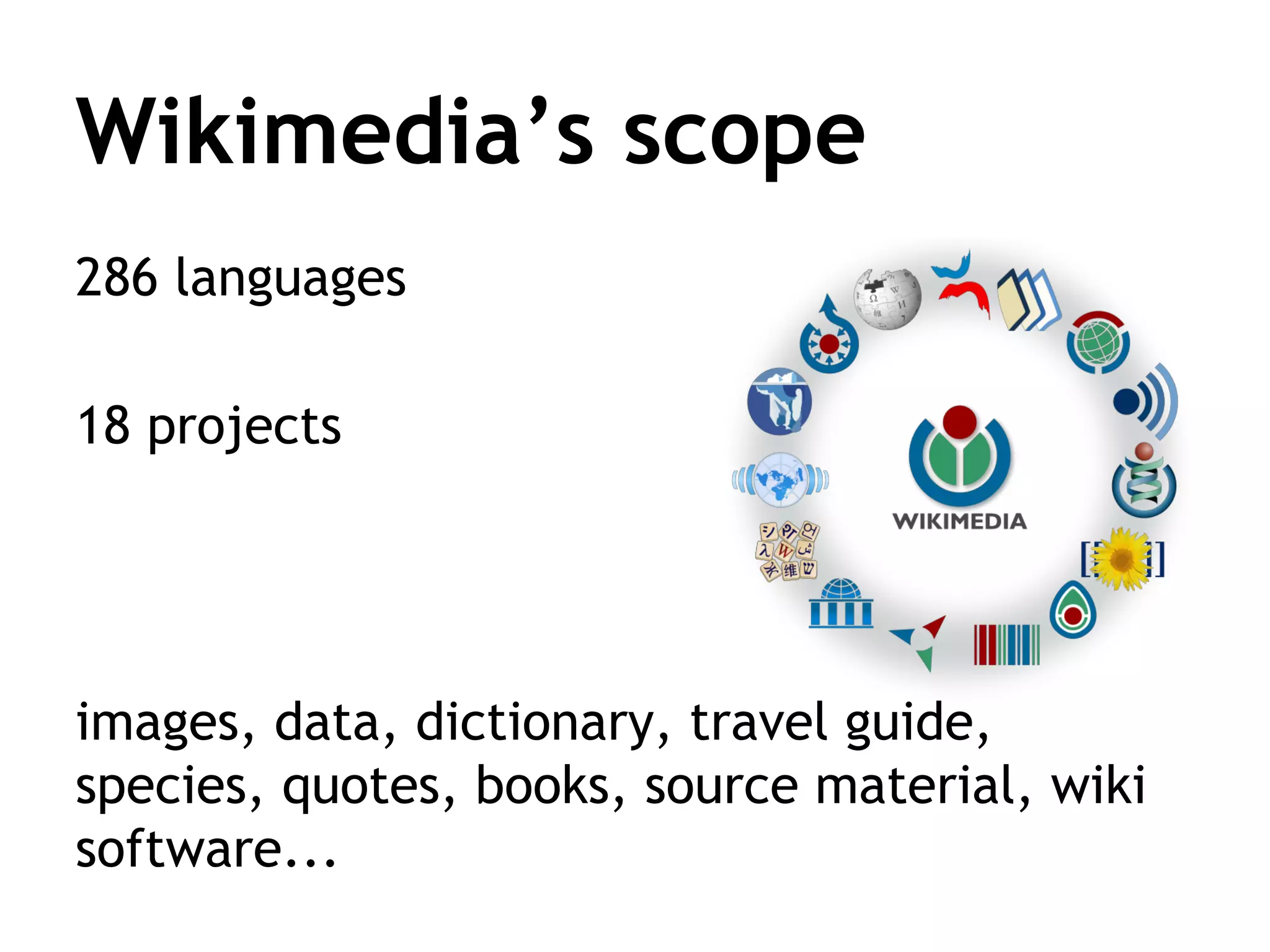
Wikimedia’s scope
286 languages
18 projects

images, data, dictionary, travel guide,
species, quotes, books, source material, wiki
software...
Wikimedia Foundation
San Francisco
150 employees
Donor funded
Nonprofit
No ads!
Wikipedia’s pillars
Neutral point of view
Verifiability
Consensus
Civility
Open copyright
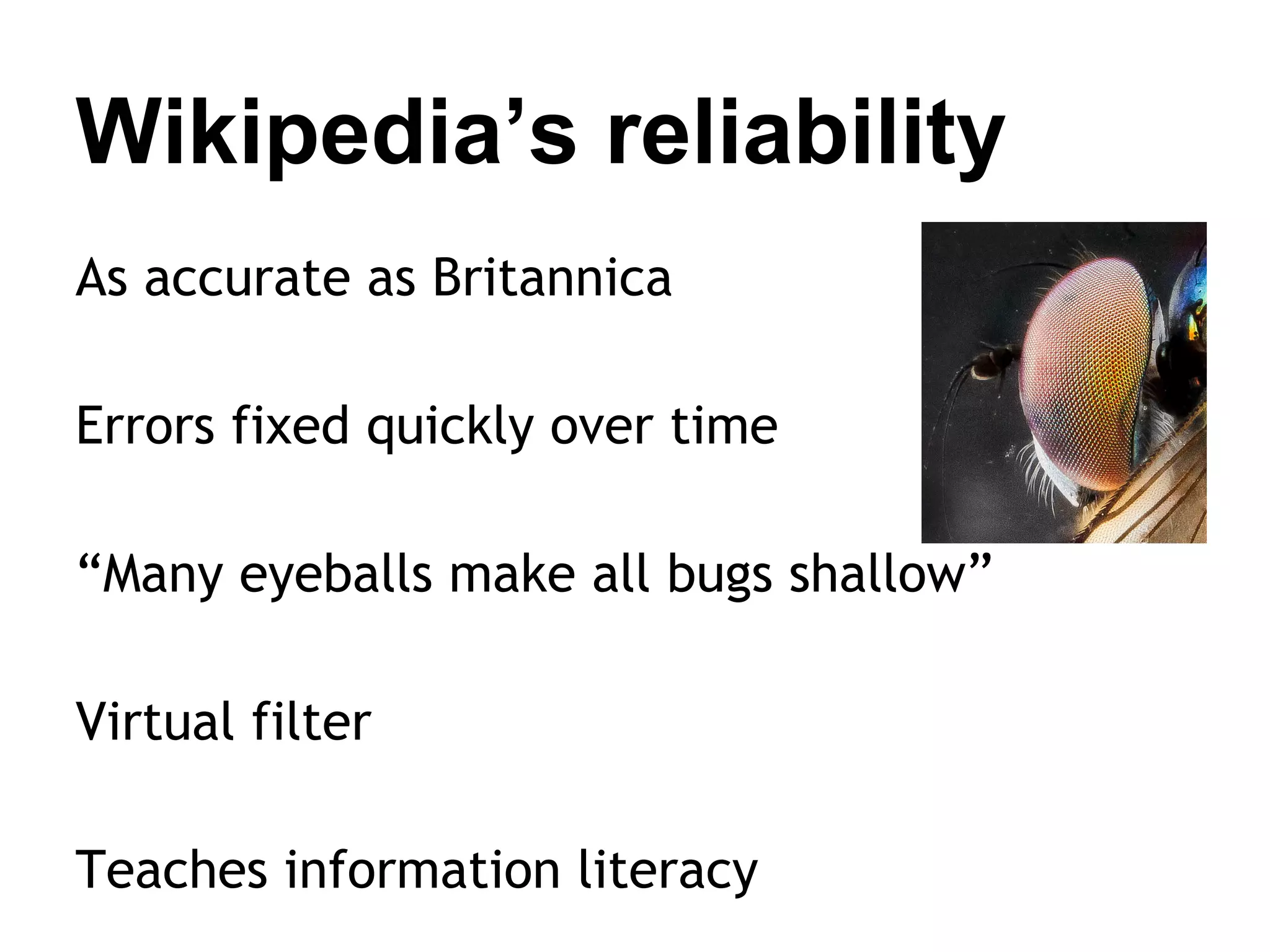
Wikipedia’s reliability
As accurate as Britannica
Errors fixed quickly over time
“Many eyeballs make all bugs shallow”
Virtual filter
Teaches information literacy
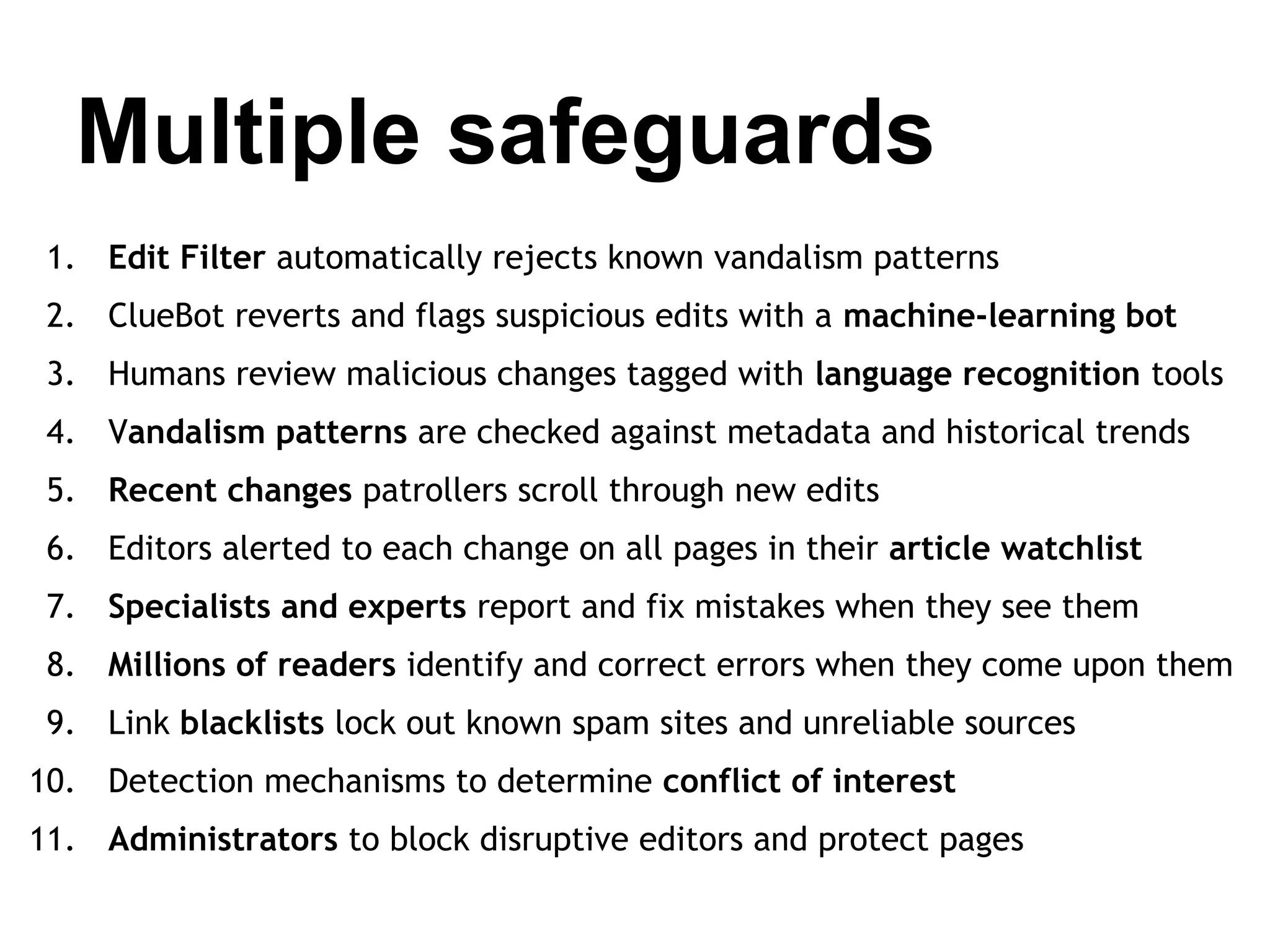
Multiple safeguards
1. Edit Filter automatically rejects known vandalism patterns
2. ClueBot reverts and flags suspicious edits with a machine-learning bot
3. Humans review malicious changes tagged with language recognition tools
4. Vandalism patterns are checked against metadata and historical trends
5. Recent changes patrollers scroll through new edits
6. Editors alerted to each change on all pages in their article watchlist
7. Specialists and experts report and fix mistakes when they see them
8. Millions of readers identify and correct errors when they come upon them
9. Link blacklists lock out known spam sites and unreliable sources
10. Detection mechanisms to determine conflict of interest
11. Administrators to block disruptive editors and protect pages
Featured, Good articles
Semi-formal peer review
Total: 4,000 FAs and 10,000 GAs
Frequently written by experts
Primarily by one or by a few people

[20]
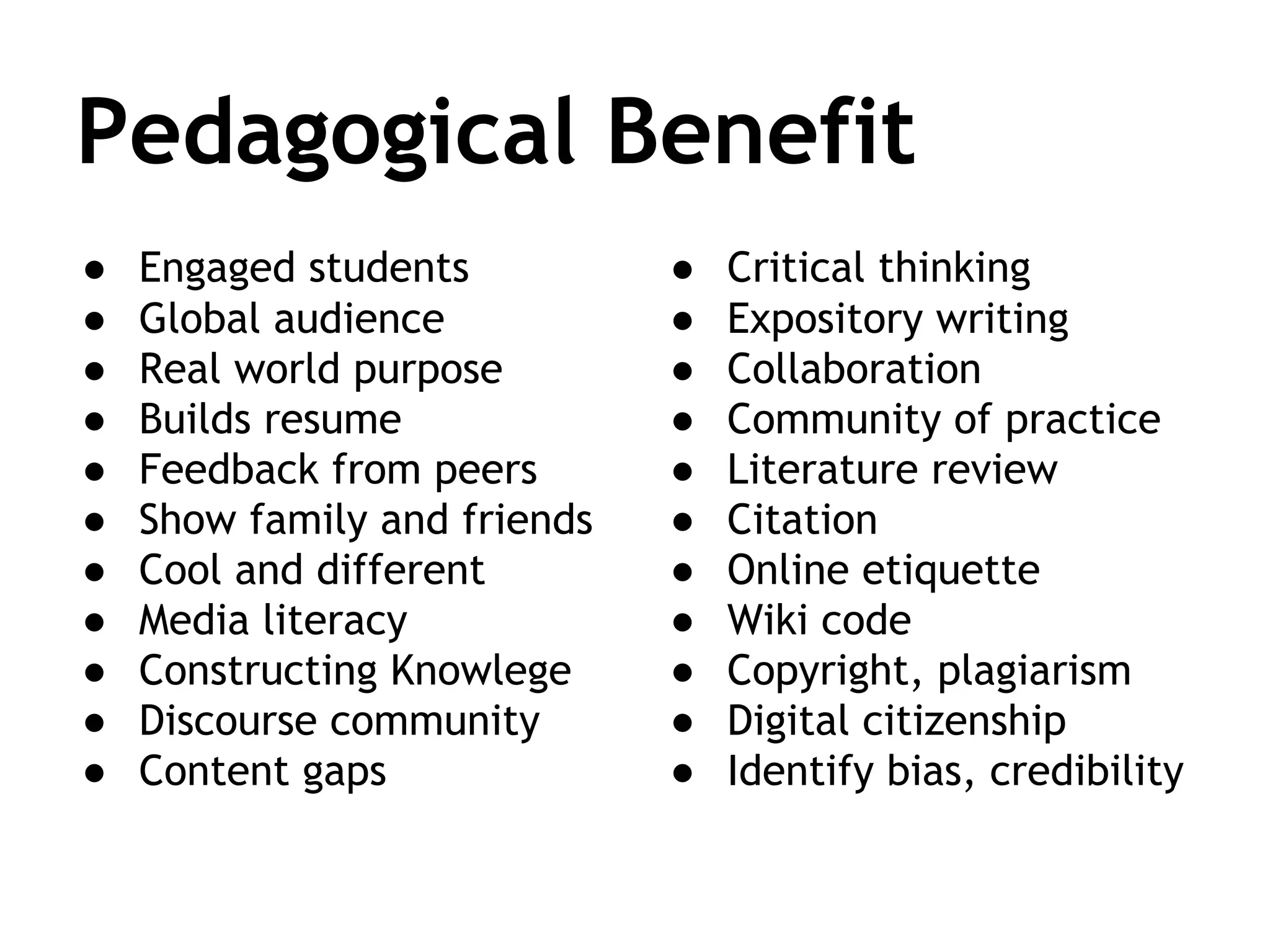
Pedagogical Benefit
● Engaged students, global audience, realworld purpose
● Unique assignment, peer feedback, cool and different
● Media literacy, identify bias, evaluate credibility
● Constructing knowledge, content gaps
● Discourse, collaboration, community of practice
● Expository writing, literature review, citation
● Critical thinking, process reflection
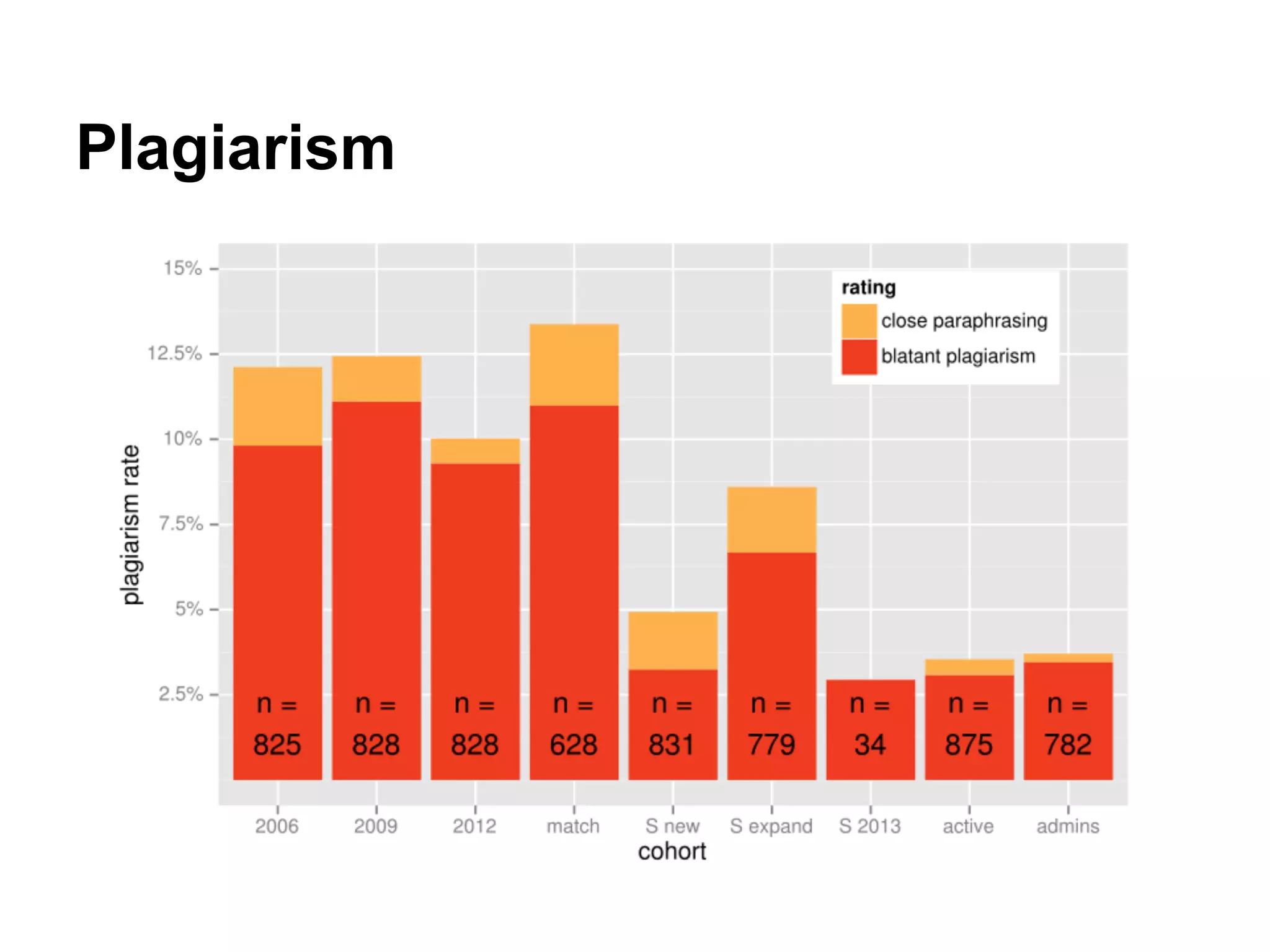
● Plagiarism, close paraphrasing, copyright
● Digital citizenship, online etiquette, wiki code
Plagiarism
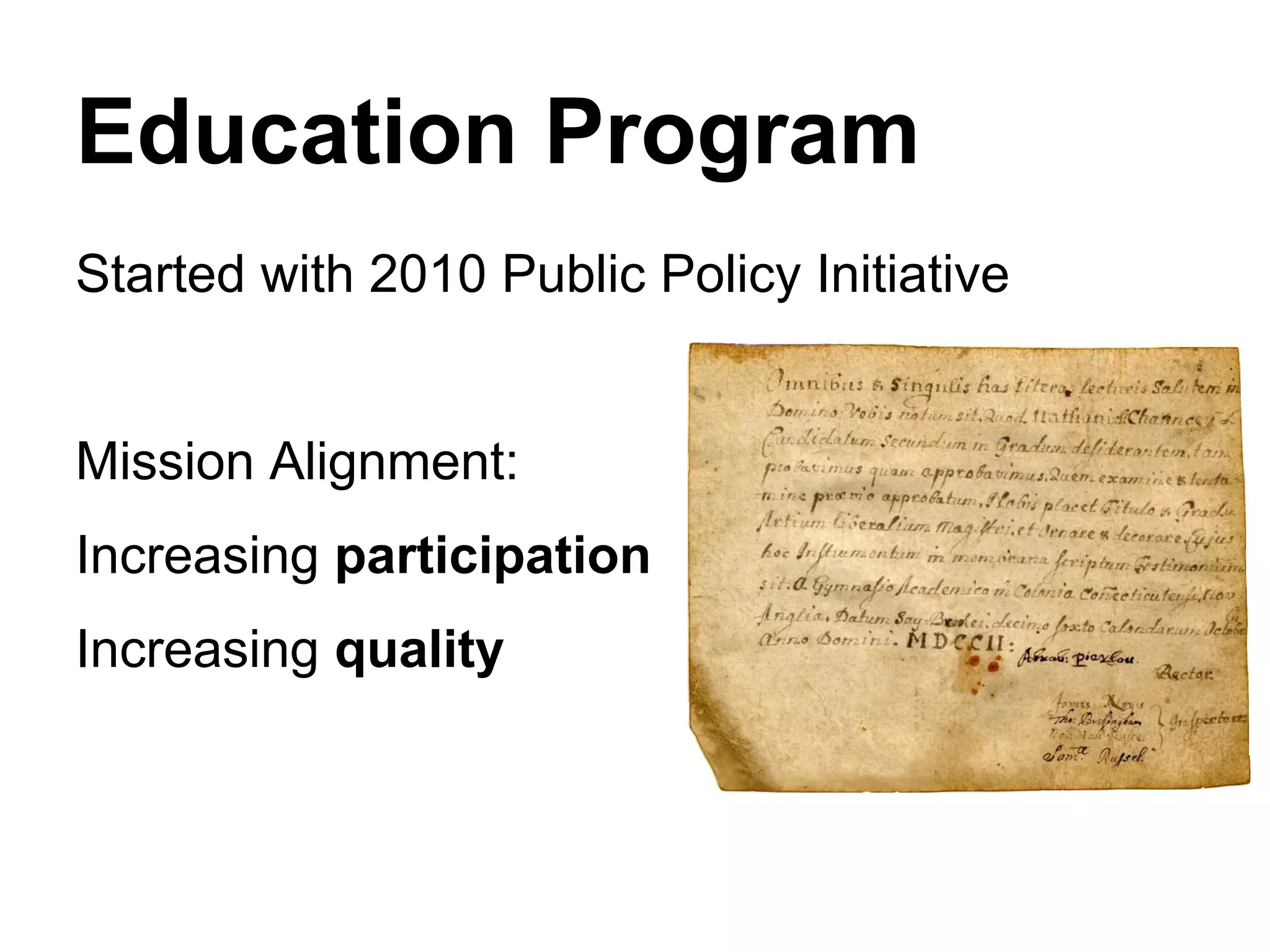
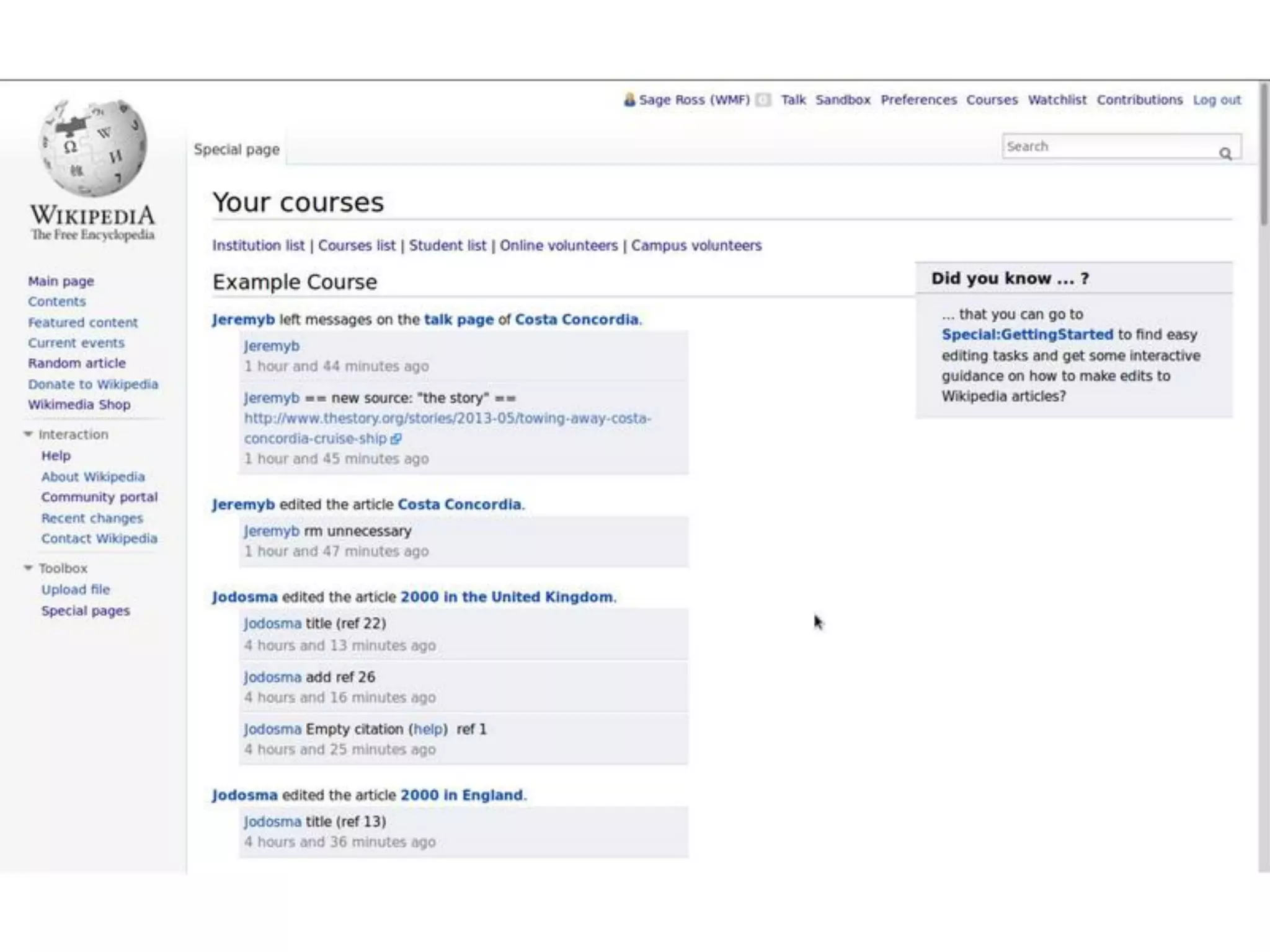
Education Program
Started with 2010 Public Policy Initiative
20,000 printed pages
6,000 Wikipedia articles

Mission Alignment:
Increasing participation
Increasing quality
Questions?
jorlowitz@gmail.com
education@wikimedia.org

The Future of Wikipedia in Education

  • 1.
    The Future ofWikipedia in Education Jake Orlowitz User:Ocaasi jorlowitz@gmail.com @JakeOrlowitz Wikimedia Foundation Grantee Wiki Project Med Foundation Wikipedia Administrator All content under a CC-BY-SA 3.0 license
  • 2.
    An early studyin the journal Nature said that in 2005, Wikipedia scientific articles came close to the level of accuracy in Encyclopædia Britannica and had a similar rate of "serious errors".[2] Between 2008 and 2012, articles in medical and scientific fields such as pathology,[5] toxicology,[6] oncology,[7] pharmaceuticals,[8] and psychiatry[9] comparing Wikipedia to professional and peer-reviewed sources found that Wikipedia's depth and coverage were of a high standard. --Reliability of Wikipedia, Wikipedia
  • 3.
    Ubiquitous usage ● 50%to 90% of physicians ● 35 to 70% of pharmacists ● 94% of medical students use Wikipedia
  • 4.
    Wikipedia’s scale 30m articles,4m English 16 million images 8000 views per second 500 million unique visitors per month 3.7 billion monthly mobile pageviews 2.1 billion edits, 700 million English
  • 5.
    Wikipedia’s mission Imagine aworld in which every person on the planet shares in the sum of all human knowledge. That is what we’re doing. (for free, in the language of their choice)
  • 6.
    Wikipedia’s volunteers 20 millionregistered users 120,000 active editors 1,400 administrators … working for free, with no central control
  • 7.
    Wikimedia’s scope 286 languages 18projects images, data, dictionary, travel guide, species, quotes, books, source material, wiki software...
  • 8.
    Wikimedia Foundation San Francisco 150employees Donor funded Nonprofit No ads!
  • 9.
    Wikipedia’s pillars Neutral pointof view Verifiability Consensus Civility Open copyright
  • 12.
    Wikipedia’s reliability As accurateas Britannica Errors fixed quickly over time “Many eyeballs make all bugs shallow” Virtual filter Teaches information literacy
  • 13.
    Multiple safeguards 1. EditFilter automatically rejects known vandalism patterns 2. ClueBot reverts and flags suspicious edits with a machine-learning bot 3. Humans review malicious changes tagged with language recognition tools 4. Vandalism patterns are checked against metadata and historical trends 5. Recent changes patrollers scroll through new edits 6. Editors alerted to each change on all pages in their article watchlist 7. Specialists and experts report and fix mistakes when they see them 8. Millions of readers identify and correct errors when they come upon them 9. Link blacklists lock out known spam sites and unreliable sources 10. Detection mechanisms to determine conflict of interest 11. Administrators to block disruptive editors and protect pages
  • 14.
    Featured, Good articles Semi-formalpeer review Total: 4,000 FAs and 10,000 GAs Frequently written by experts Primarily by one or by a few people [20]
  • 15.
    Pedagogical Benefit ● Engagedstudents, global audience, realworld purpose ● Unique assignment, peer feedback, cool and different ● Media literacy, identify bias, evaluate credibility ● Constructing knowledge, content gaps ● Discourse, collaboration, community of practice ● Expository writing, literature review, citation ● Critical thinking, process reflection ● Plagiarism, close paraphrasing, copyright ● Digital citizenship, online etiquette, wiki code
  • 16.
  • 20.
    Education Program Started with2010 Public Policy Initiative 20,000 printed pages 6,000 Wikipedia articles Mission Alignment: Increasing participation Increasing quality
  • 28.