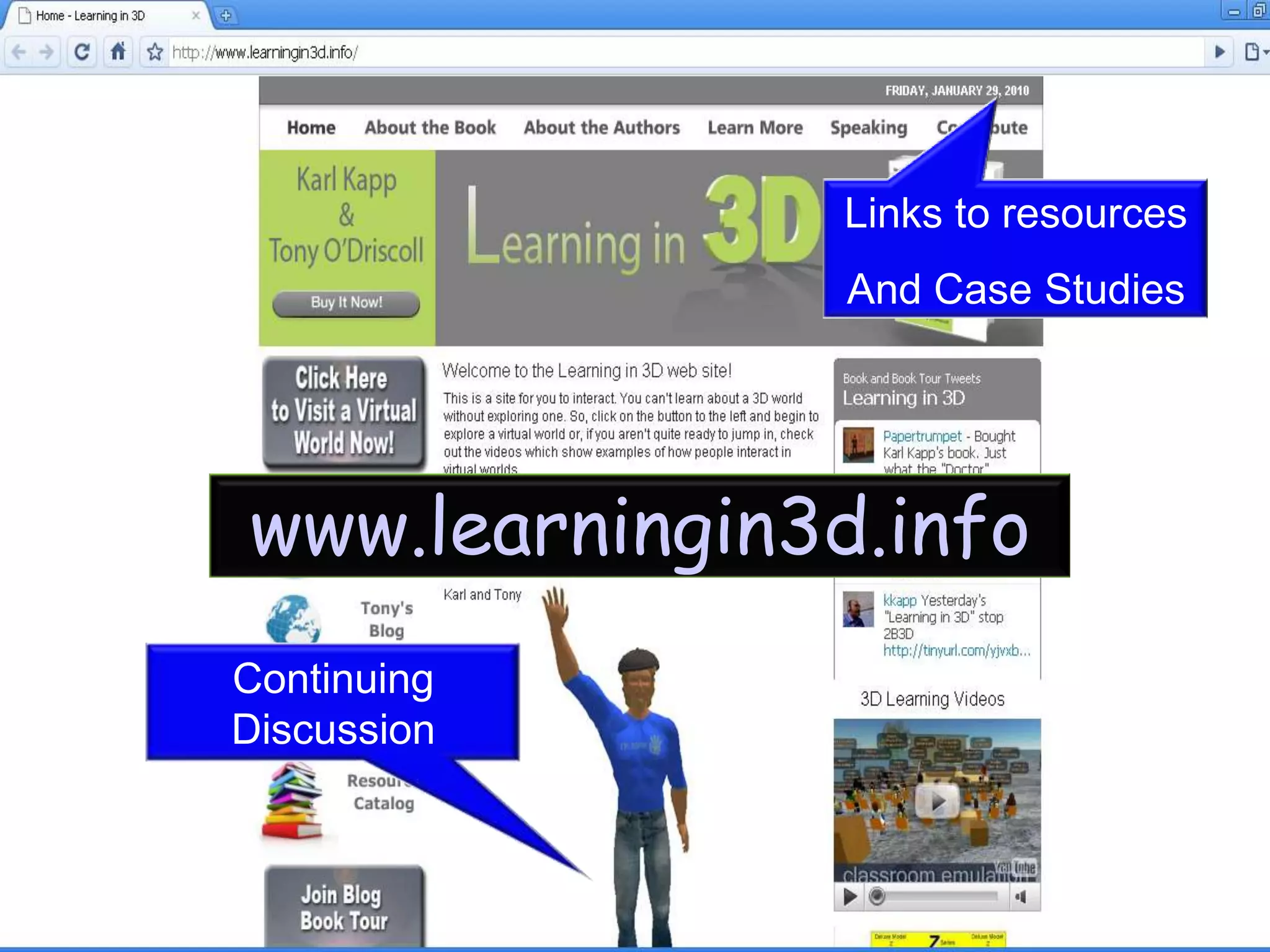



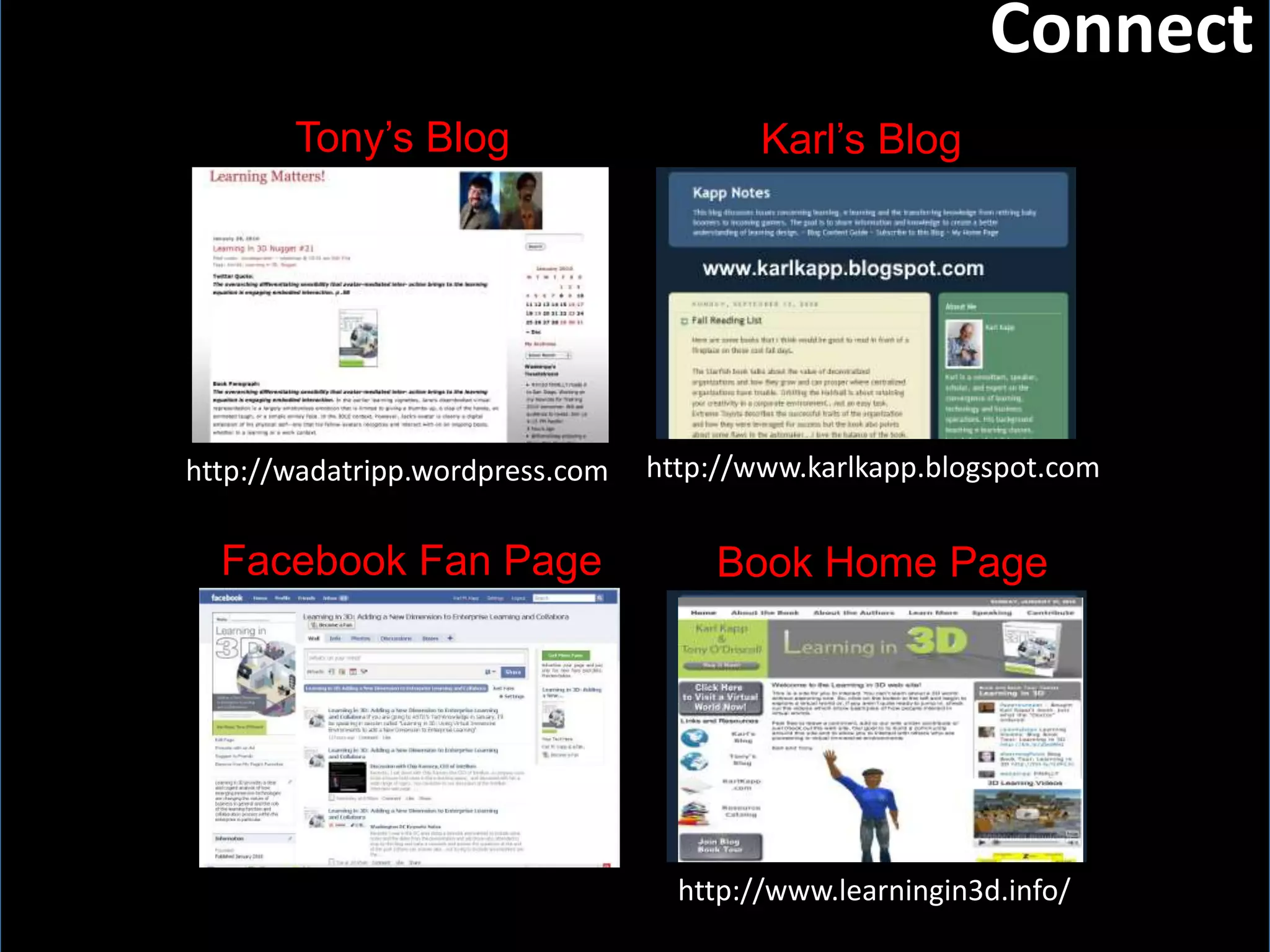
Links to resourcesAnd Case Studieswww.learningin3d.infoContinuing Discussion
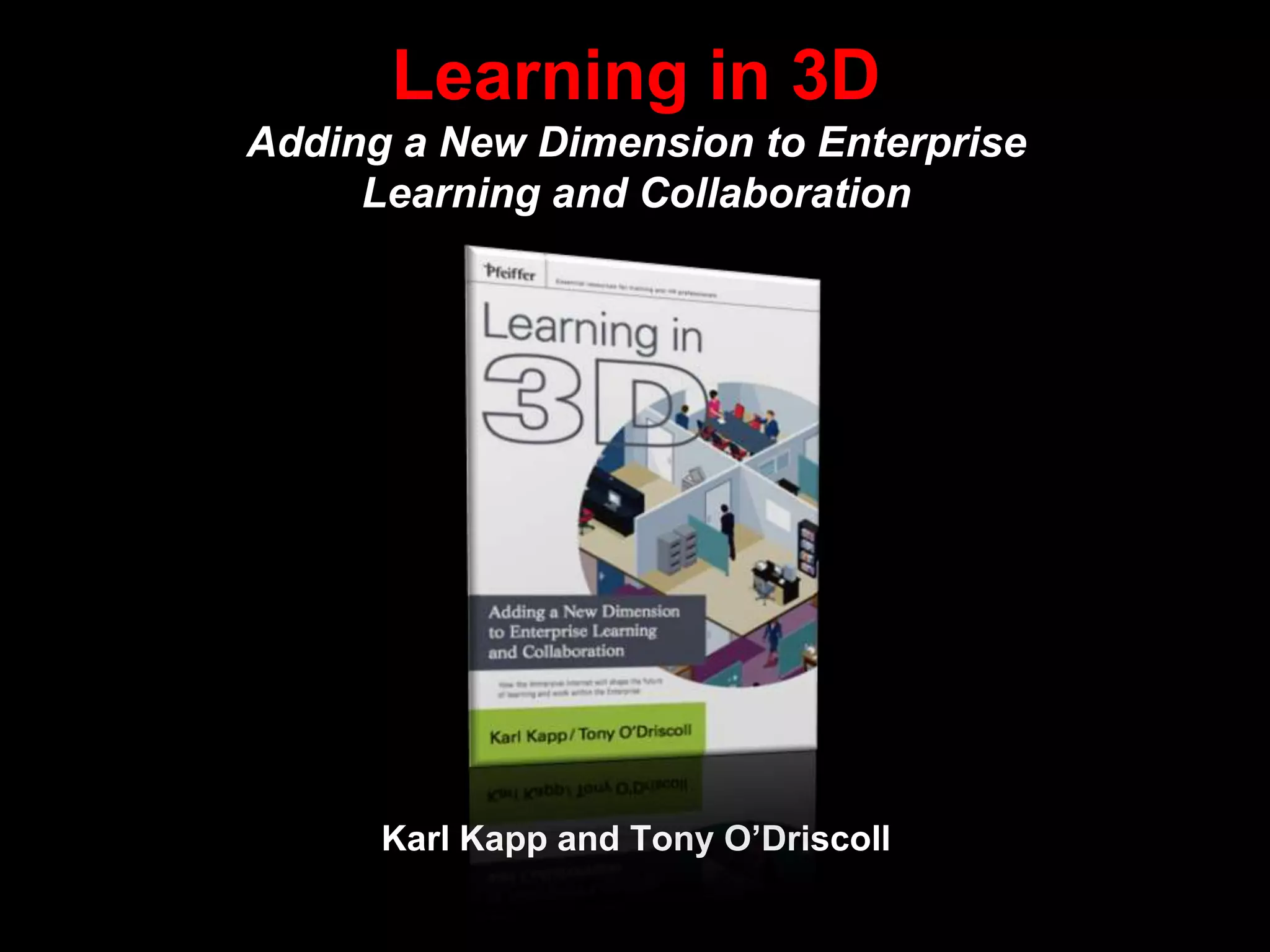
Learning in 3DAdding a New Dimension to EnterpriseLearning and CollaborationKarl Kapp and Tony O’Driscoll
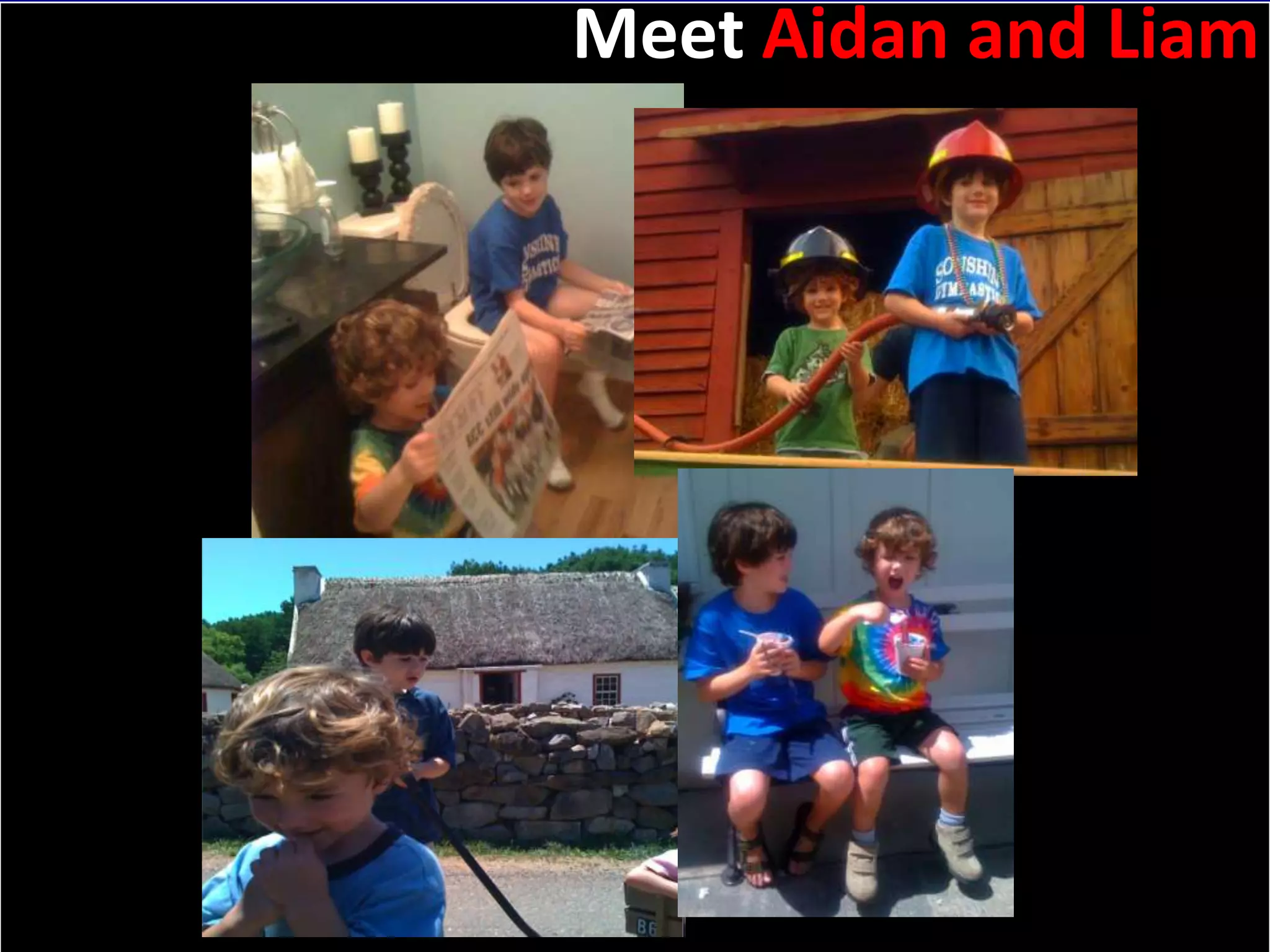
Slide: 3Meet Aidan and Liam
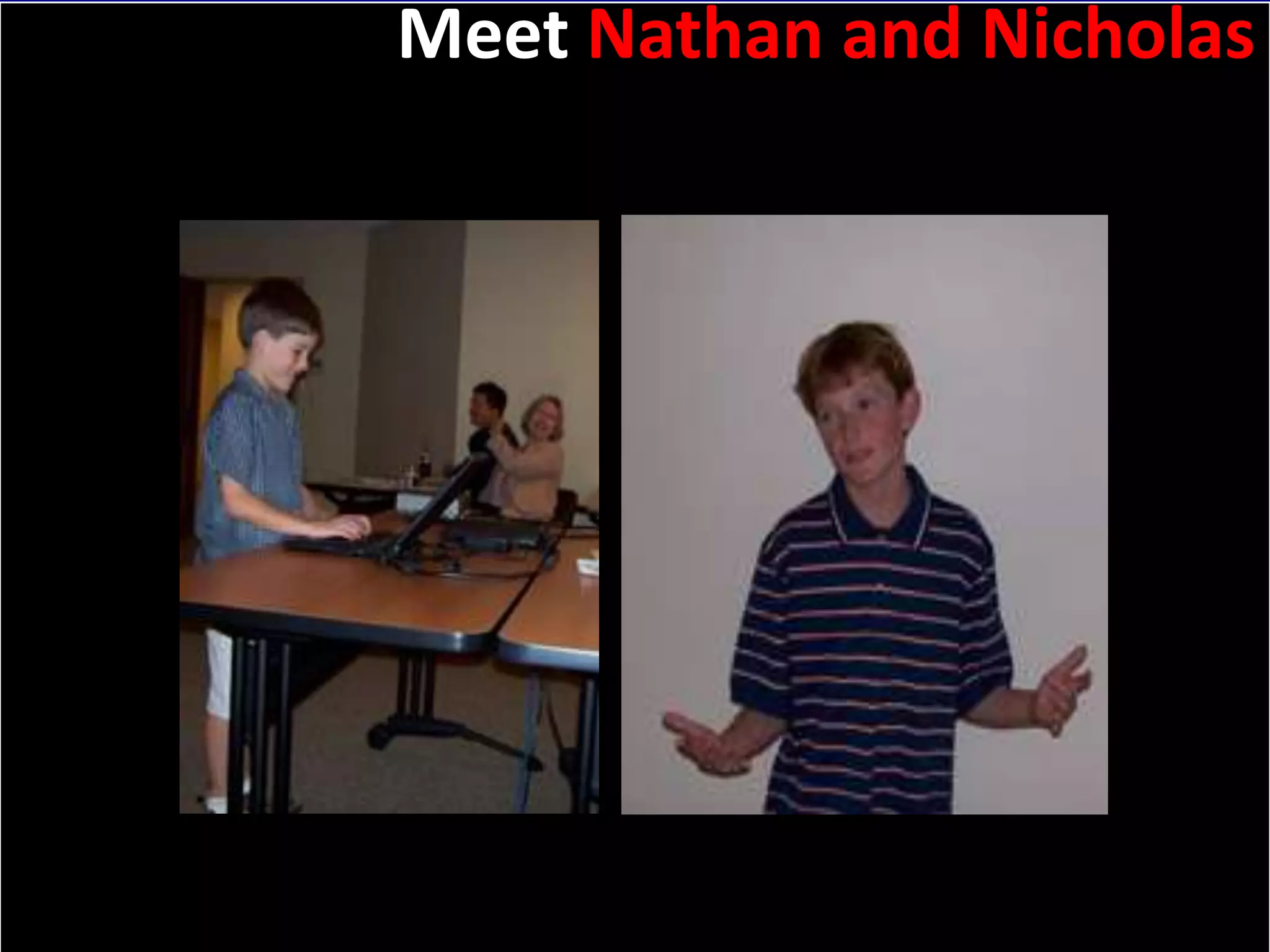
Slide: 4Meet Nathan and Nicholas
And, of course, TRONSlide: 5
Slide: 6Quick Poll: Do you Avatar?
Lets Write a Book!
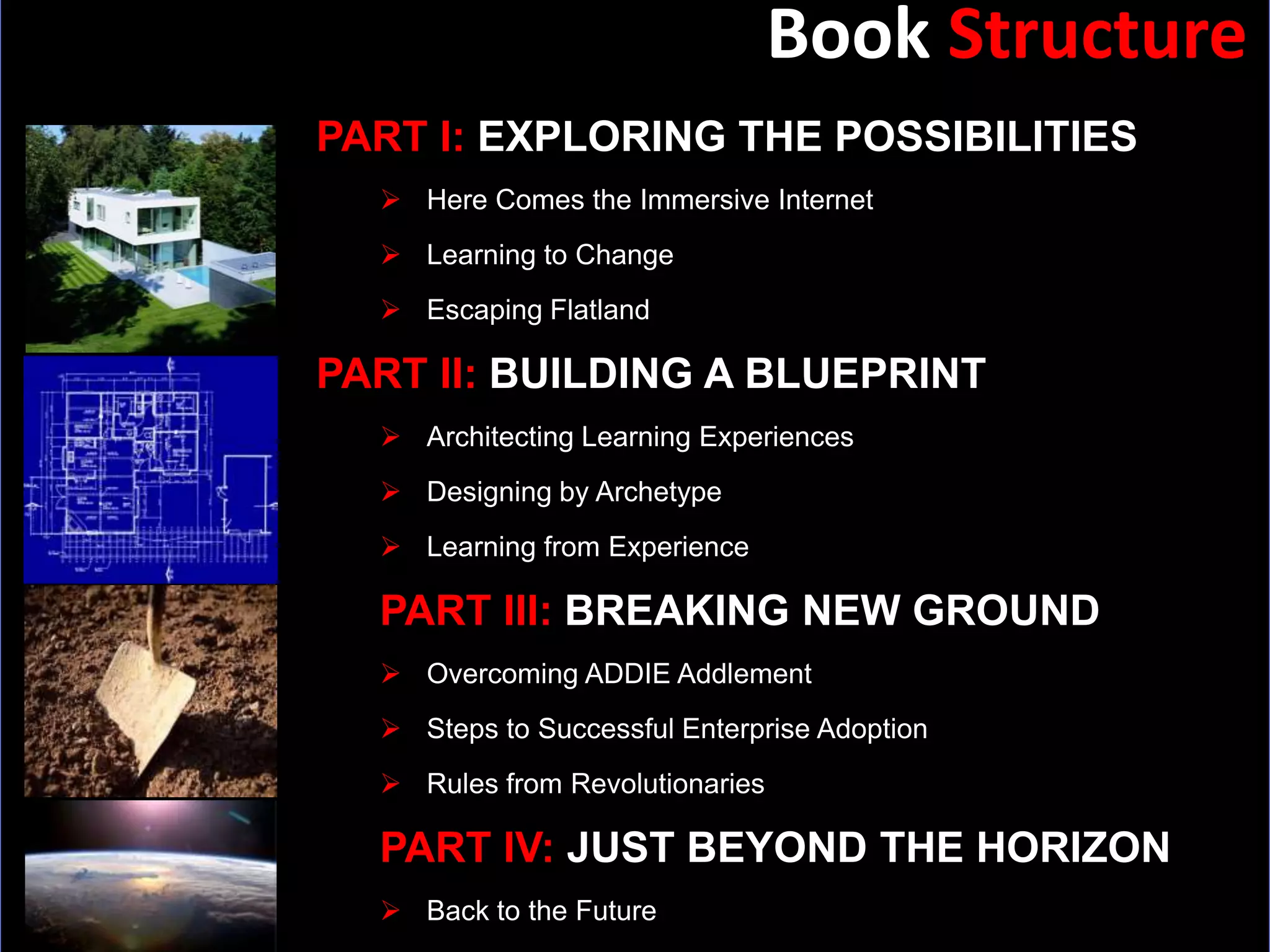
Book StructurePART I: EXPLORING THE POSSIBILITIESHere Comes the Immersive Internet
Learning to Change
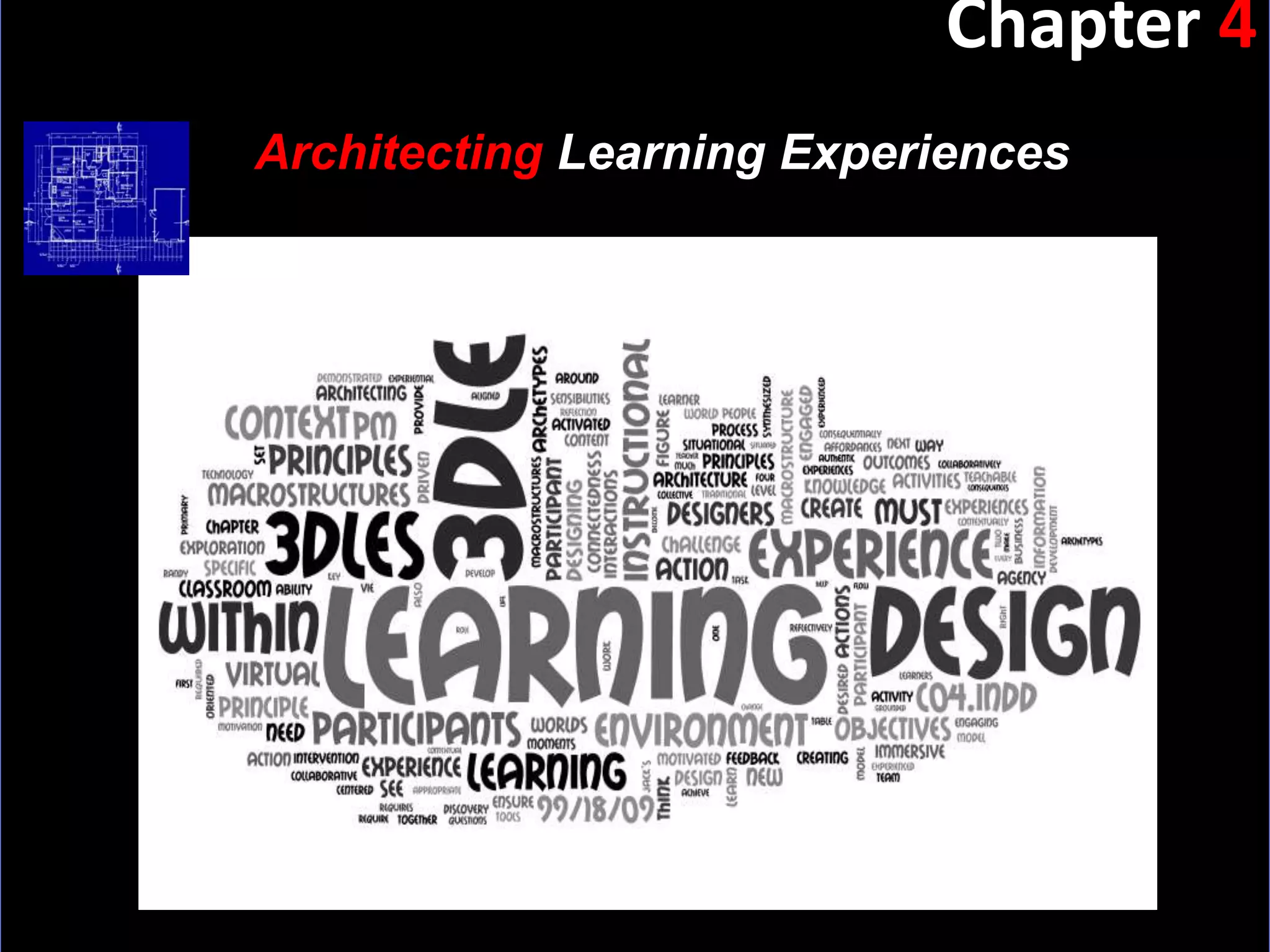
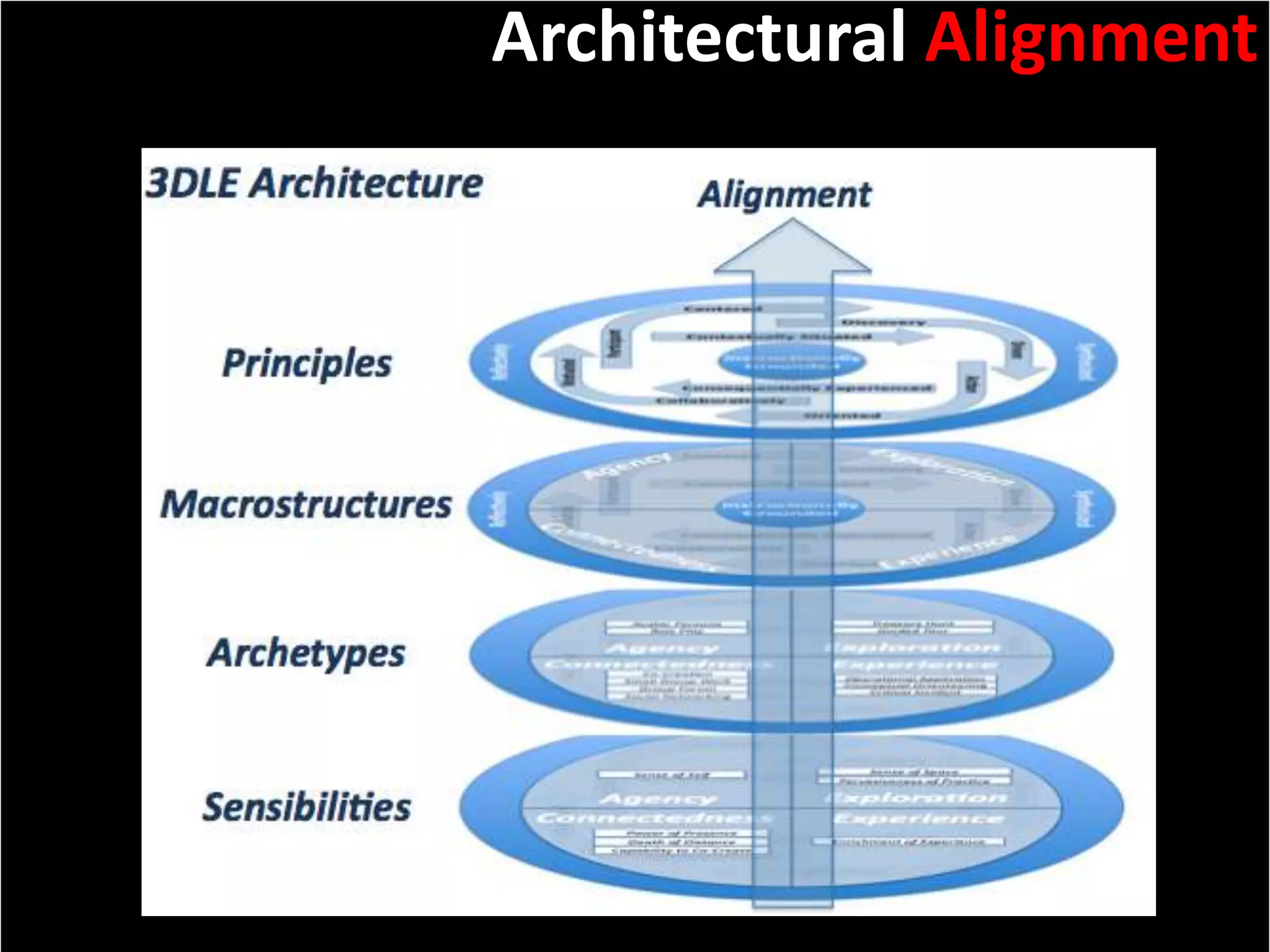
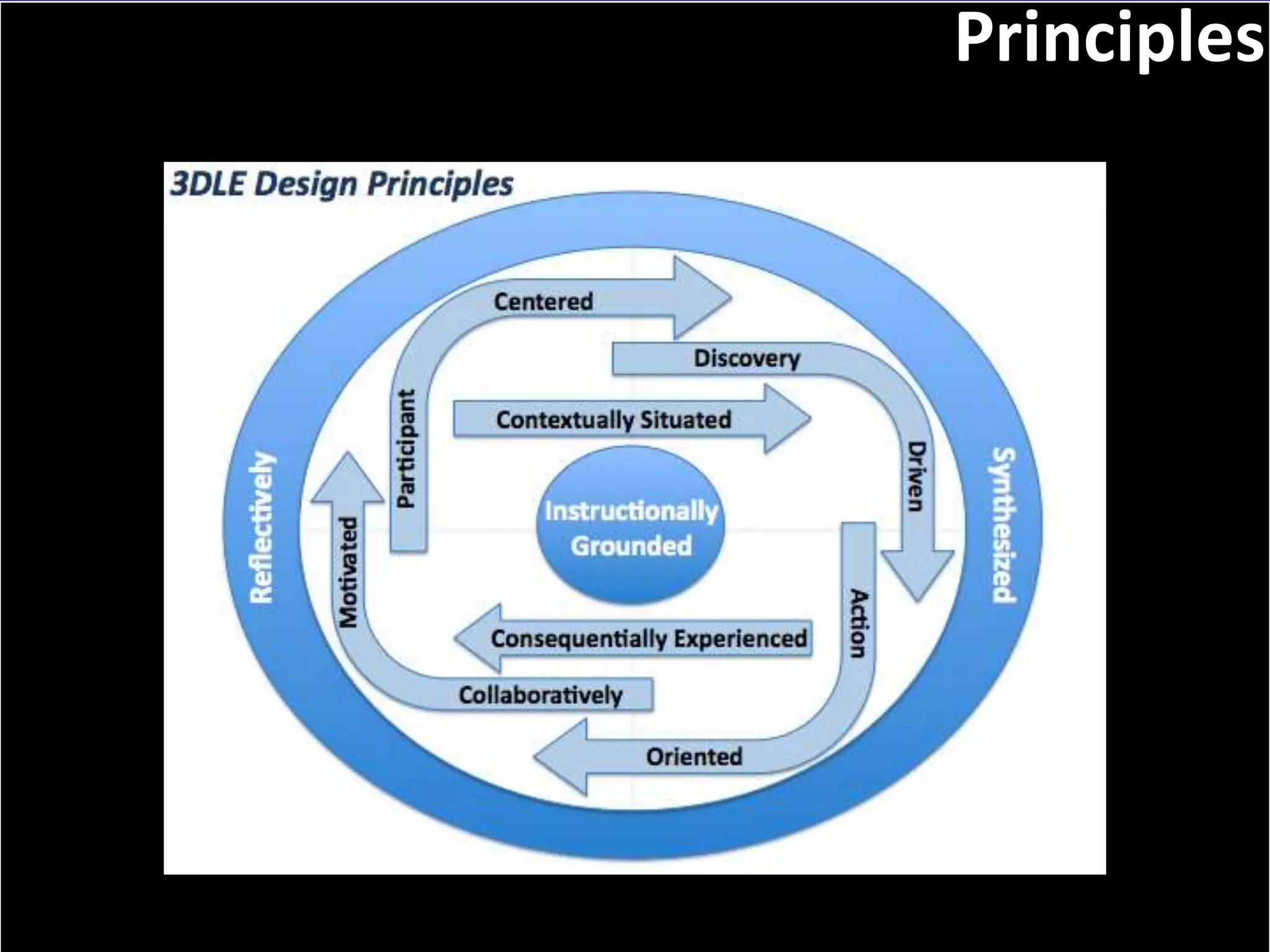
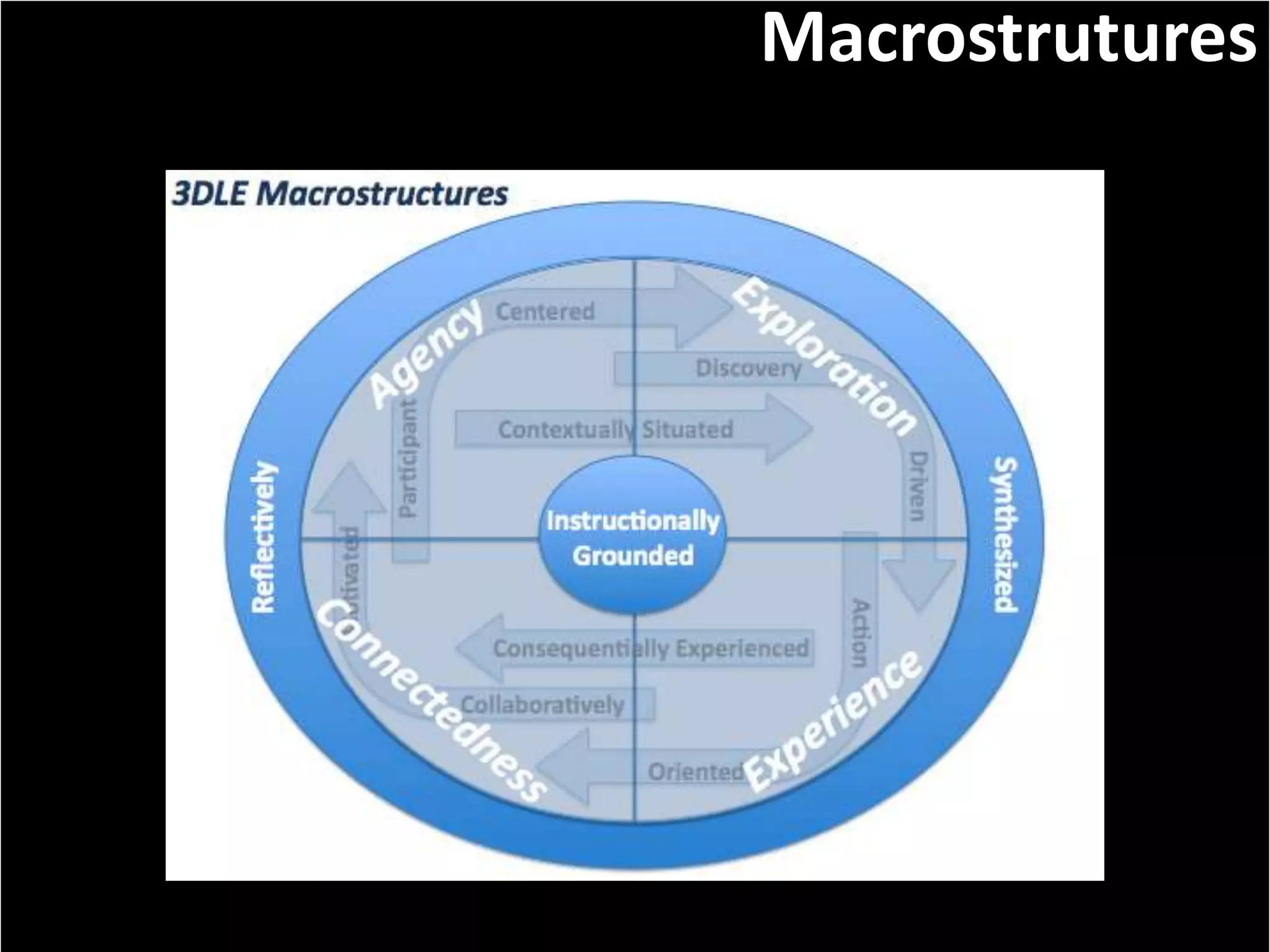
Escaping FlatlandPART II: BUILDING A BLUEPRINTArchitecting Learning Experiences
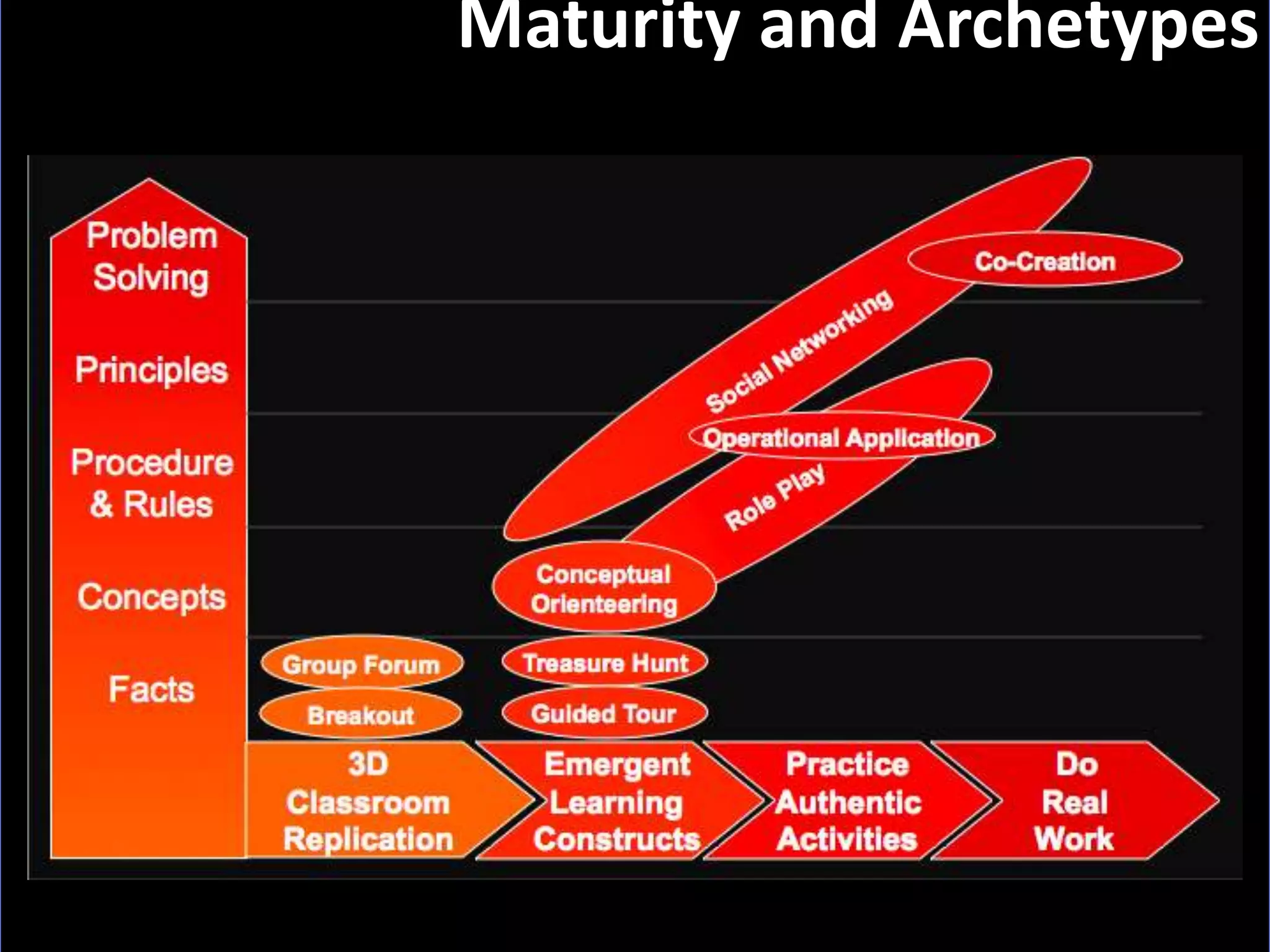
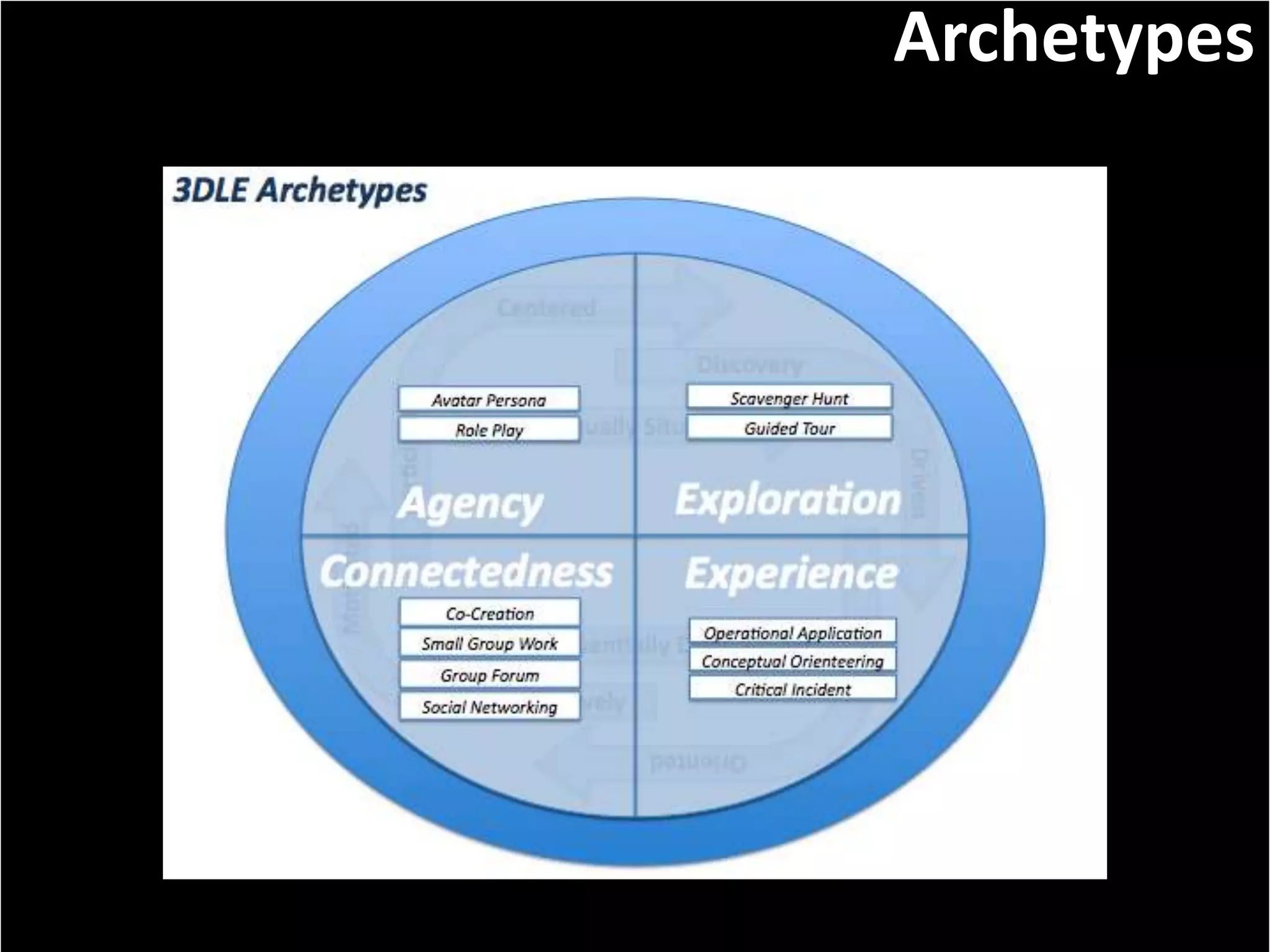
Designing by Archetype
Learning from ExperiencePART III: BREAKING NEW GROUNDOvercoming ADDIE Addlement
Steps to Successful Enterprise Adoption
Rules from RevolutionariesPART IV: JUST BEYOND THE HORIZONBack to the FutureChapter 6Learning from Experience
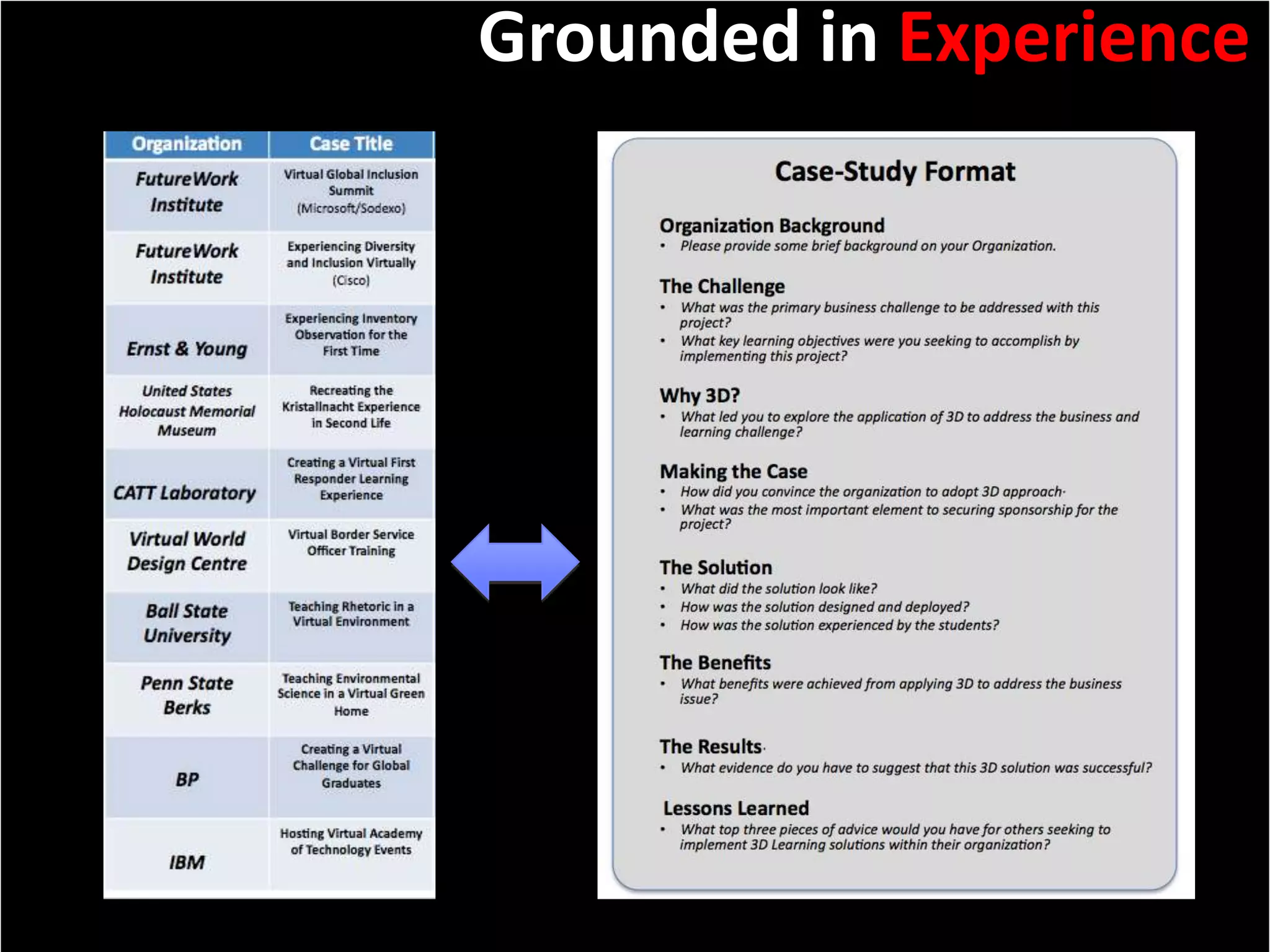
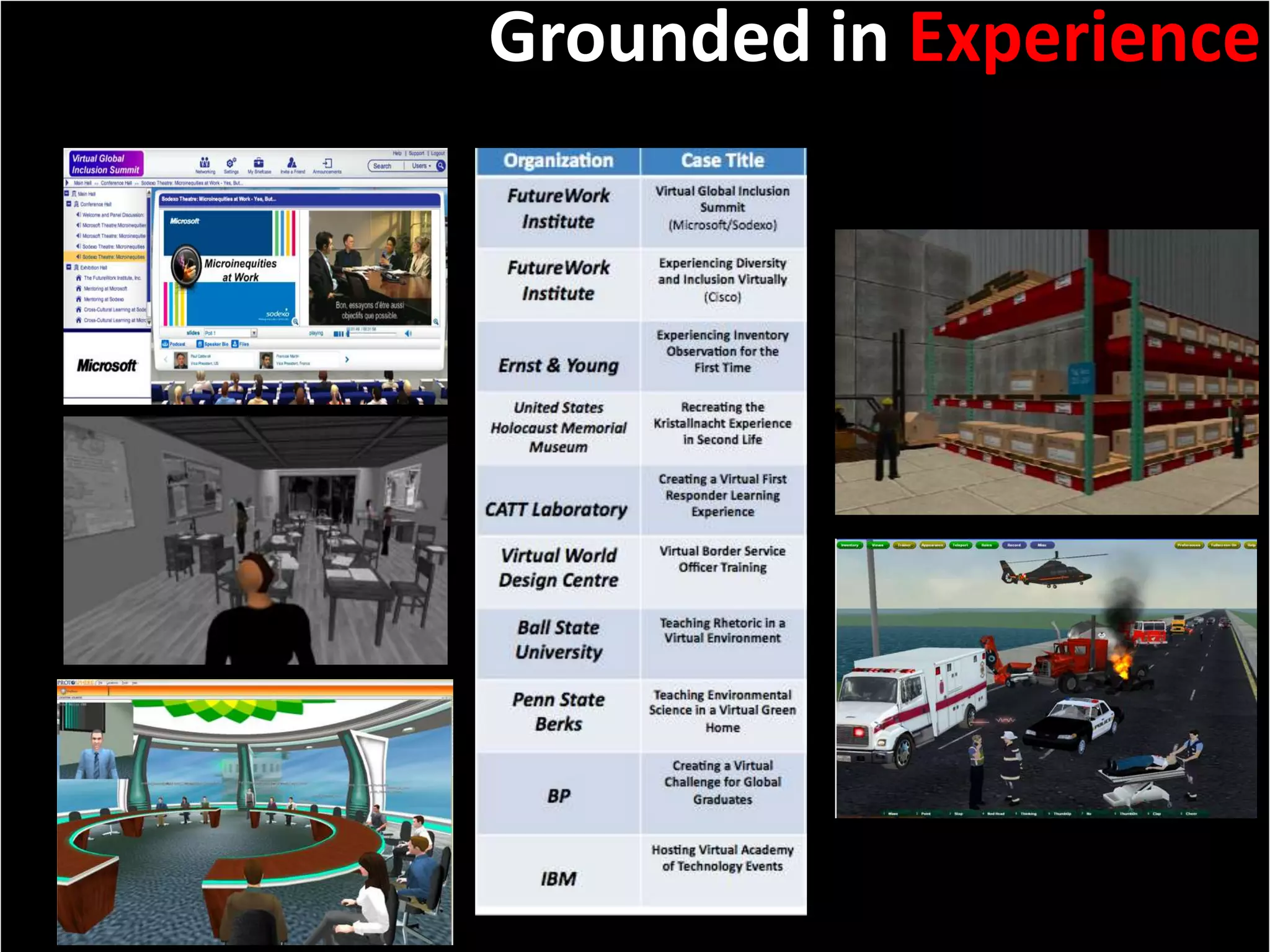
Grounded in Experience
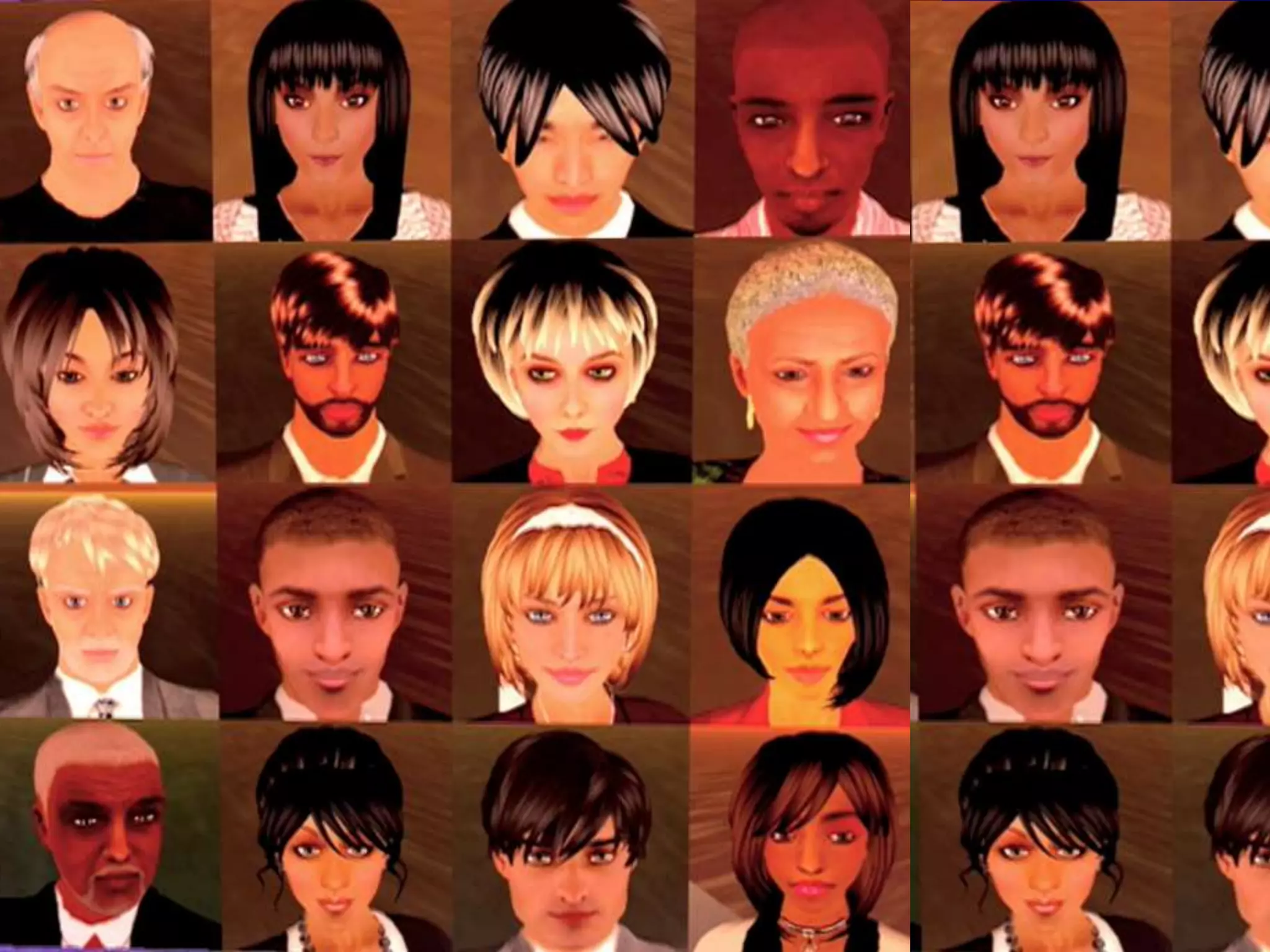
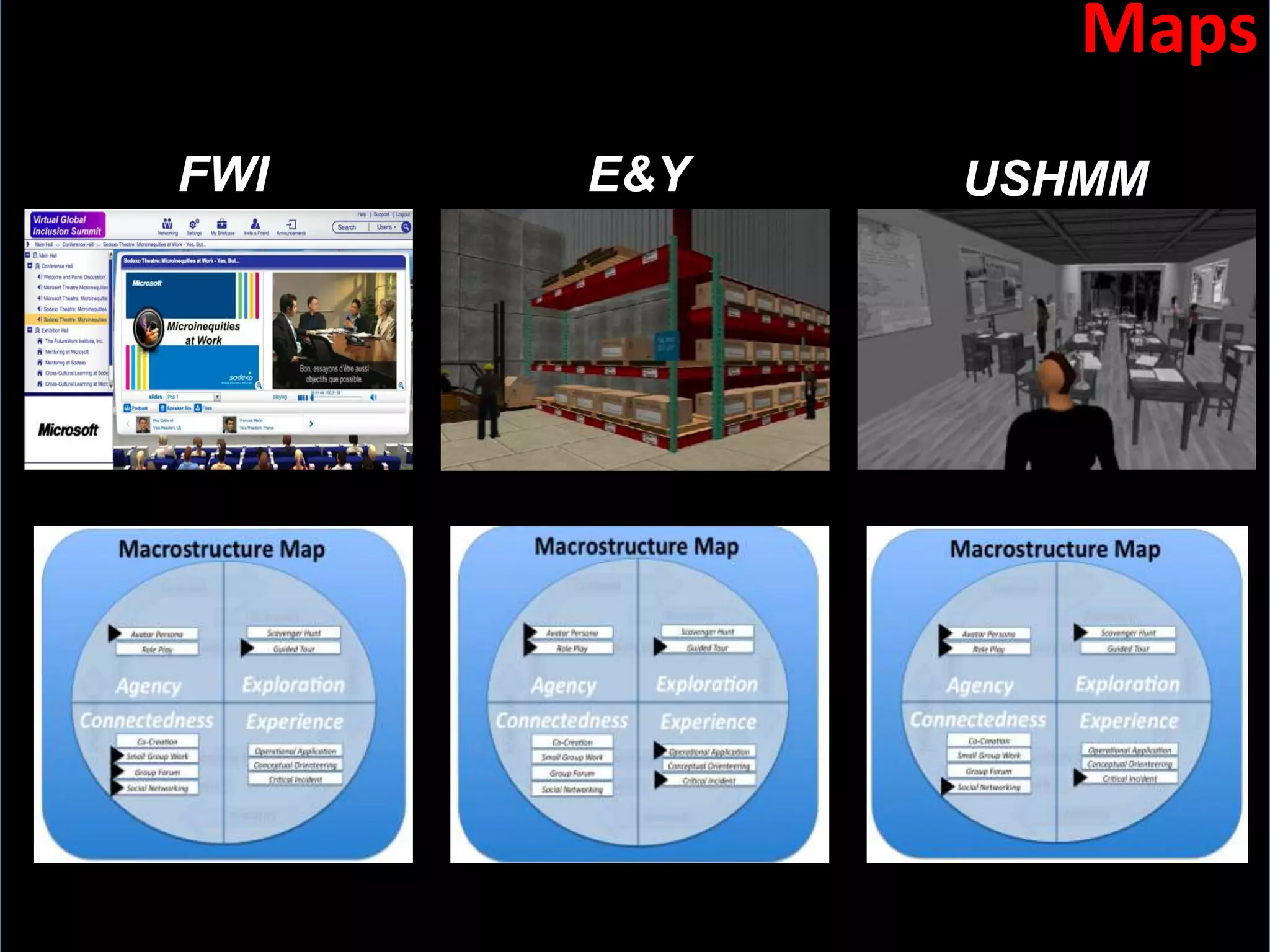
Slide: 12FutureWork Institute CaseDiversity and InclusionSource: With some help from Roger Shank’s use of same Mnemonic for Scenario Based learning
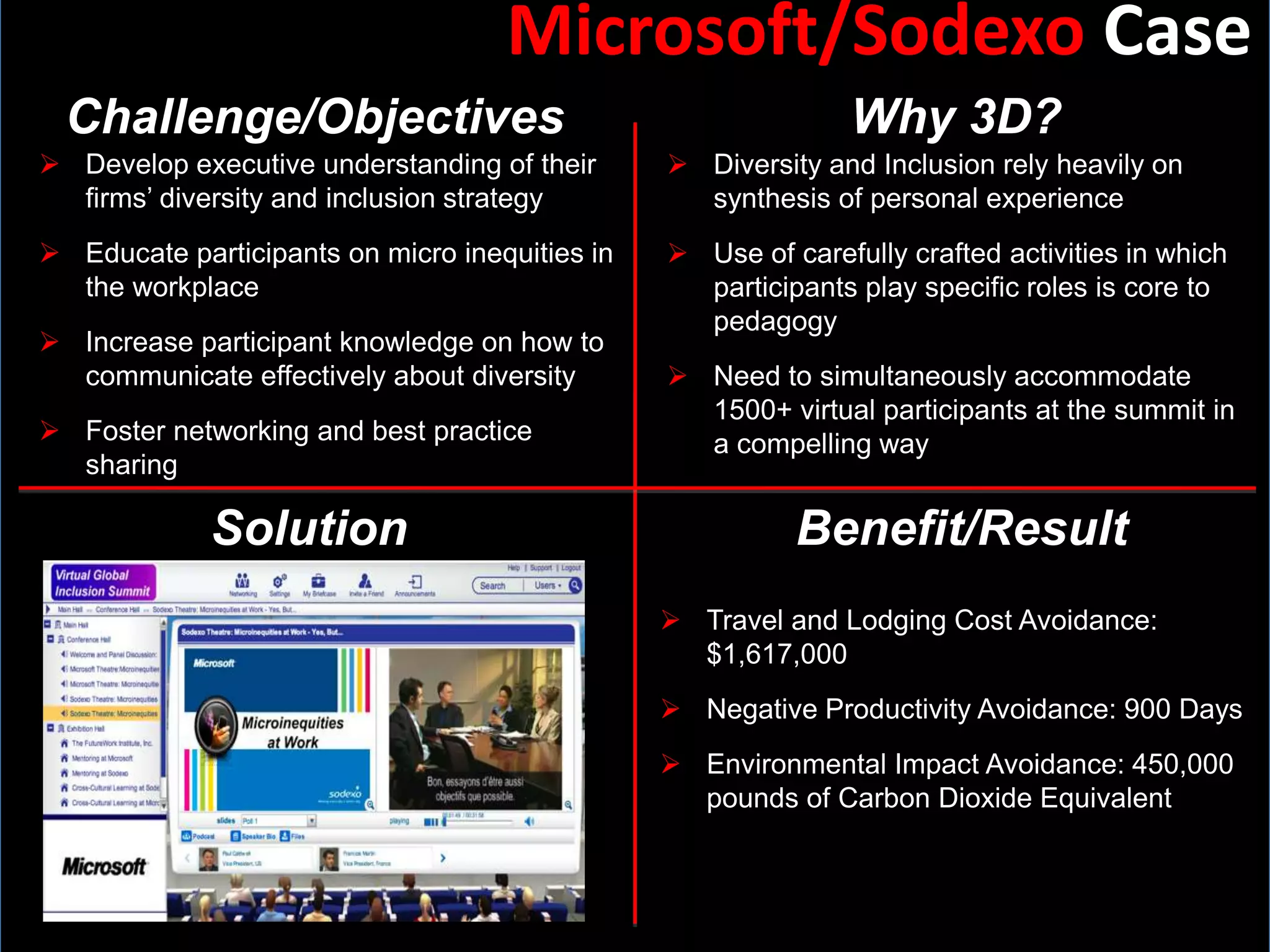
Microsoft/Sodexo CaseChallenge/ObjectivesWhy 3D?Develop executive understanding of their firms’ diversity and inclusion strategy
Educate participants on micro inequities in the workplace
Increase participant knowledge on how to communicate effectively about diversity
Foster networking and best practice sharing
Diversity and Inclusion rely heavily on synthesis of personal experience
Use of carefully crafted activities in which participants play specific roles is core to pedagogy
Need to simultaneously accommodate 1500+ virtual participants at the summit in a compelling waySolutionBenefit/ResultTravel and Lodging Cost Avoidance:  $1,617,000
Negative Productivity Avoidance: 900 Days
Environmental Impact Avoidance: 450,000 pounds of Carbon Dioxide EquivalentSlide: 17Ernst & Young CaseInventory ObservationSource: With some help from Roger Shank’s use of same Mnemonic for Scenario Based learning
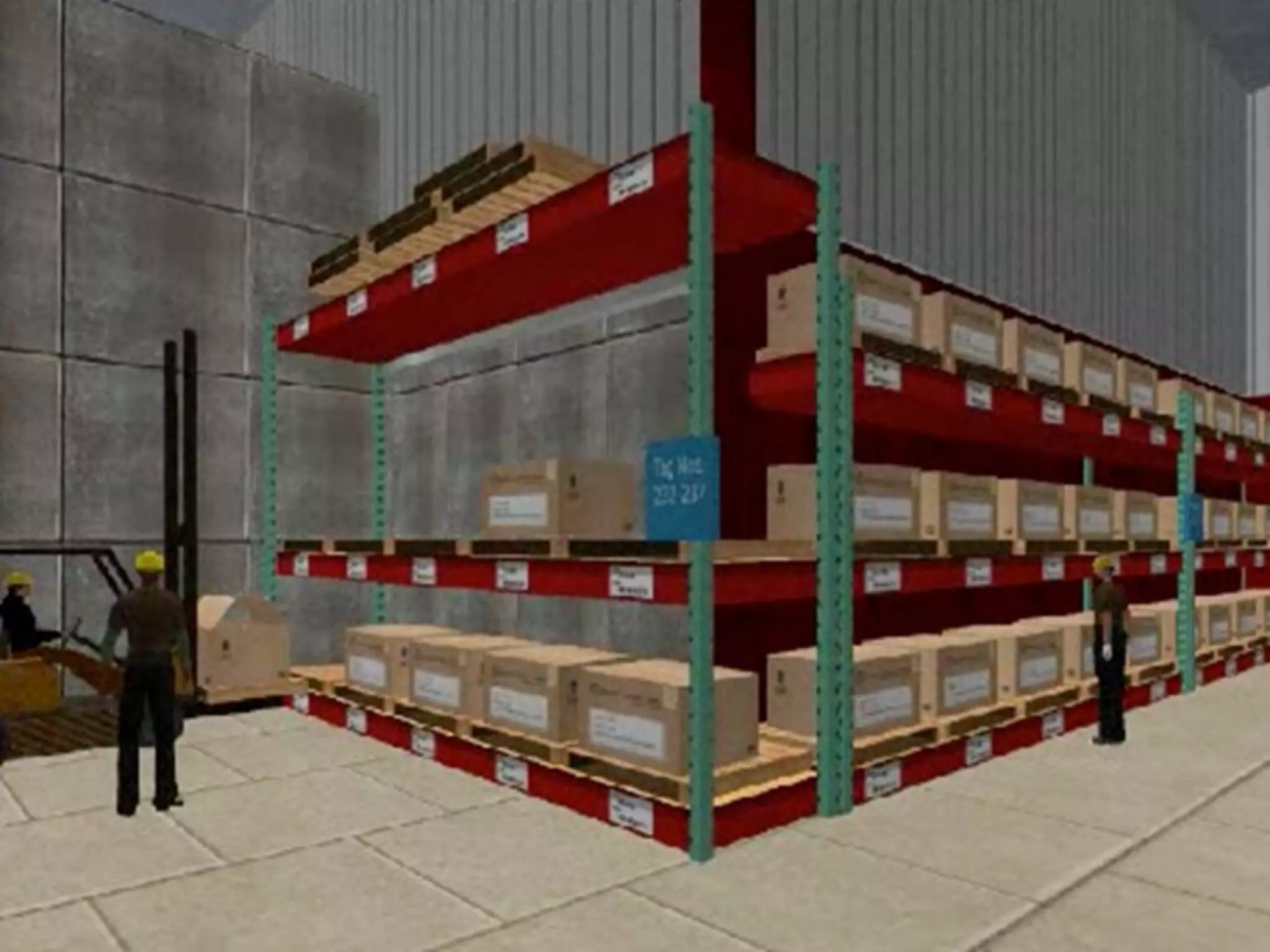
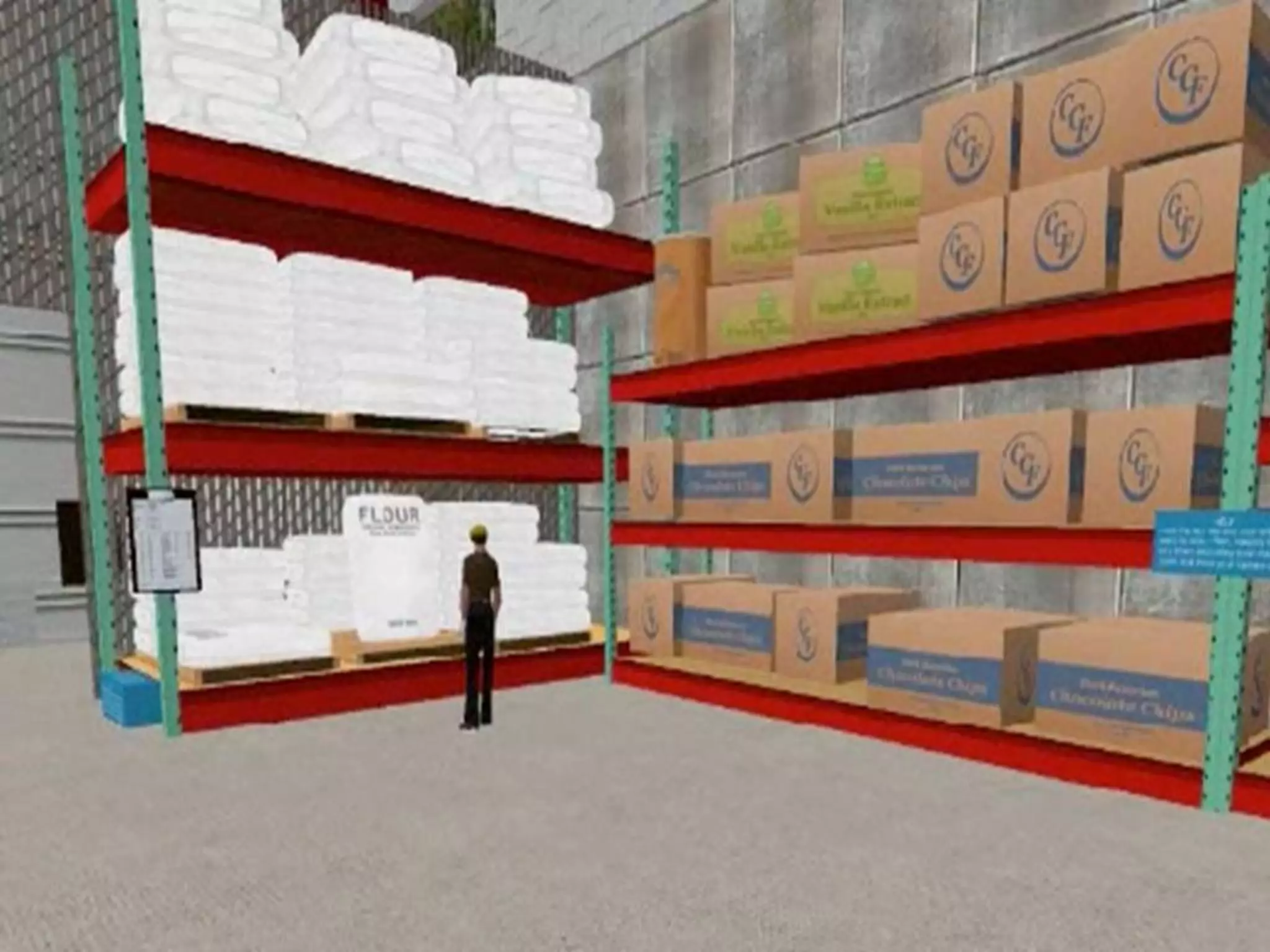
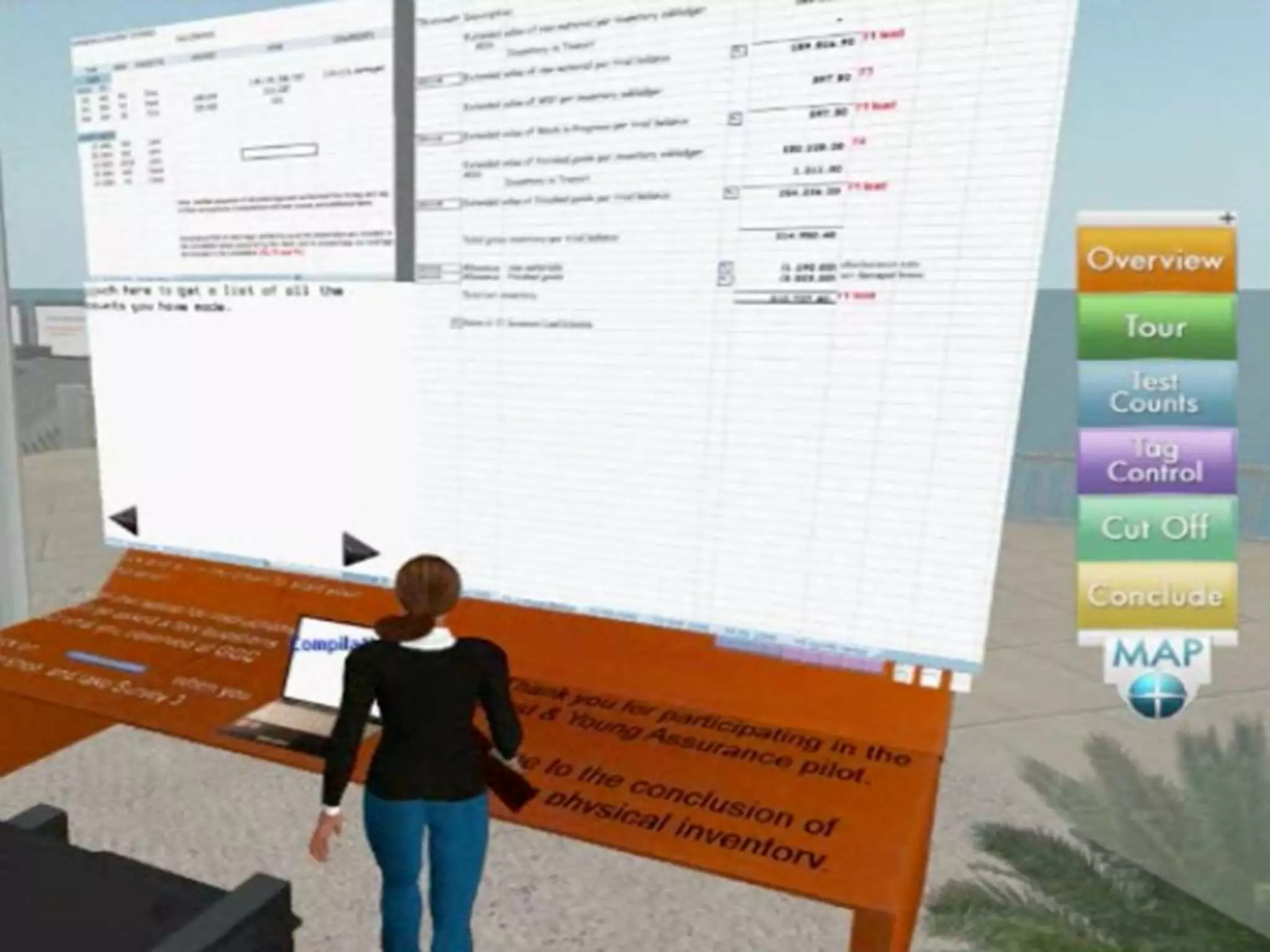
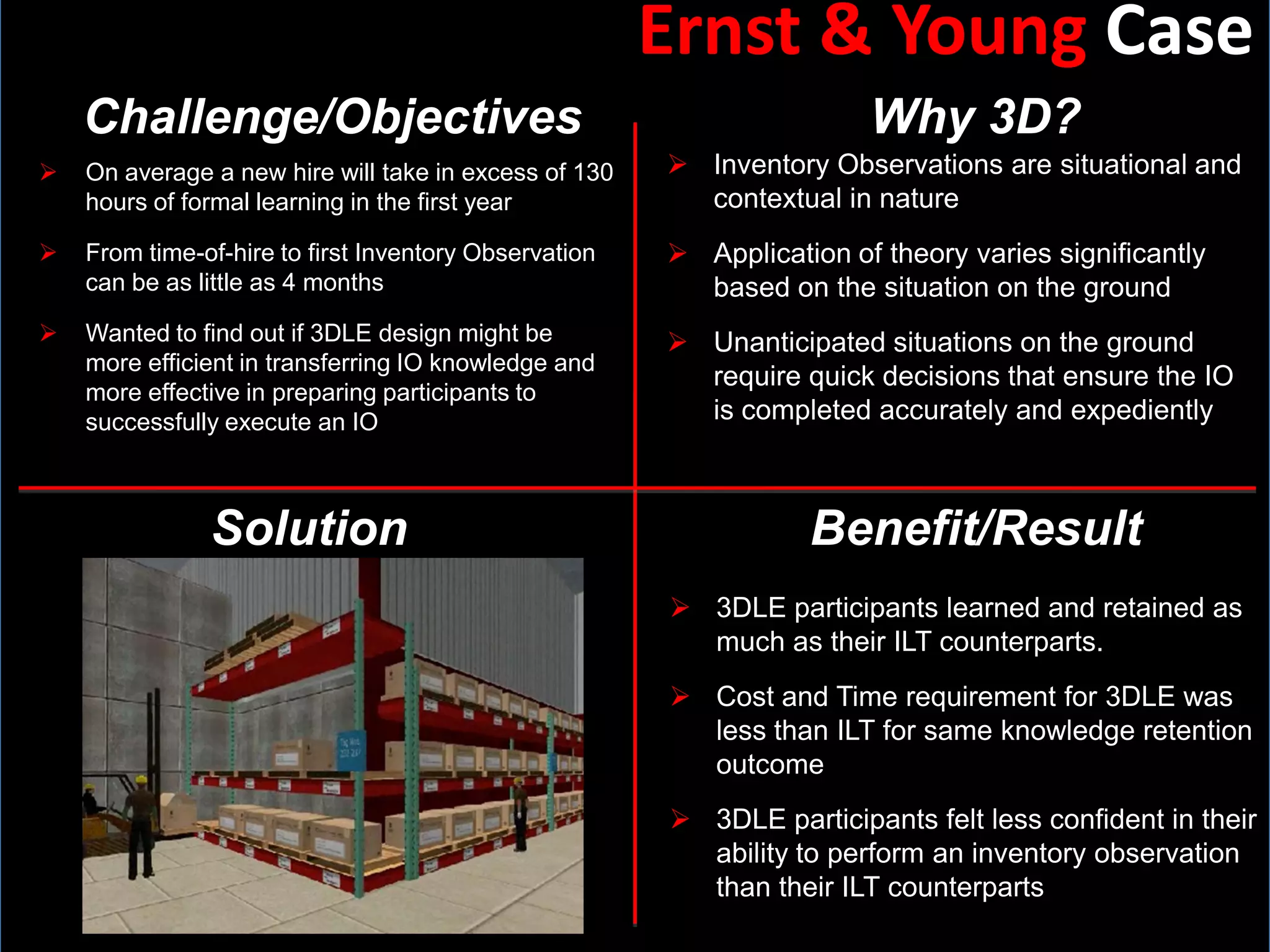
Ernst & Young CaseChallenge/ObjectivesWhy 3D?Inventory Observations are situational and contextual in nature
Application of theory varies significantly based on the situation on the ground
Unanticipated situations on the ground require quick decisions that ensure the IO is completed accurately and expediently
On average a new hire will take in excess of 130 hours of formal learning in the first year
From time-of-hire to first Inventory Observation can be as little as 4 months
Wanted to find out if 3DLE design might be more efficient in transferring IO knowledge and more effective in preparing participants to successfully execute an IOSolutionBenefit/Result3DLE participants learned and retained as much as their ILT counterparts.
Cost and Time requirement for 3DLE was less than ILT for same knowledge retention outcome
3DLE participants felt less confident in their ability to perform an inventory observation than their ILT counterpartsSlide: 23USHMM CaseKristallnacht ExhibitionSource: With some help from Roger Shank’s use of same Mnemonic for Scenario Based learning
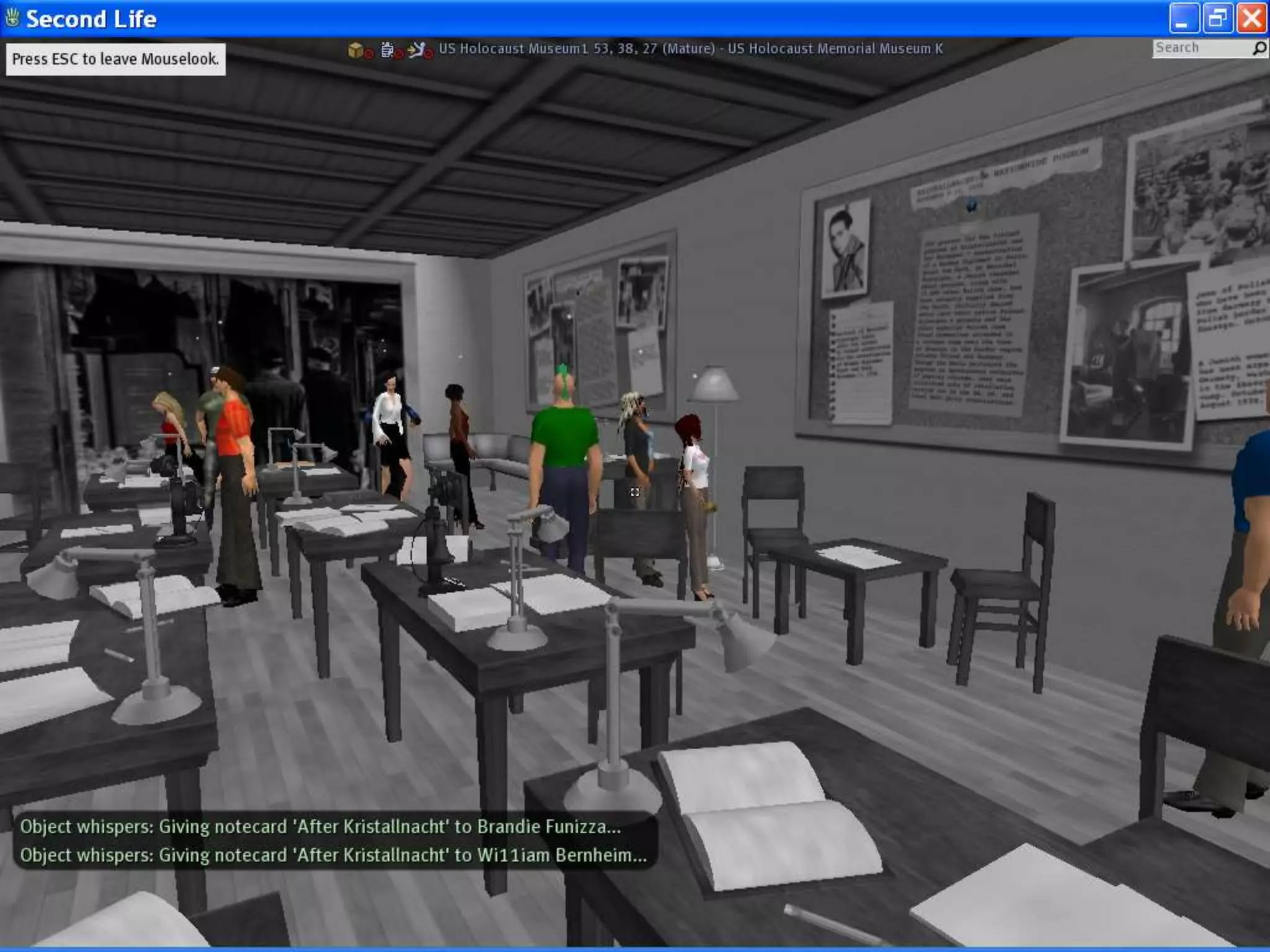
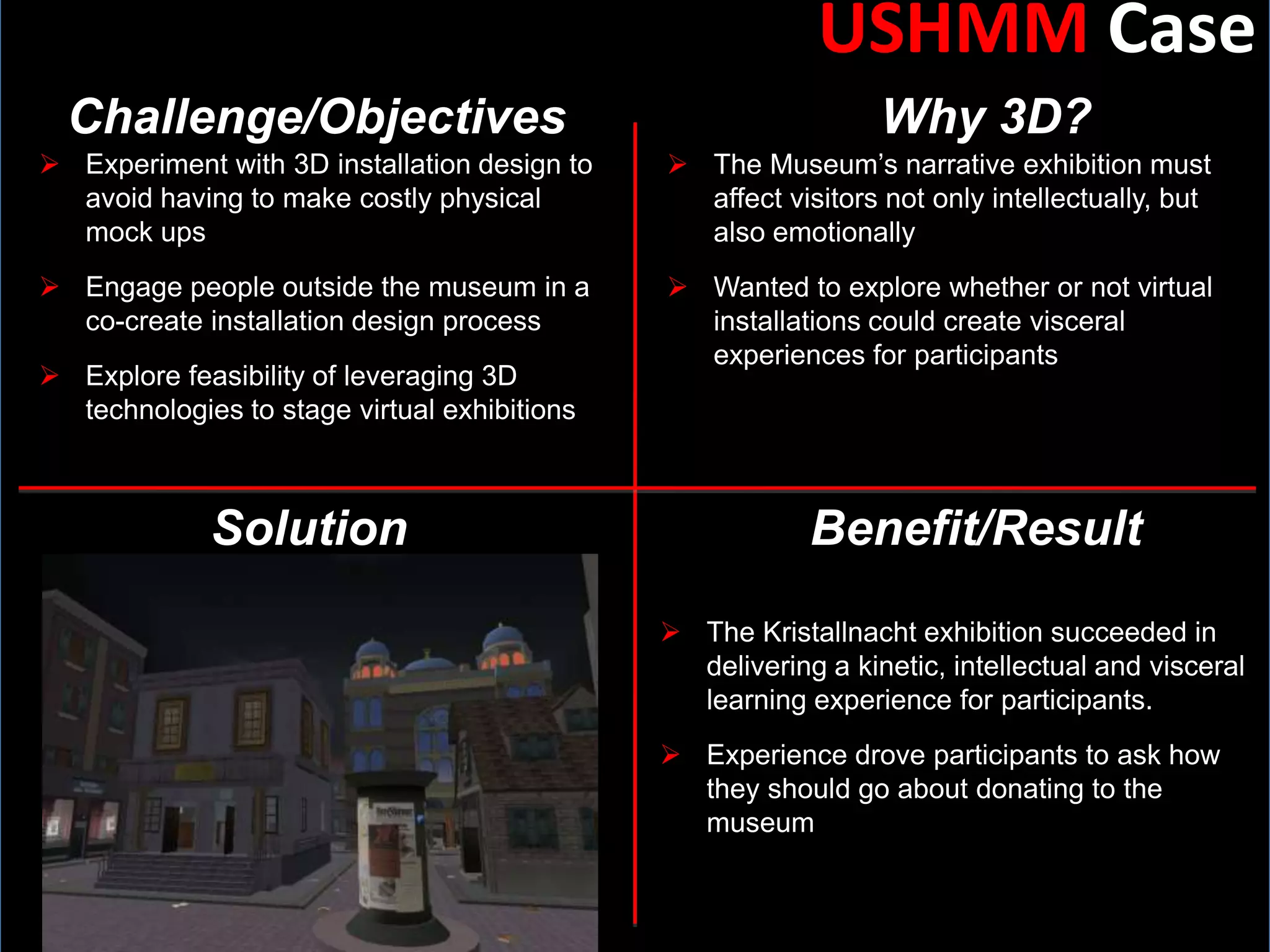
USHMM CaseChallenge/ObjectivesWhy 3D?Experiment with 3D installation design to avoid having to make costly physical mock ups
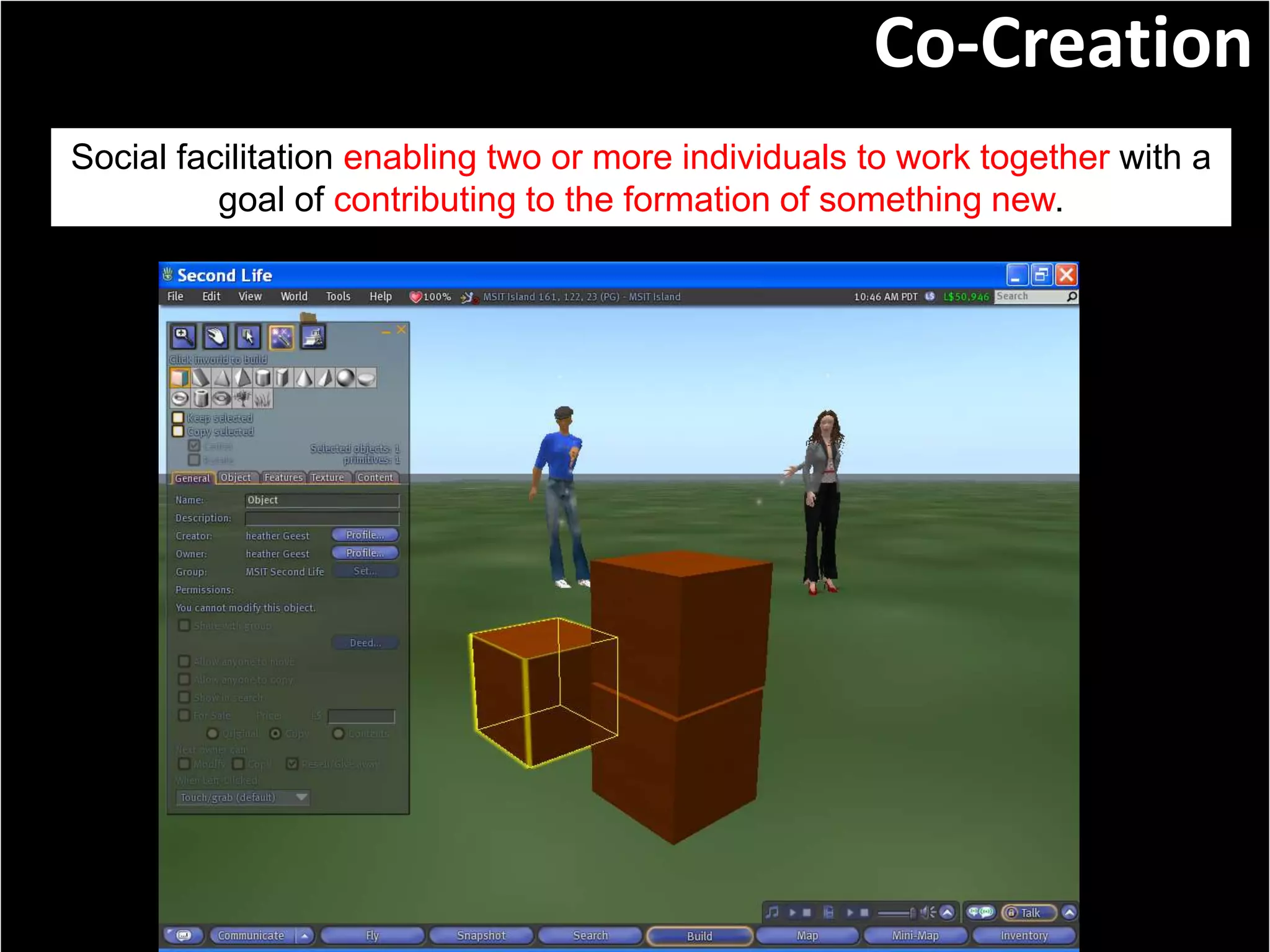
Engage people outside the museum in a co-create installation design process
Explore feasibility of leveraging 3D technologies to stage virtual exhibitions
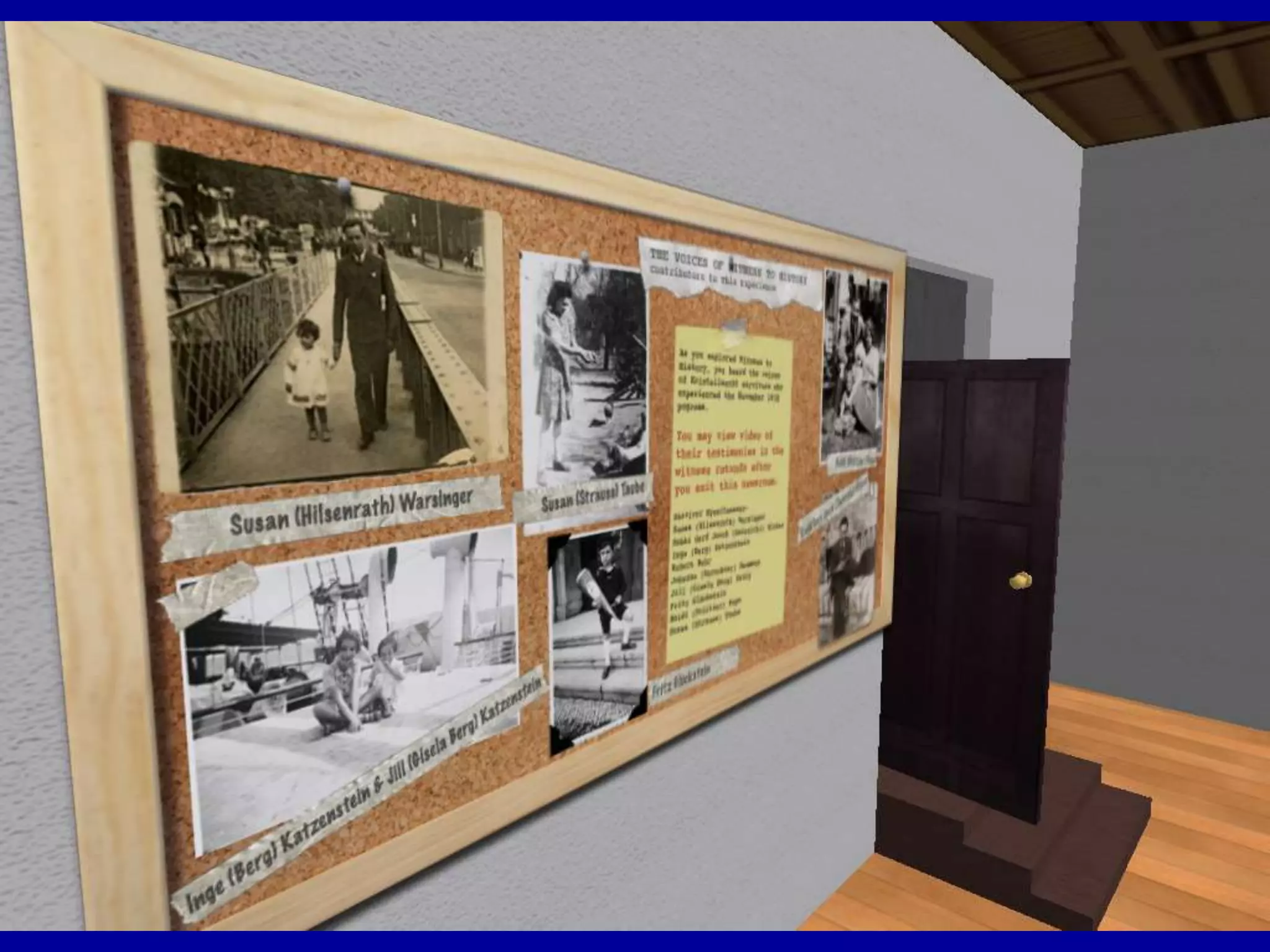
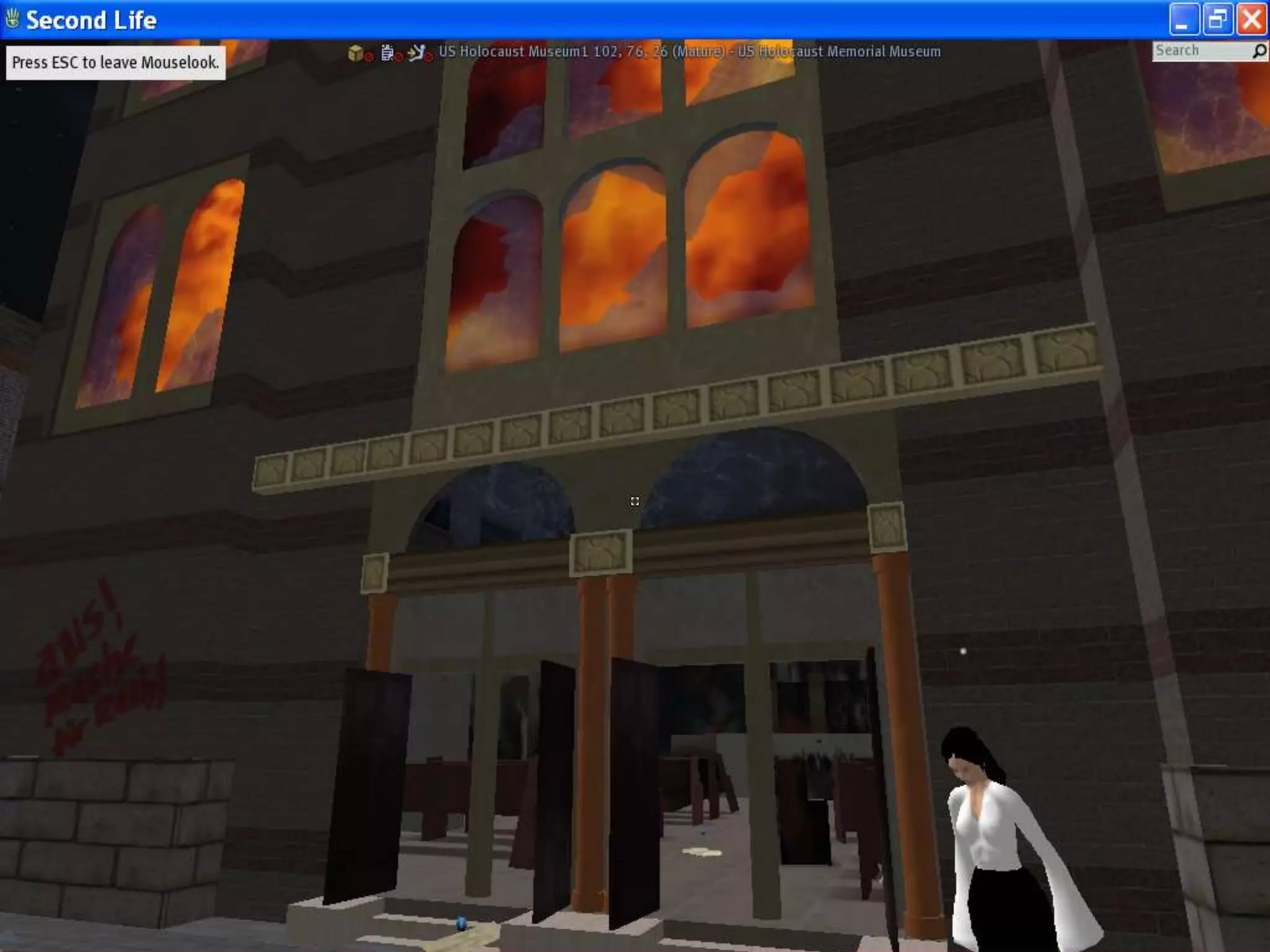
The Museum’s narrative exhibition must affect visitors not only intellectually, but also emotionally
Wanted to explore whether or not virtual installations could create visceral experiences for participantsSolutionBenefit/ResultThe Kristallnacht exhibition succeeded in delivering a kinetic, intellectual and visceral learning experience for participants.
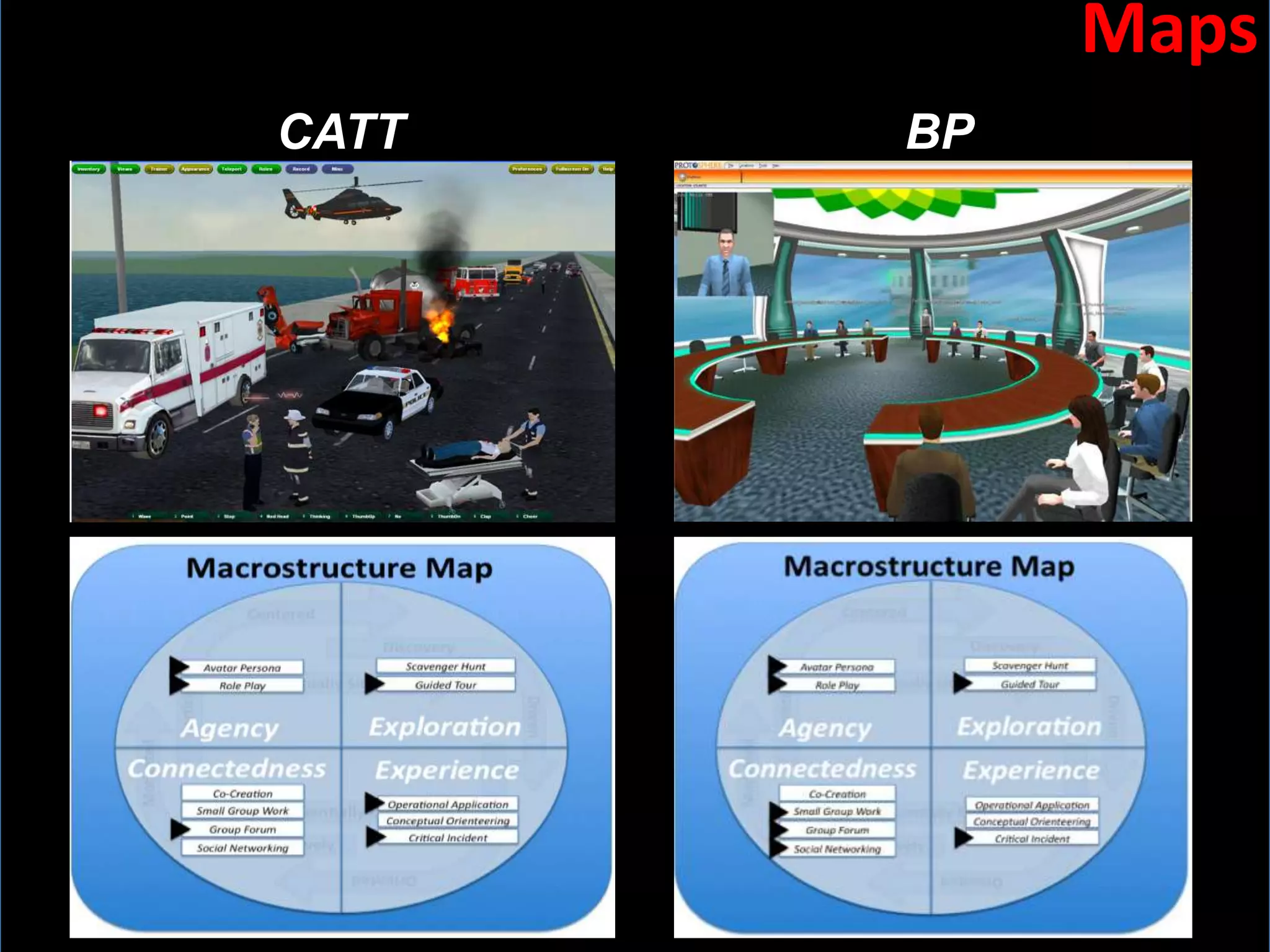
Experience drove participants to ask how they should go about donating to the museumSlide: 28CATT CaseFirst Responder TrainingSource: With some help from Roger Shank’s use of same Mnemonic for Scenario Based learning
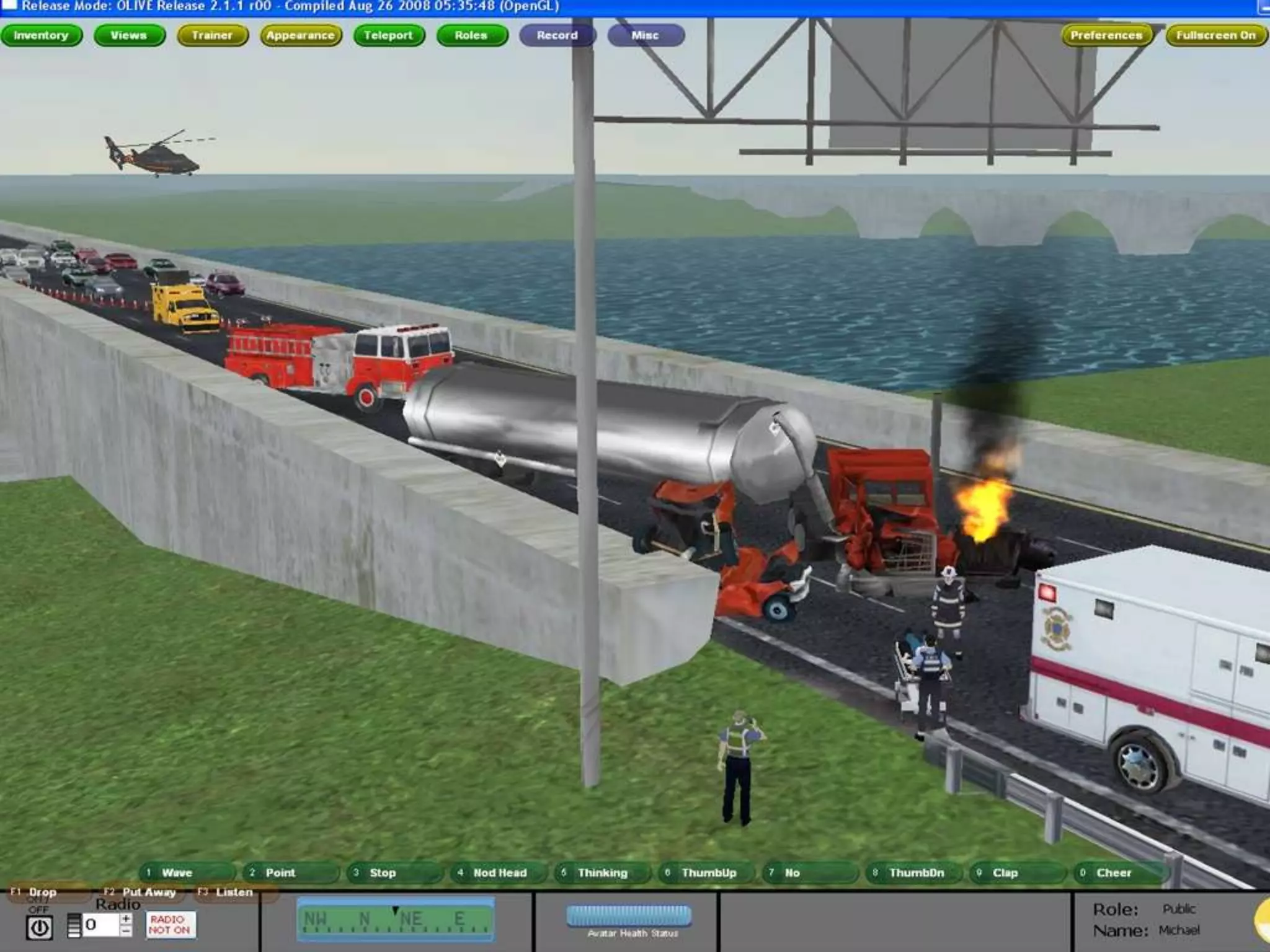
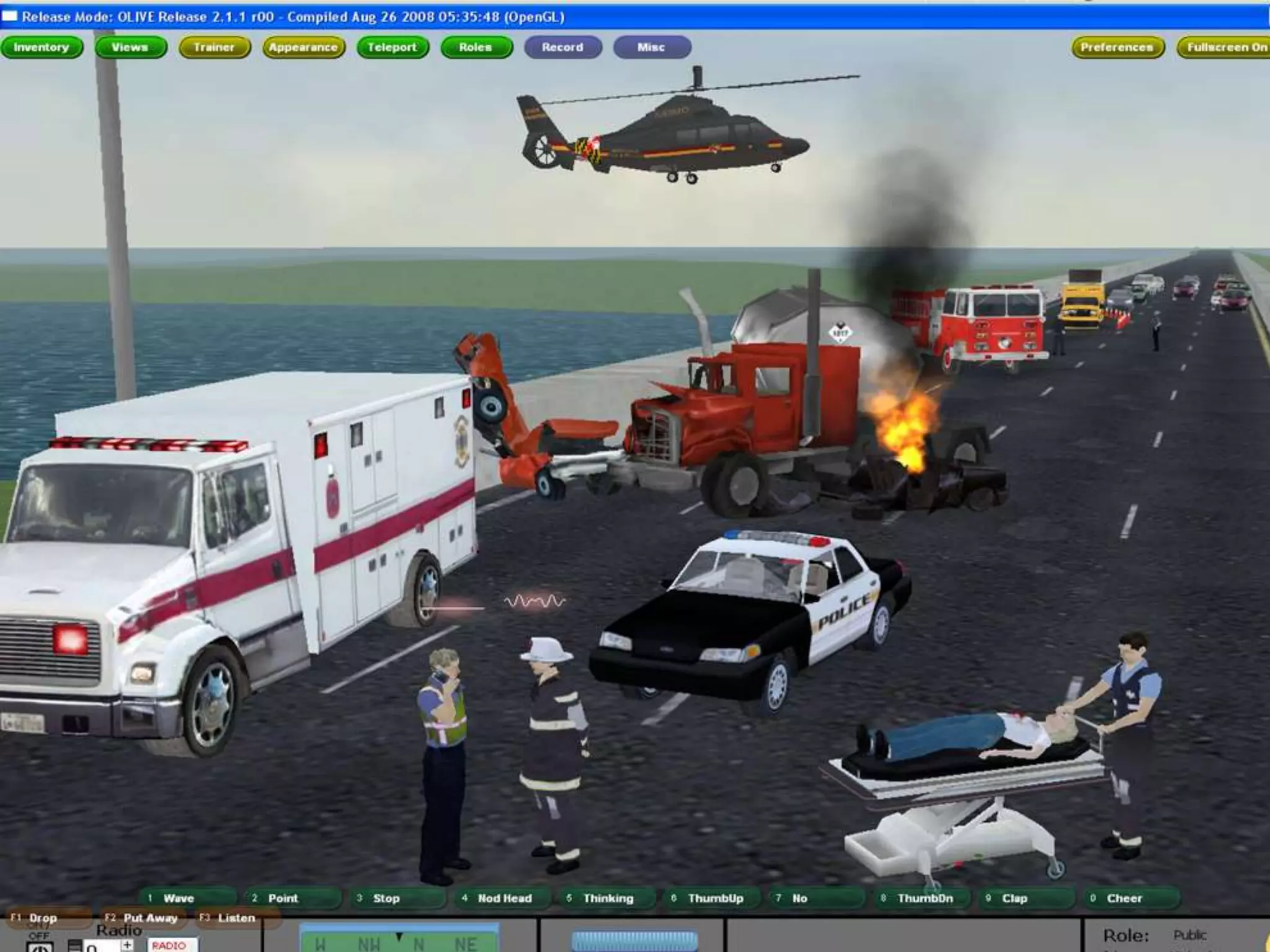
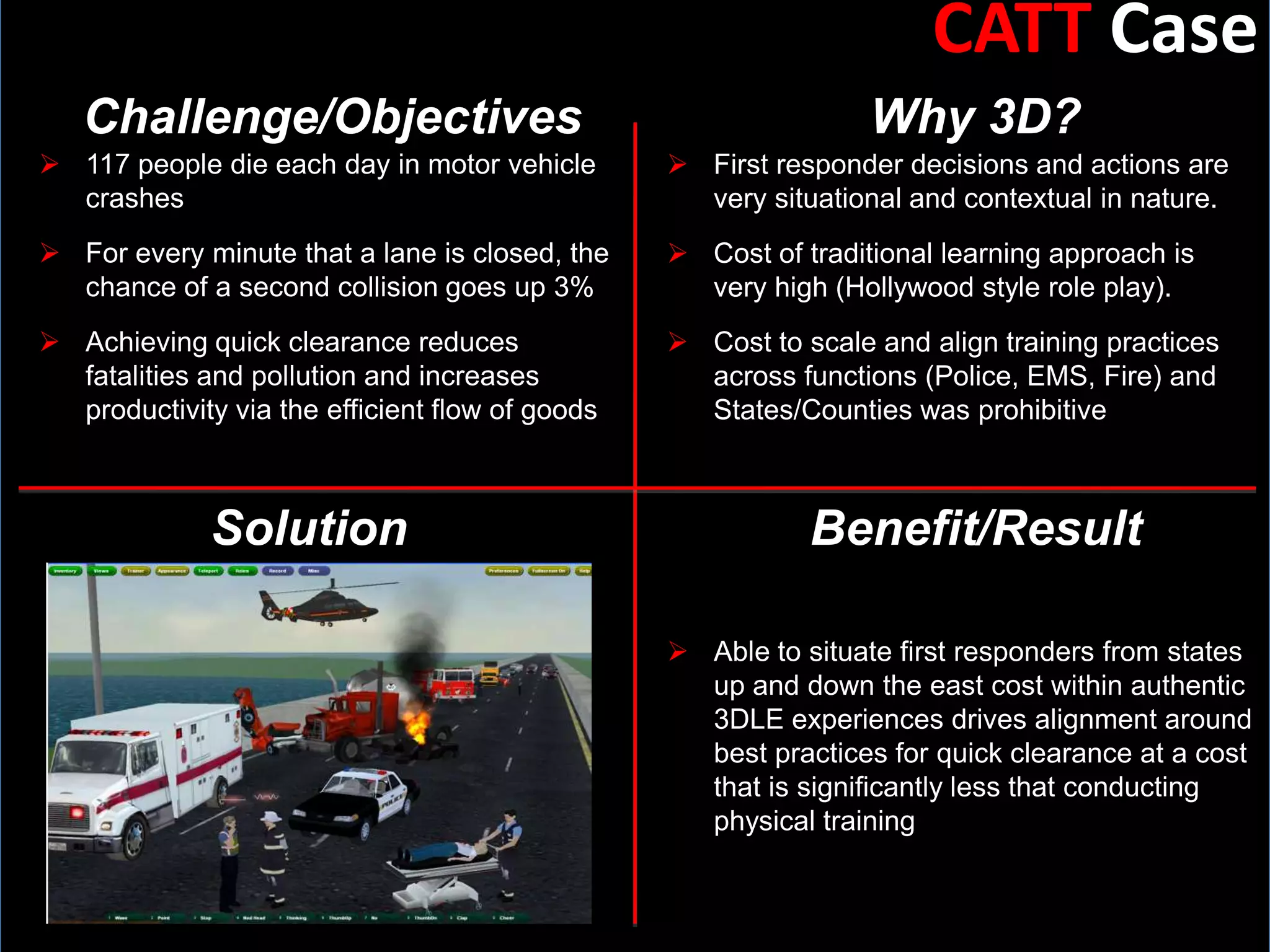
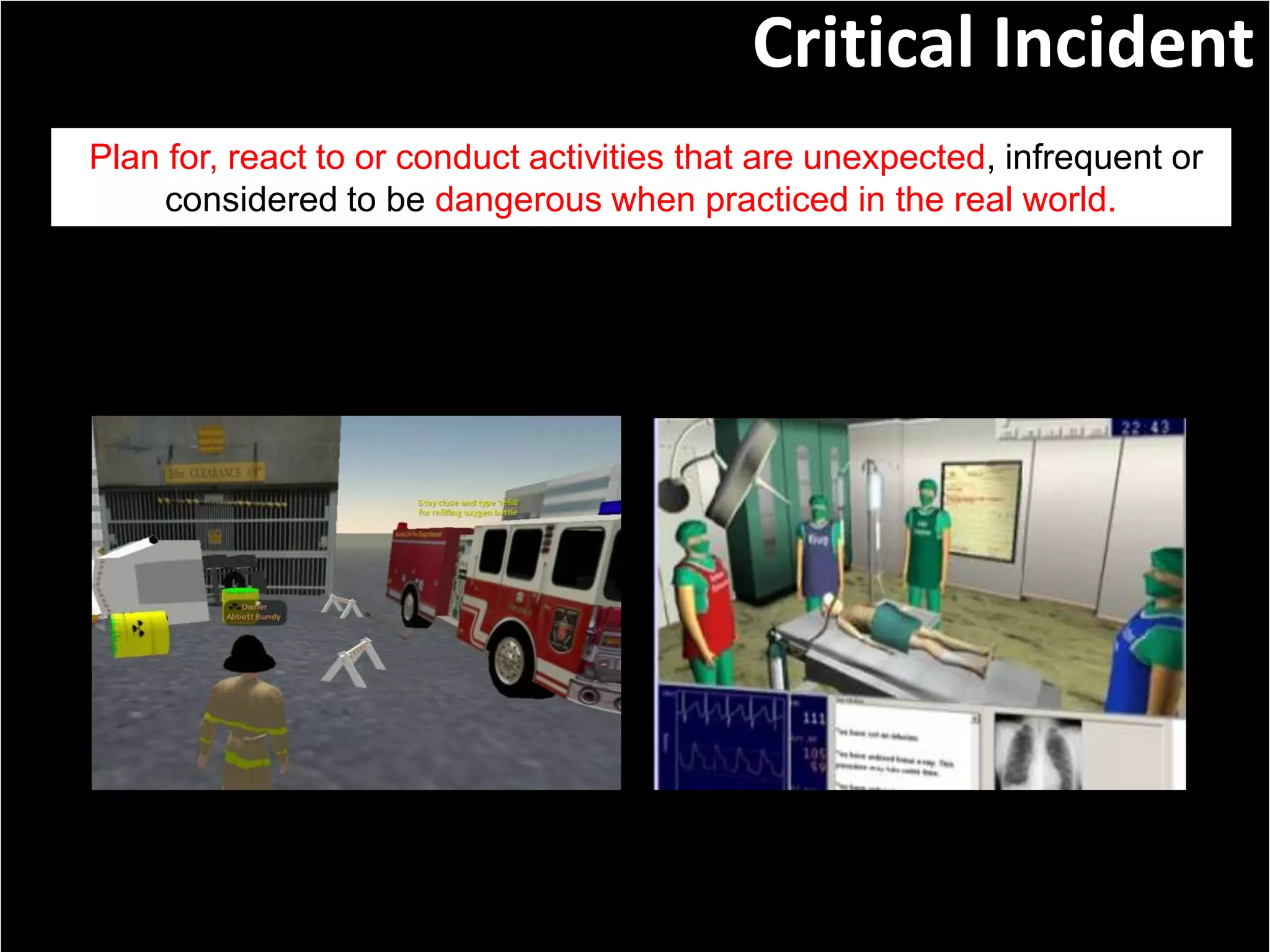
CATT CaseChallenge/ObjectivesWhy 3D?117 people die each day in motor vehicle crashes
For every minute that a lane is closed, the chance of a second collision goes up 3%
Achieving quick clearance reduces fatalities and pollution and increases productivity via the efficient flow of goods
First responder decisions and actions are very situational and contextual in nature.
Cost of traditional learning approach is very high (Hollywood style role play).
Cost to scale and align training practices across functions (Police, EMS, Fire) and States/Counties was prohibitiveSolutionBenefit/ResultAble to situate first responders from states up and down the east cost within authentic 3DLE experiences drives alignment around best practices for quick clearance at a cost that is significantly less that conducting physical trainingSlide: 32IBM CaseAcademy of Technology MeetingSource: With some help from Roger Shank’s use of same Mnemonic for Scenario Based learning
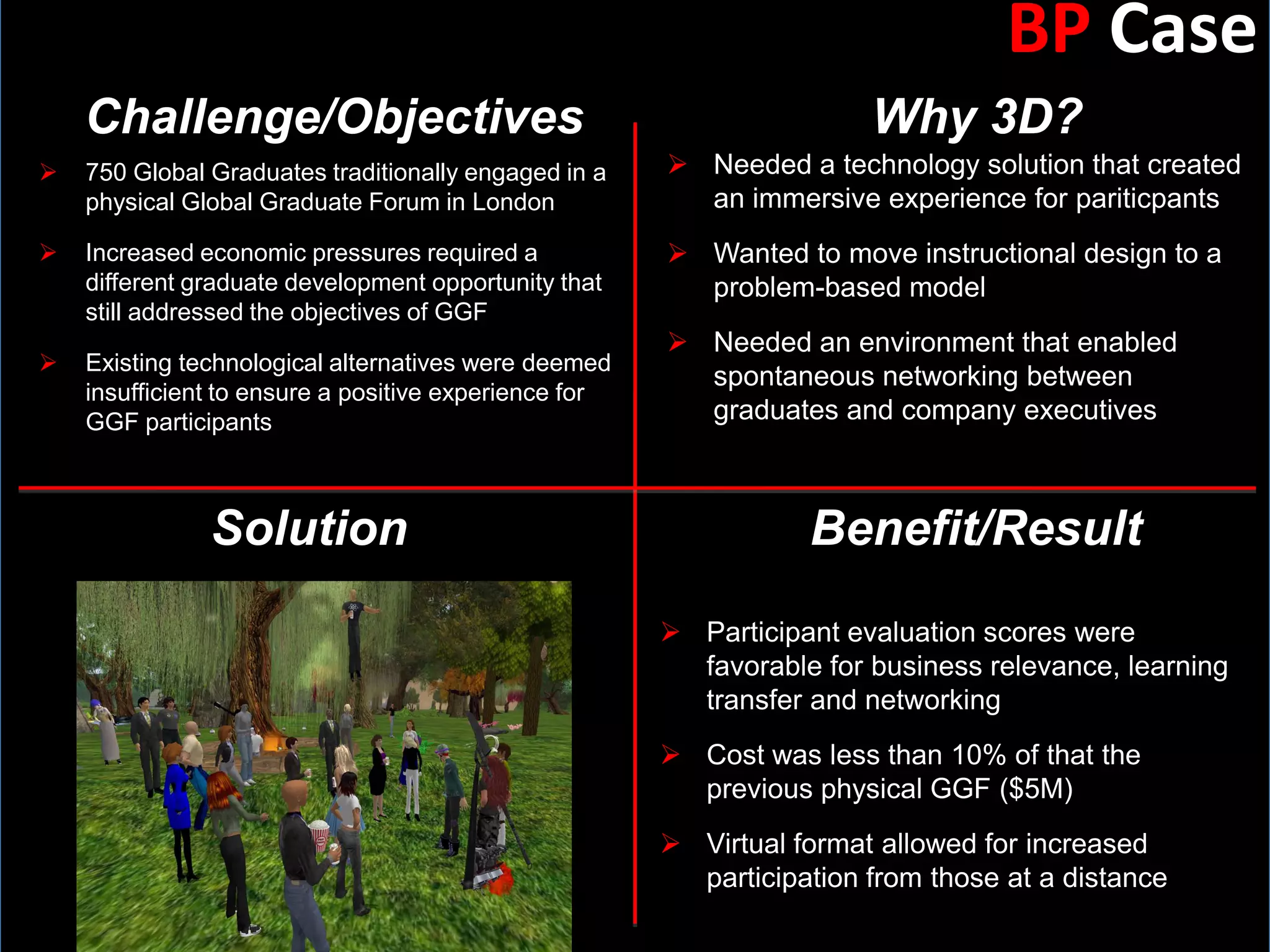
BP CaseChallenge/ObjectivesWhy 3D?Needed a technology solution that created  an immersive experience for pariticpants
Wanted to move instructional design to a problem-based model

Learning in 3D: Examples, Samples and Models