Reshaping food access and consumption
   patterns to ensure nutritional needs while
fostering healthy and sustainable eating habits
                   worldwide


          Cristina Tirado von der Pahlen, DVM, MS, PhD
         PHI Center for Public Health and Climate Change
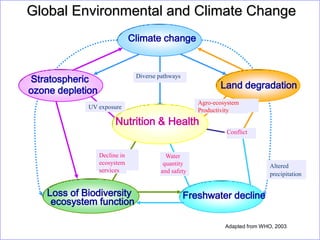
Global Environmental and Climate Change
                               Climate change


Stratospheric                   Diverse pathways
                                                             Land degradation
ozone depletion
                                                      Agro-ecosystem
             UV exposure
                                                      Productivity

                        Nutrition & Health
                                                               Conflict


                  Decline in              Water
                  ecosystem              quantity                             Altered
                  services              and safety                            precipitation


    Loss of Biodiversity                           Freshwater decline
     ecosystem function

                                                               Adapted from WHO, 2003
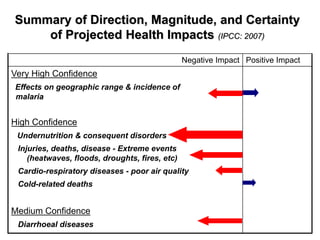
Summary of Direction, Magnitude, and Certainty
    of Projected Health Impacts (IPCC: 2007)
                                                Negative Impact Positive Impact
Very High Confidence
Effects on geographic range & incidence of
malaria


High Confidence
 Undernutrition & consequent disorders
 Injuries, deaths, disease - Extreme events
    (heatwaves, floods, droughts, fires, etc)
 Cardio-respiratory diseases - poor air quality
 Cold-related deaths


Medium Confidence
 Diarrhoeal diseases
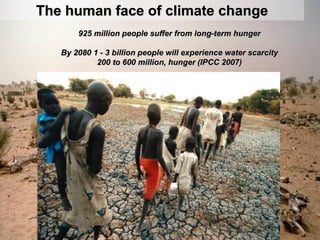
The human face of climate change
       925 million people suffer from long-term hunger

   By 2080 1 - 3 billion people will experience water scarcity
            200 to 600 million, hunger (IPCC 2007)
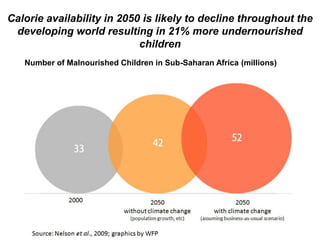
Calorie availability in 2050 is likely to decline throughout the
 developing world resulting in 21% more undernourished
                            children
   Number of Malnourished Children in Sub-Saharan Africa (millions)
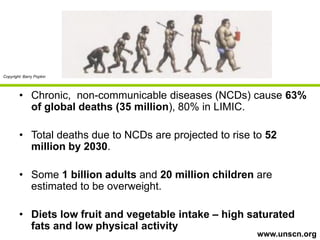
Copyright: Barry Popkin


        • Chronic, non-communicable diseases (NCDs) cause 63%
          of global deaths (35 million), 80% in LIMIC.

        • Total deaths due to NCDs are projected to rise to 52
          million by 2030.

        • Some 1 billion adults and 20 million children are
          estimated to be overweight.

        • Diets low fruit and vegetable intake – high saturated
          fats and low physical activity
                                                         www.unscn.org
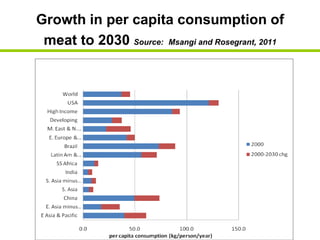
Growth in per capita consumption of
 meat to 2030 Source: Msangi and Rosegrant, 2011
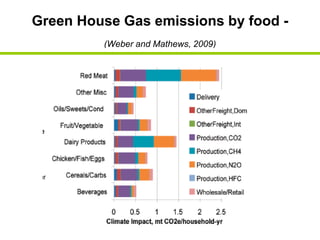
Green House Gas emissions by food -
         (Weber and Mathews, 2009)
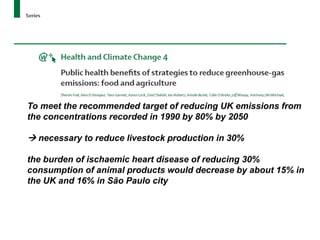
To meet the recommended target of reducing UK emissions from
the concentrations recorded in 1990 by 80% by 2050

 necessary to reduce livestock production in 30%

the burden of ischaemic heart disease of reducing 30%
consumption of animal products would decrease by about 15% in
the UK and 16% in São Paulo city
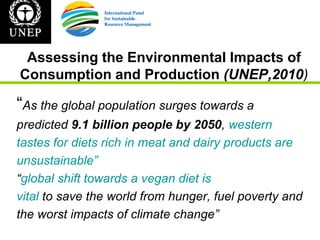
Assessing the Environmental Impacts of
Consumption and Production (UNEP,2010)

“As the global population surges towards a
predicted 9.1 billion people by 2050, western
tastes for diets rich in meat and dairy products are
unsustainable”
“global shift towards a vegan diet is
vital to save the world from hunger, fuel poverty and
the worst impacts of climate change”
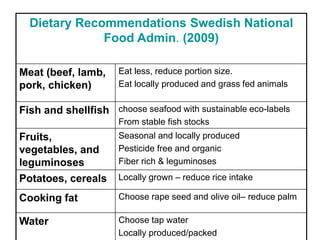
Dietary Recommendations Swedish National
              Food Admin. (2009)

Meat (beef, lamb,     Eat less, reduce portion size.
pork, chicken)        Eat locally produced and grass fed animals


Fish and shellfish choose seafood with sustainable eco-labels
                      From stable fish stocks
Fruits,               Seasonal and locally produced
vegetables, and       Pesticide free and organic
leguminoses           Fiber rich & leguminoses
Potatoes, cereals     Locally grown – reduce rice intake

Cooking fat           Choose rape seed and olive oil– reduce palm

Water                 Choose tap water
                      Locally produced/packed
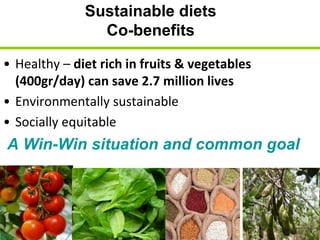
Sustainable diets
                Co-benefits

• Healthy – diet rich in fruits & vegetables
  (400gr/day) can save 2.7 million lives
• Environmentally sustainable
• Socially equitable
A Win-Win situation and common goal
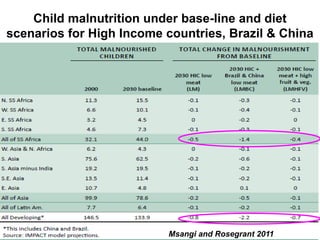
Child malnutrition under base-line and diet
scenarios for High Income countries, Brazil & China


                          Msangi and Rosegrant 2011
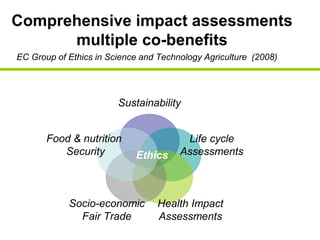
Comprehensive impact assessments
      multiple co-benefits
EC Group of Ethics in Science and Technology Agriculture (2008)


                        Sustainability


       Food & nutrition                 Life cycle
          Security          Ethics     Assessments


            Socio-economic        Health Impact
              Fair Trade          Assessments
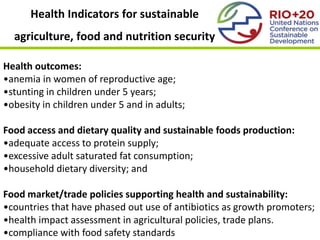
Health Indicators for sustainable
  agriculture, food and nutrition security

Health outcomes:
•anemia in women of reproductive age;
•stunting in children under 5 years;
•obesity in children under 5 and in adults;

Food access and dietary quality and sustainable foods production:
•adequate access to protein supply;
•excessive adult saturated fat consumption;
•household dietary diversity; and

Food market/trade policies supporting health and sustainability:
•countries that have phased out use of antibiotics as growth promoters;
•health impact assessment in agricultural policies, trade plans.
•compliance with food safety standards
•
“Creating a climate for Health…”


 http://www.climatehealthconnect.org/
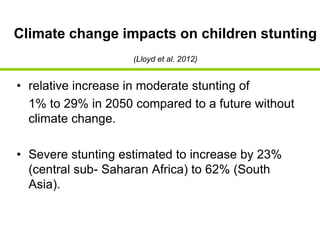
Climate change impacts on children stunting
                    (Lloyd et al. 2012)


• relative increase in moderate stunting of
  1% to 29% in 2050 compared to a future without
  climate change.

• Severe stunting estimated to increase by 23%
  (central sub- Saharan Africa) to 62% (South
  Asia).

Learning Event No. 8, Session 2: Tirado. ARDD2012 Rio

  • 1.
    Reshaping food accessand consumption patterns to ensure nutritional needs while fostering healthy and sustainable eating habits worldwide Cristina Tirado von der Pahlen, DVM, MS, PhD PHI Center for Public Health and Climate Change
  • 2.
    Global Environmental andClimate Change Climate change Stratospheric Diverse pathways Land degradation ozone depletion Agro-ecosystem UV exposure Productivity Nutrition & Health Conflict Decline in Water ecosystem quantity Altered services and safety precipitation Loss of Biodiversity Freshwater decline ecosystem function Adapted from WHO, 2003
  • 3.
    Summary of Direction,Magnitude, and Certainty of Projected Health Impacts (IPCC: 2007) Negative Impact Positive Impact Very High Confidence Effects on geographic range & incidence of malaria High Confidence Undernutrition & consequent disorders Injuries, deaths, disease - Extreme events (heatwaves, floods, droughts, fires, etc) Cardio-respiratory diseases - poor air quality Cold-related deaths Medium Confidence Diarrhoeal diseases
  • 4.
    The human faceof climate change 925 million people suffer from long-term hunger By 2080 1 - 3 billion people will experience water scarcity 200 to 600 million, hunger (IPCC 2007)
  • 5.
    Calorie availability in2050 is likely to decline throughout the developing world resulting in 21% more undernourished children Number of Malnourished Children in Sub-Saharan Africa (millions)
  • 6.
    Copyright: Barry Popkin • Chronic, non-communicable diseases (NCDs) cause 63% of global deaths (35 million), 80% in LIMIC. • Total deaths due to NCDs are projected to rise to 52 million by 2030. • Some 1 billion adults and 20 million children are estimated to be overweight. • Diets low fruit and vegetable intake – high saturated fats and low physical activity www.unscn.org
  • 7.
    Growth in percapita consumption of meat to 2030 Source: Msangi and Rosegrant, 2011
  • 8.
    Green House Gasemissions by food - (Weber and Mathews, 2009)
  • 9.
    To meet therecommended target of reducing UK emissions from the concentrations recorded in 1990 by 80% by 2050  necessary to reduce livestock production in 30% the burden of ischaemic heart disease of reducing 30% consumption of animal products would decrease by about 15% in the UK and 16% in São Paulo city
  • 10.
    Assessing the EnvironmentalImpacts of Consumption and Production (UNEP,2010) “As the global population surges towards a predicted 9.1 billion people by 2050, western tastes for diets rich in meat and dairy products are unsustainable” “global shift towards a vegan diet is vital to save the world from hunger, fuel poverty and the worst impacts of climate change”
  • 11.
    Dietary Recommendations SwedishNational Food Admin. (2009) Meat (beef, lamb, Eat less, reduce portion size. pork, chicken) Eat locally produced and grass fed animals Fish and shellfish choose seafood with sustainable eco-labels From stable fish stocks Fruits, Seasonal and locally produced vegetables, and Pesticide free and organic leguminoses Fiber rich & leguminoses Potatoes, cereals Locally grown – reduce rice intake Cooking fat Choose rape seed and olive oil– reduce palm Water Choose tap water Locally produced/packed
  • 12.
    Sustainable diets Co-benefits • Healthy – diet rich in fruits & vegetables (400gr/day) can save 2.7 million lives • Environmentally sustainable • Socially equitable A Win-Win situation and common goal
  • 13.
    Child malnutrition underbase-line and diet scenarios for High Income countries, Brazil & China Msangi and Rosegrant 2011
  • 14.
    Comprehensive impact assessments multiple co-benefits EC Group of Ethics in Science and Technology Agriculture (2008) Sustainability Food & nutrition Life cycle Security Ethics Assessments Socio-economic Health Impact Fair Trade Assessments
  • 15.
    Health Indicators forsustainable agriculture, food and nutrition security Health outcomes: •anemia in women of reproductive age; •stunting in children under 5 years; •obesity in children under 5 and in adults; Food access and dietary quality and sustainable foods production: •adequate access to protein supply; •excessive adult saturated fat consumption; •household dietary diversity; and Food market/trade policies supporting health and sustainability: •countries that have phased out use of antibiotics as growth promoters; •health impact assessment in agricultural policies, trade plans. •compliance with food safety standards
  • 16.
  • 17.
    “Creating a climatefor Health…” http://www.climatehealthconnect.org/
  • 18.
    Climate change impactson children stunting (Lloyd et al. 2012) • relative increase in moderate stunting of 1% to 29% in 2050 compared to a future without climate change. • Severe stunting estimated to increase by 23% (central sub- Saharan Africa) to 62% (South Asia).