Specific Learning Disabilities                                      By: Caitlin and Vanessa

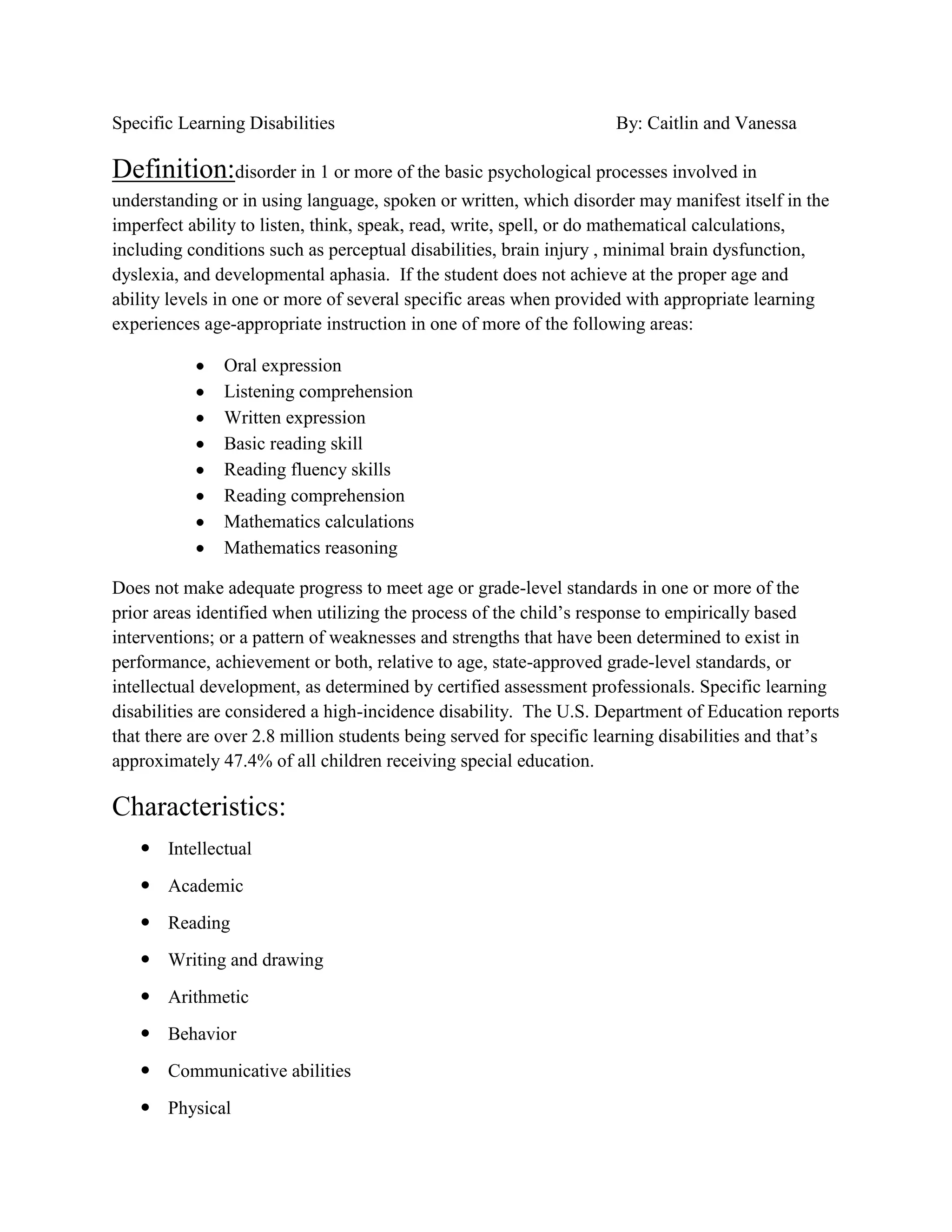
Definition:disorder in 1 or more of the basic psychological processes involved in
understanding or in using language, spoken or written, which disorder may manifest itself in the
imperfect ability to listen, think, speak, read, write, spell, or do mathematical calculations,
including conditions such as perceptual disabilities, brain injury , minimal brain dysfunction,
dyslexia, and developmental aphasia. If the student does not achieve at the proper age and
ability levels in one or more of several specific areas when provided with appropriate learning
experiences age-appropriate instruction in one of more of the following areas:

               Oral expression
               Listening comprehension
               Written expression
               Basic reading skill
               Reading fluency skills
               Reading comprehension
               Mathematics calculations
               Mathematics reasoning

Does not make adequate progress to meet age or grade-level standards in one or more of the
prior areas identified when utilizing the process of the child’s response to empirically based
interventions; or a pattern of weaknesses and strengths that have been determined to exist in
performance, achievement or both, relative to age, state-approved grade-level standards, or
intellectual development, as determined by certified assessment professionals. Specific learning
disabilities are considered a high-incidence disability. The U.S. Department of Education reports
that there are over 2.8 million students being served for specific learning disabilities and that’s
approximately 47.4% of all children receiving special education.

Characteristics:
    Intellectual
    Academic
    Reading
    Writing and drawing
    Arithmetic
    Behavior
    Communicative abilities
    Physical
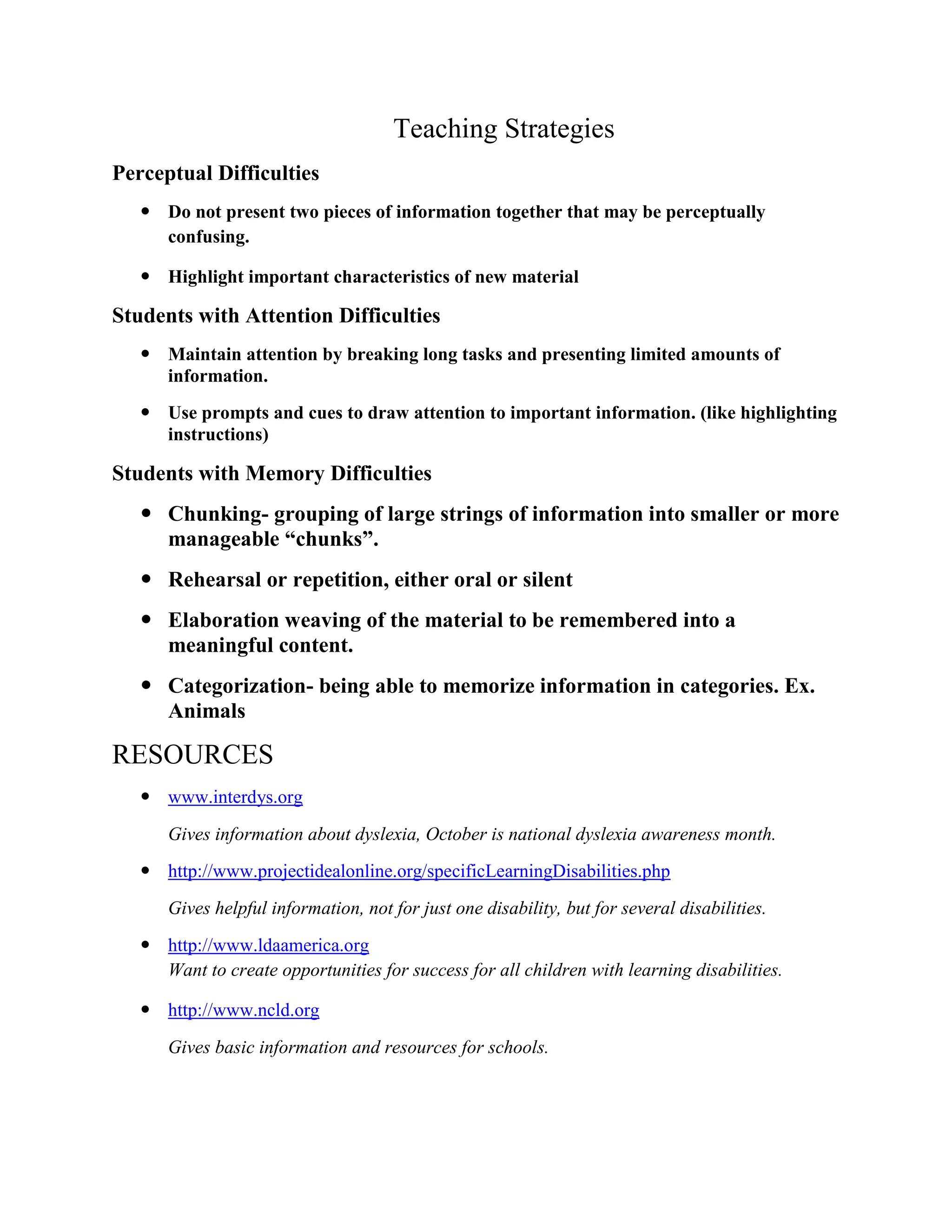
Teaching Strategies
Perceptual Difficulties
    Do not present two pieces of information together that may be perceptually
     confusing.

    Highlight important characteristics of new material

Students with Attention Difficulties
    Maintain attention by breaking long tasks and presenting limited amounts of
     information.
    Use prompts and cues to draw attention to important information. (like highlighting
     instructions)

Students with Memory Difficulties
    Chunking- grouping of large strings of information into smaller or more
     manageable “chunks”.
    Rehearsal or repetition, either oral or silent
    Elaboration weaving of the material to be remembered into a
     meaningful content.
    Categorization- being able to memorize information in categories. Ex.
     Animals

RESOURCES
    www.interdys.org
      Gives information about dyslexia, October is national dyslexia awareness month.
    http://www.projectidealonline.org/specificLearningDisabilities.php
      Gives helpful information, not for just one disability, but for several disabilities.
    http://www.ldaamerica.org
     Want to create opportunities for success for all children with learning disabilities.

    http://www.ncld.org
      Gives basic information and resources for schools.

Specific learning disabilities handour (1)

  • 1.
    Specific Learning Disabilities By: Caitlin and Vanessa Definition:disorder in 1 or more of the basic psychological processes involved in understanding or in using language, spoken or written, which disorder may manifest itself in the imperfect ability to listen, think, speak, read, write, spell, or do mathematical calculations, including conditions such as perceptual disabilities, brain injury , minimal brain dysfunction, dyslexia, and developmental aphasia. If the student does not achieve at the proper age and ability levels in one or more of several specific areas when provided with appropriate learning experiences age-appropriate instruction in one of more of the following areas: Oral expression Listening comprehension Written expression Basic reading skill Reading fluency skills Reading comprehension Mathematics calculations Mathematics reasoning Does not make adequate progress to meet age or grade-level standards in one or more of the prior areas identified when utilizing the process of the child’s response to empirically based interventions; or a pattern of weaknesses and strengths that have been determined to exist in performance, achievement or both, relative to age, state-approved grade-level standards, or intellectual development, as determined by certified assessment professionals. Specific learning disabilities are considered a high-incidence disability. The U.S. Department of Education reports that there are over 2.8 million students being served for specific learning disabilities and that’s approximately 47.4% of all children receiving special education. Characteristics:  Intellectual  Academic  Reading  Writing and drawing  Arithmetic  Behavior  Communicative abilities  Physical
  • 2.
    Teaching Strategies Perceptual Difficulties  Do not present two pieces of information together that may be perceptually confusing.  Highlight important characteristics of new material Students with Attention Difficulties  Maintain attention by breaking long tasks and presenting limited amounts of information.  Use prompts and cues to draw attention to important information. (like highlighting instructions) Students with Memory Difficulties  Chunking- grouping of large strings of information into smaller or more manageable “chunks”.  Rehearsal or repetition, either oral or silent  Elaboration weaving of the material to be remembered into a meaningful content.  Categorization- being able to memorize information in categories. Ex. Animals RESOURCES  www.interdys.org Gives information about dyslexia, October is national dyslexia awareness month.  http://www.projectidealonline.org/specificLearningDisabilities.php Gives helpful information, not for just one disability, but for several disabilities.  http://www.ldaamerica.org Want to create opportunities for success for all children with learning disabilities.  http://www.ncld.org Gives basic information and resources for schools.