Organisation for Economic Co-operation and Development
1
1                           (OECD)


           Learning from Learner Voices
                  Skolen i digital utvikling
                   Lillestrøm, 13.11.2009


                 Øystein Johannessen
                       CERI, OECD
2
2                Dagens tekst
    Ì Stereotypier
    Ì New  Millennium Learners
    Ì Learning from Learner Voices


    Ì Dokumentasjon:
       http://oysteinj.typepad.com
      
        http://www.slideshare.net/oysteinj/
3
3    The Digital Generation Project
    Ì Demovideo
4

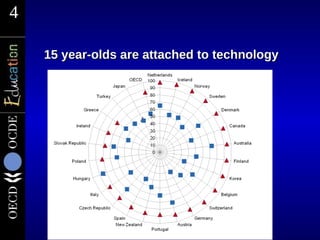
    15 year-olds are attached to technology
5
 5
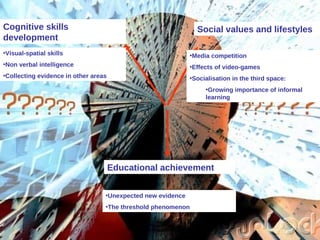
Cognitive skills                                               Social values and lifestyles
development
•Visual-spatial skills                                       •Media competition
•Non verbal intelligence                                     •Effects of video-games
•Collecting evidence in other areas                          •Socialisation in the third space:
                                                                  •Growing importance of informal
                                                                  learning


                                      Educational achievement


                                  •Unexpected new evidence
                                  •The threshold phenomenon

                                                                                  5
6


         300
               350
                     400
                           450
                                 500
                                       550
                                             600
   Finland
    Japan
    Korea
   Sweden
   Canada
   Macao-
   Ireland
     New
Netherlands
Liechtenstei
  Slovenia
   Russian
   Poland
                                                   Frequent use


    Latvia
  Germany
Switzerland
  Hungary
  Australia
   Austria
    Czech
   Croatia
  Belgium
   Greece
                                                   Moderate use


   Slovak
  Lithuania
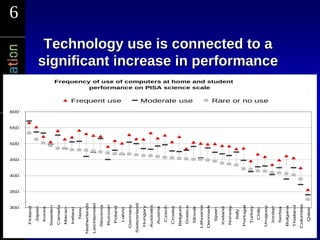
                                                                             performance on PISA science scale


  Denmark
    Spain
   Iceland
   Norway
                                                                    Frequency of use of computers at home and student


     Italy
  Portugal
   Turkey
     Chile
  Uruguay
                                                   Rare or no use
                                                                                                                         Technology use is connected to a


   Jordan
                                                                                                                        significant increase in performance


    Serbia
  Bulgaria
  Thailand
   6


 Colombia
    Qatar
7


              300
                     350
                           400
                                 450
                                       500
                                             550
                                                   600
        Finland
    Liechtenstein
    New Zealand
         Japan
        Canada
       Germany
         Korea
     Netherlands
       Hungary
        Ireland
     Switzerland
        Belgium
       Australia
                                                         Frequent use


        Austria
        Sweden
        Greece
         Poland
         Spain
        Croatia
    Macao-China
       Lithuania
          Italy
       Slovenia
                                                         Moderate use


  Slovak Republic
  Czech Republic
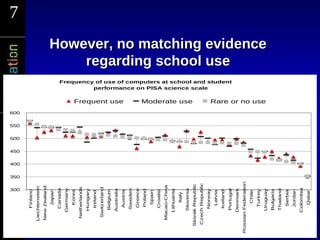
                                                                                   performance on PISA science scale


        Norway
         Latvia
        Iceland
                                                                                                                                    regarding school use
                                                                          Frequency of use of computers at school and student


       Portugal
       Denmark
Russian Federation
          Chile
         Turkey
                                                         Rare or no use
                                                                                                                                However, no matching evidence


       Uruguay
       Bulgaria
       Thailand
         Serbia
         Jordan
   7


       Colombia
         Qatar
8

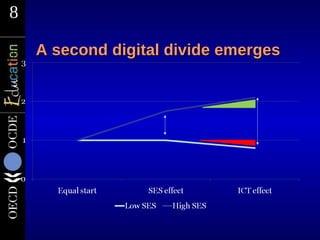
    A second digital divide emerges
9

    As well as different student profiles


                                            9
10
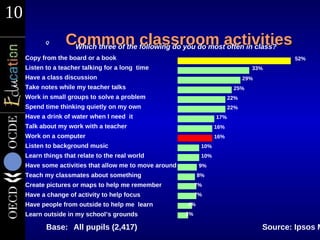
            Q      Common following do you do mostactivities
                    Which three of the
                                       classroom often in class?
     Copy from the board or a book                                                            52%
     Listen to a teacher talking for a long time                                   33%
     Have a class discussion                                                     29%
     Take notes while my teacher talks                                      25%
     Work in small groups to solve a problem                               22%
     Spend time thinking quietly on my own                                 22%
     Have a drink of water when I need it                            17%
     Talk about my work with a teacher                               16%
     Work on a computer                                              16%
     Listen to background music                                10%
     Learn things that relate to the real world                10%
     Have some activities that allow me to move around         9%
     Teach my classmates about something                      8%
     Create pictures or maps to help me remember              7%
     Have a change of activity to help focus                  7%
     Have people from outside to help me learn           4%
     Learn outside in my school’s grounds                3%

            Base: All pupils (2,417)                                                   Source: Ipsos M
11
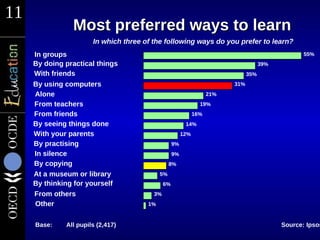
                 Most preferred ways to learn
                       In which three of the following ways do you prefer to learn?
     In groups                                                                                     55%
     By doing practical things                                                        39%
     With friends                                                               35%
     By using computers                                                   31%
     Alone                                                          21%
     From teachers                                              19%
     From friends                                             16%
     By seeing things done                               14%
     With your parents                                  12%
     By practising                                 9%
     In silence                                    9%
     By copying                                  8%
     At a museum or library                 5%
     By thinking for yourself                 6%
     From others                         3%
     Other                             1%


     Base:    All pupils (2,417)                                                            Source: Ipsos
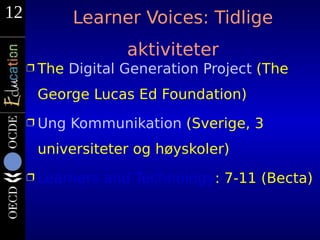
12           Learner Voices: Tidlige
                     aktiviteter
     Ì The   Digital Generation Project (The
      George Lucas Ed Foundation)
     Ì Ung   Kommunikation (Sverige, 3
      universiteter og høyskoler)
     Ì Learners   and Technology: 7-11 (Becta)
13
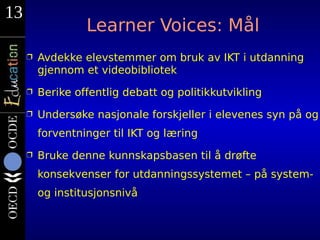
                  Learner Voices: Mål
     Ì   Avdekke elevstemmer om bruk av IKT i utdanning
         gjennom et videobibliotek
     Ì   Berike offentlig debatt og politikkutvikling
     Ì   Undersøke nasjonale forskjeller i elevenes syn på og
         forventninger til IKT og læring
     Ì   Bruke denne kunnskapsbasen til å drøfte
         konsekvenser for utdanningssystemet – på system-
         og institusjonsnivå
14
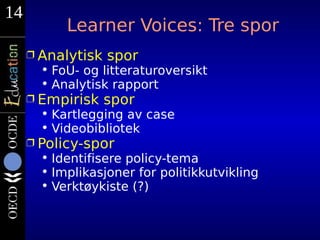
           Learner Voices: Tre spor
     Ì Analytisk   spor
        FoU- og litteraturoversikt
        Analytisk rapport

     Ì Empirisk    spor
        Kartlegging av case
        Videobibliotek

     Ì Policy-spor
        Identifisere policy-tema
        Implikasjoner for politikkutvikling

        Verktøykiste (?)
15
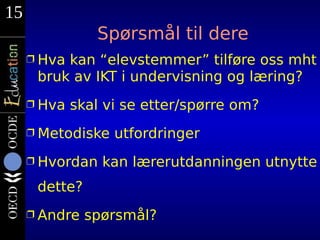
                Spørsmål til dere
     Ì Hvakan “elevstemmer” tilføre oss mht
      bruk av IKT i undervisning og læring?
     Ì Hva   skal vi se etter/spørre om?
     Ì Metodiske   utfordringer
     Ì Hvordan   kan lærerutdanningen utnytte
      dette?
     Ì Andre   spørsmål?
16
16   Organisation for Economic Co-operation and Development
                             (OECD)


          Takk for oppmerksomheten


                        More info at

                www.oecd.org/edu/nml

Learner Voices Sdu 13112009

  • 1.
    Organisation for EconomicCo-operation and Development 1 1 (OECD) Learning from Learner Voices Skolen i digital utvikling Lillestrøm, 13.11.2009 Øystein Johannessen CERI, OECD
  • 2.
    2 2 Dagens tekst Ì Stereotypier Ì New Millennium Learners Ì Learning from Learner Voices Ì Dokumentasjon:  http://oysteinj.typepad.com  http://www.slideshare.net/oysteinj/
  • 3.
    3 3 The Digital Generation Project Ì Demovideo
  • 4.
    4 15 year-olds are attached to technology
  • 5.
    5 5 Cognitive skills Social values and lifestyles development •Visual-spatial skills •Media competition •Non verbal intelligence •Effects of video-games •Collecting evidence in other areas •Socialisation in the third space: •Growing importance of informal learning Educational achievement •Unexpected new evidence •The threshold phenomenon 5
  • 6.
    6 300 350 400 450 500 550 600 Finland Japan Korea Sweden Canada Macao- Ireland New Netherlands Liechtenstei Slovenia Russian Poland Frequent use Latvia Germany Switzerland Hungary Australia Austria Czech Croatia Belgium Greece Moderate use Slovak Lithuania performance on PISA science scale Denmark Spain Iceland Norway Frequency of use of computers at home and student Italy Portugal Turkey Chile Uruguay Rare or no use Technology use is connected to a Jordan significant increase in performance Serbia Bulgaria Thailand 6 Colombia Qatar
  • 7.
    7 300 350 400 450 500 550 600 Finland Liechtenstein New Zealand Japan Canada Germany Korea Netherlands Hungary Ireland Switzerland Belgium Australia Frequent use Austria Sweden Greece Poland Spain Croatia Macao-China Lithuania Italy Slovenia Moderate use Slovak Republic Czech Republic performance on PISA science scale Norway Latvia Iceland regarding school use Frequency of use of computers at school and student Portugal Denmark Russian Federation Chile Turkey Rare or no use However, no matching evidence Uruguay Bulgaria Thailand Serbia Jordan 7 Colombia Qatar
  • 8.
    8 A second digital divide emerges
  • 9.
    9 As well as different student profiles 9
  • 10.
    10 Q Common following do you do mostactivities Which three of the classroom often in class? Copy from the board or a book 52% Listen to a teacher talking for a long time 33% Have a class discussion 29% Take notes while my teacher talks 25% Work in small groups to solve a problem 22% Spend time thinking quietly on my own 22% Have a drink of water when I need it 17% Talk about my work with a teacher 16% Work on a computer 16% Listen to background music 10% Learn things that relate to the real world 10% Have some activities that allow me to move around 9% Teach my classmates about something 8% Create pictures or maps to help me remember 7% Have a change of activity to help focus 7% Have people from outside to help me learn 4% Learn outside in my school’s grounds 3% Base: All pupils (2,417) Source: Ipsos M
  • 11.
    11 Most preferred ways to learn In which three of the following ways do you prefer to learn? In groups 55% By doing practical things 39% With friends 35% By using computers 31% Alone 21% From teachers 19% From friends 16% By seeing things done 14% With your parents 12% By practising 9% In silence 9% By copying 8% At a museum or library 5% By thinking for yourself 6% From others 3% Other 1% Base: All pupils (2,417) Source: Ipsos
  • 12.
    12 Learner Voices: Tidlige aktiviteter Ì The Digital Generation Project (The George Lucas Ed Foundation) Ì Ung Kommunikation (Sverige, 3 universiteter og høyskoler) Ì Learners and Technology: 7-11 (Becta)
  • 13.
    13 Learner Voices: Mål Ì Avdekke elevstemmer om bruk av IKT i utdanning gjennom et videobibliotek Ì Berike offentlig debatt og politikkutvikling Ì Undersøke nasjonale forskjeller i elevenes syn på og forventninger til IKT og læring Ì Bruke denne kunnskapsbasen til å drøfte konsekvenser for utdanningssystemet – på system- og institusjonsnivå
  • 14.
    14 Learner Voices: Tre spor Ì Analytisk spor  FoU- og litteraturoversikt  Analytisk rapport Ì Empirisk spor  Kartlegging av case  Videobibliotek Ì Policy-spor  Identifisere policy-tema  Implikasjoner for politikkutvikling  Verktøykiste (?)
  • 15.
    15 Spørsmål til dere Ì Hvakan “elevstemmer” tilføre oss mht bruk av IKT i undervisning og læring? Ì Hva skal vi se etter/spørre om? Ì Metodiske utfordringer Ì Hvordan kan lærerutdanningen utnytte dette? Ì Andre spørsmål?
  • 16.
    16 16 Organisation for Economic Co-operation and Development (OECD) Takk for oppmerksomheten More info at www.oecd.org/edu/nml