
June 2012
Developing Leaders: Strategies for Increasing
Staff Engagement and Commitment
Our Agenda
• Staff Engagement – Why Do We Care

• Methods for Developing Leaders

• Strategies for Engagement & Commitment
Staff Engagement – Why Do We Care
Whether we realize it or not, workers have been
under constant duress. Because of scarce
resources, few opportunities for development
and promotions– not to mention the fact that
people often have been required to do the work
of more than one person – a lot of our work
forces is burnt out. Employees across the
country feel overworked, under-rewarded and
greatly unappreciated.
-- John Gibbons, VP of Research and
Development at the Institute for Corporate
Productivity
                       Impact of the Great Recession
Impact of Low Engagement
• Dissatisfaction

• Attrition

• Inconsistency

• Lack of Goodwill
How do you know?
• Annual Staff
  Climate Survey
• Employee Feedback
• Retention Rates

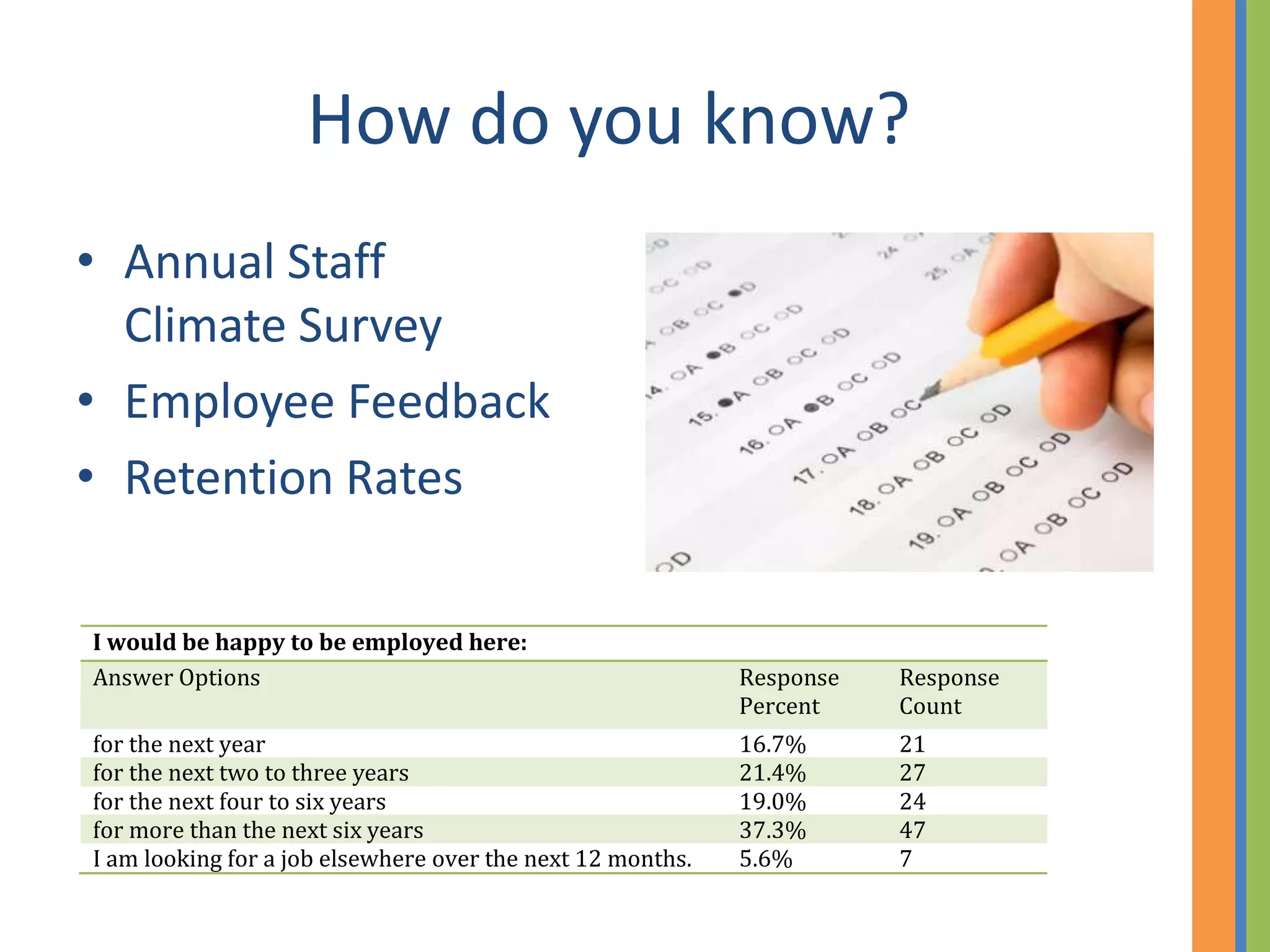
I would be happy to be employed here:
Answer Options                                              Response   Response
                                                            Percent    Count
for the next year                                           16.7%      21
for the next two to three years                             21.4%      27
for the next four to six years                              19.0%      24
for more than the next six years                            37.3%      47
I am looking for a job elsewhere over the next 12 months.   5.6%       7
What
makes you
 happy?
A FEW DIFFERENT
FRAMEWORKS OF
HAPPINESS


Source: Zappos.com
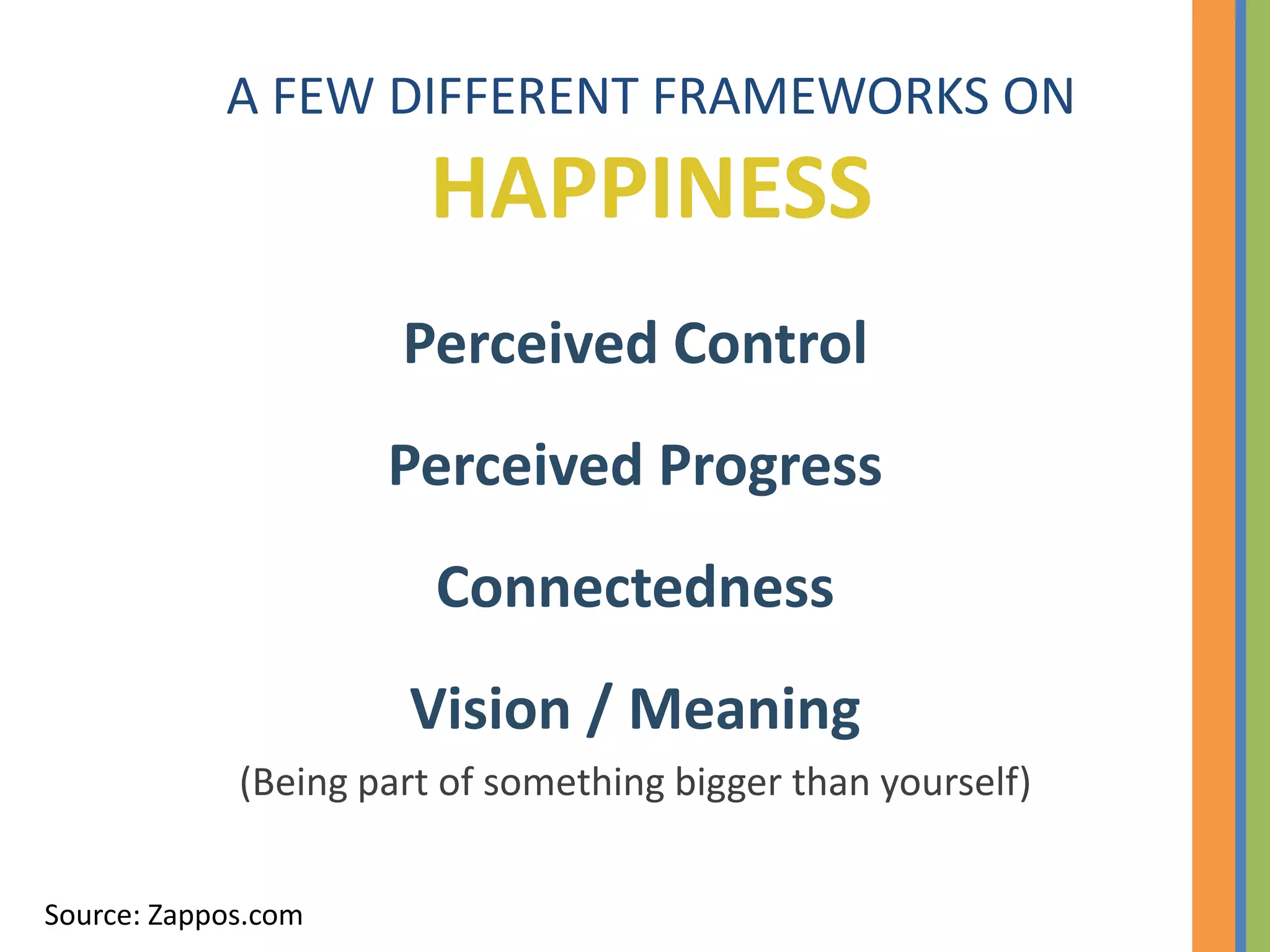
A FEW DIFFERENT FRAMEWORKS ON
                        HAPPINESS
                      Perceived Control
                     Perceived Progress
                        Connectedness
                      Vision / Meaning
             (Being part of something bigger than yourself)


Source: Zappos.com
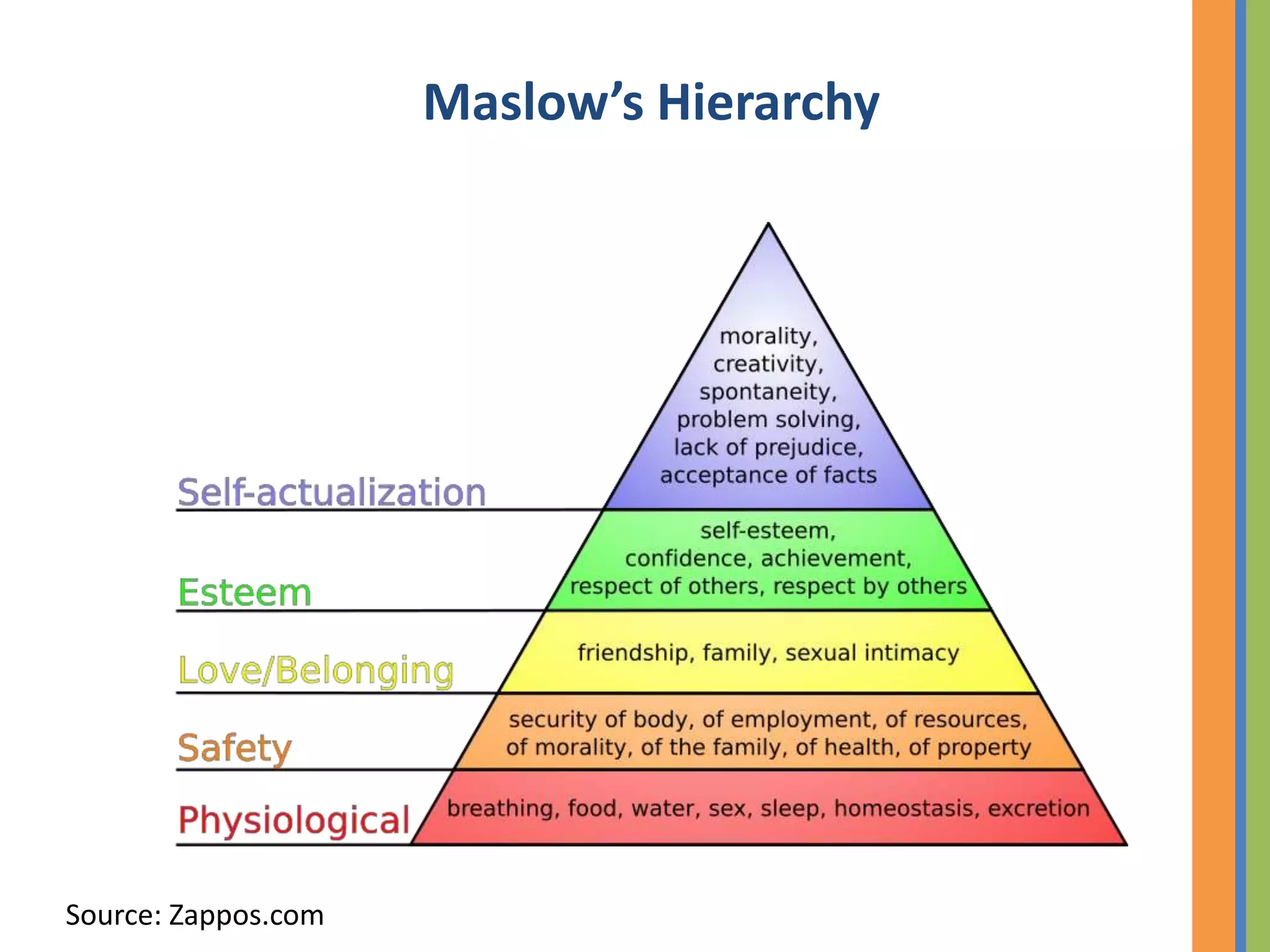
Maslow’s Hierarchy


Source: Zappos.com
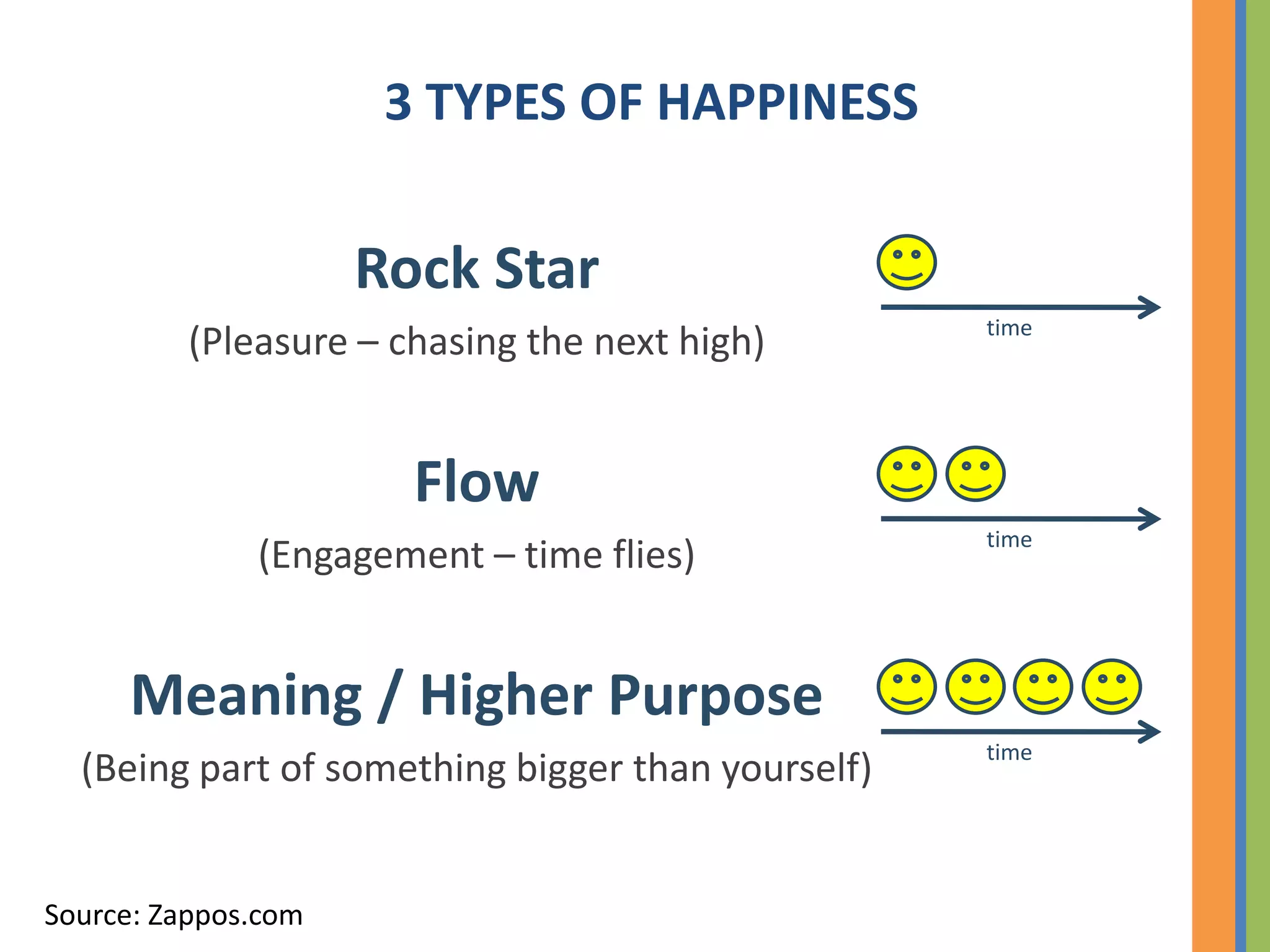
3 TYPES OF HAPPINESS

                     Rock Star
                                                   time
         (Pleasure – chasing the next high)


                       Flow
                                                   time
              (Engagement – time flies)


     Meaning / Higher Purpose
                                                   time
  (Being part of something bigger than yourself)


Source: Zappos.com
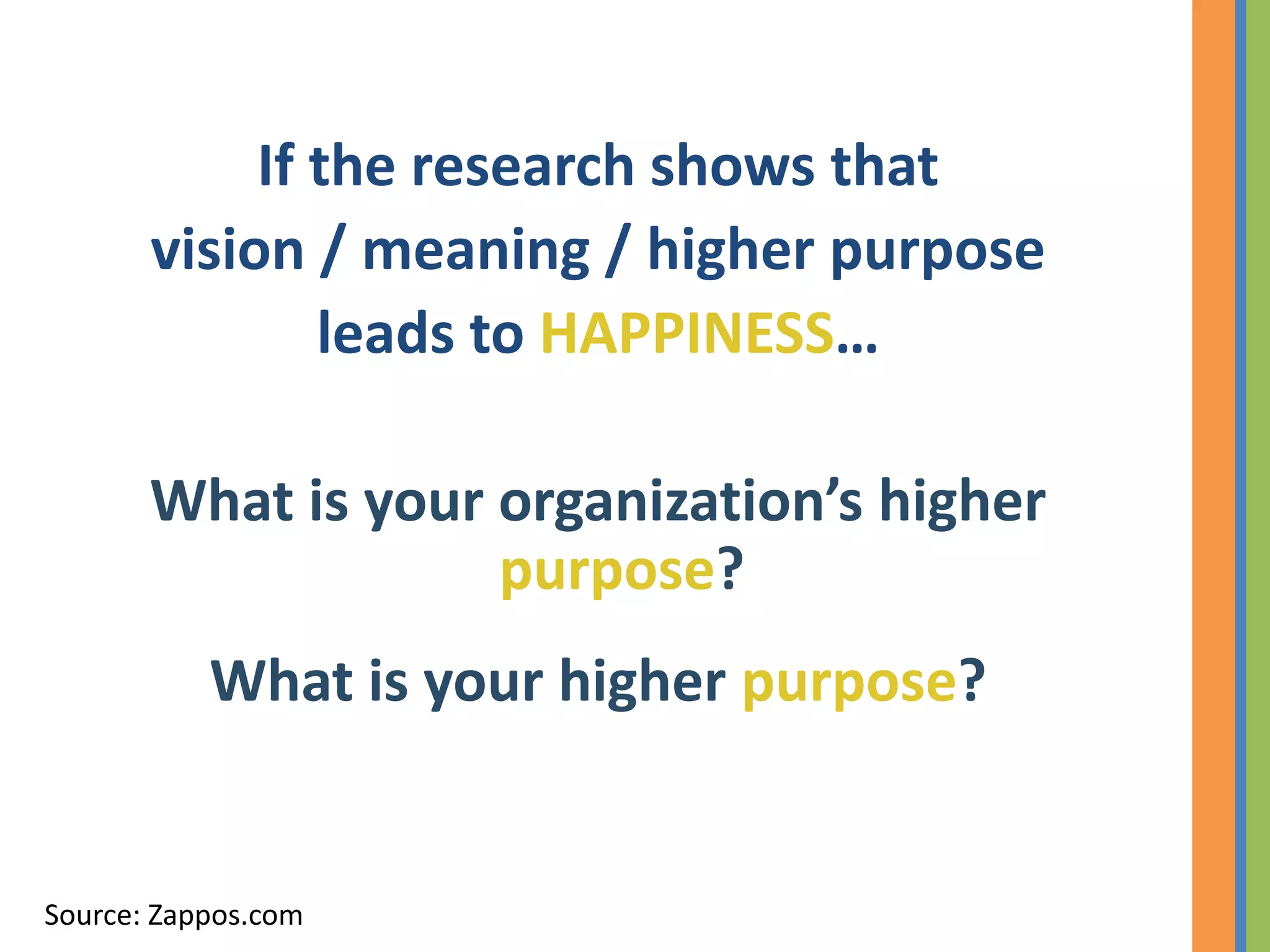
If the research shows that
       vision / meaning / higher purpose
               leads to HAPPINESS…

       What is your organization’s higher
                    purpose?
           What is your higher purpose?


Source: Zappos.com
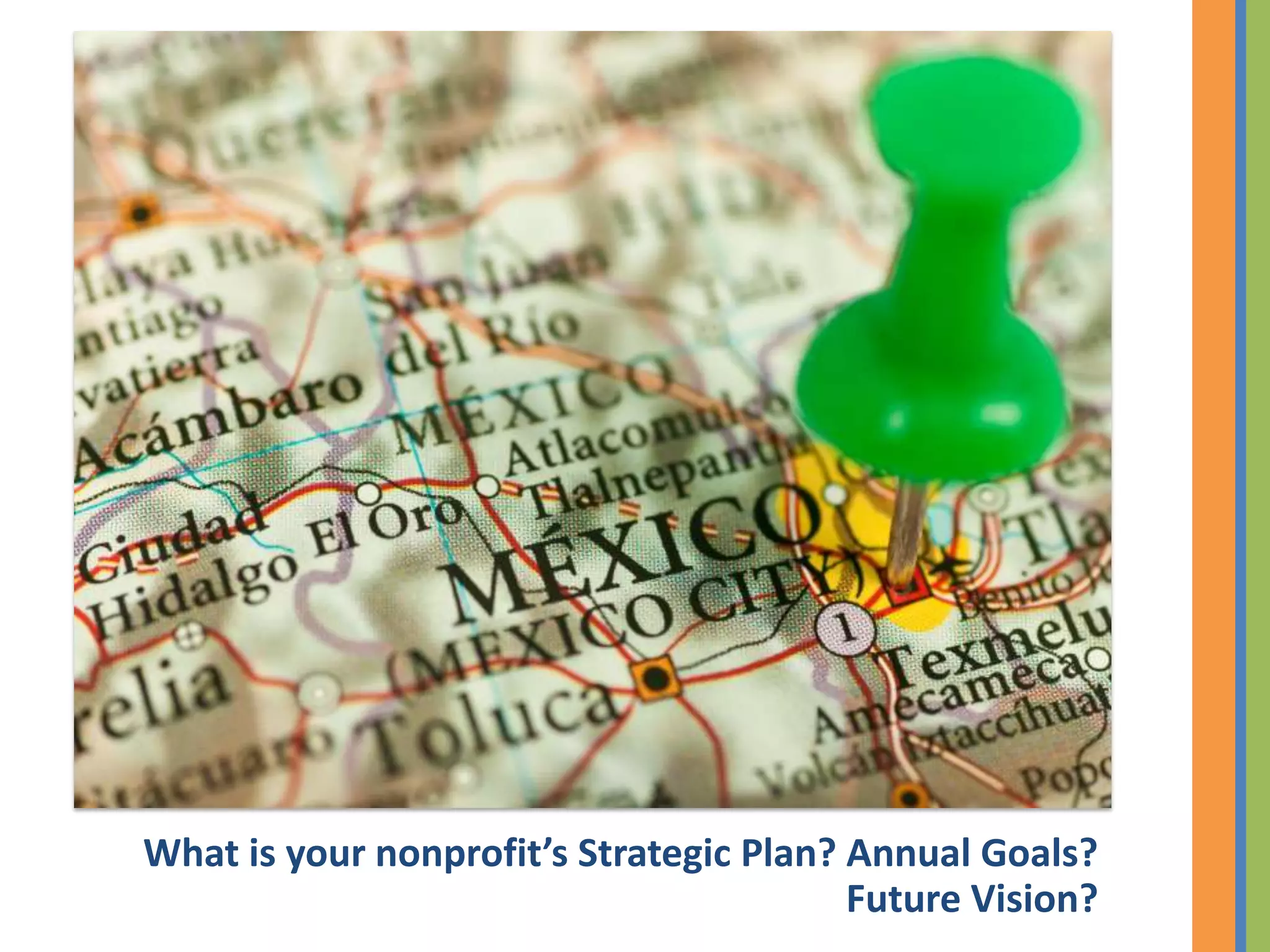
What is your nonprofit’s Strategic Plan? Annual Goals?
                                         Future Vision?
As a leader in your
organization, what is
your higher purpose?
Methods for Developing Leaders
“Leaders are not born,
     they are grown.”
     -- Peter Drucker
What experiences
contributed to your
 development as a
      leader?
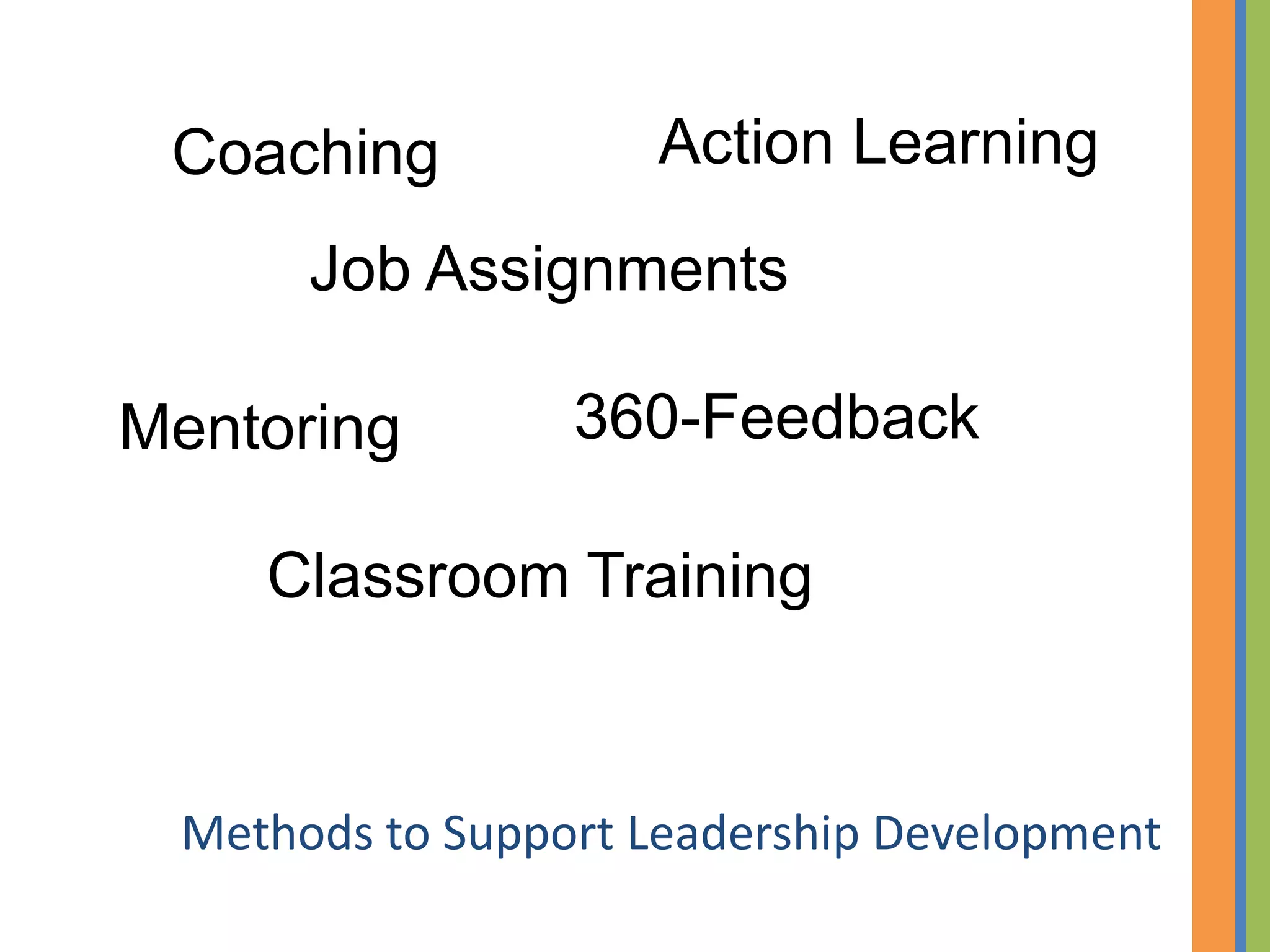
Coaching           Action Learning

      Job Assignments

Mentoring        360-Feedback

    Classroom Training


 Methods to Support Leadership Development
Strategies for Engagement & Commitment
Strategy #1: Link annual goals for staff to the
            mission and/or the strategic plan
Strategy #2: Design a “leadership
 development” program for your
                     organization
Strategy #3: Expose Staff to New Knowledge
                   (Extraordinary content!)
Strategy #4: Chart a Clear Path for Staff
   How do you chart progress for staff?
                      For organization?
Strategy #5: Re-engage the disengaged!
A few more ideas…
• Perceived Control:
• Priorities Driven by Staff – Power of Choice!

• Perceived Progress:
• A Pathway for Advancement

• Connectedness:
• Teambuilding, Increase Connection to Customers/Clients

• Vision / Meaning:
• Clarify mission/vision /values for all, keep visible and
  present – revisit often!
Closing Thought
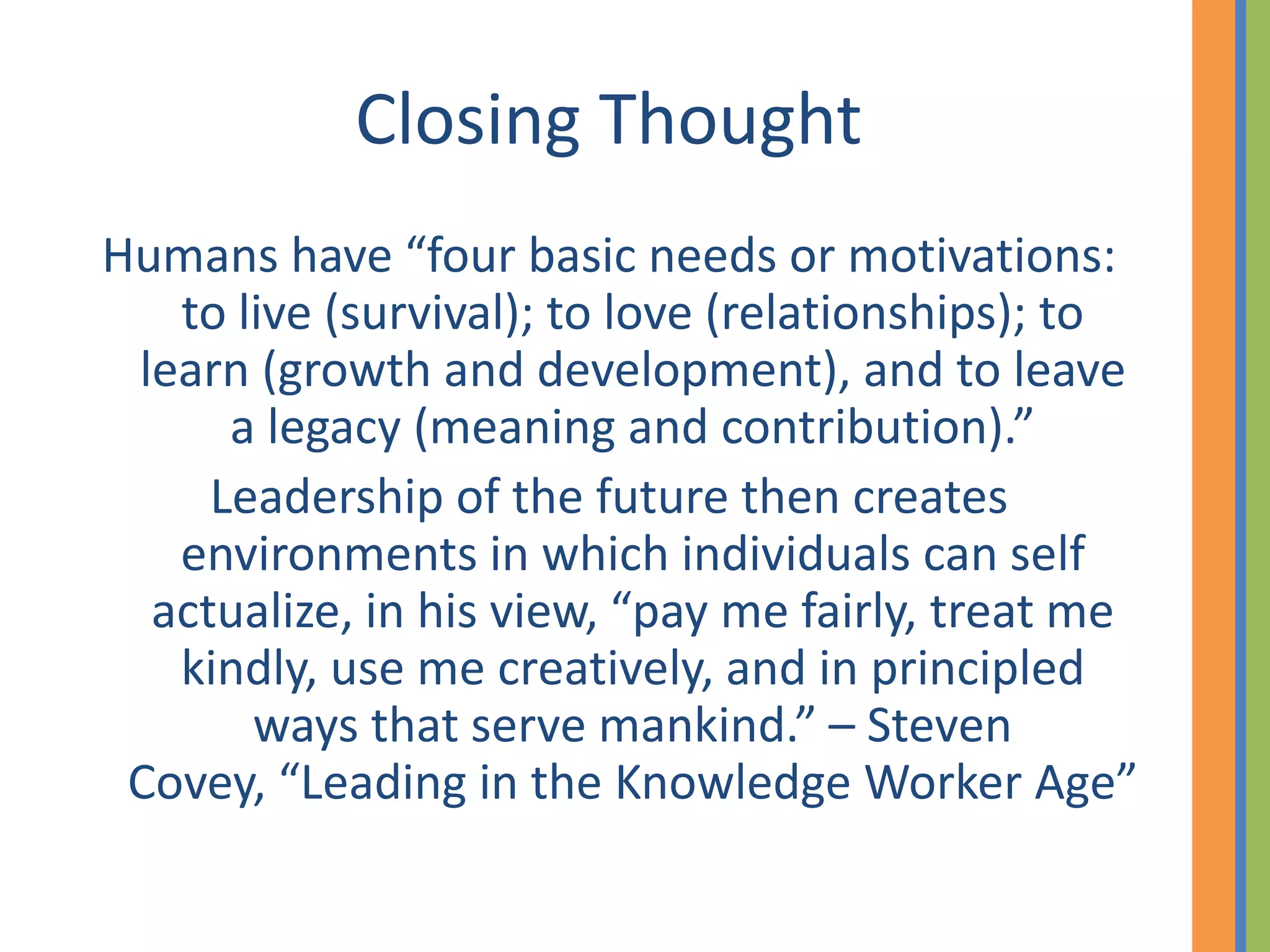
Humans have “four basic needs or motivations:
   to live (survival); to love (relationships); to
 learn (growth and development), and to leave
      a legacy (meaning and contribution).”
     Leadership of the future then creates
   environments in which individuals can self
  actualize, in his view, “pay me fairly, treat me
   kindly, use me creatively, and in principled
       ways that serve mankind.” – Steven
 Covey, “Leading in the Knowledge Worker Age”
Questions?
Find Me!
• Facebook: Fio Partners, LLC

• Twitter: @annefio, @fiopartners

• Our Blog: www.fiopartners.com/blog

• Email: anne@fiopartners.com

Leadership Development: Strategies for Employee Engagement

  • 1.
    June 2012 Developing Leaders:Strategies for Increasing Staff Engagement and Commitment
  • 2.
    Our Agenda • StaffEngagement – Why Do We Care • Methods for Developing Leaders • Strategies for Engagement & Commitment
  • 3.
    Staff Engagement –Why Do We Care
  • 4.
    Whether we realizeit or not, workers have been under constant duress. Because of scarce resources, few opportunities for development and promotions– not to mention the fact that people often have been required to do the work of more than one person – a lot of our work forces is burnt out. Employees across the country feel overworked, under-rewarded and greatly unappreciated. -- John Gibbons, VP of Research and Development at the Institute for Corporate Productivity Impact of the Great Recession
  • 5.
    Impact of LowEngagement • Dissatisfaction • Attrition • Inconsistency • Lack of Goodwill
  • 6.
    How do youknow? • Annual Staff Climate Survey • Employee Feedback • Retention Rates I would be happy to be employed here: Answer Options Response Response Percent Count for the next year 16.7% 21 for the next two to three years 21.4% 27 for the next four to six years 19.0% 24 for more than the next six years 37.3% 47 I am looking for a job elsewhere over the next 12 months. 5.6% 7
  • 7.
  • 8.
    A FEW DIFFERENT FRAMEWORKSOF HAPPINESS Source: Zappos.com
  • 9.
    A FEW DIFFERENTFRAMEWORKS ON HAPPINESS Perceived Control Perceived Progress Connectedness Vision / Meaning (Being part of something bigger than yourself) Source: Zappos.com
  • 10.
  • 11.
    3 TYPES OFHAPPINESS Rock Star time (Pleasure – chasing the next high) Flow time (Engagement – time flies) Meaning / Higher Purpose time (Being part of something bigger than yourself) Source: Zappos.com
  • 12.
    If the researchshows that vision / meaning / higher purpose leads to HAPPINESS… What is your organization’s higher purpose? What is your higher purpose? Source: Zappos.com
  • 13.
    What is yournonprofit’s Strategic Plan? Annual Goals? Future Vision?
  • 14.
    As a leaderin your organization, what is your higher purpose?
  • 15.
  • 16.
    “Leaders are notborn, they are grown.” -- Peter Drucker
  • 17.
    What experiences contributed toyour development as a leader?
  • 18.
    Coaching Action Learning Job Assignments Mentoring 360-Feedback Classroom Training Methods to Support Leadership Development
  • 19.
  • 20.
    Strategy #1: Linkannual goals for staff to the mission and/or the strategic plan
  • 21.
    Strategy #2: Designa “leadership development” program for your organization
  • 22.
    Strategy #3: ExposeStaff to New Knowledge (Extraordinary content!)
  • 23.
    Strategy #4: Charta Clear Path for Staff How do you chart progress for staff? For organization?
  • 24.
    Strategy #5: Re-engagethe disengaged!
  • 25.
    A few moreideas… • Perceived Control: • Priorities Driven by Staff – Power of Choice! • Perceived Progress: • A Pathway for Advancement • Connectedness: • Teambuilding, Increase Connection to Customers/Clients • Vision / Meaning: • Clarify mission/vision /values for all, keep visible and present – revisit often!
  • 26.
    Closing Thought Humans have“four basic needs or motivations: to live (survival); to love (relationships); to learn (growth and development), and to leave a legacy (meaning and contribution).” Leadership of the future then creates environments in which individuals can self actualize, in his view, “pay me fairly, treat me kindly, use me creatively, and in principled ways that serve mankind.” – Steven Covey, “Leading in the Knowledge Worker Age”
  • 27.
  • 28.
    Find Me! • Facebook:Fio Partners, LLC • Twitter: @annefio, @fiopartners • Our Blog: www.fiopartners.com/blog • Email: anne@fiopartners.com

Editor's Notes

  • #17 Leadership development training tries to develop the quality of an individual to see a vision and look into the future, and develop his ambitions and aspirations. Development todaymeans providingpeople opportunitiesto learn fromtheir work ratherthan taking themaway from theirwork to learn.
  • #19 Developmental relationships primarily taketwo forms: coaching and mentoring. Coachinginvolves practical, goal-focused forms of oneon-one learning and, ideally, behavioral change(Hall, et al., 1999). It can be a short-term interventionintended to develop specific leadershipskills or a more extensive process involving aseries of meetings over time. The most effectivecoaching allows for collaboration to assess andunderstand the developmental task to challengecurrent constraints while exploring new possibilities,and to ensure accountability and support forreaching goals and sustaining development (Ting& Hart, 2004). Mentoring is typically defined asa committed, long-term relationship in which asenior person supports the personal and professionaldevelopment of a junior person. It maybe a formal program or a much more informalprocess. Recognizing the value of mentoring,organizations are increasingly looking at ways toformalize these types of relationships as part oftheir leadership development efforts.Action learning is a set of organization developmentpractices in which important real-timeorganizational problems are tackled. Three kindsof objectives are sought: delivering measurableorganizational results, communicating learningsspecific to a particular context, and developingmore general leadership skills and capabilities(Palus & Horth, 2003). Effective action learningmay range from tacit, unfacilitated learning atwork to focused and high-impact learning projectsto transformations of peopleand organizations (Marsick, 2002).Challenging job assignments are apotent form of leadership developmentand provide many of the developmentalopportunities in organizationstoday. The level of organizationalinvolvement in making job assignmentspart of their leadership developmentprocess runs the gamutfrom simply providing people withinformation about developmentalopportunities in their current job to a systematicprogram of job rotation. Using job assignmentsfor developmental purposes provides benefitsthat go beyond getting the job done and mayeven result in competitive advantages for theorganization (Ohlott, 2004).leadership development itself involvesthe development of the whole person.
  • #22 Using job assignmentsfor developmentalpurposesprovides benefitsthat go beyond gettingthe job done.
  • #23 However, the best leadership development programs always include some amount of fascinating and incredibly relevant content. That is, helpful tips, new ideas, proven best practices… the kind of content that causes participants to light up, pick up their pens and start writing.