LEADERSHIP AND
ITS DIMENSIONS
Submitted By: Deepika
Class: 5.5(B)
Roll No: 709
Submitted To: Dr. Priyanka Yadav
EMOTIONAL
INTELLIGENCE
ASSIGNMENT
.
LEADERSHIP
 Leadership, both as a research area and
as a practical skill, encompasses the ability
of an individual, group or organization to
"lead", influence or guide other
individuals, teams, or entire organizations.
 Leadership is the ability of an
individual or a group of individuals to
influence and guide followers or other
members of an organization.
DIMENSIONS
OF
LEADERSHI
P .
DIMENSIONS
OF
LEADERSHIP
.
THE PIONEERING DIMENSION
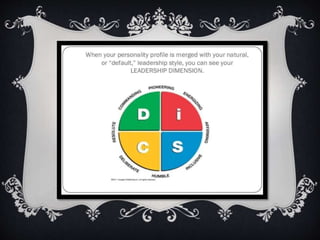
 The Pioneering Dimension Strengths and Motivators Those with the PIONEERING DIMENSION tend
to be
Action-oriented, adventurous, and drawn to new opportunities
Dynamic and charismatic, charming others into support
Passionate, optimistic, confident, and creative
 The Pioneering Dimension Challenges and “Blind Spots” Those with the PIONEERING DIMENSION
tend to be
Impulsive, impatient, overconfident, and outspoken
Aggressive and overpowering under pressure
Inconsiderate of how their impulsiveness may affect others in their wake
 The Pioneering Dimension Action Items PIONEERING leaders would increase their effectiveness
through focusing on patience, humility and consideration in their dealings with others.
THE ENERGIZING
DIMENSION
 The Energizing Dimension Strengths and Motivators Those with the ENERGIZING DIMENSION tend to
be
Enthusiastic, spontaneous, outgoing, and upbeat
Unafraid of colorful, new ideas– generating them or embracing them
Collaborative, open, expressive, and connected
 The Energizing Dimension Challenges and “Blind Spots” Those with the ENERGIZING DIMENSION
tend to be
Disorganized, scattered, and erratic, especially on follow- through or solitary tasks; annoyed by analysis
Motivated to avoid negativity, both external and internal (sensitivity to criticism)
Overly expressive and even frantic under pressure
 The Energizing Dimension Action Items ENERGIZING leaders would increase effectiveness through
being more objective, and following through on tasks.
THE AFFIRMING
DIMENSION
 The Affirming Dimension Strengths and Motivators Those with the AFFIRMING DIMENSION tend to be
Kind and supportive, seeing the good in others
Flexible, open, patient, easy-going, and tolerant
Relationship-oriented, sincere, affectionate
 The Affirming Dimension Challenges and “Blind Spots” Those with the AFFIRMING DIMENSION tend to
be
Averse to conflict, often struggling to give negative feedback or an opposing viewpoint
Prone to avoiding difficult problems that may create tension
Frustrated by analysis because of a perception that it is negative by nature
 The Affirming Dimension Action Items AFFIRMING leaders would increase their effectiveness through
acknowledging others’ flaws, and by confronting problems.
THE INCLUSIVE
DIMENSION
 The Inclusive Dimension Strengths and Motivators Those with the INCLUSIVE DIMENSION tend to be
Good listeners who foster collaboration and understanding
Accepting, diplomatic, patient, and dependable
Prone to adopt a cautious, methodical pace to ensure thoughtfulness
 The Inclusive Dimension Challenges and “Blind Spots” Those with the INCLUSIVE DIMENSION tend
to be
Passive, often allowing others to take advantage of their patient nature
Threatened by change or the unknown
Prone to internalizing problems and avoiding conflict
 The Inclusive Dimension Action Items INCLUSIVE leaders would increase their effectiveness by
displaying self- confidence and revealing their true feelings.
THE HUMBLE
DIMENSION
 The Humble Dimension Strengths and Motivators Those with the HUMBLE DIMENSION
tend to be
Reliable, steady, conscientious, precise, and consistent
Fair-minded, practical, diligent, and thorough
Able to discern what systems and structures would meet others’ needs
 The Humble Dimension Challenges and “Blind Spots” Those with the HUMBLE
DIMENSION tend to be
Overly cautious, hindering spontaneity or creativity at times
Prone to avoid trouble, conflicts, self-expression, and exposure
 The Humble Dimension Action Items HUMBLE leaders would increase their effectiveness by
being decisive, showing a sense of urgency, initiating change, and speaking up.
THE DELIBERATE
DIMENSION
 The Deliberate Dimension Strengths and Motivators Those with the DELIBERATE DIMENSION tend to
be
Disciplined leaders who provide high-quality outcomes through careful analysis and planning Systematic,
moderately paced, objective problem- solvers
Accurate, valuing expertise, logic, and privacy
 The Deliberate Dimension Challenges and “Blind Spots” Those with the DELIBERATE DIMENSION
tend to be
Reluctant to show emotions coupled with a distaste for vulnerability
Stubbornly skeptic of others’ ideas, particularly if it threatens their perceived sense of credibility
Devoted to a comfort zone that can make them seem isolated or stagnant
 The Deliberate Dimension Action Items DELIBERATE leaders would increase their effectiveness by
acknowledging others’ feelings and looking beyond data.
THE RESOLUTE
DIMENSION
 The Resolute Dimension Strengths and Motivators Those with the RESOLUTE
DIMENSION tend to be
Tenaciously driven, with a passion for overcoming obstacles
Independent and determined, valuing personal mastery, accomplishment, and efficient
results
 The Resolute Dimension Challenges and “Blind Spots” Those with the RESOLUTE
DIMENSION tend to be
Naturally skeptical, appearing disinterested, guarded, or serious
 The Resolute Dimension Action Items RESOLUTE leaders would increase their
effectiveness by focusing on personal warmth, tactful communication, and attention to
others’ needs.
THE COMMANDING
DIMENSION
 The Commanding Dimension Strengths and Motivators Those with the RESOLUTE DIMENSION tend to
be
Powerful, decisive leaders who possess a take-charge presence
Competitive, driven, assertive, motivated by bottom-line results or victory
Able to tenaciously tolerate conflict
 The Commanding Dimension Challenges and “Blind Spots” Those with the RESOLUTE DIMENSION
tend to be
Blunt, insistent, demanding, and with an aversion to “soft” emotions
Forceful, pushing others at the expanse of morale
Closed to feedback, but open to giving it
 The Commanding Dimension Action Items COMMANDING leaders would increase their effectiveness by
focusing on patience and empathy
.

Leadership and its dimensions

  • 1.
    LEADERSHIP AND ITS DIMENSIONS SubmittedBy: Deepika Class: 5.5(B) Roll No: 709 Submitted To: Dr. Priyanka Yadav
  • 2.
  • 3.
    LEADERSHIP  Leadership, bothas a research area and as a practical skill, encompasses the ability of an individual, group or organization to "lead", influence or guide other individuals, teams, or entire organizations.  Leadership is the ability of an individual or a group of individuals to influence and guide followers or other members of an organization.
  • 4.
  • 5.
  • 6.
    THE PIONEERING DIMENSION The Pioneering Dimension Strengths and Motivators Those with the PIONEERING DIMENSION tend to be Action-oriented, adventurous, and drawn to new opportunities Dynamic and charismatic, charming others into support Passionate, optimistic, confident, and creative  The Pioneering Dimension Challenges and “Blind Spots” Those with the PIONEERING DIMENSION tend to be Impulsive, impatient, overconfident, and outspoken Aggressive and overpowering under pressure Inconsiderate of how their impulsiveness may affect others in their wake  The Pioneering Dimension Action Items PIONEERING leaders would increase their effectiveness through focusing on patience, humility and consideration in their dealings with others.
  • 7.
    THE ENERGIZING DIMENSION  TheEnergizing Dimension Strengths and Motivators Those with the ENERGIZING DIMENSION tend to be Enthusiastic, spontaneous, outgoing, and upbeat Unafraid of colorful, new ideas– generating them or embracing them Collaborative, open, expressive, and connected  The Energizing Dimension Challenges and “Blind Spots” Those with the ENERGIZING DIMENSION tend to be Disorganized, scattered, and erratic, especially on follow- through or solitary tasks; annoyed by analysis Motivated to avoid negativity, both external and internal (sensitivity to criticism) Overly expressive and even frantic under pressure  The Energizing Dimension Action Items ENERGIZING leaders would increase effectiveness through being more objective, and following through on tasks.
  • 8.
    THE AFFIRMING DIMENSION  TheAffirming Dimension Strengths and Motivators Those with the AFFIRMING DIMENSION tend to be Kind and supportive, seeing the good in others Flexible, open, patient, easy-going, and tolerant Relationship-oriented, sincere, affectionate  The Affirming Dimension Challenges and “Blind Spots” Those with the AFFIRMING DIMENSION tend to be Averse to conflict, often struggling to give negative feedback or an opposing viewpoint Prone to avoiding difficult problems that may create tension Frustrated by analysis because of a perception that it is negative by nature  The Affirming Dimension Action Items AFFIRMING leaders would increase their effectiveness through acknowledging others’ flaws, and by confronting problems.
  • 9.
    THE INCLUSIVE DIMENSION  TheInclusive Dimension Strengths and Motivators Those with the INCLUSIVE DIMENSION tend to be Good listeners who foster collaboration and understanding Accepting, diplomatic, patient, and dependable Prone to adopt a cautious, methodical pace to ensure thoughtfulness  The Inclusive Dimension Challenges and “Blind Spots” Those with the INCLUSIVE DIMENSION tend to be Passive, often allowing others to take advantage of their patient nature Threatened by change or the unknown Prone to internalizing problems and avoiding conflict  The Inclusive Dimension Action Items INCLUSIVE leaders would increase their effectiveness by displaying self- confidence and revealing their true feelings.
  • 10.
    THE HUMBLE DIMENSION  TheHumble Dimension Strengths and Motivators Those with the HUMBLE DIMENSION tend to be Reliable, steady, conscientious, precise, and consistent Fair-minded, practical, diligent, and thorough Able to discern what systems and structures would meet others’ needs  The Humble Dimension Challenges and “Blind Spots” Those with the HUMBLE DIMENSION tend to be Overly cautious, hindering spontaneity or creativity at times Prone to avoid trouble, conflicts, self-expression, and exposure  The Humble Dimension Action Items HUMBLE leaders would increase their effectiveness by being decisive, showing a sense of urgency, initiating change, and speaking up.
  • 11.
    THE DELIBERATE DIMENSION  TheDeliberate Dimension Strengths and Motivators Those with the DELIBERATE DIMENSION tend to be Disciplined leaders who provide high-quality outcomes through careful analysis and planning Systematic, moderately paced, objective problem- solvers Accurate, valuing expertise, logic, and privacy  The Deliberate Dimension Challenges and “Blind Spots” Those with the DELIBERATE DIMENSION tend to be Reluctant to show emotions coupled with a distaste for vulnerability Stubbornly skeptic of others’ ideas, particularly if it threatens their perceived sense of credibility Devoted to a comfort zone that can make them seem isolated or stagnant  The Deliberate Dimension Action Items DELIBERATE leaders would increase their effectiveness by acknowledging others’ feelings and looking beyond data.
  • 12.
    THE RESOLUTE DIMENSION  TheResolute Dimension Strengths and Motivators Those with the RESOLUTE DIMENSION tend to be Tenaciously driven, with a passion for overcoming obstacles Independent and determined, valuing personal mastery, accomplishment, and efficient results  The Resolute Dimension Challenges and “Blind Spots” Those with the RESOLUTE DIMENSION tend to be Naturally skeptical, appearing disinterested, guarded, or serious  The Resolute Dimension Action Items RESOLUTE leaders would increase their effectiveness by focusing on personal warmth, tactful communication, and attention to others’ needs.
  • 13.
    THE COMMANDING DIMENSION  TheCommanding Dimension Strengths and Motivators Those with the RESOLUTE DIMENSION tend to be Powerful, decisive leaders who possess a take-charge presence Competitive, driven, assertive, motivated by bottom-line results or victory Able to tenaciously tolerate conflict  The Commanding Dimension Challenges and “Blind Spots” Those with the RESOLUTE DIMENSION tend to be Blunt, insistent, demanding, and with an aversion to “soft” emotions Forceful, pushing others at the expanse of morale Closed to feedback, but open to giving it  The Commanding Dimension Action Items COMMANDING leaders would increase their effectiveness by focusing on patience and empathy
  • 14.