Downloaded 1,457 times
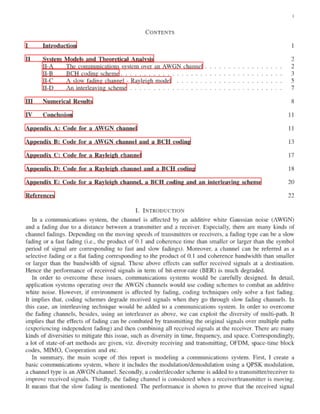
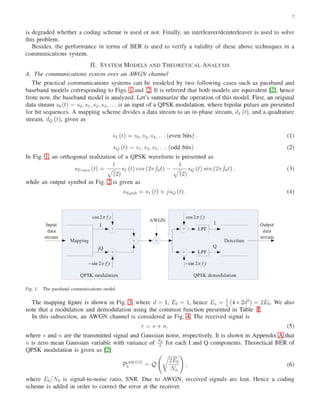
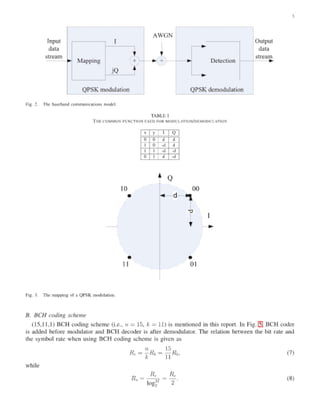
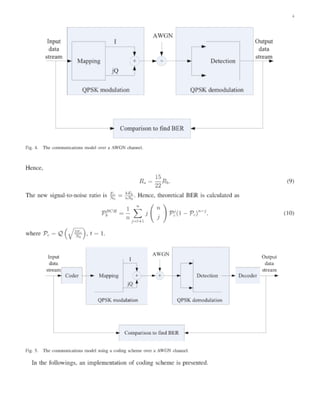
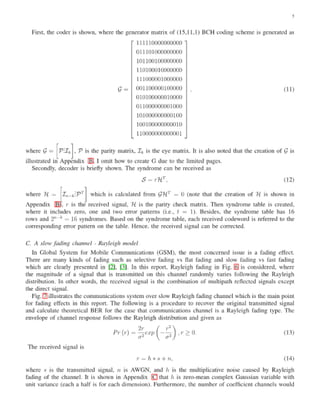
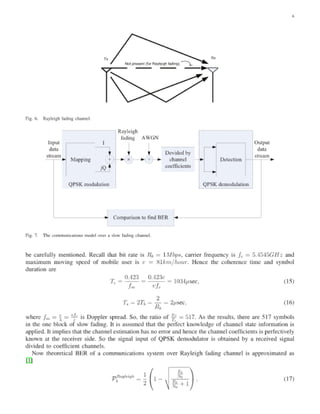
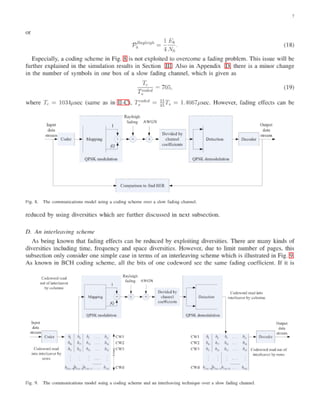
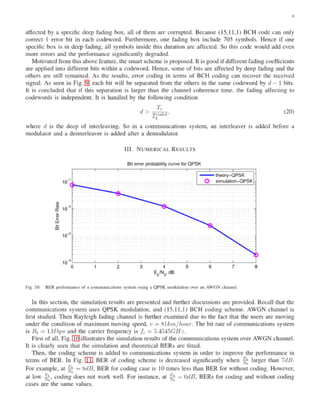
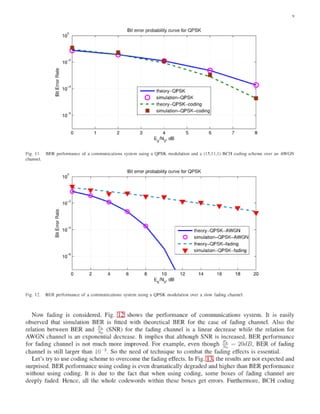
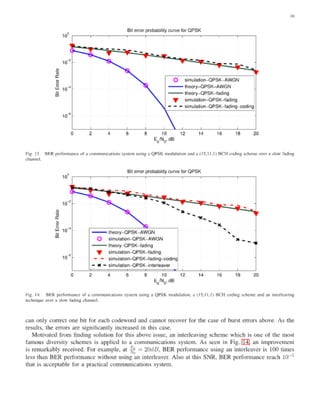
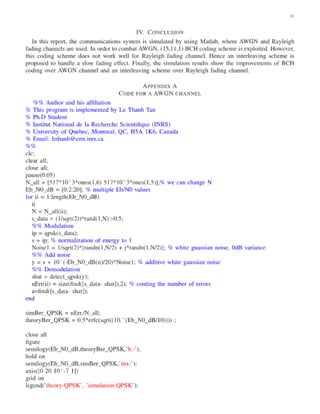
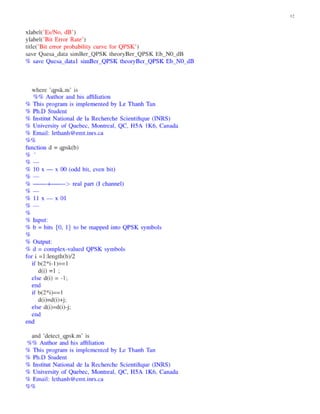
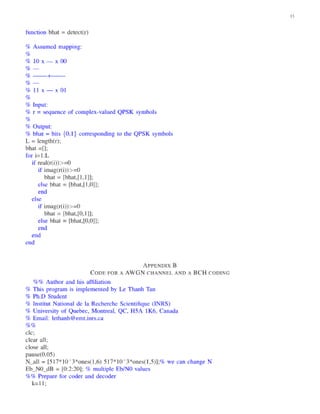
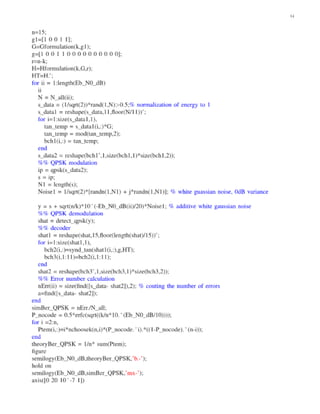
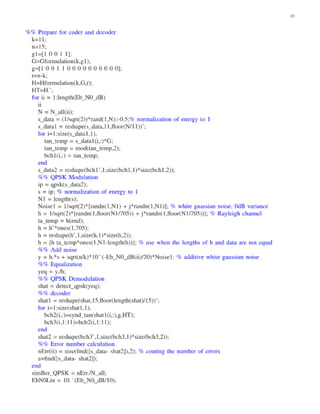
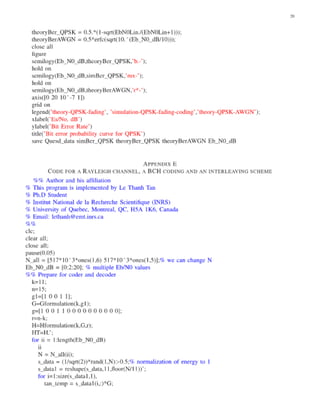
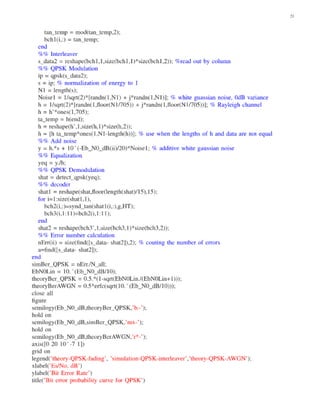

In a communications system, the channel is affected by an additive white Gaussian noise (AWGN) and a fading due to a distance between a transmitter and a receiver. Especially, there are many kinds of channel fadings. Depending on the moving speeds of transmitters or receivers, a fading type can be a slow fading or a fast fading (i.e., the product of 0.1 and coherence time than smaller or larger than the symbol period of signal are corresponding to fast and slow fadings). Moreover, a channel can be referred as a selective fading or a flat fading corresponding to the product of 0.1 and coherence bandwidth than smaller or larger than the bandwidth of signal. These above effects can suffer received signals at a destination. Hence the performance of received signals in term of bit-error-rate (BER) is much degraded. In order to overcome these issues, communications systems would be carefully designed. In detail, application systems operating over the AWGN channels would use coding schemes to combat an additive white noise. However, if environment is affected by fading, coding techniques only solve a fast fading. It implies that, coding schemes degrade received signals when they go through slow fading channels. In this case, an interleaving technique would be added to a communications system. In order to overcome the fading channels, besides, using an interleaver as above, we can exploit the diversity of multi-path. It implies that the effects of fading can be combated by transmitting the original signals over multiple paths (experiencing independent fading) and then combining all received signals at the receiver. There are many kinds of diversities to mitigate this issue, such as diversity in time, frequency, and space. Correspondingly, a lot of state-of-art methods are given, viz. diversity receiving and transmitting, OFDM, space-time block codes, MIMO, Cooperation and etc. In summary, the main scope of this report is modeling a communications system. First, I create a basic communications system, where it includes the modulation/demodulation using a QPSK modulation, a channel type is an AWGN channel. Secondly, a coder/decoder scheme is added to a transmitter/receiver to improve received signals. Thirdly, the fading channel is considered when a receiver/transmitter is moving. It means that the slow fading is mentioned. The performance is shown to prove that the received signal 2 is degraded whether a coding scheme is used or not. Finally, an interleaver/deinterleaver is used to solve this problem. Besides, the performance in terms of BER is used to verify a validity of these above techniques in a communications system.


