Layers of the Rainforest
EMERGENTS
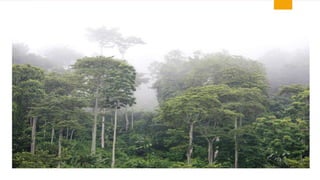
 Trees are 130-180 feet tall.
 There are tall giant trees that are much higher than the
average canopy height.
 Trees take up a lot of sunlight but are also exposed to
wind.
 They have small and pointed leaves, and long and straight
trunks with few branches.
 They house many birds and insects.
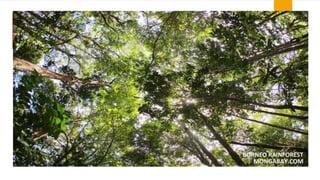
CANOPY
 Has tall slender trees from dense flat form of vegetation.
 60-130 feet tall trees
 Small amount of sunlight touches the ground.
 Home of a large biodiversity of plants and animals.
 Full of life because most of food is available.
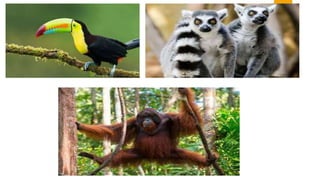
 Animals that live here are spiders, lemurs, monkeys,
sloths, toucans, orangutans, and parrot.
UNDERSTORY
Rises to about 60 feet and consists of trunks of
canopy, shrubs, small plants and trees.
Has dark and cool environment with very high
humidity with constant shade.
Broad and large leaves of plants
Has large number of insect life
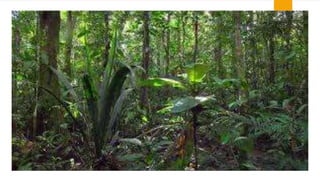
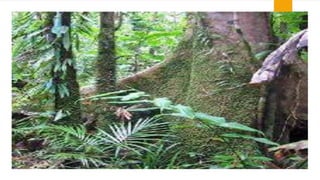
FOREST FLOOR
Deep shade and plant life is thin.
The light from the sun is blocked by the upper
layer of the forest.
Most of life here consist of fungi, insects, worms,
and litter from taller trees that fall on the forest
floor.
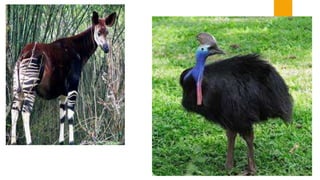
Some animals like jaguars, tigers, okapis and
cassowaries.
Terms to REMEMBER:
 FOOD CHAIN- linear series of feeding relationship
 FOOD WEB- interconnected food chain
 PRODUCERS- organisms that that make their own food.
TYPES OF CONSUMERS
1. HERBIVORES- PLANT-EATING ANIMALS
2. CARNIVORES- FLESH-EATING ANIMALS
3. OMNIVORES- PLANT AND EATING ANIMALS
Types of Interactions
WHAT IS SYMBIOSIS?
Symbiosis is a relationship
between two or more
organisms that live closely
together.
During interactions,
some organisms are
benefited while others
are harmed.
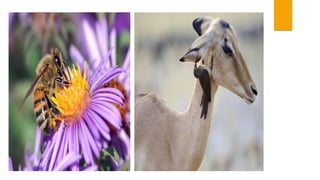
MUTUALISM
TWO ORGANISMS LIVING
TOGETHER WHEREIN BOTH
BENEFIT FROM THE
ASSOCIATION/ INTERACTION.
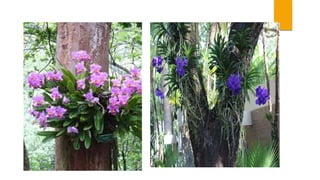
COMMENSALISM
INTERACTIONS OCCURS BETWEEN
TWO SPECIES IN WHICH ONE
ORGANISM BENEFITS WHILE THE
OTHER ORGANISM IS NEITHER
BENEFITED NOR HARMED.
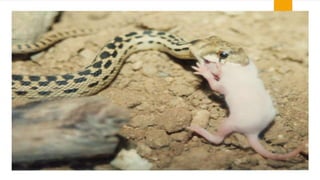
PREDATION
PREDATOR-PREY RELATIONSHIP
WHEN ARE REMOVED OR
REDUCED, THE PREY
POPULATION INCREASES AND
THEY CROWD OUT.
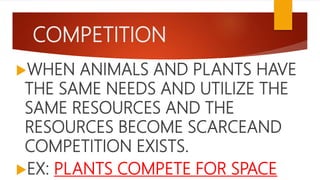
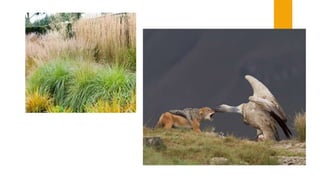
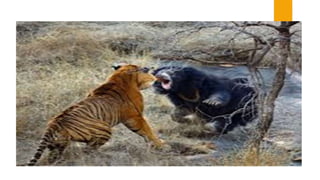
COMPETITION
WHEN ANIMALS AND PLANTS HAVE
THE SAME NEEDS AND UTILIZE THE
SAME RESOURCES AND THE
RESOURCES BECOME SCARCEAND
COMPETITION EXISTS.
EX: PLANTS COMPETE FOR SPACE
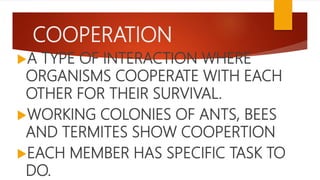
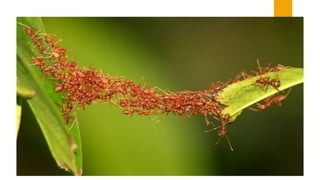
COOPERATION
A TYPE OF INTERACTION WHERE
ORGANISMS COOPERATE WITH EACH
OTHER FOR THEIR SURVIVAL.
WORKING COLONIES OF ANTS, BEES
AND TERMITES SHOW COOPERTION
EACH MEMBER HAS SPECIFIC TASK TO
DO.
Layers of the Rainforest

Layers of the Rainforest

  • 1.
    Layers of theRainforest
  • 2.
    EMERGENTS  Trees are130-180 feet tall.  There are tall giant trees that are much higher than the average canopy height.  Trees take up a lot of sunlight but are also exposed to wind.  They have small and pointed leaves, and long and straight trunks with few branches.  They house many birds and insects.
  • 4.
    CANOPY  Has tallslender trees from dense flat form of vegetation.  60-130 feet tall trees  Small amount of sunlight touches the ground.  Home of a large biodiversity of plants and animals.  Full of life because most of food is available.  Animals that live here are spiders, lemurs, monkeys, sloths, toucans, orangutans, and parrot.
  • 7.
    UNDERSTORY Rises to about60 feet and consists of trunks of canopy, shrubs, small plants and trees. Has dark and cool environment with very high humidity with constant shade. Broad and large leaves of plants Has large number of insect life
  • 9.
    FOREST FLOOR Deep shadeand plant life is thin. The light from the sun is blocked by the upper layer of the forest. Most of life here consist of fungi, insects, worms, and litter from taller trees that fall on the forest floor. Some animals like jaguars, tigers, okapis and cassowaries.
  • 13.
    Terms to REMEMBER: FOOD CHAIN- linear series of feeding relationship  FOOD WEB- interconnected food chain  PRODUCERS- organisms that that make their own food. TYPES OF CONSUMERS 1. HERBIVORES- PLANT-EATING ANIMALS 2. CARNIVORES- FLESH-EATING ANIMALS 3. OMNIVORES- PLANT AND EATING ANIMALS
  • 14.
  • 15.
    WHAT IS SYMBIOSIS? Symbiosisis a relationship between two or more organisms that live closely together.
  • 16.
    During interactions, some organismsare benefited while others are harmed.
  • 17.
    MUTUALISM TWO ORGANISMS LIVING TOGETHERWHEREIN BOTH BENEFIT FROM THE ASSOCIATION/ INTERACTION.
  • 19.
    COMMENSALISM INTERACTIONS OCCURS BETWEEN TWOSPECIES IN WHICH ONE ORGANISM BENEFITS WHILE THE OTHER ORGANISM IS NEITHER BENEFITED NOR HARMED.
  • 21.
    PREDATION PREDATOR-PREY RELATIONSHIP WHEN AREREMOVED OR REDUCED, THE PREY POPULATION INCREASES AND THEY CROWD OUT.
  • 23.
    COMPETITION WHEN ANIMALS ANDPLANTS HAVE THE SAME NEEDS AND UTILIZE THE SAME RESOURCES AND THE RESOURCES BECOME SCARCEAND COMPETITION EXISTS. EX: PLANTS COMPETE FOR SPACE
  • 26.
    COOPERATION A TYPE OFINTERACTION WHERE ORGANISMS COOPERATE WITH EACH OTHER FOR THEIR SURVIVAL. WORKING COLONIES OF ANTS, BEES AND TERMITES SHOW COOPERTION EACH MEMBER HAS SPECIFIC TASK TO DO.