Security – Layers of Control
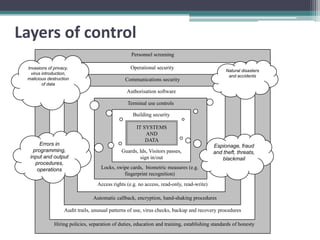
Layers of control
                                                   Personnel screening

 Invasions of privacy,                            Operational security
                                                                                                Natural disasters
   virus introduction,
                                                                                                 and accidents
 malicious destruction                          Communications security
         of data
                                                Authorisation software

                                                 Terminal use controls

                                                   Building security

                                                     IT SYSTEMS
                                                         AND
                                                         DATA
      Errors in                                                                           Espionage, fraud
   programming,                               Guards, Ids, Visitors passes,               and theft, threats,
  input and output                                    sign in/out                             blackmail
    procedures,
     operations                     Locks, swipe cards, biometric measures (e.g.
                                              fingerprint recognition)
                                  Access rights (e.g. no access, read-only, read-write)

                                Automatic callback, encryption, hand-shaking procedures

                   Audit trails, unusual patterns of use, virus checks, backup and recovery procedures

              Hiring policies, separation of duties, education and training, establishing standards of honesty
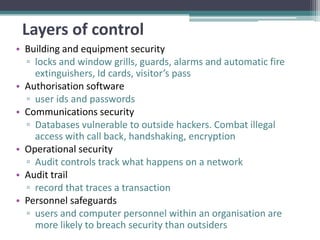
Layers of control
• Building and equipment security
  ▫ locks and window grills, guards, alarms and automatic fire
    extinguishers, Id cards, visitor’s pass
• Authorisation software
  ▫ user ids and passwords
• Communications security
  ▫ Databases vulnerable to outside hackers. Combat illegal
    access with call back, handshaking, encryption
• Operational security
  ▫ Audit controls track what happens on a network
• Audit trail
  ▫ record that traces a transaction
• Personnel safeguards
  ▫ users and computer personnel within an organisation are
    more likely to breach security than outsiders
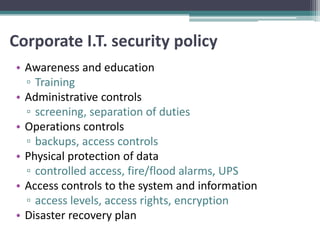
Corporate I.T. security policy
• Awareness and education
  ▫ Training
• Administrative controls
  ▫ screening, separation of duties
• Operations controls
  ▫ backups, access controls
• Physical protection of data
  ▫ controlled access, fire/flood alarms, UPS
• Access controls to the system and information
  ▫ access levels, access rights, encryption
• Disaster recovery plan

Layers of control

  • 1.
  • 2.
    Layers of control Personnel screening Invasions of privacy, Operational security Natural disasters virus introduction, and accidents malicious destruction Communications security of data Authorisation software Terminal use controls Building security IT SYSTEMS AND DATA Errors in Espionage, fraud programming, Guards, Ids, Visitors passes, and theft, threats, input and output sign in/out blackmail procedures, operations Locks, swipe cards, biometric measures (e.g. fingerprint recognition) Access rights (e.g. no access, read-only, read-write) Automatic callback, encryption, hand-shaking procedures Audit trails, unusual patterns of use, virus checks, backup and recovery procedures Hiring policies, separation of duties, education and training, establishing standards of honesty
  • 3.
    Layers of control •Building and equipment security ▫ locks and window grills, guards, alarms and automatic fire extinguishers, Id cards, visitor’s pass • Authorisation software ▫ user ids and passwords • Communications security ▫ Databases vulnerable to outside hackers. Combat illegal access with call back, handshaking, encryption • Operational security ▫ Audit controls track what happens on a network • Audit trail ▫ record that traces a transaction • Personnel safeguards ▫ users and computer personnel within an organisation are more likely to breach security than outsiders
  • 4.
    Corporate I.T. securitypolicy • Awareness and education ▫ Training • Administrative controls ▫ screening, separation of duties • Operations controls ▫ backups, access controls • Physical protection of data ▫ controlled access, fire/flood alarms, UPS • Access controls to the system and information ▫ access levels, access rights, encryption • Disaster recovery plan