LATE EFFECTS OF RADIOTHERAPY
DR. ADITYA SINGLA
INTRODUCTION
• Radiotherapy causes DNA break and subsequent cell death.
• This affects the cancer cells more severely than the normal cells.
• However, with the growing number of patients receiving RT and CT, we come across patients who
develop side effects of radiotherapy.
• Acute < 3months, Late effects > 3 months
• Early recognition and prompt management of the acute side effects can prevent the persistence of these
effects in the long term
INTRODUCTION
• Acute radiation damage predominantly involves rapidly proliferating cells, e.g., epithelial surfaces
of the skin or digestive tract.
• Radiation damages the stem cells, which manifests when tissues are lost as part of normal cell
turnover, but there is inadequate replacement by stem cells due to radiation damage.
• This results in a break in the protective barrier - commonly in the skin, oral mucosa, and
gastrointestinal tract, especially 1-5 years within the completion of radiotherapy.
• Subsequently, compensatory hyperplasia within stem cells results in recovery.
• Therefore, symptoms resolve over a few weeks. When acute damage fails to heal completely and
persists into the late period, such lesions are consequential late effects
INTRODUCTION
• Such effects are more commonly seen in regimens that involve chemotherapy in combination with
radiotherapy, where tissues fail to repair due to concomitant cytotoxic effects from chemotherapy.
• Late complications occur in tissues with slow turnover, e.g., brain, kidney, liver, the wall of the
intestine, subcutaneous tissue, fatty tissue, and muscle.
• Consequences of radiation in such tissues include fibrosis, atrophy, necrosis, and vascular damage -
telangiectasia and carcinogenesis.
• Late effects are a result of a complex interplay of various cytokines and adaptive cellular processes.
INTRODUCTION
• Damage to vasculature results in increased permeability and subsequent release of vasoactive
cytokines, TGF-beta, and fibrin, promoting collagen deposition.
• Most of these tissues or organs have a threshold dose above which late effects increase
• Leucocyte adhesion to damaged endothelial cells results in the formation of thrombi and subsequent
distal ischemia, which results in distal atrophy and necrosis.
.
• The type of cytokines released depends on the tissue type and is responsible for the differential
response of tissues to irradiation. e.g., the predominant response in the lungs is fibrosis, while in the
brain, the predominant response is necrosis
INTRODUCTION
• Radiation injury results from an interplay of radiobiologic factors, intrinsic radiosensitivity, the
volume of tissue or organ irradiated, total dose, dose per fraction, the severity of acute effects, and
combination with surgery and chemotherapy.
• The terms minimal tolerance dose (TD 5/5) and maximum tolerated dose (TD 50/5) refer to the
dose at which severe life-threatening complications occur in 5% and 50% of the recipients within
five years of radiotherapy.
• Experimental evidence suggests that fraction size is the dominant factor in determining late effects.
• Host-related factors that influence the risk of late sequelae are old age, BMI, anemia, associated
infection, comorbid conditions, concomitant chemotherapy regimens, and intrinsic radiosensitivity
of organs at risk.
LATE TOXICITIES
HNC
• Alopecia, telangiectasia, fibrosis of the masticator muscles resulting in trismus, alterations in taste
sensations, and dysphagia.
• Skin and muscle fibrosis leads to trismus in 5-10% of patients.
SALIVARY GLANDS
• Salivary gland irradiation may result in cell death by apoptosis, manifesting as swelling and
tenderness after the first dose of treatment, progressing to xerostomia and subsequent severe dental
caries and osteonecrosis, difficulty wearing dentures, eating and speech difficulties.
• Recovery of salivary gland function, if occurs, takes months or years.
• Management of xerostomia complications includes appropriate oral hygiene and dental care with
fluoride treatment, chlorhexidine rinses, and regular follow-up with a dentist.
CNS
• Long-term neurologic sequelae can be persistent fatigue, neurocognitive effects, cerebrovascular
disease, neuroendocrine dysfunction, and secondary malignancies.
• Spinal cord irradiation can result in acute transient myelopathy due to demyelination manifesting as
Lhermitte syndrome.
• Late effects include lower motor neuron syndrome, telangiectasias, and subsequent haemorrhage.
• Progressive myelopathy, which results in variable irreversible neurologic deficit ranging from minor
sensory symptoms to complete paraplegia.
• Experimental studies and anecdotal evidence supports the use of glucocorticoids, hyperbaric
oxygen, or bevacizumab to treat radiation myelopathy, which may result in partial recovery.
LUNGS
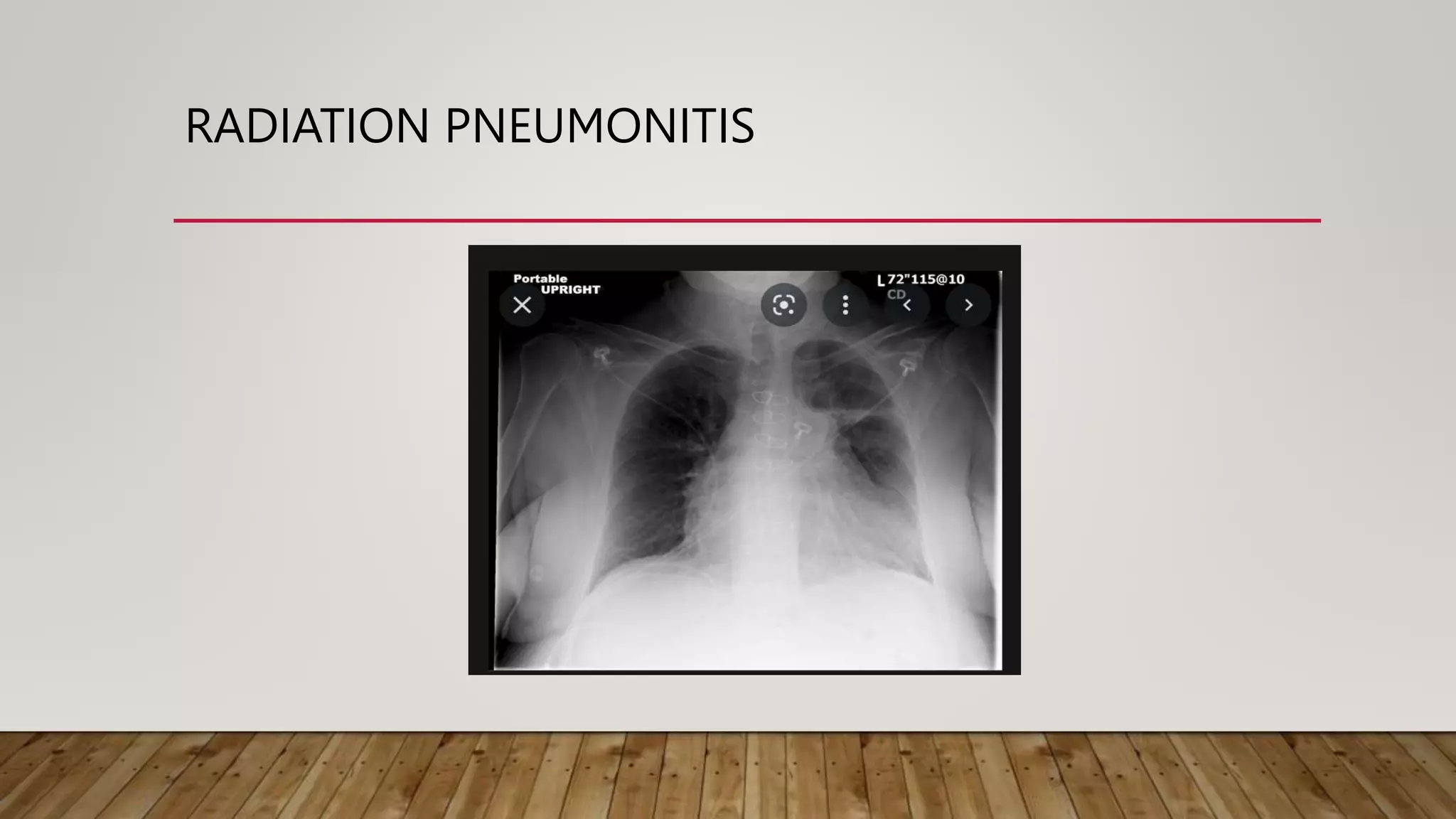
• Early phase clinical effects of lung irradiation include congestion, cough, dyspnea, fever, and chest
pain caused by radiation pneumonitis.
• Radiographic studies reveal infiltrates within the irradiated field. Severe cases result in hypoxia and
subsequent right-sided heart failure.
• Partial irradiation on the lung may occasionally induce bilateral immune-mediated pneumonitis that
generally resolves without treatment.
• The natural course of pneumonitis is either a gradual resolution of the acute phase followed by a
chronic phase causing inflammation and fibrosis, which develops over months to years.
• The degree of fibrosis is proportional to the area irradiated; hence if a large area is irradiated, the
patient may develop restrictive lung disease presenting with cough, shortness of breath, chest
discomfort, and a significant reduction of diffusion capacity and respiratory volume
RADIATION PNEUMONITIS
HEART
• Radiation injury to the heart can manifest as acute pericarditis, pericardial effusion, constrictive
pericarditis, valvular dysfunction, conductive system dysfunction, and myocardial fibrosis.
• Radiation therapy increases the risk of ischemic heart disease by causing myocardial microvascular
disease or macrovascular coronary artery stenosis.
• The vast majority of the acute morbidity is related to concomitant use of chemotherapy and hormonal
therapy; therefore, individualized treatment plans help minimize the risk of acute cardiac effects.
• Myocardial nuclear imaging studies before radiation therapy (RT) can aid in risk stratification and guide
radiotherapy dosing and technique.
• Long-term effects of radiation cardiotoxicity manifest approximately ten years after RT and contribute to
high mortality in younger women diagnosed with breast cancers
GIT
• Chronic effects include chronic diarrhoea, malabsorption, recurrent bouts of ileus or obstruction,
proliferative mucosal telangiectasias, or ulceration.
• The rectum is the most commonly affected normal tissue in radiotherapy for prostate and cervical cancer.
Symptoms of acute radiation injury are diarrhoea, increased mucus secretion, and tenesmus due to loss of
mucosal epithelium.
• Long-term complications are increased stool frequency, urgency, rectal bleeding, pain, variable degrees of
incontinence and strictures, and fistula formation.
• Treatment strategies include oral anti-inflammatory agents, analgesics, stool softeners, steroid enema,
blood transfusions (for bleeding), and mechanical dilatation of strictures.
• For severe or refractory complications, hyperbaric oxygen, endoscopic or surgical intervention involving
colostomy may be necessary.
URINARY TRACT
• RT can cause varying degrees of irritation and functional impairment of bladder transitional
epithelium and mucosa.
• Acute presentation varies from mild dysuria, increased frequency, urgency, microscopic haematuria
to urinary incontinence, gross haematuria, and bladder necrosis.
• Chronic effects include detrusor dysfunction, urge incontinence, hydronephrosis, haematuria,
mucosal ulceration, and fistula formation.
• Treatment is symptomatic with pain management, anticholinergics or antispasmodics, cranberry
juice, hyperbaric oxygen, or surgical interventions for late complications
GONADS
• Irradiation to ovaries leads to infertility or premature ovarian failure even at low doses with
increased sensitivity with advancing age.
• For women under 40 with a strong desire to preserve fertility, the ovarian transposition procedure
can reduce the risk of irradiation.
• Long-term management is a hormone replacement therapy for menopausal symptoms.
• Radiotherapy may result in impotence and testicular dysfunction in males.
• Patients undergoing radiotherapy should be offered sperm or egg cryopreservation options before
undergoing RT.
CERVIX
• Acute symptoms of mucositis include erythema, ulceration, exudative changes, serous discharge,
and increased predisposition to infection.
• Full-thickness ulceration may be seen with brachytherapy for cervical cancers.
• Late side effects include fistulas (rectovaginal or rectovesical), vaginal stenosis, and vaginismus.
• Treatment is conservative for mild symptoms; persistent non-healing mucositis, ulcers, or fistulas
can be treated with hyperbaric oxygen or pentoxifylline, and mechanical dilatation for vaginal
stenosis
MISCELLANEOUS
• Radiation-induced lymphedema causes local swelling and obstructive symptoms.
• Treatment is usually patient-directed, including physiotherapy, limb elevation, compression therapy,
manual lymphatic drainage, or complete decongestive therapy and intermittent pneumatic
compression in severe cases
SECONDARY MALIGNANCIES
• Radiation induces secondary malignancies - absolute risk ranges between 0.2% to 1% per year in
cancer survivors after radiotherapy.
• There is a bimodal distribution of radiation-induced secondary malignancies (RISMs) in relation to
occurrence after radiotherapy.
• The first peak is within three years of radiation exposure, predominantly driven by hematological
malignancies like acute leukemias.
• The second peak, seen over ten years after therapy, is driven primarily by solid malignancies
SECONDARY MALIGNANCIES
 Hodgkin disease - Breast, lung, thyroid, stomach
 Breast - Lung, leukemia, opposite breast
 Testis- Leukemia, lymphoma, pelvic malignancy, bone, and soft tissue sarcoma
 Cervix - Bladder, rectum, leukemia, sarcoma
 Childhood cancers - Thyroid, breast, leukemia, sarcoma
PREVENTION
• Modification of techniques of therapeutic irradiation can play an essential role in reducing
complications and enhancing local tumor control.
• Careful planning for radiotherapy considers likely patterns of locoregional tumor spread,
uncertainties in positioning the patient for each treatment, tumor and organ movement during
therapy and between treatment, tumor, and local tissue sensitivity helps to determine the appropriate
irradiation dose, treatment intervals, and technique.
• Combined chemoradiation leads to prolonged mucosal, gastrointestinal, and urinary toxicities.
• Acute toxicity can be mitigated by fractionation, reduction in a dose per fraction, the increasing gap
between fractions and use of radioprotectors, and growth factors in the acute phase, while chronic
side effects can be minimized by decreasing exposure to radiosensitive tissues.
PREVENTION
• The use of appropriate tools to classify and measure toxicities can help guide treatment strategies
and guidelines for radiotherapy in individual cancer treatments.
• Identify patients at a higher risk of radiation toxicity- e.g., patients with active collagen vascular
disease, inflammatory bowel disease, and atherosclerotic vascular diseases.
• Use of predictive factors of clinical radiosensitivity - e.g., age, BMI.
• Cancer-specific predictive biomarkers may help identify individual curves or subsets to determine
the appropriate dosing regimen
EDUCATION
1. Identification of patients at risk of complications and initiation of appropriate therapy (low BMI
increases the risk of diarrhea while high BMI patients are at greater risk of skin and mucosal
complications).
2. Oral hygiene instruction for all patients receiving head and neck irradiation. Consultation with a dentist
and treatment of periodontal disease before radiotherapy can minimize the risk of jaw
osteoradionecrosis.
3. Regular assessment and monitoring of high-risk patients can reduce long-term sequela in these patients
and improve the overall quality of life. Dietary modifications that alleviate symptoms include avoiding
spicy or acidic foods, caffeine, alcoholic beverages, alcohol-containing mouthwashes, and sharp foods
(e.g., chips, popcorn).
4. Nutritional assessment and dietary consult can improve the healing of damaged tissues. It is especially
important in patients with cancer cachexia compounded by radiotherapy-associated fatigue, loss of
appetite, alterations in taste sensations, and mucositis.
EDUCATION
4. Wound care interventions for skin ulcers with hydrocolloid dressings and regular cleaning
and hyperbaric oxygen therapy for refractory cases.
5. The use of probiotics reduces radiation enteritis symptoms, and dietary modifications such
as a low-residue diet with no grease, spices, and adequate fiber intake can reduce symptoms of
proctitis.
6. Vaginitis douches with dilute hydrogen peroxide use for cleaning and prevention of infection
following pelvic irradiation.
7. Smoking cessation is a critical intervention to reduce the risk of secondary lung cancer in
patients who receive mediastinal radiotherapy for Hodgkin disease. Some studies suggest up to a
20-fold increase in risk compared to non-smokers.
NUTSHELL
THANK YOU

LATE EFFECTS OF RADIOTHERAPY.pptx

  • 1.
    LATE EFFECTS OFRADIOTHERAPY DR. ADITYA SINGLA
  • 2.
    INTRODUCTION • Radiotherapy causesDNA break and subsequent cell death. • This affects the cancer cells more severely than the normal cells. • However, with the growing number of patients receiving RT and CT, we come across patients who develop side effects of radiotherapy. • Acute < 3months, Late effects > 3 months • Early recognition and prompt management of the acute side effects can prevent the persistence of these effects in the long term
  • 3.
    INTRODUCTION • Acute radiationdamage predominantly involves rapidly proliferating cells, e.g., epithelial surfaces of the skin or digestive tract. • Radiation damages the stem cells, which manifests when tissues are lost as part of normal cell turnover, but there is inadequate replacement by stem cells due to radiation damage. • This results in a break in the protective barrier - commonly in the skin, oral mucosa, and gastrointestinal tract, especially 1-5 years within the completion of radiotherapy. • Subsequently, compensatory hyperplasia within stem cells results in recovery. • Therefore, symptoms resolve over a few weeks. When acute damage fails to heal completely and persists into the late period, such lesions are consequential late effects
  • 4.
    INTRODUCTION • Such effectsare more commonly seen in regimens that involve chemotherapy in combination with radiotherapy, where tissues fail to repair due to concomitant cytotoxic effects from chemotherapy. • Late complications occur in tissues with slow turnover, e.g., brain, kidney, liver, the wall of the intestine, subcutaneous tissue, fatty tissue, and muscle. • Consequences of radiation in such tissues include fibrosis, atrophy, necrosis, and vascular damage - telangiectasia and carcinogenesis. • Late effects are a result of a complex interplay of various cytokines and adaptive cellular processes.
  • 5.
    INTRODUCTION • Damage tovasculature results in increased permeability and subsequent release of vasoactive cytokines, TGF-beta, and fibrin, promoting collagen deposition. • Most of these tissues or organs have a threshold dose above which late effects increase • Leucocyte adhesion to damaged endothelial cells results in the formation of thrombi and subsequent distal ischemia, which results in distal atrophy and necrosis. . • The type of cytokines released depends on the tissue type and is responsible for the differential response of tissues to irradiation. e.g., the predominant response in the lungs is fibrosis, while in the brain, the predominant response is necrosis
  • 6.
    INTRODUCTION • Radiation injuryresults from an interplay of radiobiologic factors, intrinsic radiosensitivity, the volume of tissue or organ irradiated, total dose, dose per fraction, the severity of acute effects, and combination with surgery and chemotherapy. • The terms minimal tolerance dose (TD 5/5) and maximum tolerated dose (TD 50/5) refer to the dose at which severe life-threatening complications occur in 5% and 50% of the recipients within five years of radiotherapy. • Experimental evidence suggests that fraction size is the dominant factor in determining late effects. • Host-related factors that influence the risk of late sequelae are old age, BMI, anemia, associated infection, comorbid conditions, concomitant chemotherapy regimens, and intrinsic radiosensitivity of organs at risk.
  • 7.
  • 8.
    HNC • Alopecia, telangiectasia,fibrosis of the masticator muscles resulting in trismus, alterations in taste sensations, and dysphagia. • Skin and muscle fibrosis leads to trismus in 5-10% of patients.
  • 9.
    SALIVARY GLANDS • Salivarygland irradiation may result in cell death by apoptosis, manifesting as swelling and tenderness after the first dose of treatment, progressing to xerostomia and subsequent severe dental caries and osteonecrosis, difficulty wearing dentures, eating and speech difficulties. • Recovery of salivary gland function, if occurs, takes months or years. • Management of xerostomia complications includes appropriate oral hygiene and dental care with fluoride treatment, chlorhexidine rinses, and regular follow-up with a dentist.
  • 10.
    CNS • Long-term neurologicsequelae can be persistent fatigue, neurocognitive effects, cerebrovascular disease, neuroendocrine dysfunction, and secondary malignancies. • Spinal cord irradiation can result in acute transient myelopathy due to demyelination manifesting as Lhermitte syndrome. • Late effects include lower motor neuron syndrome, telangiectasias, and subsequent haemorrhage. • Progressive myelopathy, which results in variable irreversible neurologic deficit ranging from minor sensory symptoms to complete paraplegia. • Experimental studies and anecdotal evidence supports the use of glucocorticoids, hyperbaric oxygen, or bevacizumab to treat radiation myelopathy, which may result in partial recovery.
  • 11.
    LUNGS • Early phaseclinical effects of lung irradiation include congestion, cough, dyspnea, fever, and chest pain caused by radiation pneumonitis. • Radiographic studies reveal infiltrates within the irradiated field. Severe cases result in hypoxia and subsequent right-sided heart failure. • Partial irradiation on the lung may occasionally induce bilateral immune-mediated pneumonitis that generally resolves without treatment. • The natural course of pneumonitis is either a gradual resolution of the acute phase followed by a chronic phase causing inflammation and fibrosis, which develops over months to years. • The degree of fibrosis is proportional to the area irradiated; hence if a large area is irradiated, the patient may develop restrictive lung disease presenting with cough, shortness of breath, chest discomfort, and a significant reduction of diffusion capacity and respiratory volume
  • 12.
  • 13.
    HEART • Radiation injuryto the heart can manifest as acute pericarditis, pericardial effusion, constrictive pericarditis, valvular dysfunction, conductive system dysfunction, and myocardial fibrosis. • Radiation therapy increases the risk of ischemic heart disease by causing myocardial microvascular disease or macrovascular coronary artery stenosis. • The vast majority of the acute morbidity is related to concomitant use of chemotherapy and hormonal therapy; therefore, individualized treatment plans help minimize the risk of acute cardiac effects. • Myocardial nuclear imaging studies before radiation therapy (RT) can aid in risk stratification and guide radiotherapy dosing and technique. • Long-term effects of radiation cardiotoxicity manifest approximately ten years after RT and contribute to high mortality in younger women diagnosed with breast cancers
  • 14.
    GIT • Chronic effectsinclude chronic diarrhoea, malabsorption, recurrent bouts of ileus or obstruction, proliferative mucosal telangiectasias, or ulceration. • The rectum is the most commonly affected normal tissue in radiotherapy for prostate and cervical cancer. Symptoms of acute radiation injury are diarrhoea, increased mucus secretion, and tenesmus due to loss of mucosal epithelium. • Long-term complications are increased stool frequency, urgency, rectal bleeding, pain, variable degrees of incontinence and strictures, and fistula formation. • Treatment strategies include oral anti-inflammatory agents, analgesics, stool softeners, steroid enema, blood transfusions (for bleeding), and mechanical dilatation of strictures. • For severe or refractory complications, hyperbaric oxygen, endoscopic or surgical intervention involving colostomy may be necessary.
  • 15.
    URINARY TRACT • RTcan cause varying degrees of irritation and functional impairment of bladder transitional epithelium and mucosa. • Acute presentation varies from mild dysuria, increased frequency, urgency, microscopic haematuria to urinary incontinence, gross haematuria, and bladder necrosis. • Chronic effects include detrusor dysfunction, urge incontinence, hydronephrosis, haematuria, mucosal ulceration, and fistula formation. • Treatment is symptomatic with pain management, anticholinergics or antispasmodics, cranberry juice, hyperbaric oxygen, or surgical interventions for late complications
  • 16.
    GONADS • Irradiation toovaries leads to infertility or premature ovarian failure even at low doses with increased sensitivity with advancing age. • For women under 40 with a strong desire to preserve fertility, the ovarian transposition procedure can reduce the risk of irradiation. • Long-term management is a hormone replacement therapy for menopausal symptoms. • Radiotherapy may result in impotence and testicular dysfunction in males. • Patients undergoing radiotherapy should be offered sperm or egg cryopreservation options before undergoing RT.
  • 17.
    CERVIX • Acute symptomsof mucositis include erythema, ulceration, exudative changes, serous discharge, and increased predisposition to infection. • Full-thickness ulceration may be seen with brachytherapy for cervical cancers. • Late side effects include fistulas (rectovaginal or rectovesical), vaginal stenosis, and vaginismus. • Treatment is conservative for mild symptoms; persistent non-healing mucositis, ulcers, or fistulas can be treated with hyperbaric oxygen or pentoxifylline, and mechanical dilatation for vaginal stenosis
  • 18.
    MISCELLANEOUS • Radiation-induced lymphedemacauses local swelling and obstructive symptoms. • Treatment is usually patient-directed, including physiotherapy, limb elevation, compression therapy, manual lymphatic drainage, or complete decongestive therapy and intermittent pneumatic compression in severe cases
  • 19.
    SECONDARY MALIGNANCIES • Radiationinduces secondary malignancies - absolute risk ranges between 0.2% to 1% per year in cancer survivors after radiotherapy. • There is a bimodal distribution of radiation-induced secondary malignancies (RISMs) in relation to occurrence after radiotherapy. • The first peak is within three years of radiation exposure, predominantly driven by hematological malignancies like acute leukemias. • The second peak, seen over ten years after therapy, is driven primarily by solid malignancies
  • 20.
    SECONDARY MALIGNANCIES  Hodgkindisease - Breast, lung, thyroid, stomach  Breast - Lung, leukemia, opposite breast  Testis- Leukemia, lymphoma, pelvic malignancy, bone, and soft tissue sarcoma  Cervix - Bladder, rectum, leukemia, sarcoma  Childhood cancers - Thyroid, breast, leukemia, sarcoma
  • 21.
    PREVENTION • Modification oftechniques of therapeutic irradiation can play an essential role in reducing complications and enhancing local tumor control. • Careful planning for radiotherapy considers likely patterns of locoregional tumor spread, uncertainties in positioning the patient for each treatment, tumor and organ movement during therapy and between treatment, tumor, and local tissue sensitivity helps to determine the appropriate irradiation dose, treatment intervals, and technique. • Combined chemoradiation leads to prolonged mucosal, gastrointestinal, and urinary toxicities. • Acute toxicity can be mitigated by fractionation, reduction in a dose per fraction, the increasing gap between fractions and use of radioprotectors, and growth factors in the acute phase, while chronic side effects can be minimized by decreasing exposure to radiosensitive tissues.
  • 22.
    PREVENTION • The useof appropriate tools to classify and measure toxicities can help guide treatment strategies and guidelines for radiotherapy in individual cancer treatments. • Identify patients at a higher risk of radiation toxicity- e.g., patients with active collagen vascular disease, inflammatory bowel disease, and atherosclerotic vascular diseases. • Use of predictive factors of clinical radiosensitivity - e.g., age, BMI. • Cancer-specific predictive biomarkers may help identify individual curves or subsets to determine the appropriate dosing regimen
  • 23.
    EDUCATION 1. Identification ofpatients at risk of complications and initiation of appropriate therapy (low BMI increases the risk of diarrhea while high BMI patients are at greater risk of skin and mucosal complications). 2. Oral hygiene instruction for all patients receiving head and neck irradiation. Consultation with a dentist and treatment of periodontal disease before radiotherapy can minimize the risk of jaw osteoradionecrosis. 3. Regular assessment and monitoring of high-risk patients can reduce long-term sequela in these patients and improve the overall quality of life. Dietary modifications that alleviate symptoms include avoiding spicy or acidic foods, caffeine, alcoholic beverages, alcohol-containing mouthwashes, and sharp foods (e.g., chips, popcorn). 4. Nutritional assessment and dietary consult can improve the healing of damaged tissues. It is especially important in patients with cancer cachexia compounded by radiotherapy-associated fatigue, loss of appetite, alterations in taste sensations, and mucositis.
  • 24.
    EDUCATION 4. Wound careinterventions for skin ulcers with hydrocolloid dressings and regular cleaning and hyperbaric oxygen therapy for refractory cases. 5. The use of probiotics reduces radiation enteritis symptoms, and dietary modifications such as a low-residue diet with no grease, spices, and adequate fiber intake can reduce symptoms of proctitis. 6. Vaginitis douches with dilute hydrogen peroxide use for cleaning and prevention of infection following pelvic irradiation. 7. Smoking cessation is a critical intervention to reduce the risk of secondary lung cancer in patients who receive mediastinal radiotherapy for Hodgkin disease. Some studies suggest up to a 20-fold increase in risk compared to non-smokers.
  • 25.
  • 27.