Key Principles and Types
of Language Assessment
Understanding Assessment in Language Learning
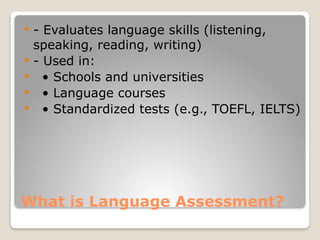
What is Language Assessment?
 - Evaluates language skills (listening,
speaking, reading, writing)
 - Used in:
 • Schools and universities
 • Language courses
 • Standardized tests (e.g., TOEFL, IELTS)
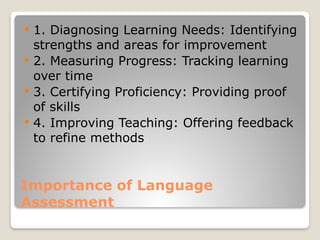
Importance of Language
Assessment
 1. Diagnosing Learning Needs: Identifying
strengths and areas for improvement
 2. Measuring Progress: Tracking learning
over time
 3. Certifying Proficiency: Providing proof
of skills
 4. Improving Teaching: Offering feedback
to refine methods
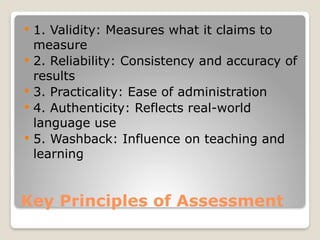
Key Principles of Assessment
 1. Validity: Measures what it claims to
measure
 2. Reliability: Consistency and accuracy of
results
 3. Practicality: Ease of administration
 4. Authenticity: Reflects real-world
language use
 5. Washback: Influence on teaching and
learning
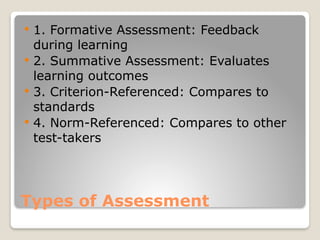
Types of Assessment
 1. Formative Assessment: Feedback
during learning
 2. Summative Assessment: Evaluates
learning outcomes
 3. Criterion-Referenced: Compares to
standards
 4. Norm-Referenced: Compares to other
test-takers
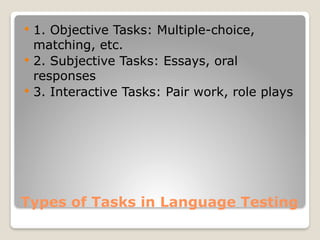
Types of Tasks in Language Testing
 1. Objective Tasks: Multiple-choice,
matching, etc.
 2. Subjective Tasks: Essays, oral
responses
 3. Interactive Tasks: Pair work, role plays
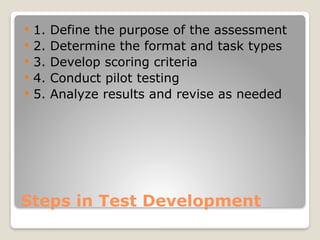
Steps in Test Development
 1. Define the purpose of the assessment
 2. Determine the format and task types
 3. Develop scoring criteria
 4. Conduct pilot testing
 5. Analyze results and revise as needed
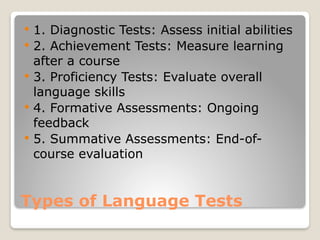
Types of Language Tests
 1. Diagnostic Tests: Assess initial abilities
 2. Achievement Tests: Measure learning
after a course
 3. Proficiency Tests: Evaluate overall
language skills
 4. Formative Assessments: Ongoing
feedback
 5. Summative Assessments: End-of-
course evaluation
Example: TOEFL
 - Purpose: Measures English proficiency
for academic contexts
 - Format: Sections (Reading, Listening,
Speaking, Writing)
 - Computer-based for efficient testing and
scoring
Conclusion
 - Language assessment is vital for
learners and educators
 - Principles like validity and reliability
ensure effective tests
 - Choose the right type of assessment
based on goals
Questions?
 Thank you for your attention! Feel free to
ask questions.

Language_Assessment_Presentation 12.pptx

  • 1.
    Key Principles andTypes of Language Assessment Understanding Assessment in Language Learning
  • 2.
    What is LanguageAssessment?  - Evaluates language skills (listening, speaking, reading, writing)  - Used in:  • Schools and universities  • Language courses  • Standardized tests (e.g., TOEFL, IELTS)
  • 3.
    Importance of Language Assessment 1. Diagnosing Learning Needs: Identifying strengths and areas for improvement  2. Measuring Progress: Tracking learning over time  3. Certifying Proficiency: Providing proof of skills  4. Improving Teaching: Offering feedback to refine methods
  • 4.
    Key Principles ofAssessment  1. Validity: Measures what it claims to measure  2. Reliability: Consistency and accuracy of results  3. Practicality: Ease of administration  4. Authenticity: Reflects real-world language use  5. Washback: Influence on teaching and learning
  • 5.
    Types of Assessment 1. Formative Assessment: Feedback during learning  2. Summative Assessment: Evaluates learning outcomes  3. Criterion-Referenced: Compares to standards  4. Norm-Referenced: Compares to other test-takers
  • 6.
    Types of Tasksin Language Testing  1. Objective Tasks: Multiple-choice, matching, etc.  2. Subjective Tasks: Essays, oral responses  3. Interactive Tasks: Pair work, role plays
  • 7.
    Steps in TestDevelopment  1. Define the purpose of the assessment  2. Determine the format and task types  3. Develop scoring criteria  4. Conduct pilot testing  5. Analyze results and revise as needed
  • 8.
    Types of LanguageTests  1. Diagnostic Tests: Assess initial abilities  2. Achievement Tests: Measure learning after a course  3. Proficiency Tests: Evaluate overall language skills  4. Formative Assessments: Ongoing feedback  5. Summative Assessments: End-of- course evaluation
  • 9.
    Example: TOEFL  -Purpose: Measures English proficiency for academic contexts  - Format: Sections (Reading, Listening, Speaking, Writing)  - Computer-based for efficient testing and scoring
  • 10.
    Conclusion  - Languageassessment is vital for learners and educators  - Principles like validity and reliability ensure effective tests  - Choose the right type of assessment based on goals
  • 11.
    Questions?  Thank youfor your attention! Feel free to ask questions.