PRELIMINARY OECD
WORK ON LVC
Abel Schumann
Economist
OECD
0
5000
10000
15000
20000
25000
30000
35000
Property
(buildings,
infrastructure)
Land Machinery &
Equipment
Inventories Other natural
resources
Intellectual
property
Other non
financial
assests
Cultivated
biological
resources
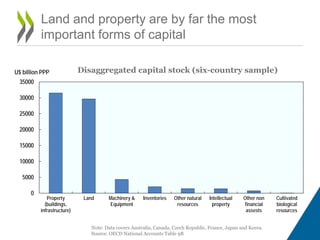
Land and property are by far the most
important forms of capital
Disaggregated capital stock (six-country sample)U$ billion PPP
Note: Data covers Australia, Canada, Czech Republic, France, Japan and Korea.
Source: OECD National Accounts Table 9B
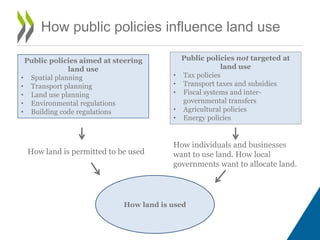
How public policies influence land use
How land is used
Public policies aimed at steering
land use
• Spatial planning
• Transport planning
• Land use planning
• Environmental regulations
• Building code regulations
Public policies not targeted at
land use
• Tax policies
• Transport taxes and subsidies
• Fiscal systems and inter-
governmental transfers
• Agricultural policies
• Energy policies
How land is permitted to be used
How individuals and businesses
want to use land. How local
governments want to allocate land.
0
2
4
6
8
10
12
14
16
18
Impact fees Joint
developments
Land value/split
rate property
tax
Land banking Betterment
levies
No value
capture
Non-Europe Europe
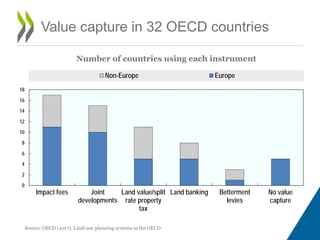
Value capture in 32 OECD countries
Source: OECD (2017), Land-use planning systems in the OECD
Number of countries using each instrument
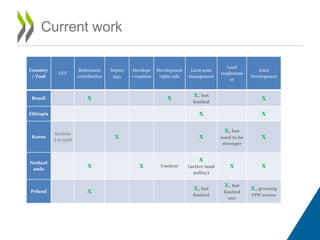
Country
/ Tool
LVT
Betterment
contribution
Impact
fees
Develope
r exaction
Development
rights sale
Land asset
management
Land
readjustme
nt
Joint
Development
Brazil X X
X, but
limited
X
Ethiopia X X
Korea
Abolishe
d in 1998
X X
X, but
used to be
stronger
X
Netherl
ands
X X Unclear
X
(active land
policy)
X X
Poland X
X, but
limited
X, but
limited
use
X, growing
PPP sector
Current work
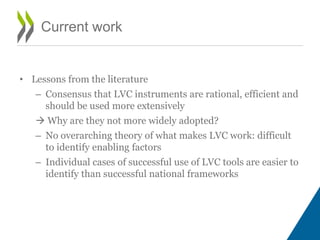
• Lessons from the literature
– Consensus that LVC instruments are rational, efficient and
should be used more extensively
 Why are they not more widely adopted?
– No overarching theory of what makes LVC work: difficult
to identify enabling factors
– Individual cases of successful use of LVC tools are easier to
identify than successful national frameworks
Current work
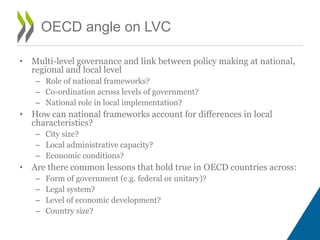
• Multi-level governance and link between policy making at national,
regional and local level
– Role of national frameworks?
– Co-ordination across levels of government?
– National role in local implementation?
• How can national frameworks account for differences in local
characteristics?
– City size?
– Local administrative capacity?
– Economic conditions?
• Are there common lessons that hold true in OECD countries across:
– Form of government (e.g. federal or unitary)?
– Legal system?
– Level of economic development?
– Country size?
OECD angle on LVC
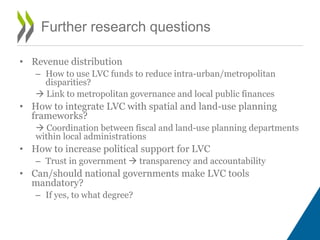
• Revenue distribution
– How to use LVC funds to reduce intra-urban/metropolitan
disparities?
 Link to metropolitan governance and local public finances
• How to integrate LVC with spatial and land-use planning
frameworks?
 Coordination between fiscal and land-use planning departments
within local administrations
• How to increase political support for LVC
– Trust in government  transparency and accountability
• Can/should national governments make LVC tools
mandatory?
– If yes, to what degree?
Further research questions
THANK YOU
Contact: abel.schumann@oecd.org

Land Value Capture

  • 1.
    PRELIMINARY OECD WORK ONLVC Abel Schumann Economist OECD
  • 2.
    0 5000 10000 15000 20000 25000 30000 35000 Property (buildings, infrastructure) Land Machinery & Equipment InventoriesOther natural resources Intellectual property Other non financial assests Cultivated biological resources Land and property are by far the most important forms of capital Disaggregated capital stock (six-country sample)U$ billion PPP Note: Data covers Australia, Canada, Czech Republic, France, Japan and Korea. Source: OECD National Accounts Table 9B
  • 3.
    How public policiesinfluence land use How land is used Public policies aimed at steering land use • Spatial planning • Transport planning • Land use planning • Environmental regulations • Building code regulations Public policies not targeted at land use • Tax policies • Transport taxes and subsidies • Fiscal systems and inter- governmental transfers • Agricultural policies • Energy policies How land is permitted to be used How individuals and businesses want to use land. How local governments want to allocate land.
  • 4.
    0 2 4 6 8 10 12 14 16 18 Impact fees Joint developments Landvalue/split rate property tax Land banking Betterment levies No value capture Non-Europe Europe Value capture in 32 OECD countries Source: OECD (2017), Land-use planning systems in the OECD Number of countries using each instrument
  • 5.
    Country / Tool LVT Betterment contribution Impact fees Develope r exaction Development rightssale Land asset management Land readjustme nt Joint Development Brazil X X X, but limited X Ethiopia X X Korea Abolishe d in 1998 X X X, but used to be stronger X Netherl ands X X Unclear X (active land policy) X X Poland X X, but limited X, but limited use X, growing PPP sector Current work
  • 6.
    • Lessons fromthe literature – Consensus that LVC instruments are rational, efficient and should be used more extensively  Why are they not more widely adopted? – No overarching theory of what makes LVC work: difficult to identify enabling factors – Individual cases of successful use of LVC tools are easier to identify than successful national frameworks Current work
  • 7.
    • Multi-level governanceand link between policy making at national, regional and local level – Role of national frameworks? – Co-ordination across levels of government? – National role in local implementation? • How can national frameworks account for differences in local characteristics? – City size? – Local administrative capacity? – Economic conditions? • Are there common lessons that hold true in OECD countries across: – Form of government (e.g. federal or unitary)? – Legal system? – Level of economic development? – Country size? OECD angle on LVC
  • 8.
    • Revenue distribution –How to use LVC funds to reduce intra-urban/metropolitan disparities?  Link to metropolitan governance and local public finances • How to integrate LVC with spatial and land-use planning frameworks?  Coordination between fiscal and land-use planning departments within local administrations • How to increase political support for LVC – Trust in government  transparency and accountability • Can/should national governments make LVC tools mandatory? – If yes, to what degree? Further research questions
  • 9.